Results by title
977 books match the query 'American literature' and 48 start with i

I Made You to Find Me
The Coming of Age of the Woman Poet and the Politics of Poetic AddressJane Hedley
The Ohio State University Press, 2009

Identity and the Failure of America
From Thomas Jefferson to the War on TerrorJohn Michael
University of Minnesota Press, 2008
From Thomas Jefferson to John Rawls, justice has been at the center of America’s self-image and national creed. At the same time, for many of its peoples-from African slaves and European immigrants to women and the poor-the American experience has been defined by injustice: oppression, disenfranchisement, violence, and prejudice.
In Identity and the Failure of America, John Michael explores the contradictions between a mythic national identity promising justice to all and the realities of a divided, hierarchical, and frequently iniquitous history and social order. Through a series of insightful readings, Michael analyzes such cultural moments as the epic dramatization of the tension between individual ambition and communal complicity in Moby-Dick, attempts to effect social change through sympathy in the novels of Lydia Marie Child and Harriet Beecher Stowe, Ralph Waldo Emerson’s antislavery activism and Frederick Douglass’s long fight for racial equity, and the divisive figures of John Brown and Nat Turner in American letters and memory.
Focusing on exemplary instances when the nature of the United States as an essentially conflicted nation turned to force, Michael ultimately posits the development of a more cosmopolitan American identity, one that is more fully and justly imagined in response to the nation’s ethical failings at home and abroad.
John Michael is professor of English and of visual and cultural studies at the University of Rochester. He is the author of Anxious Intellects: Academic Professionals, Public Intellectuals, and Enlightenment Values and Emerson and Skepticism: The Cipher of the World.
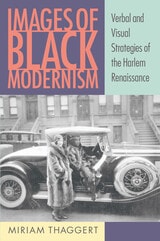
Images of Black Modernism
Verbal and Visual Strategies of the Harlem RenaissanceMiriam Thaggert
University of Massachusetts Press, 2010
Focusing on the years from 1922 to 1938, this book revisits an important moment in black cultural history to explore how visual elements were used in poems, novels, and photography to undermine existing stereotypes. Miriam Thaggert identifies and analyzes an early form of black American modernism characterized by a heightened level of experimentation with visual and verbal techniques for narrating and representing blackness. The work of the writers and artists under discussion reflects the creative tension between the intangibility of some forms of black expression, such as spirituals, and the materiality of the body evoked by other representations of blackness, such as “Negro” dialect.
By paying special attention to the contributions of photographers and other visual artists who have not been discussed in previous accounts of black modernism, Thaggert expands the scope of our understanding of the Harlem Renaissance and contributes to a growing recognition of the importance of visual culture as a distinct element within, and not separate from, black literary studies.
Thaggert trains her critical eye on the work of James Weldon Johnson, Nella Larsen, George Schuyler, Carl Van Vechten, James Van Der Zee, and Aaron Siskind—artists who experimented with narrative and photographic techniques in order to alter the perception of black images and to question and reshape how one reads and sees the black body. Examining some of the more problematic authors and artists of black modernism, she challenges entrenched assumptions about black literary and visual representations of the early to mid twentieth century.
Thaggert concludes her study with a close look at the ways in which Harlem and the Harlem Renaissance were reimagined and memorialized in two notable texts—Wallace Thurman's 1932 satire Infants of the Spring and the Metropolitan Museum of Art's controversial 1969 exhibition “Harlem on My Mind: The Cultural Capital of Black America, 1900–1968.”
Images of Germany in American Literature
Waldemar Zacharasiewicz
University of Iowa Press, 2007
Starting with the notion of Germany as the ideal site for academic study and travel in the nineteenth century and concluding with the twentieth-century image of Germany as an aggressive country, this innovative work examines the ever-changing image of Germans and Germany in the writings of Louisa May Alcott, Samuel Clemens, Henry James, William James, George Santayana, W. E. B. Du Bois, John Dewey, H. L. Mencken, Katherine Anne Porter, Kay Boyle, Thomas Wolfe, Upton Sinclair, Gertrude Stein, Kurt Vonnegut, Thomas Pynchon, William Styron, Walker Percy, and John Hawkes, among others.
Imagine Otherwise
On Asian Americanist CritiqueKandice Chuh
Duke University Press, 2003
Drawing on the insights of poststructuralist theory, postcolonial studies, and investigations of transnationalism, Imagine Otherwise conceives of Asian American literature and U.S. legal discourse as theoretical texts to be examined for the normative claims about race, gender, and sexuality that they put forth. Reading government and legal documents, novels including Carlos Bulosan's America Is in the Heart, John Okada's No-No Boy, Chang-rae Lee's A Gesture Life, Ronyoung Kim's Clay Walls, and Lois Ann Yamanaka's Blu's Hanging, and the short stories "Immigration Blues" by Bienvenido Santos and "High-Heeled Shoes" by Hisaye Yamamoto, Chuh works through Filipino American and Korean American identity formation and Japanese American internment during World War II as she negotiates the complex and sometimes tense differences that constitute 'Asian America' and Asian American studies.
Imagine the Sound
Experimental African American Literature after Civil RightsCarter Mathes
University of Minnesota Press, 2014
The post–Civil Rights era was marked by an explosion of black political thought and aesthetics. Reflecting a shifting horizon of expectations around race relations, the unconventional sounds of free jazz coupled with experimental literary creation nuanced the push toward racial equality and enriched the possibilities for aesthetic innovation within the Black Arts Movement. In Imagine the Sound, Carter Mathes demonstrates how African American writers used sound to further artistic resistance within a rapidly transforming political and racial landscape.
While many have noted the oral and musical qualities of African American poetry from the post–Civil Rights period, Mathes points out how the political implications of dissonance, vibration, and resonance produced in essays, short stories, and novels animated the ongoing struggle for equality. Situating literary works by Henry Dumas, Larry Neal, and Toni Cade Bambara in relation to the expansive ideas of sound proposed by free jazz musicians such as Marion Brown and Sun Ra, not only does this book illustrate how the presence of sound can be heard and read as political, but it recuperates critically neglected, yet important, writers and musicians. Ultimately, Mathes details how attempts to capture and render sound through the medium of writing enable writers to envision alternate realities and resistance outside of the linear frameworks offered by the Civil Rights and Black Power movements.
In precise and elegant prose, Mathes shows how in conceptualizing sound, African American writers opened up the political imaginations of their readers. By exploring this intellectual convergence of literary artistry, experimental music, and sound theory, Imagine the Sound reveals how taking up radically new forms of expression allows us to speak to the complexities of race and political resistance.
Imagining Adoption
Essays on Literature and CultureMarianne Novy, Editor
University of Michigan Press, 2003

Imagining Health
Medicine, Social Protest, and Modern American LiteratureIra Halpern
University of Massachusetts Press, 2026
In the United States, a deep suspicion of professional medical expertise is becoming increasingly prominent. Meanwhile, many arguments for health justice take a highly critical view of medical authority, even rejecting it entirely. In the early to mid-twentieth century, alternatively, as medicine rapidly professionalized, Americans came to hold the medical establishment in a particularly high regard, while many saw how it could play a crucial role in progressive politics. In this period, technologies developed, specializations grew, and medical education became standardized. With this process came inequities, as marginalized populations struggled to access the highest levels of care. Literary writers confronting social ills through their work included critiques of this new system in their writing, Ira Halpern argues. Without abandoning professional medicine, they called for alternative systems of care that could better serve diverse populations.
Halpern examines the work of several writers—including Robert Herrick, Wallace Thurman, Frank Slaughter, Charles Chesnutt, Walter White, Ralph Ellison, Charlotte Perkins Gilman, Upton Sinclair, Stephen Crane, and Edith Wharton—to demonstrate how American writing from this period embedded a critical look at healthcare within other elements of progressive politics, from racial protest and women’s rights to disability justice and counter-capitalist viewpoints. Placing this writing into historical context, in terms of medical and scientific developments as well as traditions of social protest, Halpern reveals the efforts of these writers to envision better alternative trajectories for a quickly evolving medical establishment that left too many Americans without reliable care.
Imagining Wild America
John Knott
University of Michigan Press, 2002
Imagining the Primitive in Naturalist and Modernist Literature
Gina M. Rossetti
University of Missouri Press, 2006
Immersive Words
Mass Media, Visuality, and American Literature, 1839–1893Shelly Jarenski
University of Alabama Press, 2015
The middle of the nineteenth century witnessed the emergence of numerous visual technologies and techniques: the daguerreotype, immersive exhibition spaces such as cycloramas and panoramas, mechanized tourism, and large-scale exhibitions and spectacles such as the World’s Fair. In closely argued chapters devoted to these four visual forms, Jarenski demonstrates that the popularity of these novelties catalyzed a shift by authors of the period beyond narratives that merely described images to ones that invoked aesthetic experiences.
Jarenski describes how Herman Melville adapts the aesthetic of the daguerreotype through his use of dramatic point-of-view and unexpected shifts that disorient readers. Frederick Douglass is shown to appropriate a panoramic aesthetic that severs spatial and temporal narratives from standard expectations. Jarenski traces how Nathaniel Hawthorne’s The Marble Faun found success as a travel guide to Rome, though intended as a work of serious fiction. Finally, Sarah Orne Jewett is shown to simulate the interactivity of the World Columbian Exposition to promote racialized and gendered forms of aesthetic communication. These techniques and strategies drawn from visual forms blur the just-so boundary critics and theorists have traditionally drawn between text and image.
In the mid-nineteenth century, the national identity of the United States remained fluid and hinged upon matters of gender, sexuality, and, crucially, race. Authors both reflected that evolving identity and contributed to its ongoing evolution. In demonstrating how the aesthetic and visual technologies of the nineteenth century changed the fundamental aesthetics of American literature, the importance of Immersive Words goes far beyond literary criticism.

Immigrant Acts
On Asian American Cultural PoliticsLisa Lowe
Duke University Press, 1996
Lowe argues that a national memory haunts the conception of Asian American, persisting beyond the repeal of individual laws and sustained by U.S. wars in Asia, in which the Asian is seen as the perpetual immigrant, as the “foreigner-within.” In Immigrant Acts, she argues that rather than attesting to the absorption of cultural difference into the universality of the national political sphere, the Asian immigrant—at odds with the cultural, racial, and linguistic forms of the nation—displaces the temporality of assimilation. Distance from the American national culture constitutes Asian American culture as an alternative site that produces cultural forms materially and aesthetically in contradiction with the institutions of citizenship and national identity. Rather than a sign of a “failed” integration of Asians into the American cultural sphere, this critique preserves and opens up different possibilities for political practice and coalition across racial and national borders.
In this uniquely interdisciplinary study, Lowe examines the historical, political, cultural, and aesthetic meanings of immigration in relation to Asian Americans. Extending the range of Asian American critique, Immigrant Acts will interest readers concerned with race and ethnicity in the United States, American cultures, immigration, and transnationalism.
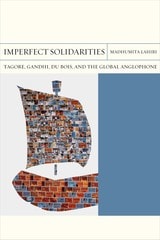
Imperfect Solidarities
Tagore, Gandhi, Du Bois, and the Global AnglophoneMadhumita Lahiri
Northwestern University Press, 2021
A century ago, activists confronting racism and colonialism—in India, South Africa, and Black America—used print media to connect with one another. Then, as now, the most effective medium for their undertakings was the English language. Imperfect Solidarities: Tagore, Gandhi, Du Bois, and the Global Anglophone tells the story of this interconnected Anglophone world. Through Rabindranath Tagore’s writings on China, Mahatma Gandhi’s recollections of South Africa, and W. E. B. Du Bois’s invocations of India, Madhumita Lahiri theorizes print internationalism. This methodology requires new terms within the worldwide hegemony of the English language (“the global Anglophone”) in order to encourage alternate geographies (such as the Global South) and new collectivities (such as people of color).
The women of print internationalism feature prominently in this account. Sonja Schlesin, born in Moscow, worked with Indians in South Africa. Sister Nivedita, an Irish woman in India, collaborated with a Japanese historian. Jessie Redmon Fauset, an African American, brought the world home to young readers through her work as an author and editor.
Reading across races and regions, genres and genders, Imperfect Solidarities demonstrates the utility of the neologism for postcolonial literary studies.
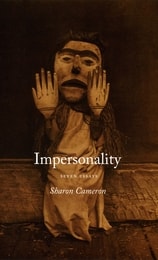
Impersonality
Seven EssaysSharon Cameron
University of Chicago Press, 2007

Impossible Stories
On the Space and Time of Black Destructive CreationJohn Murillo III
The Ohio State University Press, 2021
Taking as his lens the fragment—fragmented bodies, fragments of memories, fragments of texts—Murillo theorizes new directions for Black identity and cultural production. Combining a critical engagement of physics and metaphysics with innovative readings of Gayl Jones’s Corregidora, Octavia Butler’s Kindred, Toni Morrison’s Beloved, Kiese Laymon’s Long Division, Dionne Brand’s A Map to the Door of No Return, and Paul Beatty’s The Sellout, he offers new ways to think about anti-Black racism and practice Black creativity. Ultimately, in his equally creative and analytical responses to depictions of Black people left out of history and barred from spaces, Murillo argues that through Afro-pessimism, Black people can fight the anti-Black cosmos.
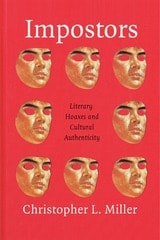
Impostors
Literary Hoaxes and Cultural AuthenticityChristopher L. Miller
University of Chicago Press, 2018
In the United States, such hoaxes are familiar. Forrest Carter’s The Education of Little Tree and JT LeRoy’s Sarah are two infamous examples. Miller’s contribution is to study hoaxes beyond our borders, employing a comparative framework and bringing French and African identity hoaxes into dialogue with some of their better-known American counterparts. In France, multiculturalism is generally eschewed in favor of universalism, and there should thus be no identities (in the American sense) to steal. However, as Miller demonstrates, this too is a ruse: French universalism can only go so far and do so much. There is plenty of otherness to appropriate. This French and Francophone tradition of imposture has never received the study it deserves. Taking a novel approach to this understudied tradition, Impostors examines hoaxes in both countries, finding similar practices of deception and questions of harm.
In Babel's Shadow
Multilingual Literatures, Monolingual StatesBrian Lennon
University of Minnesota Press, 2010
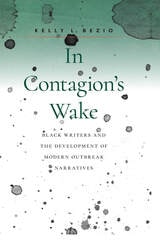
In Contagion's Wake
Black Writers and the Development of Modern Outbreak NarrativesKelly L. Bezio
University of Massachusetts Press, 2026
An examination of early American literature that highlights how racial divides exacerbated—and were exacerbated by—the spread of infection
In April of 1721, the HMS Seahorse arrived in Boston from the West Indies, causing a smallpox epidemic that would plague the city for the next year. Of its 12,000 inhabitants, nearly fifty percent were infected, and 900 people died. Like the coronavirus pandemic that began in 2020, the outbreak also brought to the surface deep divides in the social fabric of colonial New England and laid the groundwork for racialized political inequities that we continue to grapple with today.
In Contagion’s Wake examines a range of American outbreak narratives, both historical and fictional, written between the early 1700s and the early 1900s—from the rise of inoculation through the advent of germ theory. Author Kelly L. Bezio argues that during this period, literature about communicable disease was dominated by white authors, such as Cotton Mather and Edgar Allen Poe, who tended to privilege white suffering and survival while obscuring Black suffering and vulnerability. Black authors, however, such as Olaudah Equiano and Frances E.W. Harper, developed variations on plot structures, metaphors, and imagery that drew upon contagion to represent racial injustice and further the cause of Black liberation.
The diverse texts Bezio analyzes vary extensively in genre and geographical location, and in the illnesses that feature in their pages. Significant disorders from the era, including yellow fever, smallpox, consumption, and cholera, make frequent appearances, as do less culturally dominant diseases such as St. Anthony’s Fire. In Contagion’s Wake contends that representations of communicable disease should not be understood only as within their own historical moment; rather, they function more like a DNA code for our present time.

In Defense of Reason
Three Classics of Contemporary CriticismYvor Winters
Ohio University Press, 1947
Yvor Winters has here collected, with an introduction, the major critical works—Primitivism and Decadence, Maule’s Curse, and The Anatomy of Nonsense—of the period in which he worked out his famous and influential critical position. The works together show an integrated position which illuminates the force and importance of the individual essays. With The Function of Criticism, a subsequent collection, In Defense of Reason provides an incomparable body of critical writing.
The noted critic bases his analysis upon a belief in the existence of absolute truths and values, in the ethical judgment of literature, and in an insistence that it is the duty of the writer—as it is of very man—to approximate these truths insofar as human fallibility permits. His argument is by theory, but also by definite example—the technique of the “whole critic” who effectively combines close study of specific literary works and a penetrating investigation of aesthetic philosophies.

In Nature's Name
An Anthology of Women's Writing and Illustration, 1780-1930Edited by Barbara T. Gates
University of Chicago Press, 2002
The works contained in this volume are as varied as the women who produced them. They include passionate essays on the protection of animals, vivid accounts of travel and adventure from the English seashore to the Indian Alps, poetry and fiction, and marvelous tales of nature for children. Special features of the book include a detailed chronology placing each selection in its historical and literary context; biographical sketches of each author's life and works; a comprehensive bibliography of primary and secondary literature; and over sixty illustrations.
An ideal introduction to women's powerful and diverse responses to the natural world, In Nature's Name will be treasured by anyone interested in natural history, women, or Victorian and Edwardian Britain.
In Quest of the Ordinary
Lines of Skepticism and RomanticismStanley Cavell
University of Chicago Press, 1988
In Search of American Jewish Culture
Stephen J. Whitfield
Brandeis University Press, 2001

In the Company of Books
Literature and Its "Classes" in Nineteenth-Century AmericaSarah Wadsworth
University of Massachusetts Press, 2006
With sections focusing on segmentation by age, gender, and cultural status, In the Company of Books analyzes the ways authors and publishers carved up the field of literary production into a multitude of distinct submarkets, differentiated their products, and targeted specific groups of readers in order to guide their book-buying decisions. Combining innovative approaches to canonical authors such as Nathaniel Hawthorne, Louisa May Alcott, Mark Twain, and Henry James with engaging investigations into the careers of many lesser-known literary figures, Sarah Wadsworth reveals how American writers responded to—and contributed to—this diverse, and diversified, market.
In the Company of Books contends that specialized editorial and marketing tactics, in concert with the narrative strategies of authors and the reading practices of the book-buying public, transformed the literary landscape, leading to new roles for the book in American culture, the innovation of literary genres, and new relationships between books and readers. Both an exploration of a fragmented print culture through the lens of nineteenth-century American literature and an analysis of nineteenth-century American literature from the perspective of this subdivided marketplace, this wide-ranging study offers fresh insight into the impact of market forces on the development of American literature.

In the Company of Radical Women Writers
Rosemary Hennessy
University of Minnesota Press, 2023
Recovering the bold voices and audacious lives of women who confronted capitalist society’s failures and injustices in the 1930s—a decade unnervingly similar to our own
In the Company of Radical Women Writers rediscovers the political commitments and passionate advocacy of seven writers—Black, Jewish, and white—who as young women turned to communism around the Great Depression and, over decades of national crisis, spoke to issues of labor, land, and love in ways that provide urgent, thought-provoking guidance for today. Rosemary Hennessy spotlights the courageous lives of women who confronted similar challenges to those we still face: exhausting and unfair labor practices, unrelenting racial injustice, and environmental devastation.
As Hennessy brilliantly shows, the documentary journalism and creative and biographical writings of Marvel Cooke, Louise Thompson Patterson, Claudia Jones, Alice Childress, Josephine Herbst, Meridel Le Sueur, and Muriel Rukeyser recognized that life is sustained across a web of dependencies that we each have a duty to maintain. Their work brought into sharp focus the value and dignity of Black women’s domestic work, confronted the destructive myths of land exploitation and white supremacy, and explored ways of knowing attuned to a life-giving erotic energy that spans bodies and relations. In doing so, they also expanded the scope of American communism.
By tracing the attention these seven women pay to “life-making” as the relations supporting survival and wellbeing—from Harlem to the American South and Midwest—In the Company of Radical Women Writers reveals their groundbreaking reconceptions of the political and provides bracing inspiration in the ongoing fight for justice.
In the Neighborhood
Women's Publication in Early AmericaCaroline Wigginton
University of Massachusetts Press, 2016
Winner of the 2018 Early American Literature Book Prize
In this compelling and original book, Caroline Wigginton reshapes our understanding of early American literary history. Overturning long-standing connections between the male-dominated print culture of pamphlets, broadsides, and newspapers and the transformative ideas that instigated the American Revolution, Wigginton explores how women's “relational publications”—circulated texts, objects, and performances—transformed their public and intimate worlds. She argues that Native, black, and white women's interpersonal "publications" revolutionized the dynamics of power and connection in public and private spaces, whether those spaces were Quaker meeting houses, Creek talwas, trading posts, burial grounds, or the women's own "neighborhoods."
Informed by deep and rich archival research, Wigginton's case studies explore specific instances of “relational publication.” The book begins with a pairing of examples—the statement a grieving Lenape mother made through a wampum belt and the political affiliations created when a salon hostess shared her poetry. Subsequent chapters trace a history of women's publication practice, including a Creek woman's diplomatic and legal procession-spectacles in the colonial Southeast, a black mother's expression of protest in Newport, Rhode Island, and the resulting evangelical revival, Phillis Wheatley's elegies that refigured neighborhoods of enslaved and free Bostonians, and a Quaker woman's pious and political commonplace book in Revolutionary Philadelphia.
In the Work of Their Hands Is Their Prayer
Cultural Narrative and Redemption on the American Frontiers, 1830-1930Joel Daehnke
Ohio University Press, 2003
Westward expansion on the North American continent by European settlers generated a flurry of writings on the frontier experience over the course of a hundred years. Asserting that the dominant ideology of America’s Manifest Destiny embodied a tense, often contradictory union of Christian and secular republican views of social progress, In the Work of Their Hands Is Their Prayer investigates the ambivalence of the frontier as it was inscribed with redemptive, historical significance by a host of frontier writers.
Enlisting canonical and noncanonical sources, Joel Daehnke examines the manner in which the imagery of the human figure at work and play in the frontier landscape participated in the nationalist, “civilizing” project of westward expansion. While he acknowledges the growing secularization of American life, Professor Daehnke surveys the continuing claims of the Christian redemptive scheme as a powerful symbolic domain for these writers’ meditations on social progress and the potential for human perfectibility in the landscapes of the West.
Whether discussing the Edenic imagery of women’s gardens, the advocacy of an ethics of land use, or the affairs of fortune in the mining districts of Nevada, In the Work of Their Hands Is Their Prayer presents an enlightening reexamination of an American ideology of progress and its enduring fascination with mission, Manifest Destiny, and the ends of history.
In the Work of Their Hands Is Their Prayer is a welcome addition to the extended library of critical attention to the ideology, history, and literary traditions of the American frontier.

Indian Nation
Native American Literature and Nineteenth-Century NationalismsCheryl Walker
Duke University Press, 1997
Walker examines the rhetoric and writings of nineteenth-century Native Americans, including William Apess, Black Hawk, George Copway, John Rollin Ridge, and Sarah Winnemucca. Demonstrating with unique detail how these authors worked to transform venerable myths and icons of American identity, Indian Nation chronicles Native American participation in the forming of an American nationalism in both published texts and speeches that were delivered throughout the United States. Pottawattomie Chief Simon Pokagon’s "The Red Man’s Rebuke," an important document of Indian oratory, is published here in its entirety for the first time since 1893.
By looking at this writing through the lens of the best theoretical work on nationality, postcoloniality, and the subaltern, Walker creates a new and encompassing picture of the relationship between Native Americans and whites. She shows that, contrary to previous studies, America in the nineteenth century was intercultural in significant ways.
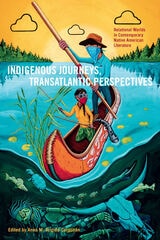
Indigenous Journeys, Transatlantic Perspectives
Relational Worlds in Contemporary Native American LiteratureAnna M Brígido-Corachán
Michigan State University Press, 2023

Indigenous Kinship, Colonial Texts, and the Contested Space of Early New England
Marie Balsley Taylor
University of Massachusetts Press, 2023
New England history often treats Indigenous people as minor or secondary actors within the larger colonial story. Focusing on those Native Americans who were sachems, or leaders, in local tribes when Europeans began arriving, Marie Balsley Taylor reframes stories of Indigenous and British interactions and illuminates the vital role that Indigenous kinship and diplomacy played in shaping the textual production of English colonial settlers in New England from the 1630s until King Philip’s War.
Taylor argues that genres like the conversion narrative, the post-sermon question and answer session, and scientific treatise—despite being written in English for European audiences—were jointly created by Indigenous sachems and settlers to facilitate interaction within the contested space of colonial New England. Analyzing the writings of Thomas Shepard, John Eliot, John Winthrop Jr., and Daniel Gookin and the relationships these English Protestants formed with Indigenous leaders like Wequash, Cutshamekin, Cassacinamon, and Waban, this innovative study offers a new approach to early American literature—indicating that Native thought and culture played a profound role in shaping the words and deeds of colonial writers.
Industry and the Creative Mind
The Eccentric Writer in American Literature and Entertainment, 1790-1860Sandra Tomc
University of Michigan Press, 2012
Industry and the Creative Mind takes a radically new look at the figure of the eccentric, alienated writer in American literature and entertainment from 1790 to 1860. Traditional scholarship takes for granted that the eccentric writer, modeled by such Romantic beings as Lord Byron and brought to life for American audiences by the gloomy person of Edgar Allan Poe, was a figure of rebellion against the excesses of modern commercial culture and industrial life. By contrast, Industry and the Creative Mind argues that in the United States myths of writerly moodiness, alienation, and irresponsibility predated the development of a commercial arts and entertainment industry and instead of forming a site of rebellion from this industry formed a bedrock for its development. Looking at the careers of a number of early American writers---Joseph Dennie, Nathaniel Parker Willis, Edgar Allan Poe, Fanny Fern, as well as a host of now forgotten souls who peopled the twilight worlds of hack fiction and industrial literature---this book traces the way in which early nineteenth-century American arts and entertainment systems incorporated writerly eccentricity in their "logical" economic workings, placing the mad, rebellious writer at the center of the industry's productivity and success.
Inequalities of Platform Publishing
The Promise and Peril of Self-Publishing in the Digital Book EraClaire Parnell
University of Massachusetts Press, 2025
Uncovering race, gender, and sexual biases in popular self-publishing platforms
The average reader need not go far in a bookstore before, knowingly or not, they encounter authors who started their careers by self-publishing prior to achieving commercial success. Examples include Margaret Atwood, Andy Weir, Colleen Hoover, Anna Todd, E. L. James, Scarlett St. Clair, and many more. Such stories of self-made writers are compelling and seem more attainable to others with the accessibility of modern publishing platforms such as Amazon, Apple, Google, Kobo, Wattpad, Webtoon, Radish, Inkitt, Qidian, Tapas, and Swoon Reads. However, as Claire Parnell uncovers in her examination of the two most popular—Amazon and Wattpad—these services in fact perpetuate systemic racial, gender, and sexual bias against authors of color and queer authors through their technological, economic, social, and cultural structures.
At a time when there is a real reckoning with the discrimination that has resulted in publishing opportunities for only relatively few privileged authors—who are often White, upper class, and male—self-publishing presents itself as an equalizer of sorts. Exploring that idea, Parnell shows that these platforms are not just intermediaries for information; they structure content and users in multiple, often inequitable, ways through their ability to set market conditions and apply algorithmic sorting. Combining original interviews, walkthrough method, metadata analysis, and more, Parnell finds that self-publishing platforms reproduce challenges for authors from marginalized communities. Far from equalizing the market, the new platforms instead frequently perpetuate the stubborn barriers to mainstream success for BIPOC and queer authors.
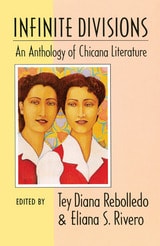
Infinite Divisions
An Anthology of Chicana LiteratureTey Diana Rebolledo
University of Arizona Press, 1993
Through poetry, fiction, drama, essay, and other forms, this landmark volume showcases the talents of more than fifty authors, including Gloria E. Anzaldúa, Ana Castillo, Lorna Dee Cervantes, Denise Chávez, Sandra Cisneros, Pat Mora, Cherríe Moraga, and María Helena Viramontes.
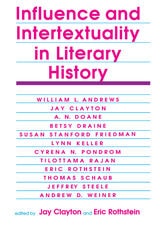
Influence and Intertextuality in Literary History
John B. Clayton
University of Wisconsin Press, 1991
This important collection explores and clarifies two of the most contested ideas in literary theory today, influence and intertextuality. The study of influence tends to center on major authors and canonical works, identifying prior documents as “sources” or “contexts” for a given author. Intertextuality, on the other hand, is a concept unconcerned with authors as individuals; it treats all texts as part of a network of discourse that includes culture, history, and social practices as well as other literary works. In thirteen essays drawing on the entire spectrum of English and American literary history, this volume considers the relationship between these two terms—their rivalry, their kinship, their range of uses.
Debates about these two concepts have been crucial to the “new historicism” and the resurgence of interest in literary history. The essays in this volume employ a refreshing array of examples from that history—poetry of the Renaissance and the twentieth century, novels of the eighteenth through twentieth centuries, Old English texts, and postmodernist productions that have served as recurrent “intertexts” for contemporary theory. The contributors treat such currently vital questions as the role of the author, canon formation, gender, causality, and the social dimension of texts. They illuminate old assumptions and new ideas about agency that lie behind notions of influence, and they examine models of an anonymous textual field that lie behind notions of intertextuality.
The volume takes much of its character from its own intertextual origin as a group project of the English faculty at the University of Wisconsin–Madison. Though diverse in their academic interests, concerns, and experience, the contributors particpated in an ongoing intellectual exchange that is a model of how new scholarship can arise from dialogue.
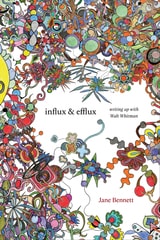
Influx and Efflux
Writing Up with Walt WhitmanJane Bennett
Duke University Press, 2020

Infrastructures of Apocalypse
American Literature and the Nuclear ComplexJessica Hurley
University of Minnesota Press, 2020
A new approach to the vast nuclear infrastructure and the apocalypses it produces, focusing on Black, queer, Indigenous, and Asian American literatures
Since 1945, America has spent more resources on nuclear technology than any other national project. Although it requires a massive infrastructure that touches society on myriad levels, nuclear technology has typically been discussed in a limited, top-down fashion that clusters around powerful men. In Infrastructures of Apocalypse, Jessica Hurley turns this conventional wisdom on its head, offering a new approach that focuses on neglected authors and Black, queer, Indigenous, and Asian American perspectives.
Exchanging the usual white, male “nuclear canon” for authors that include James Baldwin, Leslie Marmon Silko, and Ruth Ozeki, Infrastructures of Apocalypse delivers a fresh literary history of post-1945 America that focuses on apocalypse from below. Here Hurley critiques the racialized urban spaces of civil defense and reads nuclear waste as a colonial weapon. Uniting these diverse lines of inquiry is Hurley’s belief that apocalyptic thinking is not the opposite of engagement but rather a productive way of imagining radically new forms of engagement.
Infrastructures of Apocalypse offers futurelessness as a place from which we can construct a livable world. It fills a blind spot in scholarship on American literature of the nuclear age, while also offering provocative, surprising new readings of such well-known works as Atlas Shrugged, Infinite Jest, and Angels in America. Infrastructures of Apocalypse is a revelation for readers interested in nuclear issues, decolonial literature, speculative fiction, and American studies.
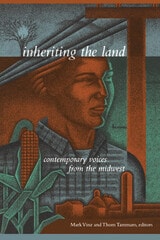
Inheriting The Land
Contemporary Voices from the MidwestMark Vinz
University of Minnesota Press, 1993

Inhuman Citizenship
Traumatic Enjoyment and Asian American LiteratureJuliana Chang
University of Minnesota Press, 2012
In Inhuman Citizenship, Juliana Chang claims that literary representations of Asian American domesticity may be understood as symptoms of America’s relationship to its national fantasies and to the “jouissance”—a Lacanian term signifying a violent yet euphoric shattering of the self—that both overhangs and underlies those fantasies. In the national imaginary, according to Chang, racial subjects are often perceived as the source of jouissance, which they supposedly embody through their excesses of violence, sexuality, anger, and ecstasy—excesses that threaten to overwhelm the social order.
To examine her argument that racism ascribes too much, rather than a lack of, humanity, Chang analyzes domestic accounts by Asian American writers, including Fae Myenne Ng’s Bone, Brian Ascalon Roley’s American Son, Chang-rae Lee’s Native Speaker, and Suki Kim’s The Interpreter. Employing careful reading and Lacanian psychoanalysis, Chang finds sites of excess and shock: they are not just narratives of trauma; they produce trauma as well. They render Asian Americans as not only the objects but also the vehicles and agents of inhuman suffering. And, claims Chang, these novels disturb yet strangely exhilarate the reader through characters who are objects of racism and yet inhumanly enjoy their suffering and the suffering of others.
Through a detailed investigation of “family business” in works of Asian American life, Chang shows that by identifying with the nation’s psychic disturbance, Asian American characters ethically assume responsibility for a national unconscious that is all too often disclaimed.

Ink Trails II
Michigan's Famous and Forgotten AuthorsDave Dempsey
Michigan State University Press, 2016
Exploring the hidden treasures of otherwise forgotten authors while also acknowledging the Michigan-set stories of giants like Hemingway, Dave and Jack Dempsey delve into the state’s literary heritage, as robust, diverse, and inexhaustible as the natural beauty of the place that nurtured it. This second volume of “ink trails” continues to tell the story of the remarkable writers, powerful words, and sublime nature of Michigan in the same well-researched and entertaining prose as the first.

Ink Trails
Michigan's Famous and Forgotten AuthorsDave Dempsey
Michigan State University Press, 2012
Long revered as the birthplace of many of the nation’s best-known authors, Michigan has also served as inspiration to countless others. In this entertaining and well-researched book—the first of its kind—the secrets, legends, and myths surrounding some of Michigan’s literary luminaries are explored. Which Michigan poet inspired a state law requiring teachers to assign at least one of his compositions to all students? Which young author emerged from the University of Michigan with a bestselling novel derided by some critics as “vulgar”? And from what Michigan city did Arthur Miller, Robert Frost, and Jane Kenyon draw vital inspiration? The answers to these questions and more are revealed in this rich literary history that highlights the diversity of those whose impact on letters has been indelible and distinctly Michiganian.

Intensive Care
More Poetry and Prose by NursesCortney & Judy Davis & Schaefer
University of Iowa Press, 2003
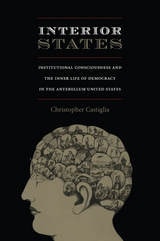
Interior States
Institutional Consciousness and the Inner Life of Democracy in the Antebellum United StatesChristopher Castiglia
Duke University Press, 2008
In the late eighteenth century and early nineteenth, as discourses of interiority gained prominence, so did powerful counter-narratives. Castiglia reveals the flamboyant pages of antebellum popular fiction to be an archive of unruly democratic aspirations. Through close readings of works by Maria Monk and George Lippard, Walt Whitman and Timothy Shay Arthur, Hannah Webster Foster and Hannah Crafts, and Nathaniel Hawthorne and Herman Melville, Castiglia highlights a refusal to be reformed or self-contained. In antebellum authors’ representations of nervousness, desire, appetite, fantasy, and imagination, he finds democratic strivings that refused to disappear. Taking inspiration from those writers and turning to the present, Castiglia advocates a humanism-without-humans that, denied the adjudicative power of interiority, promises to release democracy from its inner life and to return it to the public sphere where U.S. citizens may yet create unprecedented possibilities for social action.
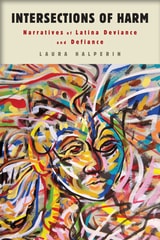
Intersections of Harm
Narratives of Latina Deviance and DefianceHalperin, Laura
Rutgers University Press, 0
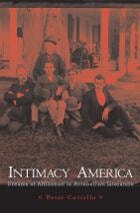
Intimacy in America
Dreams of Affiliation in Antebellum LiteraturePeter Coviello
University of Minnesota Press, 2005
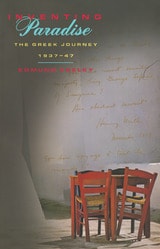
Inventing Paradise
The Greek Journey, 1937-47Edmund Keeley
Northwestern University Press, 2002
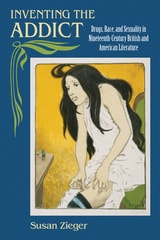
Inventing the Addict
Drugs, Race, and Sexuality in Nineteenth-Century British and American LiteratureSusan Zieger
University of Massachusetts Press, 2008
The notion of addiction has always conjured first-person stories, often beginning with an insidious seduction, followed by compulsion and despair, culminating in recovery and tentative hope for the future. We are all familiar with this form of individual life arrative, Susan Zieger observes, but we know far less about its history. “Addict” was not an available identity until the end of the nineteenth century, when a modernizing medical establishment and burgeoning culture of consumption updated the figure of the sinful drunkard popularized by the temperance movement.
In Inventing the Addict, Zieger tells the story of how the addict, a person uniquely torn between disease and desire, emerged from a variety of earlier figures such as drunkards, opium-eating scholars, vicious slave masters, dissipated New Women, and queer doctors. Drawing on a broad range of literary and cultural material, including canonical novels such as Uncle Tom's Cabin, The Strange Case of Dr. Jekyll and Mr. Hyde, and Dracula, she traces the evolution of the concept of addiction through a series of recurrent metaphors: exile, self-enslavement, disease, and vampirism. She shows how addiction took on multiple meanings beyond its common association with intoxication or specific habit-forming substances—it was an abiding desire akin to both sexual attraction and commodity fetishism, a disease that strangely failed to meet the requirements of pathology, and the citizen's ironic refusal to fulfill the promise of freedom.
Nor was addiction an ideologically neutral idea. As Zieger demonstrates, it took form over time through specific, shifting intersections of gender, race, class, and sexuality, reflecting the role of social power in the construction of meaning.
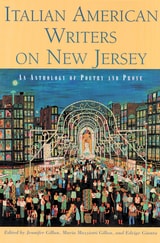
Italian American Writers on New Jersey
An Anthology of Poetry and ProseEdited by Jennifer Gillan, Maria Mazziotti Gillan, and Edvige Giunta
Rutgers University Press, 2003
This anthology gathers fiction, poetry, memoirs, oral histories, and journalistic pieces by some of the best writers to chronicle the Italian American experience in the Garden State. These works focus on ethnic identity and the distinctive culture of New Jersey, which has long been home to a large and vital Italian American community.
Filled with passion, humor, and grace, these writings depict a variety of experiences, including poignant but failed attempts at conformity and the alienation often felt by ethnic Americans. The authors also speak of the strength gained through the preservation of their communities and the realization that it is often the appreciation of their heritage that helps them to succeed. Although presented from the vantage point of only one ethnic group, this book addresses in microcosm the complexities of American identity, depicting situations and conveying emotions that will resonate with people of all immigrant ancestries.
Among the many writers featured are Gay Talese, Bill Ervolino, Tom Perrotta, Louise DeSalvo, Carole Mazo, Diane di Prima, and Maria Laurino. Each of the contributors provides a fresh perspective on the diversity, complexity, and richness of the Italian American experience.
Publication of this book is made possible in part by a grant from the Institute of Italian and Italian American Heritage Studies, State of New Jersey.
Italian Signs, American Streets
The Evolution of Italian American NarrativeFred L. Gardaphé
Duke University Press, 1996
Gardaphé draws on Vico’s concept of history, as well as the work of Gramsci, to establish a culture-specific approach to reading Italian American literature. He begins his historical reading with narratives informed by oral traditions, primarily autobiography and autobiographical fiction written by immigrants. From these earliest social–realist narratives, Gardaphé traces the evolution of this literature through tales of “the godfather” and the mafia; the “reinvention of ethnicity” in works by Helen Barolini, Tina DeRosa, and Carole Maso; the move beyond ethnicity in fiction by Don DeLillo and Gilbert Sorrentino; to the short fiction of Mary Caponegro, which points to a new direction in Italian American writing.
The result is both an ethnography of Italian American narrative and a model for reading the signs that mark the “self-fashioning” inherent in literary and cultural production. Italian Signs, American Streets promises to become a landmark in the understanding of literature and culture produced by Italian Americans. It will be of interest not only to students, critics, and scholars of this ethnic experience, but also to those concerned with American literature in general and the place of immigrant and ethnic literatures within that wide framework.

Italy and American Female Imagination
Debra Bernardi
The Ohio State University Press, 2025