Results by title
341 books match the query 'Cooking' and 7 start with i
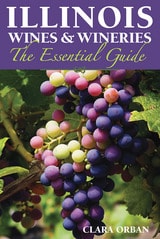
Illinois Wines and Wineries
The Essential GuideClara Orban
Southern Illinois University Press, 2014
For more than a century, Illinois has been home to a blossoming wine culture, yet winemaking in the state has not received the attention it deserves. Now, Clara Orban has created the ultimate companion to Illinois wines and wineries. This illustrated volume is a comprehensive yet user-friendly guide for both experienced wine lovers and amateur oenophiles.
Orban, a certified sommelier, begins with the history of Illinois wine production and wineries. She then enlightens readers on such wine basics as the most common grapes grown in Illinois, optimal food and wine pairings, the tenets of wine tasting, and provides an overview of the world of labels, bottles, and corks. The fascinating science of wine also is discussed, including the particulars of Illinois soil and climate and their effect on the industry. Orban then provides a guide to all the wineries listed by the Illinois Grape Growers and Vintners’ Association. For each winery, she offers a succinct history, information regarding the variety of grapes used, hours of operation, location, and contact information.
In addition to providing readers with a background of the state’s industry and snapshots of individual wineries, Illinois Wines and Wineries provides a glossary of key wine terms, including those specific to the state of Illinois, as well as color photos and a map to each location visited in the book. This sophisticated yet practical guidebook is an essential resource for connoisseurs and casual enthusiasts alike who are interested in exploring Illinois’s rich winemaking legacy.
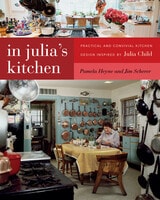
In Julia's Kitchen
Practical and Convivial Kitchen Design Inspired by Julia ChildPamela Heyne and Jim Scherer
University Press of New England, 2016
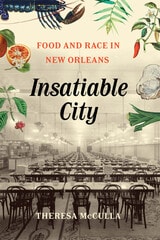
Insatiable City
Food and Race in New OrleansTheresa McCulla
University of Chicago Press, 2024
A history of food in the Crescent City that explores race, power, social status, and labor.
In Insatiable City, Theresa McCulla probes the overt and covert ways that the production of food and the discourse about it both created and reinforced many strains of inequality in New Orleans, a city significantly defined by its foodways. Tracking the city’s economy from nineteenth-century chattel slavery to twentieth-century tourism, McCulla uses menus, cookbooks, newspapers, postcards, photography, and other material culture to limn the interplay among the production and reception of food, the inscription and reiteration of racial hierarchies, and the constant diminishment and exploitation of working-class people. The consumption of food and people, she shows, was mutually reinforced and deeply intertwined. Yet she also details how enslaved and free people of color in New Orleans used food and drink to carve paths of mobility, stability, autonomy, freedom, profit, and joy. A story of pain and pleasure, labor and leisure, Insatiable City goes far beyond the task of tracing New Orleans's culinary history to focus on how food suffuses culture and our understandings and constructions of race and power.

Insatiable City
Food and Race in New OrleansTheresa McCulla
University of Chicago Press, 2024
A history of food in the Crescent City that explores race, power, social status, and labor.
In Insatiable City, Theresa McCulla probes the overt and covert ways that the production of food and the discourse about it both created and reinforced many strains of inequality in New Orleans, a city significantly defined by its foodways. Tracking the city’s economy from nineteenth-century chattel slavery to twentieth-century tourism, McCulla uses menus, cookbooks, newspapers, postcards, photography, and other material culture to limn the interplay among the production and reception of food, the inscription and reiteration of racial hierarchies, and the constant diminishment and exploitation of working-class people. The consumption of food and people, she shows, was mutually reinforced and deeply intertwined. Yet she also details how enslaved and free people of color in New Orleans used food and drink to carve paths of mobility, stability, autonomy, freedom, profit, and joy. A story of pain and pleasure, labor and leisure, Insatiable City goes far beyond the task of tracing New Orleans's culinary history to focus on how food suffuses culture and our understandings and constructions of race and power.
Intimate Eating
Racialized Spaces and Radical FuturesAnita Mannur
Duke University Press, 2022
Inventing Authenticity
How Cookbook Writers Redefine Southern IdentityCarrie Helms Tippen
University of Arkansas Press, 2018
Tippen discusses the act of cooking as a way to perform—and therefore reinforce—the identity associated with a recipe, and the complexities inherent in attempts to portray the foodways of a region marked by a sometimes distasteful history. Inventing Authenticity meets this challenge head-on, delving into problems of cultural appropriation and representations of race, thorny questions about authorship, and more. The commonplace but deceptively complex southern cookbook can sustain our sense of where we come from and who we are—or who we think we are.
Isle of Rum
Havana Club, Cultural Mediation, and the Fight for Cuban AuthenticityChristopher Chávez
Rutgers University Press, 2024
Rather than laying claim to authentic Cuban culture, Chávez explores which aspects of Cuban culture are deemed most compelling and, therefore, most profitable by corporate marketers. As a joint venture between the Cuban state and Pernod Ricard, a global spirits marketer based in Paris, Havana Club embodies the larger process of economic reform, which was meant to reintegrate Cuba into global markets during Cuba’s Special Period in a Time of Peace.