Results by title
1832 books match the query 'Essays' and 41 start with i
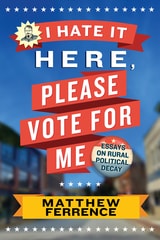
I Hate It Here, Please Vote for Me
Essays on Rural Political DecayMatthew Ferrence
West Virginia University Press, 2024
The Best Narrative & Biography Books of 2024, Selected by Porchlight
When a progressive college professor runs for the Pennsylvania House of Representatives in a deeply conservative rural district, he loses. That’s no surprise. But the story of how Ferrence loses and, more importantly, how American political narratives refuse to recognize the existence and value of nonconservative rural Americans offers insight into the political morass of our nation.
In essays focused on showing goats at the county fair, planting native grasses in the front lawn, the political power of poetry, and getting wiped out in an election, Ferrence offers a counter-narrative to stereotypes of monolithic rural American voters and emphasizes the way stories told about rural America are a source for the bitter divide between Red America and Blue America.
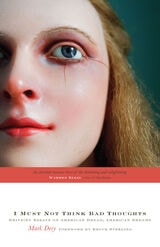
I Must Not Think Bad Thoughts
Drive-by Essays on American Dread, American DreamsMark Dery
University of Minnesota Press, 2014
From the cultural critic Wired called “provocative and cuttingly humorous” comes a viciously funny, joltingly insightful collection of drive-by critiques of contemporary America where chaos is the new normal. Exploring the darkest corners of the national psyche and the nethermost regions of the self—the gothic, the grotesque, and the carnivalesque—Mark Dery makes sense of the cultural dynamics of the American madhouse early in the twenty-first century.
Here are essays on the pornographic fantasies of Star Trek fans, Facebook as Limbo of the Lost, George W. Bush’s fear of his inner queer, the theme-parking of the Holocaust, the homoerotic subtext of the Super Bowl, the hidden agendas of IQ tests, Santa’s secret kinship with Satan, the sadism of dentists, Hitler’s afterlife on YouTube, the sexual identity of 2001’s HAL, the suicide note considered as a literary genre, the surrealist poetry of robot spam, the zombie apocalypse, Lady Gaga, the Church of Euthanasia, toy guns in the dream lives of American boys, and the polymorphous perversity of Madonna’s big toe.
Dery casts a critical eye on the accepted order of things, boldly crossing into the intellectual no-fly zones demarcated by cultural warriors on both sides of America’s ideological divide: controversy-phobic corporate media, blinkered academic elites, and middlebrow tastemakers. Intellectually omnivorous and promiscuously interdisciplinary, Dery’s writing is a generalist’s guilty pleasure in an age of nanospecialization and niche marketing. From Menckenesque polemics on American society and deft deconstructions of pop culture to unflinching personal essays in which Dery turns his scalpel-sharp wit on himself, I Must Not Think Bad Thoughts is a head-spinning intellectual ride through American dreams and American nightmares.
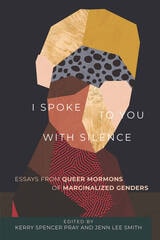
I Spoke to You with Silence
Essays from Queer Mormons of Marginalized GendersEdited by Kerry Spencer Pray and Jenn Lee Smith
University of Utah Press, 2022
This collection of essays gives voice to queer Mormons. The authors who share their stories—many speaking for the first time from the closet—do so here in simple narrative prose. They talk about their identities, their experiences, their relationships, their heartbreaks, their beliefs, and the challenges they face. Some stay in the church, some do not, some are in constant battles with themselves and the people around them as they make agonizing decisions about love and faith and community. Their stories bravely convey what it means to be queer, Mormon, and marginalized—what it means to have no voice and yet to speak anyway.

I Surf, Therefore I Am
A Philosophy of SurfingPeter Kreeft
St. Augustine's Press, 2008
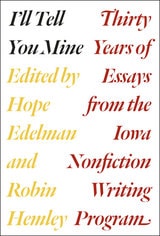
I'll Tell You Mine
Thirty Years of Essays from the Iowa Nonfiction Writing ProgramEdited by Hope Edelman and Robin Hemley
University of Chicago Press, 2015
I’ll Tell You Mine is an extraordinary anthology, a book rooted in Iowa’s successful program that goes beyond mere celebration to present some of the best nonfiction writing of the past thirty years. Eighteen pieces produced by Iowa graduates exemplify the development of both the program and the field of nonfiction writing. Each is accompanied by commentary from the author on a challenging issue presented by the story and the writing process, including drafting, workshopping, revising, and listening to (or sometimes ignoring) advice. The essays are put into broader context by a prologue from Robert Atwan, founding editor of the Best American Essays series, who details the rise of nonfiction as a literary genre since the New Journalism of the 1960s.
Creative nonfiction is the fastest-growing writing concentration in the country, with more than one hundred and fifty programs in the United States. I’ll Tell You Mine shows why Iowa’s leads the way. Its insider’s view of the Iowa program experience and its wealth of groundbreaking nonfiction writing will entertain readers and inspire writers of all kinds.
I, Grape; or The Case for Fiction
EssaysBrock Clarke
Acre Books, 2020
Clarke supports his case with passages by and about writers who have both influenced and irritated him. Pieces such as “What the Cold Can Teach Us,” “The Case for Meanness,” “Why Good Literature Makes Us Bad People,” and “The Novel is Dead; Long Live the Novel” celebrate the achievements of master practitioners such as Muriel Spark, Joy Williams, Donald Barthelme, Flannery O’Connor, Paul Beatty, George Saunders, John Cheever, and Colson Whitehead. Of particular interest to Clarke is the contentious divide between fiction and memoir, which he investigates using recent and relevant critical arguments, also tackling ancillary forms such as “fictional memoir” and the autobiographical novel.
Anecdotal and unabashed, rigorous and piercingly perceptive—not to mention flat-out funny—I, Grape; or The Case for Fiction is a love letter to and a passionate defense of the discipline to which its author has devoted his life and mind. It is also an attempt to eff the ineffable: “That is one of the basic tenets of this book: when we write fiction, surprising things sometimes happen, especially when fiction writers take advantage of their chosen form’s contrarian ability to surprise.”
Identity Work in Social Movements
Jo Reger
University of Minnesota Press, 2008
This volume offers new scholarship that explores issues of diversity and uniformity among social movement participants. Featuring case studies that range widely—from Jewish resistance fighters in Nazi-occupied Poland to antigay Christian movements in the United States to online white supremacy groups—the essays show how participants set aside issues of personal identity in order to merge together and how these processes affect mobilization and the attainment of goals.
Contributors: Mary Bernstein, Kimberly B. Dugan, Elizabeth Kaminski, Susan Munkres, Kevin Neuhouser, Benita Roth, Silke Roth, Todd Schroer, Verta Taylor, Jane Ward.
Illuminated Paris
Essays on Art and Lighting in the Belle ÉpoqueHollis Clayson
University of Chicago Press, 2019
Images of Science
Essays on Realism and EmpiricismEdited by Paul M. Churchland and Clifford A. Hooker
University of Chicago Press, 1985
Imagination, Emblems, and Expressions
Essays on Latin American, Carribean, and Continental Culture and IdentityHelen Ryan-Ranson
University of Wisconsin Press, 1993
This book of essays—carefully written by twenty-four authorities on their subjects—provides a deep understanding of and appreciation for the coherence, primacy, and importance of the search for identity in the divergent areas of Latin America, the Caribbean, and Europe.
Imagining Adoption
Essays on Literature and CultureMarianne Novy, Editor
University of Michigan Press, 2003
Imagining the Forest
Narratives of Michigan and the Upper MidwestJohn Knott
University of Michigan Press, 2011
Forests have always been more than just their trees. The forests in Michigan (and similar forests in other Great Lakes states such as Wisconsin and Minnesota) played a role in the American cultural imagination from the beginnings of European settlement in the early nineteenth century to the present. Our relationships with those forests have been shaped by the cultural attitudes of the times, and people have invested in them both moral and spiritual meanings.
Author John Knott draws upon such works as Simon Schama's Landscape and Memory and Robert Pogue Harrison's Forests: The Shadow of Civilization in exploring ways in which our
relationships with forests have been shaped, using Michigan---its history of settlement, popular literature, and forest management controversies---as an exemplary case. Knott looks at such well-known figures as William Bradford, James Fenimore Cooper, John Muir, John Burroughs, and Teddy Roosevelt; Ojibwa conceptions of the forest and natural world (including how Longfellow mythologized them); early explorer accounts; and contemporary literature set in the Upper Peninsula, including Jim Harrison's True North and Philip Caputo's Indian Country.
Two competing metaphors evolved over time, Knott shows: the forest as howling wilderness, impeding the progress of civilization and in need of subjugation, and the forest as temple or cathedral, worthy of reverence and protection. Imagining the Forestshows the origin and development of both.
Immanent Distance
Poetry and the Metaphysics of the Near at HandBruce Bond
University of Michigan Press, 2015

Immigration and American History
Essays in Honor of Theodore C. BlegenHenry Steele Commager, Editor
University of Minnesota Press, 1961
Immigration and American History was first published in 1961. Minnesota Archive Editions uses digital technology to make long-unavailable books once again accessible, and are published unaltered from the original University of Minnesota Press editions.
Ten scholars noted for their studies in immigration history contribute essays to this volume. Dr. Commager surveys the course of immigration studies over the years. Oscar Handlin reappraises the role of immigration in American life. Ingrid Semmingsen, Norwegian historian, writes on the image of American in Europe. Philip D. Jordan focuses on the immigrant's view of America. John T. Flanagan discusses the immigrant in fiction. Carlton C. Qualey contributes two essays. In the first he surveys world population movements and in the second he suggests new source materials for immigration studies. Henry A. Pochmann discusses the migration of ideas—what ideas have come into America, from where, and to what end? Franklin D. Scott inquires into the value of immigration studies of nationality groups. The Reverend Colman J. Barry explores possibilities for future immigration studies. Theodore C. Blegen takes a backward glance and a forward look at immigration studies.
The volume is based on the papers given at a conference held at the University of Minnesota in honor of Dr. Blegen on his retirement from the university.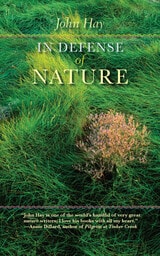
In Defense of Nature
John Hay
University of Iowa Press, 1969
Wendell Berry has called John Hay a “carrier of light and wisdom.” In Defense of Nature reveals why this is true. In it Hay has written an extended meditation on the environment and our place in it. Its lessons never more important, In Defense of Nature eerily presages the tenuous state of our environment and our place in it. As our technical abilities have moved forward, our judgment has not kept pace. “What we call natural resources cannot be limited to gas, oil, pulpwood, or uranium,we are starving the natural resources in ourselves. The soul needs to stretch; being needs to exercise.”
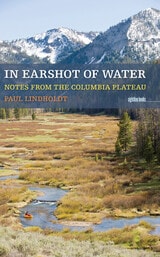
In Earshot of Water
Notes from the Columbia PlateauPaul Lindholdt
University of Iowa Press, 2011
p.MsoNormal, li.MsoNormal, div.MsoNormal { margin: 0in 0in 0.0001pt; font-size: 12pt; font-family: "Times New Roman"; }div.Section1 { page: Section1; }
Whether the subject is the plants that grow there, the animals that live there, the rivers that run there, or the people he has known there, Paul Lindholdt’s In Earshot of Water illuminates the Pacific Northwest in vivid detail. Lindholdt writes with the precision of a naturalist, the critical eye of an ecologist, the affection of an apologist, and the self-revelation and self-awareness of a personal essayist in the manner of Annie Dillard, Loren Eiseley, Derrick Jensen, John McPhee, Robert Michael Pyle, and Kathleen Dean Moore.
Exploring both the literal and literary sense of place, with particular emphasis on environmental issues and politics in the far Northwest, Lindholdt weds passages from the journals of Lewis and Clark, the log of Captain James Cook, the novelized memoir of Theodore Winthrop, and Bureau of Reclamation records growing from the paintings that the agency commissioned to publicize its dams in the 1960s and 1970s, to tell ecological and personal histories of the region he knows and loves.
In Lindholdt’s beautiful prose, America’s environmental legacies—those inherited from his blood relatives as well as those from the influences of mass culture—and illuminations of the hazards of neglecting nature’s warning signs blur and merge and reemerge in new forms. Themes of fathers and sons layer the book, as well—the narrator as father and as son—interwoven with a call to responsible social activism with appeals to reason and emotion. Like water itself, In Earshot of Water cascades across boundaries and blends genres, at once learned and literary.
In Our Own Hands
Essays in Deaf History, 1780–1970Brian H. Greenwald
Gallaudet University Press, 2016
These essays reveal how deaf people used their agency to engage in vigorous debates about issues that constantly tested the values of deaf people as Americans. The debates overlapped with social trends and spilled out into particular physical and social spaces such as clubs and churches, as well as within families. These previously unexplored areas in Deaf history intersect with important subthemes in American history, such as Southern history, religious history, and Western history.
The contributors demonstrate that as deaf people pushed for their rights as citizens, they met with resistance from hearing people, and the results of their efforts were decidedly mixed. These works reinforce the Deaf community’s longstanding desire to be part of the nation. In Our Own Hands contributes to an increased understanding of the struggle for citizenship and expands our current understanding of race, gender, religion, and other trends in Deaf history.
In Praise of the Impure
Poetry and the Ethical Imagination: Essays, 1980-1991Alan Shapiro
Northwestern University Press, 1993
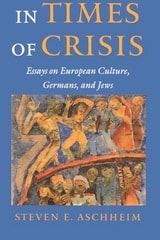
In Times of Crisis
Essays on European Culture, Germans, and JewsSteven E. Aschheim
University of Wisconsin Press, 2001
The nineteenth- and twentieth-century relationship between European culture, German history, and the Jewish experience produced some of the West’s most powerful and enduring intellectual creations—and, perhaps in subtly paradoxical and interrelated ways, our century’s darkest genocidal moments. In Times of Crisis explores the flashpoints of this vexed relationship, mapping the coordinates of a complex triangular encounter of immense historical import.
In essays that range from the question of Nietzsche’s legacy to the controversy over Daniel Goldhagen’s Hitler’s Willing Executioners, the distinguished historian Steven E. Aschheim presents this encounter as an ongoing dialogue between two evolving cultural identities. He touches on past dimensions of this exchange (such as the politics of Weimar Germany) and on present dilemmas of grasping and representing it (such as the Israeli discourse on the Holocaust). His work inevitably traces the roots and ramifications of Nazism but at the same time brings into focus historical circumstances and contemporary issues often overshadowed or distorted by the Holocaust.
These essays reveal the ubiquitous charged inscriptions of Nazi genocide within our own culture and illuminate the projects of some later thinkers and historians—from Hannah Arendt to George Mosse to Saul Friedlander—who have wrestled with its problematics and sought to capture its essence. From the broadly historical to the personal, from the politics of Weimar Germany to the experience of growing up German Jewish in South Africa, the essays expand our understanding of German Jewish history in particular, but also of historical processes in general.
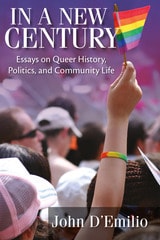
In a New Century
Essays on Queer History, Politics, and Community LifeJohn D’Emilio
University of Wisconsin Press, 2014
A pioneering scholar of gay history, John D’Emilio reflects in this wide-ranging collection of essays upon the social, cultural, and political changes provoked by LGBT activism. He offers provocative questions and historical analyses: What can we learn from a life-long activist like Bayard Rustin, who questioned the wisdom of “identity politics”? Was Richard Nixon a “gay liberationist”? How can knowing local stories—like those of Chicago in the 1950s, 1960s, and 1970s—help build stronger communities and enrich traditions of activism? Might the focus on achieving actually be evidence of growing conservatism in LGBT communities?
In a New Century provides a dynamic, thoughtful, and important resource for identifying changes that have occurred in the United States since 1960, taking stock of the work that still needs to be done, and issuing an urgent call to action for getting there.
Best Books for General Audiences, selected by the American Association of School Librarians
Best Special Interest Books, selected by the Public Library Reviewers
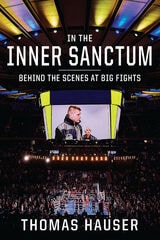
In the Inner Sanctum
Behind the Scenes at Big FightsThomas Hauser
University of Arkansas Press, 2022
When Thomas Hauser was selected for induction into the International Boxing Hall of Fame in 2019, his relationship with Muhammad Ali was widely cited. But Ali was just one of the many fighters who have shared momentous times with Hauser. For decades, elite fighters like Evander Holyfield, Manny Pacquiao, Roy Jones Jr., Bernard Hopkins, Ricky Hatton, Kelly Pavlik, Sergio Martínez, Jermain Taylor, Miguel Cotto, Gennady Golovkin, and Canelo Álvarez have welcomed him into their dressing rooms to record their journeys on fight night.
Gathering and updating more than thirty essays from Hauser’s critically acclaimed yearly collections, In the Inner Sanctum celebrates these most dramatic hours in boxers’ lives. In each account, Hauser chronicles the very moment when a fighter’s physical well-being and financial future are on the line—when the fighter is most at risk and most alive.
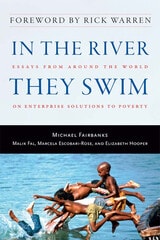
In the River They Swim
Essays from Around the World on Enterprise Solutions to PovertyMichael Fairbanks
Templeton Press, 2009
The sociologist Thomas Sowell writes, "We need to confront the most blatant fact that has persisted across centuries of social history—vast ddifferences in productivity among peoples, and the economic and other consequences of such differences." Poverty demeans dignity, shrinks the soul, wastes potential, and inflicts suffering on three billion people on our planet. We must also acknowledge that, during the past fifty yyears, the record in international assistance to the least developed countries has been disappointing; the economics-based abstractions developed in the think tanks of Europe and North America are insufficient.
In the River They Swim is the antithesis to that search for solutions the next big theory of global poverty. From the fresh perspective of advisors on the frontlines of development to the insight of leaders like President Paul Kagame of Rwanda and Pastor Rick Warren, it tells the story of change in the microcosms of emerging businesses, industries, and governments. These essays display a personal nature to their work that rigorous analysis alone cannot explain.
We learn that a Sufi master can teach us about the different levels of knowledge, the "different ways to know a river." These practitioners could have written about its length, its source, its depth, its width, the power of its current, and the life it contains. They could have invested time and money to travel to that river so that they could sit on its shores and look at it, feel the sand that borders it, and watch the birds at play over it. Instead, they dove in to swim in the river, felt its current along their bodies, and tasted something of it. They wondered, briefly, if they had the strength to swim its length, and now they share the answer.
If human development is a river, the authors in this volume, and perhaps some readers, will no longer be satisfied to stand along its banks.
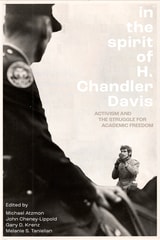
In the Spirit of H. Chandler Davis
Activism and the Struggle for Academic FreedomEdited by Michael Atzmon, John Cheney-Lippold , Gary D. Krenz, and Melanie S. Tanielian
Disobedience Press, 2026
The essays collected in this book honor H. Chandler Davis (1926-2022), a University of Michigan faculty member who became a symbol of principled dissent when suspended and fired in 1954 for refusing to testify about his political affiliations to the House Un-American Activities Committee. Invoking academic freedom and First Amendment protection, Davis was convicted of contempt of Congress. He served six months in prison before moving to Canada, where he established himself as a brilliant mathematician, prolific writer, and ardent and much beloved advocate for justice.
At a time when a new McCarthyism has come roaring back to threaten free inquiry everywhere, the 12 contributors to this book argue against censorship, the suppression of protest, the policed and surveilled campus, the self-silencing of "institutional neutrality," and other enemies of academic freedom. Also included in this volume is posthumously published work by Davis and by his late wife, the historian Natalie Zemon Davis, which reflects on the importance of facing, and not accepting, authoritarian threats.
Inspired by Chandler Davis’ courage, integrity, and devotion to the struggle against oppression, injustice, and the persecution of speech, these essays offer crucial insights into the importance of defending intellectual independence, institutional autonomy, and the right to free expression.
Contributors: Michael Bérubé, Juan Cole, H. Chandler Davis, Stefan Hanß, Marjorie Heins, Dima Khalidi, Gene Nichol, Henry Reichman, Ellen Schrecker, Joan Scott, Catharine R. Stimpson, Alan Wald, Silke-Maria Weineck, and Natalie Zemon Davis.
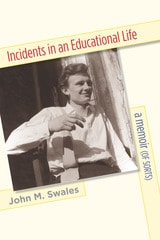
Incidents in an Educational Life
A Memoir (of Sorts)John M. Swales
University of Michigan Press, 2009
Indian Enough
EssaysPaul Chaat Smith
University of Minnesota Press, 2027
An acerbic, candid reckoning with Indigenous identity, visibility, and the messy realities of cultural change
In Indian Enough, curator and critic Paul Chaat Smith probes the paradox of contemporary Indigeneity: enormous, hard-won cultural visibility in museum exhibits, land acknowledgments, mascot removals, and more alongside persistent erasure in everyday life. Rejecting the easy comforts of identity politics (he was, he admits, a fan of the Land O’Lakes Butter Maiden), Smith brings “honest confusion” to his inquiry, using sharp wit and wry humor to confront the gap between symbolism and lived reality.
Both memoir and cultural critique, Indian Enough follows Smith from a suburban childhood in Washington, D.C., filled with Kurt Vonnegut and Vine Deloria Jr., through teenage years steeped in Native politics leading to a thrilling and eventually disillusioning stint with the American Indian Movement, to his pivotal role in creating the inaugural exhibitions at the National Museum of the American Indian. His insider account of NMAI exposes how well-meaning efforts to redress Native erasure can simply swap one set of stereotypes for another, and his candor shows how institutions and activists—himself included—all grapple with the tension between good intentions and political realities.
Irreverent and searching, Indian Enough tackles culture writ large—the rise of punk and the fall of AIM, pop culture as a battleground, Indigenous slaveowners and other histories we’d rather forget, MAGA Indians, and what it means to win when the ground keeps shifting. Together these essays reveal a truth that’s hard to reconcile in an era of “progress”: representation is everywhere, certainty is not.
Retail e-book files for this title are screen-reader friendly with images accompanied by short alt text and/or extended descriptions.
Indiana Out Loud
Dan Carpenter on the Heartland BeatDan Carpenter
Indiana Historical Society Press, 2013

Indiana's 200
The People Who Shaped the Hoosier StateLinda C. Gugin
Indiana Historical Society Press, 2015
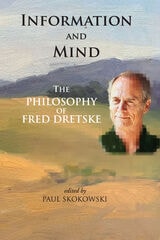
Information and Mind
The Philosophy of Fred DretskeEdited by Paul G. Skokowski
CSLI, 2020
Information, Incentives, and Economics Mechanisms
Essays in Honor of Leonid HurwiczTheodore Groves
University of Minnesota Press, 1987

Inspiring Writing in Art and Design
Taking a Line for a WritePat Francis
Intellect Books, 2009
When art and design students are asked for statements to accompany their work, reflective journals, or critiques, reviews and essays, they often freeze up because they have to put their thoughts in writing. Although these students are comfortable expressing themselves visually, they lack confidence working with words. Inspiring Writing in Art and Design is a practical aid for those students who are disheartened or overwhelmed by having to write. Pat Francis provides short writing exercises and creative writing techniques for tutors to use and which will help art and design students develop their ability to verbally articulate the concepts and aesthetics behind their art. Using Francis’s examples, students will build confidence and skills that can help them succeed in presenting their work and themselves in, and beyond, the studio world.
Integrity in Public Life
Vernon White, Claire Foster-Gilbert, and Jane Sinclair
Haus Publishing, 2019
Intelligibility of Nature
A William A. Wallace ReaderWilliam A. Wallace
Catholic University of America Press, 2022
Interested Readers
Essays on the Hebrew Bible in Honor of David J.A. ClinesJames K. Aitken
SBL Press, 2013
Interpreting Law and Literature
A Hermeneutic ReaderSanford Levinson and Steven Mailloux
Northwestern University Press, 1988
"Contemporary theory has usefully analyzed how alternative modes of interpretation produce different meanings, how reading itself is constituted by the variable perspectives of readers, and how these perspectives are in turn defined by prejudices, ideologies, interests, and so forth. Some theorists gave argued persuasively that textual meaning, in literature and in literary interpretation, is structured by repression and forgetting, by what the literary or critical text does not say as much as by what it does. All these claims are directly relevant to legal hermeneutics, and thus it is no surprise that legal theorists have recently been turning to literary theory for potential insight into the interpretation of law. This collection of essays is designed to represent the especially rich interactive that has taken place between legal and literary hermeneutics during the past ten years."

Intersections
Fantasy and Science FictionEdited by George E. Slusser and Eric S. Rabkin
Southern Illinois University Press, 1987
These 17 essays from the seventh annual J. Lloyd Eaton Conference examine the relationship between fantasy and science fiction.
They propose that fantasy and science fiction are not isolated commercial literary forms, but instead are literary forms worthy of the recognition reserved for traditional literature. Discussion of genre identification ranges from the standard forms of literary criticism embodied in Aristotle’s mimesis and poesis to innovative and possibly controversial points of view such as a theory of humor, a philosophy of time, and a detailed analysis of Dr. Seuss’s Cat in the Hat.
The essays provide not only a detailed study of literary elements but also the historical treatment of the material, its commercial use, and its relationship to similar literary forms such as the gothic tale and horror fiction. While few of the essayists agree with one another, they all contribute creative insights to the debate.
Into the Night
Rick Adams
University Press of Colorado, 2013
Contributors tell of confronting North American bears, cougars, and rattlesnakes; suffering red ctenid spider bites in the tropical rain forest; swimming through layers of feeding-frenzied hammerhead sharks in the Galapagos; evading the wrath of African bull elephants in South Africa; and delighting in the curious and gentle nature of foxes and unconditional acceptance by a family of owls. They describe “fire in the sky” across a treeless tundra, a sea ablaze with bioluminescent algae, nighttime earthquakes on the Pacific Rim, and hurricanes and erupting volcanoes on a Caribbean island.
Into the Night reveals rare and unexpected insights into nocturnal field research, illuminating experiences, discoveries, and challenges faced by intrepid biologists studying nature’s nightly marvels across the globe. This volume will be of interest to scientists and general readers alike.
Invisible People
Stories of Lives at the MarginsAlex Tizon
Temple University Press, 2021
“Somewhere in the tangle of the subject’s burden and the subject’s desire is your story.”—Alex Tizon
Every human being has an epic story. The late Pulitzer Prize–winning writer Alex Tizon told the epic stories of marginalized people—from lonely immigrants struggling to forge a new American identity to a high school custodian who penned a New Yorker short story. Edited by Tizon’s friend and former colleague Sam Howe Verhovek, Invisible People collects the best of Tizon’s rich, empathetic accounts—including “My Family’s Slave,” the Atlantic magazine cover story about the woman who raised him and his siblings under conditions that amounted to indentured servitude.
Mining his Filipino American background, Tizon tells the stories of immigrants from Cambodia and Laos. He gives a fascinating account of the Beltway sniper and insightful profiles of Surfers for Jesus and a man who tracks UFOs. His articles—many originally published in the Seattle Times and the Los Angeles Times—are brimming with enlightening details about people who existed outside the mainstream’s field of vision.
In their introductions to Tizon’s pieces, New York Times executive editor Dean Baquet, Atlantic magazine editor in chief Jeffrey Goldberg, Pulitzer Prize winners Kim Murphy and Jacqui Banaszynski, and others salute Tizon’s respect for his subjects and the beauty and brilliance of his writing. Invisible People is a loving tribute to a journalist whose search for his own identity prompted him to chronicle the lives of others.

Iowa Railroads
The Essays of Frank P. Donovan, Jr.H. Roger Grant
University of Iowa Press, 2000
What began as a study of the Minneapolis & St. Louis Railway stretched into more than a dozen contributions on Hawkeye state railroad topics. By 1969 Donovan had examined Iowa's “Little Three”: Chicago Great Western, Illinois Central, and Minneapolis & St. Paul as well as the state's “Big Four”: Chicago & North Western; Chicago, Burlington & Quincy; Chicago, Milwaukee, St. Paul & Pacific; and Chicago, Rock Island & Pacific. In addition to these seven core carriers, Donovan covered the state's less prominent railroads: Atchison, Topeka & Santa Fe; Great Northern; and Union Pacific and Wabash. Moreover, he contributed an issue on Iowa's principal interurbans, most of which survived into the 1950s as electric-powered freight-only short lines. In uniting Donovan's articles into a single volume, Iowa Railroads provides the most complete history of Iowa's rail heritage.

Is There God after Prince?
Dispatches from an Age of Last ThingsPeter Coviello
University of Chicago Press, 2023
This is a book about loving things—books, songs, people—in the shadow of a felt, looming disaster. Through lyrical, funny, heart-wrenching essays, Peter Coviello considers pieces of culture across a fantastic range, setting them inside the vivid scenes of friendship, dispute, romance, talk, and loss, where they enter our lives. Alongside him, we reencounter movies like The Shining, shows like The Sopranos; videos; poems; novels by Sam Lipsyte, Sally Rooney, and Paula Fox; as well as songs by Joni Mitchell, Gladys Knight, Steely Dan, Pavement, and the much-mourned saint of Minneapolis, Prince.
Navigating an overwhelming feeling that Coviello calls “endstrickenness,” he asks what it means to love things in calamitous times, when so much seems to be shambling toward collapse. Balancing comedy and anger, exhilaration and sorrow, Coviello illuminates the strange ways the things we cherish help us to hold on to life and to its turbulent joys. Is There God after Prince? shows us what twenty-first-century criticism can be, and how it might speak to us, in a time of ruin, in an age of “Last Things.”
Isherwood on Writing
The Complete Lectures in CaliforniaChristopher Isherwood
University of Minnesota Press, 2022
Isherwood’s lectures on writing and writers, now all available for the first time
In the 1960s, Christopher Isherwood gave an unprecedented series of lectures at California universities about his life and work. During this time Isherwood, who would liberate the memoir and become the founding father of modern gay writing, spoke openly for the first time about his craft—on writing for film, theater, and novels—and spirituality. Isherwood on Writing brings these free-flowing, wide-ranging public addresses together to reveal a distinctly American Isherwood at the top of his form.
This updated edition contains the long-lost conclusion to the second lecture, published here for the first time, including its discussion of A Single Man, his greatest novel, and A Meeting by the River, his final novel.

iatrogenesis
Essays on Becoming a PhysicianMichigan Publishing Services, 2018
In Greek, iatro- means doctor, and -genesis means origin: Iatrogenesis thus describes any effect, good or bad, brought forth by a physician’s actions. This essay compendium looks beyond a physician’s impact on patients, instead turning inward to examine the impact of medical training on student doctors. These essays written by University of Michigan medical students span from the donning of the White Coat to graduation. Along the way, each writer weaves a story, the threads of which unite in a tapestry highlighting the universality of this coming-of-age journey. These essays breathe life into each stage of medical apprenticeship, displaying the full spectrum of human emotion as medical students find ways to reinvent themselves as the physicians of tomorrow.