Results by title
732 books match the query 'Indigenous' and 45 start with i
I Have Spoken
American History Through The Voices Of The IndiansVirginia I. Armstrong
Ohio University Press, 1971
I Have Spoken is a collection of American Indian oratory from the 17th to the 20th century, concentrating on speeches focusing around Indian-white relationships, especially treaty-making negotiations. A few letters and other writings are also included.
Here, in their own words, is the Indian’s story told with integrity, with drama, with caustic wit, with statesmanship, with poetic impact; a story of proffered friendship, of broken promises, of hope, of disillusionment, of pride, of a whole land and life gone sour.
Iep Jaltok
Poems from a Marshallese DaughterKathy Jetnil-Kijiner
University of Arizona Press, 2017
As the seas rise, the fight intensifies to save the Pacific Ocean’s Marshall Islands from being devoured by the waters around them. At the same time, activists are raising their poetic voices against decades of colonialism, environmental destruction, and social injustice.
Marshallese poet and activist Kathy Jetnil-Kijiner’s writing highlights the traumas of colonialism, racism, forced migration, the legacy of American nuclear testing, and the impending threats of climate change. Bearing witness at the front lines of various activist movements inspires her work and has propelled her poetry onto international stages, where she has performed in front of audiences ranging from elementary school students to more than a hundred world leaders at the United Nations Climate Summit.
The poet connects us to Marshallese daily life and tradition, likening her poetry to a basket and its essential materials. Her cultural roots and her family provides the thick fiber, the structure of the basket. Her diasporic upbringing is the material which wraps around the fiber, an essential layer to the structure of her experiences. And her passion for justice and change, the passion which brings her to the front lines of activist movements—is the stitching that binds these two experiences together.
Iep Jāltok will make history as the first published book of poetry written by a Marshallese author, and it ushers in an important new voice for justice.

Imposing Order without Law
American Expansion to the Eastern Sierra, 1850–1865Michael J. Makley
University of Nevada Press, 2022
In the 1850s, early Euro-American settlers established two remote outposts on the slopes of the eastern Sierra Nevada, both important way stations on the central emigrant trail. The Carson Valley settlement was located on the western edge of the Utah Territory, while the Honey Lake Valley hamlet, 120 miles north, fell within California’s boundaries but was separated from the rest of the state by the formidable mountain range. Although these were some of the first white communities established in the region, both areas had long been inhabited by Indigenous Americans. Carson Valley had been part of Washoe Indian territory, and Honey Lake Valley was a section of Northern Paiute land.
Michael Makley explores the complexities of this turbulent era, when the pioneers’ actions set the stage for both valleys to become part of national incorporation. With deft writing and meticulously researched portrayals of the individuals involved, including the Washoe and Northern Paiute peoples, Imposing Order Without Law focuses on the haphazard evolution of “frontier justice” in these remote outposts. White settlers often brought with them their own ideas of civil order. Makley’s work contextualizes the extralegal acts undertaken by the settlers to enforce edicts in their attempt to establish American communities.
Makley’s book reveals the use and impact of group violence, both within the settlements and within the Indigenous peoples’ world, where it transformed their lives.
Imprints
The Pokagon Band of Potawatomi Indians and the City of ChicagoJohn N. Low
Michigan State University Press, 2016
Imprints: The Pokagon Band of Potawatomi Indians and the City of Chicago examines the ways some Pokagon Potawatomi tribal members have maintained a distinct Native identity, their rejection of assimilation into the mainstream, and their desire for inclusion in the larger contemporary society without forfeiting their “Indianness.” Mindful that contact is never a one-way street, Low also examines the ways in which experiences in Chicago have influenced the Pokagon Potawatomi. Imprints continues the recent scholarship on the urban Indian experience before as well as after World War II.
In Order to Live Untroubled
Inuit of the Central Artic 1550 to 1940Renee Fossett
University of Manitoba Press, 2001
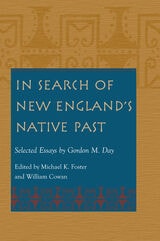
In Search of New England's Native Past
Selected Essays by Gordon M. DayGordon M. Day
University of Massachusetts Press, 1998
This volume highlights the work of the late Gordon M. Day, renowned for his groundbreaking research on the history and culture of the Western Abenakis and their Indian neighbors. Where previous historians had tended to portray northern New England as an area largely devoid of aboriginal peoples, Day established beyond all doubt the presence of Abenaki settlements along the eastern shore of Lake Champlain as well as the upper reaches of the Connecticut and Merrimack rivers.
For nearly three decades, Day focused his work on the community of Saint Francis, or Odanak, in Quebec, to which Abenaki refugees from interior New England had fled, beginning in the mid-seventeenth century and continuing into the nineteenth. Drawing on the methods of several disciplines, including ethnology, linguistics, and ethnohistory, he synthesized data from fragmentary historical records, oral traditions, and place names to reconstruct a world assumed to be lost.
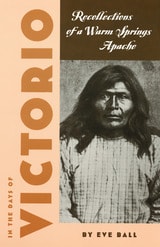
In the Days of Victorio
Recollections of a Warm Springs ApacheEve Ball; Narrated by James Kaywaykla
University of Arizona Press, 1970
"This volume contains a great deal of interesting information."—Journal of the West
"The Apache point of view [is] presented with great clarity."—Books of the Southwest
"A valuable addition to the southwestern frontier shelf and long will be drawn upon and used."—Journal of Arizona History
"A genuine contribution to the story of the Apache wars, and a very readable book as well."—Westerners Brand Book
"Shining through every page is the unquenchable spirit that was the Apache. Inured, indeed trained, to suffering, Apaches stood strong beside Victorio, Nana, and finally Geronimo in a vain attempt to maintain those things they held more dear than life itself—freedom, homeland, dignity as human beings. A warm and vital people, the Apaches had, and have, a great deal to offer."—Arizona and the West
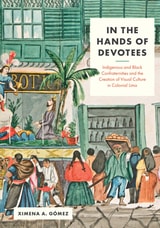
In the Hands of Devotees
Indigenous and Black Confraternities and the Creation of Visual Culture in Colonial LimaXimena A. Gómez
University of Texas Press, 2025
An exploration of how Indigenous and Black communities shaped religious imagery and navigated life in colonial Lima.
Colonial Lima was steeped in Christian devotional imagery. While Spaniards set the norms for these works, it was the city’s Black and Indigenous majority that engaged with them most. As members of lay societies of worshippers called confraternities, subalterns were Lima’s key promoters of religious art, surpassing the colonial hierarchy.
Ximena Gómez argues that, by commissioning and exhibiting sacred images—in chapels and urban processions, adorned with clothing and accessories—Indigenous and Black confraternities created Lima’s visual culture. In one case study, the Indigenous confraternity of the Virgin of Copacabana "invisibly" transforms a sculpture into an object that reflected its multiethnic Andean caretakers. Another case study, that of the confraternity of the Virgin of the Antigua, finds Black worshippers initially united in their interpretation of a Spanish image and later fracturing when some of its members applied a West African interpretive lens. Taking advantage of Lima’s rich documentary record, In the Hands of Devotees centers the ritual practices of Black and Indigenous people and opens possibilities for incorporating subalterns into the history of Lima’s art when limited extant visual evidence has survived.
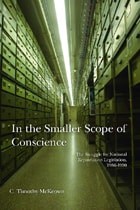
In the Smaller Scope of Conscience
The Struggle for National Repatriation Legislation, 1986–1990C. Timothy McKeown
University of Arizona Press, 2014
In 1989, The National Museum of the American Indian Act (NMAIA) was successfully passed after a long and intense struggle. One year later, the Native American Graves Protection and Repatriation Act (NAGPRA) followed. These federal repatriation statutes—arguably some of the most important laws in the history of anthropology, museology, and American Indian rights—enabled Native Americans to reclaim human remains, funerary objects, sacred objects, and objects of cultural patrimony.
Twenty years later, the controversy instigated by the creation of NMAIA and NAGPRA continues to simmer. In the Smaller Scope of Conscience is a thoughtful and detailed study of the ins and outs of the four-year process behind these laws. It is a singular contribution to the history of these issues, with the potential to help mediate the ongoing debate by encouraging all sides to retrace the steps of the legislators responsible for the acts.
Few works are as detailed as McKeown’s account, which looks into bills that came prior to NMAIA and NAGPRA and combs the legislative history for relevant reports and correspondence. Testimonies, documents, and interviews from the primary players of this legislative process are cited to offer insights into the drafting and political processes that shaped NMAIA and NAGPRA.
Above all else, this landmark work distinguishes itself from earlier legislative histories with the quality of its analysis. Invested and yet evenhanded in his narrative, McKeown ensures that this journey through history—through the strategies and struggles of different actors to effect change through federal legislation—is not only accurate but eminently intriguing.
Incense and Performance
The Lives of Mexica Ritual SpecialistsSánchez-Perry, Josefrayn
University of Arizona Press, 2026
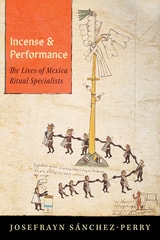
At the time of the conquest of Mexico, the anonymous authors of the Anales de Tlatelolco (1560s) recorded the deaths of two Mexica ritual specialists. During the tumultuous events of the times, Quauhnochtli (a telpochcalli specialist) and Quauhcoatl (a calmecac specialist) died protecting the temple of Huitzilopochtli and his bundled embodiement in the neighborhood of Huitznahuac.
Scholar Josefrayn Sánchez-Perry reconstructs the lives and labors of the two specialists, articulated through Nahuatl-language texts, material culture from neighborhood and temple spaces, and the academic study of religion. The book expands on known theories on Mexica ritual specialists by providing new insights about telpochcalli and calmecac duties, their interrelated educational models, and the collective practices that brought people, animals, flora, specialists, and teteo (more-than-human forces) together. The book demonstrates that telpochcalli and calmecac specialists shared the ritual responsibilities of collective and elective practices.
Giving care to teteo, giving life, and giving offerings were balanced with giving war, giving council, and giving music and dance. As Quauhnochtli and Quauhcoatl ensured the safety of the bundled Huitzilopochtli, they characterized how a Mexica ritual specialist lived and what they did.
Indian Culture and European Trade Goods
The Archeology of the Historic Period in the Western Great Lakes RegionGeorge Irving Quimby
University of Wisconsin Press, 1970
Indian Giving
Economies of Power in Indian-White ExchangesDavid Murray
University of Massachusetts Press, 2000
Indian Life on the Northwest Coast of North America as seen by the Early Explorers and Fur Traders during the Last Decades of the Eighteenth Century
Erna Gunther
University of Chicago Press, 1972
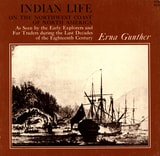
Drawing on a wide range of evidence, this volume is a carefully researched investigation into the ethnohistory of the Pacific Northwest during the period of European exploration of the region. The book supplements the archeological evidence from the area with a detailed investigation of the journals, diaries, and sketchbooks of Russian, Spanish, and English explorers and traders who reached the region, as well as artifacts that those explorers and traders obtained on their expeditions and that are now held in museums worldwide. In doing so, Gunther's research extends anthropological study of the region a century earlier, and sheds light on the understudied tribal cultures of the Haida and the Tlingit. The volume contains splendid reproductions of contemporary drawings, and appendices mapping the museum locations of artifacts and describing the processes of native technology.
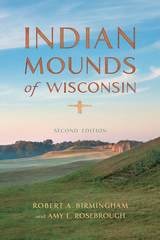
Indian Mounds of Wisconsin
Robert A. Birmingham and Amy L. Rosebrough
University of Wisconsin Press, 2017
Citing evidence from past excavations, ethnography, the traditions of present-day Native Americans in the Midwest, ground-penetrating radar and LIDAR imaging, and recent findings of other archaeologists, Robert A. Birmingham and Amy L. Rosebrough argue that effigy mound groups are cosmological maps that model belief systems and relations with the spirit world. The authors advocate for their preservation and emphasize that Native peoples consider the mounds sacred places.
This edition also includes an expanded list of public parks and preserves where mounds can be respectfully viewed, such as the Kingsley Bend mounds near Wisconsin Dells, an outstanding effigy group maintained by the Ho-Chunk Nation, and the Man Mound Park near Baraboo, the only extant human-shaped effigy mound in the world.
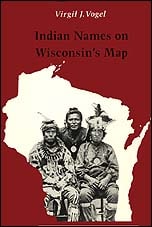
Indian Names on Wisconsin's Map
Virgil J. Vogel
University of Wisconsin Press, 1992
Place names are cultural artifacts that tell us as much about how people lived as do relics dug from the ground, writes Virgil Vogel, one of America's foremost authorities on place names. They are historical records from which the location and migration of people, plants, and animals can be charted. Onalaska and Aztalan, not surprisingly, are place names transplanted to Wisconsin from the far north and south. Some names tell of topographic features that have long since disappeared or are little noticed today. Beaver Dam once had an Indian name meaning just that; Sheboygan, "big pipe" in Ojibwa, described the shape of a river bend. Other names are vestiges of ancient languages nowhere else recorded. Some commemorate historic events: Winneconne is believed by many to mean "place of the skulls."
The Indian names of Wisconsin's towns, rivers, and lakes reveal the minds of the Indian peoples, their cosmic views, their values, their relation to their environment , and their ways of life and convey as well something of the history of their white invaders.
Virgil Vogel's thirty years of research into Native American influence on geographical names has resulted in an absorbing account that illuminates the history and culture of Wisconsin Indians. Vogel tells his story thematically—names from the spirit world, names of trails and portages, French-Indian personal names, tribal names, and so on—to show that place names are part of a larger cultural and natural world. In recovering the history and meaning of these names, he has restored an important and colorful part of America's heritage.
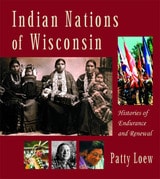
Indian Nations of Wisconsin
Histories of Endurance and RenewalPatty Loew
Wisconsin Historical Society Press, 2001
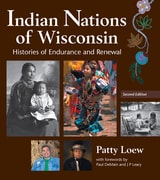
Indian Nations of Wisconsin
Histories of Endurance and Renewal, 2 EditionPatty Loew
Wisconsin Historical Society Press, 2013
From origin stories to contemporary struggles over treaty rights and sovereignty issues, Indian Nations of Wisconsin explores Wisconsin's rich Native tradition. This unique volume—based on the historical perspectives of the state’s Native peoples—includes compact tribal histories of the Ojibwe, Potawatomi, Oneida, Menominee, Mohican, Ho-Chunk, and Brothertown Indians. Author Patty Loew focuses on oral tradition—stories, songs, the recorded words of Indian treaty negotiators, and interviews—along with other untapped Native sources, such as tribal newspapers, to present a distinctly different view of history. Lavishly illustrated with maps and photographs, Indian Nations of Wisconsin is indispensable to anyone interested in the region's history and its Native peoples.
The first edition of Indian Nations of Wisconsin: Histories of Endurance and Renewal, won the Wisconsin Library Association's 2002 Outstanding Book Award.
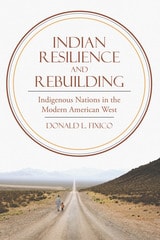
Indian Resilience and Rebuilding
Indigenous Nations in the Modern American WestDonald L. Fixico
University of Arizona Press, 2013
Fixico identifies the tools to this empowerment such as education, navigation within cultural systems, modern Indian leadership, and indigenized political economy. He explains how these tools helped Indian communities to rebuild their nations. Fixico constructs an Indigenous paradigm of Native ethos and reality that drives Indian modern political economies heading into the twenty-first century.
This illuminating and comprehensive analysis of Native nation’s resilience in the twentieth century demonstrates how Native Americans reinvented themselves, rebuilt their nations, and ultimately became major forces in the United States. Indian Resilience and Rebuilding, redefines how modern American history can and should be told.
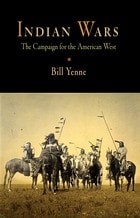
Indian Wars
The Campaign for the American WestBill Yenne
Westholme Publishing, 2006
A Chronicle of the Longest Military Action in American History
"Splendid. . . .a book that has the rare quality of being both an excellent reference work and a pleasure to read."—Wall Street Journal
"As complete and balanced an overview of nearly a century of fighting between the U.S. Army and dozens of Indian nations as there is." —Martin Naparsteck, Salt Lake Tribune
"Excellent. . . . Indian Wars is an outstanding introduction to the 'longest campaign ever waged by any of the United States armed forces.' It also has the virtue of speaking eloquently to the past while offering valuable guidance for the future."—Military.com
The Indian wars remain the most misunderstood campaign ever waged by the U. S. Army. From the first sustained skirmishes west of the Mississippi River in the 1850s to the sweeping clashes of hundreds of soldiers and warriors along the upper plains decades later, these wars consumed most of the active duty resources of the army for the greater part of the nineteenth century and resulted in the disruption of nearly all of the native cultures in the West. Yet the popular understanding of the Indian wars is marred by stereotypes and misinformation as well as a tendency to view these individual wars—the battles against the Sioux, the Cheyenne, the Nez Perce, the Apache, and other groups—as distinct incidents rather than parts of a single overarching campaign. Dispelling notions that American Indians were simply attempting to stop encroachment on their homelands or that they shared common views on how to approach the Europeans, Bill Yenne explains in Indian Wars: The Campaign for the American West, that these wars, fought for more than five decades across a landscape the size of continental Europe, were part of a general long-term strategy by the U. S. Army to control the West as well as extensions of conflicts among native peoples that predated European contact.
Complete with a general history of Indian and European relations from the earliest encounters to the opening of the west, and featuring legendary figures from both sides, including Crazy Horse, Chief Joseph, Sitting Bull, Geronimo, George Custer, Kit Carson, and George Crook, Indian Wars allows the reader to better understand the sequence of events that transformed the West and helped define the American temperament.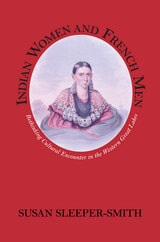
Indian Women and French Men
Rethinking Cultural Encounter in the Western Great LakesSusan Sleeper-Smith
University of Massachusetts Press, 2001
A center of the lucrative fur trade throughout the colonial period, the Great Lakes region was an important site of cultural as well as economic exchange between native and European peoples. In this well-researched study, Susan Sleeper-Smith focuses on an often overlooked aspect of these interactions—the role played by Indian women who married French traders. Drawing on a broad range of primary and secondary sources, she shows how these women used a variety of means to negotiate a middle ground between two disparate cultures. Many were converts to Catholicism who constructed elaborate mixed-blood kinship networks that paralleled those of native society, thus facilitating the integration of Indian and French values. By the mid-eighteenth century, native women had extended these kin linkages to fur trade communities throughout the Great Lakes, not only enhancing access to the region's highly prized pelts but also ensuring safe transport for other goods.
Indian Women and French Men depicts the encounter of Old World and New as an extended process of indigenous adaptation and change rather than one of conflict and inevitable demise. By serving as brokers between those two worlds, Indian women who married French men helped connect the Great Lakes to a larger, expanding transatlantic economy while securing the survival of their own native culture. As such, Sleeper-Smith points out, their experiences illuminate those of other traditional cultures forced to adapt to market-motivated Europeans.
Indians Playing Indian
Multiculturalism and Contemporary Indigenous Art in North AmericaMonika Siebert
University of Alabama Press, 2015
Explores how American Indian artists have responded to the pervasive misunderstanding of indigenous peoples as cultural minorities in the United States and Canada
Contemporary indigenous peoples in North America confront a unique predicament. While they are reclaiming their historic status as sovereign nations, mainstream popular culture continues to depict them as cultural minorities similar to other ethnic Americans. These depictions of indigenous peoples as “Native Americans” complete the broader narrative of America as a refuge to the world’s immigrants and a home to contemporary multicultural democracies, such as the United States and Canada. But they fundamentally misrepresent indigenous peoples, whose American history has been not of immigration but of colonization.
Monika Siebert’s Indians Playing Indian first identifies this phenomenon as multicultural misrecognition, explains its sources in North American colonial history and in the political mandates of multiculturalism, and describes its consequences for contemporary indigenous cultural production. It then explores the responses of indigenous artists who take advantage of the ongoing popular interest in Native American culture and art while offering narratives of the political histories of their nations in order to resist multicultural incorporation.
Each chapter of Indians Playing Indian showcases a different medium of contemporary indigenous art—museum exhibition, cinema, digital fine art, sculpture, multimedia installation, and literary fiction—and explores specific rhetorical strategies artists deploy to forestall multicultural misrecognition and recover political meanings of indigeneity. The sites and artists discussed include the National Museum of the American Indian in Washington, DC; filmmakers at Inuit Isuma Productions; digital artists/photographers Dugan Aguilar, Pamela Shields, and Hulleah Tsinhnahjinnie; sculptor Jimmie Durham; and novelist LeAnne Howe.
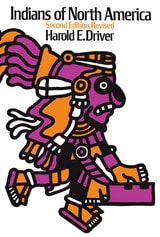
Indians of North America
Harold E. Driver
University of Chicago Press, 1969
For this second edition, Harold Driver made extensive revisions in chapter content and organization, incorporating many new discoveries and interpretations in archeology and related fields. He also revised several of the maps and added more than 100 bibliographical items. Since the publication of the first edition, there has been an increased interest in the activities of Indians in the twentieth century; accordingly, the author placed much more emphasis on this period.
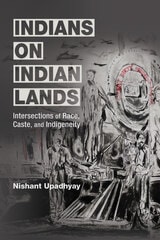
Indians on Indian Lands
Intersections of Race, Caste, and IndigeneityNishant Upadhyay
University of Illinois Press, 2024
Winner of a NWSA/University of Illinois Press First Book Prize
Nishant Upadhyay unravels Indian diasporic complicity in its ongoing colonialist relationship with Indigenous peoples, lands, and nations in Canada. Upadhyay examines the interwoven and simultaneous areas of dominant Indian caste complicity in processes of settler colonialism, antiblackness, capitalism, brahminical supremacy, Hindu nationalism, and heteropatriarchy. Resource extraction in British Columbia in the 1970s–90s and in present-day Alberta offer examples of spaces that illuminate the dispossession of Indigenous peoples and simultaneously reveal racialized, gendered, and casted labor formations. Upadhyay juxtaposes these extraction sites with examples of anticolonial activism and solidarities from Tkaronto. Analyzing silence on settler colonialism and brahminical caste supremacy, Upadhyay upends the idea of dominant caste Indian diasporas as racially victimized and shows that claiming victimhood denies a very real complicity in enforcing other power structures. Exploring stories of quotidian proximity and intimacy between Indigenous and South Asian communities, Upadhyay offers meditations on anticolonial and anti-casteist ways of knowledge production, ethical relationalities, and solidarities.Groundbreaking and ambitious, Indians on Indian Lands presents the case for holding Indian diasporas accountable for acts of violence within a colonial settler nation.
Indians, Fire, and the Land in the Pacific Northwest
Robert Boyd
Oregon State University Press, 1999
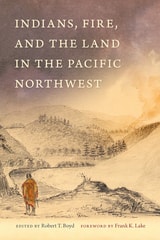
Indians, Fire, and the Land in the Pacific Northwest
Robert Boyd
Oregon State University Press, 2021
Instead of discovering a land blanketed by dense forests, early explorers of the Pacific Northwest encountered a varied landscape including open woods, meadows, and prairies. Far from a pristine wilderness, much of the Northwest was actively managed and shaped by the hands of its Native American inhabitants. Their primary tool was fire.
This volume takes an interdisciplinary approach to one of the most important issues concerning Native Americans and their relationship to the land. Over more than 10,000 years, Native Americans in the Northwest learned the intricacies of their local environments and how to use fire to create desired effects, mostly in the quest for food.
Drawing on historical journals, Native American informants, and ethnobotanical and forestry studies, this book’s contributors describe local patterns of fire use in eight ecoregions, representing all parts of the Native Northwest, from southwest Oregon to British Columbia and from Puget Sound to the Northern Rockies. Their essays provide glimpses into a unique understanding of the environment, one that draws on traditional ecological knowledge. Together, these writings also offer historical perspective on the contemporary debate over “prescribed burning” and management of public lands.
This updated edition includes a foreword by Frank K. Lake and a new epilogue by editor Robert T. Boyd. Contributors include Stephen Arno, Stephen Barrett, Theresa Ferguson, David French, Eugene Hunn, Leslie Johnson, Jeff LaLande, Estella Leopold, Henry Lewis, Helen H. Norton, Reg Pullen, William Robbins, John Ross, Nancy Turner, and Richard White.

Indigeneity and the Mestizo Question
The Limits of Latin American PhilosophyJorge Sanchez-Perez
Amherst College Press, 2027
In The Limits of Latin American Philosophy: Indigeneity and the Mestizo Question, Jorge Sanchez-Perez argues that the distinction between Latin American philosophy and Indigenous philosophy from Latin America has been neglected. While Latin American philosophers have succeeded in carving out a conceptual space in the landscape of Western philosophy, a space in which issues positions relevant to Latin American concerns are discussed and debated, this space has failed to sufficiently acknowledge the differences with Indigenous philosophy from Latin America. Although both fields can point to some, even if contested, geographical shared space, they emerge from different conceptual backgrounds. While Latin American philosophy emerges as a project in relation, even if as a rejection, to Europe, Indigenous philosophy from Latin America predates the existence of Europe by thousands of years. By defining the countours of Latin American philosophy, The Limits of Latin American Philosophy aims to make room for discussions of Indigenous philosophy from Latin America.
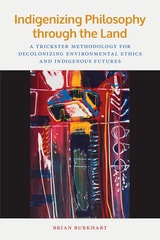
Indigenizing Philosophy through the Land
A Trickster Methodology for Decolonizing Environmental Ethics and Indigenous FuturesBrian Burkhart
Michigan State University Press, 2019
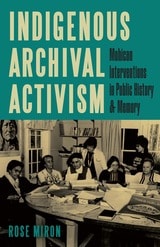
Indigenous Archival Activism
Mohican Interventions in Public History and MemoryRose Miron
University of Minnesota Press, 2024
Who has the right to represent Native history?
The past several decades have seen a massive shift in debates over who owns and has the right to tell Native American history and stories. For centuries, non-Native actors have collected, stolen, sequestered, and gained value from Native stories and documents, human remains, and sacred objects. However, thanks to the work of Native activists, Native history is now increasingly being repatriated back to the control of tribes and communities. Indigenous Archival Activism takes readers into the heart of these debates by tracing one tribe’s fifty-year fight to recover and rewrite their history.
Rose Miron tells the story of the Stockbridge-Munsee Mohican Nation and their Historical Committee, a group of mostly Mohican women who have been collecting and reorganizing historical materials since 1968. She shows how their work is exemplary of how tribal archives can be used strategically to shift how Native history is accessed, represented, written and, most importantly, controlled. Based on a more than decade-long reciprocal relationship with the Stockbridge-Munsee Mohican Nation, Miron’s research and writing is shaped primarily by materials found in the tribal archive and ongoing conversations and input from the Stockbridge-Munsee Historical Committee.
As a non-Mohican, Miron is careful to consider her own positionality and reflects on what it means for non-Native researchers and institutions to build reciprocal relationships with Indigenous nations in the context of academia and public history, offering a model both for tribes undertaking their own reclamation projects and for scholars looking to work with tribes in ethical ways.
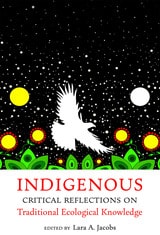
Indigenous Critical Reflections on Traditional Ecological Knowledge
Lara A. Jacobs
Oregon State University Press, 2025
With more than fifty contributors, Indigenous Critical Reflections on Traditional Ecological Knowledge offers important perspectives by Indigenous Peoples on Traditional Ecological Knowledge and Indigenous value systems. The book aims to educate and inspire readers about the importance of decolonizing how Indigenous Knowledges are considered and used outside of Native communities.
By including the work of Indigenous storytellers, poets, and scholars from around the globe, editor Lara Jacobs and chapter authors effectively explore the Indigenous value systems—relationships, reciprocity, and responsibility—that are fundamental to Indigenous Knowledge systems and cultures. Indigenous languages and positionality statements are featured for each of the contributors to frame their cultural and geographical background and to allow each Indigenous voice to lead discussions and contribute critical discourse to the literature on Indigenous Knowledges and value systems. By creating space for each of these individual voices, this volume challenges colonial extraction norms and highlights the importance of decolonial methods in understanding and protecting Indigenous Knowledges.
Indigenous Critical Reflections on Traditional Ecological Knowledge is an essential resource for students, academics, members of Tribal, state, and federal governments, Indigenous communities, and non-Indigenous allies as well as a valuable addition to environmental and Indigenous studies collections.
Contributors include: Melinda M. Adams, Joe Anderson, Coral Avery, Andrew Kalani Carlson, Kathryn Champagne, Brandie Makeba Cross, Joanna M. DeMeyer, Jonathan James Fisk, Pat Gonzales-Rogers, Celina Gray, Rhode Grayson, Zena Greenawald, Jennifer Grenz, Joy Harjo, Mandi Harris, Jessica Hernandez, Victor Hernandez, David Iniguez, Michelle M. Jacob, Lara A. Jacobs, Lydia L. Jennings, Eileen Jimenez, Stephanie Kelley, David G. Lewis, Tomás A. Madrigal, Tara McAllister, Lauren Wendelle Yowelunh McLester-Davis, Angeles Mendoza, Kat Milligan-McClellan, Todd A. Mitchell swəlítub, Don Motanic, ‘Alohi Nakachi, Kaikea Nakachi, Kobe , Natachu, Ululani Kekahiliokalani Brigitte Russo Oana, Jennifer R. O’Neal, Lily Painter, Britt Postoak, Leasi Vanessa Lee Raymond, Anamaq Margaret H. C. Rudolf, Oral Saulters, Sam Schimmel, Paulette Steeves, Joni Tobacco, Angelo Villagomez, Vivi Vold, Margaret Palaghicon Von Rotz, Luhui Whitebear, Joseph Gazing Wolf, Monique Wynecoop, and Cherry YEW Yamane.
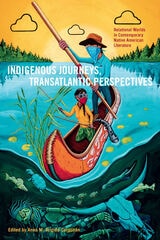
Indigenous Journeys, Transatlantic Perspectives
Relational Worlds in Contemporary Native American LiteratureAnna M Brígido-Corachán
Michigan State University Press, 2023
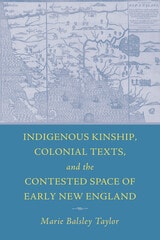
Indigenous Kinship, Colonial Texts, and the Contested Space of Early New England
Marie Balsley Taylor
University of Massachusetts Press, 2023
New England history often treats Indigenous people as minor or secondary actors within the larger colonial story. Focusing on those Native Americans who were sachems, or leaders, in local tribes when Europeans began arriving, Marie Balsley Taylor reframes stories of Indigenous and British interactions and illuminates the vital role that Indigenous kinship and diplomacy played in shaping the textual production of English colonial settlers in New England from the 1630s until King Philip’s War.
Taylor argues that genres like the conversion narrative, the post-sermon question and answer session, and scientific treatise—despite being written in English for European audiences—were jointly created by Indigenous sachems and settlers to facilitate interaction within the contested space of colonial New England. Analyzing the writings of Thomas Shepard, John Eliot, John Winthrop Jr., and Daniel Gookin and the relationships these English Protestants formed with Indigenous leaders like Wequash, Cutshamekin, Cassacinamon, and Waban, this innovative study offers a new approach to early American literature—indicating that Native thought and culture played a profound role in shaping the words and deeds of colonial writers.
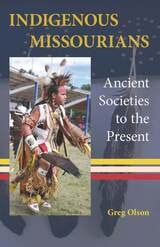
Indigenous Missourians
Ancient Societies to the PresentGreg Olson
University of Missouri Press, 2023
The history of Indigenous people in present-day Missouri is far more nuanced, complex, and vibrant than the often-told tragic stories of conflict with white settlers and forced Indian removal would lead us to believe. In this path-breaking narrative, Greg Olson presents the Show Me State’s Indigenous past as one spanning twelve millennia of Native presence, resilience, and evolution. While previous Missouri histories have tended to include Indigenous people only during periods when they constituted a threat to the state’s white settlement, Olson shows us the continuous presence of Native people that includes the present day.
Beginning thousands of years before the state of Missouri existed, Olson recounts how centuries of inventiveness and adaptability enabled Native people to create innovations in pottery, agriculture, architecture, weaponry, and intertribal diplomacy. Olson also shows how the resilience of Indigenous people like the Osages allowed them to thrive as fur traders, even as settler colonialists waged an all-out policy of cultural genocide against them.
Though the state of Missouri claimed to have forced Indigenous people from its borders after the 1830s, Olson uses U.S. Census records and government rolls from the allotment period to show that thousands remained. In the end, he argues that, with a current population of 27,000 Indigenous people, Missouri remains very much a part of Indian Country, and that Indigenous history is Missouri history.

Indigenous Narratives of Territory and Creation
Hemispheric PerspectivesPenelope Kelsey and Leila Gómez, special issue editors
Duke University Press, 2020
Contributors. Amber Meadow Adams, Alexandre Belmonte, Enrique Manuel Bernales Albites, Andrew Cowell, Ella Deloria, Leila Gómez, Sarah Hernandez, Penelope Kelsey, José Antonio Mazzotti, Javier Muñoz-Díaz, Craig Perez, Cheryl Savageau, Ángel Tuninetti, Christopher T. Vecsey
Indigenous Poetics
Inés Hernández-Ávila
Michigan State University Press, 2025
Indigenous Political Ecology
Clint Carroll
University of Minnesota Press, 2027
Advancing Indigenous and allied voices to address urgent environmental questions at the crossroads of Indigenous and settler state sovereignty
Authored by a group of majority Indigenous scholars from across Canada and the United States, this collection enacts a radical intervention into colonial impulses in traditional political ecology scholarship and its examination of state power in environmental conflicts. Centering the human–nature relationality of Indigenous cosmologies, this book confronts the terms by which land and water degradation, climate change, and other disastrous effects of extractive capitalism are understood.
Drawing on family histories, storytelling, autoethnography, and community-grounded research, Indigenous Political Ecology showcases a deeply self-reflexive examination of intergenerational struggles over land rights and attempts to resist settler colonial dynamics, including struggles over knowledge itself. Contributors recount the fraught history of Bears Ears National Monument, decades of Seminole-led efforts to restore the Everglades ecosystem, the creation of land education programs advancing Cherokee sovereignty, the impact of mining development on Mushkegowuk homelands in the Ring of Fire, and many other ongoing stories in which the “ecological” and “political” are being redefined.
Through its collectively led efforts and transdisciplinary approach, Indigenous Political Ecology models a new type of environmental scholarship that considers its modes of production integral to its contributors’ broader ethical and political commitments. Rooted in Indigenous sovereignty and self-determination, this groundbreaking volume sets forth a powerful blueprint for a more just and sustainable path through the field of political ecology.
Contributors: Nicholas A. Brown, Jessica R. Catellino, Andrew Curley, Michelle Daigle, Jean Dennison, Ashley Nichole Lewis, Beth Rose Middleton Manning, Teresa Montoya, Dana E. Powell, Kyle Powys Whyte, Jen Rose Smith, Lisa Wilson.
Retail e-book files for this title are screen-reader friendly with images accompanied by short alt text and/or extended descriptions.
Indigenous Science and Technology
Nahuas and the World Around ThemKelly S. McDonough
University of Arizona Press, 2024
Winner 2025 Bryce Wood Book Award
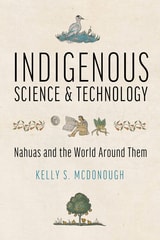
This is a book about how Nahuas—native speakers of Nahuatl, the common language of the Aztec Empire and of more than 2.5 million Indigenous people today—have explored, understood, and explained the world around them in pre-invasion, colonial, and contemporary time periods. It is a deep dive into Nahua theoretical and practical inquiry related to the environment, as well as the dynamic networks in which Nahuas create, build upon, and share knowledges, practices, tools, and objects to meet social, political, and economic needs.
In this work, author Kelly S. McDonough addresses Nahua understanding of plants and animals, medicine and ways of healing, water and water control, alphabetic writing, and cartography. Interludes between the chapters offer short biographical sketches and interviews with contemporary Nahua scientists, artists, historians, and writers, accompanied by their photos. The book also includes more than twenty full-color images from sources including the Florentine Codex, a sixteenth-century collaboration between Indigenous and Spanish scholars considered the most comprehensive extant source on the pre-Hispanic and early colonial Aztec (Mexica) world.
In Mexico today, the terms “Indigenous” and “science and technology” are rarely paired together. When they are, the latter tend to be framed as unrecoverable or irreparably damaged pre-Hispanic traditions, relics confined to a static past. In Indigenous Science and Technology, McDonough works against such erroneous and racialized discourses with a focus on Nahua environmental engagements and relationalities, systems of communication, and cultural preservation and revitalization. Attention to these overlooked or obscured knowledges provides a better understanding of Nahua culture, past and present, as well as the entangled local and global histories in which they were—and are—vital actors.
Indigenous Visual Cultures in Latin America
Seeing, Being, and MeaningEdited by Tamara L. Bray and Carolyn Dean
University of Texas Press, 2026
Reframing the study of Indigenous visual cultures, this volume explores how images and objects generate affect and relation in non-Western contexts, foregrounding alternative modes of material engagement and meaning-making.
While traditional approaches to Indigenous visual cultures have often centered on iconography and representation, this volume turns toward other ways that images and objects act in the world. Indigenous Visual Cultures in Latin America explores how material productions function not merely as signs that point elsewhere but as agents that help shape relationships, environments, and affective experience.
Spanning Mesoamerica, the Andes, and Amazonia from 1500 BCE to the present, the chapters examine how meaning may reside in materials themselves; how making is a form of exchange between maker and matter; and how visual forms participate in configuring relations among humans, ancestors, deities, and place. These works are not passive containers of meaning, but charged presences—generative forces within ongoing worlds. Attuned to Indigenous ways of knowing and being, the volume invites readers to think beyond the frame, beyond the image, and beyond representation itself.
Indigenous and Popular Thinking in América
Rodolfo Kusch
Duke University Press, 2010
Indigenous and Popular Thinking in América is a record of Kusch's attempt to immerse himself in the indigenous ways of knowing and being. At first glance, his methodology resembles ethnography. He speaks with and observes indigenous people and mestizos in Peru, Bolivia, and Argentina. He questions them about their agricultural practices and economic decisions; he observes rituals; he asks women in the market the meaning of indigenous talismans; he interviews shamans; he describes the spatial arrangement and the contents of shrines, altars, and temples; and he reproduces diagrams of archaeological sites, which he then interprets at length. Yet he does not present a "them" to a putative "us." Instead, he offers an inroad to a way of thinking and being that does not follow the logic or fit into the categories of Western social science and philosophy. In his introduction, Walter D. Mignolo discusses Kusch's work and its relation to that of other twentieth-century intellectuals, Argentine history, and contemporary scholarship on the subaltern and decoloniality.
Inheriting the Past
The Making of Arthur C. Parker and Indigenous ArchaeologyChip Colwell-Chanthaphonh
University of Arizona Press, 2009
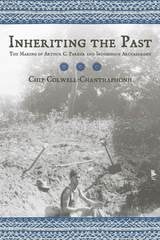
In Inheriting the Past, Chip Colwell-Chanthaphonh examines Parker’s winding career path and asks why it has taken generations for Native peoples to follow in his footsteps. Closely tracing Parker’s life through extensive archival research, Colwell-Chanthaphonh explores how Parker crafted a professional identity and negotiated dilemmas arising from questions of privilege, ownership, authorship, and public participation. How Parker, as well as the discipline more broadly, chose to address the conflict between Native American rights and the pursuit of scientific discovery ultimately helped form archaeology’s moral community.
Parker’s rise in archaeology just as the field was taking shape demonstrates that Native Americans could have found a place in the scholarly pursuit of the past years ago and altered its trajectory. Instead, it has taken more than a century to articulate the promise of an Indigenous archaeology—an archaeological practice carried out by, for, and with Native peoples. As the current generation of researchers explores new possibilities of inclusiveness, Parker’s struggles and successes serve as a singular reference point to reflect on archaeology’s history and its future.
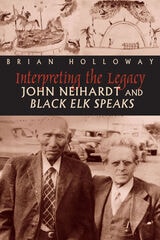
Interpreting the Legacy
John Neihardt and Black Elk SpeaksBrian Holloway
University Press of Colorado, 2020
Using Neihardt's original handwritten notes and early manuscript drafts, Holloway demonstrates the poet's careful and deliberate re-creation of Black Elk's spiritual world in order to induce a transcendent experience in the reader. Through exhaustive research into Neihardt's biographical materials, published philosophical and metaphysical writings, and volumes of taped lectures, Holloway examines the sources of the book's production as well as the reactions to and the implications of his literary portrayal of the spiritual world of the Oglala.
Restoring Neihardt's reputation as a faithful witness to Black Elk's sacred landscape, Interpreting the Legacy: John Neihardt and Black Elk Speaks will be of interest to Neihardt scholars and students of literature, religious studies, and Native American studies.
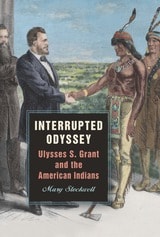
Interrupted Odyssey
Ulysses S. Grant and the American IndiansMary Stockwell
Southern Illinois University Press, 2018
In the late 1860s, before becoming president, Grant collaborated with Ely Parker, a Seneca Indian who became his first commissioner of Indian affairs, on a plan to rescue the tribes from certain destruction. Grant hoped to save the Indians from extermination by moving them to reservations, where they would be guarded by the U.S. Army, and welcoming them into the nation as American citizens. By so doing, he would restore the executive branch’s traditional authority over Indian policy that had been upended by Jackson.
In Interrupted Odyssey, Stockwell rejects the common claim in previous Grant scholarship that he handed the reservations over to Christian missionaries as part of his original policy. In part because Grant’s plan ended political patronage, Congress overturned his policy by disallowing Army officers from serving in civil posts, abandoning the treaty system, and making the new Board of Indian Commissioners the supervisors of the Indian service. Only after Congress banned Army officers from the Indian service did Grant place missionaries in charge of the reservations, and only after the board falsely accused Parker of fraud before Congress did Grant lose faith in his original policy.
Stockwell explores in depth the ousting of Parker, revealing the deep-seated prejudices that fueled opposition to him, and details Grant’s stunned disappointment when the Modoc murdered his peace commissioners and several tribes—the Comanche, Kiowa, Cheyenne, and Sioux—rose up against his plans for them.
Though his dreams were interrupted through the opposition of Congress, reformers, and the tribes themselves, Grant set his country firmly toward making Indians full participants in the national experience. In setting Grant’s contributions against the wider story of the American Indians, Stockwell’s bold, thoughtful reappraisal reverses the general dismissal of Grant’s approach to the Indians as a complete failure and highlights the courage of his policies during a time of great prejudice.
Invasion of Indian Country in the Twentieth Century
American Capitalism and Tribal Natural ResourcesDonald Fixico
University Press of Colorado, 1998
In The Invasion of Indian Country in the 20th Century, Donald Fixico details the course of this struggle, providing a wealth of information on the resources possessed by individual tribes and the way in which they were systematically defrauded and stripped of these resources. Fixico contends that federal policies originally devised to protect Indian interests ironically worked against the Indian nations as the tribes employed new tactics with the Council of Energy Resources Tribes, using the law in courts and applying aggressive business leadership to combat the capitalist invasion by mainstream America.
Fixico's analysis of this war being waged throughout the century and today serves as an indispensable reference tool for anyone interested in Native American history and current government policy with regard to Indian lands.
Invasion of Indian Country in the Twentieth Century
American Capitalism and Tribal Natural Resources, Second EditionDonald Fixico
University Press of Colorado, 2012
Iroquois Culture History in the Niagara Frontier Area of New York State
Marian E. White
University of Michigan Press, 1961
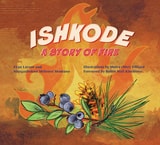
Ishkode
A Story of FireEvan Larson
University of Minnesota Press, 0
Igniting connection with the forests of the Great Lakes region through Indigenous teachings
When an invitation arrives from the forest, what will you hear? What will you learn? How will you respond? Ishkode: A Story of Fire brings readers into a beautiful stand of ancient red pines where Aanikoobijigan, a grandmother red pine, guides a young woman, Animikiimiikanikwe, toward healing and renewal through fire. Embracing the power of memory, storytelling, and restoration, this lyrical narrative is a celebration of hope, healing, and the lessons we can learn from the land.
Including an Ojibwe pronunciation guide and glossary, this book weaves Anishinaabe teachings with the science of tree rings to reveal the deep, enduring relationships between people, fire, pines, and the wider web of ecosystems in the Great Lakes region. Ishkode highlights the role of fire in the environment, bringing to light the connections between ecological restoration, cultural revival, and reciprocal stewardship.