Results by title
4030 books match the query 'Language Arts & Disciplines' and 223 start with i

I Found It on the Internet
Coming of Age OnlineFrances Jacobson Harris
American Library Association, 2011
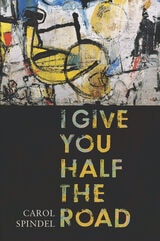
I Give You Half the Road
Carol Spindel
University of Wisconsin Press, 2021
Once considered the most stable country in West Africa, Ivory Coast was split by an armed rebellion in 2002 and endured a decade of instability and a violent conflict. Spindel provides an intimate glimpse into this turbulent period by weaving together the daily lives and paths of five neighbors. Their stories reveal Ivorians determined to reunite a divided country through reliance on mutual respect and obligation even while power-hungry politicians pursued xenophobic and anti-immigrant platforms for personal gain. Illuminating democracy as a fragile enterprise that must be continually invented and reinvented, I Give You Half the Road emphasizes the importance of connection, generosity, and forgiveness.
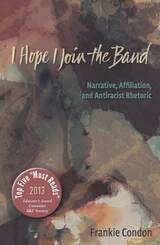
I Hope I Join the Band
Narrative, Affiliation, and Antiraciset RhetoricFrankie Condon
Utah State University Press, 2012
"Both from the Right and from the Left, we are stymied in talking well with one another about race and racism, by intransigent beliefs in our own goodness as well as by our conviction that such talk is useless. . . . White antiracist epistemology needs to begin not with our beliefs, but with our individual and collective awakening to that which we do not know."
Drawing on scholarship across disciplines ranging from writing and rhetoric studies to critical race theory to philosophy, I Hope I Join the Band examines the limits and the possibilities for performative engagement in antiracist activism. Focusing particularly on the challenges posed by raced-white identity to performativity, and moving between narrative and theoretical engagement, thebook names and argues for critical shifts in the understandings and rhetorical practices that attend antiracist activism.

I Thought There Would Be More Wolves
PoemsSara Ryan
University of Alaska Press, 2021
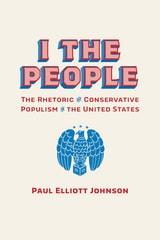
I the People
The Rhetoric of Conservative Populism in the United StatesPaul Elliott Johnson
University of Alabama Press, 2022
WINNER OF THE NATIONAL COMMUNICATION ASSOCIATION'S 2023 HOCHMUTH-NICHOLS AWARD
A definitive rhetorical history of conservative populism, exposing how identity, victimhood, and populist appeals have shaped—and constrained—modern American conservatism.
I The People: The Rhetoric of Conservative Populism in the United States examines a variety of texts—ranging from speeches and campaign advertisements to news reports and political pamphlets—to outline the populist character of conservatism in the United States. Paul Elliott Johnson focuses on key inflection points in the development of populist conservatism, including its manifestation in the racially charged presidential election of 1964, its consolidation at the height of Ronald Reagan’s reelection campaign in 1984, and its character in successive moments that saw its fortunes wax and wane, including 1994, the Obama era, and the rise of Donald J. Trump. theorizing conservative populism as a rhetorical form, Johnson advances scholarship about populism away from a binary ideological framework while offering a useful lens for contextualizing scholarship on American conservatism. I The People emphasizes that the populist roots of conservative hegemony exercise a powerful constraining force on conservative intellectuals, whose power to shape and control the movement to which they belong is circumscribed by the form of its public-facing appeals.
The study also reframes scholarly understandings of the conservative tradition’s seeming multiplicity, especially the tendency to suggest an abiding conservative unease regarding capitalism, showing how racist hostility underwrote a compromise with an increasingly economized understanding of humanity. Johnson also contests the narrative that conservatives learned to practice identity politics from social progressives. From the beginning, conservatism’s public vernacular was a white and masculine identity politics reliant on a rhetoric of victimhood, whether critiquing the liberal Cold War consensus or President Barack Obama.
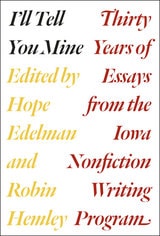
I'll Tell You Mine
Thirty Years of Essays from the Iowa Nonfiction Writing ProgramEdited by Hope Edelman and Robin Hemley
University of Chicago Press, 2015
I’ll Tell You Mine is an extraordinary anthology, a book rooted in Iowa’s successful program that goes beyond mere celebration to present some of the best nonfiction writing of the past thirty years. Eighteen pieces produced by Iowa graduates exemplify the development of both the program and the field of nonfiction writing. Each is accompanied by commentary from the author on a challenging issue presented by the story and the writing process, including drafting, workshopping, revising, and listening to (or sometimes ignoring) advice. The essays are put into broader context by a prologue from Robert Atwan, founding editor of the Best American Essays series, who details the rise of nonfiction as a literary genre since the New Journalism of the 1960s.
Creative nonfiction is the fastest-growing writing concentration in the country, with more than one hundred and fifty programs in the United States. I’ll Tell You Mine shows why Iowa’s leads the way. Its insider’s view of the Iowa program experience and its wealth of groundbreaking nonfiction writing will entertain readers and inspire writers of all kinds.
I, Digital
Personal Collections in the Digital EraChristopher A. Lee
American Library Association, 2011
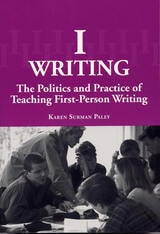
I-Writing
The Politics and Practice of Teaching First-Person WritingKaren Surman Paley
Southern Illinois University Press, 2001
In this ethnographic study of the teaching of writing, Karen Surman Paley reveals the social significance of first-person writing and the limitations of a popular taxonomy of composition studies. Paley looks critically at the way social constructionists have created an “Other” in the field of composition studies and named it “expressivist.”
Paley demonstrates the complexity of approaches to teaching writing through an ethnographic study of two composition faculty at Boston College, a programthat some would say is “expressivist.” She prompts her colleagues to consider how family experiences shape the way students feel about and treat people of races, religions, genders, and sexual preferences other than their own. Finally, she suggests to the field of composition that practitioners spend less time shoring up taxonomies of the field and more time sharing pedagogies.
IJAL vol 81 num 2
The University of Chicago Press
University of Chicago Press Journals, 2015
IJAL vol 81 num 4
The University of Chicago Press
University of Chicago Press Journals, 2015
IJAL vol 82 num 3
The University of Chicago Press
University of Chicago Press Journals, 2016
IJAL vol 82 num 4
The University of Chicago Press
University of Chicago Press Journals, 2016
IJAL vol 84 num 4
The University of Chicago Press
University of Chicago Press Journals, 2018
IJAL vol 85 num 2
The University of Chicago Press
University of Chicago Press Journals, 2019
IJAL vol 86 num 4
The University of Chicago Press
University of Chicago Press Journals, 2020
IJAL vol 87 num 1
The University of Chicago Press
University of Chicago Press Journals, 2021
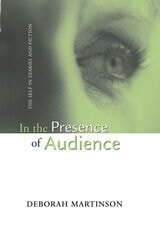
IN THE PRESENCE OF AUDIENCE
THE SELF IN DIARIES AND FICTIONDeborah Martinson
The Ohio State University Press, 2003
As a diary writer imagines shadow readers rifling diary pages, she tweaks images of the self, creating multiple readings of herself, fixed and unfixed. When the readers and potential readers are husbands and publishers, the writer maneuvers carefully in a world of men who are quick to judge and to take offense. She fills the pages with reflections, anecdotes, codes, stories, biographies, and fictions. The diary acts as a site for the writer’s tension, rebellion, and remaking of herself.
In this book Martinson examines the diaries of Virginia Woolf, Katherine Mansfield, Violet Hunt, and Doris Lessing’s fictional character Anna Wulf, and shows that these diaries (and others like them) are not entirely private writings as has been previously assumed. Rather, their authors wrote them knowing they would be read. In these four cases, the audience is the author’s male lover or husband, and Martinson reveals how knowledge of this audience affects the language and content in each diary. Ultimately, she argues, this audience enforces a certain “male censorship” which changes the shape of the revelations, the shape of the writer herself, making it impossible for the female author to be honest in writing about her true self.
Even sophisticated readers often assume that diaries are primarily private. This study interrogates the myth of authenticity and self-revelation in diaries written under the gaze of particular peekers.

Iberian Imperialism and Language Evolution in Latin America
Edited by Salikoko S. Mufwene
University of Chicago Press, 2014
The essays approach language development through an ecological lens, exploring the effects of politics, economics, cultural contact, and natural resources on the indigenization of Spanish and Portuguese in a variety of local settings. They show how languages adapt to new environments, peoples, and practices, and the ramifications of this for the spread of colonial languages, the loss or survival of indigenous ones, and the way hybrid vernaculars get situated in larger political and cultural forces. The result is a sophisticated look at language as a natural phenomenon, one that meets a host of influences with remarkable plasticity.
Identity Technologies
Constructing the Self OnlineEdited by Anna Poletti and Julie Rak
University of Wisconsin Press, 2013

Identity and Ethnicity in the Rural South
A Sociolinguistic View through Past and Present Be, Volume 74Kirk Hazen
Duke University Press, 0
Identity and Ethnicity in the Rural South investigates the interaction of cultural and ethnic identity as realized in language variation. Through the quantitative and qualitative analysis of sociolinguistic data on the past tense of the verb be and on its absence, this work explains the synchronic and diachronic trends of language variation and several important social factors, including ethnicity, sex, and cultural identity. This volume also informs the debates about the origins and contemporary synchronic relations of African American Vernacular English to other ethnic varieties.

Identity, Language, and Mind
An Introduction to the Philosophy of John PerryEdited by Albert Newen and Raphael van Riel
CSLI, 2012
Idiomatic Expressions and Grammatical Constructions
Paul Kay, Laura A. Michaelis, Ivan A. Sag, and Dan Flickinger
CSLI, 2025
Any theory of idioms should be part and parcel of a general theory of grammar, adding as little machinery to one's overall grammatical approach as possible in describing both the syntactic and semantic idiosyncrasies and regularities of this large class of linguistic expressions. This volume presents several lexicalist analyses of idioms within the framework of Sign-Based Construction Grammar, reflecting three guiding principles: many but not all idioms are syntactically and semantically compositional, dividing into distinct classes; idioms are analyzable in terms of a suitably rich lexicon and a set of constructions (lexical and syntactic rules) with corresponding meaning representations; and idiomaticity is a gradient phenomenon, exhibiting wide variation in degree of syntactic flexibility and meaning.

If It Ain't Broke, Break It
How Corporate Journalism Killed the Arkansas GazetteDonna Lampkin Stephens
University of Arkansas Press, 2015
Whereas the Heiskell/Patterson family had been committed to quality journalism, Gannett was focused on the bottom line. The corporation shifted the Gazette’s editorial focus from giving readers what they needed to be engaged citizens to informing them about what they should do in their leisure time. While in many ways the chain trivialized the Gazette’s mission, the paper managed to retain its superior quality. But financial concerns made the difference in Arkansas’s ongoing newspaper war. As the head of a privately held company, Hussman had only himself to answer to, and he never flinched while spending $42 million in his battle with the Pattersons and millions more against Gannett. Gannett ultimately lost $108 million during its five years in Little Rock; Hussman said his losses were far less but still in the tens of millions.
Gannett had to answer to nervous stockholders, most of whom had no tie to, or knowledge of, Arkansas or the Gazette. For Hussman, the Arkansan, the battle had been personal since at least 1978. It is no surprise that the corporation blinked first, and the Arkansas Gazette died on October 18, 1991, the victim of corporate journalism.

If a Chimpanzee Could Talk and Other Reflections on Language Acquisition
Jerry H. Gill
University of Arizona Press, 1997
In this book, a philosopher combines these famous cases with a lifetime of study to examine the threshold of language--that point "between speech and not quite speech." He provides fascinating accounts of the deaf and blind Helen Keller, of chimpanzees like Washoe, and of feral children such as Victor, the "wild boy of Aveyron," putting a new spin on their stories. When does it start, he asks, that miracle most of us take for granted? Where does it come from, that uniquely human power to transform perception and action into thought and the singular activity we call speech?
Here is evidence that, for chimp or child, the crucial factors in acquiring language have less to do with intellect and everything to do with social interaction. Here is confirmation that the "give-and-take, push-and-pull" of daily life forces virtually all of us to acquire language simply to live and work together. Author Jerry Gill offers no pat answers. Rather, he emphasizes imitation and reciprocity—for example, playing pat-a-cake with a baby—as essential to becoming part of a speaking community "and thereby becoming a human being." In addition, Gill gives dozens of examples to show how gesture and facial expression both create and change the meaning of language. In compelling fashion, he underscores the point that language acquisition can be fully understood only in terms of such physical and social activity. The author exposes the flaws of research focused mainly on mental processes and gives little credit to findings based upon artificially contrived experiments.
With vigor, compassion, and a broad-minded humanism, these pages invite the reader to think again about how we say what we mean, how we mean what we say, and where it all starts in the first place. Valuable to students of psychology, linguistics, philosophy, and anthropology, the book will also appeal to general readers who welcome an opportunity to explore familiar things in a new and entirely enjoyable way.
If at First You Don't Succeed?
Writing, Rhetoric, and the Question of FailureSteven J. Corbett
University Press of Colorado, 2025
Images of English
A Cultural History of the LanguageRichard W. Bailey
University of Michigan Press, 1992
Imagination without Borders
Feminist Artist Tomiyama Taeko and Social ResponsibilityLaura Hein and Rebecca Jennison, Editors
University of Michigan Press, 2010

Imagining China
Rhetorics of Nationalism in an Age of GlobalizationStephen J. Hartnett
Michigan State University Press, 2017

Imagining Serengeti
A History of Landscape Memory in Tanzania from Earliest Times to the PresentJan Bender Shetler
Ohio University Press, 2007
Many students come to African history with a host of stereotypes that are not always easy to dislodge. One of the most common is that of Africa as safari grounds—as the land of expansive, unpopulated game reserves untouched by civilization and preserved in their original pristine state by the tireless efforts of contemporary conservationists. With prose that is elegant in its simplicity and analysis that is forceful and compelling, Jan Bender Shetler brings the landscape memory of the Serengeti to life. She demonstrates how the social identities of western Serengeti peoples are embedded in specific spaces and in their collective memories of those spaces. Using a new methodology to analyze precolonial oral traditions, Shetler identifies core spatial images and reevaluates them in their historical context through the use of archaeological, linguistic, ethnographic, ecological, and archival evidence. Imagining Serengeti is a lively environmental history that will ensure that we never look at images of the African landscape in quite the same way.
Immersion
A Writer's Guide to Going DeepTed Conover
University of Chicago Press, 2016
In immersion reporting—a literary cousin to ethnography, travel writing, and memoir—the writer fully steps into a new world or culture, participating in its trials, rites, and rituals as a member of the group. The end results of these firsthand experiences are familiar to us from bestsellers such as Nickel and Dimed and Behind the Beautiful Forevers. But in a world of wary strangers, where does one begin?
Conover distills decades of knowledge into an accessible resource aimed at writers of all levels. He covers how to “get into” a community, how to conduct oneself once inside, and how to shape and structure the stories that emerge. Conover is also forthright about the ethics and consequences of immersion reporting, preparing writers for the surprises that often surface when their piece becomes public. Throughout, Conover shares anecdotes from his own experiences as well as from other well-known writers in this genre, including Alex Kotlowitz, Anne Fadiman, and Sebastian Junger. It’s a deep-in-the-trenches book that all aspiring immersion writers should have in hand as they take that first leap into another world.

Immigration, Diversity, and Broadcasting in the United States 1990—2001
Vibert C. Cambridge
Ohio University Press, 2004
Impactful Community-Based Literacy Projects
Lesley S. J. Farmer
American Library Association, 2021
Foreword by Dr. Lois Bridges
Inspired by the Library of Congress Literacy Awards Program and its applicants, which have showcased and disseminated innovative literacy initiatives across the country and around the world since 2013, this book provides evidence-based practice guidelines for librarians and educators. To optimize results, the projects in this book blend early literacy benefits, fundamental reading skills, and other foundational concepts with culture- or community-specific sensitivity and leveraging. They’re adaptable based on age, audience, size, resources, and budget; and most importantly, they address social inequities and foster cross-culture interactions. Inside, readers will find
- detailed profiles of dozens of successful literacy projects, which include such activities as oral storytelling, the Parent-Child Home Program, a repository of multilingual children’s stories, accessible web readers, personal tutors, and many more;
- an overview of universal steps to literacy, explaining how people learn, generic reading skill development, human developmental issues, and habits of literacy;
- research-based factors for impactful literacy projects;
- discussion of the importance and role of literacy partners such as families, schools and universities, libraries, government agencies, nonprofit organizations, and for-profit entities;
- advice on project planning, including needs assessment, goals and objectives, literacy review, target audience, project personnel, resources, setting and timing, communication, support, implementation, and continuous assessment and improvement; and
- guidance on building capacity, empowering the community, and sustaining a culture of literacy.
Impersonal Passion
Language as AffectDenise Riley
Duke University Press, 2005
In nine linked essays, Riley deftly unravels the rhetoric of life’s absurdities and urgencies, its comforts and embarrassments, to insist on the forcible affect of language itself. She teases out the emotional complexities of such quotidian matters as what she ironically terms the right to be lonely in the face of the imperative to be social or the guilt associated with feeling as if you’re lying when you aren’t. Impersonal Passion reinvents questions from linguistics, the philosophy of language, and cultural theory in an illuminating new idiom: the compelling emotion of the language of the everyday.

Impersonating Animals
Rhetoric, Ecofeminism, and Animal Rights LawS. Marek Muller
Michigan State University Press, 2020
Implementing Cost-Effective Assistive Computer Technology
A How-To-Do-It Manual for LibrariansJane Vincent
American Library Association, 2012
Implementing Excellence in Diversity, Equity, and Inclusion
A Handbook for Academic LibrariesCorliss Lee
American Library Association, 2022
—from the Foreword by Mark A. Puente
Academic library workers often make use of systemic, bureaucratic, political, collegial, and symbolic dimensions of organizational behavior to achieve their diversity, equity, and inclusion goals, but many are also doing the crucial work of pushing back at the structures surrounding them in ways small and large.
Implementing Excellence in Diversity, Equity, and Inclusion captures emerging practices that academic libraries and librarians can use to create more equitable and representative institutions. 19 chapters are divided into 6 sections:
- Recruitment, Retention and Promotion
- Professional Development
- Leveraging Collegial Networks
- Reinforcing the Message
- Organizational Change
- Assessment
Chapters cover topics including active diversity recruitment strategies; inclusive hiring; gendered ageism; librarians with disabilities; diversity and inclusion with student workers; residencies and retention; creating and implementing a diversity strategic plan; cultural competency training; libraries’ responses to Canadian Truth and Reconciliation Commission Calls to Action; and accountability and assessment. Authors provide practical guiding principles, effective practices, and sample programs and training.
Implementing Excellence in Diversity, Equity, and Inclusion explores how academic libraries have leveraged and deployed their institutions’ resources to effect DEI improvements while working toward implementing systemic solutions. It provides means and inspiration for continuing to try to hire, retain, and promote the change we want to see in the world regardless of existing structures and systems, and ways to improve those structures and systems for the future.
Implementing FRBR in Libraries
Key Issues and Future DirectionsAmerican Library Association, 2009
Implementing Typed Feature Structure Grammars
Ann Copestake
CSLI, 2001
Implementing Virtual Reference Services
Beth Thomsett-Scott
American Library Association, 2013
Implementing for Results
Your Strategic Plan in ActionSandra Nelson
American Library Association, 2009
Impolite Periodicals
Reading for Rudeness in the Eighteenth CenturyEmrys D. Jones
Bucknell University Press, 2026
With an afterword by Manushag N. Powell.
Published by Bucknell University Press. Distributed worldwide by Rutgers University Press.
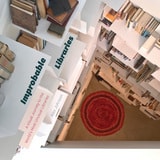
Improbable Libraries
A Visual Journey to the World's Most Unusual LibrariesAlex Johnson
University of Chicago Press, 2015
Public libraries are a cornerstone of modern civilization, yet like the books in them, libraries face an uncertain future in an increasingly digital world. Undaunted, librarians around the globe are thinking up astonishing ways of reaching those in reading need, whether by bike in Chicago, boat in Laos, or donkey in Colombia. Improbable Libraries showcases a wide range of unforgettable, never-before-seen images and interviews with librarians who are overcoming geographic, economic, and political difficulties to bring the written word to an eager audience. Alex Johnson charts the changing face of library architecture, as temporary pop-ups rub shoulders with monumental brick-and-mortar structures, and many libraries expand their mission to function as true community centers. To take just one example: the open-air Garden Library in Tel Aviv, located in a park near the city’s main bus station, supports asylum seekers and migrant workers with a stock of 3,500 volumes in sixteen different languages.
Beautifully illustrated with two hundred and fifty color photographs, Improbable Libraries offers a breathtaking tour of the places that bring us together and provide education, entertainment, culture, and so much more. From the rise of the egalitarian Little Free Library movement to the growth in luxury hotel libraries, the communal book revolution means you’ll never be far from the perfect next read.

Improving Library Services in Support of International Students and English as a Second Language Learners
Leila June Rod-Welch
Assoc of College & Research Libraries, 2019
Improving the Visibility and Use of Digital Repositories
Kenneth Arlitsch
American Library Association, 2013
Improvisations on a Missing String
Nazik Saba Yared
University of Arkansas Press, 1997
Nazik Saba Yared’s novel, Improvisations on a Missing String, tells the story of Saada Rayyis, who, after a mastectomy and prior to another operation which she may not survive, considers the course of her life with the purpose of understanding not only where she has been, but also where she is going.
In her attempt to cope with complex feelings of alienation and insecurity, she struggles against traditional expectations in order to secure a sense of belonging and fulfillment—but always on her own terms.
From her childhood in Palestine, through her university studies in Cairo, and finally as a teacher in Beirut, we follow the development of this independent woman as she comes to terms with her feelings about family, lovers, politics, art, and finally her own aspirations for belonging.
Improvisations
Methods and Methodologies in Lifespan Writing ResearchRyan J. Dippre
University Press of Colorado, 2025
In Our Hands
Educating Healthcare InterpretersLaurie Swabey
Gallaudet University Press, 2012
Deaf Americans have identified healthcare as the most difficult setting in which to obtain a qualified interpreter. Yet, relatively little attention has been given to developing evidence-based resources and a standardized body of knowledge to educate healthcare interpreters. In Our Hands: Educating Healthcare Interpreters addresses these concerns by delineating the best practices for preparing interpreters to facilitate full access for deaf people in healthcare settings.
The first section of this volume begins with developing domains and competencies toward a teaching methodology for medical and mental health interpreters. The next chapter describes a discourse approach that relies on analyzing actual transcripts and recordings to train healthcare interpreters. Other chapters feature a model mental health interpreter training program in Alabama; using a Demand-Control Schema for experiential learning; the risk of vicarious trauma to interpreters; online educational opportunities; and interpreting for deaf health care professionals. The second section offers four perspectives on education, including healthcare literacy of the clients; the education of Deaf interpreters; the development of standards for spoken-language healthcare interpreters; and the perspectives of healthcare interpreter educators in Europe. The range and depth of In Our Hands takes significant strides in presenting educational opportunities that can enhance the critical services provided by healthcare interpreters to deaf clients.

In Silence
Growing Up Hearing in a Deaf WorldRuth Sidransky
Gallaudet University Press, 2006
Inside her family’s apartment, Sidransky knew a warm, secure place. She recalls her earliest memories of seeing words fall from her parents’ hands. She remembers her father entertaining the family endlessly with his stories, and her mother’s story of tying a red ribbon to herself and her infant daughter to know when she needed anything in the night.
Outside the apartment, the cacophonous hearing world greeted Sidransky’s family with stark stares of curiosity as though they were “freaks.” Always upbeat, her proud father still found it hard to earn a living. When Sidransky started school, she was placed in a class for special needs children until the principal realized that she could hear and speak.
Sidransky portrays her family with deep affection and honesty, and her frank account provides a living narrative of the Deaf experience in pre- and post-World War II America. In Silence has become an invaluable chronicle of a special time and place that will affect all who read it for years to come.

In the Company of Books
Literature and Its "Classes" in Nineteenth-Century AmericaSarah Wadsworth
University of Massachusetts Press, 2006
With sections focusing on segmentation by age, gender, and cultural status, In the Company of Books analyzes the ways authors and publishers carved up the field of literary production into a multitude of distinct submarkets, differentiated their products, and targeted specific groups of readers in order to guide their book-buying decisions. Combining innovative approaches to canonical authors such as Nathaniel Hawthorne, Louisa May Alcott, Mark Twain, and Henry James with engaging investigations into the careers of many lesser-known literary figures, Sarah Wadsworth reveals how American writers responded to—and contributed to—this diverse, and diversified, market.
In the Company of Books contends that specialized editorial and marketing tactics, in concert with the narrative strategies of authors and the reading practices of the book-buying public, transformed the literary landscape, leading to new roles for the book in American culture, the innovation of literary genres, and new relationships between books and readers. Both an exploration of a fragmented print culture through the lens of nineteenth-century American literature and an analysis of nineteenth-century American literature from the perspective of this subdivided marketplace, this wide-ranging study offers fresh insight into the impact of market forces on the development of American literature.
In the Face of Adversity
Translating Difference and DissentEdited by Thomas Nolden
University College London, 2023
In the Face of Adversity explores the dynamics of translating texts that articulate particular notions of adverse circumstances. The contributors show how literary records of painful experiences and dissenting voices are at risk of being stripped of their authenticity when not carefully handled by the translator, how cultural moments in which the translation of a text that would have otherwise fallen into oblivion instead gave rise to a translator who enabled its preservation while ultimately coming into their own as an author as a result, and how the difficulties the translator faces in intercultural or transnational constellations in which prejudice plays a role endangers projects meant to facilitate mutual understanding. The authors address translation as a project of making available and preserving a corpus of texts that would otherwise be in danger of becoming censored, misperceived, or ignored. They look at translation and adaptation as a project of curating textual models of personal, communal, or collective perseverance, and they offer insights into the dynamics of cultural inclusion and exclusion through a series of theoretical frameworks, as well as through a set of concrete case studies drawn from different cultural and historical contexts.