Results by title
622 books match the query 'Language Study' and 27 start with i
Ilegal
Reflexiones de un inmigrante indocumentadoJosé Ángel N.
University of Illinois Press, 2019
José Ángel N. es escritor y traductor. Sus ensayos se han publicado en revistas culturales en México y Estados Unidos. Verónica Murguía es escritora y traductora y radica en México.
Iliad, Book 1
Homer
University of Michigan Press, 2002
Images of English
A Cultural History of the LanguageRichard W. Bailey
University of Michigan Press, 1992
Implementing Collaborative Writing Tasks in Multilingual Classrooms
Mimi Li and Neomy Storch
University of Michigan Press, 2025
With clear visuals and concrete examples of different types of collaborative writing tasks—including multimodal writing and collaborative reading for writing tasks—the book invites readers to consider the kind of decisions that need to be taken when implementing collaborative writing (e.g., group size, how to allocate students) and when assessing collaborative writing. In connecting frontier pedagogical knowledge to practice, Implementing Collaborative Writing Tasks in Multilingual Classrooms will help educators to implement collaborative writing activities in their various contexts.
Throughout the book, readers will find:
- Research-informed, pedagogy-oriented lessons on why and how to implement and assess collaborative writing in multilingual classrooms.
- Cutting-edge pedagogical knowledge that distinguishes the different modes of implementing collaborative writing (e.g., face-to-face, via computer-mediated communication, and a hybrid approach).
- Key practical suggestions for teachers.
- Tips on how to incorporate artificial intelligence in collaborative writing activities.
- Recommendations for further research that can be helpful for practitioners, teacher educators, or graduate students.
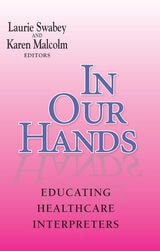
In Our Hands
Educating Healthcare InterpretersLaurie Swabey
Gallaudet University Press, 2012
Deaf Americans have identified healthcare as the most difficult setting in which to obtain a qualified interpreter. Yet, relatively little attention has been given to developing evidence-based resources and a standardized body of knowledge to educate healthcare interpreters. In Our Hands: Educating Healthcare Interpreters addresses these concerns by delineating the best practices for preparing interpreters to facilitate full access for deaf people in healthcare settings.
The first section of this volume begins with developing domains and competencies toward a teaching methodology for medical and mental health interpreters. The next chapter describes a discourse approach that relies on analyzing actual transcripts and recordings to train healthcare interpreters. Other chapters feature a model mental health interpreter training program in Alabama; using a Demand-Control Schema for experiential learning; the risk of vicarious trauma to interpreters; online educational opportunities; and interpreting for deaf health care professionals. The second section offers four perspectives on education, including healthcare literacy of the clients; the education of Deaf interpreters; the development of standards for spoken-language healthcare interpreters; and the perspectives of healthcare interpreter educators in Europe. The range and depth of In Our Hands takes significant strides in presenting educational opportunities that can enhance the critical services provided by healthcare interpreters to deaf clients.
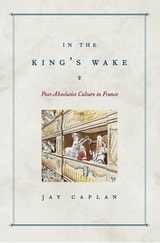
In the King's Wake
Post-Absolutist Culture in FranceJay Caplan
University of Chicago Press, 1999
While absolutist culture had focused on value directly represented in people (e.g., those of noble blood) and things (e.g., coins made of precious metals), post-absolutist culture instead explored the capacity of signs to stand for something real (e.g., John Law's banknotes or Marivaux's plays in which actions rather than birth signify nobility). Between the image of the Sun King and visions of the godlike Romantic self, Caplan discovers a post-absolutist France wracked by surprisingly modern conflicts over the true sources of value and legitimacy.
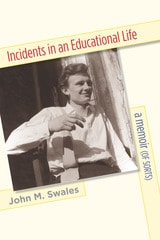
Incidents in an Educational Life
A Memoir (of Sorts)John M. Swales
University of Michigan Press, 2009
Indian Place Names in Alabama
William A. Read, and revised edition by James B. McMillan
University of Alabama Press, 1984
Learn the Secrets of Alabama’s Fascinating Place Names
In Place Names in Alabama, readers embark on a captivating journey through the linguistic and cultural heritage embedded in the state’s geography. This masterful reference work, compiled by a renowned linguist and historian, unveils the origins and meanings of hundreds of towns, rivers, creeks, and landmarks—many rooted in Native American languages, colonial history, and local folklore. From the bustling streets of Tuscaloosa, whose name means “Black Warrior,” to Mobile, rooted in the name of the indigenous Maubila people, this book reveals the deep cultural and linguistic layers that shape Alabama’s identity. Other fascinating examples are Talladega, which traces its name to a Muscogee word meaning “border town” and Opelika, derived from Creek for “large swamp.”
Indian Place Names in Alabama is scholarly yet accessible, ideal for historians, educators, genealogists, and curious readers. It is richly annotated and includes historical maps, archival citations, and linguistic insights. Its etymologies include place names of Indigenous, French, Spanish, and English origin. Whether you're tracing ancestral roots, exploring regional history, or simply intrigued by the names on a map, Indian Place Names in Alabama offers a treasure trove of discovery.
Inside Academic Writing
Understanding Audience and Becoming Part of an Academic CommunityGrace Canseco
University of Michigan Press, 2010
Inside Academic Writing is designed to prepare students in any academic discipline for graduate-level writing. The text situates students within their writing communities by prioritizing the steps of learning; students are directed to use common threads of academic writing across disciplines. The goal of Inside Academic Writing is to give students the opportunity to write for a variety of audiences and to develop the knowledge necessary to recognize how to write for different audiences and purposes.
Inside Academic Writing allows students to examine basic assumptions about writing before they learn specific strategies for targeting the audience or mapping the flow of information. Through the material in this textbook, students will create a portfolio of writings that includes a biographical statement and a research interest essay—important pieces of writing that are rarely taught in courses. Other types of writing featured are a summary, a problem-solution text, a comparative structure paper, and a commentary.
Other textbooks prepare students for graduate writing, but Inside Academic Writing was designed to bridge the gap between non-academic writing and the writing required within an academic community, with one’s peers, colleagues, and field experts. In addition, Inside Academic Writing offers guidance on writing materials for grants, fellowships, conferences, and publication.
Insiders' French
Beyond the DictionaryEleanor Levieux and Michel Levieux
University of Chicago Press, 1999
This "new France" is a country poised to experience the European single currency but uncertain about being part of Europe. It is hooked on fast food but ambivalent about the country where it originated. France today has record unemployment and an increasingly controversial immigrant population. Clearly, given the rapidly changing conditions and lifestyles, conventional French dictionaries alone cannot completely inform readers and visitors. Insiders' French offers a solution to the incomprehension, a unique handbook in which you'll find the language of European union, the space program, abortion and women's rights, high-tech industries, and health care, among other topics. Entries proceed by association of ideas and related terms, with extensive cross-referencing, while still being alphabetized for easy reference like a standard dictionary. Cartoons from major French journals add to your understanding and enjoyment.
Insiders' French opens up the secret territory of French politics and culture that is often not understood by visitors or students, and it does so with wit and verve—qualities that remain in the French language despite its recent changes.
Instructor Guide for Speechcraft
Discourse Pronunciation for Academic CommunicationWayne B. Dickerson
University of Michigan Press, 2027
Instructor Guide for Speechcraft helps shoulder time-consuming, non-teaching tasks so that instructors can focus on working directly with their students. Four-part lesson plans are adaptable for instructors who want to insert critical pronunciation topics into a non-pronunciation ESL/EFL course. To aid in professional development, each lesson plan includes a commentary on the order of topics in the syllabus and common student questions. Appendices provide pre- and post-tests to make sure that instructors have the resources they need to teach confidently. In addition to the 232 audio recordings for the textbook, instructors can access 37 additional recordings that can be used for class preparation or for in-class progress checks. With the Instructor Guide for Speechcraft, teachers will be able to help their students achieve the clear, intelligible speech they need to pursue their studies in their chosen discipline, to serve as international teaching assistants, and to interact well in their chosen professions.
Intensive Bulgarian 1
A Textbook and Reference GrammarRonelle Alexander, with the assistance of Olga M. Mladenova
University of Wisconsin Press, 2000
This is the first comprehensive textbook teaching English-speakers to read, write, and speak contemporary Bulgarian. The text is designed to be adaptable for students of varying skill levels and can be taught at a gradual or intensive pace. It is also a much-needed reference grammar of Bulgarian, incorporating the latest research and theories on Bulgarian grammar in accessible layman’s language.
Volume 1 introduces the basic elements of Bulgarian grammar and contains Lessons 1–15, a Bulgarian-English glossary, an English-Bulgarian glossary for beginners, and an appendix of verbal forms. Like many popular language textbooks, the dialogues in Intensive Bulgarian form a continuing dramatic narrative that gradually introduces students to both language and culture. Throughout the text, Bulgarian constructions and phrases are compared with English ones to clarify grammar and idioms.
Lessons include:
o dialogues and sample sentences
o exercises and translation sentences
o basic and supplemental grammar sections
o reading selections
o a glossary for the lesson
o cultural notes.
Together, Volumes 1 and 2 of Intensive Bulgarian provide all the materials necessary for teachers and students to learn lively, modern colloquial Bulgarian, to become familiar with Bulgarian cultural life, and to thoroughly understand Bulgarian grammar. Slavic scholars will also find in Volume 2 both a thorough presentation of the Bulgarian verb system, as traditionally conceived, and a new analysis of this system.
Intensive Bulgarian 2
A Textbook and Reference GrammarRonelle Alexander, with the assistance of Olga M. Mladenova
University of Wisconsin Press, 2000
This is the first comprehensive textbook teaching English-speakers to read, write, and speak contemporary Bulgarian. The text is designed to be adaptable for students of varying skill levels and can be taught at a gradual or intensive pace. It is also a much-needed reference grammar of Bulgarian, incorporating the latest research and theories on Bulgarian grammar in accessible layman’s language.
Volume 2 contains Lessons 16-30 and introduces more complex points of grammar and syntax than Volume 1. It also includes a cumulative Bulgarian-English glossary covering both volumes. Like many popular language textbooks, the dialogues in Intensive Bulgarian form a continuing dramatic narrative that gradually introduces students to both language and culture. Throughout the text, Bulgarian constructions and phrases are compared with English ones to clarify grammar and idioms.
Lessons include:
o dialogues and sample sentences
o exercises and translation sentences
o basic and supplemental grammar sections
o reading selections
o a glossary for the lesson
o cultural notes.
Together, Volumes 1 and 2 of Intensive Bulgarian provide all the materials necessary for teachers and students to learn lively, modern colloquial Bulgarian, to become familiar with Bulgarian cultural life, and to thoroughly understand Bulgarian grammar. Slavic scholars will also find in Volume 2 both a thorough presentation of the Bulgarian verb system, as traditionally conceived, and a new analysis of this system.
Intercultural Skills in Action
An International Student's Guide to College and University Life in the U.S.Darren LaScotte and Bethany Peters
University of Michigan Press, 2021
Although traditional ESL/EFL textbooks have primarily introduced cultural topics at a knowledge level only, this textbook is designed to create meaningful opportunities for students to reflect on and practice intercultural skills in ways that are relatable in their daily lives and that can lead to a more satisfying U.S. academic experience.
Each unit opens with a discovery activity that serves as a springboard for the unit and introduces the topic in an engaging way. Chapters feature academic content that builds expands knowledge of intercultural skills, plus opportunities for students to pause and reflect on how to apply what they are learning to their own intercultural experiences. The activities ask students to respond with short written reflections and practice oral skills through discussion in pairs and small groups. Each unit closes with an activity that requires students to use higher-order thinking skills to create, evaluate, and/or analyze cultural information gathered from college and university settings in the form of surveys, interviews, observations, or internet research and then report on what they have learned.
The intended audiences for this book are international students studying in Intensive English Programs, in university bridge or pathway programs, or at colleges and universities in the United States. It may also be used by new-student orientation programs or by student services offices that provide intercultural training for students, staff, and faculty who work with international students.
Intermediate Biblical Hebrew Grammar
A Student's Guide to Phonology and MorphologyEric D. Reymond
SBL Press, 2018
A unique grammar for intermediate or advanced students of Hebrew
This grammar is intended for students of Hebrew who wish to learn more about the history of the Hebrew language, specifically its phonology and morphology. Reymond focuses on aspects of Hebrew that will encourage a student to better remember the words and their inflection as well as those that will reinforce general principles of the language. Specific examples for memorization are outlined at the end of each chapter. The book also serves as a resource for students wishing to remind themselves of the relative frequency of certain phenomena. The book provides students with a full picture of the language's morphology.
Features:
- Tables of nouns and adjectives illustrating the absolute and construct, singular and plural forms, as well as all the forms with suffixes
- Tables include forms not found in the Masoretic Text
- Additional tables that set similar verbal inflections side by side
Intermediate Spanish Memory Book
A New Approach to Vocabulary BuildingBy William F. Harrison and Dorothy Winters Welker
University of Texas Press, 1997
Mnemonics is an age-old device for remembering names, numbers, and many other things. As in the authors' previous Memory Books, the Intermediate Spanish Memory Book makes use of this reliable memory help in a series of mnemonic jingles that are by turns playful, sardonic, touching, and heroic to help both students and independent learners acquire and remember Spanish vocabulary. The 500-plus words in this book represent a more advanced vocabulary than those in the Spanish Memory Book (1990) and the Spanish Memory Book, Junior Edition (1993).
The mnemonic jingles present both the sound of the Spanish word (indicated by syllables in italic type) and its English meaning (given by a word or phrase in boldface type):
merienda: picnic, afternoon tea
Mary, end a boring picnic.
Just say, "I'm going home. I'm sick, Nick."
This innovative approach to vocabulary building is simple, effective, and entertaining.
Intermediate Technical Japanese, Volume 1
Readings and Grammatical PatternsJames L. Davis
University of Wisconsin Press, 2002
Learn how to read and translate technical manuals, research publications, and reference works. This two-volume set is designed to help the intermediate-level learner of Japanese build a technical vocabulary, reinforce understanding of frequently used grammatical patterns, improve reading comprehension, and practice translating technical passages. The glossary in volume 2 clarifies words and phrases that often puzzle beginning readers.
The sample readings on technical topics are drawn from a broad range of specialties, from mathematics and computer science to electronics and polymer science. The initial grammar lesson and the first nine field-specific lessons constitute the common core to be used by all instructors or students. Topics of interest from the remaining thirty-one field-specific lessons may be selected to produce a customized course of study. Intermediate Technical Japanese is designed to fulfill a typical two-semester sequence.
Volume 1 contains:
o information about 600 key kanji
o explanations of 100 important grammatical patterns
o more than 700 scientific or technical essays
o an index of the grammatical patterns.
Volume 2 contains:
o a complete glossary
Intermediate Technical Japanese, Volume 2
GlossaryJames L. Davis
University of Wisconsin Press, 2002
Learn how to read and translate technical manuals, research publications, and reference works. This two-volume set is designed to help the intermediate-level learner of Japanese build a technical vocabulary, reinforce understanding of frequently used grammatical patterns, improve reading comprehension, and practice translating technical passages. The glossary in volume 2 clarifies words and phrases that often puzzle beginning readers.
The sample readings on technical topics are drawn from a broad range of specialties, from mathematics and computer science to electronics and polymer science. The initial grammar lesson and the first nine field-specific lessons constitute the common core to be used by all instructors or students. Topics of interest from the remaining thirty-one field-specific lessons may be selected to produce a customized course of study. Intermediate Technical Japanese is designed to fulfill a typical two-semester sequence.
Volume 1 contains:
o information about 600 key kanji
o explanations of 100 important grammatical patterns
o more than 700 scientific or technical essays
o an index of the grammatical patterns.
Volume 2 contains:
o a complete glossary
International Students in First-Year Writing
A Journey Through Socio-Academic SpaceMegan M. Siczek
University of Michigan Press, 2018
This study raises questions about how to support international students:
- In what ways can it inform our practices and policies relative to the internationalization of education and the development of global perspectives and competencies?
- What does it reveal that could impact daily instruction of L2 writing, particularly when it comes to international students’ need to meet the expectations of “university-level writing” in U.S. institutions of higher education?
- On an individual level, what can we learn from these students and about ourselves as a result of our interactions?
Interrogating Privilege
Reflections of a Second Language EducatorStephanie Vandrick
University of Michigan Press, 2013
Interrogating Privilege is a welcome combination of personal essays and academic research, blending theory, analysis, and narrative to explore the function and consequences of privilege in second language education.
While teachers’ focus on the learning process and class goals are quite important, there is not enough attention paid to the types of privilege—or lack thereof—that individuals bring to the classroom. Through chapters that can either stand alone or be read together, with topics such as gender, age, and colonialism (the author is the daughter of missionary parents) in second language teaching, this book seeks to address the experiences of teachers, scholars, and students as “whole persons” and to observe the workings of identity and privilege in the educational setting.
Into God, student edition
Itinerarium Mentis in Deum of Saint BonaventureRegis J. Armstrong
Catholic University of America Press, 0
Introduction to Classical and New Testament Greek
A Unified ApproachMichael Boler
Catholic University of America Press, 2020
Introduction to Middle Welsh
Joshua Byron Smith
Catholic University of America Press, 2026
Investigations in Healthcare Interpreting
Brenda Nicodemus
Gallaudet University Press, 2014
Investigations in Healthcare Interpreting consists of ten chapters contributed by a broad array of international scholars. They address topics as diverse as the co-construction of medical conversation between interlocutors, healthcare interpretation in Ireland, and how interpreters make requests for clarification in their work. Using a variety of methodological approaches including ethnography, questionnaires, observation, and diary accounts, these scholars report on trials of simultaneous video interpreting in Austrian hospitals; direct, interpreted, and translated healthcare information for Australian deaf people; the interpretation of medical interview questions from English into ASL; and specialized psychological/psychiatric diagnostic tests for deaf and hard of hearing clients. Researchers, practitioners, and students, as well as all healthcare professionals, will find this volume to be an invaluable resource.
Iron Age Hieroglyphic Luwian Inscriptions
Annick Payne
SBL Press, 2012
Itzaj Maya Grammar
Charles A Hofling
University of Utah Press, 2000
The Itzaj Maya language is a member of the Yukatekan Maya language family spoken in the lowlands of Guatemala, Mexico, and Belize, a family that includes Maya, Mopan, and Lakantum. Many classic Maya hieroglyphic texts were written in an earlier form of these languages, as were many important colonial documents. In addition to being a valuable record of ancient language, Andrew Hofling’s Itzaj Maya Grammar contributes greatly to the study of these older documents.
This exemplary grammar completes a basic documentation that began with Itzaj Maya Texts and Itzaj Maya-Spanish-English Dictionary. It’s coverage of the linguistic structures of Itzaj includes the phonological, morphophonological, and syntactic structures. Each morphological and grammatical construction is carefully explained, with additional examples of each construction included.
Itzaj Maya Grammar is a landmark contribution to the study of discourse in Maya language. When used with Hofling’s previous texts, it provides a thoroughly dynamic documentation of the language, useful to all interested in the study of Yukatejan languages or linguistics.
Itzaj Maya Spanish English Dictionary
Charles A Hofling
University of Utah Press, 1997
•More than twenty-thousand entries
•In trilingual format with extensive Spanish-Itzaj Maya and English Itzaj indexes
•Includes a grammatical sketch describing morphological and syntactic processes of Itzaj Maya words
•Three appendixes present flora and fauna taxonomy and an overview of body parts