Results by title
1107 books match the query 'Memoirs' and 38 start with i
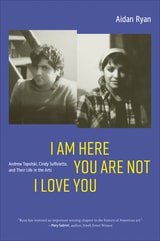
I Am Here You Are Not I Love You
Andrew Topolski, Cindy Suffoletto, and Their Life in the ArtsAidan Ryan
University of Iowa Press, 2025
The book presents a critical reexamination of Andrew Topolski, an overlooked luminary of intermedia and postminimalism. In repositioning Topolski’s legacy and vast body of work, Ryan makes compelling findings about the interplay of talent, luck, and community support in the making or breaking of artistic careers. At the same time, the story shares the significant and never-before-seen body of work by Cindy Suffoletto, a talented and inventive artist little shown and never cataloged during her short life. Ultimately, Ryan argues that the time is right for both to take up a privileged place among the great artists of their generation.
I Have Not Loved You With My Whole Heart
Cris Harris
Oregon State University Press, 2021
In a book rich with remembrances of the Pacific Northwest of the 1970s–1990s, Cris Harris pulls the reader through turning points in a household crowded with abuse, addiction, neglect, acceptance, and grief, as well as the healing that comes after reconciliation. In recognizing perpetrators of violence as complex people—as selves we can recognize—Harris wrestles with paradox: the keening dissonance of loving people with hard edges, the humor of horrible situations, and how humor can cover for anger. He shows how violence can mark us and courageously lays bare those marks, owning them as his own precious history, born of a fierce species of love.
I Have Not Loved You With My Whole Heart will speak to readers whose family members came out late in life, and to those who lost loved ones in the AIDS crisis of the late 1980s and 1990s. Those with complicated relationships to faith, survivors of abuse, and anyone who has lived with family crisis will also find healing in these pages.
I Have Not Loved You With My Whole Heart
Cris Harris
Oregon State University Press, 2021
In a book rich with remembrances of the Pacific Northwest of the 1970s–1990s, Cris Harris pulls the reader through turning points in a household crowded with abuse, addiction, neglect, acceptance, and grief, as well as the healing that comes after reconciliation. In recognizing perpetrators of violence as complex people—as selves we can recognize—Harris wrestles with paradox: the keening dissonance of loving people with hard edges, the humor of horrible situations, and how humor can cover for anger. He shows how violence can mark us and courageously lays bare those marks, owning them as his own precious history, born of a fierce species of love.
I Have Not Loved You With My Whole Heart will speak to readers whose family members came out late in life, and to those who lost loved ones in the AIDS crisis of the late 1980s and 1990s. Those with complicated relationships to faith, survivors of abuse, and anyone who has lived with family crisis will also find healing in these pages.
I Hear Voices
A Memoir of Love, Death, and the RadioJean Feraca
University of Wisconsin Press, 2007
Jean Feraca’s road to self-fulfillment has been as quirky and demanding as the characters in her incredible memoir. A veteran of several decades of public radio broadcasting, Feraca is also a writer and a poet. She is a talk show host beloved for her unique mixture of the humanities, poetry, and journalism, and is the creator of the pioneering international cultural affairs radio program Here on Earth: Radio without Borders.
In this searing memoir, Feraca traces her own emergence. She pulls back the curtain on her private life, revealing unforgettable portraits of the characters in her brawling Italian-American family: Jenny, the grandmother, the devil woman who threw Casey Stengel down an excavation pit; Dolly, the mother, a cross between Long John Silver and the Wife of Bath, who in battling mental illness becomes the scourge of a Lutheran nursing home; and Stephen, the brilliant but troubled older brother, an anthropologist adopted by a Sioux tribe. In a new chapter that reinforces and ties together the book’s exploration of the multiple forms of love, Jean introduces us to Roger, a Wildman and her husband’s best friend with whom she, too, develops an extraordinary intimacy. A selection of fifteen of Feraca’s poems add counterpoint to her engaging prose.
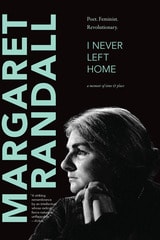
I Never Left Home
Poet, Feminist, RevolutionaryMargaret Randall
Duke University Press, 2020
From living among New York's abstract expressionists in the mid-1950s as a young woman to working in the Nicaraguan Ministry of Culture to instill revolutionary values in the media during the Sandinista movement, the story of Randall's life reads like a Hollywood production. Along the way, she edited a bilingual literary journal in Mexico City, befriended Cuban revolutionaries, raised a family, came out as a lesbian, taught college, and wrote over 150 books. Throughout it all, Randall never wavered from her devotion to social justice.
When she returned to the United States in 1984 after living in Latin America for twenty-three years, the U.S. Immigration and Naturalization Service ordered her to be deported for her “subversive writing.” Over the next five years, and with the support of writers, entertainers, and ordinary people across the country, Randall fought to regain her citizenship, which she won in court in 1989.
As much as I Never Left Home is Randall's story, it is also the story of the communities of artists, writers, and radicals she belonged to. Randall brings to life scores of creative and courageous people on the front lines of creating a more just world. She also weaves political and social analyses and poetry into the narrative of her life. Moving, captivating, and astonishing, I Never Left Home is a remarkable story of a remarkable woman.

I Never Made Love with James Baldwin
A MemoirStanley Cohen
Seagull Books, 2026
One man's life unfolds into a memoir of the defining cultural figures of the mid-twentieth century and beyond.
I Never Made Love with James Baldwin is a dazzling memoir told through a succession of attorney Stanley Cohen's vivid encounters with some of the most compelling figures of the twentieth century and beyond. Moving between America, Europe, and Asia, Cohen recounts moments shared with artists, writers, jurists, and financiers, including Alexander Calder, Joseph Heller, Robert Caro, Ruth Bader Ginsburg, Yehuda Hanani, and members of the Rothschild family. These figures appear not as distant icons but as sharp, human presences—brilliant, eccentric, generous, and flawed. Cohen’s life unfolds like a performance, shaped less by planning than by intensity: conversations, friendships, arguments, and coincidences that flare briefly and leave lasting marks. With wit, candor, and an eye for the telling detail, he captures a vast social and creative network spanning the mid-twentieth century to the present. The result is an intimate, unconventional portrait of an exceptional life and of the people who lit its path.
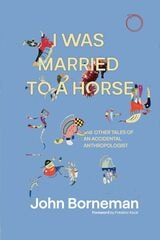
I Was Married to a Horse, and Other Tales of an Accidental Anthropologist
John Borneman
HAU, 2026
How does the youngest of eight children, raised on a family farm in northern Wisconsin by parents with only half a grammar school education, become an Ivy League professor and a witness to some of the most transformative events of the late twentieth and early twenty-first centuries? In this remarkable memoir, John Borneman tells the story of his life as an “accidental anthropologist” with searing honesty, humor, and emotional depth.
Tracing a path from his upbringing as a queer farm boy to a career in anthropology, Borneman’s memoir reflects on social mobility, the decline of the American family farm, and shifting understandings of queerness and masculinity. Meanwhile, as a fourth-generation German American, his journey carried him to divided Berlin, where he captures the moods of East and West, and back again during the arrival of Syrian refugees—culminating in a long-standing friendship and a poignant reunion with a refugee he had first met years earlier.
Through these encounters, Borneman shows how empathy and attention can reveal the hidden textures of history, identity, and belonging. Rich in insight and humanity, this is a story of personal discovery, intercultural encounter, and the search for meaning in a rapidly changing world—one that speaks to scholars and general readers alike.
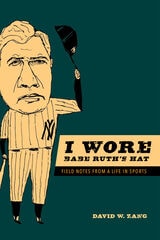
I Wore Babe Ruth's Hat
Field Notes from a Life in SportsDavid Zang
University of Illinois Press, 2015
Whether pondering his long-unbuilt replica of Connie Mack Stadium or his eye-opening turn as the Baltimore Ravens' mascot, Zang offers tales at turns poignant and hilarious as he engages with the passions that shaped his life. Yet his meditations also probe the tragedy of a modern athletic culture that substitutes hyped spectatorship for participation. As he laments, American society's increasing scorn for taking part in play robs adults of the life-affirming virtues of games that challenge us to accomplish the impossible for the most transcendent of reasons: to see if it can be done.
From teammates named Lop to tracing Joe Paterno's long shadow over Happy Valley, I Wore Babe Ruth's Hat reports from the everyman's Elysium where games and life intersect.

I Would Meet You Anywhere
A MemoirSusan Kiyo Ito
The Ohio State University Press, 2023
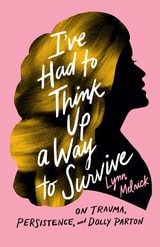
I've Had to Think Up a Way to Survive
On Trauma, Persistence, and Dolly PartonLynn Melnick
University of Texas Press, 2022
A moving and essential exploration of what it takes to find your voice as a woman, a survivor, an artist, and an icon.
The first time Lynn Melnick listened to a Dolly Parton song in full, she was 14 years old, in the triage room of a Los Angeles hospital, waiting to be admitted to a drug rehab program. Already in her young life as a Jewish teen in the 1980s, she had been the victim of rape, abuse, and trauma, and her path to healing would be long. But in Parton’s words and music, she recognized a fellow survivor.
In this powerful, incisive work of social and self-exploration, Melnick blends personal essay with cultural criticism to explore Parton’s dual identities as feminist icon and objectified sex symbol, identities that reflect the author’s own fraught history with rape culture and the arduous work of reclaiming her voice. Each chapter engages with the artistry and impact of one of Parton’s songs, as Melnick reckons with violence, misogyny, creativity, parenting, friendship, sex, love, and the consolations and cruelties of religion. Bold and inventive, I’ve Had to Think Up a Way to Survive gives us an accessible and memorable framework for understanding our times and a revelatory account of survival, persistence, and self-discovery.
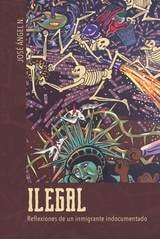
Ilegal
Reflexiones de un inmigrante indocumentadoJosé Ángel N.
University of Illinois Press, 2019
José Ángel N. es escritor y traductor. Sus ensayos se han publicado en revistas culturales en México y Estados Unidos. Verónica Murguía es escritora y traductora y radica en México.
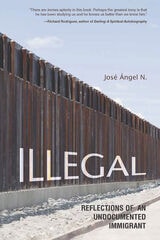
Illegal
Reflections of an Undocumented ImmigrantJose Angel N.
University of Illinois Press, 2014
Arriving in the 1990s with a ninth grade education, N. traveled to Chicago where he found access to ESL and GED classes. He eventually attended college and graduate school and became a professional translator.
Despite having a well-paying job, N. was isolated by a lack of legal documentation. Travel concerns made promotions impossible. The simple act of purchasing his girlfriend a beer at a Cubs baseball game caused embarrassment and shame when N. couldn't produce a valid ID. A frustrating contradiction, N. lived in a luxury high-rise condo but couldn't fully live the American dream. He did, however, find solace in the one gift America gave him–-his education. Ultimately, N.'s is the story of the triumph of education over adversity. In Illegal, he debunks the stereotype that undocumented immigrants are freeloaders without access to education or opportunity for advancement. With bravery and honesty, N. details the constraints, deceptions, and humiliations that characterize alien life "amid the shadows."
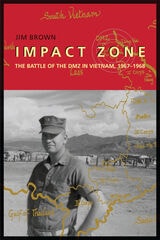
Impact Zone
The Battle of the DMZ in Vietnam, 1967–1968Jim Brown
University of Alabama Press, 2004
In the heart of the DMZ, one Marine faced the war—and the truth behind it.
Impact Zone documents Marine First Lieutenant James S. Brown's intense battle experiences, including those at Khe Sanh and Con Thien, throughout his thirteen months of service on the DMZ during 1967-68. This high-action account also reflects Brown's growing belief that the Vietnam War was mis-fought due to the unproductive political leadership of President Johnson and his administration. Brown's naiveté developed into hardening skepticism and cynicism as he faced the harsh realities of war, though he still managed to retain a sense of honor, pride, and patriotism for his country.
Impact Zone is a distinctive book on the Vietnam War because it is told from the perspective of an artilleryman, and the increasingly dangerous events gain momentum as they progress from one adventure to the next. Impact Zone is not only an important historical document of the Vietnam conflict, but also a moving record of the personal and emotional costs of war.
Imperium in Imperio
Tess Chakkalakal
University of Delaware Press, 0
Edited and introduced by Tess Chakkalakal and Kenneth W. Warren, this new critical edition offers not only an incisive biographical and historical introduction to the novel and its author but also a wealth of references that make the events and characters of Griggs’s Imperium in Imperio, and its aftermath, accessible to readers today.
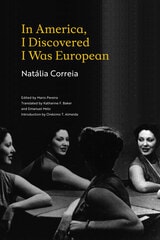
In America, I Discovered I Was European
NatáliaCorreia, Translated by Katharine F. Baker and Melo, Emanuel; Introduction by Onésimo T. Almeida
Tagus Press, 2025
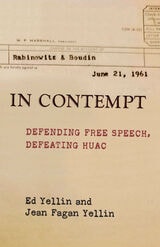
In Contempt
Defending Free Speech, Defeating HUACEd Yellin and Jean Fagan Yellin
University of Michigan Press, 2022
So began a decade of hardship for Ed and Jean Yellin and their three young children as the repressive weight of the U.S. government, caught up in the throes of McCarthyism, crashed down upon their careers, their daily household budget, and their relationships to colleagues, neighbors, and their country. In Contempt is a faithful, factual testament to the enduring quality of patriotic dissent in our evolving democracy—and a loving reconstruction of what it meant to be labeled “unAmerican” for defending the Constitution.
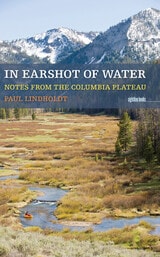
In Earshot of Water
Notes from the Columbia PlateauPaul Lindholdt
University of Iowa Press, 2011
p.MsoNormal, li.MsoNormal, div.MsoNormal { margin: 0in 0in 0.0001pt; font-size: 12pt; font-family: "Times New Roman"; }div.Section1 { page: Section1; }
Whether the subject is the plants that grow there, the animals that live there, the rivers that run there, or the people he has known there, Paul Lindholdt’s In Earshot of Water illuminates the Pacific Northwest in vivid detail. Lindholdt writes with the precision of a naturalist, the critical eye of an ecologist, the affection of an apologist, and the self-revelation and self-awareness of a personal essayist in the manner of Annie Dillard, Loren Eiseley, Derrick Jensen, John McPhee, Robert Michael Pyle, and Kathleen Dean Moore.
Exploring both the literal and literary sense of place, with particular emphasis on environmental issues and politics in the far Northwest, Lindholdt weds passages from the journals of Lewis and Clark, the log of Captain James Cook, the novelized memoir of Theodore Winthrop, and Bureau of Reclamation records growing from the paintings that the agency commissioned to publicize its dams in the 1960s and 1970s, to tell ecological and personal histories of the region he knows and loves.
In Lindholdt’s beautiful prose, America’s environmental legacies—those inherited from his blood relatives as well as those from the influences of mass culture—and illuminations of the hazards of neglecting nature’s warning signs blur and merge and reemerge in new forms. Themes of fathers and sons layer the book, as well—the narrator as father and as son—interwoven with a call to responsible social activism with appeals to reason and emotion. Like water itself, In Earshot of Water cascades across boundaries and blends genres, at once learned and literary.
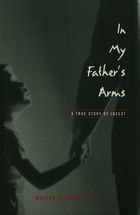
In My Father’s Arms
A Son’s Story of Sexual AbuseWalter A. de Milly III
University of Wisconsin Press, 2012
Tragically, Walter's deeply troubled father would launch his family on a perilous journey into darkness. To the outside world, this man is a prominent businessman, a dignified Presbyterian, and a faithful husband; to Walter, he is an overwhelming, handsome monster. Whenever the two are together, young Walter becomes a sexual plaything for his father; father and son outings are turned into soul-obliterating nightmares.
Walter eventually becomes a successful businessman only to be stricken by another catastrophe: his father, at the age of seventy, is caught molesting a young boy. Walter is asked to confront his father. Walter convenes his family, and in a private conference with a psychiatrist, the father agrees to be surgically castrated.
De Milly's portraits of his relationships with his father and mother, and the confrontation that leads to his father's bizarre and irreversible voluntary "cure," are certain to be remembered long after the reader has set aside this powerful contribution to the literature of incest survival.
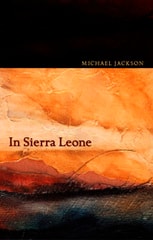
In Sierra Leone
Michael Jackson
Duke University Press, 2004
Though the Revolutionary United Front (R.U.F.) ostensibly fought its war (1991–2002) against corrupt government, the people of Sierra Leone were its victims. By the time the war was over, more than fifty thousand were dead, thousands more had been maimed, and over one million were displaced. Jackson relates the stories of political leaders and ordinary people trying to salvage their lives and livelihoods in the aftermath of cataclysmic violence. Combining these with his own knowledge of African folklore, history, and politics and with S. B.’s bittersweet memories—of his family’s rich heritage, his imprisonment as a political detainee, and his position in several of Sierra Leone’s post-independence governments—Jackson has created a work of elegiac, literary, and philosophical power.
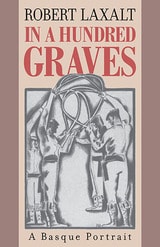
In a Hundred Graves
A Basque PortraitRobert Laxalt
University of Nevada Press, 2016
The Basques of Europe are legendary for the curtain of privacy they have always drawn around their world, shielding it from visitors from the outside. As a result, accounts of the inner workings of Basque village life are almost nonexistent. In this unique book, author Robert Laxalt has managed to penetrate the deep reserve of Basque village folk. Shepherds, troubadours, merchants, and smugglers, caught up in the panorama of daily life, parade before the reader. They are portrayed against a backdrop of green rugged mountains and stone buildings, typical of the Basque provinces in France and Spain. Laxalt, an American born of Basque parents, unveils the Basque character with warmth, wry humor, and above all, honesty.
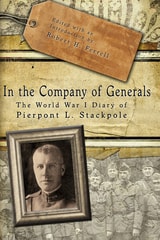
In the Company of Generals
The World War I Diary of Pierpont L. StackpoleEdited & Intro by Robert H. Ferrell
University of Missouri Press, 2009
Pierpont Stackpole was a Boston lawyer who in January 1918 became aide to Lieutenant General Hunter Liggett, soon to be commander of the first American corps in France. Stackpole’s diary, published here for the first time, is a major eyewitness account of the American Expeditionary Forces’ experience on the Western Front, offering an insider’s view into the workings of Liggett’s commands, his day-to-day business, and how he orchestrated his commands in trying and confusing situations.
Hunter Liggett did not fit John J. Pershing’s concept of the trim and energetic officer, but Pershing entrusted to him a corps and then an army command. Liggett assumed leadership of the U.S. First Army in mid-October of 1918, and after reorganizing, reinforcing, and resting, the battle-weary troops broke through the German lines in a fourth attack at the Meuse-Argonne—accomplishing what Pershing had failed to do in three previous attempts. The victory paved the way to armistice on November 11.
Liggett has long been a shadowy figure in the development of the American high command. He was “Old Army,” a veteran of Indian wars who nevertheless kept abreast of changes in warfare and more than other American officers was ready for the novelties of 1914–1918. Because few of his papers have survived, the diary of his aide—who rode in the general’s staff car as Liggett unburdened himself about fellow generals and their sometimes abysmal tactical notions—provides especially valuable insights into command within the AEF.
Stackpole’s diary also sheds light on other figures of the war, presenting a different view of the controversial Major General Clarence Edwards than has recently been recorded and relating the general staff’s attitudes about the flamboyant aviation figure Billy Mitchell. General Liggett built the American army in France, and the best measure of his achievement is this diary of his aide. That record stands here as a fascinating and authentic look at the Great War.

In the Company of Grace
A Veterinarian's Memoir of Trauma and HealingJody Lulich
University of Minnesota Press, 2023
The son of a Black mother and white father overcomes family trauma to find the courage of compassion in veterinary practice
Rising to accept a prestigious award, Jody Lulich wondered what to say. Explain how he’d been attracted to veterinary medicine? Describe how caring for helpless, voiceless animals in his own shame and pain provided a lifeline, a chance to heal himself as well? Lulich tells his story in In the Company of Grace, a memoir about finding courage in compassion and strength in healing—and power in finally confronting the darkness of his youth.
Lulich’s white father and Black mother met at a civil rights rally, but love was no defense against their personal demons. His mother’s suicide, in his presence when he was nine years old, and his sometimes brutal father’s subsequent withdrawal set Lulich on a course from the South Side of Chicago to the Tuskegee School of Veterinary Medicine in Alabama to an endowed chair at the University of Minnesota, forever searching for the approval and affection that success could not deliver. Though shadowed by troubling secrets, his memoir also features scenes of surprising light and promise—of the neighbors who take him in, a brother’s unlikely effort to save Christmas, his mother’s memories of the family’s charmed early days, bright moments (and many curious details) of veterinary practice. Most consequentially, at Tuskegee Lulich rents a room in the home of a seventy-five-year-old Black woman named Grace, whose wholehearted adoption of him—and her own stories of the Jim Crow era—finally gives him a sense of belonging and possibility.
Completing his book amid the furor over George Floyd’s murder, Lulich reflects on all the ways that race has shaped his life. In the Company of Grace is a moving testament to the power of compassion in the face of seemingly overwhelming circumstances.
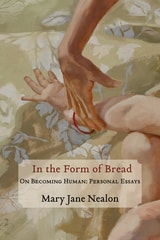
In the Form of Bread
On Becoming HumanMary Jane Nealon
Four Way Books, 2026
In this collection of vignettes—heartbreaking and often humorous—Nealon explores caregiving as both sacred practice and human risk.
She looks back to her relationship with a father devastated by the early death of her brother; to tending men—some with AIDS, some drunk, some sober—living in Bowery flophouses; to confronting racism; to the quiet instruction of a dog who teaches attention by gazing back.
The essays ask what price we pay when we offer ourselves wholeheartedly to one another, and what it means to remain open to being more than human in a fractured world.
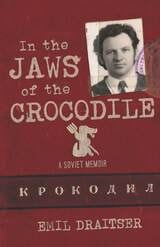
In the Jaws of the Crocodile
A Soviet MemoirEmil Draitser
University of Wisconsin Press, 2021
In this captivating memoir, Draitser explores what it means to be a satirist in a country lacking freedom of expression. His experience provides a window into the lives of a generation of artists who were allowed to poke fun and make readers laugh, as long as they toed a narrow, state-approved line. In the Jaws of the Crocodile also includes several of Draitser’s wry pieces translated into English for the first time.
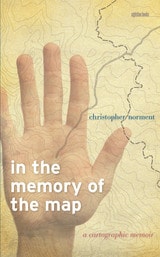
In the Memory of the Map
A Cartographic MemoirChristopher Norment
University of Iowa Press, 2012
Maps may have been the stuff of his dreams, but they sometimes drew him away from places where he should have remained firmly rooted. In the Memory of the Map explores the complex relationship among maps, memory, and experience—what might be called a “cartographical psychology” or “cartographical history.” Interweaving a personal narrative structured around a variety of maps, with stories about maps as told by scholars, poets, and fiction writers, this book provides a dazzlingly rich personal and intellectual account of what many of us take for granted.
A dialog between desire and the maps of his life, an exploration of the pleasures, utilitarian purposes, benefits, and character of maps, this rich and powerful personal narrative is the matrix in which Norment embeds an exploration of how maps function in all our lives. Page by page, readers will confront the aesthetics, mystery, function, power, and shortcomings of maps, causing them to reconsider the role that maps play in their lives.
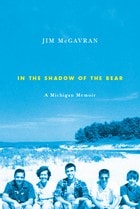
In the Shadow of the Bear
A Michigan MemoirJim McGavran
Michigan State University Press, 2010
In the Shadow of the Bear chronicles the author's return, after a forty-year absence, to the site of his childhood summer vacations at Little Glen Lake in northwestern Lower Michigan's Leelanau peninsula.
The ancient Ojibwa legend that gave a name to the area's most striking geographical feature, the Sleeping Bear Sand Dunes, offers a way of understanding his mother's powerful but sometimes restless force of love and ambition in the family, as well as his father's quieter, often self-sacrificing love. Chapters devoted to the return to Leelanau, to each of his parents, and to his father's family culminate in the narrative of his daughter's 2005 Leelanau wedding.
Jim McGavran tells his story of self-discovery in prose that is alternatively frank and lyrical as he recaptures his bewildered yet enchanted boyhood self, filtered through his consciousness of longing and loss, lending the writing a particular poignancy.
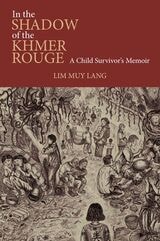
In the Shadow of the Khmer Rouge
A Child Survivor's MemoirMuy Lang Lim
National University of Singapore Press, 2025
Forty-five years have passed since the end of Khmer Rouge rule in Cambodia in 1979. Angkar, the hidden, menacing face of the revolutionary leadership, is gone, yet the misery, death, and destruction they wrought in the name of revolution cannot be forgotten. In In the Shadow of the Khmer Rouge, a voice is given to these memories by a child survivor of the catastrophe that engulfed Cambodia in the 1970’s.
Muy Lang's memoir begins by recalling her gentle childhood with her Sino-Cambodian family in Phnom Penh. With the fall of the city to the Khmer Rouge and its brutal emptying, the country descended into a utopian hell in which drastic economic ideas were enforced with deadly fervor. Muy Lang was only nine years old when she and her family were marched at gunpoint out of Phnom Penh in 1975. Within three years, she was completely alone; tragically, the seven other members of her family were all killed.
Muy Lang survived nearly four years of starvation, sickness, brutality, and threatened death in the Cambodian countryside. She ultimately escaped to Thailand with the first group of refugees to navigate a treacherous descent from the border through the landmine-infested Dângrêk Mountains. In the Shadow of the Khmer Rouge pays tribute to Muy Lang’s family and to other war victims who shared their stories with her. It offers future generations a personal reflection on themes such as displacement, loss of cultural identity, hope, and resilience in the face of unimaginable circumstances, and is an unflinching account of Cambodia's darkest years.
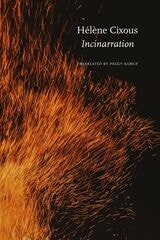
Incinarration
What Do We Carry?Hélène Cixous
Seagull Books, 2026
Hélène Cixous’s powerful new book, masterfully translated by Peggy Kamuf, is a vivid journey through fire. From the ashes of wars, wildfires, and upheaval, Cixous traces a dramatic path across time—from the Second World War and the Nazi occupation of Oran to the European wildfires of 2022—weaving a rich, intimate narrative that merges history, autobiography, and myth. With her piercing, lyrical voice, Cixous confronts the human cost of destruction and upheaval, and asks a universal question: What do we carry with us when everything we know is falling to ashes?
In Incinarration, Cixous finds hope in the power of words, memory, and imagination to illuminate our darkest moments and redeem the future. As forests burn and regimes collapse, Cixous shows us how stories become a form of resistance—a way to remember, to bear testimony, and to find renewal in the face of oblivion.
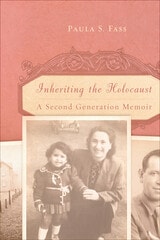
Inheriting the Holocaust
A Second-Generation MemoirPaula S. Fass
Rutgers University Press, 2011
Fass begins her journey through time and relationships when she travels to Poland and locates birth certificates of the murdered siblings she never knew. That journey to recover her family's story provides her with ever more evidence for the perplexing reliability of memory and its winding path toward historical reconstruction. In the end, Fass recovers parts of her family's history only to discover that Poland is rapidly re-imagining the role Jews played in the nation's past.
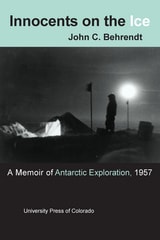
Innocents on the Ice
A Memoir of Antarctic Exploration, 1957John C. Behrendt
University Press of Colorado, 1998
"Adventures in the Antarctic only happen when someone makes a mistake.”
—From the Preface
Inspired Journeys
Travel Writers in Search of the MuseEdited by Brian Bouldrey
University of Wisconsin Press, 2016

Intimate
An American Family Photo AlbumPaisley Rekdal
Tupelo Press, 2012
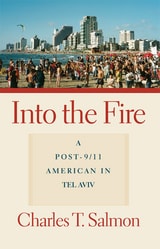
Into the Fire
A Post-9/11 American in Tel AvivCharles T. Salmon
Michigan State University Press, 2003
In the fall of 2001 Charles Salmon had a Fulbright fellowship in Israel. He was due to depart on September 12. Arriving in Israel a few weeks later, speaking no Hebrew and largely unfamiliar with Judaism and Israeli customs, he immersed himself in Israeli culture.
This collection of correspondence began as a weekly report to friends and was designed to offer an alternative to mainstream media. With the excitement of a tourist and the eagerness of an anthropologist, Salmon emerges as a modern Candide. He describes historical sites and a supermarket in Tel Aviv, discusses the differences between university students in Israel and America, and negotiates the purchase of food and the vagaries of the weather with humor and passion. The letters also discuss Israeli–Palestinian relations, and details terrorist events and responses to them.
This unique book focuses on how everyday hopes and fears transcend geopolitical boundaries and provides valuable lessons on how to thrive in these new and uncertain times.
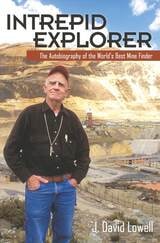
Intrepid Explorer
The Autobiography of the World's Best Mine FinderJ. David Lowell
University of Arizona Press, 2014
An Arizona native with family roots in territorial times, Lowell grew from modest beginnings on a ranch near Nogales to become a major world figure in the fields of minerals, mining, and economic geology. He has personally discovered more copper than anyone in history and has developed multibillion-dollar gold and copper mines that have changed the economies of nations. And although he has consulted for corporations in the field of mining, he has largely operated as an independent agent and explorer, the architect of his own path and success.
His life’s story unfolds in four stages: his early education in his field, on-the-job learning at sites in the United States and Mexico, development of exploration strategies, and finally, the launch of his own enterprises and companies. Recurring themes in Lowell’s life include the strict personal, ethical, and tactical policies he requires of his colleagues; his devotion to his family; and his distaste for being away from the field in a corporate office, even to this day. The magnitude of Lowell’s overall success is evident in his list of mine discoveries, as well as in his scientific achievements and the enormous respect his friends and colleagues have had for him throughout his lengthy career, which he continues to zealously pursue.

Is There God after Prince?
Dispatches from an Age of Last ThingsPeter Coviello
University of Chicago Press, 2023
This is a book about loving things—books, songs, people—in the shadow of a felt, looming disaster. Through lyrical, funny, heart-wrenching essays, Peter Coviello considers pieces of culture across a fantastic range, setting them inside the vivid scenes of friendship, dispute, romance, talk, and loss, where they enter our lives. Alongside him, we reencounter movies like The Shining, shows like The Sopranos; videos; poems; novels by Sam Lipsyte, Sally Rooney, and Paula Fox; as well as songs by Joni Mitchell, Gladys Knight, Steely Dan, Pavement, and the much-mourned saint of Minneapolis, Prince.
Navigating an overwhelming feeling that Coviello calls “endstrickenness,” he asks what it means to love things in calamitous times, when so much seems to be shambling toward collapse. Balancing comedy and anger, exhilaration and sorrow, Coviello illuminates the strange ways the things we cherish help us to hold on to life and to its turbulent joys. Is There God after Prince? shows us what twenty-first-century criticism can be, and how it might speak to us, in a time of ruin, in an age of “Last Things.”
It All Tastes of Farewell
Diaries, 1964–1970Brigitte Reimann
Seagull Books, 2016
It All Tastes of Farewell is a frank account of one woman’s life and loves in 1960s East Germany. As a writer, Brigitte Reimann could not help but tell a compelling story, and that is born out here in her diaries, which are gripping as any novel. She recorded only what mattered: telling details, emotional truths, and political realities. Never written for publication and first published in full in German only after the fall of the Berlin Wall, these diaries offer a unique record of what it felt like to live in a country that no longer exists, was represented for years largely through Cold War propaganda, and is still portrayed in fairy-tale Stasi dramas. Here we get a sense of lived experience as if Doris Lessing or Edna O’Brien had been allowed in with their notebooks. This volume continues where her earlier book of diaries, I Have No Regrets, left off, in 1964. It sees Reimann grow wistful and at times bitter, as her love life, her professional life, and her health all suffer. Yet throughout she retains a lively appetite for new experiences and a dedication to writing. Finally, she finds security in a surprising new love, and although she died soon after this volume ends, the novel she was writing was to become a much-read cult hit after her death.
A remarkable document from a time and place that we still struggle to see clearly, It All Tastes of Farewell is unforgettable, a last gift from an essential writer.

It Was Always About the Work
A Photojournalist's MemoirMelvin Grier
Ohio University Press, 2023
Over the last six decades, Melvin Grier’s work has vividly portrayed community, humanity, irony, fear, war, elegance, art, and, most notably, the unexpected. It Was Always About the Work includes nearly one hundred black-and-white and color photographs, including photographs from Grier’s most famous exhibitions and news stories. Whether covering local events, Cincinnati life, impoverished villages overseas, young future Marines on their way to their first post, or high fashion, Grier's photos are unmistakable and evocative.
Starting with his early years as a boy growing up in Cincinnati, this book tells the story of a young man who won his first photo contest while in the Air Force. He came home determined to make a career as a photographer, and, despite his lack of formal training and experience, he secured a job as a photographer for the Cincinnati Post. After the closure of the Cincinnati Post in 2007, Grier continued his career as an independent artist, featuring work in exhibitions such as “White People: A Retrospective” and “Clothes Encounters.” In collaboration with one of his journalist partners, reporter Molly Kavanaugh, Grier shares why it was always about the work.
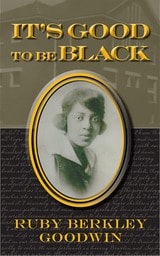
It's Good to Be Black
Ruby Berkley Goodwin
Southern Illinois University Press, 1953
From the preface by Carmen Kenya Wadley:
“Is it good to be black? To Ruby Berkley Goodwin it was....The black she writes about has nothing to do with skin color, but it does have a great deal to do with self images, values, spiritual strength, and most of all love. Unlike the contradicting definitions of blackness we see reflected in today's crime statistics, movies, television, newspapers, political speeches, advertisements, and sociological reports, Ruby Berkley Goodwin's definition of blackness is simple and to the point: black is good. It's Good to be Black is more than the story (history) of a black family living in Du Quoin, Illinois, during the early 1900s; it is a reaffirmation for all of us who know in our hearts that there is still good in the world and that some of that good is black.”