Results by title
1947 books match the query 'Music' and 65 start with i
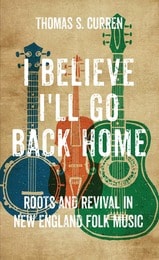
I Believe I'll Go Back Home
Roots and Revival in New England Folk MusicThomas S. Curren
University of Massachusetts Press, 2021
Fueled by interviews with key players from the folk music scene, I Believe I'll Go Back Home traces a direct line from Yankee revolutionaries, up-country dancers, and nineteenth-century pacifists to the emergence of blues and rock 'n' roll, ultimately landing at the period of the folk revival. Thomas S. Curren presents the richness and diversity of the New England folk tradition, which continues to provide perspective, inspiration, and healing in the present day.

I Belong to This Band, Hallelujah!
Community, Spirituality, and Tradition among Sacred Harp SingersLaura Clawson
University of Chicago Press, 2011
The Sacred Harp choral singing tradition originated in the American South in the mid-nineteenth century, spread widely across the country, and continues to thrive today. Sacred Harp isn’t performed but participated in, ideally in large gatherings where, as the a cappella singers face each other around a hollow square, the massed voices take on a moving and almost physical power. I Belong to This Band, Hallelujah! is a vivid portrait of several Sacred Harp groups and an insightful exploration of how they manage to maintain a sense of community despite their members’ often profound differences.
Laura Clawson’s research took her to Alabama and Georgia, to Chicago and Minneapolis, and to Hollywood for a Sacred Harp performance at the Academy Awards, a potent symbol of the conflicting forces at play in the twenty-first-century incarnation of this old genre. Clawson finds that in order for Sacred Harp singers to maintain the bond forged by their love of music, they must grapple with a host of difficult issues, including how to maintain the authenticity of their tradition and how to carefully negotiate the tensions created by their disparate cultural, religious, and political beliefs.
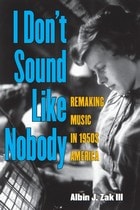
I Don't Sound Like Nobody
Remaking Music in 1950s AmericaAlbin J. Zak III
University of Michigan Press, 2012
"In Albin J. Zak III's highly original study, phonograph records are not just the medium for disseminating songs but musical works unto themselves. Fashioned from a mix of copyright law, recording studios and techniques, the talent of musicians and disc jockeys, the ingenuity and avarice of producers, and the appetites of record buyers, the all-powerful marketplace Zak describes is an unruly zone where music of, by, and for the people is made and anointed."
---Richard Crawford, author of America's Musical Life: A History
"Wrestling clarity from the exuberant chaos of early rock 'n' roll, Albin Zak's I Don't Sound Like Nobody redefines our understanding of the record in the shaping of the post–World War II soundscape. Zak tracks the story which extends from Bing Crosby and Frank Sinatra through Elvis and Buddy Holly to the Beatles and Bob Dylan with excursions into dozens of lesser known, but crucial, players in a game with few established rules. A crucial addition to the bookshelf."
---Craig Werner, author of A Change Is Gonna Come: Music, Race & the Soul of America
"I Don't Sound Like Nobody is a superb account of the transformation of American popular music in the 1950s. Albin Zak insightfully explores what recording actually means in terms of the process of making and consuming music. His discussion of the legal, aesthetic, and industrial ramifications of changes in the recording process over the course of the 1950s will make popular music scholars and record collectors reconsider what they think they know about the period."
---Rob Bowman, author of Soulsville, U.S.A.: The Story of Stax Records
"Informative, original, and entertaining. Through a narrative that is not only enlightening but also compelling, I Don't Sound Like Nobody probes the sources and mechanisms of change within post-war American popular music, shedding a cultural and historical light on the convergence of musical idioms that created '50s rock and roll."
---Stan Hawkins, author of Settling the Pop Score
"From the birth of the record industry through the legacy of Presley, the development of rock and roll, and the Beatles 'stunning arrival on the world's stage,' Albin Zak takes us on a journey of exceptional scholarship. The breadth of coverage and deep examination of recordings and repertoire reveal the author's reverence and sensitivity to the many dimensions and origins of this complex musical soundscape."
---William Moylan, author of Understanding and Crafting the Mix: The Art of Recording
The 1950s marked a radical transformation in American popular music as the nation drifted away from its love affair with big band swing to embrace the unschooled and unruly new sounds of rock 'n' roll.
The sudden flood of records from the margins of the music industry left impressions on the pop soundscape that would eventually reshape long-established listening habits and expectations, as well as conventions of songwriting, performance, and recording. When Elvis Presley claimed, "I don't sound like nobody," a year before he made his first commercial record, he unwittingly articulated the era's musical Zeitgeist.
The central story line of I Don't Sound Like Nobody is change itself. The book's characters include not just performers but engineers, producers, songwriters, label owners, radio personalities, and fans---all of them key players in the decade's musical transformation.
Written in engaging, accessible prose, Albin Zak's I Don't Sound Like Nobody approaches musical and historical issues of the 1950s through the lens of recordings and fashions a compelling story of the birth of a new musical language. The book belongs on the shelf of every modern music aficionado and every scholar of rock 'n' roll.
Albin J. Zak III is Professor of Music at the University at Albany, State University of New York. He is the editor of The Velvet Underground Companion and the author of The Poetics of Rock: Cutting Tracks, Making Records, a groundbreaking study of rock music production. Zak is also a record producer, songwriter, singer, and guitarist.Jacket design by Paula Newcomb
Jacket photograph © Eve Arnold/Magnum Photos
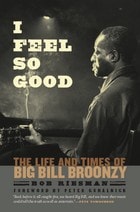
I Feel So Good
The Life and Times of Big Bill BroonzyBob Riesman
University of Chicago Press, 2011
A major figure in American blues and folk music, Big Bill Broonzy (1903–1958) left his Arkansas Delta home after World War I, headed north, and became the leading Chicago bluesman of the 1930s. His success came as he fused traditional rural blues with the electrified sound that was beginning to emerge in Chicago. This, however, was just one step in his remarkable journey: Big Bill was constantly reinventing himself, both in reality and in his retellings of it. Bob Riesman’s groundbreaking biography tells the compelling life story of a lost figure from the annals of music history.
I Feel So Good traces Big Bill’s career from his rise as a nationally prominent blues star, including his historic 1938 appearance at Carnegie Hall, to his influential role in the post-World War II folk revival, when he sang about racial injustice alongside Pete Seeger and Studs Terkel. Riesman’s account brings the reader into the jazz clubs and concert halls of Europe, as Big Bill's overseas tours in the 1950s ignited the British blues-rock explosion of the 1960s. Interviews with Eric Clapton, Pete Townshend, and Ray Davies reveal Broonzy’s profound impact on the British rockers who would follow him and change the course of popular music.
Along the way, Riesman details Big Bill’s complicated and poignant personal saga: he was married three times and became a father at the very end of his life to a child half a world away. He also brings to light Big Bill’s final years, when he first lost his voice, then his life, to cancer, just as his international reputation was reaching its peak. Featuring many rarely seen photos, I Feel So Good will be the definitive account of Big Bill Broonzy’s life and music.
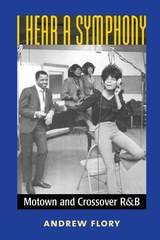
I Hear a Symphony
Motown and Crossover R&BAndrew Flory
University of Michigan Press, 2017
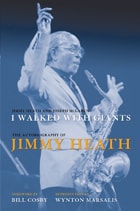
I Walked With Giants
The Autobiography of Jimmy HeathJimmy Heath and Joseph McLaren, foreword by Bill Cosby, introduction by Wynton Marsalis
Temple University Press, 2010
In this extraordinary autobiography, the legendary Heath creates a “dialogue” with musicians and family members. As in jazz, where improvisation by one performer prompts another to riff on the same theme, I Walked with Giants juxtaposes Heath’s account of his life and career with recollections from jazz giants about life on the road and making music on the world’s stages. His memories of playing with his equally legendary brothers Percy and Albert (aka “Tootie”) dovetail with their recollections.
Heath reminisces about a South Philadelphia home filled with music and a close-knit family that hosted musicians performing in the city’s then thriving jazz scene. Milt Jackson recalls, “I went to their house for dinner…Jimmy’s father put Charlie Parker records on and told everybody that we had to be quiet till dinner because he had Bird on…. When I [went] to Philly, I’d always go to their house.” Today Heath performs, composes, and works as a music educator and arranger. By turns funny, poignant, and extremely candid, Heath’s story captures the rhythms of a life in jazz.
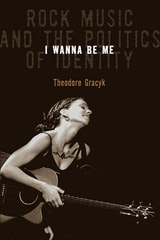
I Wanna Be Me
Rock Music And The Politics Of IdentityTheodore Gracyk
Temple University Press, 2001
Gracyk sees rock as a mass art, open-ended and open to diverse (but not unlimited) interpretations. Recordings reach millions, drawing people together in communities of listeners who respond viscerally to its sound and intellectually to its messages. As an art form that proclaims its emotional authenticity and resistance to convention, rock music constitutes part of the cultural apparatus from which individuals mold personal and political identities. Going to the heart of this relationship between the music's role in its performers' and fans' self-construction, Gracyk probes questions of gender and appropriation. How can a feminist be a Stones fan or a straight man enjoy the Indigo Girls? Does borrowing music that carries a "racial identity" always add up to exploitation, a charge leveled at Paul Simon's Graceland?
Ranging through forty years of rock history and offering a trove of anecdotes and examples, I Wanna Be Me, like Gracyk's earlier book, "should be cherished, and read, by rockers everywhere" (Salon).
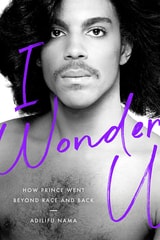
I Wonder U
How Prince Went beyond Race and BackAdilifu Nama
Rutgers University Press, 2020
In 1993, Prince infamously changed his name to a unique, unpronounceable symbol. Yet this was only one of a long string of self-reinventions orchestrated by Prince as he refused to be typecast by the music industry’s limiting definitions of masculinity and femininity, of straightness and queerness, of authenticity and artifice, or of black music and white music.
Revealing how he continually subverted cultural expectations, I Wonder U examines the entirety of Prince’s diverse career as a singer, multi-instrumentalist, songwriter, producer, record label mogul, movie star, and director. It shows how, by blending elements of R&B, rock, and new wave into an extremely videogenic package, Prince was able to overcome the color barrier that kept black artists off of MTV. Yet even at his greatest crossover success, he still worked hard to retain his credibility among black music fans. In this way, Adilifu Nama suggests, Prince was able to assert a distinctly black political sensibility while still being perceived as a unique musical genius whose appeal transcended racial boundaries.

I masnadieri
Melodramma tragico in Four Parts by Andrea MaffeiGiuseppe Verdi Edited by Roberta Montemorra Marvin
University of Chicago Press, 2000
The critical edition is the first publication of I masnadieri in full score. Based on the composer's autograph and on important secondary sources such as the performing parts mentioned above, this edition provides scholars and performers alike with unequaled means for interpretation and study of one of Verdi's less well known works. The detailed critical commentary discusses problems and ambiguities in the sources, while a wide-ranging introduction to the score traces the opera's genesis, sources, and performance history and practices.
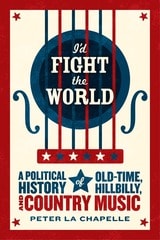
I'd Fight the World
A Political History of Old-Time, Hillbilly, and Country MusicPeter La Chapelle
University of Chicago Press, 2019
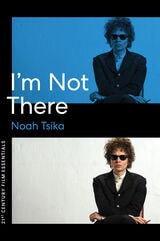
I'm Not There
Noah Tsika
University of Texas Press, 2023
An examination of director Todd Haynes and his Bob Dylan biopic.
As the first and only Bob Dylan “biopic,” I’m Not There caused a stir when released in 2007. Offering a surreal retelling of moments from Dylan’s life and career, the film is perhaps best known for its distinctive approach to casting, including Cate Blanchett and Marcus Carl Franklin, a Black child actor, as versions of Dylan though none of the characters bear his name. Greenlit by Bob Dylan himself, the film uses Dylan’s music as a score, a triumph for famed queer filmmaker Todd Haynes after encountering issues with copyright in previous projects.
Noah Tsika eloquently characterizes all the ways that Dylan and Haynes harmonize in their methods and sensibilities, interpreting the rule-breaking film as a biography that refuses chronology, disdains factual accuracy, flirts with libel, and cannibalizes Western cinema. Fitting the film’s inspiration, creation, and reception alongside its continuing afterlife, Tsika examines Dylan’s music in the film through the context of intellectual property, raising questions about who owns artistic material and artistic identities and how such material can be reused and repurposed. Tsika’s adventurous analysis touches on gender, race, queerness, celebrity, popular culture, and the law, while offering much to Haynes and Dylan fans alike.
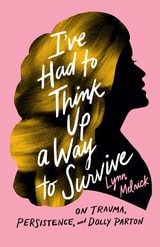
I've Had to Think Up a Way to Survive
On Trauma, Persistence, and Dolly PartonLynn Melnick
University of Texas Press, 2022
A moving and essential exploration of what it takes to find your voice as a woman, a survivor, an artist, and an icon.
The first time Lynn Melnick listened to a Dolly Parton song in full, she was 14 years old, in the triage room of a Los Angeles hospital, waiting to be admitted to a drug rehab program. Already in her young life as a Jewish teen in the 1980s, she had been the victim of rape, abuse, and trauma, and her path to healing would be long. But in Parton’s words and music, she recognized a fellow survivor.
In this powerful, incisive work of social and self-exploration, Melnick blends personal essay with cultural criticism to explore Parton’s dual identities as feminist icon and objectified sex symbol, identities that reflect the author’s own fraught history with rape culture and the arduous work of reclaiming her voice. Each chapter engages with the artistry and impact of one of Parton’s songs, as Melnick reckons with violence, misogyny, creativity, parenting, friendship, sex, love, and the consolations and cruelties of religion. Bold and inventive, I’ve Had to Think Up a Way to Survive gives us an accessible and memorable framework for understanding our times and a revelatory account of survival, persistence, and self-discovery.
If Beale Street Could Talk
Music, Community, CultureRobert Cantwell
University of Illinois Press, 2008

If Colors Could be Heard
Narratives About Racial Identity in Music EducationEdited by Christopher Cayari, Jason D. Thompson, and Rekha S. Rajan
Intellect Books, 2025
If Colors Could Be Heard: Narratives About Racial Identity in Music Education is a groundbreaking collection of firsthand accounts by music educators, artists, activists, and students from the Global Majority. These deeply personal narratives explore how race and ethnicity shape experiences in music learning, making, and teaching.
From stories of childhood discovery to reflections on navigating racial identity in the classroom, these voices paint a complex and vivid portrait of music education in the United States. Going beyond a collection of research studies, this book embraces self-reflective storytelling as a legitimate and essential method of inquiry, offering a scholarly mosaic of lived experience.
By centering voices often marginalized in academia, If Colors Could Be Heard challenges dominant narratives and reimagines music education through a lens of equity, identity, and belonging. A must-read for students, educators, and researchers committed to fostering an inclusive and just musical future.

Il Turco in Italia
Dramma buffo in Two Acts by Felice RomaniGioachino Rossini
University of Chicago Press, 1988

Il corsaro
Melodramma tragico in Three Acts, Libretto by Francesco Maria PiaveGiuseppe Verdi Edited by Elizabeth Hudson
University of Chicago Press, 1998
The full score of Il corsaro, published here for the first time, as well as recent revivals based on pre-publication proofs of this critical edition, reveal the work to be far more rewarding than even Verdi himself would later admit. Showing the gradual consolidation of Verdi's mature style through his contacts with French opera, Il corsaro well repays the renewed attention it is receiving.

Il signor Bruschino, ossia Il figlio per azzardo
Farsa giocosa in One Act by Giuseppe FoppaGioachino Rossini
University of Chicago Press, 1986
Il trovatore
Critical Edition Study ScoreGiuseppe Verdi
University of Chicago Press, 2016
Based on Verdi’s autograph score and an examination of important secondary sources, including contemporary manuscript copies and performing parts, this edition of Il trovatore identifies and resolves numerous ambiguities of harmony, melodic detail, text, and phrasing that have marred previous scores. Scholars and performers alike will find a wealth of information in the critical apparatus to inform their research and interpretations. The introduction to the score outlines the work’s genesis, sources, and performance history, while the critical commentary discusses all editorial decisions.

Il trovatore
Dramma in Four Parts by Salvadore CammaranoGiuseppe Verdi
University of Chicago Press, 1993
The lengthy introduction to the score discusses the work's genesis, sources, and performance history as well as issues of instrumental and vocal performance practice, production and staging, and problems of notation. As an added feature of the introduction is an original study by Carlos Matteo Mossa of the creation of the libretto, based on the original draft and numerous other autograph documents.

Il viaggio a Reims, ossia L'albergo del giglio d'oro
Dramma giocoso in one act by Luigi BalochiGioachino Rossini
University of Chicago Press, 2000
Rossini permitted only four performances of Viaggio, later reusing half the score for Le Comte Ory. The manuscript sources were presumed lost until part of the autograph was recovered in the 1970s at the Rome Conservatory, while other sources were found in Paris (including original performing parts) and Vienna. The identification of a missing chorus completed the restoration of this magnificent work to the repertory.
Along with the reconstructed score, the critical edition provides historical information about the libretto's relationship to French politics of the era and details on the first production.
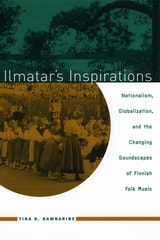
Ilmatar's Inspirations
Nationalism, Globalization, and the Changing Soundscapes of Finnish Folk MusicTina K. Ramnarine
University of Chicago Press, 2003
Kalevala (the Finnish national epic). In Ilmatar's Inspirations, Tina K. Ramnarine explores creative processes and the critical role that music has played in Finnish nationalism by focusing on Finnish "new folk music" in the shifting spaces between the national imagination and the global marketplace.
Through extensive interviews and observations of performances, Ramnarine reveals how new folk musicians think and talk about past and present folk music practices, the role of folk music in the representation of national identity, and the interactions of Finnish folk musicians with performers from around the globe. She focuses especially on two internationally successful groups—JPP, a group that plays fiddle dance music, and Värttinä, an ensemble that highlights women's vocal traditions. Analyzing the multilayered processes—musical, institutional, political, and commercial—that have shaped and are shaped by new folk music in Finland, Ramnarine gives us an entirely new understanding of the connections between music, place, and identity.

Image and Structure in Chamber Music
Donald N. Ferguson
University of Minnesota Press, 1964
Image and Structure in Chamber Music was first published in 1964. Minnesota Archive Editions uses digital technology to make long-unavailable books once again accessible, and are published unaltered from the original University of Minnesota Press editions.
The major portion of this book is devoted to descriptions of the most important chamber music works, taken up in separate chapters by composer in broadly chronological order—Haydn, Mozart, Beethoven, Schubert, Mendelssohn, Schumann, and Brahms. There are also chapters on the intimacy of chamber music, on the antecedents of the above-named composers, on nationalistic chamber music, on twentieth-century chamber music, and on chamber music in the United States.

Imaging Sound
An Ethnomusicological Study of Music, Art, and Culture in Mughal IndiaBonnie C. Wade
University of Chicago Press, 1998
Combining ethnomusicological and art historical methods with history and lore, Wade focuses first on paintings for Akbar, showing how political and cultural agendas intertwined in the portrayal of his life and that of his grandfather Babur and father, Humayun. Wade then follows the depictions of music-making through paintings for Akbar's successors, Jahangir and Shah Jahan, to trace the gradual synthesis of Persian and Indian culture. Richly illustrated with reproductions of rare Mughal paintings, this work will appeal broadly to anyone interested in Indian history, ethnomusicology, and art history.
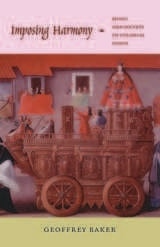
Imposing Harmony
Music and Society in Colonial CuzcoGeoffrey Baker
Duke University Press, 2008
Building on recent scholarship by social historians and urban musicologists and drawing on extensive archival research, Baker highlights European music as a significant vehicle for reproducing and contesting power relations in Cuzco. He examines how Andean communities embraced European music, creating an extraordinary cultural florescence, at the same time that Spanish missionaries used the music as a mechanism of colonialization and control. Uncovering a musical life of considerable and unexpected richness throughout the diocese of Cuzco, Baker describes a musical culture sustained by both Hispanic institutional patrons and the upper strata of indigenous society. Mastery of European music enabled elite Andeans to consolidate their position within the colonial social hierarchy. Indigenous professional musicians distinguished themselves by fulfilling important functions in colonial society, acting as educators, religious leaders, and mediators between the Catholic Church and indigenous communities.
Improvisation and Social Aesthetics
Georgina Born, Eric Lewis, and Will Straw, editors
Duke University Press, 2017
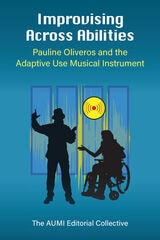
Improvising Across Abilities
Pauline Oliveros and the Adaptive Use Musical InstrumentThe AUMI Editorial Collective
University of Michigan Press, 2024
This book, which contains wisdom from many who have been affected by their work with the instrument and the people who use it, is a representation of how music and extemporized performance have touched the lives and minds of scholars and families alike. Not only has AUMI provided the opportunity to grow in listening to others who may speak differently (or not at all), but it has been used as an avenue for a diverse set of people to build friendships with others whom they may have never otherwise even glanced at in the street. By providing a space for every person who comes across AUMI to perform, listen, improvise, and collaborate, the continuing development of this instrument contributes to a world in which every person is heard, welcomed, and celebrated.
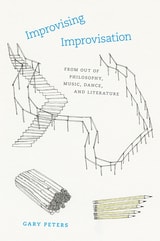
Improvising Improvisation
From Out of Philosophy, Music, Dance, and LiteratureGary Peters
University of Chicago Press, 2017
Guided by Kant, Hegel, Heidegger, and especially Deleuze—and exploring a range of artists from Hendrix to Borges—Peters illuminates new fundamentals about what, as an experience, improvisation truly is. As he shows, improvisation isn’t so much a genre, idiom, style, or technique—it’s a predicament we are thrown into, one we find ourselves in. The predicament, he shows, is a complex entwinement of choice and decision. The performativity of choice during improvisation may happen “in the moment,” but it is already determined by an a priori mode of decision. In this way, improvisation happens both within and around the actual moment, negotiating a simultaneous past, present, and future. Examining these and other often ignored dimensions of spontaneous creativity, Peters proposes a consistently challenging and rigorously argued new perspective on improvisation across an extraordinary range of disciplines.
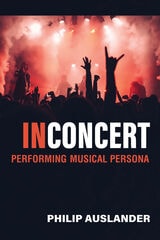
In Concert
Performing Musical PersonaPhillip Auslander
University of Michigan Press, 2021
The conventional way of understanding what musicians do as performers is to treat them as producers of sound; some even argue that it is unnecessary to see musicians in performance as long as one can hear them. But musical performance, counters Philip Auslander, is also a social interaction between musicians and their audiences, appealing as much to the eye as to the ear. In Concert: Performing Musical Persona he addresses not only the visual means by which musicians engage their audiences through costume and physical gesture, but also spectacular aspects of performance such as light shows.
Although musicians do not usually enact fictional characters on stage, they nevertheless present themselves to audiences in ways specific to the performance situation. Auslander’s term to denote the musician’s presence before the audience is musical persona. While presence of a musical persona may be most obvious within rock and pop music, the book’s analysis extends to classical music, jazz, blues, country, electronic music, laptop performance, and music made with experimental digital interfaces. The eclectic group of performers discussed include the Beatles, Miles Davis, Keith Urban, Lady Gaga, Nicki Minaj, Frank Zappa, B. B. King, Jefferson Airplane, Virgil Fox, Keith Jarrett, Glenn Gould, and Laurie Anderson.
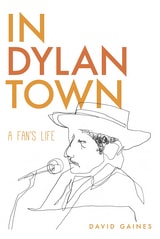
In Dylan Town
A Fan's LifeDavid Gaines
University of Iowa Press, 2015
Gaines’s personal journey toward creating such communities of passionate knowledge encompasses his own coming of age and marriages, fatherhood, and teaching. As a devoted fan who is also a professor of American literature, questions about teaching and learning are central to his experience. When asked, “Why Dylan?” he says, “He’s the writer I care about the most. He’s been the way into the best and longest running conversations I have ever had.” Talking with students, exchanging Dylan trivia with fellow fans, or cheering on fan-musicians doing Dylan covers during the Dylan Days festival, Gaines shows that, for many people, being a fan of popular culture couples serious critical and creative engagement with heartfelt commitment. Here, largely unheralded, the ideal of liberal education is realized every day.
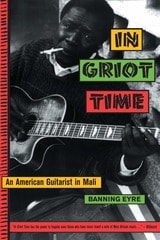
In Griot Time
Banning Eyre
Temple University Press, 2000
Djelimady Tounkara is only one of the memorable people you will meet in this dramatic narrative of life among the griot musicians of Mali. Born into families where music and the tradition of griot story-telling is a heritage and a privilege, Djelimady and his fellow griots -- both men and women -- live their lives at the intersection of ancient traditions and the modern entertainment industry. During the seven months he spent living and studying with Djelimady, Banning Eyre immersed himself in a world that will fascinate you as it did him.
Eyre creates a range of unforgettable portraits. Some of the people who stride through his pages are internationally known, musicians like Salif Keita, Oumou Sangare, and Grammy winner Ali Farka Toure. But the lesser-known characters are equally fascinating: Adama Kouyate, Djelimady's dynamic wife; Moussa Kouyate, the Tounkara family's own griot; Yayi Kanoute, the flamboyant jelimuso (female griot) who failed to take America by storm; Foutanga Babani Sissoko, the mysterious millionaire who rebuilt an entire town and whose patronage is much sought after by the griots of Bamako.
But the picture Eyre draws is not just a series of portraits. Out of their interactions comes a perceptive panorama of life in Mali in the late twentieth century. The narrative gives us a street-level view of the transformation of musical taste and social customs, the impact of technology and the pressures of poverty, at a crucial time in Mali's history. In individual after individual, family after family, we see the subtle conflicts of heritage and change. Even the complications of democracy -- with democracy, mango vendors think they can charge anything they want, Djelimady points out -- are woven into an unforgettable saga of one man, his family, his profession, and the world of Malian music.
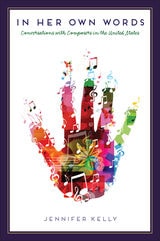
In Her Own Words
Conversations with Composers in the United StatesJennifer Kelly
University of Illinois Press, 2014
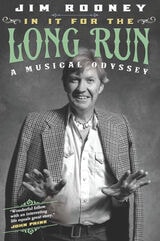
In It for the Long Run
A Musical OdysseyJim Rooney
University of Illinois Press, 2014
Inspired by the Hank Williams and Leadbelly recordings he heard as a teenager growing up outside of Boston, Jim Rooney began a musical journey that intersected with some of the biggest names in American music including Bob Dylan, James Taylor, Bill Monroe, Muddy Waters, and Alison Krauss. In It for the Long Run: A Musical Odyssey is Rooney's kaleidoscopic first-hand account of more than five decades of success as a performer, concert promoter, songwriter, music publisher, engineer, and record producer.
As witness to and participant in over a half century of music history, Rooney provides a sophisticated window into American vernacular music. Following his stint as a "Hayloft Jamboree" hillbilly singer in the mid-1950s, Rooney managed Cambridge's Club 47, a catalyst of the ‘60’s folk music boom. He soon moved to the Newport Folk Festival as talent coordinator and director where he had a front row seat to Dylan "going electric."
In the 1970s Rooney's odyssey continued in Nashville where he began engineering and producing records. His work helped alternative country music gain a foothold in Music City and culminated in Grammy nominations for singer-songwriters John Prine, Iris Dement, and Nanci Griffith. Later in his career he was a key link connecting Nashville to Ireland's folk music scene.
Writing songs or writing his memoir, Jim Rooney is the consummate storyteller. In It for the Long Run: A Musical Odyssey is his singular chronicle from the heart of Americana.
In Plenty and in Time of Need
Popular Culture and the Remapping of Barbadian IdentityLia T. Bascomb
Rutgers University Press, 2020
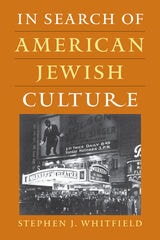
In Search of American Jewish Culture
Stephen J. Whitfield
Brandeis University Press, 2001

In Search of Music Education
Estelle R. Jorgensen
University of Illinois Press, 1997
and inadequate conceptions of the field, Estelle Jorgensen raises the
possibility of alternative views that can dignify the teacher's task,
enrich and enliven the profession, and validate an exciting range of additional
ways in which music education can be undertaken in the contemporary world.
One of the most respected leaders in music education, Jorgensen emphasizes
world music and ethnomusicology as equal partners alongside the more conventional
sounds and styles that have dominated the classroom. Exemplifying sound
scholarship, thorough research, and compelling argument, In Search
of Music Education will be especially welcome wherever teachers strive
to deal with requirements for responsible music education.
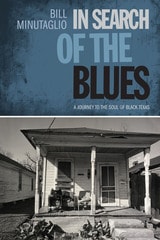
In Search of the Blues
A Journey to the Soul of Black TexasBy Bill Minutaglio
University of Texas Press, 2010
The rich, complex lives of African Americans in Texas were often neglected by the mainstream media, which historically seldom ventured into Houston's Fourth Ward, San Antonio's East Side, South Dallas, or the black neighborhoods in smaller cities. When Bill Minutaglio began writing for Texas newspapers in the 1970s, few large publications had more than a token number of African American journalists, and they barely acknowledged the things of lasting importance to the African American community. Though hardly the most likely reporter—as a white, Italian American transplant from New York City—for the black Texas beat, Minutaglio was drawn to the African American heritage, seeking its soul in churches, on front porches, at juke joints, and anywhere else that people would allow him into their lives. His nationally award-winning writing offered many Americans their first deeper understanding of Texas's singular, complicated African American history.
This eclectic collection gathers the best of Minutaglio's writing about the soul of black Texas. He profiles individuals both unknown and famous, including blues legends Lightnin' Hopkins, Amos Milburn, Robert Shaw, and Dr. Hepcat. He looks at neglected, even intentionally hidden, communities. And he wades into the musical undercurrent that touches on African Americans' joys, longings, and frustrations, and the passing of generations. Minutaglio's stories offer an understanding of the sweeping evolution of music, race, and justice in Texas. Moved forward by the musical heartbeat of the blues and defined by the long shadow of racism, the stories measure how far Texas has come . . . or still has to go.
In The Break
The Aesthetics Of The Black Radical TraditionFred Moten
University of Minnesota Press, 2003
Investigates the connections between jazz, sexual identity, and radical black politics
In his controversial essay on white jazz musician Burton Greene, Amiri Baraka asserted that jazz was exclusively an African American art form and explicitly fused the idea of a black aesthetic with radical political traditions of the African diaspora. In the Break is an extended riff on “The Burton Greene Affair,” exploring the tangled relationship between black avant-garde in music and literature in the 1950s and 1960s, the emergence of a distinct form of black cultural nationalism, and the complex engagement with and disavowal of homoeroticism that bridges the two. Fred Moten focuses in particular on the brilliant improvisatory jazz of John Coltrane, Ornette Coleman, Albert Ayler, Eric Dolphy, Charles Mingus, and others, arguing that all black performance—culture, politics, sexuality, identity, and blackness itself—is improvisation.
For Moten, improvisation provides a unique epistemological standpoint from which to investigate the provocative connections between black aesthetics and Western philosophy. He engages in a strenuous critical analysis of Western philosophy (Heidegger, Kant, Husserl, Wittgenstein, and Derrida) through the prism of radical black thought and culture. As the critical, lyrical, and disruptive performance of the human, Moten’s concept of blackness also brings such figures as Frederick Douglass and Karl Marx, Cecil Taylor and Samuel R. Delany, Billie Holiday and William Shakespeare into conversation with each other.
Stylistically brilliant and challenging, much like the music he writes about, Moten’s wide-ranging discussion embraces a variety of disciplines—semiotics, deconstruction, genre theory, social history, and psychoanalysis—to understand the politicized sexuality, particularly homoeroticism, underpinning black radicalism. In the Break is the inaugural volume in Moten’s ambitious intellectual project-to establish an aesthetic genealogy of the black radical tradition
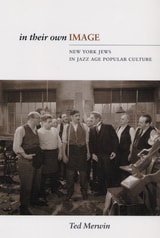
In Their Own Image
New York Jews in Jazz Age Popular CultureMerwin, Ted
Rutgers University Press, 2006
The Jazz Age of the 1920s is an era remembered for illegal liquor, innovative music and dance styles, and burgeoning ideas of social equality. It was also the period during which second-generation Jews began to emerge as a significant demographic in New York City. In TheirOwn Image examines thegrowing cultural visibility of Jewish life amid this vibrant scene.
From the vaudeville routines of Fanny Brice, Eddie Cantor, George Jessel, and Sophie Tucker, to the slew of Broadway comedies about Jewish life and the silent films that showed immigrant families struggling to leave the ghetto, images and representations of Jews became staples of interwar popular culture. Through the performing arts, Jews expressed highly ambivalent feelings about their identification with Jewish and American cultures. Ted Merwin shows how they became American by producing and consuming not images of another group, but images of themselves. As a result, they humanized Jewish stereotypes, softened anti-Semitic attitudes, and laid the groundwork for today’s Jewish comedians.
An entertaining look at the role popular culture plays in promoting the acculturation of an ethnic group, In Their Own Image enhances our understanding of American Jewish history and provides a model for the study of other groups and their integration into mainstream society.
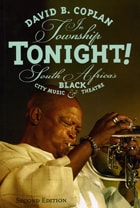
In Township Tonight!
South Africa's Black City Music and Theatre, Second EditionDavid B. Coplan
University of Chicago Press, 2008
In vivid detail, Coplan comprehensively explores more than three centuries of the diverse history of South Africa’s black popular culture, taking readers from indigenous musical traditions into the world of slave orchestras, pennywhistlers, clergyman-composers, the gumboot dances of mineworkers, and touring minstrelsy and vaudeville acts. This up-to-date edition of a landmark work will be welcomed by scholars of ethnomusicology and African studies, world music fans, and anyone concerned with South Africa and its development.
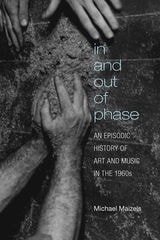
In and Out of Phase
An Episodic History of Art and Music in the 1960sMichael Maizels
University of Michigan Press, 2020
In and Out of Phase is the first sustained look at the creative interactions between artists and musicians of this era, looking at four pairs of creators who used process-oriented ideas and techniques in their music and art: Dan Flavin and La Monte Young; Sol LeWitt and Milton Babbitt; Richard Serra and Steve Reich; and Bruce Nauman and Meredith Monk. Maizels uncovers not just the social and intellectual connections between these two groups of creators, but illuminates how the focus on repetitive actions, pattern and process, and an emphasis on “surface” created mutual influence—and stylistic change—between music and art during this period. The book’s concluding chapter briefly addresses the enduring influence of the innovations of the 1960s on more recent works.
In the Course of Performance
Studies in the World of Musical ImprovisationEdited by Bruno Nettl and Melinda Russell
University of Chicago Press, 1998
Contributors are Stephen Blum, Sau Y. Chan, Jody Cormack, Valerie Woodring Goertzen, Lawrence Gushee, Eve Harwood, Tullia Magrini, Peter Manuel, Ingrid Monson, Bruno Nettl, Jeff Pressing, Ali Jihad Racy, Ronald Riddle, Stephen Slawek, Chris Smith, R. Anderson Sutton, and T. Viswanathan.
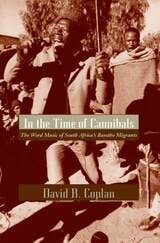
In the Time of Cannibals
The Word Music of South Africa's Basotho MigrantsDavid B. Coplan
University of Chicago Press, 1994
Coplan discusses every aspect of the Basotho musical literature, taking into account historical conditions, political dynamics, and social forces as well as the styles, artistry, and occasions of performance. He engages the postmodern challenge to decolonize our representation of the ethnographic subject and demonstrates how performance formulates local knowledge and communicates its shared understandings.
Complete with transcriptions of full male and female performances, this book develops a theoretical and methodological framework crucial to anyone seeking to understand the relationship between orality and literacy in the context of performance. This work is an important contribution to South African studies, to ethnomusicology and anthropology, and to performance studies in general.
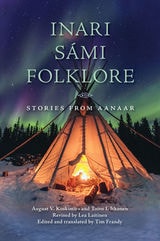
Inari Sámi Folklore
Stories from AanaarAugust V. Koskimies and Toivo I. Itkonen, revised by Lea Laitinen; Edited and translated by Tim Frandy
University of Wisconsin Press, 2020
First published in 1918 only in the Aanaar Sámi language and in Finnish, this anthology is now available in a centennial English-language edition for a global readership. Translator Tim Frandy has added biographies of the storytellers, maps and period photos, annotations, and a glossary. In headnotes that contextualize the stories, he explains such underlying themes as Aanaar conflicts with neighboring Sámi and Finnish communities, the collapse of the wild reindeer populations less than a century before, and the pre-Christian past in Aanaar. He introduces us to the bawdy humor of Antti Kitti, the didacticism of Iisakki Mannermaa, and the feminist leanings of Juho Petteri Lusmaniemi, emphasizing that folktales and proverbs are rooted in the experiences of individuals who are links in a living tradition.
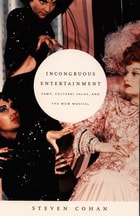
Incongruous Entertainment
Camp, Cultural Value, and the MGM MusicalSteven Cohan
Duke University Press, 2005
In addition to examining the spectatorship of the mgm musical, Cohan investigates the genre’s production and marketing, paying particular attention to the studio’s employment of a largely gay workforce of artists and craftspeople. He reflects on the role of the female stars—including Judy Garland, Debbie Reynolds, Esther Williams, and Lena Horne—and he explores the complex relationship between Gene Kelley’s dancing and his masculine persona. Cohan looks at how, in the decades since the 1950s, the marketing and reception of the mgm musical have negotiated the more publicly recognized camp value attached to the films. He considers the status of Singin’ in the Rain as perhaps the first film to be widely embraced as camp; the repackaging of the musicals as nostalgia and camp in the That’s Entertainment! series as well as on home video and cable; and the debates about Garland’s legendary gay appeal among her fans on the Internet. By establishing camp as central to the genre, Incongruous Entertainment provides a new way of looking at the musical.
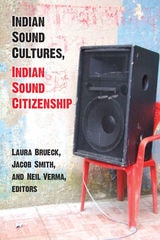
Indian Sound Cultures, Indian Sound Citizenship
Laura Brueck, Jacob Smith, and Neil Verma, editors
University of Michigan Press, 2020
Indian Sound Cultures, Indian Sound Citizenship addresses the multifaceted roles sound plays in Indian cultures and media, and enacts a sonic turn in South Asian Studies by understanding sound in its own social and cultural contexts. “Scapes, Sites, and Circulations” considers the spatial and circulatory ways in which sound “happens” in and around Indian sound cultures, including diasporic cultures. “Voice” emphasizes voices that embody a variety of struggles and ambiguities, particularly around gender and performance. Finally, “Cinema Sound” make specific arguments about film sound in the Indian context, from the earliest days of talkie technology to contemporary Hindi films and experimental art installations.
Integrating interdisciplinary scholarship at the nexus of sound studies and South Asian Studies by questions of nation/nationalism, postcolonialism, cinema, and popular culture in India, Indian Sound Cultures, Indian Sound Citizenship offers fresh and sophisticated approaches to the sonic world of the subcontinent.

Indigenous Pop
Native American Music from Jazz to Hip HopEdited by Jeff Berglund, Jan Johnson, and Kimberli Lee
University of Arizona Press, 2016
From Joe Shunatona and the United States Indian Reservation Orchestra to Jim Pepper, from Buffy Saint-Marie to Robbie Robertson, from Joy Harjo to Lila Downs, Indigenous Pop vividly addresses the importance of Native musicians and popular musical genres, establishing their origins and discussing what they represent.
Arranged both chronologically and according to popular generic forms, the book gives Indigenous pop a broad new meaning. In addition to examining the transitive influences of popular music on Indigenous expressive forms, the contributors also show ways that various genres have been shaped by what some have called the “Red Roots” of American-originated musical styles. This recognition of mutual influence extends into the ways of understanding how music provides methodologies for living and survival.
Each in-depth essay in the volume zeros in on a single genre and in so doing exposes the extraordinary whole of Native music. This book showcases the range of musical genres to which Native musicians have contributed and the unique ways in which their engagement advances the struggle for justice and continues age-old traditions of creative expression.

Industrial Strength Bluegrass
Southwestern Ohio's Musical LegacyEdited by Fred Bartenstein and Curtis W. Ellison
University of Illinois Press, 2021
Revelatory and multifaceted, Industrial Strength Bluegrass shares the inspiring story of a bluegrass hotbed and the people who created it.
Contributors: Fred Bartenstein, Curtis W. Ellison, Jon Hartley Fox, Rick Good, Lily Isaacs, Ben Krakauer, Mac McDivitt, Nathan McGee, Daniel Mullins, Joe Mullins, Larry Nager, Phillip J. Obermiller, Bobby Osborne, and Neil V. Rosenberg.
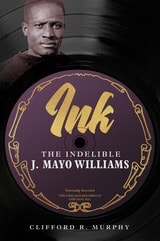
Ink
The Indelible J. Mayo WilliamsClifford R. Murphy
University of Illinois Press, 2024
<p>Vivid and engaging, <i>Ink</i> brings to light the extraordinary journey of a Black businessman and athlete.</p>
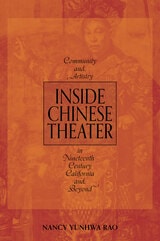
Inside Chinese Theater
Community and Artistry in Nineteenth-Century California and BeyondNancy Yunhwa Rao
University of Illinois Press, 2025
In the mid-nineteenth century, Chinese opera theater arrived as one of the significant performing art forms in California. Nancy Yunhwa Rao excavates and contextualizes the important history of Chinese Opera Theater, bringing to light the ways it became woven into the financial, political, social, and family life in California and beyond.
Chinese opera theater found brick-and-mortar homes with San Francisco theaters like the Hing Chuen Yuen and the Donn Qui Yuen. But troupes had already followed Chinese immigrants to mining and railroad towns, and across the American West. As Chinese theater became part of California and San Francisco culture, popular Chinese actors advocated for their art alongside appeals for civil rights. Rao draws on personal diaries, newspapers and artifacts to place Chinese theater within the everyday lives of San Francisco. She also examines the costumes, singing, staging, and storytelling that impacted mainstream reception and influenced how Chinese communities saw themselves.
Illustrated with seventy photographs, Inside Chinese Theater is an expert and eloquent journey into the early decades of Chinese opera in America.
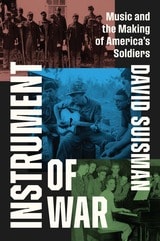
Instrument of War
Music and the Making of America's SoldiersDavid Suisman
University of Chicago Press, 2024
An original history of music in the lives of American soldiers.
Since the Civil War, music has coursed through the United States military. Soldiers have sung while marching, listened to records and armed forces radio, and packed the seats at large-scale USO shows. The bugle call “reveille” has roused soldiers in the morning, and “taps” has marked the end of a long day. Whether the sounds come from brass instruments, weary and homesick singers, or a pair of heavily used earbuds, where there has been war, there has been music, too.
Instrument of War is a first-of-its-kind study of music in the lives of American soldiers. Although musical activity has been part of war since time immemorial, the significance of the U.S. military as a musical institution has generally gone unnoticed. Historian David Suisman traces how the U.S. military has used—and continues to use—music to train soldiers and regulate military life, and how soldiers themselves have turned to music to cope with war’s emotional and psychological realities. Opening our ears to these practices, Suisman reveals how music has enabled more than a century and a half of American war-making. Instrument of War unsettles assumptions about music as a force of uplift and beauty, demonstrating how it has also been entangled in large-scale state violence.
From chanting “Sound off!” in basic training to switching on a phonograph or radio or cueing up an iPod playlist during a patrol, the sound of music has long resonated in soldiers’ wartime experiences. Now we all can finally hear it.