Results by title
1427 books match the query 'Politics' and 52 start with i

I Wanna Be Me
Rock Music And The Politics Of IdentityTheodore Gracyk
Temple University Press, 2001
Gracyk sees rock as a mass art, open-ended and open to diverse (but not unlimited) interpretations. Recordings reach millions, drawing people together in communities of listeners who respond viscerally to its sound and intellectually to its messages. As an art form that proclaims its emotional authenticity and resistance to convention, rock music constitutes part of the cultural apparatus from which individuals mold personal and political identities. Going to the heart of this relationship between the music's role in its performers' and fans' self-construction, Gracyk probes questions of gender and appropriation. How can a feminist be a Stones fan or a straight man enjoy the Indigo Girls? Does borrowing music that carries a "racial identity" always add up to exploitation, a charge leveled at Paul Simon's Graceland?
Ranging through forty years of rock history and offering a trove of anecdotes and examples, I Wanna Be Me, like Gracyk's earlier book, "should be cherished, and read, by rockers everywhere" (Salon).
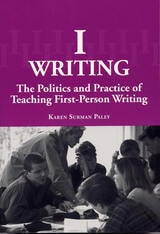
I-Writing
The Politics and Practice of Teaching First-Person WritingKaren Surman Paley
Southern Illinois University Press, 2001
In this ethnographic study of the teaching of writing, Karen Surman Paley reveals the social significance of first-person writing and the limitations of a popular taxonomy of composition studies. Paley looks critically at the way social constructionists have created an “Other” in the field of composition studies and named it “expressivist.”
Paley demonstrates the complexity of approaches to teaching writing through an ethnographic study of two composition faculty at Boston College, a programthat some would say is “expressivist.” She prompts her colleagues to consider how family experiences shape the way students feel about and treat people of races, religions, genders, and sexual preferences other than their own. Finally, she suggests to the field of composition that practitioners spend less time shoring up taxonomies of the field and more time sharing pedagogies.
Identities, Politics, and Rights
Austin Sarat and Thomas R. Kearns, Editors
University of Michigan Press, 1997
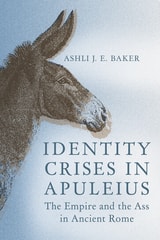
Identity Crises in Apuleius
The Empire and the Ass in Ancient RomeAshli J. E. Baker
University of Wisconsin Press, 2026
In the second century CE, the multiethnic, multilingual, and religiously diverse Roman Empire grew to its greatest extent. To maintain order, Rome relied heavily on strict social hierarchies, established not only through legal frameworks like citizenship, but also through cultural markers (such as clothing and language) and personal traits (such as educational achievement). Even as Rome grew into one of the world’s most powerful empires, however, its social systems strained under the stresses caused by that very growth, which encouraged cultural interaction, long-distance travel, and social mobility—all of which threatened the hierarchies that underpinned Roman order.
It was during this time that the North African–born, Latin-speaking, Greek-educated Apuleius—whose own background showcases the multiplicity of identities available then to Roman individuals—flourished. He remains one of the ancient world’s best-known authors today, thanks particularly to his famous novel, Metamorphoses, known also as The Golden Ass. Taking a bird’s-eye view of his work, Ashli J. E. Baker proffers a bold new reading of Apuleius, proposing that across his writings there is a consistent focus on the theme of identity and its instability. By placing close readings in conversation with sociocultural and material contexts, she shows that because the structures of Roman power depended on inherently unreliable markers of identity, Apuleius’ work can be read as a biting critique of the fraught relationship between the individual, society, and the state in his contemporary Rome.
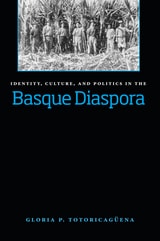
Identity, Culture, And Politics In The Basque Diaspora
Gloria Pilar Totoricagüena
University of Nevada Press, 2015
Totoricagüena offers a superb quantitative study of an aspect of Basque culture that has been largely ignored by scholars—the diaspora. In doing so, she enlarges the understanding of cultural identity in general—how it is defined and preserved, how it evolves over time, and how both the politics of distant places and the most intimate family habits can shape an individual’s sense of self. Identity, Culture, and Politics in the Basque Diaspora is a major contribution to the knowledge of Basques and their persistent political and cultural traditions.
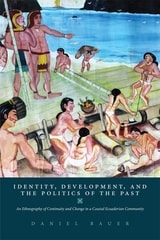
Identity, Development, and the Politics of the Past
An Ethnography of Continuity and Change in a Coastal Ecuadorian CommunityBauer
University Press of Colorado, 2018
Residents in the coastal community of Salango pushed for formal recognition of Indigenous identity while highlighting their pre-Hispanic roots in order to make claims about cultural continuity and ancestrality. Bauer considers the extent to which the politics of identity is embedded in the process of community-based development, paying close attention to how local conceptions of identity and residents’ ideas about their own identity and the identities of others fit within the broader context of Ecuadorian and Latin American notions of mestizaje. He emphasizes ethnogenesis and the fluid nature of identity as residents reference prehistory and the archaeological record as anchor points for claims to an Indigenous ethnic identity.
Identity, Development, and the Politics of the Past moves beyond existing studies that center on questions of authenticity and instead focuses on the ways people make claims to identity. This book makes a significant contribution to the growing body of literature on the Ecuadorian coast and directs scholars who focus on Ecuador to expand their focus beyond the highland and Amazonian regions. It will be of interest to students and scholars of Latin American studies, anthropology, ethnology, economic development, and ethnic identity.
Identity, Mediation, and the Cunning of Capital
Ani Maitra
Northwestern University Press, 2020
Maitra’s archive is transnational and multimodal. Moving from anticolonial polemics to psychoanalysis to diasporic experimental literature to postcolonial feminist and queer media, he lays bare the cunning by which capitalism produces and fragments identity through an intermedial “aesthetic dissonance” with the commodity form. Maitra’s novel contribution to theories of identity and to the concept of mediation will interest a wide range of scholars in media studies, critical race and postcolonial studies, and critical aesthetics.
Ideology, Interrupted
A Theory of Political PrecarityRobin Truth Goodman
University of Minnesota Press, 2026
A powerful argument that the failure of ideology has created political disconnection and apathy
Political institutions increasingly fail to provide representations where citizens can recognize, identify, and imagine themselves as part of the institutions’ democratic project. Robin Truth Goodman argues that this disconnection is because ideology itself has gotten interrupted. Reversing Louis Althusser’s famous formulation of ideology as “calling” to citizens who, in response, turn toward the call, she argues that citizens now believe that ideology has turned away from them and stopped calling, endangering the most basic processes of modern democracies.
Deconstructing the widespread failure of democratic institutions to connect with individuals, Goodman examines recent works by authors such as Claire Vaye Watkins, Colson Whitehead, Ling Ma, Han Kang, and Ruth Ozeki that interrogate subjective agency within three different sites of social struggle: eco-catastrophe, pandemic, and food insecurity. She shows the themes that emerge from the novels reflecting and extending how the privatization and technologization of political decision-making have effectively cut off politicians and political institutions from the people they are supposed to serve.
Basing her study in the political philosophy of Judith Butler, Hannah Arendt, Julia Kristeva, and other prominent feminists, Goodman draws parallels with gender theory and argues that precarity in democratic societies has prevented citizens from finding points of engagement within politics. Diagnosing this widespread inability to translate private struggles into collective responses, Ideology, Interrupted is a powerful and inspiring call for new forms of societal bonds and political engagement to rejuvenate our democratic systems.
Retail e-book files for this title are screen-reader friendly.

If Truth Be Told
The Politics of Public EthnographyDidier Fassin, editor
Duke University Press, 2017
Contributors. Jonathan Benthall, Lucas Bessire, João Biehl, Gabriella Coleman, Manuela Ivone Cunha, Vincent Dubois, Nadia Abu El-Haj, Didier Fassin, Kelly Gillespie, Ghassan Hage, Sherine Hamdy, Federico Neiburg, Unni Wikan
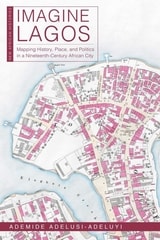
Imagine Lagos
Mapping History, Place, and Politics in a Nineteenth-Century African CityAdemide Adelusi-Adeluyi
Ohio University Press, 2024
Immaterial Archives
An African Diaspora Poetics of LossJenny Sharpe
Northwestern University Press, 2020
Immigrant Agency
Hmong American Movements and the Politics of Racialized IncorporationYang Sao Xiong
Rutgers University Press, 2022
Immigrant Identity and the Politics of Citizenship
A Collection of Articles from the Journal of American Ethnic HistoryJohn J Bukowczyk
University of Illinois Press, 2016
Immigrants, Evangelicals, and Politics in an Era of Demographic Change
Janelle S. Wong
Russell Sage Foundation, 2018
Asian Americans and Latinos currently constitute 13 percent of evangelicals, and their churches are among the largest, fastest growing organizations in their communities. While evangelical identity is associated with conservative politics, Wong draws from national surveys and interviews to show that non-white evangelicals express political attitudes that are significantly less conservative than those of their white counterparts. Black, Asian American, and Latino evangelicals are much more likely to support policies such as expanded immigration rights, increased taxation of the wealthy, and government interventions to slow climate change. As Wong argues, non-white evangelicals’ experiences as members of racial or ethnic minority groups often lead them to adopt more progressive political views compared to their white counterparts.
However, despite their growth in numbers, non-white evangelicals—particularly Asian Americans and Latinos—are concentrated outside of swing states, have lower levels of political participation than white evangelicals, and are less likely to be targeted by political campaigns. As a result, white evangelicals dominate the evangelical policy agenda and are overrepresented at the polls. Also, many white evangelicals have adopted even more conservative political views in response to rapid demographic change, perceiving, for example, that discrimination against Christians now rivals discrimination against racial and ethnic minorities.
Wong demonstrates that immigrant evangelicals are neither “natural” Republicans nor “natural” Democrats. By examining the changing demographics of the evangelical movement, Immigrants, Evangelicals, and Politics in an Era of Demographic Change sheds light on an understudied constituency that has yet to find its political home.
Immigration and the Politics of American Sovereignty, 1890-1990
Cheryl Shanks
University of Michigan Press, 2001
Imperfect Solidarities
Tagore, Gandhi, Du Bois, and the Global AnglophoneMadhumita Lahiri
Northwestern University Press, 2021
A century ago, activists confronting racism and colonialism—in India, South Africa, and Black America—used print media to connect with one another. Then, as now, the most effective medium for their undertakings was the English language. Imperfect Solidarities: Tagore, Gandhi, Du Bois, and the Global Anglophone tells the story of this interconnected Anglophone world. Through Rabindranath Tagore’s writings on China, Mahatma Gandhi’s recollections of South Africa, and W. E. B. Du Bois’s invocations of India, Madhumita Lahiri theorizes print internationalism. This methodology requires new terms within the worldwide hegemony of the English language (“the global Anglophone”) in order to encourage alternate geographies (such as the Global South) and new collectivities (such as people of color).
The women of print internationalism feature prominently in this account. Sonja Schlesin, born in Moscow, worked with Indians in South Africa. Sister Nivedita, an Irish woman in India, collaborated with a Japanese historian. Jessie Redmon Fauset, an African American, brought the world home to young readers through her work as an author and editor.
Reading across races and regions, genres and genders, Imperfect Solidarities demonstrates the utility of the neologism for postcolonial literary studies.
Imperial Decay
Literature, Autonomy, and the End of Modernization in the AmericasEmilio Sauri
Northwestern University Press, 2027
Demonstrating how art and literature remain vital to alternative imaginaries beyond the power of imperialism and modernization
Imperial Decay: Literature, Autonomy, and the End of Modernization in the Americas employs a dynamic, comparative approach to contemporary literature and visual art, showing how fiction, photography, poetry, and film from Latin America and the United States vividly illuminate the present. Focusing on the period from the end of the Cold War to the financial crisis of the late 2000s, Emilio Sauri contends that what brings these media together is not just the history of hemispheric connections but also, and more strikingly, the question of the artwork’s autonomy.
Elaborating on influential accounts that reveal how US hegemony in Latin America and the resistance it inspired throughout the region are bound up with the promise of modernization, Imperial Decay offers unique insights into the hollowing out of this promise at the end of the so-called American Century. Tracing this commitment back to the modernisms of the last century and forward to more recent works, this book casts canonical figures such as Ernest Hemingway, Walker Evans, and Gabriel García Márquez in a new and necessary light while developing a compelling interpretive framework for contemporary writers and artists from across the region, including Roberto Bolaño and Benjamin Kunkel, Alejandro Cartagena and Yvonne Venegas, and Kleber Mendonça Filho. Ultimately, Sauri shows why the work of art remains vital to the task of envisioning alternatives to the immiserations, ecological devastation, and degraded forms of life wrought by imperial decay.
Imperial Encounters
The Politics of Representation in North-South RelationsRoxanne Doty
University of Minnesota Press, 1996
Offers a fresh perspective on power relationships in global politics.
“Developed/underdeveloped,” “first world/third world,” “modern/traditional”-although there is nothing inevitable, natural, or arguably even useful about such divisions, they are widely accepted as legitimate ways to categorize regions and peoples of the world. In Imperial Encounters, Roxanne Lynn Doty looks at the way these kinds of labels influence North-South relations, reflecting a history of colonialism and shaping the way national identity is constructed today.
Employing a critical, poststructuralist perspective, Doty examines two “imperial encounters” over time: between the United States and the Philippines and between Great Britain and Kenya. The history of these two relationships demonstrates that not only is the more powerful member allowed to construct “reality,” but this construction of reality bears an important relationship to actual practice. Doty is particularly interested in the way in which the South has been represented by policymakers, scholars, and journalists, and how these representations have influenced specific encounters. Doty also uses the insights of Edward Said to argue that the power dynamic that allows the North to define the global identity of nations in the South ultimately tells us more about northern powers than about their southern neighbors. Doty then considers the persistence of representational practices, particularly with regard to Northern views of human rights in the South and contemporary social science discourses on North-South relations. She ends with the argument that the discipline of international relations needs to be reformed by broadening the repertoire of theoretical and analytical tools available to scholars studying global politics. Important and timely, Imperial Encounters brings a fresh perspective to the debate over the past-and the future-of global politics.
Imperial Israel and the Palestinians
The Politics of ExpansionNur Masalha
Pluto Press, 2000
Masalha argues that the heart of the conflict between Zionist immigrants/settlers and the native Palestinians has always been about land, territory, demography and water. He documents how Israeli policy has made it a priority to expel the Palestinians, either by war or peaceful measures. But these imperialist tendencies are not restricted to extremist zealots. The author uncovers the expansionist policies found in Labour Zionism and Kookist ideology.
Chapters cover the Whole Land of Israel Movement, Zionist Revisionism and the Likud Party, Gush Emunim and the religious fundamentalists, parties and movements of the far right and the evolution of Israeli Jewish public attitudes since 1967.
Imposing Decency
The Politics of Sexuality and Race in Puerto Rico, 1870–1920Eileen J. Suárez Findlay
Duke University Press, 2000
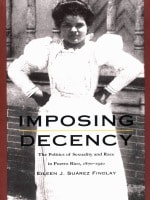
In showing how political projects and alliances in Puerto Rico were affected by racially contingent definitions of “decency” and “disreputability,” Findlay argues that attempts at moral reform and the state’s repression of “sexually dangerous” women were weapons used in batttles between elite and popular, American and Puerto Rican, and black and white. Based on a thorough analysis of popular and elite discourses found in both literature and official archives, Findlay contends that racialized sexual norms and practices were consistently a central component in the construction of social and political orders. The campaigns she analyzes include an attempt at moral reform by elite male liberals and a movement designed to enhance the family and cleanse urban space that ultimately translated into repression against symbollically darkened prostitutes. Findlay also explores how U.S. officials strove to construct a new colonial order by legalizing divorce and how feminist, labor, and Afro-Puerto Rican political demands escalated after World War I, often focusing on the rehabilitation and defense of prostitutes.
Imposing Decency forces us to rethink previous interpretations of political chronologies as well as reigning conceptualizations of both liberalism and the early working-class in Puerto Rico. Her work will appeal to scholars with an interest in Puerto Rican or Latin American studies, sexuality and national identity, women in Latin America, and general women’s studies.
In Defense of Politics
Bernard Crick
University of Chicago Press, 1993
It's hard to get excited about politics these days. Polarization is high, getting things done seems all but impossible, and at times it seems like no one is willing to listen to anyone they disagree with. Surely there's a better way.
In Defense of Politics says, loud and proud: Absolutely not. In this classic but still timely work, which recently drew strong praise from Ezra Klein, Bernard Crick argues that politics, with its compromises and frustrations aand power struggles, remains the only tested alternative to government by coercion, making both freedom and order possible in heterogeneous societies. For Crick, politics is messy and complex, and his book defends it against those who would identify it with (and reduce it to) ideology, democracy, nationalism, or technology. “Politics," Crick explains, "involves genuine relationships with people who are genuinely other people, not tasks set for our redemption or objects for our philanthropy.”
Clear-eyed and frank yet still capable of inspiring, In Defense of Politics is a rousing call to recommit to the hard work of bringing people together and moving society forward.

In Defense of Politics in Public Administration
A Value Pluralist PerspectiveMichael W. Spicer
University of Alabama Press, 2009
Where values collide, politics guides the way.
Scholars of public administration have historically too often been disdainful towards politics in the field, viewing political activities and interests as opportunities for corruption, mismanagement, and skewed priorities. Supporters of this anti-political stance have become even more strident in recent years, many of them advancing scientific models for the study and practice of public administration and governance.
Michael Spicer argues that politics deserves to be defended as a vital facet of public administration on the grounds that it can promote moral conduct in government and in public administration, principally by bringing to the foreground the role of values in administrative practice. Politics can facilitate the resolution of conflicts that naturally arise from competing values, or conceptions of the good, while minimizing the use of force or violence. Drawing on the writings of Isaiah Berlin, Bernard Crick, and Stuart Hampshire, In Defense of Politics in Public Administration argues that value conflict is an integral part of our moral experience, both in making our own moral choices and in dealing with those whose values conflict with our own. This book is a spirited declaration of principles and a timely contribution to a dialogue that is redefining public administration, both in theory and in practice.
In Lady Liberty's Shadow
The Politics of Race and Immigration in New JerseyRobyn Magalit Rodriguez
Rutgers University Press, 2017
In Lady Liberty’s Shadow examines popular white perceptions of danger represented by immigrants and their children, as well the specter that lurks at the edges of suburbs in the shape of black and Latino urban underclasses and the ever more nebulous hazard of (presumed-Islamic) terrorism that threatening to undermine “life as we know it.” Robyn Magalit Rodriguez explores the impact of anti-immigrant municipal ordinances on a range of immigrant groups living in varied suburban communities, from undocumented Latinos in predominantly white suburbs to long-established Asian immigrants in “majority-minority” suburbs. The “American Dream” that suburban life is supposed to represent is shown to rest on a racialized, segregated social order meant to be enjoyed only by whites. Although it is a case study of New Jersey, In Lady Liberty’s Shadow offers crucial insights that can shed fresh light on the national immigration debate.
For more information, go to: https://www.facebook.com/inlibertysshadow
In Senghor's Shadow
Art, Politics, and the Avant-Garde in Senegal, 1960–1995Elizabeth Harney
Duke University Press, 2004
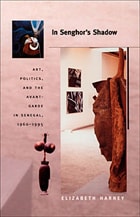
Heavily illustrated with nearly one hundred images, including some in color, In Senghor’s Shadow surveys the work of a range of Senegalese artists, including painters, muralists, sculptors, and performance-based groups—from those who worked at the height of Senghor’s patronage system to those who graduated from art school in the early 1990s. Harney reveals how, in the 1970s, avant-gardists contested Negritude beliefs by breaking out of established artistic forms. During the 1980s and 1990s, artists such as Moustapha Dimé, Germaine Anta Gaye, and Kan-Si engaged with avant-garde methods and local artistic forms to challenge both Senghor’s legacy and the broader art world’s understandings of cultural syncretism. Ultimately, Harney’s work illuminates the production and reception of modern Senegalese art within the global arena.

In The Nature Of Things
Language, Politics, and the EnvironmentJane Bennett
University of Minnesota Press, 1993
Informed by recent developments in literary criticism and social theory, In the Nature of Things addresses the presumption that nature exists independent of culture and, in particular, of language. The theoretical approaches of the contributors represent both modernist and postmodernist positions, including feminist theory, critical theory, Marxism, science fiction, theology, and botany. They demonstrate how the concept of nature is invoked and constituted in a wide range of cultural projects—from the Bible to science fiction movies, from hunting to green consumerism. Ultimately, it weeks to link the work of theorists concerned with nature and the environment to nontheorists who share similar concerns.
Contributors include R. McGreggor Cawley, Romand Coles, William E. Connolly, Jan E. Dizard, Valerie Hartouni, Cheri Lucas Jennings, Bruce H. Jennings, Timothy W. Luke, Shane Phelan, John Rodman, Michael J. Shapiro, and Wade Sikorski.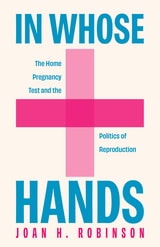
In Whose Hands
The Home Pregnancy Test and the Politics of ReproductionJoan H. Robinson
Rutgers University Press, 2027
The home pregnancy test is a technology that can be purchased in drug stores, gas stations, and online, and the results are often casually posted to social media. But, as sociologist and attorney Joan Robinson argues, no technology is as simple as it appears. In Whose Hands traces this test from its origin story in a lab to its day-to-day existence in the hands of users, showing that mundane technologies matter, especially when they are used as tools of surveillance and self-surveillance. The book is the result of Robinson's fourteen-year exploration of the social life of the home pregnancy test, and it describes the breadth and beauty of people's messy reproductive lives today. Based on archival and legal research as well as interviews with home pregnancy test users, it shows how even those technologies that we use because they're convenient can be tools of shame, surveillance, and control.
In a New Century
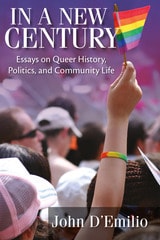
Essays on Queer History, Politics, and Community LifeJohn D’Emilio
University of Wisconsin Press, 2014
A pioneering scholar of gay history, John D’Emilio reflects in this wide-ranging collection of essays upon the social, cultural, and political changes provoked by LGBT activism. He offers provocative questions and historical analyses: What can we learn from a life-long activist like Bayard Rustin, who questioned the wisdom of “identity politics”? Was Richard Nixon a “gay liberationist”? How can knowing local stories—like those of Chicago in the 1950s, 1960s, and 1970s—help build stronger communities and enrich traditions of activism? Might the focus on achieving actually be evidence of growing conservatism in LGBT communities?
In a New Century provides a dynamic, thoughtful, and important resource for identifying changes that have occurred in the United States since 1960, taking stock of the work that still needs to be done, and issuing an urgent call to action for getting there.
Best Books for General Audiences, selected by the American Association of School Librarians
Best Special Interest Books, selected by the Public Library Reviewers
In the Red
The Politics of Public Debt Accumulation in Developed CountriesZsófia Barta
University of Michigan Press, 2018
Inclusion
The Politics of Difference in Medical ResearchSteven Epstein
University of Chicago Press, 2007
With Inclusion, Steven Epstein argues that strategies to achieve diversity in medical research mask deeper problems, ones that might require a different approach and different solutions.
Formal concern with this issue, Epstein shows, is a fairly recent phenomenon. Until the mid-1980s, scientists often studied groups of white, middle-aged men—and assumed that conclusions drawn from studying them would apply to the rest of the population. But struggles involving advocacy groups, experts, and Congress led to reforms that forced researchers to diversify the population from which they drew for clinical research. While the prominence of these inclusive practices has offered hope to traditionally underserved groups, Epstein argues that it has drawn attention away from the tremendous inequalities in health that are rooted not in biology but in society.
“Epstein’s use of theory to demonstrate how public policies in the health profession are shaped makes this book relevant for many academic disciplines. . . . Highly recommended.”—Choice
“A masterful comprehensive overview of a wide terrain.”—Troy Duster, Biosocieties
Inconvenient Strangers
Transnational Subjects and the Politics of CitizenshipShui-yin Sharon Yam
The Ohio State University Press, 2019
Inconvenient Strangers: Transnational Subjects and the Politics of Citizenship draws attention to how intersecting networks of power—particularly race and ethnicity, gender, and social class—marginalize transnational subjects who find themselves outside a dominant citizenship that privileges familiarity and socioeconomic and racial superiority. In this study of how neoliberal ideas limit citizenship for marginalized populations in Hong Kong, Shui-yin Sharon Yam examines how three transnational groups—mainland Chinese maternal tourists, Southeast Asian migrant domestic workers, and South Asian permanent residents—engage with the existing citizenry and gain recognition through circulating personal narratives.
Coupling transnational feminist studies with research on emotions, Yam analyzes court cases, interviews, social media discourse, and the personal narratives of Hong Kong’s marginalized groups to develop the concept of deliberative empathy—critical empathy that prompts an audience to consider the structural sources of another’s suffering while deliberating one’s own complicity in it. Yam argues that storytelling and familial narratives can promote deliberative empathy among the audience as both a political and ethical response—carrying the affective power to jolt the dominant citizenry out of their usual xenophobic attitudes and ultimately prompt them to critically consider the human conditions they share with the marginalized and move them toward more ethical coalitions.
Indelible Inequalities in Latin America
Insights from History, Politics, and CulturePaul Gootenberg and Luis Reygadas, eds.
Duke University Press, 2010
Contributors
Jeanine Anderson
Javier Auyero
Odette Casamayor
Christina Ewig
Paul Gootenberg
Margaret Gray
Eric Hershberg
Lucio Renno
Luis Reygadas
Indigenous Mestizos
The Politics of Race and Culture in Cuzco, Peru, 1919-1991Marisol de la Cadena
Duke University Press, 2000
De la Cadena’s ethnographically and historically rich study examines how indigenous citizens of the city of Cuzco have been conceived by others as well as how they have viewed themselves and places these conceptions within the struggle for political identity and representation. Demonstrating that the terms Indian and mestizo are complex, ambivalent, and influenced by social, legal, and political changes, she provides close readings of everyday concepts such as marketplace identity, religious ritual, grassroots dance, and popular culture, as well as of such common terms as respect, decency, and education. She shows how Indian has come to mean an indigenous person without economic and educational means—one who is illiterate, impoverished, and rural. Mestizo, on the other hand, has come to refer to an urban, usually literate, and economically successful person claiming indigenous heritage and participating in indigenous cultural practices. De la Cadena argues that this version of de-Indianization—which, rather than assimilation, is a complex political negotiation for a dignified identity—does not cancel the economic and political equalities of racism in Peru, although it has made room for some people to reclaim a decolonized Andean cultural heritage.
This highly original synthesis of diverse theoretical arguments brought to bear on a series of case studies will be of interest to scholars of cultural anthropology, postcolonialism, race and ethnicity, gender studies, and history, in addition to Latin Americanists.
Information Please
Culture and Politics in the Age of Digital MachinesMark Poster
Duke University Press, 2006
Poster’s critique develops through a series of lively studies. Analyzing the appearance of Sesame Street’s Bert next to Osama Bin Laden in a New York Times news photo, he examines the political repercussions of this Internet “hoax” as well as the unlimited opportunities that Internet technology presents for the appropriation and alteration of information. He considers the implications of open-source licensing agreements, online personas, the sudden rise of and interest in identity theft, peer-to-peer file sharing, and more. Focusing explicitly on theory, he reflects on the limitations of critical concepts developed before the emergence of new media, particularly globally networked digital communications, and he argues that, contrary to the assertions of Michael Hardt and Antonio Negri, new media do not necessarily reproduce neoimperialisms. Urging a rethinking of assumptions ingrained during the dominance of broadcast media, Poster charts new directions for work on politics and digital culture.
Inside Academia
Professors, Politics, and PoliciesCahn, Steven M
Rutgers University Press, 2019
Inside Academia uses real cases to illustrate how faculty members, deans, and provosts often do not serve the best interests of schools or students. Yet the book also highlights efforts of those who have committed themselves and their institutions to the pursuit of academic excellence.
Integrating the Rural World
Economy, Society and Politics in Central and South-Eastern Europe, 1848-1939Sorin Radu
Central European University Press, 2026
Intellectuals and Politics in Central Europe
Ivan Bernik
Central European University Press, 1999
Interrogating Cultural Studies
Theory, Politics and PracticeEdited by Paul Bowman
Pluto Press, 2003
Interrogating Postfeminism
Gender and the Politics of Popular CultureYvonne Tasker and Diane Negra, eds.
Duke University Press, 2007
Essays by feminist film, media, and literature scholars based in the United States and United Kingdom provide an array of perspectives on the social and political implications of post-feminism. Examining magazines, mainstream and independent cinema, popular music, and broadcast genres from primetime drama to reality television, contributors consider how postfeminism informs self-fashioning through makeovers and cosmetic surgery, the “metrosexual” male, the “black chick flick,” and more. Interrogating Postfeminism demonstrates not only the viability of, but also the necessity for, a powerful feminist critique of contemporary popular culture.
Contributors. Sarah Banet-Weiser, Steven Cohan, Lisa Coulthard, Anna Feigenbaum, Suzanne Leonard, Angela McRobbie, Diane Negra, Sarah Projansky, Martin Roberts, Hannah E. Sanders, Kimberly Springer, Yvonne Tasker, Sadie Wearing

Intimate Radicals
East European Jewish Women and Progressive American DesiresAshley Walters
Rutgers University Press, 2027
In the early 1900s, a handful of unconventional couples emerged within the American radical Left. In Intimate Radicals, Ashley Walters tells the story of a group of young, East European Jewish women and white, Anglo-Saxon Protestant men— such as Jack London, Sinclair Lewis, and William English Walling, among other notable figures in American literature, domestic and international affairs, and early Hollywood—and how they imbued their romances with revolutionary principles. The relationships captivated the public and became a source of intrigue, largely driven by the growth of human-interest journalism. Through individual biographies, historical narrative, and literary analysis, Walters reveals the cultural and political contingencies of desire.
As Progressive Era radicals rebelled against the constraints of an earlier era, East European Jews—and Jewish women in particular— came to embody a new cosmopolitan ideal and European revolutionary spirit. Drawing on letters, newspapers, literature, and film, Walters shows how the public reception of these patrician-immigrant relationships lent credence to a new cultural mythology of Jewish womanhood. The men’s desire for East European Jewish women, she also points out, can be viewed as a form of “radical tourism,” in which men who enjoy a degree of privilege pursue an alluring Other in the hope of obtaining a more worldly identity.
This book is published with the support of the Jordan Schnitzer First Book Publication Award, administered by the Association for Jewish Studies.

Intimate Relations
Social Reform and the Late Nineteenth-Century South Asian NovelKrupa Shandilya
Northwestern University Press, 2017

Invoking Hope
Theory and Utopia in Dark TimesPhillip E. Wegner
University of Minnesota Press, 2020
An appeal for the importance of theory, utopia, and close consideration of our contemporary dark times
What does any particular theory allow us to do? What is the value of doing so? And who benefits? In Invoking Hope, Phillip E. Wegner argues for the undiminished importance of the practices of theory, utopia, and a deep and critical reading of our current situation of what Bertolt Brecht refers to as finsteren Zeiten, or dark times.
Invoking Hope was written in response to three events that occurred in 2016: the five hundredth anniversary of the publication of Thomas More’s Utopia; the one hundredth anniversary of the founding text in theory, Ferdinand de Saussure’s Course in General Linguistics; and the rise of the right-wing populism that culminated in the election of Donald Trump. Wegner offers original readings of major interventions in theory alongside dazzling utopian imaginaries developed from classical Greece to our global present—from Theodor Adorno, Ernst Bloch, Alain Badiou, Jacques Derrida, Fredric Jameson, Sarah Ahmed, Susan Buck-Morss, and Jacques Lacan to such works as Plato’s Republic, W. E. B. Du Bois’s John Brown, Isak Dinesen’s “Babette’s Feast,” Kim Stanley Robinson’s 2312, and more. Wegner comments on an expansive array of modernist and contemporary literature, film, theory, and popular culture.
With Invoking Hope, Wegner provides an innovative lens for considering the rise of right-wing populism and the current crisis in democracy. He discusses challenges in the humanities and higher education and develops strategies of creative critical reading and hope against the grain of current trends in scholarship.
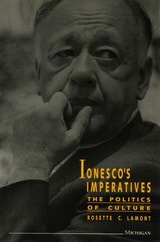
Ionesco's Imperatives
The Politics of CultureRosette C. Lamont
University of Michigan Press, 1993
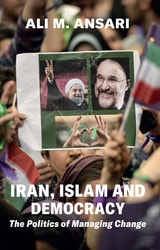
Iran, Islam and Democracy
The Politics of Managing ChangeAli M. Ansari
Gingko, 2019
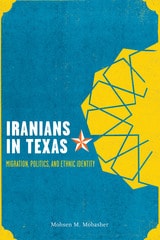
Iranians in Texas
Migration, Politics, and Ethnic IdentityBy Mohsen M. Mobasher
University of Texas Press, 2012
Thousands of Iranians fled their homeland when the 1978–1979 revolution ended the fifty-year reign of the Pahlavi Dynasty. Some fled to Europe and Canada, while others settled in the United States, where anti-Iranian sentiment flared as the hostage crisis unfolded. For those who chose America, Texas became the fourth-largest settlement area, ultimately proving to be a place of paradox for any Middle Easterner in exile. Iranians in Texas culls data, interviews, and participant observations in Iranian communities in Houston, Dallas, and Austin to reveal the difficult, private world of cultural pride, religious experience, marginality, culture clashes, and other aspects of the lives of these immigrants.
Examining the political nature of immigration and how the originating and receiving countries shape the prospects of integration, Mohsen Mobasher incorporates his own experience as a Texas scholar born in Iran. Tracing current anti-Muslim sentiment to the Iranian hostage crisis, two decades before 9/11, he observes a radically negative shift in American public opinion that forced thousands of Iranians in the United States to suddenly be subjected to stigmatization and viewed as enemies. The book also sheds light on the transformation of the Iranian family in exile and some of the major challenges that second-generation Iranians face in their interactions with their parents.
Bringing to life a unique population in the context of global politics, Iranians in Texas overturns stereotypes while echoing diverse voices.
Iranians in Texas
Migration, Politics, and Ethnic IdentityMohsen Mostafavi MobasherForeword by Nestor Rodriguez
University of Texas Press, 2025
An exploration of the link between politics of migration, prospects of integration, and ethnic identity among Iranian immigrants and their descendants in the United States, spanning from the 1970s to the present day.
Thousands of Iranians fled their homeland when the 1978–1979 revolution ended the fifty-year reign of the Pahlavi dynasty. Some fled to Europe and Canada, while others settled in the United States, where anti-Iranian sentiment flared as the hostage crisis unfolded. For those who chose America, Texas became the fourth-largest settlement area. Iranians in Texas culls data, interviews, and participant observations in Iranian communities in Houston, Dallas, and Austin to reveal the difficult, private world of cultural pride, religious experience, marginality, culture clashes, and other aspects of the lives of these immigrants.
Examining the political nature of immigration between Iran and the United States and social, cultural, and economic life for Iranian immigrants and their American-born children, Mohsen Mostafavi Mobasher incorporates his own experience as a Texas scholar born in Iran. In this revised edition, two new chapters and a new introduction and conclusion provide updates on what has happened in the Obama, Trump, and Biden administrations, including the Iran nuclear deal and resulting controversy, the Muslim ban, and the global protests over the death of twenty-two-year-old Mahsa Amini for not wearing a hijab. Bringing to life a unique immigrant population in the context of global politics, Iranians in Texas overturns stereotypes and echoes diverse voices.
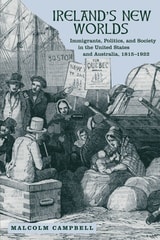
Ireland's New Worlds
Immigrants, Politics, and Society in the United States and Australia, 1815–1922Malcolm Campbell
University of Wisconsin Press, 2007
Ireland’s New Worlds is the first book to compare Irish immigrants in the United States and Australia. In a profound challenge to the national histories that frame most accounts of the Irish diaspora, Malcolm Campbell highlights the ways that economic, social, and cultural conditions shaped distinct experiences for Irish immigrants in each country, and sometimes in different parts of the same country. From differences in the level of hostility that Irish immigrants faced to the contrasting economies of the United States and Australia, Campbell finds that there was much more to the experiences of Irish immigrants than their essential “Irishness.” America’s Irish, for example, were primarily drawn into the population of unskilled laborers congregating in cities, while Australia’s Irish, like their fellow colonialists, were more likely to engage in farming. Campbell shows how local conditions intersected with immigrants’ Irish backgrounds and traditions to create surprisingly varied experiences in Ireland’s new worlds.
“Well conceived and thoroughly researched . . . . This clearly written, thought-provoking work fulfills the considerable ambitions of comparative migration studies.”—Choice

Islam and Politics in East Africa
The Sufi Order in TanzaniaAugust H. Nimtz Jr.
University of Minnesota Press, 1980
Islam and Politics in East Africa was first published in 1980. Minnesota Archive Editions uses digital technology to make long-unavailable books once again accessible, and are published unaltered from the original University of Minnesota Press editions.
Focusing on the interplay of religion, society, and politics, August Nimtz examines the role of sufi tariqas (brotherhoods) in Tanzania, where he observed an African Muslim society at first hand. Nimtz opens this book with a historical account of Islam in East Africa, and in subsequent chapters analyzes the role of tariqas in Tanzania and, more specifically, in the coastal city of Bagamoyo. Using a conceptual framework derived from contemporary political theories on social cleavages and individual interests. Nimtz explains why the tariqa is important in the process of political change.
The fundamental cleavage in Muslim East Africa, he notes, is that of "whites" versus blacks. Nimtz contends that the tariqus, in serving the interest of blacks (that is, Africans), became in turn vehicles for the mass mobilization of African Muslims during the anti-colonial struggle. In Bagamoyo he finds a similar process and, in addition, reveals that the tariqas have served African interests in opposition to those of "whites" because of the individual benefits they provide. At the same time, Nimtz concludes, the social structure of East African Muslim society has ensured that Africans would be particularly attracted to these benefits. This work will interest both observers of African political development and specialists in the Islamic studies.
Islam and Politics in Indonesia
The Masyumi Party between Democracy and IntegralismRémy Madinier
National University of Singapore Press, 2015
This book examines the Masyumi Party from its roots in early 20th-century Muslim reformism to its contemporary legacy, and offers a perspective on political Islam which provides an alternative to the more widely-studied model of Middle-Eastern Islam. The party’s experience teaches us much about the fine line separating a moderate form of Islam open to democracy and a certain degree of secularisation from the sort of religious intransigence which can threaten the country’s denominational coexistence.
Islam's Political Culture
Religion and Politics in Predivided PakistanBy Nasim Ahmad Jawed
University of Texas Press, 1999
This book examines the political dimension of Islam in predivided Pakistan (1947-1971), one of the first new Muslim nations to commit itself to an Islamic political order and one in which the national debate on Islamic, political, and ideological issues has been the most persistent, focused, and rich of any dialogues in the contemporary Muslim world.
Nasim Jawed draws on the findings of a survey he conducted among two influential social groups—the ulama (traditional religious leaders) and the modern professionals—as well as on the writings of Muslim intellectuals. He probes the major Islamic positions on critical issues concerning national identity, the purpose of the state, the form of government, and free, socialist, and mixed economies.
This study contributes to an enhanced understanding of Islam's political culture worldwide, since the issues, positions, and arguments are often similar across the Muslim world. The empirical findings of the study not only outline the ideological backdrop of contemporary Islamic reassertion, but also reveal diversity as well as tensions within it.
Israel
Politics, Myths and Identity CrisesAkiva Orr
Pluto Press, 1994