Results by title
1861 books match the query 'Social life and customs' and 74 start with i

I Am Alaskan
Brian Adams
University of Alaska Press, 2013
In this full-color tribute, Adams entices us to reconsider our ideas of this unique and compelling land and its equally individual residents. He captures subjects on urban streets and in rural villages, revealing what daily life in Alaska is really like. The portraits focus on moments both ordinary and extraordinary, serious and playful, while capturing Alaskans at their most natural. Subjects range from Alaska Native villagers to rarely seen portraits of famous Alaskans, including Sarah Palin, Vic Fischer, and Lance Mackey. Through photographs, Adams also explores his own half-Iñupiat, half–American Alaska identity in the process, revealing how he came to define himself and the state in which he lives. Frame by frame, Adams powerfully and honestly shows what it means to be an Alaskan.
Ice Geographies
The Colonial Politics of Race and Indigeneity in the ArcticJen Rose Smith
Duke University Press, 2025
Idlewild
The Rise, Decline, and Rebirth of a Unique African American Resort TownRonald J. Stephens
University of Michigan Press, 2013
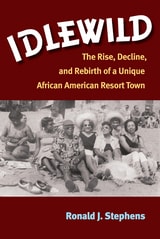
In 1912, white land developers founded Idlewild, an African American resort community in western Michigan. Over the following decades, the town became one of the country’s foremost vacation destinations for the black middle class, during its peak drawing tens of thousands of visitors annually and hosting the era’s premier entertainers, such as The Four Tops, Della Reese, Brook Benton, and George Kirby. With the civil rights movement and the resulting expansion of recreation options available to African Americans, Idlewild suffered a sharp social and economic decline, and by the early 1980s the town had become a struggling retirement community in the midst of financial and political crises.
Meticulously researched and unearthing never-before-seen historical material, Ronald J. Stephens’s book examines the rapid rise and decline of this pivotal landmark in African American and leisure history, in the process exploring intersections among race, class, tourism, entertainment, and historic preservation in the United States. Featuring a wealth of fieldwork on contemporary Idlewild, the book also takes a candid look at recent revitalization efforts and analyzes the possibilities for a future resurgence of this national treasure.
If I Were Boss
The Early Business Stories of Sinclair LewisEdited by Anthony Di Renzo
Southern Illinois University Press, 1997
Anthony Di Renzo makes available for the first time since their original publication some eighty years ago a collection of fifteen of Sinclair Lewis’s early business stories.
Among Lewis’s funniest satires, these stories introduce the characters, themes, and techniques that would evolve into Babbitt. Each selection reflects the commercial culture of Lewis’s day, particularly Reason Why advertising, self-help manuals, and the business fiction of the Saturday Evening Post. The stories were published between October 1915 and May 1921 (nine in the Saturday Evening Post, four in Metropolitan Magazine, one in Harper’s Magazine, and one in American Magazine).
Because some things have not changed in the American workplace since Lewis’s day, these highly entertaining and unflinchingly accurate office satires will appeal to the fans of Dilbert and The Drew Carey Show. In a sense, they provide lay readers with an archaeology of white-collar angst and regimentation. The horror and absurdities of contemporary corporate downsizing already existed in the office of the Progressive Era. For an audience contemplating the death of the American middle class, Lewis’s stories provide an important retrospective on earlier times and a preliminary autopsy on the American dream.
Appearing just in time to celebrate the seventy-fifth anniversary of the publication of Babbitt, this collection rescues Lewis’s best early short fiction from obscurity, provides extensive information about his formative years in advertising and public relations, and analyzes both his genius for marketing and his carefully cultivated persona as the Great Salesman of American letters.

Igloo Among Palms
Rod Val Moore
University of Iowa Press, 1994
Illuminating the Particular
Photographs of Milwaukee's Polish South SideChristel T. Maass
Wisconsin Historical Society Press, 2003
While Kwasniewski's camera captured the sights and sounds of Milwaukee at the turn of the century from the perspective of a single ethnic group in a single neighborhood, his photographs resonate far beyond Milwaukee's Polish South Side. They illuminate the particulars of American life during the early decades of the twentieth century. "What we see, reflected in the distant mirror," says John Gurda, "is ourselves."

Imacoqwa’s Arrow
On the Biunity of the Sun and Moon in a Papuan LifeworldJadran Mimica
HAU, 2025
In Imacoqwa’s Arrow, Jadran Mimica draws on decades of field research to bring us a rich ethnographic account of myth and meaning in the lifeworlds of the Yagwoia of Papua New Guinea. He focuses especially on the relations of the sun and the moon in Yagwoia understandings of the universe and their own place within it. This is classic terrain in Melanesian ethnography, but Mimica does much more than add to the archive of anthropological accounts of the significance of the sun and the moon for peoples of this part of the world. With extraordinary rigor and reflexivity, he grounds his understanding of Yagwoia concepts in psychoanalytic and phenomenological methods that afford a radically new and revealing translation of these seminal themes in Melanesian mythology and its poetics. This is a major contribution to the hermeneutics of ethnographic translation and theorization.
Images of Contemporary Iceland
Everyday Lives and Global ContextsGisli Palsson
University of Iowa Press, 1996
The Anthropology of Iceland presents the first perspectives on Icelandic anthropology from both Icelandic and foreign anthropologists. The thirteen essays in this volume are divided into four themes: ideology and action; kinship and gender; culture, class, and ethnicity; and the Commonwealth period of circa 930 to 1220, which saw the flowering of sagas. Insider and outsider viewpoints on such topics as the Icelandic women's movement, the transformation of the fishing industry, the idea of mystical power in modern Iceland, and archaeological research in Iceland merge to form an international, comparative discourse.
Individually and collectively, by bringing the insights of anthropology to bear on Iceland, the native and foreign authors of this volume carry Iceland into the realm of modern anthropology, advancing our understanding of the island's people and the practice of anthropology.
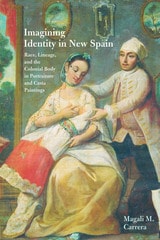
Imagining Identity in New Spain
Race, Lineage, and the Colonial Body in Portraiture and Casta PaintingsBy Magali M. Carrera
University of Texas Press, 2003
Using an interdisciplinary approach that also considers legal, literary, and religious documents of the period, Magali Carrera focuses on eighteenth-century portraiture and casta paintings to understand how the people and spaces of New Spain were conceptualized and visualized.
Winner, Book Award, Association of Latin American Art, 2004
Reacting to the rising numbers of mixed-blood (Spanish-Indian-Black African) people in its New Spain colony, the eighteenth-century Bourbon government of Spain attempted to categorize and control its colonial subjects through increasing social regulation of their bodies and the spaces they inhabited. The discourse of calidad (status) and raza (lineage) on which the regulations were based also found expression in the visual culture of New Spain, particularly in the unique genre of casta paintings, which purported to portray discrete categories of mixed-blood plebeians.
Using an interdisciplinary approach that also considers legal, literary, and religious documents of the period, Magali Carrera focuses on eighteenth-century portraiture and casta paintings to understand how the people and spaces of New Spain were conceptualized and visualized. She explains how these visual practices emphasized a seeming realism that constructed colonial bodies—elite and non-elite—as knowable and visible. At the same time, however, she argues that the chaotic specificity of the lives and lived conditions in eighteenth-century New Spain belied the illusion of social orderliness and totality narrated in its visual art. Ultimately, she concludes, the inherent ambiguity of the colonial body and its spaces brought chaos to all dreams of order.
Immigrant Women in the Settlement of Missouri
Robyn Burnett & Ken Luebbering
University of Missouri Press, 2005
Because it examines the lives of women from many social classes and ethnic backgrounds, Immigrant Women in the Settlement of Missouri does much to explain the rich cultural diversity Missouri enjoys today. The photographs and narratives relating to Czech, French, German, Hungarian, Irish, Italian, and Polish life will remind descendants of immigrants that many customs and traditions they grew up practicing have roots in their home countries and will also promote understanding of the customs of other cultures. In addition to the ethnic and class differences that affected these women’s lives, the book also notes the impact of the various eras in which they lived, their education, the circumstances of their migrations, and their destinations across Missouri.
With their engaging and straightforward narrative, Burnett and Luebbering take the reader chronologically through the history of the state from the colonial period to the Civil War and industrialization. Like all Missouri Heritage Readers, this one is presented in an accessible format with abundant illustrations, and it is sure to please both general readers and those engaged in immigrant and women’s studies.

Impasse of the Angels
Scenes from a Moroccan Space of MemoryStefania Pandolfo
University of Chicago Press, 1997
Impasse of the Angels explores what it means to be a subject in the historical and poetic imagination of a southern Moroccan society. Passionate and lyrical, ironic and tragic, the book listens to dissonant, often idiosyncratic voices—poetic texts, legends, social spaces, folktales, conversations—which elaborate in their own ways the fractures, wounds, and contradictions of the Maghribî postcolonial present. Moving from concrete details in a traditional ethnographic sense to a creative, experiential literary style, Impasse of the Angels is a tale of life and death compellingly addressing readers from anthropology, literature, philosophy, postcolonial criticism, and Middle Eastern studies.
Imperial City
Rome under NapoleonSusan Vandiver Nicassio
University of Chicago Press, 2009
In 1798, the armies of the French Revolution tried to transform Rome from the capital of the Papal States to a Jacobin Republic. For the next two decades, Rome was the subject of power struggles between the forces of the Empire and the Papacy, while Romans endured the unsuccessful efforts of Napoleon’s best and brightest to pull the ancient city into the modern world. Against this historical backdrop, Nicassio weaves together an absorbing social, cultural, and political history of Rome and its people. Based on primary sources and incorporating two centuries of Italian, French, and international research, her work reveals what life was like for Romans in the age of Napoleon.
“A remarkable book that wonderfully vivifies an understudied era in the history of Rome. . . . This book will engage anyone interested in early modern cities, the relationship between religion and daily life, and the history of the city of Rome.”—Journal of Modern History
“An engaging account of Tosca’s Rome. . . . Nicassio provides a fluent introduction to her subject.”—History Today
“Meticulously researched, drawing on a host of original manuscripts, memoirs, personal letters, and secondary sources, enabling [Nicassio] to bring her story to life.”—History

Imperial Imaginings
The Dean C. Worcester Photographic Collection of the PhilippinesCarla M Sinopoli
University of Michigan Press, 2021
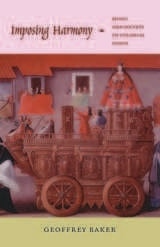
Imposing Harmony
Music and Society in Colonial CuzcoGeoffrey Baker
Duke University Press, 2008
Building on recent scholarship by social historians and urban musicologists and drawing on extensive archival research, Baker highlights European music as a significant vehicle for reproducing and contesting power relations in Cuzco. He examines how Andean communities embraced European music, creating an extraordinary cultural florescence, at the same time that Spanish missionaries used the music as a mechanism of colonialization and control. Uncovering a musical life of considerable and unexpected richness throughout the diocese of Cuzco, Baker describes a musical culture sustained by both Hispanic institutional patrons and the upper strata of indigenous society. Mastery of European music enabled elite Andeans to consolidate their position within the colonial social hierarchy. Indigenous professional musicians distinguished themselves by fulfilling important functions in colonial society, acting as educators, religious leaders, and mediators between the Catholic Church and indigenous communities.
Impossible Appetites
James Fetler
University of Iowa Press, 1980
The collection of nine stories which won the 1980 Iowa Short Fiction Award is woven in a pattern so subtle that reading it is like writing your own nine-part novel. The author allows brief glimpses into the tormented journals of Joseph Quaile, a man of acute compassions and consuming hungers, then juxtaposes them with the fiction Quaile writes to scourge his demons and come to terms with himself and the people he loves. This is a dispassionate intelligence in passionate pursuit of freedom and reconciliation.

Improvised Adolescence
Somali Bantu Teenage Refugees in AmericaSandra Grady
University of Wisconsin Press, 2015
Improvised Adolescence explores how teenagers from southern Somalia, who spent much of their childhood in East African refugee camps, are adapting to resettlement in the American Midwest. The collapse of the Somali state in 1991, and subsequent chaos in the Horn of Africa, disrupted the lives of these young people educationally, culturally, and developmentally. Folklorist Sandra Grady has intermittently observed the lifeworld of these teens—their homes, their entertainment choices, their interaction with classmates and teachers at school, and their plans for the future—for more than seven years to understand the cultural tools they’ve used in their journey from this disrupted childhood. They negotiate two sets of cultural expectations: in the resettled Somali Bantu community, traditional rites of passage continue to mark the change from child to adult; in the surrounding U.S. culture, an unfamiliar in-between category—“adolescent”—delays adulthood. Offering analysis that is both engaging and theoretically grounded, Grady tracks the emergence in this immigrant community of an improvised adolescence.
Best books for public & secondary school libraries from university presses, American Library Association
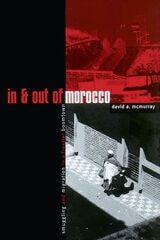
In And Out Of Morocco
Smuggling and Migration in a Frontier BoomtownDavid Mcmurray
University of Minnesota Press, 2001
A revealing inquiry into how global culture is lived locally.
Every summer for almost forty years, tens of thousands of Moroccan emigrants from as far away as Norway and Germany descend on the duty-free smugglers’ cove/migrant frontier boomtown of Nador, Morocco. David McMurray investigates the local effects of the multiple linkages between Nador and international commodity circuits, and analyzes the profound effect on everyday life of the free flow of bodies, ideas, and commodities into and out of the region.
Combining immigration and population statistics with street-level ethnography, In and Out of Morocco covers a wide range of topics, including the origin and nature of immigrant nostalgia, the historical evolution of the music of migration in the region, and the influence of migrant wealth on social distinctions in Nador. Groundbreaking in its attention to the performative aspects of life in a smuggling border zone, the book also analyzes the way in which both migration and smuggling have affected local structures of feeling by contributing to the spread of hyperconsumption. The result is a rare and revealing inquiry into how the global culture is lived locally.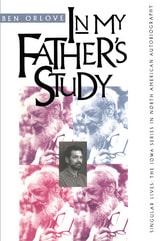
In My Father'S Study
Ben Orlove
University of Iowa Press, 1995
In 1921 Solomon Orlovski, a Russian Jew born in 1904, emigrated to America and transformed himself into Robert Orlove, a pattern maker in two senses of the term: during the day, he worked in the fur trade in New York and Chicago, making patterns for toys and hats; in his private life he became a self-taught artist who created prints, sketches, and collages in his study. More than sixty years later his son Ben—an anthropologist educated at Harvard and Berkeley—walked through the doorway of the deceased Robert's study and began to explore more than a half century of his father's experiences, thoughts, and emotions as well as his own very different life. His wry, sensitive combination of biography, memoir, and autobiography taps a remarkably rich vein of individual and collective experience in our diverse society.
Ben Orlove's dual narrative constitutes a family history of notable breadth and immediacy. By turns passionate and cool, dramatic and analytic, he excavates his father Robert's lifetime accumulation of diaries, letters, clippings, photographs, and artworks to create a convincing, deeply satisfying portrait that link both father and son.

In Oceania
Visions, Artifacts, HistoriesNicholas Thomas
Duke University Press, 1997
In Oceania documents and analyzes the "rhetorical artifacts" of explorers, missionaries, fiction and travel writers, and the people of the Pacific themselves to illustrate how Oceanic identities have been represented over time. Not content with conventional methods of anthropology or history, Thomas draws on postcolonial theory and literary analysis in extraordinarily wide-ranging analyses of texts, visual images, and historical processes. He demonstrates how cultures of the Pacific Islands have dealt with colonialist ventures, modernity, and the debate about the recuperation of histories and traditions. The picture Thomas paints of Oceania, however, is not one of a group of societies stripped of meaning, but one that shows how the interactions between indigenous cultures and European influences have created entirely new identities.

In Pursuit of Civility
Manners and Civilization in Early Modern EnglandKeith Thomas
Brandeis University Press, 2018
In Search of New England's Native Past
Selected Essays by Gordon M. DayGordon M. Day
University of Massachusetts Press, 1998
This volume highlights the work of the late Gordon M. Day, renowned for his groundbreaking research on the history and culture of the Western Abenakis and their Indian neighbors. Where previous historians had tended to portray northern New England as an area largely devoid of aboriginal peoples, Day established beyond all doubt the presence of Abenaki settlements along the eastern shore of Lake Champlain as well as the upper reaches of the Connecticut and Merrimack rivers.
For nearly three decades, Day focused his work on the community of Saint Francis, or Odanak, in Quebec, to which Abenaki refugees from interior New England had fled, beginning in the mid-seventeenth century and continuing into the nineteenth. Drawing on the methods of several disciplines, including ethnology, linguistics, and ethnohistory, he synthesized data from fragmentary historical records, oral traditions, and place names to reconstruct a world assumed to be lost.
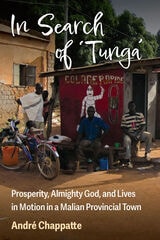
In Search of Tunga
Prosperity, Almighty God, and Lives in Motion in a Malian Provincial TownAndré Chappatte
University of Michigan Press, 2022
In the context of the current global war on terrorism, most studies of Muslim life have focused on the politics of piety of reformist movements, their leaders, and members. By contrast, In Search of “Tunga” takes a perspective from below. It opens piety up to “simply Muslims,” although the religious elites have always claimed authority and legitimacy over piety. Is piety an exclusive field of experiences for those who claim to strive for it? What does piety involve for the majority of Muslims, the non-elite and unaffiliated Muslims? This volume “democratizes” piety by documenting its practice as going beyond sharply defined religious affiliations and Islamic scholarship, and by showing it is both alive and normative, existential and prescriptive. As opposed to studies that build on the classic historical connections between the Maghreb and the Sahel, the southbound migration from the Sahel documented in this book stresses the overlooked historical connections between the southern shores of the Sahara and the lands south of those shores. It demonstrates how the Malian savanna, this former buffer-zone between ancient Mande kingdoms and thereafter remote areas of French Sudan, is increasingly becoming central in today’s Sahel contexts of desiccation and insecurity.
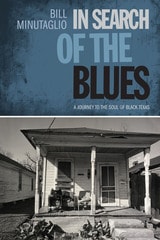
In Search of the Blues
A Journey to the Soul of Black TexasBy Bill Minutaglio
University of Texas Press, 2010
The rich, complex lives of African Americans in Texas were often neglected by the mainstream media, which historically seldom ventured into Houston's Fourth Ward, San Antonio's East Side, South Dallas, or the black neighborhoods in smaller cities. When Bill Minutaglio began writing for Texas newspapers in the 1970s, few large publications had more than a token number of African American journalists, and they barely acknowledged the things of lasting importance to the African American community. Though hardly the most likely reporter—as a white, Italian American transplant from New York City—for the black Texas beat, Minutaglio was drawn to the African American heritage, seeking its soul in churches, on front porches, at juke joints, and anywhere else that people would allow him into their lives. His nationally award-winning writing offered many Americans their first deeper understanding of Texas's singular, complicated African American history.
This eclectic collection gathers the best of Minutaglio's writing about the soul of black Texas. He profiles individuals both unknown and famous, including blues legends Lightnin' Hopkins, Amos Milburn, Robert Shaw, and Dr. Hepcat. He looks at neglected, even intentionally hidden, communities. And he wades into the musical undercurrent that touches on African Americans' joys, longings, and frustrations, and the passing of generations. Minutaglio's stories offer an understanding of the sweeping evolution of music, race, and justice in Texas. Moved forward by the musical heartbeat of the blues and defined by the long shadow of racism, the stories measure how far Texas has come . . . or still has to go.
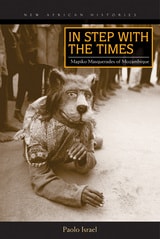
In Step with the Times
Mapiko Masquerades of MozambiquePaolo Israel
Ohio University Press, 2014
The helmet-shaped mapiko masks of Mozambique have garnered admiration from African art scholars and collectors alike, due to their striking aesthetics and their grotesque allure. This book restores to mapiko its historic and artistic context, charting in detail the transformations of this masquerading tradition throughout the twentieth century.
Based on field research spanning seven years, this study shows how mapiko has undergone continuous reinvention by visionary individuals, has diversified into genres with broad generational appeal, and has enacted historical events and political engagements. This dense history of creativity and change has been sustained by a culture of competition deeply ingrained within the logic of ritual itself. The desire to outshine rivals on the dance ground drives performers to search for the new, the astonishing, and the topical. It is this spirit of rivalry and one-upmanship that keeps mapiko attuned to the times that it traverses.
In Step with the Times is illustrated with vibrant photographs of mapiko masks and performances. It marks the most radical attempt to date to historicize an African performative tradition.

In The Box Called Pleasure
Kim Addonizio
University of Alabama Press, 1999
These gutsy and post feminist stories will elicit the shock of recognition from women and may reveal to men something about the further regions of the female psyche. By turns graphic and funny, these urban tales present characters who are teetering on the edge. Indifferent or absent lovers, too much alcohol, too many cigarettes, obsession, paranoia, a desire that is always fresh in spite of the facts—this is the macabre landscape of these very unusual and unrestrained works.
In "Reading Sontag," Addonizio invades and recasts Susan Sontag's essay "The Pornographic Imagination" while describing a monumentally failed relationship. In "The Gift," a woman finds a dildo on the street and is magically transformed into a man.These are fictions to prepare us for the real millennium.
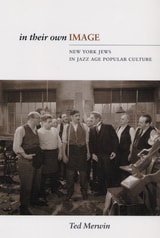
In Their Own Image
New York Jews in Jazz Age Popular CultureMerwin, Ted
Rutgers University Press, 2006
The Jazz Age of the 1920s is an era remembered for illegal liquor, innovative music and dance styles, and burgeoning ideas of social equality. It was also the period during which second-generation Jews began to emerge as a significant demographic in New York City. In TheirOwn Image examines thegrowing cultural visibility of Jewish life amid this vibrant scene.
From the vaudeville routines of Fanny Brice, Eddie Cantor, George Jessel, and Sophie Tucker, to the slew of Broadway comedies about Jewish life and the silent films that showed immigrant families struggling to leave the ghetto, images and representations of Jews became staples of interwar popular culture. Through the performing arts, Jews expressed highly ambivalent feelings about their identification with Jewish and American cultures. Ted Merwin shows how they became American by producing and consuming not images of another group, but images of themselves. As a result, they humanized Jewish stereotypes, softened anti-Semitic attitudes, and laid the groundwork for today’s Jewish comedians.
An entertaining look at the role popular culture plays in promoting the acculturation of an ethnic group, In Their Own Image enhances our understanding of American Jewish history and provides a model for the study of other groups and their integration into mainstream society.
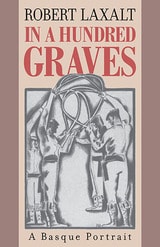
In a Hundred Graves
A Basque PortraitRobert Laxalt
University of Nevada Press, 2016
The Basques of Europe are legendary for the curtain of privacy they have always drawn around their world, shielding it from visitors from the outside. As a result, accounts of the inner workings of Basque village life are almost nonexistent. In this unique book, author Robert Laxalt has managed to penetrate the deep reserve of Basque village folk. Shepherds, troubadours, merchants, and smugglers, caught up in the panorama of daily life, parade before the reader. They are portrayed against a backdrop of green rugged mountains and stone buildings, typical of the Basque provinces in France and Spain. Laxalt, an American born of Basque parents, unveils the Basque character with warmth, wry humor, and above all, honesty.
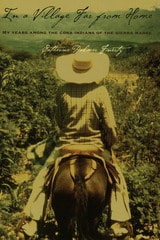
In a Village Far from Home
My Years among the Cora Indians of the Sierra MadreCatherine Palmer Finerty
University of Arizona Press, 2000
What do most career women do after a successful run on Madison Avenue? Catherine Finerty watched her friends settle into the country-club life. She opted instead for Mexico.
When the 60-year-old widow loaded up her car and headed south, what she found at the end of the road was far from what she expected. Finerty settled into a comfortable house just outside of Guadalajara and, although not a Catholic, she soon immersed herself in Franciscan volunteer work. It wasn't long before she found herself visiting small settlements hidden in the tropical mountains of western Mexico, and it was in Jesús María—so isolated that one could only get there by mule or small plane—that she found her new calling: the village nurse.
With its bugs and heat, no phones or running water, the tiny town was hardly a place to enjoy one's retirement years, but Finerty was quickly charmed by the community of Cora Indians and mestizos. Armed with modest supplies, a couple of textbooks, and common sense, she found herself delivering first aid, advising on public health, and administering injections. And in a place where people still believed in the power of shamans, providing health care sometimes required giving in to the magical belief that a hypodermic needle could cure anything.
Finerty's account of her eight years in Jesús María is both a compelling story of nursing under adverse conditions and a loving portrait of a people and their ways. She shares the joys and sorrows of this isolated world: religious festivals and rites of passage; the tragedy of illness and death in a place where people still rely on one another as much as medicine; a flash flood that causes such havoc that even less-than-pious village men attend Mass daily. And she introduces a cast of characters not unlike those in a novel: Padre Domingo and his airborne medical practice; the local bishop, who frowns on Finerty's slacks; Chela, a mestiza from whom she rents her modest two-room house (complete with scorpions); and the young Cora Indian woman Chuy, from whom she gains insight into her new neighbors.
Blending memoir and travel writing, In a Village Far from Home takes readers deep into the Sierra Madre to reveal its true treasure: the soul of a people.
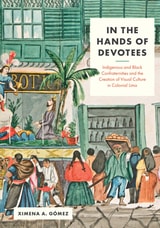
In the Hands of Devotees
Indigenous and Black Confraternities and the Creation of Visual Culture in Colonial LimaXimena A. Gómez
University of Texas Press, 2025
An exploration of how Indigenous and Black communities shaped religious imagery and navigated life in colonial Lima.
Colonial Lima was steeped in Christian devotional imagery. While Spaniards set the norms for these works, it was the city’s Black and Indigenous majority that engaged with them most. As members of lay societies of worshippers called confraternities, subalterns were Lima’s key promoters of religious art, surpassing the colonial hierarchy.
Ximena Gómez argues that, by commissioning and exhibiting sacred images—in chapels and urban processions, adorned with clothing and accessories—Indigenous and Black confraternities created Lima’s visual culture. In one case study, the Indigenous confraternity of the Virgin of Copacabana "invisibly" transforms a sculpture into an object that reflected its multiethnic Andean caretakers. Another case study, that of the confraternity of the Virgin of the Antigua, finds Black worshippers initially united in their interpretation of a Spanish image and later fracturing when some of its members applied a West African interpretive lens. Taking advantage of Lima’s rich documentary record, In the Hands of Devotees centers the ritual practices of Black and Indigenous people and opens possibilities for incorporating subalterns into the history of Lima’s art when limited extant visual evidence has survived.
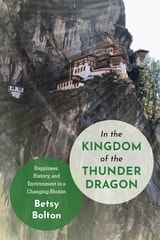
In the Kingdom of the Thunder Dragon
Happiness, History, and Environment in a Changing BhutanBetsy Bolton
Lever Press, 2025
International views on Bhutan tend to be sharply split between admiration for its democratizing development strategies and opposition to its human rights abuses—a division partly maintained by Bhutan’s tight limits on immigration and foreign travel within the country. In the first book-length study of its kind, In the Kingdom of the Thunder Dragon explores the tensions and contradictions of Bhutan’s rapid political and economic transformation from the perspective of a Fulbright scholar helping start a new master’s program in the remote east of the country.
Mingling personal narrative with historical context to engage undergraduate students and general readers, In the Kingdom of the Thunder Dragon explores Bhutan’s Vajrayana Buddhist heritage and ongoing embrace of tradition alongside development, the country’s newly minted democracy amidst a complicated history of citizenship and belonging, and the challenges the nation faces in a period of increasing globalization. Betsy Bolton further explores Bhutan’s recent events surrounding the 1990s expulsion of the Lhotshampa people and the development of GNH in the early 2000s. From here, Bolton illuminates how these historical narratives and issues have impacted Bhutanese citizens and students through stories gathered at educational and artistic institutions, festivals and community events. In the Kingdom of the Thunder Dragon is a fresh, accessible approach to Bhutanese history and will interest general readers as well as scholars of Asia, history, economics, sociology, and environmental studies.

In the Nineties
John Stokes
University of Chicago Press, 1990
Spurning fixed boundaries, Stokes relates the controversial topics of the day—the status of the "New Journalism," the "degenerative" influence of Impressionist painting, the dubious morality of the music hall, the urgent need for prison reform, and the prevalence of suicide—to primary literary texts, such as The Ballad of Reading Gaol, The Importance of Being Earnest, Jude the Obscure, and Portrait of a Lady. And in the process, he explores crucial areas of sociological and psychological interest: criminality, sexuality, madness, and "morbidity."
Each of the book's six chapters opens with a look at the correspondence columns of daily newspapers and goes on, with a keen eye for the hidden link, to pursue a particular theme. Locations shift from Leicester Square and the Thames embankment to the Normandy coast and the Paris morgue and feature, along with famous names, a lesser known company of acrobats, convicts, aesthetes, "philistines," and mysterious suicides.
Nearly a century later, John Stokes's unrivalled knowledge of how the arts actually functioned in the nineties makes this book a major contribution to modern cultural studies.
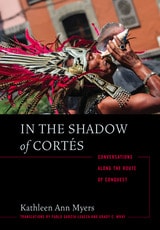
In the Shadow of Cortés
Conversations Along the Route of ConquestKathleen Ann Myers
University of Arizona Press, 2015
Following the route of Hernán Cortés, In the Shadow of Cortés offers a visual and cultural history of the legacy of contact between Spaniards and indigenous civilizations. The book is a reflective journey that presents a diversity of voices, images, and ideas about history and conquest. Specialist in Mexican culture Kathleen Ann Myers teams up with prize-winning translators and photographers to offer a unique reading experience that combines accessible interpretative essays with beautifully translated interviews and dozens of historical and contemporary black-and-white and color images, including some by award-winner Steven Raymer. The result offers readers multiple perspectives on these pivotal events as imagined and re-envisioned today by Mexicans both in their homeland and in the United States.
In the Shadow of Cortés offers an extensive visual narrative about conquest and, ultimately, about Mexican history. It traces the symbolic geography of the conquest and shows how the historical memory of colonialism continues to shape lives today.
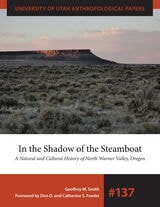
In the Shadow of the Steamboat
A Natural and Cultural History of North Warner Valley, OregonGeoffrey M. Smith
University of Utah Press, 2022
Smith and colleagues present their work in a way that allows readers to understand not only how people adapted to local change but also how North Warner Valley fits into the complex mosaic of precontact history in the American West. This research is the most comprehensive work conducted in the northern Great Basin in more than two decades. Its multidisciplinary nature should interest students of natural and cultural history, archaeology, and Indigenous lifeways.

In the Sierra Madre
Jeff Biggers
University of Illinois Press, 2006
A stunning history of legendary treasure seekers and enigmatic natives in Mexico's Copper Canyon
Based on his one-year sojourn in Copper Canyon among the Raramuri/Tarahumara, award-winning journalist Jeff Biggers offers a rare look into the ways of the most resilient indigenous culture in the Americas, the exploits of Mexican mountaineers, and the fascinating parade of argonauts and accidental travelers who have journeyed into the Sierra Madre over centuries. From African explorers, Bohemian friars, Confederate and Irish war deserters, French poets, Boer and Russian commandos, Apache and Mennonite communities, bewildered archaeologists, addled writers, and legendary characters including Antonin Artaud, Henry Flipper, B. Traven, Sergei Eisenstein, George Patton, Geronimo, and Pancho Villa, Biggers uncovers the remarkable treasures of the Sierra Madre.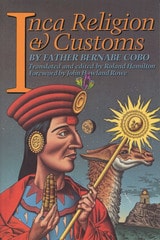
Inca Religion and Customs
By Bernabe Cobo
University of Texas Press, 1990
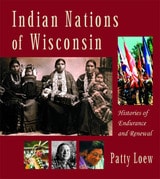
Indian Nations of Wisconsin
Histories of Endurance and RenewalPatty Loew
Wisconsin Historical Society Press, 2001
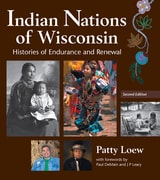
Indian Nations of Wisconsin
Histories of Endurance and Renewal, 2 EditionPatty Loew
Wisconsin Historical Society Press, 2013
From origin stories to contemporary struggles over treaty rights and sovereignty issues, Indian Nations of Wisconsin explores Wisconsin's rich Native tradition. This unique volume—based on the historical perspectives of the state’s Native peoples—includes compact tribal histories of the Ojibwe, Potawatomi, Oneida, Menominee, Mohican, Ho-Chunk, and Brothertown Indians. Author Patty Loew focuses on oral tradition—stories, songs, the recorded words of Indian treaty negotiators, and interviews—along with other untapped Native sources, such as tribal newspapers, to present a distinctly different view of history. Lavishly illustrated with maps and photographs, Indian Nations of Wisconsin is indispensable to anyone interested in the region's history and its Native peoples.
The first edition of Indian Nations of Wisconsin: Histories of Endurance and Renewal, won the Wisconsin Library Association's 2002 Outstanding Book Award.

Indiana Out Loud
Dan Carpenter on the Heartland BeatDan Carpenter
Indiana Historical Society Press, 2013
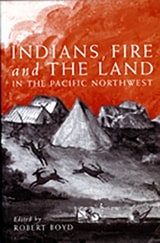
Indians, Fire, and the Land in the Pacific Northwest
Robert Boyd
Oregon State University Press, 1999
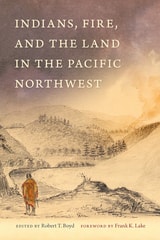
Indians, Fire, and the Land in the Pacific Northwest
Robert Boyd
Oregon State University Press, 2021
Instead of discovering a land blanketed by dense forests, early explorers of the Pacific Northwest encountered a varied landscape including open woods, meadows, and prairies. Far from a pristine wilderness, much of the Northwest was actively managed and shaped by the hands of its Native American inhabitants. Their primary tool was fire.
This volume takes an interdisciplinary approach to one of the most important issues concerning Native Americans and their relationship to the land. Over more than 10,000 years, Native Americans in the Northwest learned the intricacies of their local environments and how to use fire to create desired effects, mostly in the quest for food.
Drawing on historical journals, Native American informants, and ethnobotanical and forestry studies, this book’s contributors describe local patterns of fire use in eight ecoregions, representing all parts of the Native Northwest, from southwest Oregon to British Columbia and from Puget Sound to the Northern Rockies. Their essays provide glimpses into a unique understanding of the environment, one that draws on traditional ecological knowledge. Together, these writings also offer historical perspective on the contemporary debate over “prescribed burning” and management of public lands.
This updated edition includes a foreword by Frank K. Lake and a new epilogue by editor Robert T. Boyd. Contributors include Stephen Arno, Stephen Barrett, Theresa Ferguson, David French, Eugene Hunn, Leslie Johnson, Jeff LaLande, Estella Leopold, Henry Lewis, Helen H. Norton, Reg Pullen, William Robbins, John Ross, Nancy Turner, and Richard White.
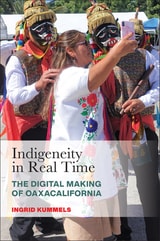
Indigeneity in Real Time
The Digital Making of OaxacaliforniaIngrid Kummels
Rutgers University Press, 2023
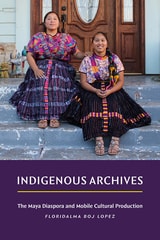
Indigenous Archives
The Maya Diaspora and Mobile Cultural ProductionFloridalma Boj Lopez
Duke University Press, 2026
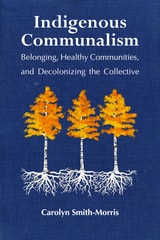
Indigenous Communalism
Belonging, Healthy Communities, and Decolonizing the CollectiveCarolyn Smith-Morris
Rutgers University Press, 2020
Told in vibrant detail, the narrative of the book conveys the importance of communalism as a value system present in all human groups and one at the center of Indigenous survival. Carolyn Smith-Morris draws on her work among the Akimel O'odham and the Wiradjuri to show how communal work and culture help these communities form distinctive Indigenous bonds. The results are not only a rich study of Indigenous relational lifeways, but a serious inquiry to the continuing acculturative atmosphere that Indigenous communities struggle to resist. Recognizing both positive and negative sides to the issue, she asks whether there is a global Indigenous communalism. And if so, what lessons does it teach about healthy communities, the universal human need for belonging, and the potential for the collective to do good?
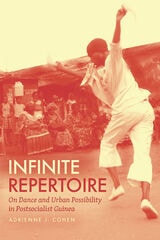
Infinite Repertoire
On Dance and Urban Possibility in Postsocialist GuineaAdrienne J. Cohen
University of Chicago Press, 2021
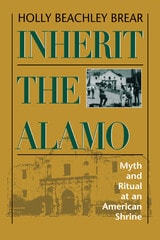
Inherit the Alamo
Myth and Ritual at an American ShrineBy Holly Beachley Brear
University of Texas Press, 1994
Long overshadowed by the towering buildings of downtown San Antonio, the modest little Alamo still evokes tremendous feeling among Texans and, indeed, many other Americans. For Anglo Texans, the Alamo is the "Cradle of Texas Liberty" and a symbolic confirmation of Manifest Destiny. For Hispanic Texans, however, the Alamo has increasingly become a stolen symbol, its origin as a Spanish mission forgotten, its famous defeat used to exclude Hispanics from an honorable place in Texas history.
In this important new book, Holly Beachley Brear explores in fascinating detail what the Alamo means to the numerous groups that lay claim to its heritage. She shows how Alamo myths often diverge from the historical facts—and why. She decodes the agendas of various groups, including the Daughters of the Republic of Texas (who maintain the Alamo buildings and grounds), the Order of the Alamo, the Texas Cavaliers, and LULAC. And she probes attempts by individuals and groups to rewrite the Alamo myth to include more positive roles for themselves, as she explains the value in laying claim to the Alamo's past.
With new perspectives on all the sacred icons of the Alamo and the Fiesta that celebrates (one version of) its history each year, Inherit the Alamo is guaranteed to challenge stereotypes and offer new understanding of the Alamo's ongoing role in shaping Texas and American history and mythology. It will be of interest to a wide popular and scholarly audience.
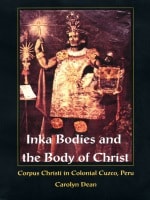
Inka Bodies and the Body of Christ
Corpus Christi in Colonial Cuzco, PeruCarolyn Dean
Duke University Press, 1999
As Dean clearly illustrates, the central rite of the festival—the taking of the Eucharist—symbolized both the acceptance of Christ and the power of the colonizers over the colonized. The most remarkable of Andean celebrants were those who appeared costumed as the vanquished Inka kings of Peru’s pagan past. Despite the subjugation of the indigenous population, Dean shows how these and other Andean nobles used the occasion of Corpus Christi as an opportunity to construct new identities through tinkuy, a native term used to describe the conjoining of opposites. By mediating the chasms between the Andean region and Europe, pagans and Christians, and the past and the present, these Andean elites negotiated a new sense of themselves. Dean moves beyond the colonial period to examine how these hybrid forms of Inka identity are still evident in the festive life of modern Cuzco.
Inka Bodies and the Body of Christ offers the first in-depth analysis of the culture and paintings of colonial Cuzco. This volume will be welcomed by historians of Peruvian culture, art, and politics. It will also interest those engaged in performance studies, religion, and postcolonial and Latin American studies.
Insatiable City
Food and Race in New OrleansTheresa McCulla
University of Chicago Press, 2024
A history of food in the Crescent City that explores race, power, social status, and labor.
In Insatiable City, Theresa McCulla probes the overt and covert ways that the production of food and the discourse about it both created and reinforced many strains of inequality in New Orleans, a city significantly defined by its foodways. Tracking the city’s economy from nineteenth-century chattel slavery to twentieth-century tourism, McCulla uses menus, cookbooks, newspapers, postcards, photography, and other material culture to limn the interplay among the production and reception of food, the inscription and reiteration of racial hierarchies, and the constant diminishment and exploitation of working-class people. The consumption of food and people, she shows, was mutually reinforced and deeply intertwined. Yet she also details how enslaved and free people of color in New Orleans used food and drink to carve paths of mobility, stability, autonomy, freedom, profit, and joy. A story of pain and pleasure, labor and leisure, Insatiable City goes far beyond the task of tracing New Orleans's culinary history to focus on how food suffuses culture and our understandings and constructions of race and power.

Institutions and Economic Theory
The Contribution of the New Institutional EconomicsEirik Furubotn and Rudolf Richter
University of Michigan Press, 2005
This second edition assesses some of the major refinements, extensions, and useful applications that have developed in neoinstitutionalist thought in recent years. More attention is given to the overlap between the New Institutional Economics and developments in economic history and political science. In addition to updated references, new material includes analysis of parallel developments in the field of economic sociology and its attacks on representatives of the NIE as well as an explanation of the institution-as-an-equilibrium-of-game approach.
Already an international best seller, Institutions and Economic Theory is essential reading for economists and students attracted to the NIE approach. Scholars from such disciplines as political science, sociology, and law will find the work useful as the NIE continues to gain wide academic acceptance. A useful glossary for students is included.
Eirik Furubotn is Honorary Professor of Economics, Co-Director of the Center for New Institutional Economics, University of Saarland, Germany and Research Fellow, Private Enterprise Research Center, Texas A&M University.
Rudolph Richter is Professor Emeritus of Economics and Director of the Center for New Institutional Economics, University of Saarland, Germany.
Intercultural Utopias
Public Intellectuals, Cultural Experimentation, and Ethnic Pluralism in ColombiaJoanne Rappaport
Duke University Press, 2005
Intercultural Utopias centers on southwestern Colombia’s Cauca region, a culturally and linguistically heterogeneous area well known for its history of indigenous mobilization and its pluralist approach to ethnic politics. Rappaport interweaves the stories of individuals with an analysis of the history of the Regional Indigenous Council of Cauca and other indigenous organizations. She presents insights into the movement and the intercultural relationships that characterize it from the varying perspectives of regional indigenous activists, nonindigenous urban intellectuals dedicated to the fight for indigenous rights, anthropologists, local teachers, shamans, and native politicians.
Interpreting Kigali, Rwanda
Architectural Inquiries and Prospects for a Developing African CityKorydon H. Smith
University of Arkansas Press, 2018
Interpreting Kigali, Rwanda explores the pressing challenges and opportunities to be found in planning, designing, and constructing a healthy, equitable, and sustainable city. Asking “what is an authentic-yet-modern, prosperous-yet-feasible African city, Rwandan city?” Smith, Berlanda, and colleagues conducted research on Rwandan activities of daily living and how these routines are connected to space-making practices and the Kinyarwanda terms that describe them.
Through a culturally informed view of urban and rural lifestyles and spaces, Interpreting Kigali, Rwanda presents principles and proposals for neighborhood development in the challenging context of Kigali’s informal settlements. With one billion people living in informal settlements worldwide, a number expected to double by 2030, the lessons learned in Rwanda provide a complex, fascinating, and urgent study for scholars and practitioners across disciplines and around the world.