Results by title
28167 books match the query 'History' and 997 start with i
Irrigation's Impact on Society
Edited by Theodore E. Downing and McGuire Gibson
University of Arizona Press, 1974
Is Administrative Law Unlawful?
Philip Hamburger
University of Chicago Press, 2014
With Is Administrative Law Unlawful?, Philip Hamburger answers this question in the affirmative, offering a revisionist account of administrative law. Rather than accepting it as a novel power necessitated by modern society, he locates its origins in the medieval and early modern English tradition of royal prerogative. Then he traces resistance to administrative law from the Middle Ages to the present. Medieval parliaments periodically tried to confine the Crown to governing through regular law, but the most effective response was the seventeenth-century development of English constitutional law, which concluded that the government could rule only through the law of the land and the courts, not through administrative edicts. Although the US Constitution pursued this conclusion even more vigorously, administrative power reemerged in the Progressive and New Deal Eras. Since then, Hamburger argues, administrative law has returned American government and society to precisely the sort of consolidated or absolute power that the US Constitution—and constitutions in general—were designed to prevent.
With a clear yet many-layered argument that draws on history, law, and legal thought, Is Administrative Law Unlawful? reveals administrative law to be not a benign, natural outgrowth of contemporary government but a pernicious—and profoundly unlawful—return to dangerous pre-constitutional absolutism.
Is It Nation Time?
Contemporary Essays on Black Power and Black NationalismEdited by Eddie S. Glaude Jr.
University of Chicago Press, 2002
Is It Nation Time? gathers new and classic essays on the Black Power movement and its legacy by renowned thinkers who deal rigorously and unsentimentally with such issues as the commodification of blackness, the piety of cultural recovery, and class tensions within the movement. For anyone who wants to understand the roots of the complex political and cultural desires of contemporary black America, this will be an essential collection.
Contributors:
Eddie S. Glaude Jr.
Farah Jasmine Griffin
Phillip Brian Harper
Gerald Horne
Robin D. G. Kelley
Wahneema Lubiano
Adolph Reed Jr.
Jeffrey Stout
Will Walker
S. Craig Watkins
Cornel West
E. Francis White
Is It Time to Reform Social Security?
Edward M. Gramlich
University of Michigan Press, 2000
Is There Still a West?
The Future of the Atlantic AllianceEdited & Intro by William Anthony Hay & Harvey Sicherman
University of Missouri Press, 2007
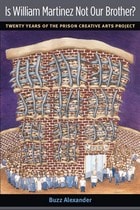
Is William Martinez Not Our Brother?
Twenty Years of the Prison Creative Arts ProjectBuzz Alexander
University of Michigan Press, 2010
Praise for the Prison Creative Arts Project:
"I cannot overstate how profoundly my experience with the Prison Creative Arts Project has shaped my life. It began my engagement with prison issues, developed both my passion and my understanding of them, and I continue to draw on both as I seek to contribute to a more rational, humane and just criminal justice system. PCAP prepared me to adapt to any situation, to take risks, to collaborate with people very different from myself in a manner infused with total respect."
---Jesse Jannetta, researcher, Justice Policy Center, the Urban Institute
"PCAP provided me with an emotional education that I would not have received otherwise. PCAP continually opens the doors to the stark reality of our criminal justice system as well as our society's ability to right the wrongs of that system and provide justice to millions of men, women, and children . . . PCAP showed me the power I, and the individuals around me, have to make a difference."
---Anne Bowles, Policy and Outreach Associate, Institute for Higher Education Policy
"PCAP looks beyond past mistakes and personal shortcomings to find the beauty and creative energies that help to heal the hurts we've done to others. They have not forgotten that we are human too! . . . Their program has given me a way to reach people that I would otherwise never reach. For that, I owe PCAP everything. They are my lifeline that I cling to."
---Bryan Picken, incarcerated artist
Prisons are an invisible, but dominant, part of American society: the United States incarcerates more people than any other nation in the world. In Michigan, the number of prisoners rose from 3,000 in 1970 to more than 50,000 by 2008, a shift that Buzz Alexander witnessed firsthand when he came to teach at the University of Michigan.
Is William Martinez Not Our Brother? describes the University of Michigan's Prison Creative Arts Project (PCAP), a pioneering program founded in 1990 that provides university courses, a nonprofit organization, and a national network for incarcerated youth and adults in Michigan juvenile facilities and prisons.
By giving incarcerated individuals an opportunity to participate in the arts, PCAP enables them to withstand and often overcome the conditions and culture of prison, the policies of an incarcerating state, and the consequences of mass incarceration.
Buzz Alexander is Arthur F. Thurnau Professor of English Language and Literature, College of Literature, Science, and the Arts, at the University of Michigan and was Carnegie National Professor of the Year in 2005.
Cover image: Overcrowded by Ronald Rohn

Is a Single Teachable Indian Past Possible Today?
Janaki Nair
Seagull Books, 2024
More than ever before, the school history textbook in India has become an embattled object and the subject of many contestations from both above and below. It is vulnerable not only to the political vagaries of governments but also to the exclusive claims of myriad communities and groups to their sense of the past. What is the future of India’s textbook, arguably the most important repository of the country’s national past? Is a single teachable past even possible any longer?
In this essay, Janaki Nair uses the Indian predicament to discuss the possibility of building up a “historical temper” in the Indian classroom. Sharing examples from her unique position as a professional historian with sustained experience in the field of pedagogy, Nair invites reflections on the prospect of cultivating a historical temper that can help the teacher equip students to grapple with history.

Is the Cemetery Dead?
David Charles Sloane
University of Chicago Press, 2018
Is the Cemetery Dead? gets to the heart of the tragedy of death, chronicling how Americans are inventing new or adapting old traditions, burial places, and memorials. In illustrative prose, David Charles Sloane shows how people are taking control of their grief by bringing their relatives home to die, interring them in natural burial grounds, mourning them online, or memorializing them streetside with a shrine, ghost bike, or RIP mural. Today’s mourners are increasingly breaking free of conventions to better embrace the person they want to remember. As Sloane shows, these changes threaten the future of the cemetery, causing cemeteries to seek to become more responsive institutions.
A trained historian, Sloane is also descendent from multiple generations of cemetery managers and he grew up in Syracuse’s Oakwood Cemetery. Enriched by these experiences, as well as his personal struggles with overwhelming grief, Sloane presents a remarkable and accessible tour of our new American way of death.
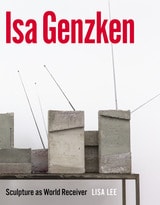
Isa Genzken
Sculpture as World ReceiverLisa Lee
University of Chicago Press, 2017
Through penetrating analyses of individual works as well as archival and interview material from the artist herself, Lee establishes four major themes in Genzken’s oeuvre: embodied perception, architecture and built space, the commodity, and the body. Contextualizing the sculptor’s engagement with fellow artists, such as Joseph Beuys and Bruce Nauman, Lee situates Genzken within a critical and historical framework that begins in politically fraught 1960s West Germany and extends to the globalized present. Here we see how Genzken tests the relevance of the utopian aspirations and formal innovations of the early twentieth century by submitting them to homage and travesty. Sure to set the standard for future studies of Genzken’s work, Isa Genzken is essential for anyone interested in contemporary art.
Isaac Harby of Charleston, 1788-1828
Jewish Reformer and IntellectualGary Phillip Zola
University of Alabama Press, 1994
The visionary voice who helped shape American Judaism—and Charleston’s cultural soul.
Isaac Harby of Charleston, 1788–1828 is a richly detailed biography that brings to life one of early America’s most fascinating and underappreciated Jewish intellectuals. Gary Phillip Zola offers a compelling portrait of Harby—a playwright, newspaper editor, drama critic, educator, and religious reformer—who emerged as a central figure in Charleston’s vibrant cultural scene during the early 19th century. At a time when Charleston was experiencing both economic prosperity and cultural efflorescence, Harby stood at the crossroads of literary ambition and religious innovation.
A descendant of Sephardic Jews, Harby was deeply engaged in the intellectual and civic life of his city. He founded a literary journal at just eighteen, established a private academy, and wrote prolifically on politics, education, and religion. But his most enduring legacy lies in his role as a pioneer of Reform Judaism in America. As a founding member of the Reformed Society of Israelites in 1825, Harby advocated for a rational, modernized approach to Jewish worship—one that emphasized universal ethics and intellectual engagement over ritual formalism. His efforts, though controversial in his time, laid the groundwork for the broader Reform movement that would flourish later in the century.
Drawing on newly uncovered archival materials, including Harby’s personal library and writings, Zola’s biography not only illuminates Harby’s life and thought but also offers a window into the broader cultural, religious, and political transformations of the early American republic. This book is essential reading for anyone interested in American Jewish history, Southern intellectual life, and the roots of religious reform in the United States.
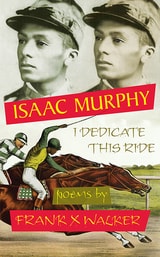
Isaac Murphy
I Dedicate This RideFrank X Walker
Ohio University Press, 2010
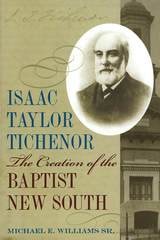
Isaac Taylor Tichenor
The Creation of the Baptist New SouthMichael E. Williams Sr.
University of Alabama Press, 2005
The influential role Tichenor played in shaping both the Baptist denomination and southern culture
Isaac Taylor Tichenor worked as a Confederate chaplain, a mining executive, and as president of the Agricultural and Mechanical College of Alabama (now Auburn University). He also served as corresponding secretary for the Home Mission Board of the Southern Baptist Convention in Atlanta from 1882 until 1899. In these capacities Tichenor developed the New South ideas that were incorporated into every aspect of his work and ultimately influenced many areas of southern life, including business, education, religion, and culture.
In Isaac Taylor Tichenor: The Creation of the Baptist New South, Michael E. Williams Sr. provides a comprehensive analysis of Tichenor’s life, examining the overall impact of his life and work. This volume also documents the methodologies Tichenor used to rally Southern Baptist support around its struggling Home Mission Board, which defined the makeup of the Southern Baptist Convention and defended the territory of the convention.
Tichenor was highly influential in forming a uniquely southern mindset prior to and at the turn of the century. Williams contends that Tichenor’s role in shaping Southern Baptists as they became the largest denomination in the South was crucial in determining their identity both the identities of the region and the SBC.
Isaac of Antioch
Homilies on Moral and Monastic ReformAdam H. Becker
SBL Press, 2024
This volume offers a critical edition and annotated translation of twenty metrical homilies attributed to Isaac of Antioch, a late fifth-century CE Syriac poet. The works in this collection, the majority of which are examples of the Syriac rebuke genre, are aimed at the moral reformation of the Syrian Christian community. The introduction, which provides the first detailed study of the manuscript tradition of the corpus as a whole, identifies four different Isaacs whose writings were intermingled already in late antiquity and develops criteria for distinguishing among their works. Scholars and students of church history will find this a valuable resource for the study of Syriac poetry and homiletics, Christian ideas of moral reform, and late antique monastic and lay devotional culture.
Isaac, Iphigeneia, and Ignatius
Martyrdom and Human SacrificeMonika Pesthy-Simon
Central European University Press, 2017
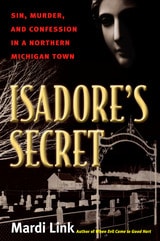
Isadore's Secret
Sin, Murder, and Confession in a Northern Michigan TownMardi Link
University of Michigan Press, 2010
"In Isadore's Secret, Mardi Link shines a journalist's lamp on this dark, quiet corner of Michigan's history, assuring that the tragic story of Sister Janina is not forgotten. Link's telling is fascinating and thorough, making a story you will not soon forget."
---Steve Lehto, author of Death's Door
A gripping account of the mysterious 1907 disappearance of a young nun in a northern Michigan town and the national controversy that followed when she turned up dead and buried in the basement of her own church.
Swinging planks of lantern light shine through the musty air and onto the dirt floor of the church basement. The oddly glowing rectangles syncopate over the damp ground and illuminate even the darkest, stooped-down corners of the space beyond. The only sound is the ragged breathing of two men, a young parish priest and a much older laborer. Aboveground these men belong completely to this place, in both body and soul. A glimpse of their faces anywhere in the sanctuary, the rectory, the school, the barn, or the gardens would be a welcome sight. But here below, these men of Isadore are interlopers. Only trespassers would sneak silently into the church's sloped underbelly without witness to carry out such a sinful and secret errand as this one. Despite their tools, and their lantern, and their resolve, neither is equipped for the task at hand or for what is to come.
Mardi Link, a former crime reporter, was named Antioch's Betty Crumrine Scholar for Creative Nonfiction in 2007. Her first book, When Evil Came to Good Hart, also published by the University of Michigan Press, spent four months on the Heartland Indie Bestseller List.
This true story was the basis for the Broadway play The Runner Stumbles and the film of the same name.
Front cover: Photograph of cemetery © John L. Russell, Great Lakes Images; image of face ©iStockphoto.com/duncan1890.

Isaiah Berlin
A CelebrationEdited by Edna Ullmann-Margalit and Avishai Margalit
University of Chicago Press, 1991
"Some [essays], like Joseph Brodsky's tribute, are touchingly personal. Others, like G. A. Cohen's 'Isaiah's Marx, and Mine,' mingle personal reminiscences with a more theoretical look at Berlin's ideas. . . . The volume is a fitting tribute to a thinker famed for his erudition, eclecticism, and clarity of style."—Merle Rubin, The Christian Science Monitor
"One of the many merits of this rich and rewarding collection is the sense-very imperfectly conveyed here-it transmits of the tone of Berlin's writings and conversation, of the multiplicity of his interests and the variety of his achievements. . . . The essays testify to the character of Berlin's mind as a luminous prism, in which the cultural traditions of Russia, England and Judaism are marvelously refracted."—John Gray, Times Literary Supplement
"[T]he collection testifies to the learning and profundity of Berlin's thought and, by way both of reminiscence and influence, to the charm and gaity of its expression."—Anthony Quinton, The Times of London
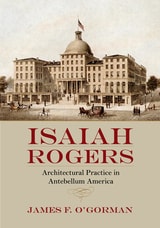
Isaiah Rogers
Architectural Practice in Antebellum AmericaJames F. O'Gorman
University of Massachusetts Press, 2015
When Isaiah Rogers died in 1869, the Cincinnati Daily Times noted that “in his profession he was, perhaps, better known than any other person in the country.” Yet until now there has been no study that fully examines his remarkable, influential, and instructive career. Based largely on Rogers's own diary, this book tells his story and adds much to our understanding of architectural practice in the United States before the Civil War.
In 1944 the distinguished historian Talbot Hamlin wrote of New York's Merchant Exchange (1836–42) that the building had “been so grandly conceived, so simply and directly planned, and so beautifully detailed . . . [that] the whole was welded inextricably into one powerful organic conception that shows Rogers as a great architect in the fullest sense of the word.” Rogers's Tremont House in Boston has been called the world's first modern hotel; it spawned many progeny, from his first Astor House in New York to his Burnet House in Cincinnati and beyond.
Rogers designed buildings from Maine to Georgia and from Boston to Chicago to New Orleans, supervising their construction while traveling widely to procure materials and workmen for the job. He finished his career as Architect of the Treasury Department during the Civil War. In this richly illustrated volume, James F. O'Gorman offers a deft portrait of an energetic practitioner at a key time in architectural history, the period before the founding of the American Institute of Architects in 1857.
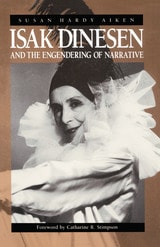
Isak Dinesen and the Engendering of Narrative
Susan Hardy Aiken
University of Chicago Press, 1990
In a series of readings that range across Dinesen's career, Aiken demonstrates that Dinesen persistently asserted the inseparability of gender and the engendering of narrative. She argues that Dinesen's texts anticipate in remarkable ways some of the most radical insights of contemporary literary theories, particularly those of French feminist criticism. Aiken also offers a major rereading of Out of Africa that both addresses its distinctiveness as a colonialist text and places it within Dinesen's larger oeuvre.
In Aiken's account, Dinesen's work emerges as a compelling inquiry into sexual difference and the ways it informs culture, subjectivity, and the language that is their medium. This important book will at last give Isak Dinesen's work the prominence it deserves in literary studies.
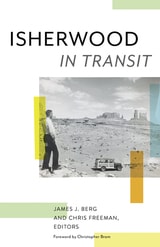
Isherwood in Transit
James J. Berg
University of Minnesota Press, 2020
New perspectives on Christopher Isherwood as a searching and transnational writer
“Perhaps I had traveled too much, left my heart in too many places,” muses the narrator of Christopher Isherwood’s novel Prater Violet (1945), which he wrote in his adopted home of Los Angeles after years of dislocation and desperation. In Isherwood in Transit, James J.Berg and Chris Freeman bring together diverse Isherwood scholars to understand the challenges this writer faced as a consequence of his travel.
Based on a conference at the Huntington Library, where Isherwood’s recently opened papers are held, Isherwood in Transit considers the writer not as an English, continental, or American writer but as a transnational one, whose identity, politics, and beliefs were constantly transformed by global connections and engagements arising from journeys to Germany, Japan, China, and Argentina; his migration to the United States; and his conversion to Vedanta Hinduism in the 1940s.
Approaching Isherwood’s rootlessness and restlessness from various perspectives, these essays show that long after he made a new home in California and became an American citizen, Christopher Isherwood remained unsettled, although his wanderings became spiritual and personal rather than geographic.
Contributors: Barrie Jean Borich, DePaul U; Jamie Carr, Niagara U; Robert L. Caserio, Penn State U, University Park; Lisa Colletta, American U of Rome; Lois Cucullu, U of Minnesota; Jaime Harker, U of Mississippi; Carola M. Kaplan, California State U, Pomona; Calvin W. Keogh, Central European U, Budapest; Victor Marsh; Wendy Moffat, Dickinson College; Xenobe Purvis; Bidhan Roy, California State U, Los Angeles; Katharine Stevenson, U of Texas at Austin; Edmund White.
Isis, volume 112 number 4 (December 2021)
The University of Chicago Press
University of Chicago Press Journals, 2021
Isis, volume 113 number 1 (March 2022)
The University of Chicago Press
University of Chicago Press Journals, 2022
Isis, volume 113 number 2 (June 2022)
The University of Chicago Press
University of Chicago Press Journals, 2022
Isis, volume 113 number 3 (September 2022)
The University of Chicago Press
University of Chicago Press Journals, 2022
Isis, volume 113 number 4 (December 2022)
The University of Chicago Press
University of Chicago Press Journals, 2022
Isis, volume 114 number 1 (March 2023)
The University of Chicago Press
University of Chicago Press Journals, 2023
Isis, volume 114 number 2 (June 2023)
The University of Chicago Press
University of Chicago Press Journals, 2023
Isis, volume 114 number 3 (September 2023)
The University of Chicago Press
University of Chicago Press Journals, 2023
Isis, volume 114 number 4 (December 2023)
The University of Chicago Press
University of Chicago Press Journals, 2023
Isis, volume 115 number 1 (March 2024)
The University of Chicago Press
University of Chicago Press Journals, 2024
Isis, volume 115 number 2 (June 2024)
The University of Chicago Press
University of Chicago Press Journals, 2024
Isis, volume 115 number 3 (September 2024)
The University of Chicago Press
University of Chicago Press Journals, 2024
Isis, volume 115 number 4 (December 2024)
The University of Chicago Press
University of Chicago Press Journals, 2024
Isis, volume 116 number 1 (March 2025)
The University of Chicago Press
University of Chicago Press Journals, 2025
Isis, volume 116 number 2 (June 2025)
The University of Chicago Press
University of Chicago Press Journals, 2025
Isis, volume 116 number 3 (September 2025)
The University of Chicago Press
University of Chicago Press Journals, 2025
Isis, volume 116 number 4 (December 2025)
The University of Chicago Press
University of Chicago Press Journals, 2025
Isis, volume 117 number 1 (March 2026)
The University of Chicago Press
University of Chicago Press Journals, 2026
Isis, volume 117 number 2 (June 2026)
The University of Chicago Press
University of Chicago Press Journals, 2026
Isis, volume 117 number 3 (September 2026)
The University of Chicago Press
University of Chicago Press Journals, 2026
Islam
Fazlur Rahman
University of Chicago Press, 1979
Islam Translated
Literature, Conversion, and the Arabic Cosmopolis of South and Southeast AsiaRonit Ricci
University of Chicago Press, 2011
In Islam Translated, Ronit Ricci uses the Book of One Thousand Questions—from its Arabic original to its adaptations into the Javanese, Malay, and Tamil languages between the sixteenth and twentieth centuries—as a means to consider connections that linked Muslims across divides of distance and culture. Examining the circulation of this Islamic text and its varied literary forms, Ricci explores how processes of literary translation and religious conversion were historically interconnected forms of globalization, mutually dependent, and creatively reformulated within societies making the transition to Islam.
Islam against the West
Shakib Arslan and the Campaign for Islamic NationalismBy William L. Cleveland
University of Texas Press, 1985
This book gives a unique perspective on the interwar history of the Middle East. By telling the life story of one man, it illuminates the political and cultural struggles of an era. Shakib Arslan (1869–1946) was a leading member of the generation of Ottoman Arabs who came to professional maturity just before the final defeat of the Ottoman Empire. Born to a powerful Lebanese Druze family, Arslan grew up perfectly suited to his time and place in history. He was one of the leading writers of his day and a dexterous, ambitious politician. But, by the end of World War I, Arslan and others of his generation found themselves adrift in a world no longer of their choosing, as the once great Ottoman state lay broken before the West.
Rather than retreating from public life in those dark days, however, Arslan emerged militant in his opposition to Western encroachment on Islamic lands and tireless in his crusade to bring the organizing principles of a universalist Islam to the age of emerging nation-states. Organizer, pamphleteer, diplomat, spokesman, and symbol, Arslan became one of the dominant, and most controversial, Muslim political figures in the two decades between the wars. His involvements were so varied and intense that to study his life is to bring into focus all the major political issues and intellectual currents of the era. By the end of his career he was both praised and vilified, but he was arguably the most widely read Arab author of his day.
Curiously, Arslan has received relatively little attention in English-language research. This may well be due less to his contemporary importance than to the perspective from which Western scholarship has viewed Middle Eastern intellectual history. Arslan was not one of the winners. For many his evocation of the old imperial ideal and his insistence on the strategic importance of Islamic ideals seemed to be simply archaic protest in a secular age. But this impeccably researched and beautifully written biography demonstrates the power and importance of Arslan’s activist heritage, reinterpreting it for its own time and showing its importance for ours.
Islam and Modernity
Transformation of an Intellectual TraditionFazlur Rahman
University of Chicago Press, 1984
"In this work, Professor Fazlur Rahman presents a positively ambitious blueprint for the transformation of the intellectual tradition of Islam: theology, ethics, philosophy and jurisprudence. Over the voices advocating a return to Islam or the reestablishment of the Sharia, the guide for action, he astutely and soberly asks: What and which Islam? More importantly, how does one get to 'normative' Islam? The author counsels, and passionately demonstrates, that for Islam to be actually what Muslims claim it to be—comprehensive in scope and efficacious for every age and place—Muslim scholars and educationists must reevaluate their methodology and hermeneutics. In spelling out the necessary and sound methodology, he is at once courageous, serious and profound."—Wadi Z. Haddad, American-Arab Affairs

Islam and Politics in East Africa
The Sufi Order in TanzaniaAugust H. Nimtz Jr.
University of Minnesota Press, 1980
Islam and Politics in East Africa was first published in 1980. Minnesota Archive Editions uses digital technology to make long-unavailable books once again accessible, and are published unaltered from the original University of Minnesota Press editions.
Focusing on the interplay of religion, society, and politics, August Nimtz examines the role of sufi tariqas (brotherhoods) in Tanzania, where he observed an African Muslim society at first hand. Nimtz opens this book with a historical account of Islam in East Africa, and in subsequent chapters analyzes the role of tariqas in Tanzania and, more specifically, in the coastal city of Bagamoyo. Using a conceptual framework derived from contemporary political theories on social cleavages and individual interests. Nimtz explains why the tariqa is important in the process of political change.
The fundamental cleavage in Muslim East Africa, he notes, is that of "whites" versus blacks. Nimtz contends that the tariqus, in serving the interest of blacks (that is, Africans), became in turn vehicles for the mass mobilization of African Muslims during the anti-colonial struggle. In Bagamoyo he finds a similar process and, in addition, reveals that the tariqas have served African interests in opposition to those of "whites" because of the individual benefits they provide. At the same time, Nimtz concludes, the social structure of East African Muslim society has ensured that Africans would be particularly attracted to these benefits. This work will interest both observers of African political development and specialists in the Islamic studies.
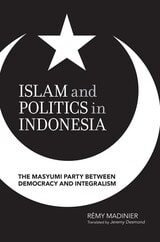
Islam and Politics in Indonesia
The Masyumi Party between Democracy and IntegralismRémy Madinier
National University of Singapore Press, 2015
This book examines the Masyumi Party from its roots in early 20th-century Muslim reformism to its contemporary legacy, and offers a perspective on political Islam which provides an alternative to the more widely-studied model of Middle-Eastern Islam. The party’s experience teaches us much about the fine line separating a moderate form of Islam open to democracy and a certain degree of secularisation from the sort of religious intransigence which can threaten the country’s denominational coexistence.
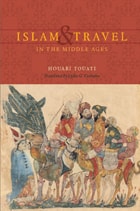
Islam and Travel in the Middle Ages
Houari Touati
University of Chicago Press, 2010
In the Middle Ages, Muslim travelers embarked on a rihla, or world tour, as surveyors, emissaries, and educators. On these journeys, voyagers not only interacted with foreign cultures—touring Greek civilization, exploring the Middle East and North Africa, and seeing parts of Europe—they also established both philosophical and geographic boundaries between the faithful and the heathen. These voyages thus gave the Islamic world, which at the time extended from the Maghreb to the Indus Valley, a coherent identity.
Islam and Travel in the Middle Ages assesses both the religious and philosophical aspects of travel, as well as the economic and cultural conditions that made the rihla possible. Houari Touati tracks the compilers of the hadith who culled oral traditions linked to the prophet, the linguists and lexicologists who journeyed to the desert to learn Bedouin Arabic, the geographers who mapped the Muslim world, and the students who ventured to study with holy men and scholars. Travel, with its costs, discomforts, and dangers, emerges in this study as both a means of spiritual growth and a metaphor for progress. Touati’s book will interest a broad range of scholars in history, literature, and anthropology.
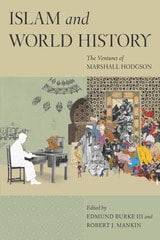
Islam and World History
The Ventures of Marshall HodgsonEdited by Edmund Burke and Robert J. Mankin
University of Chicago Press, 2018
In our post-9/11 world, Hodgson’s historical vision and moral engagement have never been more relevant. A towering achievement, Islam and World History will prove to be the definitive statement on Hodgson’s relevance in the twenty-first century and will introduce his influential work to a new generation of readers.
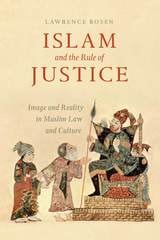
Islam and the Rule of Justice
Image and Reality in Muslim Law and CultureLawrence Rosen
University of Chicago Press, 2018
With Islam and the Rule of Justice, Lawrence Rosen analyzes a number of these misperceptions. Drawing on specific cases, he explores the application of Islamic law to the treatment of women (who win most of their cases), the relations between Muslims and Jews (which frequently involve close personal and financial ties), and the structure of widespread corruption (which played a key role in prompting the Arab Spring). From these case studie the role of informal mechanisms in the resolution of local disputes. The author also provides a close reading of the trial of Zacarias Moussaoui, who was charged in an American court with helping to carry out the 9/11 attacks, using insights into how Islamic justice works to explain the defendant’s actions during the trial. The book closes with an examination of how Islamic cultural concepts may come to bear on the constitutional structure and legal reforms many Muslim countries have been undertaking.
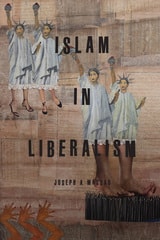
Islam in Liberalism
Joseph A. Massad
University of Chicago Press, 2014
Joseph Massad’s Islam in Liberalism explores what Islam has become in today’s world, with full attention to the multiplication of its meanings and interpretations. He seeks to understand how anxieties about tyranny, intolerance, misogyny, and homophobia, seen in the politics of the Middle East, are projected onto Islam itself. Massad shows that through this projection Europe emerges as democratic and tolerant, feminist, and pro-LGBT rights—or, in short, Islam-free. Massad documents the Christian and liberal idea that we should missionize democracy, women’s rights, sexual rights, tolerance, equality, and even therapies to cure Muslims of their un-European, un-Christian, and illiberal ways. Along the way he sheds light on a variety of controversial topics, including the meanings of democracy—and the ideological assumption that Islam is not compatible with it while Christianity is—women in Islam, sexuality and sexual freedom, and the idea of Abrahamic religions valorizing an interfaith agenda. Islam in Liberalism is an unflinching critique of Western assumptions and of the liberalism that Europe and Euro-America blindly present as a type of salvation to an assumingly unenlightened Islam.
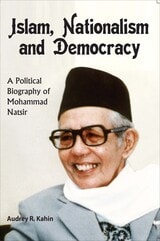
Islam, Nationalism and Democracy
a Political Biography of Mohammad NatsirAudrey R. Kahin
National University of Singapore Press, 2012