Results by title
2728 books match the query 'Education' and 91 start with i
Insiders, Outliers
Centering Adult Student Writers at an HBCUCollie Fulford
Rutgers University Press, 2025
Winner of the 2026 Outstanding Book Award in the Monograph category from the Conference on College Composition and Communication
Insiders, Outliers invites readers into the lives of adult HBCU students for whom college is one meaningful activity among many. Although adults over the age of twenty-four comprise a quarter of all undergraduates, they are institutionally segregated and only partially served by a US higher education system that remains organized around traditional-aged learners. Even as such students are regarded as a market for postsecondary institutions, they are routinely marginalized by institutional barriers. Students’ stories of their personal, professional, community, and academic writing experiences illuminate a critical need for more age-inclusive practices across academia. Their cases also offer new conceptual models of writing as an ethical and emotional practice that fuels changes for individuals and the people and institutions that they care about—including higher education. What adult students reveal about writing across their life domains has powerful implications for conceptualizing writing as a complex form of agency and for teaching writing across the curriculum.

Insights in Applied Theatre
The Early Days and OnwardsEdited by John O'Toole, Penny Bundy, and Peter O'Connor
Intellect Books, 2023
Insights in Applied Theatre offers an inside look into the advent of applied theater and its development as an area of practice and research. Much more than an archive, the texts in this collection present vivid, pertinent voices and messages from the pioneers of applied theater. The nineteen articles chosen by the editors of Applied Theatre Research represent key themes and elements from the start of the practice. The articles—many of which were influential in their own time—have much to say to the contemporary scene. They have been arranged in sections according to key themes and issues discovered, investigated, and stumbled across by the trailblazing writers in the collection. A vital new contribution to the field, the book raises questions about the contested issues of power, partnerships, and voice in applied theater.
Inspiring Writing in Art and Design
Taking a Line for a WritePat Francis
Intellect Books, 2009
When art and design students are asked for statements to accompany their work, reflective journals, or critiques, reviews and essays, they often freeze up because they have to put their thoughts in writing. Although these students are comfortable expressing themselves visually, they lack confidence working with words. Inspiring Writing in Art and Design is a practical aid for those students who are disheartened or overwhelmed by having to write. Pat Francis provides short writing exercises and creative writing techniques for tutors to use and which will help art and design students develop their ability to verbally articulate the concepts and aesthetics behind their art. Using Francis’s examples, students will build confidence and skills that can help them succeed in presenting their work and themselves in, and beyond, the studio world.
Institution Building in Urban Education
Morris Janowitz
Russell Sage Foundation, 1968
Institutional Literacies
Engaging Academic IT Contexts for Writing and CommunicationStuart A. Selber
University of Chicago Press, 2020
Institutional Literacies argues that writing and communication teachers and program directors should collaborate more closely and engage more deeply with IT staff as technology projects are planned, implemented, and expanded. Teachers need to both analyze how their institutions approach information technologies and intervene in productive ways as active university citizens with relevant expertise. To help them do so, the book offers a three-part heuristic, reflecting the reality that academic IT units are complex and multilayered, with historical, spatial, and textual dimensions. It discusses six ways teachers can intervene in the academic IT work of their own institutions: maintaining awareness, using systems and services, mediating for audiences, participating as user advocates, working as designers, and partnering as researchers. With these strategies in hand, educators can be proactive in helping institutional IT approaches align with the professional values and practices of writing and communication programs.
Institutional Repositories
Josh C. Cromwell
Against the Grain, LLC, 2026
Institutional Repositories manage and preserve an institution’s own content. Since their introduction over 25 years ago, Institutional Repositories have been established in universities and institutions around the world. Yet many people, even within the scholarly world, are unaware of the work that repositories carry out, and the essential role they play. Institutional Repositories is a much-needed guide to repositories, past and present. Written by a repository manager and trainer, this fully peer-reviewed book assumes no prior knowledge, and guides the reader through all the activities carried out by the repository team, including (but not limited to) ensuring green Open Access, and ensuring maximum impact for the institution’s research output, as well as providing a collective memory for the organization, often capturing content that would otherwise be lost.
- Wide-ranging, from staffing and managing the repository, to accessibility, preservation, and metadata
- Includes practical guidance for the daily tasks carried out by repository staff
- Compares national repository strategies
- With glossary of repository-related terms
Cromwell achieves something rare: a book that is comprehensive, detailed, readable, and useful all at once. He understands the benefits and untapped potential of the global network of open-access repositories, and offers practical advice for taking full advantage of this community-led infrastructure. Recommended for all institutions hosting or planning to host a repository.
Peter Suber, Director of the Harvard Open Access Project
Instructor Guide for Speechcraft
Discourse Pronunciation for Academic CommunicationWayne B. Dickerson
University of Michigan Press, 2027
Instructor Guide for Speechcraft helps shoulder time-consuming, non-teaching tasks so that instructors can focus on working directly with their students. Four-part lesson plans are adaptable for instructors who want to insert critical pronunciation topics into a non-pronunciation ESL/EFL course. To aid in professional development, each lesson plan includes a commentary on the order of topics in the syllabus and common student questions. Appendices provide pre- and post-tests to make sure that instructors have the resources they need to teach confidently. In addition to the 232 audio recordings for the textbook, instructors can access 37 additional recordings that can be used for class preparation or for in-class progress checks. With the Instructor Guide for Speechcraft, teachers will be able to help their students achieve the clear, intelligible speech they need to pursue their studies in their chosen discipline, to serve as international teaching assistants, and to interact well in their chosen professions.

Insubordinate Spaces
Improvisation and Accompaniment for Social JusticeBarbara Tomlinson
Temple University Press, 2019
Insubordinate spaces are places of possibility, products of acts of accompaniment and improvisation that deepen capacities for democratic social change. Barbara Tomlinson and George Lipsitz’s Insubordinate Spaces explores the challenges facing people committed to social justice in an era when social institutions have increasingly been reconfigured to conform to the imperatives of a market society.
In their book, the authors argue that education, the arts, and activism are key terrains of political and ideological conflict. They explore and analyze exemplary projects responding to current social justice issues and crises, from the Idle No More movement launched by Indigenous people in Canada to the performance art of Chingo Bling, Fandango convenings, the installation art of Ramiro Gomez, and the mass protests proclaiming “Black Lives Matter" in Ferguson, MO. Tomlinson and Lipsitz draw on key concepts from struggles to advance ideas about reciprocal recognition and co-creation as components in the construction of new egalitarian and democratic social relations, practices, and institutions.
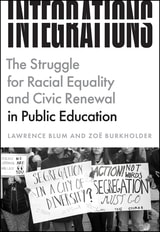
Integrations
The Struggle for Racial Equality and Civic Renewal in Public EducationLawrence Blum and Zoë Burkholder
University of Chicago Press, 2021
Integrations focuses on multiple marginalized groups in American schooling: African Americans, Native Americans, Latinxs, and Asian Americans. The authors show that in order to grapple with integration in a meaningful way, we must think of integration in the plural, both in its multiple histories and in the many possible definitions of and courses of action for integration. Ultimately, the authors show, integration cannot guarantee educational equality and justice, but it is an essential component of civic education that prepares students for life in our multiracial democracy.
Intellectual Freedom Manual, Eleventh Edition
Erin Office for Intellectual Freedom
American Library Association, 2026
When someone faces a difficult intellectual freedom (IF) issue, they usually don’t have time to wade through dense text to find the answers they need. Designed as a real-world reference, OIF’s Intellectual Freedom Manual provides trusted, comprehensive guidance for every library worker, from the volunteer to the director, in plain language. Whether you’re developing or reviewing policies, on-boarding new staff or trustees, responding to challenges and controversies, or studying librarianship, you’ll find this a vital tool, with features such as
- contributions that center the voices of Black, Indigenous, and other People of Color (BIPOC) and LGBTQIA+ people, who are often targeted by censorship efforts;
- chapters that begin with an overview explaining the big ideas and offering reflection questions;
- an introduction to IF and why it matters, drawing on ALA's core IF documents and supported with adaptable policy worksheets;
- information and best practice guidance on key topics such as access, children and youth, censorship and internet filtering, collection development and management, copyright, meeting rooms and exhibit spaces, library programming, politics and religion, privacy, and visits and requests from law enforcement;
- stories from real people whose lives have been impacted by IF, showing how library policies shape culture, protect staff and users, and affect real people;
- concise breakdowns of IF issues from legal experts, helping you understand the laws and how they apply in real situations;
- practical advice on advocating for IF, getting help when challenges arise, lobbying, and working with your elected officials;
- a thorough index to help you quickly find the information you need; and
- a helpful glossary and selected bibliography of additional resources.
Intellectual Property on Campus
Students' Rights and ResponsibilitiesTyAnna K. Herrington
Southern Illinois University Press, 2010
What issues arise when students’ uses of intellectual materials are legally challenged, and how does the academic context affect them? What happens when users of intellectual property, either within or outside the academic structure, violate students’ rights to their intellectual products? In Intellectual Property on Campus, TyAnna K. Herrington addresses these concerns and more, clearing up the confusion often surrounding intellectual property law and its application in an academic setting. Filled with practical information and simple yet thorough explanations, this enlightening volume provides educators and students with a solid basis for understanding the broader impacts of legal and ethical dilemmas involving intellectual materials.
Herrington provides insight for students into how complex concepts such as patent, trademark, copyright, fair use, and plagiarism affect their work. She outlines the potential effects of the choices students make, as well as the benefits and limitations of legal protection for intellectual property, including the thorny issues of authorship and authority under the 1976 Copyright Act. Herrington also explores the topic of student collaboration—now very common on college campuses—and how it affects intellectual property issues and legal relationships, as well as the impact of new technologies, such as blogs, on student work in educational environments.
Intellectual Property on Campus also provides useful information for administrators and educators. In particular, Herrington investigates the possible ramifications of their pedagogical and policy choices, and examines in depth the responsibility of instructors to treat students’ intellectual property legally, ethically, and conscientiously. Cautioning educators about the limitations on their control over intellectual materials in an academic setting, Herrington encourages teachers to minimize their influence over student works, instead giving pupils more freedom to control their own creations.
The volume also investigates the rights, responsibilities, and limitations for users of intellectual property, as opposed to creators, especially as related to student or instructor use of copyrighted materials. Discussed in detail are such issues as fair use and the TEACH Act, as well as the often-intertwined areas of plagiarism, authorship, and copyright. In addition, Herrington addresses recent cultural developments regarding the use and creation of intellectual property by students and instructors.
Written in a jargon-free style that is easy to understand, Intellectual Property on Campus gives students, instructors, and administrators the information they need to navigate the intricate landscape of law and integrity in the realm of academic creation.
Intelligent Action
A History of Artistic Research, Aesthetic Experience, and Artists in AcademiaTimothy Ridlen
Rutgers University Press, 2024
Intentional Tech
Principles to Guide the Use of Educational Technology in College TeachingDerek Bruff
West Virginia University Press, 2019
Chalkboards and projectors are familiar tools for most college faculty, but when new technologies become available, instructors aren’t always sure how to integrate them into their teaching in meaningful ways. For faculty interested in supporting student learning, determining what’s possible and what’s useful can be challenging in the changing landscape of technology.
Arguing that teaching and learning goals should drive instructors’ technology use, not the other way around, Intentional Tech explores seven research-based principles for matching technology to pedagogy. Through stories of instructors who creatively and effectively use educational technology, author Derek Bruff approaches technology not by asking “How to?” but by posing a more fundamental question: “Why?”

Intercollegiate Athletics and the American University
A University President's PerspectiveJames J. Duderstadt
University of Michigan Press, 2003
Intercultural Skills in Action
An International Student's Guide to College and University Life in the U.S.Darren LaScotte and Bethany Peters
University of Michigan Press, 2021
Although traditional ESL/EFL textbooks have primarily introduced cultural topics at a knowledge level only, this textbook is designed to create meaningful opportunities for students to reflect on and practice intercultural skills in ways that are relatable in their daily lives and that can lead to a more satisfying U.S. academic experience.
Each unit opens with a discovery activity that serves as a springboard for the unit and introduces the topic in an engaging way. Chapters feature academic content that builds expands knowledge of intercultural skills, plus opportunities for students to pause and reflect on how to apply what they are learning to their own intercultural experiences. The activities ask students to respond with short written reflections and practice oral skills through discussion in pairs and small groups. Each unit closes with an activity that requires students to use higher-order thinking skills to create, evaluate, and/or analyze cultural information gathered from college and university settings in the form of surveys, interviews, observations, or internet research and then report on what they have learned.
The intended audiences for this book are international students studying in Intensive English Programs, in university bridge or pathway programs, or at colleges and universities in the United States. It may also be used by new-student orientation programs or by student services offices that provide intercultural training for students, staff, and faculty who work with international students.
Interdisciplining Digital Humanities
Boundary Work in an Emerging FieldJulie Thompson Klein
University of Michigan Press, 2015
Interest and Effort in Education
John Dewey. With a new preface by James E. Wheeler
Southern Illinois University Press, 1975

Intergovernmental Relations in Education
Robert Morlan
University of Minnesota Press, 1950
Intergroup Dialogue
Deliberative Democracy in School, College, Community, and WorkplaceDavid Schoem and Sylvia Hurtado, Editors
University of Michigan Press, 2001
Intergroup Dialogue is the most comprehensive study of intergroup dialogue to date, showcasing twelve in-depth case studies, offering critical perspectives, and exploring the foundation of such dialogue in democratic theory. The case studies are drawn from leading American organizations offering intergroup dialogue, including the Anti-Defamation League and the National Conference for Community and Justice, as well as several major universities and consultants to corporate America. Each case study presents a particular program's rationale, its details, an account of its successes, and evaluation data.
The pieces collected by David Schoem and Sylvia Hurtado will be of interest to community leaders, teachers, human resources managers, student affairs deans, and intergroup dialogue practitioners in the United States and abroad; particularly as the 2024 presidential election draws near.
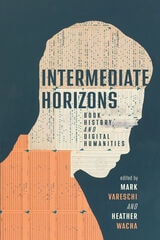
Intermediate Horizons
Book History and Digital HumanitiesEdited by Mark Vareschi and Heather Wacha
University of Wisconsin Press, 2024
Integrating intermedial practices and assessments, the editors and contributors explore issues surrounding the access to and materiality of digitized materials, and the challenge of balancing preservation of traditional archival materials with access. They offer an assessment in our present moment of the early visions of book history and DH projects. In revisiting these projects, they ask us to shift our thinking on the promises and perils of archival and creative work in different media. Taken together, this volume reconsiders the historical intersections of book history and DH and charts a path for future scholarship across disciplinary boundaries.
International Dialogues about Visual Culture, Education and Art
Edited by Teresa Eça and Rachel Mason
Intellect Books, 2008
International Practices in Special Education
Debates and ChallengesMargret A. Winzer
Gallaudet University Press, 2011
Margret A. Winzer and Kas Mazurek combine two disciplines in this collection, comparative and international studies and special education, to explore the ways that diverse nations respond to persons who are exceptional. Their learned contributors also explore the changing parameters of special education, employing comparative studies theories and methods to document, explore, discuss, and analyze social and educational inclusion.
International Practices in Special Education: Debates and Challenges travels the world to examine the progress of special education, from inclusive reform in Canada, “education for all” in the United Kingdom, the reform-restructure-renew movement in Poland to the journey from awareness to action in the United States. Chapters describe the challenges and opportunities in the United Arab Emirates; conflicts regarding educational welfare in South Korea; new perspectives on special needs and inclusive education in Japan; facing inclusion in India; making the invisibles visible in Pakistan; problems and prospects in Nigeria; special needs education in Ethiopia; and the developments, prospects, and demands of special education in a rising China. “One step forward, two steps backward” describes Israel’s special education issues. Germany’s special education receives an international perspective; and education policy and pedagogy for students with disabilities in Australia, completes the analyses in this remarkable, comprehensive work of scholarship.
International and Language Education for a Global Future
Fifty Years of U.S. Title VI and Fulbright-Hays ProgramsDavid S. Wiley
Michigan State University Press, 2010
The contributions to this book address the role that the U.S. Department of Education Title VI and Fulbright-Hays programs have played in building the largest and highest quality infrastructure in the world for training in languages and other aspects of foreign area knowledge. The volume celebrates the 50th anniversary of the Title VI and associated Fulbright-Hays programs, which have established more than 150 centers of excellence for modern foreign language and area studies and international business education in more than 60 U.S. universities.
The authors review the history of the programs, including their founding and their cumulative impacts on internationalizing the American university at the graduate and undergraduate levels. They review how programs for foreign research, technology for foreign information access, and undergraduate programs have built the foundations of U.S. language-learning materials for use in college courses and government with improved language-learning pedagogies, erected the most distinguished library holdings on foreign countries, supported in-depth research abroad in virtually every nation, and created capacity to teach more than 200 less commonly taught languages.
Internationalizing a School of Education
Integration and Infusion in PracticeJohn Schwille
Michigan State University Press, 2016
Interpreter Education in the Digital Age
Innovation, Access, and ChangeSuzanne Ehrlich
Gallaudet University Press, 2015
Initiatives described in this collection range from the implementation of on-demand interpreting using iPad technology to create personalized, small-group, multidimensional models suited to digital media for 160 languages; introducing students to interpreting in a 3D world through an IVY virtual environment; applying gaming principles to interpreter education; assessing the amenability of the digital pen in the hybrid mode of interpreting; developing multimedia content for both open access and structured interpreter education environments; to preparing interpreting students for interactions in social media forums, and more. Interpreter Education in the Digital Age provides a context for the application of technologies in interpreter education from an international viewpoint across languages and modalities.
Interrogating Privilege
Reflections of a Second Language EducatorStephanie Vandrick
University of Michigan Press, 2013
Interrogating Privilege is a welcome combination of personal essays and academic research, blending theory, analysis, and narrative to explore the function and consequences of privilege in second language education.
While teachers’ focus on the learning process and class goals are quite important, there is not enough attention paid to the types of privilege—or lack thereof—that individuals bring to the classroom. Through chapters that can either stand alone or be read together, with topics such as gender, age, and colonialism (the author is the daughter of missionary parents) in second language teaching, this book seeks to address the experiences of teachers, scholars, and students as “whole persons” and to observe the workings of identity and privilege in the educational setting.
Intersectional Inequality
Race, Class, Test Scores, and PovertyCharles C. Ragin and Peer C. Fiss
University of Chicago Press, 2016
Ragin and Fiss begin by taking up the controversy regarding the relative importance of test scores versus socioeconomic background on life chances, a debate that has raged since the 1994 publication of Richard Herrnstein and Charles Murray’s TheBell Curve. In contrast to prior work, Ragin and Fiss bring an intersectional approach to the evidence, analyzing the different ways that advantages and disadvantages combine in their impact on life chances. Moving beyond controversy and fixed policy positions, the authors propose sophisticated new methods of analysis to underscore the importance of attending to configurations of race, gender, family background, educational achievement, and related conditions when addressing social inequality in America today.
Intersectionality and Higher Education
Identity and Inequality on College CampusesW. Carson Byrd
Rutgers University Press, 2019
Into the Story 2
More Stories! More Drama!Carole Miller and Juliana Saxton
Intellect Books, 2016
Introduction to Engineering Design
A Conceptual OverviewKenneth Alfano
Michigan Publishing Services, 2025
Engineering design courses are often project-oriented, and rightly so, given that the process is best understood through some amount of experience. But a conceptual foundation is likewise critical for this subject. It helps enable experiential learning to relate the broad context of design process elements to the specific context of a given project. Further, engineering students tend to start out more acquainted with thinking about math and science subjects, where there is often one way – or at least a clear best way – to a “right” answer. The design process, by marked contrast, is largely qualitative and open-ended. Relatedly, it can (perhaps ironically) aid early learners to point out how varied and inconsistent the usage can be for some terminology – so the book does so at times, to help preempt confusion down the road.
In addition to being a text for an introductory college course, the book can also serve as a supplemental or reference text for later courses or on the job, or simply a general overview for those curious about the subject.
Investigating Interdisciplinary Collaboration
Theory and Practice across DisciplinesFrickel, Scott
Rutgers University Press, 2016
Chapter 10 is available Open Access here (https://www.ncbi.nlm.nih.gov/books/NBK395883)
Investing Wisely
Informed Approaches to Designing and Implementing Allocation Systems for Graduate AssistantshipsRoger B. Sidje, Joan M. Barth, Ellary A. Draper, Matthew J. Jenny, Daniel L. Riches, and Dean M. Townsley
University of Alabama Press, 2026
Investing in Graduate Education Through Data, Equity, and Purpose.
Investing Wisely: Informed Approaches to Designing and Implementing Allocation Systems for Graduate Assistantships tackles one of the most consequential and least understood challenges in higher education: how universities can distribute graduate assistantships fairly, strategically, and transparently. Drawing on a multiyear effort at the University of Alabama, the authors introduce DIASGA™ (Designing and Implementing Allocation Systems for Graduate Assistantships), a practical framework for aligning graduate funding with institutional priorities, departmental needs, and student success. Through real-world experience, the book demonstrates how institutions can move beyond inherited funding patterns and build adaptive systems capable of responding to changing academic realities.
The book proposes a distinctive blend of rigorous analysis and practical guidance. The authors reveal the hidden complexities behind graduate funding decisions, challenging simplistic allocation formulas based on enrollment or credit-hour production. Instead, they advocate a data-informed, collaborative process grounded in departmental expertise, institutional values, and continuous assessment. Featuring case studies, implementation strategies, funding models, committee structures, and lessons learned from both successes and setbacks, Investing Wisely offers an unusually candid account of organizational change and resource allocation in higher education.
This book will be invaluable to provosts, deans, graduate school leaders, department chairs, faculty administrators, and higher education policymakers. It will also appeal to scholars of university governance, institutional effectiveness, and academic planning who seek practical approaches to balancing equity, accountability, and strategic investment. Whether your institution is reconsidering graduate funding practices or simply striving to make better-informed decisions, Investing Wisely provides a thoughtful roadmap for investing in graduate education with clarity, fairness, and purpose.
This book is freely available in open access format thanks to TOME (Toward an Open Monograph Ecosystem) - a collaboration of the Association of American Universities, the Association of University Presses, and the Association of Research Libraries - and the generous support of Virginia Tech. This Open Access publication can be accessed by visiting the University of Alabama Libraries Repository at https://ir.ua.edu/handle/123456789/18409.
Invisible China
How the Urban-Rural Divide Threatens China’s RiseScott Rozelle and Natalie Hell
University of Chicago Press, 2020
As the glittering skyline in Shanghai seemingly attests, China has quickly transformed itself from a place of stark poverty into a modern, urban, technologically savvy economic powerhouse. But as Scott Rozelle and Natalie Hell show in Invisible China, the truth is much more complicated and might be a serious cause for concern.
China’s growth has relied heavily on unskilled labor. Most of the workers who have fueled the country’s rise come from rural villages and have never been to high school. While this national growth strategy has been effective for three decades, the unskilled wage rate is finally rising, inducing companies inside China to automate at an unprecedented rate and triggering an exodus of companies seeking cheaper labor in other countries. Ten years ago, almost every product for sale in an American Walmart was made in China. Today, that is no longer the case. With the changing demand for labor, China seems to have no good back-up plan. For all of its investment in physical infrastructure, for decades China failed to invest enough in its people. Recent progress may come too late. Drawing on extensive surveys on the ground in China, Rozelle and Hell reveal that while China may be the second-largest economy in the world, its labor force has one of the lowest levels of education of any comparable country. Over half of China’s population—as well as a vast majority of its children—are from rural areas. Their low levels of basic education may leave many unable to find work in the formal workplace as China’s economy changes and manufacturing jobs move elsewhere.
In Invisible China, Rozelle and Hell speak not only to an urgent humanitarian concern but also a potential economic crisis that could upend economies and foreign relations around the globe. If too many are left structurally unemployable, the implications both inside and outside of China could be serious. Understanding the situation in China today is essential if we are to avoid a potential crisis of international proportions. This book is an urgent and timely call to action that should be read by economists, policymakers, the business community, and general readers alike.
Invisible Hawkeyes
African Americans at the University of Iowa during the Long Civil Rights EraLena M. Hill and Michael D. Hill
University of Iowa Press, 2016
By examining the quieter collisions between Iowa’s polite midwestern progressivism and African American students’ determined ambition, Invisible Hawkeyes focuses attention on both local stories and their national implications. By looking at the University of Iowa and a smaller midwestern college town like Iowa City, this collection reveals how fraught moments of interracial collaboration, meritocratic advancement, and institutional insensitivity deepen our understanding of America’s painful conversion into a diverse republic committed to racial equality.
SUBJECTS COVERED
Edison Holmes Anderson, George Overall Caldwell, Elizabeth Catlett, Fanny Ellison, Oscar Anderson Fuller, Michael Harper, James Alan McPherson, Herbert Franklin Mells, Herbert Nipson, Thomas Pawley, William Oscar Smith, Mitchell Southall, Margaret Walker
CONTRIBUTORS
Dora Martin Berry, Richard M. Breaux, Kathleen A. Edwards, Lois Eichaker, Brian Hallstoos, Lena M. Hill, Michael D. Hill, Dianna Penny, Donald W. Tucker, Ted Wheeler
Invitations to Love
Literacy, Love Letters, and Social Change in NepalLaura M. Ahearn
University of Michigan Press, 2001
The love-letter correspondences examined by Ahearn also provide a deeper understanding of the social effects of literacy. While the acquisition of literary skills may open up new opportunities for some individuals, such skills can also impose new constraints, expectations, and disappointments. The increase in female literacy rates in Junigau in the 1990s made possible the emergence of new courtship practices and facilitated self-initiated marriages, but it also reinforced certain gender ideologies and undercut some avenues to social power, especially for women.
Scholars, and students in such fields as anthropology, women's studies, linguistics, development studies, and South Asian studies will find this book ethnographically rich and theoretically insightful.
Is William Martinez Not Our Brother?
Twenty Years of the Prison Creative Arts ProjectBuzz Alexander
University of Michigan Press, 2010
Praise for the Prison Creative Arts Project:
"I cannot overstate how profoundly my experience with the Prison Creative Arts Project has shaped my life. It began my engagement with prison issues, developed both my passion and my understanding of them, and I continue to draw on both as I seek to contribute to a more rational, humane and just criminal justice system. PCAP prepared me to adapt to any situation, to take risks, to collaborate with people very different from myself in a manner infused with total respect."
---Jesse Jannetta, researcher, Justice Policy Center, the Urban Institute
"PCAP provided me with an emotional education that I would not have received otherwise. PCAP continually opens the doors to the stark reality of our criminal justice system as well as our society's ability to right the wrongs of that system and provide justice to millions of men, women, and children . . . PCAP showed me the power I, and the individuals around me, have to make a difference."
---Anne Bowles, Policy and Outreach Associate, Institute for Higher Education Policy
"PCAP looks beyond past mistakes and personal shortcomings to find the beauty and creative energies that help to heal the hurts we've done to others. They have not forgotten that we are human too! . . . Their program has given me a way to reach people that I would otherwise never reach. For that, I owe PCAP everything. They are my lifeline that I cling to."
---Bryan Picken, incarcerated artist
Prisons are an invisible, but dominant, part of American society: the United States incarcerates more people than any other nation in the world. In Michigan, the number of prisoners rose from 3,000 in 1970 to more than 50,000 by 2008, a shift that Buzz Alexander witnessed firsthand when he came to teach at the University of Michigan.
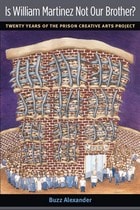
Is William Martinez Not Our Brother? describes the University of Michigan's Prison Creative Arts Project (PCAP), a pioneering program founded in 1990 that provides university courses, a nonprofit organization, and a national network for incarcerated youth and adults in Michigan juvenile facilities and prisons.
By giving incarcerated individuals an opportunity to participate in the arts, PCAP enables them to withstand and often overcome the conditions and culture of prison, the policies of an incarcerating state, and the consequences of mass incarceration.
Buzz Alexander is Arthur F. Thurnau Professor of English Language and Literature, College of Literature, Science, and the Arts, at the University of Michigan and was Carnegie National Professor of the Year in 2005.
Cover image: Overcrowded by Ronald Rohn

Is a Single Teachable Indian Past Possible Today?
Janaki Nair
Seagull Books, 2024
More than ever before, the school history textbook in India has become an embattled object and the subject of many contestations from both above and below. It is vulnerable not only to the political vagaries of governments but also to the exclusive claims of myriad communities and groups to their sense of the past. What is the future of India’s textbook, arguably the most important repository of the country’s national past? Is a single teachable past even possible any longer?
In this essay, Janaki Nair uses the Indian predicament to discuss the possibility of building up a “historical temper” in the Indian classroom. Sharing examples from her unique position as a professional historian with sustained experience in the field of pedagogy, Nair invites reflections on the prospect of cultivating a historical temper that can help the teacher equip students to grapple with history.
Islam and Education
Myths and TruthsEdited by Wadad Kadi and Victor Billeh
University of Chicago Press, 2007
In this timely volume based on a special issue of Comparative Education Review, leading comparative education scholars explore the world of education in Islam from the medieval era to today, illuminating the continuing struggle among Islamic scholars and educators over whether to reform or resist as a way of preserving identity. Islam and Education offers a rare overview of the great diversity in forms of Islamic education, dispelling misinterpretations and documenting the ever-evolving relationship of Islamic education to the West. It should be necessary reading for all humanists and social scientists wishing to understand the nexus between schools and societies, the spiritual dimensions of learning, and the social configuration of educational institutions.
Issues Unresolved
New Perspectives on Language and Deaf EducationAmatzia Weisel
Gallaudet University Press, 1998
Part 1, Communication: Signed and Spoken Languages, addresses matters that range from considering critical periods for language acquisition, researched by Susan D. Fischer, to assessing the impact of immigration policies on the ethnic composition of Australia’s deaf community, intriguing work by Jan Branson and Don Miller.
Part 2, Communication: Accessibility to Speech, continues the debate with works on the perception of speech by deaf and hard of hearing children, contributed by Arthur Boothroyd, and automatic speech recognition and its applications, delineated by Harry Levitt.
Educational issues are brought to the forefront in Part 3 in such engrossing studies as Lea Lurie and Alex Kozulin’s discourse on the application of an instrumental-enrichment cognitive intervention program with deaf immigrant children from Ethiopia. Stephen Powers offers another perspective in this section with his retrospective evaluation of a distance education training course for teachers of the deaf.
Part 4, Psychological and Social Adjustment reviews progress in this area, with Anne de Klerk’s exposition on the Rotterdam Deaf Awareness Program, and Corinne J. Lewkowitz and Lynn S. Liben’s research on the development of deaf and hearing children’s sex-role attitudes and self-endorsements. These and the many other contributions by renowned international scholars in the field make Issues Unresolved a compelling new standard for all involved in deaf education.

Issues in Curriculum
Selected Essays from Past NSSE YearbooksEdited by Margaret Early and Kenneth J. Rehage
University of Chicago Press, 1999
Ivy and Industry
Business and the Making of the American University, 1880-1980Christopher Newfield
Duke University Press, 2003
Newfield views management as neither inherently good nor bad, but rather as a challenge to and tool for negotiating modern life. In Ivy and Industry he integrates business and managerial philosophies from Taylorism through Tom Peters’s “culture of excellence” with the speeches and writings of leading university administrators and federal and state education and science policies. He discusses the financial dependence on industry and government that was established in the university’s early years and the equal influence of liberal arts traditions on faculty and administrators. He describes the arrival of a managerial ethos on campus well before World War II, showing how managerial strategies shaped even fields seemingly isolated from commerce, like literary studies. Demonstrating that business and the humanities have each had a far stronger impact on higher education in the United States than is commonly thought, Ivy and Industry is the dramatic story of how universities have approached their dual mission of expanding the mind of the individual while stimulating economic growth.