Results by title
5448 books match the query 'History and criticism' and 193 start with i

Imperial Bibles, Domestic Bodies
Women, Sexuality, and Religion in the Victorian MarketMary Wilson Carpenter
Ohio University Press, 2003
Of the many literary phenomena that sprang up in eighteenth-century England and later became a staple of Victorian culture, one that has received little attention until now is the “Family Bible with Notes.” Published in serial parts to make it affordable, the Family Bible was designed to enhance the family’s status and sense of national and imperial identity.
Imperial Bibles, Domestic Bodies reveals in its study of the production and consumption of British commercial Family Bibles startling changes in “family values.” Advertised in the eighteenth century as providing the family with access to “universal knowledge,” these Bibles suddenly shifted in the early nineteenth century to Bibles with bracketed sections marked “to be omitted from family reading” and reserved for reading “in the closet” by the “Master of the family.” These disciplinary Bibles were paralleled by Family Bibles designed to appeal to the newly important female consumer. Illustrations featured saintly women and charming children, and “family registers” with vignettes of family life emphasized the prominent role of the “angel in the house.”
As Mary Wilson Carpenter documents in Imperial Bibles, Domestic Bodies, the elaborate notes and “elegant engravings” in these Bibles bring to light a wealth of detail about the English commonsense view of such taboo subjects as same-sex relations, masturbation, menstruation, and circumcision. Her reading of literary texts by Charlotte Brontë, George Eliot, and Elizabeth Barrett Browning in the context of these commercial representations of the “Authorized Version” or King James translation of the Bible indicates that when the Victorians spoke about religion, they were also frequently speaking about sex.

Imperial Desire
Dissident Sexualities And Colonial LiteraturePhilip Holden
University of Minnesota Press, 2003
Illuminates the intersections between colonial thought and homosexuality
An exploration of the intersection of colonialism and homosexuality in fiction and travel writing from Robinson Crusoe to the present, this volume brings together two dynamic fields of academic inquiry: colonial discourse analysis, which considers literary texts as expressions of colonial power; and queer theory, which interrogates the representation, enforcement, and subversions of sexualities in literature and culture.
These writers reexamine the work of Kipling, Conrad, Forster, Lessing, and others, ranging from male adventure stories to postcolonial novels. This volume will provoke and inform readers concerned with gender and sexuality, colonial history and literature, or with any of the works and authors revisited—and reexperienced—here. Contributors: Anjali Arondekar, U of California, Santa Cruz; John C. Beynon, California State U, Fresno; Joseph A. Boone, USC; Sarah Cole, Columbia U; Lois Cucullu, U of Minnesota; Maria Davidis, Cornell; Dennis Denisoff, Ryerson U; Mark Forrester, U of Maryland; Terry Goldie, York U; Christopher Lane, Northwestern U; Tim Middleton, Bath Spa U College, UK; Hans Turley, U of Connecticut.
Imperial Fictions
German Literature Before and Beyond the Nation-StateTodd Kontje
University of Michigan Press, 2018

Imperial Media
Colonial Networks and Information Technologies in the British Literary Imagination, 1857–1918Aaron Worth
The Ohio State University Press, 2014
Imperial Media: Colonial Networks and Information Technologies in the British Literary Imagination, 1857–1918 brings together two of the most dynamic and productive approaches to the study of nineteenth-century literature in recent years—media studies and colonial studies—to illuminate the rich and enduring symbiosis that developed between information technologies and Empire. Over a century before Facebook and the iPhone, Britons relied on the electric media of their day for information about their global empire—but those media, which during Victoria’s reign stretched out its tentacles to form a true “world wide web,” not only delivered information but provided conceptual frames as well, helping to shape the way their users thought.
Ranging in space from the telegraph offices of Kipling’s India to the wireless transmitter on H.G. Wells’s Africanized moon, and in time from the Sepoy Rebellion to the Great War, Imperial Media reveals the extent to which British conceptions of imperial power were inflected by the new media of the nineteenth century: the telegraph, telephone, phonograph, radio, and cinema.
While focusing on the fiction of Kipling, Wells, Marie Corelli, H. Rider Haggard, and John Buchan (“the last Victorian,” in Gertrude Himmelfarb’s phrase), Aaron Worth also argues that the “imperial media” of the Victorians retain much of their imaginative life and power today, informing such popular entertainments of the twenty-first century as Bollywood cinema and the BBC’s science-fiction franchise Torchwood. This is a vital, engaging study that will shape future discussions of both colonial and information systems, as well as the relationship between the two, in Victorian studies and elsewhere.
Impersonality
Seven EssaysSharon Cameron
University of Chicago Press, 2007
Imposing Harmony
Music and Society in Colonial CuzcoGeoffrey Baker
Duke University Press, 2008
Building on recent scholarship by social historians and urban musicologists and drawing on extensive archival research, Baker highlights European music as a significant vehicle for reproducing and contesting power relations in Cuzco. He examines how Andean communities embraced European music, creating an extraordinary cultural florescence, at the same time that Spanish missionaries used the music as a mechanism of colonialization and control. Uncovering a musical life of considerable and unexpected richness throughout the diocese of Cuzco, Baker describes a musical culture sustained by both Hispanic institutional patrons and the upper strata of indigenous society. Mastery of European music enabled elite Andeans to consolidate their position within the colonial social hierarchy. Indigenous professional musicians distinguished themselves by fulfilling important functions in colonial society, acting as educators, religious leaders, and mediators between the Catholic Church and indigenous communities.
Impossible Purities
Blackness, Femininity, and Victorian CultureJennifer DeVere Brody
Duke University Press, 1998
Opening with a reading of Daniel Defoe’s “A True-Born Englishman,” which posits the mixed origins of English identity, Brody goes on to analyze mulattas typified by Rhoda Swartz in William Thackeray’s Vanity Fair, whose mixed-race status reveals the “unseemly origins of English imperial power.” Examining Victorian stage productions from blackface minstrel shows to performances of The Octoroon and Uncle Tom’s Cabin, she explains how such productions depended upon feminized, “black” figures in order to reproduce Englishmen as masculine white subjects. She also discusses H.G. Wells’s The Island of Dr. Moreau in the context of debates about the “new woman,” slavery, and fears of the monstrous degeneration of English gentleman. Impossible Purities concludes with a discussion of Bram Stoker’s novella, “The Lair of the White Worm,” which brings together the book’s concerns with changing racial representations on both sides of the Atlantic.
This book will be of interest to scholars in Victorian studies, literary theory, African American studies, and cultural criticism.

Impossible Stories
On the Space and Time of Black Destructive CreationJohn Murillo III
The Ohio State University Press, 2021
Taking as his lens the fragment—fragmented bodies, fragments of memories, fragments of texts—Murillo theorizes new directions for Black identity and cultural production. Combining a critical engagement of physics and metaphysics with innovative readings of Gayl Jones’s Corregidora, Octavia Butler’s Kindred, Toni Morrison’s Beloved, Kiese Laymon’s Long Division, Dionne Brand’s A Map to the Door of No Return, and Paul Beatty’s The Sellout, he offers new ways to think about anti-Black racism and practice Black creativity. Ultimately, in his equally creative and analytical responses to depictions of Black people left out of history and barred from spaces, Murillo argues that through Afro-pessimism, Black people can fight the anti-Black cosmos.
Impostors
Literary Hoaxes and Cultural AuthenticityChristopher L. Miller
University of Chicago Press, 2018
In the United States, such hoaxes are familiar. Forrest Carter’s The Education of Little Tree and JT LeRoy’s Sarah are two infamous examples. Miller’s contribution is to study hoaxes beyond our borders, employing a comparative framework and bringing French and African identity hoaxes into dialogue with some of their better-known American counterparts. In France, multiculturalism is generally eschewed in favor of universalism, and there should thus be no identities (in the American sense) to steal. However, as Miller demonstrates, this too is a ruse: French universalism can only go so far and do so much. There is plenty of otherness to appropriate. This French and Francophone tradition of imposture has never received the study it deserves. Taking a novel approach to this understudied tradition, Impostors examines hoaxes in both countries, finding similar practices of deception and questions of harm.
Impressionist Subjects
Gender, Interiority, and Modernist Fiction in EnglandTamar Katz
University of Illinois Press, 2000
Sophisticated and tightly argued, Impressionist Subjects is a substantial contribution to the reassessment and expansion of the modernist fiction canon.
Improbability, Chance, and the Nineteenth-Century Realist Novel
Adam Grener
The Ohio State University Press, 2020
Contemporary thinking about probability came to recognize the variability and even randomness of the world while also discovering how patterns and order reemerge at scale. Reading chance as a tension between randomness and order, Grener shows how novels by Jane Austen, Sir Walter Scott, Charles Dickens, Anthony Trollope, and Thomas Hardy resist the demands of probabilistic representation and develop strategies for capturing cultural particularity and historical transformation. These authors served their visions of realism by tactically embracing improbability in the form of coincidences, fatalism, supernaturalism, and luck. Understanding this strategy helps us to appreciate how realist novels work to historicize the social worlds and experiences they represent and asks us to rethink the very foundation of realism.
Improvisational Poetry from the Basque Country
Gorka Aulestia
University of Nevada Press, 1995
Foreword by William A. Douglass Translated by Lisa Corcostegui and Linda White.Improvisational Poetry from the Basque Country introduces the Basque bertsolari to the English-speaking world and provides an understanding of an interesting cultural phenomenon—the artist in Basque society who is capable of improvising verse on any subject spontaneously and setting it to music. The tradition is at least several centuries old and runs the gamut from amateurish efforts to periodic national championship competitions. These competitions draw thousands of listeners and pack theaters while many other thousands tune their radios to the broadcasts of the performances. Aulestia takes a scholarly and in-depth look at the art of the bertsolari. In a fascinating text, the author examines the history of a tradition that is truly unique and completely Basque. He introduces and analyzes the performing styles of great bertsolariak, including Xabier Amuriza and Jon Azpillaga. From the bertsolari’s roots in the old Basque Country to the social phenomenon it is today, Aulestia’s look at the improvisational oral literature of the Basques is an essential addition to their written history.
In Babel's Shadow
Multilingual Literatures, Monolingual StatesBrian Lennon
University of Minnesota Press, 2010
In Contagion's Wake
Black Writers and the Development of Modern Outbreak NarrativesKelly L. Bezio
University of Massachusetts Press, 2026
An examination of early American literature that highlights how racial divides exacerbated—and were exacerbated by—the spread of infection
In April of 1721, the HMS Seahorse arrived in Boston from the West Indies, causing a smallpox epidemic that would plague the city for the next year. Of its 12,000 inhabitants, nearly fifty percent were infected, and 900 people died. Like the coronavirus pandemic that began in 2020, the outbreak also brought to the surface deep divides in the social fabric of colonial New England and laid the groundwork for racialized political inequities that we continue to grapple with today.
In Contagion’s Wake examines a range of American outbreak narratives, both historical and fictional, written between the early 1700s and the early 1900s—from the rise of inoculation through the advent of germ theory. Author Kelly L. Bezio argues that during this period, literature about communicable disease was dominated by white authors, such as Cotton Mather and Edgar Allen Poe, who tended to privilege white suffering and survival while obscuring Black suffering and vulnerability. Black authors, however, such as Olaudah Equiano and Frances E.W. Harper, developed variations on plot structures, metaphors, and imagery that drew upon contagion to represent racial injustice and further the cause of Black liberation.
The diverse texts Bezio analyzes vary extensively in genre and geographical location, and in the illnesses that feature in their pages. Significant disorders from the era, including yellow fever, smallpox, consumption, and cholera, make frequent appearances, as do less culturally dominant diseases such as St. Anthony’s Fire. In Contagion’s Wake contends that representations of communicable disease should not be understood only as within their own historical moment; rather, they function more like a DNA code for our present time.
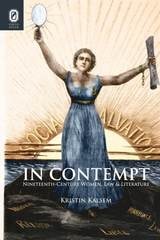
In Contempt
Nineteenth-Century Women, Law, and LiteratureKristin Kalsem
The Ohio State University Press, 2012
In Contempt: Nineteenth-Century Women, Law, and Literature, by Kristin Kalsem, explores the legal advocacy performed by nineteenth-century women writers in publications of nonfiction and fiction, as well as in real-life courtrooms and in the legal forum provided by the novel form.
In Defense of Reason
Three Classics of Contemporary CriticismYvor Winters
Ohio University Press, 1947
Yvor Winters has here collected, with an introduction, the major critical works—Primitivism and Decadence, Maule’s Curse, and The Anatomy of Nonsense—of the period in which he worked out his famous and influential critical position. The works together show an integrated position which illuminates the force and importance of the individual essays. With The Function of Criticism, a subsequent collection, In Defense of Reason provides an incomparable body of critical writing.
The noted critic bases his analysis upon a belief in the existence of absolute truths and values, in the ethical judgment of literature, and in an insistence that it is the duty of the writer—as it is of very man—to approximate these truths insofar as human fallibility permits. His argument is by theory, but also by definite example—the technique of the “whole critic” who effectively combines close study of specific literary works and a penetrating investigation of aesthetic philosophies.
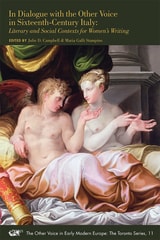
In Dialogue with the Other Voice in Sixteenth-century Italy
Literary and Social Contexts for Women's WritingEdited by Julie D. Campbell and Maria Galli Stampino
Iter Press, 2011
—Elissa Weaver
Professor of Italian, Emerita, University of Chicago
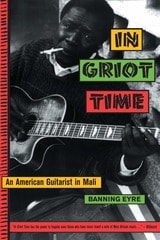
In Griot Time
Banning Eyre
Temple University Press, 2000
Djelimady Tounkara is only one of the memorable people you will meet in this dramatic narrative of life among the griot musicians of Mali. Born into families where music and the tradition of griot story-telling is a heritage and a privilege, Djelimady and his fellow griots -- both men and women -- live their lives at the intersection of ancient traditions and the modern entertainment industry. During the seven months he spent living and studying with Djelimady, Banning Eyre immersed himself in a world that will fascinate you as it did him.
Eyre creates a range of unforgettable portraits. Some of the people who stride through his pages are internationally known, musicians like Salif Keita, Oumou Sangare, and Grammy winner Ali Farka Toure. But the lesser-known characters are equally fascinating: Adama Kouyate, Djelimady's dynamic wife; Moussa Kouyate, the Tounkara family's own griot; Yayi Kanoute, the flamboyant jelimuso (female griot) who failed to take America by storm; Foutanga Babani Sissoko, the mysterious millionaire who rebuilt an entire town and whose patronage is much sought after by the griots of Bamako.
But the picture Eyre draws is not just a series of portraits. Out of their interactions comes a perceptive panorama of life in Mali in the late twentieth century. The narrative gives us a street-level view of the transformation of musical taste and social customs, the impact of technology and the pressures of poverty, at a crucial time in Mali's history. In individual after individual, family after family, we see the subtle conflicts of heritage and change. Even the complications of democracy -- with democracy, mango vendors think they can charge anything they want, Djelimady points out -- are woven into an unforgettable saga of one man, his family, his profession, and the world of Malian music.

In It for the Long Run
A Musical OdysseyJim Rooney
University of Illinois Press, 2014
Inspired by the Hank Williams and Leadbelly recordings he heard as a teenager growing up outside of Boston, Jim Rooney began a musical journey that intersected with some of the biggest names in American music including Bob Dylan, James Taylor, Bill Monroe, Muddy Waters, and Alison Krauss. In It for the Long Run: A Musical Odyssey is Rooney's kaleidoscopic first-hand account of more than five decades of success as a performer, concert promoter, songwriter, music publisher, engineer, and record producer.
As witness to and participant in over a half century of music history, Rooney provides a sophisticated window into American vernacular music. Following his stint as a "Hayloft Jamboree" hillbilly singer in the mid-1950s, Rooney managed Cambridge's Club 47, a catalyst of the ‘60’s folk music boom. He soon moved to the Newport Folk Festival as talent coordinator and director where he had a front row seat to Dylan "going electric."
In the 1970s Rooney's odyssey continued in Nashville where he began engineering and producing records. His work helped alternative country music gain a foothold in Music City and culminated in Grammy nominations for singer-songwriters John Prine, Iris Dement, and Nanci Griffith. Later in his career he was a key link connecting Nashville to Ireland's folk music scene.
Writing songs or writing his memoir, Jim Rooney is the consummate storyteller. In It for the Long Run: A Musical Odyssey is his singular chronicle from the heart of Americana.
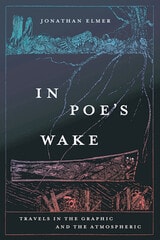
In Poe's Wake
Travels in the Graphic and the AtmosphericJonathan Elmer
University of Chicago Press, 2024
You’ll find his face everywhere, from coffee mugs, bobbleheads, and T-shirts to the cover of the Beatles’ Sergeant Pepper’s Lonely Hearts Club Band. Edgar Allan Poe is one of American culture’s most recognizable literary figures, his life and works inspiring countless derivations beyond the literary realm. Poe’s likeness and influence have been found in commercial illustration and kitsch, art installations, films, radio plays, children’s cartoons, and video games. What makes Poe so hugely influential in media other than his own? What do filmmakers, composers, and other artists find in Poe that suits their purposes so often and so variously?
In Poe’s Wake locates the source of the writer’s enduring legacy in two vernacular aesthetic categories: the graphic and the atmospheric. Jonathan Elmer uses Poe to explore these two terms and track some deep patterns in their use, not through theoretical labor but through close encounters with a wide sampling of aesthetic objects that avail themselves of Poe’s work. Poe’s writings are violent and macabre, memorable both for certain grisly images and for certain prevailing moods or atmospheres—dread, creepiness, and mournfulness. Furthermore, a bundle of Poe traits—his thematic emphasis on extreme sensation, his flexible sense of form, his experimental and modular method, and his iconic visage—amount to what could be called a Poe “brand,” one as likely to be found in music videos or comics as in novels and stories. Encompassing René Magritte, Claude Debussy, Lou Reed, Roger Corman, Spongebob Squarepants, and many others, Elmer’s book shows how the Poe brand opens trunk lines to aesthetic experiences fundamental to a multi-media world.
In Praise of Antiheroes
Figures and Themes in Modern European Literature, 1830-1980Victor Brombert
University of Chicago Press, 1999
Though they fail, by design, to live up to conventional expectations of mythic heroes, antiheroes are not necessarily "failures." They display different kinds of courage more in tune with our time and our needs: deficiency translated into strength, failure experienced as honesty, dignity achieved through humiliation. Brombert explores these paradoxes in the works of Büchner, Gogol, Dostoevsky, Flaubert, Svevo, Hašek, Frisch, Camus, and Levi. Coming from diverse cultural and linguistic traditions, these writers all use the figure of the antihero to question handed-down assumptions, to reexamine moral categories, and to raise issues of survival and renewal embodying the spirit of an uneasy age.

In Praise of the Impure
Poetry and the Ethical Imagination: Essays, 1980-1991Alan Shapiro
Northwestern University Press, 1993
In Quest of the Ordinary
Lines of Skepticism and RomanticismStanley Cavell
University of Chicago Press, 1988
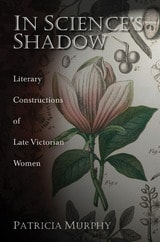
In Science's Shadow
Literary Constructions of Late Victorian WomenPatricia Murphy
University of Missouri Press, 2006
The Victorian era was characterized by great scientific curiosity—as exemplified by the publication of Darwin’s Descent of Man—as well as by new questions regarding the place of women in society. Patricia Murphy now explores the tenuous interplay of gender and science to show how the era’s literature both challenged and reinforced a constrictive role for Victorian women. Focusing on a specific body of literature involving women intensely associated with scientific pursuits, and examining selected noncanonical writings—both fictional and nonfictional representations of scientific women—Murphy demonstrates how these works informed the “Woman Question” by reinforcing or rejecting presumed truths about gender and science.
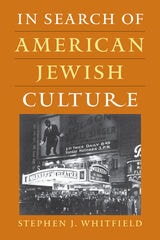
In Search of American Jewish Culture
Stephen J. Whitfield
Brandeis University Press, 2001

In Search of First Contact
The Vikings of Vinland, the Peoples of the Dawnland, and the Anglo-American Anxiety of DiscoveryAnnette Kolodny
Duke University Press, 2012
Kolodny considers what the sagas reveal about the Native peoples encountered by the Norse in Vinland around the year A.D. 1000, and she recovers Native American stories of first contacts with Europeans, including one that has never before been shared outside of Native communities. These stories contradict the dominant narrative of "first contact" between Europeans and the New World. Kolodny rethinks the lingering power of a mythic American Viking heritage and the long-standing debate over whether Leif Eiriksson or Christopher Columbus should be credited as the first discoverer. With this paradigm-shattering work, Kolodny shows what literary criticism can bring to historical and social scientific endeavors.
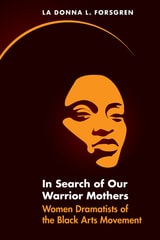
In Search of Our Warrior Mothers
Women Dramatists of the Black Arts MovementLa Donna L. Forsgren
Northwestern University Press, 2018
The Black Arts Movement (1965–76) consisted of artists across the United States deeply concerned with the relationship between politics and the black aesthetic. In Search of Our Warrior Mothers examines the ways in which black women playwrights in the movement advanced feminist and womanist perspectives from within black nationalist discourses. La Donna L. Forsgren recuperates the careers, artistic theories, and dramatic contributions of four leading playwrights: Martie Evans-Charles, J.e. Franklin, Sonia Sanchez, and Barbara Ann Teer. Using original interviews, production recordings, playbills, and unpublished manuscripts, she investigates how these women, despite operating within a context that equated the collective well-being of black people with black male agency, created works that validated black women's aspirations for autonomy and explored women's roles in the struggle for black liberation.
In Search of Our Warrior Mothers demonstrates the powerful contributions of women to the creation, interpretation, and dissemination of black aesthetic theory, thus opening an interdisciplinary conversation at the intersections of theater, performance, feminist, and African American studies and identifying and critiquing the gaps and silences within these fields.

In Search of the Paper Tiger
A Sociological Perspective of Myth, Formula, and the Mystery Genre in the Entertainment Print Mass MediumGary Hoppenstand
University of Wisconsin Press, 1987

In Search of the True Russia
The Provinces in Contemporary Nationalist DiscourseLyudmila Parts
University of Wisconsin Press, 2020
Surveying a largely unexplored body of Russian journalism, literature, and film from the late twentieth and early twenty-first centuries, Parts finds that the harshest portrayals of the provinces arise within "high" culture. Popular culture, however, has increasingly turned from the newly prosperous, multiethnic, and westernized Moscow to celebrate the hinterlands as repositories of national traditions and moral strength. This change, she argues, has directed debate about Russia's identity away from its loss of imperial might and global prestige and toward a hermetic national identity based on the opposition of "us vs. us" rather than "us vs. them." She offers an intriguing analysis of the contemporary debate over what it means to be Russian and where "true" Russians reside.
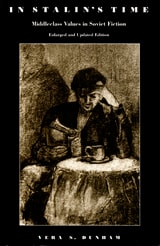
In Stalin's Time
Middleclass Values in Soviet FictionVera S. Dunham
Duke University Press, 1990
In Time
Poets, Poems, and the RestC. K. Williams
University of Chicago Press, 2012
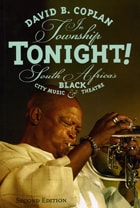
In Township Tonight!
South Africa's Black City Music and Theatre, Second EditionDavid B. Coplan
University of Chicago Press, 2008
In vivid detail, Coplan comprehensively explores more than three centuries of the diverse history of South Africa’s black popular culture, taking readers from indigenous musical traditions into the world of slave orchestras, pennywhistlers, clergyman-composers, the gumboot dances of mineworkers, and touring minstrelsy and vaudeville acts. This up-to-date edition of a landmark work will be welcomed by scholars of ethnomusicology and African studies, world music fans, and anyone concerned with South Africa and its development.
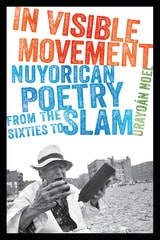
In Visible Movement
Nuyorican Poetry from the Sixties to SlamUrayoan Noel
University of Iowa Press, 2014
The first book-length study specifically devoted to Nuyorican poetry, In Visible Movement is unique in its historical and formal breadth, ranging from the foundational poets of the 1960s and 1970s to a variety of contemporary poets emerging in and around the Nuyorican Poets Cafe “slam” scene of the 1990s and early 2000s. It also unearths a largely unknown corpus of poetry performances, reading over forty years of Nuyorican poetry at the intersection of the printed and performed word, underscoring the poetry’s links to vernacular and Afro-Puerto Rican performance cultures, from the island’s oral poets to the New York sounds and rhythms of Latin boogaloo, salsa, and hip-hop. With depth and insight, Urayoán Noel analyzes various canonical Nuyorican poems by poets such as Pedro Pietri, Victor Hernández Cruz, Miguel Algarín, Miguel Piñero, Sandra María Esteves, and Tato Laviera. He discusses historically overlooked poets such as Lorraine Sutton, innovative poets typically read outside the Nuyorican tradition such as Frank Lima and Edwin Torres, and a younger generation of Nuyorican-identified poets including Willie Perdomo, María Teresa Mariposa Fernández, and Emanuel Xavier, whose work has received only limited critical consideration. The result is a stunning reflection of how New York Puerto Rican poets have addressed the complexity of identity amid diaspora for over forty years.
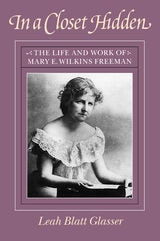
In a Closet Hidden
The Life and Work of Mary E. Wilkins FreemanLeah Blatt Glasser
University of Massachusetts Press, 1996
The first literary biography of a much-neglected American writer, this book explores the multiple tensions at the core of Mary E. Wilkins Freeman's life and work. A prolific short story writer and novelist, Freeman (1852–1930) developed a reputation as a local colorist who depicted the peculiarities of her native New England. Yet as Leah Blatt Glasser shows, Freeman was one of the first American authors to write extensively about the relationships women form outside of marriage and motherhood, the role of work in women's lives, the complexity of women's sexuality, and the interior lives of women who rebel rather than conform to patriarchal strictures.
In a Closet Hidden traces Freeman's evolution as a writer, showing how her own inner conflicts repeatedly found expression in her art. As Glasser demonstrates, Freeman's work examined the competing claims of creativity and convention, self-fulfillment and self-sacrifice, spinsterhood and marriage, lesbianism and heterosexuality.
In a Maelstrom
The History of Russian-Jewish Prose, 1860–1940Zsuzsa Hetényi
Central European University Press, 2008
In a Persian Mirror
Images of the West and Westerners in Iranian FictionBy M. R. Ghanoonparvar
University of Texas Press, 1993
The extreme anti-Western actions and attitudes of Iranians in the 1980s astonished and dismayed the West, which has characterized the Iranian positions as irrational and inexplicable. In this groundbreaking study of images of the West in Iranian literature, however, M. R. Ghanoonparvar reveals that these attitudes did not develop suddenly or inexplicably but rather evolved over more than two centuries of Persian-Western contact.
Notable among the authors whose works Ghanoonparvar discusses are Sadeq Hedayat, M. A. Jamalzadeh, Hushang Golshiri, Gholamhoseyn Sa'edi, Simin Daneshvar, Moniru Ravanipur, Sadeq Chubak, and Jalal Al-e Ahmad. This survey significantly illuminates the sources of Iranian attitudes toward the West and offers many surprising discoveries for Western readers, not least of which is the fact that Iranians have often found Westerners to be as enigmatic and incomprehensible as we have believed them to be.
In and Of the Mediterranean
Medieval and Early Modern Iberian StudiesMichelle M. Hamilton
Vanderbilt University Press, 2014
In the Beginning
First Novels in Mystery SeriesMary Jean Demarr
University of Wisconsin Press, 1995
This volume contains fourteen essays by authoritative academics studying the field of mystery and detective fiction. The essays all concentrate on the first novels in established series, analyzing ways in which the opening books of the series do or do not create patterns followed in succeeding novels.
In the Company of Books
Literature and Its "Classes" in Nineteenth-Century AmericaSarah Wadsworth
University of Massachusetts Press, 2006
With sections focusing on segmentation by age, gender, and cultural status, In the Company of Books analyzes the ways authors and publishers carved up the field of literary production into a multitude of distinct submarkets, differentiated their products, and targeted specific groups of readers in order to guide their book-buying decisions. Combining innovative approaches to canonical authors such as Nathaniel Hawthorne, Louisa May Alcott, Mark Twain, and Henry James with engaging investigations into the careers of many lesser-known literary figures, Sarah Wadsworth reveals how American writers responded to—and contributed to—this diverse, and diversified, market.
In the Company of Books contends that specialized editorial and marketing tactics, in concert with the narrative strategies of authors and the reading practices of the book-buying public, transformed the literary landscape, leading to new roles for the book in American culture, the innovation of literary genres, and new relationships between books and readers. Both an exploration of a fragmented print culture through the lens of nineteenth-century American literature and an analysis of nineteenth-century American literature from the perspective of this subdivided marketplace, this wide-ranging study offers fresh insight into the impact of market forces on the development of American literature.

In the Company of Radical Women Writers
Rosemary Hennessy
University of Minnesota Press, 2023
Recovering the bold voices and audacious lives of women who confronted capitalist society’s failures and injustices in the 1930s—a decade unnervingly similar to our own
In the Company of Radical Women Writers rediscovers the political commitments and passionate advocacy of seven writers—Black, Jewish, and white—who as young women turned to communism around the Great Depression and, over decades of national crisis, spoke to issues of labor, land, and love in ways that provide urgent, thought-provoking guidance for today. Rosemary Hennessy spotlights the courageous lives of women who confronted similar challenges to those we still face: exhausting and unfair labor practices, unrelenting racial injustice, and environmental devastation.
As Hennessy brilliantly shows, the documentary journalism and creative and biographical writings of Marvel Cooke, Louise Thompson Patterson, Claudia Jones, Alice Childress, Josephine Herbst, Meridel Le Sueur, and Muriel Rukeyser recognized that life is sustained across a web of dependencies that we each have a duty to maintain. Their work brought into sharp focus the value and dignity of Black women’s domestic work, confronted the destructive myths of land exploitation and white supremacy, and explored ways of knowing attuned to a life-giving erotic energy that spans bodies and relations. In doing so, they also expanded the scope of American communism.
By tracing the attention these seven women pay to “life-making” as the relations supporting survival and wellbeing—from Harlem to the American South and Midwest—In the Company of Radical Women Writers reveals their groundbreaking reconceptions of the political and provides bracing inspiration in the ongoing fight for justice.
In the Flesh
Embodied Identities in Roman ElegyErika Zimmermann Damer
University of Wisconsin Press, 2022
Recognizing this power of material flesh to shape elegiac poetry, she asserts, grants figures at the margins of this poetic discourse—mistresses, rivals, enslaved characters, overlooked members of households—their own identities, even when they do not speak. She demonstrates how the three poets create a prominent aesthetic of corporeal abjection and imperfection, associating the body as much with blood, wounds, and corporeal disintegration as with elegance, refinement, and sensuality.
In the Lurch
Verbatim Theater and the Crisis of Democratic DeliberationRyan Claycomb
University of Michigan Press, 2023
But this is not just a disinterested history—Claycomb reflects on his own participation in that political fantasy, including earlier scholarly writing that articulated with breathless hopefulness the potential of verbatim theater, and on his own theatrical attendance, imbued with a belief that witnessing this idealized public sphere was a substitute for actual public participation. In the Lurch also recounts the bumpy path towards its completion, two years marked by presidential impeachments, an insurrection, a national reckoning with racism, and a global pandemic. At the heart of the book is a central question: is verbatim theater any longer an effective cultural response to what can look like the possible end of democracy?
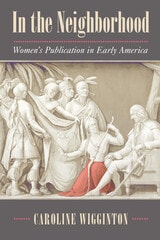
In the Neighborhood
Women's Publication in Early AmericaCaroline Wigginton
University of Massachusetts Press, 2016
Winner of the 2018 Early American Literature Book Prize
In this compelling and original book, Caroline Wigginton reshapes our understanding of early American literary history. Overturning long-standing connections between the male-dominated print culture of pamphlets, broadsides, and newspapers and the transformative ideas that instigated the American Revolution, Wigginton explores how women's “relational publications”—circulated texts, objects, and performances—transformed their public and intimate worlds. She argues that Native, black, and white women's interpersonal "publications" revolutionized the dynamics of power and connection in public and private spaces, whether those spaces were Quaker meeting houses, Creek talwas, trading posts, burial grounds, or the women's own "neighborhoods."
Informed by deep and rich archival research, Wigginton's case studies explore specific instances of “relational publication.” The book begins with a pairing of examples—the statement a grieving Lenape mother made through a wampum belt and the political affiliations created when a salon hostess shared her poetry. Subsequent chapters trace a history of women's publication practice, including a Creek woman's diplomatic and legal procession-spectacles in the colonial Southeast, a black mother's expression of protest in Newport, Rhode Island, and the resulting evangelical revival, Phillis Wheatley's elegies that refigured neighborhoods of enslaved and free Bostonians, and a Quaker woman's pious and political commonplace book in Revolutionary Philadelphia.

In the Nineties
John Stokes
University of Chicago Press, 1990
Spurning fixed boundaries, Stokes relates the controversial topics of the day—the status of the "New Journalism," the "degenerative" influence of Impressionist painting, the dubious morality of the music hall, the urgent need for prison reform, and the prevalence of suicide—to primary literary texts, such as The Ballad of Reading Gaol, The Importance of Being Earnest, Jude the Obscure, and Portrait of a Lady. And in the process, he explores crucial areas of sociological and psychological interest: criminality, sexuality, madness, and "morbidity."
Each of the book's six chapters opens with a look at the correspondence columns of daily newspapers and goes on, with a keen eye for the hidden link, to pursue a particular theme. Locations shift from Leicester Square and the Thames embankment to the Normandy coast and the Paris morgue and feature, along with famous names, a lesser known company of acrobats, convicts, aesthetes, "philistines," and mysterious suicides.
Nearly a century later, John Stokes's unrivalled knowledge of how the arts actually functioned in the nineties makes this book a major contribution to modern cultural studies.

In the Shadows of Romance
Romantic Tragic Drama in Germany, England, and FranceJeffrey N. Cox
Ohio University Press, 2011
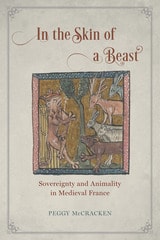
In the Skin of a Beast
Sovereignty and Animality in Medieval FrancePeggy McCracken
University of Chicago Press, 2017
Peggy McCracken discusses a range of literary texts and images from medieval France, including romances in which animal skins appear in symbolic displays of power, fictional explorations of the wolf’s desire for human domestication, and tales of women and snakes converging in a representation of territorial claims and noble status. These works reveal that the qualities traditionally used to define sovereignty—lineage and gender among them—are in fact mobile and contingent. In medieval literary texts, as McCracken demonstrates, human dominion over animals is a disputed model for sovereign relations among people: it justifies exploitation even as it mandates protection and care, and it depends on reiterations of human-animal difference that paradoxically expose the tenuous nature of human exceptionalism.
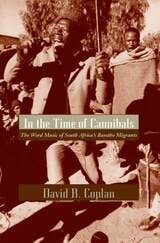
In the Time of Cannibals
The Word Music of South Africa's Basotho MigrantsDavid B. Coplan
University of Chicago Press, 1994
Coplan discusses every aspect of the Basotho musical literature, taking into account historical conditions, political dynamics, and social forces as well as the styles, artistry, and occasions of performance. He engages the postmodern challenge to decolonize our representation of the ethnographic subject and demonstrates how performance formulates local knowledge and communicates its shared understandings.
Complete with transcriptions of full male and female performances, this book develops a theoretical and methodological framework crucial to anyone seeking to understand the relationship between orality and literacy in the context of performance. This work is an important contribution to South African studies, to ethnomusicology and anthropology, and to performance studies in general.

In the Voice of Others
Chinese Music Bureau PoetryJoseph R. Allen
University of Michigan Press, 1992
In the Work of Their Hands Is Their Prayer
Cultural Narrative and Redemption on the American Frontiers, 1830-1930Joel Daehnke
Ohio University Press, 2003
Westward expansion on the North American continent by European settlers generated a flurry of writings on the frontier experience over the course of a hundred years. Asserting that the dominant ideology of America’s Manifest Destiny embodied a tense, often contradictory union of Christian and secular republican views of social progress, In the Work of Their Hands Is Their Prayer investigates the ambivalence of the frontier as it was inscribed with redemptive, historical significance by a host of frontier writers.
Enlisting canonical and noncanonical sources, Joel Daehnke examines the manner in which the imagery of the human figure at work and play in the frontier landscape participated in the nationalist, “civilizing” project of westward expansion. While he acknowledges the growing secularization of American life, Professor Daehnke surveys the continuing claims of the Christian redemptive scheme as a powerful symbolic domain for these writers’ meditations on social progress and the potential for human perfectibility in the landscapes of the West.
Whether discussing the Edenic imagery of women’s gardens, the advocacy of an ethics of land use, or the affairs of fortune in the mining districts of Nevada, In the Work of Their Hands Is Their Prayer presents an enlightening reexamination of an American ideology of progress and its enduring fascination with mission, Manifest Destiny, and the ends of history.
In the Work of Their Hands Is Their Prayer is a welcome addition to the extended library of critical attention to the ideology, history, and literary traditions of the American frontier.
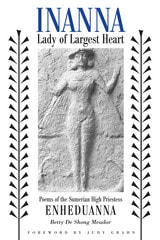
Inanna, Lady of Largest Heart
Poems of the Sumerian High Priestess EnheduannaBy Betty De Shong Meador
University of Texas Press, 2001