Results by title
18284 books match the query 'United States' and 636 start with i

If I Can Do It Horseback
A Cow-Country SketchbookBy John Hendrix; illustrated by Malcolm Thurgood
University of Texas Press, 1964
John Hendrix drew upon his own varied experiences for this panoramic view of West Texas ranch life, presented here in an integral compilation of flavorful articles written originally for The Cattleman. Touching upon virtually every facet of the cattle industry, they examine economic influences and technological changes as well as the personal and emotional aspects of range life.
Here are accurate, detailed, fascinating descriptions of the day-to-day life of the cowboy, the chuck-wagon cook, the range boss: narratives rich in human interest, in pathos, comedy, drama. Some tell of the organization and operation of the cow camp: the activities of the men, their duties and their entertainments, the clothes they wore, the food they ate, the horses they rode, the language they spoke. Some compare West Texas cattle-handling techniques with those of other sectors, or contrast early techniques with later practices. Others give biographies of cattlemen and cowboys. Still others study the operation, development, problems, and achievements of typical ranches of various types: the early open-range ranches, the large ranches which successfully made the transition to modem operation, the unsuccessful company-owned ranches of the 1880s, the pioneer cattle-feeding projects. Several articles describe the geography of the West Texas cattle country: the vast, arid expanses; the brown-green hills and Cap Rock; the life-giving springs; and the fickle weather. These are all considered in terms of their physical appearance and emotional impact, their importance as economic factors, and their effect on the duties of the cowboys.
Written in direct language and savoring of the life they describe, these articles capture the beauty of the cattle country—as well as its violence, hardships, drudgery. John Hendrix’s affection for the land, the people, and the life gives his writing a special warmth that his readers are sure to recognize and admire.
Texas artist Malcolm Thurgood has provided delightful illustrations for the text, and Wayne Gard, author of The Chisholm Trail and The Great Buffalo Hunt, has written a valuable introduction.
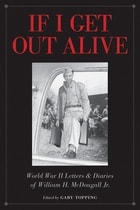
If I Get Out Alive
The World War II Letters and Diaries of William H McDougall JrGary Topping
University of Utah Press, 2007
McDougall’s letters to his family offer a rare and detailed look at daily life in Tokyo and in Japanese-occupied Shanghai during the months leading up to the Pearl Harbor attack. After his imprisonment in Sumatra, he began keeping a daily journal of his experiences as a POW. Published here for the first time are the journals he retrieved at the end of World War II.
Written by an articulate and perceptive professional reporter, McDougall's letters and diaries offer an intimate, personal narrative of conditions in wartime East Asia.
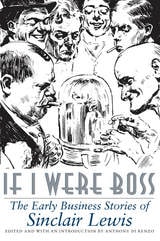
If I Were Boss
The Early Business Stories of Sinclair LewisEdited by Anthony Di Renzo
Southern Illinois University Press, 1997
Anthony Di Renzo makes available for the first time since their original publication some eighty years ago a collection of fifteen of Sinclair Lewis’s early business stories.
Among Lewis’s funniest satires, these stories introduce the characters, themes, and techniques that would evolve into Babbitt. Each selection reflects the commercial culture of Lewis’s day, particularly Reason Why advertising, self-help manuals, and the business fiction of the Saturday Evening Post. The stories were published between October 1915 and May 1921 (nine in the Saturday Evening Post, four in Metropolitan Magazine, one in Harper’s Magazine, and one in American Magazine).
Because some things have not changed in the American workplace since Lewis’s day, these highly entertaining and unflinchingly accurate office satires will appeal to the fans of Dilbert and The Drew Carey Show. In a sense, they provide lay readers with an archaeology of white-collar angst and regimentation. The horror and absurdities of contemporary corporate downsizing already existed in the office of the Progressive Era. For an audience contemplating the death of the American middle class, Lewis’s stories provide an important retrospective on earlier times and a preliminary autopsy on the American dream.
Appearing just in time to celebrate the seventy-fifth anniversary of the publication of Babbitt, this collection rescues Lewis’s best early short fiction from obscurity, provides extensive information about his formative years in advertising and public relations, and analyzes both his genius for marketing and his carefully cultivated persona as the Great Salesman of American letters.

If Memory Serves
Gay Men, AIDS, and the Promise of the Queer PastChristopher Castiglia
University of Minnesota Press, 2011
The AIDS epidemic soured the memory of the sexual revolution and gay liberation of the 1970s, and prominent politicians, commentators, and academics instructed gay men to forget the sexual cultures of the 1970s in order to ensure a healthy future. But without memory there can be no future, argue Christopher Castiglia and Christopher Reed in this exploration of the struggle over gay memory that marked the decades following the onset of AIDS.
Challenging many of the assumptions behind first-wave queer theory, If Memory Serves offers a new perspective on the emergence of contemporary queer culture from the suppression and repression of gay memory. Drawing on a rich archive of videos, films, television shows, novels, monuments, paintings, and sculptures created in the wake of the epidemic, the authors reveal a resistance among critics to valuing—even recognizing—the inscription of gay memory in art, literature, popular culture, and the built environment. Castiglia and Reed explore such topics as the unacknowledged ways in which the popular sitcom Will and Grace circulated gay subcultural references to awaken a desire for belonging among young viewers; the post-traumatic (un)rememberings of queer theory; and the generation of “ideality politics” in the art of Félix González-Torres, the film Chuck & Buck, and the independent video Video Remains.
Inspired by Alasdair MacIntyre’s insight that “the possession of a historical identity and the possession of a social identity coincide,” Castiglia and Reed demonstrate that memory is crafted in response to inadequacies in the present—and therefore a constructive relation to the past is essential to the imagining of a new future.
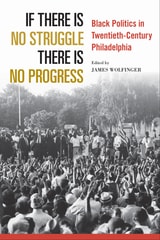
If There Is No Struggle There Is No Progress
Black Politics in Twentieth-Century PhiladelphiaEdited by James Wolfinger
Temple University Press, 2022
Philadelphia has long been a crucial site for the development of Black politics across the nation. If There Is No Struggle There Is No Progress provides an in-depth historical analysis—from the days of the Great Migration to the present—of the people and movements that made the city a center of political activism. The editor and contributors show how Black activists have long protested against police abuse, pushed for education reform, challenged job and housing discrimination, and put presidents in the White House.
If There Is No Struggle There Is No Progress emphasizes the strength of political strategies such as the “Don’t Buy Where You Can’t Work” movement and the Double V campaign. It demonstrates how Black activism helped shift Philadelphia from the Republican machine to Democratic leaders in the 1950s and highlights the election of politicians like Robert N. C. Nix, Sr., the first African American representative from Philadelphia. In addition, it focuses on grassroots movements and the intersection of race, gender, class, and politics in the 1960s, and shows how African Americans from the 1970s to the present challenged Mayor Frank Rizzo and helped elect Mayors Wilson Goode, John Street, and Michael Nutter.
If There Is No Struggle There Is No Progress cogently makes the case that Black activism has long been a powerful force in Philadelphia politics.

If They Don't Bring Their Women Here
Chinese Female Immigration before ExclusionGeorge Anthony Peffer
University of Illinois Press, 1999
Seven years before the Chinese Exclusion Act of 1882, the Page Law sought to stem the tide of Chinese prostitutes entering the United States. Yet during these seven years, it was not just prostitutes but all Chinese females who encountered at best hostility and at worst expulsion when they reached the "Golden Door."
George Anthony Peffer looks at enforcement of immigration laws to provide the first detailed account of Chinese American women's lives in the pre-exclusion era. Peffer documents the habeas corpus trials in which the wives and daughters of Chinese laborers were required to prove their status as legal immigrants or return to China. He also surveys the virulently anti-Chinese coverage of these trials and the issue of Chinese immigration received in California newspapers, confirming that Chinatown's prostitution industry so dominated the popular imagination as to render other classes of female immigrants all but invisible.
Insightful and groundbreaking, If They Don't Bring Their Women Here amplifies the voices of Chinese immigrant women and establishes a place for them within the historiographic framework of Chinese American studies.
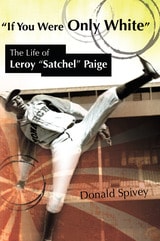
If You Were Only White
The Life of Leroy "Satchel" PaigeDonald Spivey
University of Missouri Press, 2012
Spivey follows Paige from his birth in Alabama in 1906 to his death in Kansas City in 1982, detailing the challenges Paige faced battling the color line in America and recounting his tests and triumphs in baseball. He also opens up Paige’s private life during and after his playing days, introducing readers to the man who extended his social, cultural, and political reach beyond the limitations associated with his humble background and upbringing. This other Paige was a gifted public speaker, a talented musician and singer, an excellent cook, and a passionate outdoorsman, among other things.
Paige’s life intertwined with many of the most important issues of the times in U.S. and African American history, including the continuation of the New Negro Movement and the struggle for civil rights. Spivey incorporates interviews with former teammates conducted over twelve years, as well as exclusive interviews with Paige’s son Robert, daughter Pamela, Ted “Double Duty” Radcliffe, and John “Buck” O’Neil to tell the story of a pioneer who helped transform America through the nation’s favorite pastime.
Maintaining an image somewhere between Joe Louis’s public humility and the flamboyant aggression of Jack Johnson, Paige pushed the boundaries of segregation and bridged the racial divide with stellar pitching packaged with slapstick humor. He entertained as he played to win and saw no contradiction in doing so. Game after game, his performance refuted the lie that black baseball was inferior to white baseball. His was a contribution to civil rights of a different kind—his speeches and demonstrations expressed through his performance on the mound.
If You've Seen One, You've Seen the Mall
EUROPEANS AND AMERICAN MASS CULTURERob Kroes
University of Illinois Press, 1996
continually fragmenting, disassembling, and reassembling itself--and in
the process creating something new. In a series of topical essays that
show why he is one of Europe's leading authorities on American culture,
Kroes probes trends in American advertising, the image of the Vietnam
war in American films, the implications of American vernacular culture as represented in rap music, and other topics.
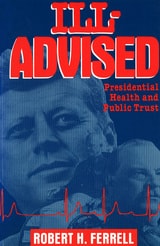
Ill-Advised
Presidential Health and Public TrustRobert H. Ferrell
University of Missouri Press, 1996
In Ill-Advised: Presidential Health and Public Trust, now available in paperback, noted historian Robert H. Ferrell presents powerful evidence of frightening medical scandals in the White House. Malpractice, missing public records, and politically motivated cover-ups have hidden sometimes severe presidential illnesses from the American people. Ferrell traces these often shocking incidents--from Grover Cleveland's secret surgery for cancer to the questionable reporting on the health of both Ronald Reagan and George Bush.
Ill-Gotten Gains
Evasion, Blackmail, Fraud, and Kindred Puzzles of the LawLeo Katz
University of Chicago Press, 1996
"An ambitious and well-written book of legal and moral theory to overthrow both utilitarianism and its cousin, the economic approach to law."—Richard A. Posner, New Republic
"A good, well-written book full of interesting examples."—Library Journal
"[An] elegant defense of circumvention and subterfuge . . . a heroically counterintuitive book."—Malcolm Gladwell, New Yorker
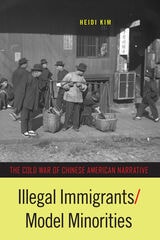
Illegal Immigrants/Model Minorities
The Cold War of Chinese American NarrativeHeidi Kim
Temple University Press, 2021
In the Cold War era, Chinese Americans were caught in a double-bind. The widespread stigma of illegal immigration, as it was often called, was most easily countered with the model minority, assimilating and forming nuclear families, but that in turn led to further stereotypes. In Illegal Immigrants/Model Minorities, Heidi Kim investigates how Chinese American writers navigated a strategy to normalize and justify the Chinese presence during a time when fears of Communism ran high.
Kim explores how writers like Maxine Hong Kingston, Jade Snow Wong, and C. Y. Lee, among others, addressed issues of history, family, blood purity, and law through then-groundbreaking novels and memoirs. Illegal Immigrants/Model Minorities also uses legal cases, immigration documents, and law as well as mass media coverage to illustrate how writers constructed stories in relation to the political structures that allowed or disallowed their presence, their citizenship, and their blended identity.
Kim illuminates the rapidly shifting political and social pressures on Chinese American authors who selectively concealed, revealed, and reconstructed issues of citizenship, belonging, and inclusion in their writing.

Illegal Migrations and the Huckleberry Finn Problem
John S W Park
Temple University Press, 2013

Illegal
Reflections of an Undocumented ImmigrantJose Angel N.
University of Illinois Press, 2014
Arriving in the 1990s with a ninth grade education, N. traveled to Chicago where he found access to ESL and GED classes. He eventually attended college and graduate school and became a professional translator.
Despite having a well-paying job, N. was isolated by a lack of legal documentation. Travel concerns made promotions impossible. The simple act of purchasing his girlfriend a beer at a Cubs baseball game caused embarrassment and shame when N. couldn't produce a valid ID. A frustrating contradiction, N. lived in a luxury high-rise condo but couldn't fully live the American dream. He did, however, find solace in the one gift America gave him–-his education. Ultimately, N.'s is the story of the triumph of education over adversity. In Illegal, he debunks the stereotype that undocumented immigrants are freeloaders without access to education or opportunity for advancement. With bravery and honesty, N. details the constraints, deceptions, and humiliations that characterize alien life "amid the shadows."

Illegalized
Undocumented Youth Movements in the United StatesRafael A. Martínez
University of Arizona Press, 2024
Rafael A. Martínez, an undocu-scholar, intricately weaves his lived experience into this deeply insightful exploration. Martínez’s interdisciplinary approach will engage scholars and readers alike, resonating with disciplines such as history, American studies, Chicana and Chicano studies, and borderlands studies.
Illegalized shows that undocumented youth and their activism represent a disruption to the social imaginary of the U.S. nation-state and its figurative and physical borders. It invites readers to explore how undocumented youth activists changed the way immigrant rights are discussed in the United States today.
Illiberal Justice
John Rawls vs. the American Political TraditionDavid Lewis Schaefer
University of Missouri Press, 2007
Illiberal Vanguard
Populist Elitism in the United States and RussiaAlexandar Mihailovic
University of Wisconsin Press, 2023
Mihailovic investigates notable right-wing actors like Steve Bannon and Alexander Dugin and targets of right-wing ire such as globalization, LGBTQ+ activism, and mobilizations to remove controversial statues (that honor Confederate generals and Soviet leaders, for instance), but the argument extends beyond the specifics. How and why are radical right-wing movements developing along such similar trajectories in two nominally oppositional countries? How do religious sectarianism, the construction of whiteness, and institutionalized homophobia support each other in this transnational, informal, but powerful allegiance? Despite their appeals to populism and flamboyant theatrics, Mihailovic argues, much of the answer can be found in the mutual desire to justify and organize an illiberal vanguard of elite intellectuals, one that supports and advocates for a new authoritarianism.
Illinois History
A ReaderEdited by Mark Hubbard: A collection of articles from the Journal of the Illinois State Historical Society
University of Illinois Press, 2018
This Common Threads collection offers important articles from the Journal of the Illinois State Historical Society. Organized as an approachable survey of state history, the book offers chapters that cover the colonial era, early statehood, the Civil War years, the Gilded Age and Progressive eras, World War II, and postwar Illinois. The essays reflect the wide range of experiences lived by Illinoisans engaging in causes like temperance and women's struggle for a shorter workday; facing challenges that range from the rise of street gangs to Decatur's urban decline; and navigating historic issues like the 1822-24 constitutional crisis and the Alton School Case.
Contributors: Roger Biles, Lilia Fernandez, Paul Finkelman, Raymond E. Hauser, Reginald Horsman, Suellen Hoy, Judson Jeffries, Lionel Kimble Jr., Thomas E. Pegram, Shirley Portwood, Robert D. Sampson, Ronald E. Shaw, and Robert M. Sutton.
Illinois Justice
The Scandal of 1969 and the Rise of John Paul StevensKenneth A. Manaster
University of Chicago Press, 2001
In 1969, citizen gadfly Sherman Skolnick accused two Illinois Supreme Court justices of accepting valuable bank stock from an influential Chicago lawyer in exchange for deciding an important case in the lawyer’s favor. The resulting feverish media coverage prompted the state supreme court to appoint a special commission to investigate. Within six weeks and on a shoestring budget, the commission mobilized a small volunteer staff to reveal the facts. Stevens, then a relatively unknown Chicago lawyer, served as chief counsel. His work on this investigation would launch him into the public spotlight and onto the bench.
Manaster, who served on the commission, tells the real story of the investigation, detailing the dead ends, tactics, and triumphs. Manaster expertly traces Stevens’s masterful courtroom strategies and vividly portrays the high-profile personalities involved, as well as the subtleties of judicial corruption. A reflective foreword by Justice Stevens himself looks back at the case and how it influenced his career.
Now the subject of the documentary Unexpected Justice: The Rise of John Paul Stevens, Manaster’s book is both a fascinating chapter of political history and a revealing portrait of the early career of a Supreme Court justice.
Illinois Justice
The Scandal of 1969 and the Rise of John Paul StevensKenneth A. Manaster
University of Chicago Press, 2001
In 1969, citizen gadfly Sherman Skolnick accused two Illinois Supreme Court justices of accepting valuable bank stock from an influential Chicago lawyer in exchange for deciding an important case in the lawyer’s favor. The resulting feverish media coverage prompted the state supreme court to appoint a special commission to investigate. Within six weeks and on a shoestring budget, the commission mobilized a small volunteer staff to reveal the facts. Stevens, then a relatively unknown Chicago lawyer, served as chief counsel. His work on this investigation would launch him into the public spotlight and onto the bench.
Manaster, who served on the commission, tells the real story of the investigation, detailing the dead ends, tactics, and triumphs. Manaster expertly traces Stevens’s masterful courtroom strategies and vividly portrays the high-profile personalities involved, as well as the subtleties of judicial corruption. A reflective foreword by Justice Stevens himself looks back at the case and how it influenced his career.
Now the subject of the documentary Unexpected Justice: The Rise of John Paul Stevens, Manaster’s book is both a fascinating chapter of political history and a revealing portrait of the early career of a Supreme Court justice.
Illinois Politics
A Citizen's GuideJames D. Nowlan, Samuel K. Gove, and Richard J. Winkel
University of Illinois Press, 2009
Illinois has produced presidents and leading members of Congress. It also has a long history of political corruption, including, in recent years, the federal indictments of two consecutive governors. The population of the state is exceptionally diverse, with a significant number of new immigrants. Its political allegiance, once firmly Republican, has trended ever more Democratic. Illinois can be divided neatly into three distinct regions: Chicago, the suburban collar surrounding the city, and the ninety-five downstate counties.
Based on the research and experience of respected veterans of Illinois politics, this book shows how the government runs, how politics operates, and what obstacles and opportunities exist for change. It explains how power is exercised and how parties compete for it. For engaged citizens, scholars, and students, Illinois Politics: A Citizen's Guide is a timely and much-needed roadmap for positive change.
Illinois Politics
A Citizen's Guide to Power, Politics, and GovernmentMelissa Mouritsen, Kent D. Redfield, and James D. Nowlan
University of Illinois Press, 2024
Shifting demographics. Downstate versus Chicago. Billionaires and bribery. Even veteran observers need a roadmap to track Illinois’ ever-changing political landscape. Melissa Mouritsen, Kent D. Redfield, and James D. Nowlan provide an up-to-date primer on Prairie State politics, government, and policies. Features include:
- Discussions of recent events like the 2015-2017 budget disaster, the response to COVID-19, and the fall of longtime House Speaker Michael Madigan;
- New chapters on corruption, social policies, and the political rules of the game;
- Perspectives on the nuts-and-bolts of campaign funding, the ways political actors acquire power or influence, and many other topics;
- Close examinations of complex issues like the state’s increased polarization and its ongoing fiscal recovery.
Fully revised and expanded, <i>Illinois Politics</i> blends detailed information with expert analysis to offer an essential resource for citizens, students, and public servants alike.

Illinois Trails & Traces
Portraits and Stories along the State’s Historic RoutesText by Gary Marx and photographs by Daniel Overturf, with a foreword by Dick Durbin
Southern Illinois University Press, 2022
FINALIST, 2023 Society of Midland Authors Award in Adult Nonfiction!
Exploring Illinois history through the paths we travel
Illinois Trails & Traces partners the deft writing of Gary Marx with vivid photography by Daniel Overturf to illuminate ever evolving patterns of travel and settlement. Taking the reader on a journey down early buffalo traces and Native American trails, this book shows how these paths evolved into wagon roads and paved highways. Marx and Overturf explore historic routes ranging from Route 66 to the Underground Railroad, all the way back to post-Ice Age animal migration trails followed by Paleo-Indian people. The authors also examine how rivers, canals, and railroads spurred the rapid rise of Illinois as a modern state.
Marx and Overturf bring history into the present by including over forty photographic portraits and written profiles of individuals who live along these routes today. Many of the people you will meet on these pages work to preserve and honor the history of these passages. Others profiled here embody the spirit of the old roads and provide a vivid link between past and present. Through this journey, we discover that we’ve all been traveling the same road all along.

Illinois Wines and Wineries
The Essential GuideClara Orban
Southern Illinois University Press, 2014
For more than a century, Illinois has been home to a blossoming wine culture, yet winemaking in the state has not received the attention it deserves. Now, Clara Orban has created the ultimate companion to Illinois wines and wineries. This illustrated volume is a comprehensive yet user-friendly guide for both experienced wine lovers and amateur oenophiles.
Orban, a certified sommelier, begins with the history of Illinois wine production and wineries. She then enlightens readers on such wine basics as the most common grapes grown in Illinois, optimal food and wine pairings, the tenets of wine tasting, and provides an overview of the world of labels, bottles, and corks. The fascinating science of wine also is discussed, including the particulars of Illinois soil and climate and their effect on the industry. Orban then provides a guide to all the wineries listed by the Illinois Grape Growers and Vintners’ Association. For each winery, she offers a succinct history, information regarding the variety of grapes used, hours of operation, location, and contact information.
In addition to providing readers with a background of the state’s industry and snapshots of individual wineries, Illinois Wines and Wineries provides a glossary of key wine terms, including those specific to the state of Illinois, as well as color photos and a map to each location visited in the book. This sophisticated yet practical guidebook is an essential resource for connoisseurs and casual enthusiasts alike who are interested in exploring Illinois’s rich winemaking legacy.
Illinois in the Civil War
Victor Hicken
University of Illinois Press, 1991
Illinois in the War of 1812
Gillum Ferguson
University of Illinois Press, 2012
Russell P. Strange "Book of the Year" Award from the Illinois State Historical Society, 2012.

Illinois
A HistoryRichard J. Jensen
University of Illinois Press, 1978
Richard J. Jensen treats Illinois as a microcosm of the nation, arguing that its history exhibits basic conflicts that had much to do with shaping American society in general. Northern reformers in Illinois were intent on remaking the state in their image: middle-class, egalitarian, urban, and progressive. These values clashed with the patriarchal supremacy and intense loyalty to kin and ken by which the people of southern Illinois, and the South, organized their lives.
When the Civil War broke out, sympathy for the Confederacy ran high in southern Illinois. Although the region officially supported the Union, guerrilla bands terrorized Unionists, and in Charleston a full-scale riot against Federal troops erupted in 1864. The Union victory decisively shifted both the nation and Illinois toward faster modernization. Violence became more bureaucratized, and localism eroded with the onslaught of chain franchises, consolidated schools, and homogenized suburbs. Jensen extends his discussion to the emergence of newer, postmodern conflicts that continue to occupy the people of Illinois.
Without neglecting the high-profile individuals and events that put the Prairie State on the map, Jensen offers an innovative, wide-angle view that expands our perspective on Illinois history.
Illinois
Crossroads of a ContinentLois A. Carrier
University of Illinois Press, 1993
Writing in a fast-paced, down-to-earth style, Lois Carrier introduces a host of innovations and innovators associated with Illinois: Jane Addams and Louis Armstrong, Frank Lloyd Wright and Walt Disney, Cracker Jack and the Ferris wheel. From the Cahokia Mounds to Chicago, Illinois: Crossroads of a Continent provides a panoramic history for students and general readers.

Illinois’s War
The Civil War in DocumentsMark Hubbard
Ohio University Press, 2013
On the eve of the Civil War and after, Illinois was one of the most significant states in the Union. Its history is, in many respects, the history of the Union writ large: its political leaders figured centrally in the war’s origins, progress, and legacies; and its diverse residents made sacrifices and contributions—both on the battlefield and on the home front—that proved essential to Union victory.
The documents in Illinois’s War reveal how the state and its people came to assume such a prominent role in this nation’s greatest conflict. In these crucial decades Illinois experienced its astonishing rise from rural frontier to economic and political powerhouse. But also in these years Illinois was, like the nation itself, a “house divided” over the expansion of slavery, the place of blacks in society, and the policies of the federal government both during and after the Civil War. Illinois’s War illuminates these conflicts in sharp relief, as well as the ways in which Illinoisans united in both saving the Union and transforming their state. Through the firsthand accounts of men and women who experienced these tumultuous decades, Illinois’s War presents the dramatic story of the Prairie State’s pivotal role in the sectional crisis, as well as the many ways in which the Civil War era altered the destiny of Illinois and its citizens.
Illinois’s War is the first book-length history of the state during the Civil War years since Victor Hicken’s Illinois in the Civil War, first published in 1966. Mark Hubbard has compiled a rich collection of letters, editorials, speeches, organizational records, diaries, and memoirs from farmers and workers, men and women, free blacks and runaway slaves, native-born and foreign-born, common soldiers and decorated generals, state and nationally recognized political leaders. The book presents fresh details of Illinois’s history during the Civil War era, and reflects the latest interpretations and evidence on the state’s social and political development.
Illuminating the Particular
Photographs of Milwaukee's Polish South SideChristel T. Maass
Wisconsin Historical Society Press, 2003
While Kwasniewski's camera captured the sights and sounds of Milwaukee at the turn of the century from the perspective of a single ethnic group in a single neighborhood, his photographs resonate far beyond Milwaukee's Polish South Side. They illuminate the particulars of American life during the early decades of the twentieth century. "What we see, reflected in the distant mirror," says John Gurda, "is ourselves."
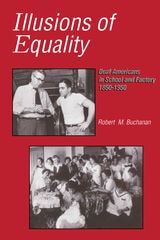
Illusions of Equality
Deaf Americans in School and Factory, 1850-1950Robert M. Buchanan
Gallaudet University Press, 1999
The working lives of Deaf Americans from the mid-1850s to the post-World War II era depended upon strategies created by Deaf community leaders to win and keep jobs through periods of low national employment as well as high. Deaf people typically sought to de-emphasize their identity as sign language users to be better integrated into the workforce. But in his absorbing new book Illusions of Equality, Robert Buchanan shows that events during the next century would thwart these efforts.
The residential schools for deaf students established in the 19th century favored a bilingual approach to education that stressed the use of American Sign Language while also recognizing the value of learning English. But the success of this system was disrupted by the rise of oralism, with its commitment to teaching deaf children speech and its ban of sign language. Buchanan depicts the subsequent ramifications in sobering terms: most deaf students left school with limited educations and abilities that qualified them for only marginal jobs. He also describes the insistence of the male hierarchy in the Deaf community on defending the tactics of individual responsibility through the end of World War II, a policy that continually failed to earn job security for Deaf workers. Illusions of Equality is an original, edifying work that will be appreciated by scholars and students for years to come.
Illusions of a Future
Psychoanalysis and the Biopolitics of DesireKate Schechter
Duke University Press, 2014
In the process, Schechter shows how deeply imbricated the analyst-patient relationship is in this effort. Since the mid-twentieth century, the "real" relationship between analyst and patient is no longer the unremarked background of analysis but its very site. Psychoanalysts seek to validate the centrality of this relationship with theory and, through codified "standards," to claim it as a privileged technique. It has become the means by which psychoanalysts, in seeking to protect their disciplinary autonomy, have unwittingly bound themselves to a neoliberal discourse of regulation.
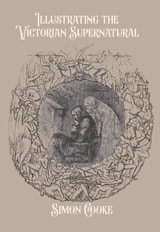
Illustrating the Victorian Supernatural
Simon Cooke
Ohio University Press, 0
A detailed study of Victorian supernaturalism in book and magazine illustrations and cartoons
Illustrating the Victorian Supernatural explores written and visual texts through which the original Victorian readership encountered and navigated their experience of supernaturalism. Looking across the nineteenth century, Simon Cooke investigates illustrative responses to well-known texts by writers such as Charles Dickens and Henry James while also examining responses to less familiar ghost stories by female authors such as M. E. Braddon and Amelia Edwards. The mix of familiar and unfamiliar carries forward into the selection of artists, both those in the mainstream—John Leech, George Cruikshank, Dante Gabriel Rossetti, John Everett Millais—and others whose names are lost to modern readers and whose work deserves to be better known.
The study addresses two main questions: how illustration responded to key literary texts and how graphic designs related to contemporary contexts of race, gender, and class and to the workings of the supernatural itself. The first chapter focuses on satirical writings about ghosts and ghostliness and the various ways illustrators depicted that mockery. Chapter 2 traces artistic responses to Dickens’s writing of the supernatural as a mode of psychological investigation. Chapter 3 looks at class and gender and the problematic practice of male artists illustrating female-authored ghost stories. The fourth chapter examines satirical cartoons’ deployment of supernatural imagery to anatomize issues of imperialism and race. Finally, chapter 5 examines how neo-Victorian artists have revisited the classic texts and taken up the themes established by their forebears.
Image Makers
Advertising, Public Relations, and the Ethos of AdvocacyRobert Jackall and Janice M. Hirota
University of Chicago Press, 2000
Robert Jackall and Janice M. Hirota explore the fashioning of the apparatus of advocacy through the stories of two organizations, the Committee on Public Information, which sold the Great War to the American public, and the Advertising Council, which since the Second World War has been the main coordinator of public service advertising. They then turn to the career of William Bernbach, the adman's adman, who reinvented advertising and grappled creatively with the profound skepticism of a propaganda-weary midcentury public. Jackall and Hirota argue that the tools-in-trade and habits of mind of "image makers" have now migrated into every corner of modern society. Advocacy is now a vocation for many, and American society abounds as well with "technicians in moral outrage," including street-smart impresarios, feminist preachers, and bombastic talk-radio hosts.
The apparatus and ethos of advocacy give rise to endlessly shifting patterns of conflicting representations and claims, and in their midst Image Makers offers a clear and spirited understanding of advocacy in contemporary society and the quandaries it generates.
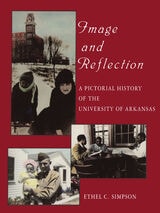
Image and Reflection
A Pictorial History of the University of ArkansasEthel Simpson
University of Arkansas Press, 1990
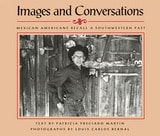
Images and Conversations
Mexican Americans Recall a Southwestern PastText by Patricia Preciado Martin; Photographs by Louis Carlos Bernal
University of Arizona Press, 1983
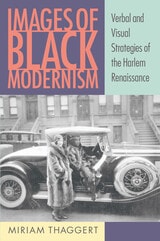
Images of Black Modernism
Verbal and Visual Strategies of the Harlem RenaissanceMiriam Thaggert
University of Massachusetts Press, 2010
Focusing on the years from 1922 to 1938, this book revisits an important moment in black cultural history to explore how visual elements were used in poems, novels, and photography to undermine existing stereotypes. Miriam Thaggert identifies and analyzes an early form of black American modernism characterized by a heightened level of experimentation with visual and verbal techniques for narrating and representing blackness. The work of the writers and artists under discussion reflects the creative tension between the intangibility of some forms of black expression, such as spirituals, and the materiality of the body evoked by other representations of blackness, such as “Negro” dialect.
By paying special attention to the contributions of photographers and other visual artists who have not been discussed in previous accounts of black modernism, Thaggert expands the scope of our understanding of the Harlem Renaissance and contributes to a growing recognition of the importance of visual culture as a distinct element within, and not separate from, black literary studies.
Thaggert trains her critical eye on the work of James Weldon Johnson, Nella Larsen, George Schuyler, Carl Van Vechten, James Van Der Zee, and Aaron Siskind—artists who experimented with narrative and photographic techniques in order to alter the perception of black images and to question and reshape how one reads and sees the black body. Examining some of the more problematic authors and artists of black modernism, she challenges entrenched assumptions about black literary and visual representations of the early to mid twentieth century.
Thaggert concludes her study with a close look at the ways in which Harlem and the Harlem Renaissance were reimagined and memorialized in two notable texts—Wallace Thurman's 1932 satire Infants of the Spring and the Metropolitan Museum of Art's controversial 1969 exhibition “Harlem on My Mind: The Cultural Capital of Black America, 1900–1968.”
Images of a Free Press
Lee C. Bollinger
University of Chicago Press, 1991
"Images of a Free Press is the natural sequel to Lee Bollinger's first book, The Tolerant Society, and is destined to become a standard in first amendment scholarship."—Rodney A. Smolla, Constitutional Commentary
"Revisiting themes he first explored some fifteen years ago, Bollinger now adds further to our understanding of the complex relationship among the First Amendment, the Supreme Court, the public, the press and the democratic process. This is a work of insight, sensitivity, and power. Bollinger has a profound knowledge of and a deep affection for his subject, and it shows."—Geoffrey R. Stone, Michigan Law Review
"This thoughtful, understated book remains a call to come join the town meeting and hammer out some new rules of order. Scholars and citizens alike could do well to read Bollinger's book and accept his challenge."—Yale Law Review
"For a number of years, Lee Bollinger has argued that the First Amendment has been applied differently to the print media than it has been to the broadcast media. In his new book, Images of a Free Press, Bollinger provides a concise, persuasive account of why this is so—and why it ought to be so."—Columbia Law Review
Imaginary Friends
Representing Quakers in American Culture, 1650–1950James Emmett Ryan
University of Wisconsin Press, 2009
Portrayals of Quakers—from dangerous and anarchic figures in seventeenth-century theological debates to moral exemplars in twentieth-century theater and film (Grace Kelly in High Noon, for example)—reflected attempts by writers, speechmakers, and dramatists to grapple with the troubling social issues of the day. As foils to more widely held religious, political, and moral values, members of the Society of Friends became touchstones in national discussions about pacifism, abolition, gender equality, consumer culture, and modernity.
Spanning four centuries, Imaginary Friends takes readers through the shifting representations of Quaker life in a wide range of literary and visual genres, from theological debates, missionary work records, political theory, and biography to fiction, poetry, theater, and film. It illustrates the ways that, during the long history of Quakerism in the United States, these “imaginary” Friends have offered a radical model of morality, piety, and anti-modernity against which the evolving culture has measured itself.
Winner, CHOICE Outstanding Academic Book Award

Imaginary Lines
Border Enforcement and the Origins of Undocumented Immigration, 1882-1930By Patrick Ettinger
University of Texas Press, 2009
Southwest Book Award, Border Regional Library Association, 2011
Although popularly conceived as a relatively recent phenomenon, patterns of immigrant smuggling and undocumented entry across American land borders first emerged in the late nineteenth century. Ingenious smugglers and immigrants, long and remote boundary lines, and strong push-and-pull factors created porous borders then, much as they do now.
Historian Patrick Ettinger offers the first comprehensive historical study of evolving border enforcement efforts on American land borders at the turn of the twentieth century. He traces the origins of widespread immigrant smuggling and illicit entry on the northern and southern United States borders at a time when English, Irish, Chinese, Italian, Russian, Lebanese, Japanese, Greek, and, later, Mexican migrants created various "backdoors" into the United States. No other work looks so closely at the sweeping, if often ineffectual, innovations in federal border enforcement practices designed to stem these flows.
From upstate Maine to Puget Sound, from San Diego to the Lower Rio Grande Valley in Texas, federal officials struggled to adapt national immigration policies to challenging local conditions, all the while battling wits with resourceful smugglers and determined immigrants. In effect, the period saw the simultaneous "drawing" and "erasing" of the official border, and its gradual articulation and elaboration in the midst of consistently successful efforts to undermine it.
Imagine the Sound
Experimental African American Literature after Civil RightsCarter Mathes
University of Minnesota Press, 2014
The post–Civil Rights era was marked by an explosion of black political thought and aesthetics. Reflecting a shifting horizon of expectations around race relations, the unconventional sounds of free jazz coupled with experimental literary creation nuanced the push toward racial equality and enriched the possibilities for aesthetic innovation within the Black Arts Movement. In Imagine the Sound, Carter Mathes demonstrates how African American writers used sound to further artistic resistance within a rapidly transforming political and racial landscape.
While many have noted the oral and musical qualities of African American poetry from the post–Civil Rights period, Mathes points out how the political implications of dissonance, vibration, and resonance produced in essays, short stories, and novels animated the ongoing struggle for equality. Situating literary works by Henry Dumas, Larry Neal, and Toni Cade Bambara in relation to the expansive ideas of sound proposed by free jazz musicians such as Marion Brown and Sun Ra, not only does this book illustrate how the presence of sound can be heard and read as political, but it recuperates critically neglected, yet important, writers and musicians. Ultimately, Mathes details how attempts to capture and render sound through the medium of writing enable writers to envision alternate realities and resistance outside of the linear frameworks offered by the Civil Rights and Black Power movements.
In precise and elegant prose, Mathes shows how in conceptualizing sound, African American writers opened up the political imaginations of their readers. By exploring this intellectual convergence of literary artistry, experimental music, and sound theory, Imagine the Sound reveals how taking up radically new forms of expression allows us to speak to the complexities of race and political resistance.
Imaging Animal Industry
American Meatpacking in Photography and Visual CultureEmily Kathryn Morgan
University of Iowa Press, 2024
Drawing on archival collections across the American Midwest, this book relates a history of the meatpacking industry’s use of images in the early to mid-twentieth century. In the process, it reveals the key role that images, particularly photographs, have played in assisting with the rise of industrial meat production.
Imaging Hoover Dam
The Making of a Cultural IconAnthony F. Arrigo
University of Nevada Press, 2014
Anthony F. Arrigo has researched a wide array of primary sources and archival materials to trace the project from its earliest representations in illustrations to the documentary photography of its construction and later depictions of the structure in commercial promotions, fine art photography, and paintings. Analyzing Hoover Dam through the trajectory of imagery across several decades, rather than the narrative of its construction, illuminates the underlying cultural and ecological imperatives in the drive to build it, including the influence of religious doctrine and the American agrarian movement. Arrigo also discusses various portrayals of laborers, women, minority groups, nature, and technology in this imagery. In time, the visual icon of power and domination was commercialized to sell cars, vacations, and more.
Imaging Hoover Dam is an important work in both visual rhetoric and cultural studies. It will also intrigue readers interested in such varied topics as the history of the American Southwest, the Great Depression and the New Deal, social and environmental issues, and American popular culture.

Imagining America in 2033
How the Country Put Itself Together after BushHerbert J. Gans
University of Michigan Press, 2008
At the heart of Herbert J. Gans's utopian narrative is the vision of progress with fairness on which the best of American idealism has been built. Part utopia, part realism, Imagining America in 2033 is also a liberal's dream of life after Bush and a set of progressive yet practical guidelines for restoring sanity and intelligence to nearly every aspect of public and political life post-Bush.
Herbert J. Gans, one of the most influential and prolific sociologists and social commentators of our time, achieves a realistic utopia set mostly in the second and third decades of the century. In Gans's imagined future, elected officials, policymakers, activists, and citizens have transformed America into a much more humane and effective democracy. The book features three Democratic presidents; the major new domestic, foreign, and social policies their administrations pursue; and the political battles they fight.
Gans provides chapters on an exhaustive list of social, political, and economic policy issues: jobs; war; tax reform; global warming; economic, racial, gender, and religious equality; family policies; the creation of affordable housing and energy saving communities; education reform; and more. While hopeful and idealistic, many of Gans's proposals---such as the concept of the nurse-doctor, in which nurses increasingly take on tasks previously handled only by medical doctors within a framework of national health care---are ideas innovative enough that they should be taken seriously by actual policymakers.
Imagining America in 2033 is lively and accessible, with an appeal for general readers, policy hounds, and the politically savvy alike.

Imagining China
Rhetorics of Nationalism in an Age of GlobalizationStephen J. Hartnett
Michigan State University Press, 2017
Imagining Deliberative Democracy in the Early American Republic
Sandra M. Gustafson
University of Chicago Press, 2011
Deliberation, in recent years, has emerged as a form of civic engagement worth reclaiming. In this persuasive book, Sandra M. Gustafson combines historical literary analysis and political theory in order to demonstrate that current democratic practices of deliberation are rooted in the civic rhetoric that flourished in the early American republic.
Though the U.S. Constitution made deliberation central to republican self-governance, the ethical emphasis on group deliberation often conflicted with the rhetorical focus on persuasive speech. From Alexis de Tocqueville’s ideas about the deliberative basis of American democracy through the works of Walt Whitman, John Dewey, John F. Kennedy, and Martin Luther King Jr., Gustafson shows how writers and speakers have made the aesthetic and political possibilities of deliberation central to their autobiographies, manifestos, novels, and orations. Examining seven key writers from the early American republic—including James Fenimore Cooper, David Crockett, and Daniel Webster—whose works of deliberative imagination explored the intersections of style and democratic substance, Gustafson offers a mode of historical and textual analysis that displays the wide range of resources imaginative language can contribute to political life.
Imagining Grace
Liberating Theologies in the Slave Narrative TraditionKimberly Rae Connor
University of Illinois Press, 2000
From Frederick Douglass's autobiographical writings through Richard Wright's imaginative reconstruction of slavery to Ernest Gaines's Autobiography of Miss Jane Pittman and the candescent novels of Toni Morrison, slave narratives exhort the reader to step into the experience of the dispossessed. Connor underscores the broad influence of the slave narrative by considering nonliterary as well as literary works, including Glenn Ligon's introspective art, Anna Deavere Smith's one-woman performance pieces, and Charlie Haden's politically engaged Liberation Music Orchestra. Through these works, readers, listeners, and viewers imagine grace on two levels: as the liberation of the enslaved from oppression and as their own liberation from prejudice and "willed innocence."
Calling to task a complacent white society that turns a blind eye to deep-seated and continuing racial inequalities, Imagining Grace shows how these creative endeavors embody the search for grace, seeking to expose racism in all its guises and lay claim to political, intellectual, and spiritual freedom.
Imagining Health
Medicine, Social Protest, and Modern American LiteratureIra Halpern
University of Massachusetts Press, 2026
In the United States, a deep suspicion of professional medical expertise is becoming increasingly prominent. Meanwhile, many arguments for health justice take a highly critical view of medical authority, even rejecting it entirely. In the early to mid-twentieth century, alternatively, as medicine rapidly professionalized, Americans came to hold the medical establishment in a particularly high regard, while many saw how it could play a crucial role in progressive politics. In this period, technologies developed, specializations grew, and medical education became standardized. With this process came inequities, as marginalized populations struggled to access the highest levels of care. Literary writers confronting social ills through their work included critiques of this new system in their writing, Ira Halpern argues. Without abandoning professional medicine, they called for alternative systems of care that could better serve diverse populations.
Halpern examines the work of several writers—including Robert Herrick, Wallace Thurman, Frank Slaughter, Charles Chesnutt, Walter White, Ralph Ellison, Charlotte Perkins Gilman, Upton Sinclair, Stephen Crane, and Edith Wharton—to demonstrate how American writing from this period embedded a critical look at healthcare within other elements of progressive politics, from racial protest and women’s rights to disability justice and counter-capitalist viewpoints. Placing this writing into historical context, in terms of medical and scientific developments as well as traditions of social protest, Halpern reveals the efforts of these writers to envision better alternative trajectories for a quickly evolving medical establishment that left too many Americans without reliable care.
Imagining Judeo-Christian America
Religion, Secularism, and the Redefinition of DemocracyK. Healan Gaston
University of Chicago Press, 2019
Imagining Legality
Where Law Meets Popular CultureAustin Sarat
University of Alabama Press, 2011
Imagining Legality argues that images of law suggested by television and film are as numerous as they are various, and that they give rise to a potent and pervasive imaginative life of the law. The media’s projections of the legal system remind us not only of the way law lives in our imagination but also of the contingencies of our own legal and social arrangements.
Contributors to Imagining Legality are less interested in the accuracy of the portrayals of law in film and television than in exploring the conditions of law’s representation, circulation, and consumption in those media. In the same way that legal scholars have taken on the disciplinary perspectives of history, economics, sociology, anthropology, and psychology in relation to the law, these writers bring historical, sociological, and cultural analysis, as well as legal theory, to aid in the understanding of law and popular culture.
Imagining Literacy
Rhizomes of Knowledge in American Culture and LiteratureBy Ramona Fernandez
University of Texas Press, 2001
Defining the "common knowledge" a "literate" person should possess has provoked intense debate ever since the publication of E. D. Hirsch's controversial book Cultural Literacy: What Every American Needs to Know. Yet the basic concept of "common knowledge," Ramona Fernandez argues, is a Eurocentric model ill-suited to a society composed of many distinct cultures and many local knowledges.
In this book, Fernandez decodes the ideological assumptions that underlie prevailing models of cultural literacy as she offers new ways of imagining and modeling mixed cultural and non-print literacies. In particular, she challenges the biases inherent in the "encyclopedias" of knowledge promulgated by E. D. Hirsch and others, by Disney World's EPCOT Center, and by the Smithsonian Institution. In contrast to these, she places the writings of Zora Neale Hurston, Maxine Hong Kingston, Gloria Anzaldúa, and Leslie Marmon Silko, whose works model a cultural literacy that weaves connections across many local knowledges and many ways of knowing.