Results by title
5550 books match the query 'Biography & Autobiography' and 174 start with i
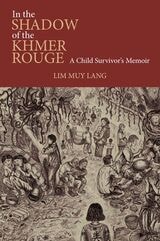
In the Shadow of the Khmer Rouge
A Child Survivor's MemoirMuy Lang Lim
National University of Singapore Press, 2025
Forty-five years have passed since the end of Khmer Rouge rule in Cambodia in 1979. Angkar, the hidden, menacing face of the revolutionary leadership, is gone, yet the misery, death, and destruction they wrought in the name of revolution cannot be forgotten. In In the Shadow of the Khmer Rouge, a voice is given to these memories by a child survivor of the catastrophe that engulfed Cambodia in the 1970’s.
Muy Lang's memoir begins by recalling her gentle childhood with her Sino-Cambodian family in Phnom Penh. With the fall of the city to the Khmer Rouge and its brutal emptying, the country descended into a utopian hell in which drastic economic ideas were enforced with deadly fervor. Muy Lang was only nine years old when she and her family were marched at gunpoint out of Phnom Penh in 1975. Within three years, she was completely alone; tragically, the seven other members of her family were all killed.
Muy Lang survived nearly four years of starvation, sickness, brutality, and threatened death in the Cambodian countryside. She ultimately escaped to Thailand with the first group of refugees to navigate a treacherous descent from the border through the landmine-infested Dângrêk Mountains. In the Shadow of the Khmer Rouge pays tribute to Muy Lang’s family and to other war victims who shared their stories with her. It offers future generations a personal reflection on themes such as displacement, loss of cultural identity, hope, and resilience in the face of unimaginable circumstances, and is an unflinching account of Cambodia's darkest years.

In the Shadow of the Magic Mountain
The Erika and Klaus Mann StoryAndrea Weiss
University of Chicago Press, 2008
Thomas Mann’s two eldest children, Erika and Klaus, were unconventional, rebellious, and fiercely devoted to each other. Empowered by their close bond, they espoused vehemently anti-Nazi views in a Europe swept up in fascism and were openly, even defiantly, gay in an age of secrecy and repression. Although their father’s fame has unfairly overshadowed their legacy, Erika and Klaus were serious authors, performance artists before the medium existed, and political visionaries whose searing essays and lectures are still relevant today. And, as Andrea Weiss reveals in this dual biography, their story offers a fascinating view of the literary and intellectual life, political turmoil, and shifting sexual mores of their times.
In the Shadow of the Magic Mountain begins with an account of the make-believe world the Manns created together as children—an early sign of their talents as well as the intensity of their relationship. Weiss documents the lifelong artistic collaboration that followed, showing how, as the Nazis took power, Erika and Klaus infused their work with a shared sense of political commitment. Their views earned them exile, and after escaping Germany they eventually moved to the United States, where both served as members of the U.S. armed forces. Abroad, they enjoyed a wide circle of famous friends, including Andre Gide, Christopher Isherwood, Jean Cocteau, and W. H. Auden, whom Erika married in 1935. But the demands of life in exile, Klaus’s heroin addiction, and Erika’s new allegiance to their father strained their mutual devotion, and in 1949 Klaus committed suicide.
Beautiful never-before-seen photographs illustrate Weiss’s riveting tale of two brave nonconformists whose dramatic lives open up new perspectives on the history of the twentieth century.

In the Sierra Madre
Jeff Biggers
University of Illinois Press, 2006
A stunning history of legendary treasure seekers and enigmatic natives in Mexico's Copper Canyon
Based on his one-year sojourn in Copper Canyon among the Raramuri/Tarahumara, award-winning journalist Jeff Biggers offers a rare look into the ways of the most resilient indigenous culture in the Americas, the exploits of Mexican mountaineers, and the fascinating parade of argonauts and accidental travelers who have journeyed into the Sierra Madre over centuries. From African explorers, Bohemian friars, Confederate and Irish war deserters, French poets, Boer and Russian commandos, Apache and Mennonite communities, bewildered archaeologists, addled writers, and legendary characters including Antonin Artaud, Henry Flipper, B. Traven, Sergei Eisenstein, George Patton, Geronimo, and Pancho Villa, Biggers uncovers the remarkable treasures of the Sierra Madre.
In the Solitude of My Soul
The Diary of Genevieve Breton, 1867-1871James Smith Allen
Southern Illinois University Press, 1994
Originally published to glowing reviews and literary prizes in France in 1985, this revealing diary not only recounts the moving and tragic relationship of its author, Geneviève Bréton, with the rising young nineteenth-century artist Henri Regnault, it also serves as a valuable historical document concerning the social, cultural, and political life of the French Second Empire.
The young Geneviève Bréton began her journal in 1867 as a consolation for the death of her eldest brother, Antoine. She met Regnault soon after on a trip to Rome. Throughout the next four years of their relationship, Bréton eloquently describes the personal, cultural, and political turbulence that affected her life. Writing against the backdrop of France’s fateful conflict with Prussia and the hardships and dangers of the siege of Paris and the Commune, Bréton, with innate candor and lyricism, creates a text that beautifully illuminates French art, literature, family life, society, and politics of the time. Her poignant account of her love for and engagement to Regnault reveals special insight into the life and mind of an extraordinary, though little known, literary talent. At Regnault’s death in 1871 during the Franco–Prussian War, the expression of her anguish is as much testimony to the political and cultural disorder of the time as it is to her own personal tragedy.
Following Bréton’s own instructions that she left before her death in 1918, this English version of the diary reincorporates material that was deleted from the French edition. Graced by rare photographs of the Bréton family as well as Regnault’s paintings, the book contains a touching foreword by the author’s granddaughter, Daphné Doublet-Vaudoyer. In its first English translation, it is a book for lovers of French life and culture, as well as students of French history; literature, and art.
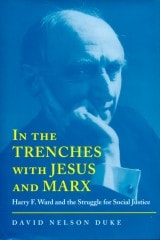
In the Trenches with Jesus and Marx
Harry F. Ward and the Struggle for Social JusticeDavid Duke
University of Alabama Press, 2006
The story of a Social Gospel leader who brought faith, activism, and social justice into the heart of modern American politics.
Radical religious and political leader Harry F. Ward started life quietly enough in a family of Methodist shopkeepers and butchers in London. But his relentless pursuit of social justice would lead him to the United States and a long career of religious activism. Ward served as professor of Christian ethics at the Union Theological Seminary and chairman of the board of the American Civil Liberties Union for two decades. He also became a leader in labor groups, Protestant activist organizations, and New York intellectual circles.
David Duke builds his comprehensive story of this fiery leader from extensive archival sources, including FBI files and private correspondence, sermons, class notes, and other unpublished material. Duke skillfully charts Ward's rise from an idealistic Methodist minister in a Chicago stockyard parish to a prominent national religious leader and influential political figure. Ultimately, Ward's lifelong attempt to synthesize the beliefs of Jesus and Marx and his role as an admirer of the Soviet Union put him on a collision course with McCarthyism in Cold War America. Viewed by some as a prophet and by others as a heretic, traitor, and communist, Ward became increasingly marginalized as he stubbornly maintained his radical positions. Even in his own circle, he went from being a figure of unquestioned integrity who eloquently spoke his convictions to a tragically short-sighted idealogue whose unwavering pro-Soviet agenda blinded him to the horrors of Stalinist oppression.
Harry Ward's long, colorful career intersected nearly every intellectual current in American culture for more than a half century. This biography will be important for scholars of American religious history, students of liberalism and politics, social Christians, and general readers who enjoy a compelling tour into the private and public lives of notable figures of history.

In the Zone
The Twilight World of Rod SerlingPeter Wolfe
University of Wisconsin Press, 1997

Incidental Architect
William Thornton and the Cultural Life of Early Washington, D.C., 1794–1828Gordon S. Brown
Ohio University Press, 2009
While the majority of scholarship on early Washington focuses on its political and physical development, in Incidental ArchitectGordon S. Brown describes the intellectual and social scene of the 1790s and early 1800s through the lives of a prominent couple whose cultural aspirations served as both model and mirror for the city’s own.
When William and Anna Maria Thornton arrived in Washington, D.C., in 1794, the new nation’s capital was little more than a raw village. The Edinburgh–educated Thornton and his accomplished wife brought with them the values of the Scottish Enlightenment, an enthusiasm for the arts, and a polished urbanity that was lacking in the little city emerging from the swamps along the Potomac. Thornton’s talents were manifold: He is perhaps best known as the original architect of the Capitol building, but he also served as a city commissioner and as director of the Patent Office, where his own experimentation in steam navigation embroiled him in a long-running dispute with inventor Robert Fulton.
In spite of their general preoccupation with politics and real estate development, Washington’s citizens gradually created a network of cultural institutions—theaters, libraries and booksellers, music venues, churches, schools, and even colleges and intellectual associations—that began to satisfy their aspirations.
Incidental Architect is a fascinating account of how the city’s cultural and social institutions were shaped by its earliest citizens.

Incidents in an Educational Life
A Memoir (of Sorts)John M. Swales
University of Michigan Press, 2009
Incinarration
What Do We Carry?Hélène Cixous
Seagull Books, 2026
Hélène Cixous’s powerful new book, masterfully translated by Peggy Kamuf, is a vivid journey through fire. From the ashes of wars, wildfires, and upheaval, Cixous traces a dramatic path across time—from the Second World War and the Nazi occupation of Oran to the European wildfires of 2022—weaving a rich, intimate narrative that merges history, autobiography, and myth. With her piercing, lyrical voice, Cixous confronts the human cost of destruction and upheaval, and asks a universal question: What do we carry with us when everything we know is falling to ashes?
In Incinarration, Cixous finds hope in the power of words, memory, and imagination to illuminate our darkest moments and redeem the future. As forests burn and regimes collapse, Cixous shows us how stories become a form of resistance—a way to remember, to bear testimony, and to find renewal in the face of oblivion.
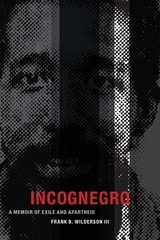
Incognegro
A Memoir of Exile and ApartheidFrank B. Wilderson III
Duke University Press, 2008
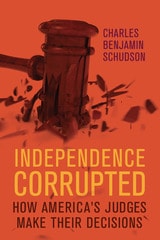
Independence Corrupted
How America's Judges Make Their DecisionsCharles Benjamin Schudson
University of Wisconsin Press, 2018
As political attacks on judges increase, Schudson calls for reforms to protect judicial independence and for vigilance to ensure justice for all. Independence Corrupted is invaluable for students and scholars, lawyers and judges, and all citizens concerned about the future of America's courts.
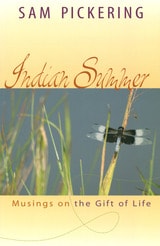
Indian Summer
Musings on the Gift of LifeSam Pickering
University of Missouri Press, 2005
Returning to Nova Scotia every summer contributes to the illusion of smooth continuance, each summer not the first thread in a new fabric but another button on a cardigan, perhaps looser than buttons below but still familiar and comfortable. Every summer the songs of white-throated sparrows bounce from scrub like novelty tunes from the fifties. Early in the morning ravens grind woodenly. . . . No matter how slowly I jog, on the headland butterflies spring from my feet in clumps, first azures and orange crescents, then wood nymphs, and finally over the lowlands near the Beaver River outlet cabbage whites spiraling, dizzy with mating.
Indian Summer is the newest collection of personal essays by Sam Pickering. In typical Pickering fashion, he seeks to capture the gift of living. He brings to the page again his family, students, and a wealth of country characters who live in places that exist only in his imagination and who wander through the stories he tells.
Indiana Political Heroes
Geoff Paddock
Indiana Historical Society Press, 2008
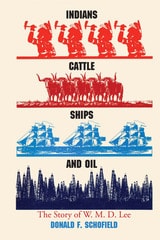
Indians, Cattle, Ships, and Oil
The Story of W. M. D. LeeBy Donald F. Schofield
University of Texas Press, 1985
Indian trader, rancher, harbor developer, oil impresario—these are the many worlds of one of the least chronicled but most fascinating characters of the American West. In the early, bustling years of the frontier, a brazen young man named William McDole Lee moved from Wisconsin to Kansas and then to Texas to forge a life for himself. Becoming a driving entrepreneurial force in Texas's development, Lee soon garnered the alliances and resources necessary to shape the financial destinies of disparate groups throughout the state. His story is expertly told in Donald F. Schofield's Indians, Cattle, Ships, and Oil.
Beginning in 1869 as a trader to the southern Cheyenne and Arapaho tribes and fort provisioner to troops garrisoned at Camp Supply, Indian Territory, Lee gained a partner and amassed a fortune in short order from trading buffalo hides and robes. Vast herds of buffalo grazing on the southern plains were killed largely on his order. When buffalo were no longer a profitable commodity, Lee tackled his next challenge—the cattle trade.
He began with herds branded LR that grazed on pastures near Fort Supply. Then came his LE herd in the Texas Panhandle. Another partnership, with noted cattle rancher Lucien Scott, resulted in the vast LS ranch, one of the most successful operations of its day. Lee even introduced a new breed of cattle, the Aberdeen-Angus, to the western range. But as his partnership faded, Lee moved on to his next undertaking—the development of Texas' first deep-water harbor.
In 1888, Lee and other financiers put up one million dollars to finance a dream: opening international trade from the waters of the Gulf of Mexico to the mainland at the mouth of the Brazos River. Their Brazos River Channel and Dock Company was to construct, own, and operate a deep-water harbor at Velasco, with a railroad link to Houston. Though threats of financial disaster loomed large, the Velasco facility was to welcome, in its day, tugs, barges, and three-masted schooners and to provide impetus for Houston's boom. Yet with success, the mercurial Lee turned to yet another challenge—oil.
Starting still another partnership, Lee committed himself to prospecting for oil on the West Columbia Ridge in Brazoria County. Lee and crew struck oil in 1907, developing one of the first producing wells of Brazoria County, but inadequate drilling equipment hampered further fruitful exploration. Lee moved his rigs to the famed Spindletop, where he perfected the technique of shallow drilling. Though spectacular success in the oil business eluded him, Lee's accomplishments set him squarely among the great entrepreneurs of the Texas oil industry.
Lee's exploits led him to roles in some of the most dramatic moments in Texas and the West—Indian uprisings, buffalo hunts, political scandals, cowboy strikes and shoot-outs, railroad promotions, oil-well blow-outs and gushers. The people he encountered are the famous and infamous of western history: Cheyenne Chief Little Robe and the outlaw "Hurricane Bill" Martin; Indian Agent John D. Miles and Major General John Pope; outlaws Tom Harris and William Bonney, and Sheriff Pat Garrett. Altogether, Lee's biography vividly shows one man's manipulation of people and events during the settlement of the American frontier.

Infinite Variety
The Life and Legend of the Marchesa CasatiScot D. Ryersson
University of Minnesota Press, 2004
Infinity Net
The Autobiography of Yayoi KusamaYayoi Kusama
University of Chicago Press, 2011
In 1957, encouraged by Georgia O’Keeffe, artist Yayoi Kusama left Japan for New York City to become a star. By the time she returned to her home country in 1973, she had established herself as a leader of New York’s avant-garde movement, known for creating happenings and public orgies to protest the Vietnam War and for the polka dots that had become a trademark of her work. Her sculptures, videos, paintings, and installations are to this day included in major international exhibitions.

Ingrid Jonker
Poet under ApartheidLouise Viljoen
Ohio University Press, 2012
Nelson Mandela brought the poetry of Ingrid Jonker to the attention of South Africa and the wider world when he read her poem “Die kind” (The Child) at the opening of South Africa’s first democratic parliament on May 24, 1994. Though Jonker was already a significant figure in South African literary circles, Mandela’s reference contributed to a revival of interest in Jonker and her work that continues to this day.
Viljoen’s biography illuminates the brief and dramatic life of Jonker, who created a literary oeuvre—as searing in its intensity as it is brief—before taking her own life at the age of thirty-one. Jonker wrote against a background of escalating apartheid laws, violent repression of black political activists, and the banning of the African National Congress and the Pan Africanist Congress. Viljoen tells the story of Ingrid Jonker in the political and cultural context of her time, provides sensitive insights into her poetry, and considers the reasons for the enduring fascination with her life and death.
Her writings, her association with bohemian literary circles, and her identification with the oppressed brought her into conflict with her father, a politician in the white ruling party, and with other authority figures from her Afrikaner background. Her life and work demonstrate the difficulty and importance of artistic endeavor in a place of terrible conflict.
Inheritance
Love, Loss, and the Legacy of the HolocaustCharlie Scheidt
Rutgers University Press, 2026
2026 Independent Publisher Book Awards (IPPY) Silver Medal in the Autobiography/Memoir II (Coming of Age/Family Legacy) category.
After his mother’s death, Charlie Scheidt discovered a trove of historic documents that set him on a decade-long journey to uncover his family’s hidden past during the Holocaust. Joined by Kat Rohrer, the granddaughter of a Nazi officer, Scheidt embarked on a quest to trace his family’s harrowing efforts to escape from Nazi-occupied Europe. As they investigated, they uncovered stories of survival and loss. Their journey takes them across generations and continents, revealing a legacy of love, loss, and resilience. Grappling with questions about the long-lasting effects of inherited trauma, the book asks whether it is possible to break free of a familial cycle. This memoir, rooted in his family’s escape and the lasting trauma that followed, is a powerful reflection on history’s enduring scars, the importance of remembrance, and healing across generations.
Inheriting the Holocaust
A Second-Generation MemoirPaula S. Fass
Rutgers University Press, 2011
Fass begins her journey through time and relationships when she travels to Poland and locates birth certificates of the murdered siblings she never knew. That journey to recover her family's story provides her with ever more evidence for the perplexing reliability of memory and its winding path toward historical reconstruction. In the end, Fass recovers parts of her family's history only to discover that Poland is rapidly re-imagining the role Jews played in the nation's past.
Inheriting the Past
The Making of Arthur C. Parker and Indigenous ArchaeologyChip Colwell-Chanthaphonh
University of Arizona Press, 2009
In Inheriting the Past, Chip Colwell-Chanthaphonh examines Parker’s winding career path and asks why it has taken generations for Native peoples to follow in his footsteps. Closely tracing Parker’s life through extensive archival research, Colwell-Chanthaphonh explores how Parker crafted a professional identity and negotiated dilemmas arising from questions of privilege, ownership, authorship, and public participation. How Parker, as well as the discipline more broadly, chose to address the conflict between Native American rights and the pursuit of scientific discovery ultimately helped form archaeology’s moral community.
Parker’s rise in archaeology just as the field was taking shape demonstrates that Native Americans could have found a place in the scholarly pursuit of the past years ago and altered its trajectory. Instead, it has taken more than a century to articulate the promise of an Indigenous archaeology—an archaeological practice carried out by, for, and with Native peoples. As the current generation of researchers explores new possibilities of inclusiveness, Parker’s struggles and successes serve as a singular reference point to reflect on archaeology’s history and its future.

Ink
The Indelible J. Mayo WilliamsClifford R. Murphy
University of Illinois Press, 2024
<p>Vivid and engaging, <i>Ink</i> brings to light the extraordinary journey of a Black businessman and athlete.</p>
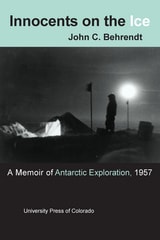
Innocents on the Ice
A Memoir of Antarctic Exploration, 1957John C. Behrendt
University Press of Colorado, 1998
"Adventures in the Antarctic only happen when someone makes a mistake.”
—From the Preface

Insane Sisters
Or, the Price Paid for Challenging a Company TownGregg Andrews
University of Missouri Press, 2020
Insane Sisters is the extraordinary tale of two sisters, Mary Alice Heinbach and Euphemia B. Koller, and their seventeen- year property dispute against the nation's leading cement corporation—the Atlas Portland Cement Company.
In 1903, Atlas built a plant on the border of the small community of Ilasco, located just outside Hannibal—home of the infamous cave popularized in Mark Twain's most acclaimed novels. The rich and powerful Atlas quickly appointed itself as caretaker of Twain's heritage and sought to take control of Ilasco. However, its authority was challenged in 1910 when Heinbach inherited her husband's tract of land that formed much of the unincorporated town site. On grounds that Heinbach's husband had been in the advanced stages of alcoholism when she married him the year before, some of Ilasco's political leaders and others who had ties to Atlas challenged the will, charging Heinbach with undue influence.
To help fight against the local lawyers and politicians who wanted Atlas to own the land, Heinbach enlisted the help of her shrewd and combative sister, Euphemia Koller, by making her co-owner of the tract. In a complex case that went to the Missouri Supreme Court four times, the sisters fiercely sought to hang on to the tract. However, in 1921 the county probate court imposed a guardianship over Heinbach and a circuit judge ordered a sheriff's sale of the property. After Atlas purchased the tract, Koller waged a lonely battle to overturn the sale and expose the political conspiracies that had led to Ilasco's conversion into a company town. Her efforts ultimately resulted in her court- ordered confinement in 1927 to Missouri's State Hospital Number One for the Insane, where she remained until her death at age sixty-eight.
Insane Sisters traces the dire consequences the sisters suffered and provides a fascinating look at how the intersection of gender, class, and law shaped the history and politics of Ilasco. The book also sheds valuable new light on the wider consolidation of corporate capitalism and the use of guardianships and insanity to punish unconventional women in the early twentieth century.
Inscribing the Daily
Critical Essays on Women's DiariesSuzanne L. Bunkers
University of Massachusetts Press, 1996
Inside Academia
Professors, Politics, and PoliciesCahn, Steven M
Rutgers University Press, 2019
Inside Academia uses real cases to illustrate how faculty members, deans, and provosts often do not serve the best interests of schools or students. Yet the book also highlights efforts of those who have committed themselves and their institutions to the pursuit of academic excellence.
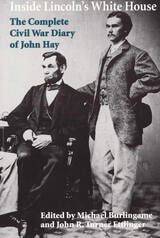
Inside Lincoln's White House
The Complete Civil War Diary of John HayEdited by Michael Burlingame and John R. Turner Ettlinger
Southern Illinois University Press, 1999
On 18 April 1861, assistant presidential secretary John Hay recorded in his diary the report of several women that "some young Virginian long haired swaggering chivalrous of course. . . and half a dozen others including a daredevil guerrilla from Richmond named Ficklin would do a thing within forty eight hours that would ring through the world."
The women feared that the Virginian planned either to assassinate or to capture the president. Calling this a "harrowing communication," Hay continued his entry: "They went away and I went to the bedside of the Chief couché. I told him the yarn; he quietly grinned."
This is but one of the dramatic entries in Hay’s Civil War diary, presented here in a definitive edition by Michael Burlingame and John R. Turner Ettlinger. Justly deemed the most intimate record we will ever have of Abraham Lincoln in the White House, the Hay diary is, according to Burlingame and Ettlinger, "one of the richest deposits of high-grade ore for the smelters of Lincoln biographers and Civil War historians." While the Cabinet diaries of Salmon P. Chase, Edward Bates, and Gideon Welles also shed much light on Lincoln’s presidency, as does the diary of Senator Orville Hickman Browning, none of these diaries has the literary flair of Hay’s, which is, as Lincoln’s friend Horace White noted, as "breezy and sparkling as champagne." An aspiring poet, Hay recorded events in a scintillating style that the lawyer-politician diarists conspicuously lacked.
Burlingame and Ettlinger’s edition of the diary is the first to publish the complete text of all of Hay’s entries from 1861 through 1864. In 1939 Tyler Dennett published Lincoln and the Civil War in the Diaries and Letters of John Hay, which, as Civil War historian Allan Nevins observed, was "rather casually edited." This new edition is essential in part because Dennett omitted approximately 10 percent of Hay’s 1861–64 entries.
Not only did the Dennett edition omit important parts of the diaries, it also introduced some glaring errors. More than three decades ago, John R. Turner Ettlinger, then in charge of Special Collections at the Brown University Library, made a careful and literal transcript of the text of the diary, which involved deciphering Hay’s difficult and occasionally obscure writing. In particular, passages were restored that had been canceled, sometimes heavily, by the first editors for reasons of confidentiality and propriety. Ettlinger’s text forms the basis for the present edition, which also incorporates, with many additions and much updating by Burlingame, a body of notes providing a critical apparatus to the diary, identifying historical events and persons.
Inside the Ropes with Jesse Ventura
Tom Hauser
University of Minnesota Press, 2002
A firsthand account of the remarkable rise of Minnesota’s unconventional governor.
Jesse Ventura burst into national consciousness-and late-night punch lines-when the former professional wrestler was unexpectedly elected governor of Minnesota in 1998. An overnight political sensation whose only previous relevant experience was a brief period as mayor of a Minneapolis suburb, Ventura became a lightning rod for the media, combining the bravado of a Navy SEAL, the showmanship of a movie actor, and the blunt speech and bluff humor of a talk-radio host with a surprising passion for public policy and legislative reform.
In this revealing chronicle of Jesse Ventura’s campaign, election, and time in office, political reporter Tom Hauser tells us what he saw as one of the "media jackals" covering the governor for local television station KSTP. In a saga full of drama, hi-jinks, and controversy, Hauser offers the inside story of the hubbub surrounding Ventura-from his triumphal tour of the late-night talk shows upon his election, to his outspoken and outrageous revelations in Playboy, to his stints as referee for the World Wrestling Federation and commentator for the failed XFL, to his ongoing battles with the state legislature. Hauser also provides insight into Ventura’s popularity, character, and motivations-his impatience with conventional wisdom, his distrust of traditional politics, and his combative relationship with the media. Though to many Ventura seemed to come out of nowhere, Hauser has been following him since the day he filed to run for governor, when he was the underdog in a race against two well-established career politicians, backed by major parties. Hauser offers the only detailed account available of Ventura’s amazing rise and reign, providing an evenhanded look at a political story that will leave readers feeling that truth really is stranger than fiction.Inside the Spiral
The Passions of Robert SmithsonSuzaan Boettger
University of Minnesota Press, 2022
An expansive and revelatory study of Robert Smithson’s life and the hidden influences on his iconic creations
This first biography of the major American artist Robert Smithson, famous as the creator of the Spiral Jetty, deepens understanding of his art by addressing the potent forces in his life that were shrouded by his success, including his suppressed early history as a painter; his affiliation with Christianity, astrology, and alchemy; and his sexual fluidity. Integrating extensive investigation and acuity, Suzaan Boettger uncovers Smithson’s story and, with it, symbolic meanings across the span of his painted and drawn images, sculptures, essays, and earthworks up to the Spiral Jetty and beyond, to the circumstances leading to what became his final work, Amarillo Ramp.
While Smithson is widely known for his monumental earthwork at the edge of the Great Salt Lake, Inside the Spiral delves into the arc of his artistic production, recognizing it as a response to his family’s history of loss, which prompted his birth and shaped his strange intelligence. Smithson configured his personal conflicts within painterly depictions of Christ’s passion, the rhetoric of science fiction, imagery from occult systems, and the impersonal posture of conceptual sculpture. Aiming to achieve renown, he veiled his personal passions and transmuted his professional persona, becoming an acclaimed innovator and fierce voice in the New York art scene.
Featuring copious illustrations never before published of early work that eluded Smithson’s destruction, as well as photographs of Smithson and his wife, the noted sculptor Nancy Holt, and recollections from nearly all those who knew him throughout his life, Inside the Spiral offers unprecedented insight into the hidden impulses of one of modern art’s most enigmatic figures. With great sensitivity to the experiences of loss and existential strife that defined his distinct artistic language, this biographical analysis provides an expanded view of Smithson’s iconic art pilgrimage site and the experiences and works that brought him to its peculiar blood red water.

Inside/Outside
A Physician's Journey with Breast CancerJanet R. Gilsdorf, M.D.
University of Michigan Press, 2006
The medical system delivers cures, answers, and relief from pain to those who seek its help, but it can also offer misinformation, shattered expectations, horrible options, and inhumane consideration of the people it is supposed to serve. As Gilsdorf takes us on a journey across the terrifying landscape of cancer, she discovers that there are oases of unfathomable beauty to be found.
Inside/Outside is compelling, sometimes scary, reading as it puts us inside Gilsdorf’s skin. It ponders a vast array of profound choices most of us will be confronted with in our lives: thinking versus feeling, knowing versus not knowing, hanging on versus letting go, loving versus hating, and the immeasurable territories of life between the poles. Even as it touches on these universal human themes, ultimately Inside/Outside is a story of one person’s courage, hope, and survival in the face of terrifying odds.
Inspired Journeys
Travel Writers in Search of the MuseEdited by Brian Bouldrey
University of Wisconsin Press, 2016
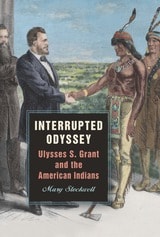
Interrupted Odyssey
Ulysses S. Grant and the American IndiansMary Stockwell
Southern Illinois University Press, 2018
In the late 1860s, before becoming president, Grant collaborated with Ely Parker, a Seneca Indian who became his first commissioner of Indian affairs, on a plan to rescue the tribes from certain destruction. Grant hoped to save the Indians from extermination by moving them to reservations, where they would be guarded by the U.S. Army, and welcoming them into the nation as American citizens. By so doing, he would restore the executive branch’s traditional authority over Indian policy that had been upended by Jackson.
In Interrupted Odyssey, Stockwell rejects the common claim in previous Grant scholarship that he handed the reservations over to Christian missionaries as part of his original policy. In part because Grant’s plan ended political patronage, Congress overturned his policy by disallowing Army officers from serving in civil posts, abandoning the treaty system, and making the new Board of Indian Commissioners the supervisors of the Indian service. Only after Congress banned Army officers from the Indian service did Grant place missionaries in charge of the reservations, and only after the board falsely accused Parker of fraud before Congress did Grant lose faith in his original policy.
Stockwell explores in depth the ousting of Parker, revealing the deep-seated prejudices that fueled opposition to him, and details Grant’s stunned disappointment when the Modoc murdered his peace commissioners and several tribes—the Comanche, Kiowa, Cheyenne, and Sioux—rose up against his plans for them.
Though his dreams were interrupted through the opposition of Congress, reformers, and the tribes themselves, Grant set his country firmly toward making Indians full participants in the national experience. In setting Grant’s contributions against the wider story of the American Indians, Stockwell’s bold, thoughtful reappraisal reverses the general dismissal of Grant’s approach to the Indians as a complete failure and highlights the courage of his policies during a time of great prejudice.

Interviews with American Composers
Barney Childs in ConversationBarney Childs. Edited by Virginia Anderson
University of Illinois Press, 2022
Virginia Anderson edits the first published collection of these conversations. She pairs each interview with a contextual essay by a contemporary expert that shows how the composer's discussion with Childs fits into his life and work. Together, the interviewees cover a broad range of ideas and concerns around topics like education, notation, developments in electronic music, changing demands on performers, and tonal music.
Innovative and revealing, Interviews with American Composers is an artistic and historical snapshot of American music at an important crossroads.
Intimate Strangers
The Letters of Margaret Laurence and Gabrielle RoyMargaret Laurence
University of Manitoba Press, 2004
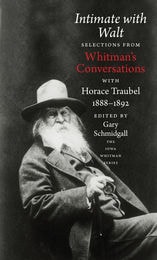
Intimate With Walt
Whitmans Conversataions With Horace TraubelGary Schmidgall
University of Iowa Press, 2001
In Intimate with Walt Gary Schmidgall has condensed Traubel's nearly 5,000 pages into one manageable volume featuring the many self-revealing, humorous, nostalgic, and often curmudgeonly words of the Good Gray Poet. The book is divided into five sections, each consisting of several chapters: the first, presenting Walt on himself, his family, and his daily life and visitors at the only home he ever owned; the second, on his artistic credos, the literary life, and a large array of comments on the writing, publication of, and critical reaction to Leaves of Grass; the third, focusing on his friends, admirers, idols, and lovers; the fourth and longest, presenting his no-holds-barred views on a variety of topics, including the American scene, race, religion, music, and even alcohol; and finally, a gathering of passages revealing Whitman's struggles with his infirmities, his poignant final days, and Traubel's observations on Whitman's deathbed scene and burial rites.

Intimate
An American Family Photo AlbumPaisley Rekdal
Tupelo Press, 2012

Into the Fire
A Post-9/11 American in Tel AvivCharles T. Salmon
Michigan State University Press, 2003
In the fall of 2001 Charles Salmon had a Fulbright fellowship in Israel. He was due to depart on September 12. Arriving in Israel a few weeks later, speaking no Hebrew and largely unfamiliar with Judaism and Israeli customs, he immersed himself in Israeli culture.
This collection of correspondence began as a weekly report to friends and was designed to offer an alternative to mainstream media. With the excitement of a tourist and the eagerness of an anthropologist, Salmon emerges as a modern Candide. He describes historical sites and a supermarket in Tel Aviv, discusses the differences between university students in Israel and America, and negotiates the purchase of food and the vagaries of the weather with humor and passion. The letters also discuss Israeli–Palestinian relations, and details terrorist events and responses to them.
This unique book focuses on how everyday hopes and fears transcend geopolitical boundaries and provides valuable lessons on how to thrive in these new and uncertain times.
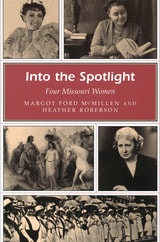
Into the Spotlight
Four Missouri WomenMargot Ford McMillen & Heather Roberson
University of Missouri Press, 2004
Sacred Sun, also called Mohongo, was a Native American of the Osage tribe in Missouri. In 1827, her people lost their land, their sacred places, and many of their traditions. Seeking answers to the dilemma faced by her people, and possibly aid from the French, she journeyed to Europe with a group of prominent Osage and a French entrepreneur. The harrowing events she experienced there would shape the woman she became when she returned to the Osage tribe, which had been forced to move to Oklahoma and was still struggling to survive.
Emily Newell Blair was born into a successful southwest Missouri family. Although she was born at a time when the contributions of women in the workforce were quite limited, she was encouraged by her family to get an education and expand her skills in writing and speaking. When women did begin to pursue education and careers, Blair was at the forefront, working tirelessly to secure voting rights for women. Eventually, she was elected to the Democratic National Committee and later poured her energy into organizing Democratic women’s clubs.
Josephine Baker grew up in segregated turn-of-the-century St. Louis society, which determined human worth by the color of one’s skin. Her mixed ethnic background left Baker feeling isolated both from her own black family and from white society. Driven to develop her own unique style, she became a star of song and stage, toured Europe, served as a spy, and was a fervent civil rights and antiracism activist.
Elizabeth Virginia Wallace, known to her family as “Bess,” grew up in one of Missouri’s most prominent families. She married a neighborhood boy—considered unacceptable by her mother—who would go on to become President Harry Truman. Bess Truman, called “the boss” by her husband, worked side by side with him, editing his speeches and providing advice and guidance through innumerable crises during and after World War II.
Into the Spotlight provides valuable new insights into Missouri and American history, as well as women’s history, and will be a welcome addition to the Missouri Heritage Readers Series.
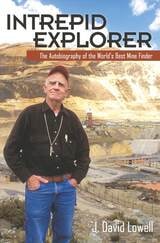
Intrepid Explorer
The Autobiography of the World's Best Mine FinderJ. David Lowell
University of Arizona Press, 2014
An Arizona native with family roots in territorial times, Lowell grew from modest beginnings on a ranch near Nogales to become a major world figure in the fields of minerals, mining, and economic geology. He has personally discovered more copper than anyone in history and has developed multibillion-dollar gold and copper mines that have changed the economies of nations. And although he has consulted for corporations in the field of mining, he has largely operated as an independent agent and explorer, the architect of his own path and success.
His life’s story unfolds in four stages: his early education in his field, on-the-job learning at sites in the United States and Mexico, development of exploration strategies, and finally, the launch of his own enterprises and companies. Recurring themes in Lowell’s life include the strict personal, ethical, and tactical policies he requires of his colleagues; his devotion to his family; and his distaste for being away from the field in a corporate office, even to this day. The magnitude of Lowell’s overall success is evident in his list of mine discoveries, as well as in his scientific achievements and the enormous respect his friends and colleagues have had for him throughout his lengthy career, which he continues to zealously pursue.

Intrepid Lover of Perfect Grace
The Life and Thought of Prosper of AquitaineAlexander Y. Hwang
Catholic University of America Press, 2009
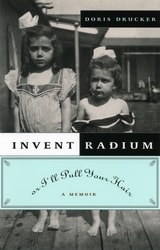
Invent Radium or I'll Pull Your Hair
A MemoirDoris Drucker
University of Chicago Press, 2004
Rothschilds and radium were the horizons of Doris's childhood. Born in Germany in the early twentieth century, she came of age in an upper-middle-class family that struggled to maintain its bourgeois respectability between the two World Wars. Doris Drucker (she met her husband Peter—of management fame—in the 1930s) has penned a lively and charming memoir that brings to life the Germany of her childhood. Rather than focusing on the rise of Hitler, Drucker weaves history into her story of the day-to-day life of a relatively apolitical family. She chronicles here the crowds that gathered to see the Zeppelin, her attempts to negotiate her Prussian mother's plans for her (like marrying well and becoming a famous scientist), ski trips and hikes, the schools she attended, her father's struggles to support the family, and all the stuff and drama that make up a childhood. Drucker's energetic storytelling, eye for the telling detail, and sly humor draw the reader into her portrait of a way of life made forever poignant by its place in history so close to the brutalities of World War II.
From the boarding school that forbade girls to look at their own legs while they bathed to the unfortunate confusion that resulted from Doris's misinterpretation of "Warsaw has fallen" as "The Waschfrau [washerwoman] has fallen," the tales recounted in Invent Radium or I'll Pull Your Hair give dimension and depth to a milieu that has been flattened by the historical events around it.
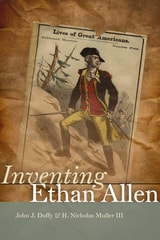
Inventing Ethan Allen
John J. Duffy and H. Nicholas Muller
University Press of New England, 2014
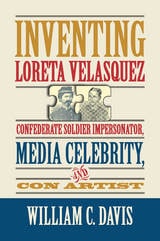
Inventing Loreta Velasquez
Confederate Soldier Impersonator, Media Celebrity, and Con ArtistWilliam C. Davis
Southern Illinois University Press, 2016
This groundbreaking biography reveals a woman quite different from the public persona she promoted. In her bestselling memoir, The Woman in Battle, Velasquez claimed she was an emphatic Confederate patriot, but in fact she never saw combat. Instead, during the war she manufactured bullets for the Union and persuaded her Confederate husband to desert the Army.
After the Civil War ended, she wore many masks, masterminding ambitious confidence schemes worth millions, such as creating a phony mining company, conning North Carolina residents to back her financially in a fake immigration scheme, and attracting investors to build a railroad across western Mexico. With various husbands, Velasquez sought her fortune both in the American West and in the Klondike, though her endeavors cost one husband his life. She also became a social reformer advocating on behalf of better prison conditions, the Cuban revolt against Spain, and the plight of Cuban refugees. Further, Velasquez was one of the first women to venture into journalism and presidential politics. Always a sensational press favorite, she displayed throughout her life an uncanny ability to manipulate popular media and to benefit from her fame in a way that prefigured celebrities of our own time, including using her testimony in a Congressional inquiry about Civil War counterfeiting as a means of promoting her latest business ventures.
So little has been known of Velasquez’s real life that some postmodern scholars have glorified her as a “woman warrior” and used her as an example in cross-gender issues and arguments concerning Hispanic nationalism. Davis firmly refutes these notions by bringing the historical Velasquez to the surface. The genuine story of Velasquez’s life is far more interesting than misguided interpretations and her own fanciful inventions.
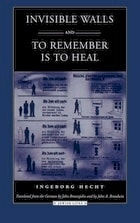
Invisible Walls and To Remember is to Heal
A German Family under the Nuremberg LawsIngeborg Hecht
Northwestern University Press, 1999
In Invisible Walls, Hecht writes of what it was like to live under these circumstances, sharing heartbreaking details of her personal life, including the loss of her daughter's father on the Russian front; the death of her own father after his deportation in 1944; and her fears of perishing coupled with the shame of faring better than most of her family and friends. This new volume adds the first translation of part of Hecht's second book, To Remember is to Heal, a collection of vignettes of encounters and experiences that resulted from the publication of the first.

Inwardness and Existence
Subjectivity in/and Hegel, Heidegger, Marx, and FreudWalter A. Davis
University of Wisconsin Press, 1989
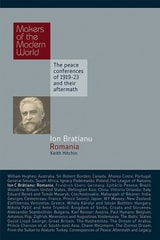
Ionel Bratianu
RomaniaKeith Hitchins
Haus Publishing, 2011

Iowa's Historic Architects
A Biographical DictionaryWesley I. Shank
University of Iowa Press, 1998
Among the prominent Iowa architects of the late nineteenth and early twentieth centuries were a remarkable few who had little training in architecture; their natural talents and their capacity for hard work made up for their lack of experience. Beginning in 1927, however, an Iowa architect had to meet state requirements of experience and training in order to practice. Shank includes an introduction to the history of the profession in Iowa: the development of professional education and training, the founding of professional societies and their roles, the different personalities and talents of the architects, the demography of architectural offices in the state, and the relative importance of Iowa architects both statewide and nationally.
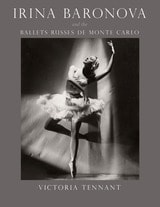
Irina Baronova and the Ballets Russes de Monte Carlo
Victoria Tennant
University of Chicago Press, 2014
Drawing on letters, correspondence, oral histories, and interviews, Baronova’s daughter, the actress Victoria Tennant, warmly recounts Baronova’s dramatic life, from her earliest aspirations to her grueling time on tour to her later years in Australia as a pioneer of the art. She begins with the Baronov family’s flight from Russia during the Revolution, which led them to Romania and later Paris, where at the age of thirteen, Baronova became a star, chosen by the legendary George Balanchine to join the Ballets Russes, where she danced the lead in Swan Lake. Tennant provides an intimate account of Baronova’s life as a dancer and rare behind-the-scenes stories of life on the road with the stars of the company. Spectacular photographs, a mix of archival images and family snapshots, offer many rare views of rehearsals, costumes, set designs, and the dancers themselves both at their most dazzling and in their most everyday.
The story of Irina Baronova is also the story of the rise of ballet in America thanks to the Ballets Russes, who brought the magisterial beauty and star power of dance to big cities and small towns alike. Irina Baronova and the Ballet Russes de Monte Carlo offers a unique perspective on this history, sure to be treasured by dance patrons and aspiring stars.

Irish Born, American Made
The Life and Myth of Captain John EganKen Egan Jr.
University of Wisconsin Press, 2026
Born to poverty in the Irish county of Tipperary, John Egan participated in some of the most dramatic events of the nineteenth century, including mass migration to the United States during a catastrophic famine, the “opening” of Japan via gunboat diplomacy, Sherman’s March to the Sea, and homesteading in the Upper Midwest. In Irish Born, American Made, his great-grandson examines the processes by which a scorned British subject became a proud American citizen.
Although Egan’s life was filled with epic drama, the author does not shy away from unsavory truths, such as his ancestor’s doubts about the virtues of abolition or his enthusiastic participation in settling land appropriated from Indigenous peoples. Equally, Egan recognizes the real hardships his ancestor faced in assimilating to American society, from the prejudices of the ascendant Know-Nothing movement to the condescending caricatures of Irish soldiers by his Union compatriots during and after the Civil War. The result is both a moving reminder of the hardships of immigration and a timely reckoning with the imperfections of our forebears.

Irving Wallace
A Writer's ProfileJohn Leverence
University of Wisconsin Press, 1974
This profile of the man and the writer is an introduction to the personality behind The Chapman Report and The Fan Club. Through correspondence, diaries, manuscript annotations, interviews and other private sources, the profile reveals the man who began as a sports stringer for a Wisconsin newspaper and is now one of the world's most popular novelists.

Is It Nation Time?
Contemporary Essays on Black Power and Black NationalismEdited by Eddie S. Glaude Jr.
University of Chicago Press, 2002
Is It Nation Time? gathers new and classic essays on the Black Power movement and its legacy by renowned thinkers who deal rigorously and unsentimentally with such issues as the commodification of blackness, the piety of cultural recovery, and class tensions within the movement. For anyone who wants to understand the roots of the complex political and cultural desires of contemporary black America, this will be an essential collection.
Contributors:
Eddie S. Glaude Jr.
Farah Jasmine Griffin
Phillip Brian Harper
Gerald Horne
Robin D. G. Kelley
Wahneema Lubiano
Adolph Reed Jr.
Jeffrey Stout
Will Walker
S. Craig Watkins
Cornel West
E. Francis White