Results by title
3071 books match the query 'Business & Economics' and 131 start with i
Introducing a New Economics
Pluralist, Sustainable and ProgressiveJack Reardon, Maria Alejandra Caporale Madi and Molly Scott Cato
Pluto Press, 2015

Introduction to Esports Management
First EditionDina Gentile
FiT Publishing, 2022
The esports industry has experienced rapid expansion across management, marketing, and overall operations of esports events, as well as distribution of programming and gaming. College programs are adding courses, minors, and major programs of study to capitalize on the growing popularity and interest of esports to prepare future professionals in this booming industry. In response to the astronomical growth in esports worldwide, this first edition of Introduction to Esports Management was developed.
Introduction to Esports Management is a first-of-its-kind resource to explore the full breadth of topics on the management and administration of esports and gaming across a variety of settings. It offers coverage of topics specific to esports, such as streaming, branding, esports careers, esports operations and strategic planning, along with the cultural impact of esports. The text examines traditional sport management topics including governance, event/facility management, and marketing with deliberate consideration of how these essential elements are adjusted to address the esports environment and its unique stakeholder groups. Ultimately, Introduction to Esports Management is a timely and well-organized classroom resource that addresses core areas of the industry and immersive feedback from esports professionals in the field.
Inventing Times Square
Commerce and Culture at the Crossroads of the WorldWilliam R. Taylor
Russell Sage Foundation, 1991
Invested
How Three Centuries of Stock Market Advice Reshaped Our Money, Markets, and MindsPaul Crosthwaite, Peter Knight, Nicky Marsh, Helen Paul, and James Taylor
University of Chicago Press, 2022
Who hasn’t wished for a surefire formula for riches and a ticket to the good life? For three centuries, investment advisers of all kinds, legit and otherwise, have guaranteed that they alone can illuminate the golden pathway to prosperity—despite strong evidence to the contrary. In fact, too often, they are singing a siren song of devastation. And yet we keep listening.
Invested tells the story of how the genre of investment advice developed and grew in the United Kingdom and the United States, from its origins in the eighteenth century through today, as it saturates our world. The authors analyze centuries of books, TV shows, blogs, and more, all promising techniques for amateur investors to master the ways of the market: from Thomas Mortimer’s pathbreaking 1761 work, Every Man His Own Broker, through the Gilded Age explosion of sensationalist investment manuals, the early twentieth-century emergence of a vernacular financial science, and the more recent convergence of self-help and personal finance. Invested asks why, in the absence of evidence that such advice reliably works, guides to the stock market have remained perennially popular. The authors argue that the appeal of popular investment advice lies in its promise to level the playing field, giving outsiders the privileged information of insiders. As Invested persuasively shows, the fantasies sold by these writings are damaging and deceptive, peddling unrealistic visions of easy profits and the certainty of success, while trying to hide the fact that there is no formula for avoiding life’s economic uncertainties and calamities.
Invested
How Three Centuries of Stock Market Advice Reshaped Our Money, Markets, and MindsPaul Crosthwaite, Peter Knight, Nicky Marsh, Helen Paul, and James Taylor
University of Chicago Press, 2022
Invested examines the perennial and nefarious appeal of financial advice manuals.
Who hasn’t wished for a surefire formula for riches and a ticket to the good life? For three centuries, investment advisers of all kinds, legit and otherwise, have guaranteed that they alone can illuminate the golden pathway to prosperity—despite strong evidence to the contrary. In fact, too often, they are singing a siren song of devastation. And yet we keep listening.
Invested tells the story of how the genre of investment advice developed and grew in the United Kingdom and the United States, from its origins in the eighteenth century through today, as it saturates our world. The authors analyze centuries of books, TV shows, blogs, and more, all promising techniques for amateur investors to master the ways of the market: from Thomas Mortimer’s pathbreaking 1761 work, Every Man His Own Broker, through the Gilded Age explosion of sensationalist investment manuals, the early twentieth-century emergence of a vernacular financial science, and the more recent convergence of self-help and personal finance. Invested asks why, in the absence of evidence that such advice reliably works, guides to the stock market have remained perennially popular. The authors argue that the appeal of popular investment advice lies in its promise to level the playing field, giving outsiders the privileged information of insiders. As Invested persuasively shows, the fantasies sold by these writings are damaging and deceptive, peddling unrealistic visions of easy profits and the certainty of success, while trying to hide the fact that there is no formula for avoiding life’s economic uncertainties and calamities.
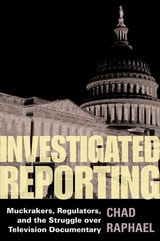
Investigated Reporting
Muckrakers, Regulators, and the Struggle over Television DocumentaryChad Raphael
University of Illinois Press, 2005
2006 History Division Book Award of the Association for Education in Journalism and Mass Communication,
2006 Frank Luther Mott/Kappa Tau Alpha Communications Award, and
2005 Donald McGannon Award for Social and Ethical Relevance in Communications Policy Research
The public often views television investigative reporting as a watchdog on the government. In fact, some of the centerpiece moments of TV muckraking relied heavily on official sources for inspiration, information, and regulatory protection from critics. At the same time, criticism by government officials and overt threats to regulate the television industry influenced the decision-making and content that went into some of broadcast news's iconic moments.
Chad Raphael's looks at the relationship between journalism and regulation during the celebrated period of muckraking that took place on American television between 1960 and 1975. Raphael offers new insights into the economic, political, and industrial forces that shaped documentaries like Harvest of Shame, Hunger in America, and Banks and the Poor while placing the investigative television documentary into its institutional, regulatory, and cultural context. Throughout, Raphael exposes the complex strands of influence used by government officials to shape--and attack--investigative reporting, and highlights how these tactics created a troubling legacy for the regulation of television news today.

Investigations in the Economics of Aging
Edited by David A. Wise
University of Chicago Press, 2012
One of the most well-established relationships in the economics of aging is that between health and wealth. Yet this relationship is also changing in conjunction with a rapidly aging population as well as a broad evolution in how people live later in life.
Building on findings from earlier editions in this National Bureau of Economic Research series, Investigations in the Economics of Aging focuses on the changing financial circumstances of the elderly and the relationship of these circumstances to health and health care. Among the topics addressed are the significance of out-of-pocket health care costs, the effects of inflation on social security, and the impact of the recent financial crisis on Americans’ well-being. Encompassing new data and advances in research methodology, the developments presented in this volume will have important implications for economies worldwide.
Investing Wisely
Informed Approaches to Designing and Implementing Allocation Systems for Graduate AssistantshipsRoger B. Sidje, Joan M. Barth, Ellary A. Draper, Matthew J. Jenny, Daniel L. Riches, and Dean M. Townsley
University of Alabama Press, 2026
Investing in Graduate Education Through Data, Equity, and Purpose.
Investing Wisely: Informed Approaches to Designing and Implementing Allocation Systems for Graduate Assistantships tackles one of the most consequential and least understood challenges in higher education: how universities can distribute graduate assistantships fairly, strategically, and transparently. Drawing on a multiyear effort at the University of Alabama, the authors introduce DIASGA™ (Designing and Implementing Allocation Systems for Graduate Assistantships), a practical framework for aligning graduate funding with institutional priorities, departmental needs, and student success. Through real-world experience, the book demonstrates how institutions can move beyond inherited funding patterns and build adaptive systems capable of responding to changing academic realities.
The book proposes a distinctive blend of rigorous analysis and practical guidance. The authors reveal the hidden complexities behind graduate funding decisions, challenging simplistic allocation formulas based on enrollment or credit-hour production. Instead, they advocate a data-informed, collaborative process grounded in departmental expertise, institutional values, and continuous assessment. Featuring case studies, implementation strategies, funding models, committee structures, and lessons learned from both successes and setbacks, Investing Wisely offers an unusually candid account of organizational change and resource allocation in higher education.
This book will be invaluable to provosts, deans, graduate school leaders, department chairs, faculty administrators, and higher education policymakers. It will also appeal to scholars of university governance, institutional effectiveness, and academic planning who seek practical approaches to balancing equity, accountability, and strategic investment. Whether your institution is reconsidering graduate funding practices or simply striving to make better-informed decisions, Investing Wisely provides a thoughtful roadmap for investing in graduate education with clarity, fairness, and purpose.
This book is freely available in open access format thanks to TOME (Toward an Open Monograph Ecosystem) - a collaboration of the Association of American Universities, the Association of University Presses, and the Association of Research Libraries - and the generous support of Virginia Tech. This Open Access publication can be accessed by visiting the University of Alabama Libraries Repository at https://ir.ua.edu/handle/123456789/18409.
Investing in the Homeland
Migration, Social Ties, and Foreign FirmsBenjamin A.T. Graham
University of Michigan Press, 2019
Graham’s analysis draws on new data from face-to-face interviews with the managers of over 450 foreign firms operating in two developing countries: Georgia and the Philippines. Diaspora-owned and diaspora-managed firms are better connected than other foreign firms and they use social ties to resolve disputes and influence government policy. At the same time, Graham shows that diaspora-affiliated firms are no more socially responsible than their purely foreign peers—at root, they are profit-seeking enterprises, not development NGOs. Graham identifies implications for policymakers seeking to capture the development potential of diaspora investment and for managers of multinational firms who want to harness diasporans as a source of sustained competitive advantage.
Investment Management in Boston
A HistoryDavid Grayson Allen
University of Massachusetts Press, 2015
Presented here for the first time is the history of Boston's evolution as a center of American money management from early settlement to the twenty-first century. Within a few decades after the Revolution, Bostonians built up an impressive mercantile and industrial economy, and used wealth accrued from the China trade, New England mills, and other ventures to establish the most important stock exchange in America. They also created the “Boston trustee,” a unique professional who managed private fortunes over generations. During the late nineteenth century, Boston financial institutions were renowned as bastions of stability and conservatism in an era of recurrent economic panics and frequent failures.
It was not until the twentieth century that Boston became better known for its role in investment management. In 1924, local financiers created the first mutual fund, an innovation almost a century in the making. After World War II, Boston originated venture capital with the founding of American Research & Development. This was soon followed by the development of private equity, the growth of the mutual fund industry, the pension “revolution” that changed and strengthened money management, the evolution in management of institutional endowments, and the rise of new family offices and hedge funds. The contributions of fiduciaries and investment managers have played an important part in the rise of the “New Boston” and made the city one of the most vibrant financial capitals in the world.
Investment Management in Boston is published in association with Massachusetts Historical Society.
Investment, Profit, and Tenancy
The Jurists and the Roman Agrarian EconomyDennis P. Kehoe
University of Michigan Press, 1997
In Investment, Profit, and Tenancy Dennis P. Kehoe defines the economic mentality of upper-class Romans by analyzing the assumptions that Roman jurists in the Digest of Justinian made about investment and profit in agriculture as they addressed legal issues involving private property. In particular the author analyzes the duties of guardians in managing the property of their wards, and the bequeathing of agricultural property. He bases his analysis on Roman legal sources, which offer a comprehensive picture of the economic interests of upper-class Romans. Farm tenancy was crucial to these interests, and Kehoe carefully examines how Roman landowners contended with the legal, social, and economic institutions surrounding farm tenancy as they pursued security from their agricultural investments.
Kehoe argues that Roman jurists offer a consistent picture of agriculture as a form of investment that was grounded in upper-class conceptions of the Roman economy. In the eyes of the jurists, agriculture represented the only form of investment capable of providing upper-class Romans with economic security, and this situation had important implications for the relationship between landowners and tenants. Landowners who sought economic stability from their agricultural holdings preferred to simplify the task of managing their estates by delegating the work and costs to their tenants. This tended to make landowners depend on the expertise and resources of tenants, which in turn gave the tenants significant bargaining power. This dynamic relationship is traced in the jurists' regulation of farm tenancy, as the jurists adapted Roman law to the economic realities of the Roman empire.
Investment, Profit, and Tenancy will be of interest to classicists as well as to scholars of preindustrial comparative economics.
Dennis P. Kehoe is Professor of Classical Studies, Tulane University.
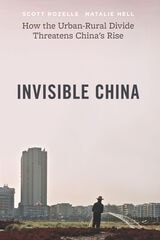
Invisible China
How the Urban-Rural Divide Threatens China’s RiseScott Rozelle and Natalie Hell
University of Chicago Press, 2020
As the glittering skyline in Shanghai seemingly attests, China has quickly transformed itself from a place of stark poverty into a modern, urban, technologically savvy economic powerhouse. But as Scott Rozelle and Natalie Hell show in Invisible China, the truth is much more complicated and might be a serious cause for concern.
China’s growth has relied heavily on unskilled labor. Most of the workers who have fueled the country’s rise come from rural villages and have never been to high school. While this national growth strategy has been effective for three decades, the unskilled wage rate is finally rising, inducing companies inside China to automate at an unprecedented rate and triggering an exodus of companies seeking cheaper labor in other countries. Ten years ago, almost every product for sale in an American Walmart was made in China. Today, that is no longer the case. With the changing demand for labor, China seems to have no good back-up plan. For all of its investment in physical infrastructure, for decades China failed to invest enough in its people. Recent progress may come too late. Drawing on extensive surveys on the ground in China, Rozelle and Hell reveal that while China may be the second-largest economy in the world, its labor force has one of the lowest levels of education of any comparable country. Over half of China’s population—as well as a vast majority of its children—are from rural areas. Their low levels of basic education may leave many unable to find work in the formal workplace as China’s economy changes and manufacturing jobs move elsewhere.
In Invisible China, Rozelle and Hell speak not only to an urgent humanitarian concern but also a potential economic crisis that could upend economies and foreign relations around the globe. If too many are left structurally unemployable, the implications both inside and outside of China could be serious. Understanding the situation in China today is essential if we are to avoid a potential crisis of international proportions. This book is an urgent and timely call to action that should be read by economists, policymakers, the business community, and general readers alike.

Ireland's Economic History
Crisis and Development in the North and SouthGerard McCann
Pluto Press, 2011
With clarity and depth, Gerard McCann explores the complex developments that have shaped Ireland’s economic development, north and south, and led to recurring crises and instability.
The Irish economy has been traditionally portrayed as a product of its political divisions and the colonial legacy, divided and analysed in terms of the hegemonic tensions that exist on the island. Influenced by these divisions, academics have tended to look at a two-region approach to economic development, without adequately acknowledging the interactive nature of the island economy as a source of the crises or as a solution to systemic divergence.
McCann's definitive and dynamic history of the Irish economy circumvents conventional analyses and investigates the economic development of the island economy as a whole, highlighting where aggressive differentiation has been divisive and destabilising. He concludes by considering an alternative integrated and cohesive process of economic development.
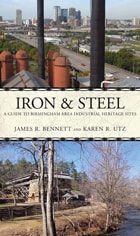
Iron and Steel
A Driving Guide to the Birmingham Area Industrial HeritageJames R. Bennett and Karen R. Utz
University of Alabama Press, 2010
This guidebook of historic iron-production sites is designed to give the reader a factual and illuminating look at the people and events that shaped Birmingham into one of America’s leading steel centers. Iron & Steel is heavily illustrated with both color and historical black-and-white photographs. It can be used while visiting parks or read as a coherent volume before or after a visit.
The book contains chapters devoted to the larger preserved sites open to the public, such as Sloss Furnaces National Historic Landmark and Tannehill Ironworks Historical State Park. It also highlights lesser-known, yet still accessible, sites such as Blocton Coke Ovens Park. The work provides easy-to-follow maps for every site as well as driving directions to the more remote locations, giving visitors easy access to all the notable iron and steel sites in Jefferson, Shelby, Tuscaloosa, and Bibb counties. Each chapter also includes a variety of historical information, with accompanying photographs, in order to present the reader with a detailed and comprehensive account of the Birmingham Iron and Steel District.
Featured sites include: Tannehill Ironworks Historical State Park; Shelby Ironworks Park; Billy Gould Coke Ovens Park; Brierfield Ironworks Historical State Park; Oxmoor Furnace Site; Irondale Furnace Park; Helena Rolling Mill Site; Red Mountain Park, Iron Ore Mines; Lewisburg Coke Ovens Park; Sloss Furnaces National Historic Landmark; Ruffner Mountain Nature Center; Blocton Coke Ovens Park; and Vulcan Park and Museum.

Irrational Together
The Social Forces That Invisibly Shape Our Economic BehaviorAdam S. Hayes
University of Chicago Press, 2025
In Irrational Together, economic sociologist Adam S. Hayes takes readers on a fascinating journey to uncover the often-unseen social forces that shape our financial behavior. Drawing on original research and engaging real-world examples, Hayes challenges not only the notion that economic decisions are purely rational but also the prevailing behavioral economics view that irrational choices stem primarily from individual beliefs. Instead, he argues that our economic choices and actions are deeply embedded in our social and cultural contexts and that understanding these influences is crucial to fully grasp the complexities of financial decision-making.
From the impact of social class and cultural capital on risk-taking and the role of social networks and group identities in shaping consumer choices to the gendered dimensions of financial advice and literacy, this book weaves together insights from sociology, behavioral economics, and cultural studies to paint a nuanced picture of how we navigate the economic landscape as inherently social beings. Why, for example, would someone choose to continue paying 20% interest on a large credit card debt rather than taking out a low-interest mortgage on their home to pay off the card? As Hayes makes clear through rigorous analysis, cultural values—like those related to home ownership—hold as much or more sway over us than financial best practices.
Bridging the gap between behavioral economics and sociology, this groundbreaking work paves the way for a more holistic understanding of the social and cultural influences on economic behavior. Hayes also looks to the future and argues that to correct major disparities in our social understanding of wealth and money, we need to construct financial systems that consider a diversity of social backgrounds.
With its accessible language and thought-provoking insights, Irrational Together is an essential guide for anyone seeking to understand the intersection of money, society, and human behavior.
Is Finance Technology?
Insights for Building an Enduring Fintech CompanyAndrew Endicott
Epic Books, 2026
Is Finance Technology? explores how fintech reshaped how the world borrows, saves, spends, and invests. Behind the hype and headlines, though, is a hard truth—most fintech companies fail. Not because their ideas aren’t feasible, but because founders underestimate the complexity of blending finance, technology, and regulation.
Drawing on years of experience as a founder, operator, and investor, fintech veteran Andrew Endicott reveals the patterns driving industry success and failure. From banking and payments to insurance and infrastructure, Endicott examines the forces transforming financial services and exposes the strategic blind spots that derail even the most ambitious of founders. Clear, candid, and deeply informed,
Is Finance Technology? is essential reading for founders, investors, and anyone who wants to understand where the future of finance is heading—and which companies will endure and shape it.
Is It Time to Reform Social Security?
Edward M. Gramlich
University of Michigan Press, 2000

Is Social Security Broke?
A Cartoon Guide to the IssuesBarbara R. Bergmann and Jim Bush
University of Michigan Press, 2000

Isle of Fire
The Political Ecology of Landscape Burning in MadagascarChristian A. Kull
University of Chicago Press, 2004
Isle of Rum
Havana Club, Cultural Mediation, and the Fight for Cuban AuthenticityChristopher Chávez
Rutgers University Press, 2024
Rather than laying claim to authentic Cuban culture, Chávez explores which aspects of Cuban culture are deemed most compelling and, therefore, most profitable by corporate marketers. As a joint venture between the Cuban state and Pernod Ricard, a global spirits marketer based in Paris, Havana Club embodies the larger process of economic reform, which was meant to reintegrate Cuba into global markets during Cuba’s Special Period in a Time of Peace.
Issues and Options for U.S.-Japan Trade Policies
Robert M. Stern, Editor
University of Michigan Press, 2002
The chapters represent a spectrum of approaches, including theoretical analysis, quantitative measurement, and evaluations of policies and institutions from economic and legal perspectives. The multi-lateral issues cover the analysis of the economic effects of a new WTO negotiating round and the range of issues that are to be addressed there, including reform of Japan's agricultural policies, services liberalization, antidumping, intellectual property rights, and trade and the environment. The regional issues include theoretical and simulation analysis of the benefits of preferential trading arrangements and the policy of open regionalism that is being sought by APEC members. U.S.-Japan bilateral relations are studied by analyzing the major actions and positions taken by the two nations in the context of their national trade laws and policies, how trade policies are implemented, the effects of bilateral trade agreements on the United States and Japan, and the interplay of legal decisions reached in WTO actions with bilateral and unilateral measures undertaken by the two nations.
The book is designed for a broad audience consisting of academic economists, lawyers, policymakers, and students interested in U.S.-Japan international economic relations.
Robert M. Stern is Professor Emeritus of Economics and Public Policy, University of Michigan.
Issues in Law and Economics
Harold Winter
University of Chicago Press, 2017
Issues in Pension Economics
Edited by Zvi Bodie, John B. Shoven, and David A. Wise
University of Chicago Press, 1987
The papers in this volume cover such issues as the interaction of pension-funding decisions and corporate finances; the role of pensions in providing adequate and secure retirement income, including the integration of pension plans with social security and significant drops in the U.S. saving rate; and the incentive effects of pension plans on labor market behavior and the implications of plans on labor market behavior and the implications of plans for different demographic groups.
Issues in Pension Economics offers important empirical studies and makes valuable theoretical contributions to current thinking in an area that will most likely continue to be a source of controversy and debate for some time to come. The volume should prove useful to academics and policymakers, as well as to members of the business and labor communities.
Issues in US-EC Trade Relations
Edited by Robert E. Baldwin, Carl B. Hamilton, and André Sapir
University of Chicago Press, 1988
Issues in US-EC Trade Relations presents the results of a conference organized by the NBER and the Centre for European Policy Studies. In it, North American and European trade specialists offer theoretical, empirical, and historical analyses of some of the major issues on which American and Community officials disagree and also formulate realistic policies for settling present disputes. Contributors consider such topics as the legal aspects of trade between the two regions, agricultural policy, different ways the United States and members of the European Community use embargoes to attempt to induce foreign countries to change particular political actions, the growing trend toward protectionism and responses to this policy, international trade in services, and trade policy in oligopolistic environments. In most cases, each general subject is approached from both an American and a European perspective.
Issues in the Economics of Aging
Edited by David A. Wise
University of Chicago Press, 1990
Issues in the Economics of Immigration
Edited by George J. Borjas
University of Chicago Press, 2000
This collection offers new insights into the kinds of economic opportunities and outcomes that immigrant populations might expect for themselves and future generations.
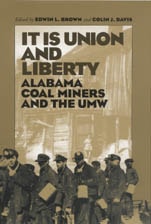
It is Union and Liberty
Alabama Coal Miners, 1898-1998Edwin L. Brown
University of Alabama Press, 1999
One union, many voices—Alabama coal miners and the century-long fight for justice.
Much of Alabama's labor history is written in its coal fields. This book records the critical contribution that District 20 of the United Mine Workers of America played in the state's labor movement through its strong stands on such issues as child labor, public education, and inter-racial unions.
Standing at the cutting edge of social and political history, these essays cover five periods over a century of union activity: the emergence of a militant labor force during mining's formative years; the World War I era, when mine operators tried to divide black and white labor; the increasing role of the state in labor relations during the interwar years; rapid changes in the union between 1942 and 1975; and the 1977-79 strike, the largest in the United Mine Workers' history.
Through historic photographs and depictions of living and working conditions, contributors Edwin L. Brown, Colin J. Davis, Daniel Letwin, Brian M. Kelly, Peter Alexander, Glenn Feldman, and Robert H. Woodrum portray the world that miners, both black and white, made. In a state where racial segregation was the norm,even the earliest District 20 contract proposals demanded equal pay for equal work regardless of color. It Is Union and Liberty shows that the UMW in Alabama stands apart from perceptions of southern trade unionism as exclusionary and racially fragmented. It sheds light on an important segment of the state's labor history and is a testament to District 20 on its centennial celebration.

It's Legal but It Ain't Right
Harmful Social Consequences of Legal IndustriesNikos Passas and Neva Goodwin
University of Michigan Press, 2005
--William S. Laufer, Professor, The Wharton School of Business
"This delightful and serious book involves a matter I have long felt of first importance. That is our tendency to make social truth and acceptance conform to personal or larger corporate interests. On this I have written , but gladly yield to this persuasive parallel. No one concerned with literate, informed, and relevant---as distinct from self-serving---truth should miss It's Legal but It Ain't Right."
--John Kenneth Galbraith
"This absorbing and well-written book of essays on the harmful consequences of legal industries skillfully illuminates the ways in which some corporate harms fail to be transformed into criminal law-making and enforcement, and offers cogent suggestions for better regulation in the public interest."
--Dr. Michael Levi, Professor of Criminology, Cardiff University
Many U.S. corporations and the goods they produce negatively impact our society without breaking any laws. We are all too familiar with the tobacco industry's effect on public health and health care costs for smokers and nonsmokers, as well as the role of profit in the pharmaceutical industry's research priorities. It's Legal but It Ain't Right tackles these issues, plus the ethical ambiguities of legalized gambling, the firearms trade, the fast food industry, the pesticide industry, private security companies, and more. Aiming to identify industries and goods that undermine our societal values and to hold them accountable for their actions, this collection makes a valuable contribution to the ongoing discussion of ethics in our time.
This accessible exploration of corporate legitimacy and crime will be important reading for advocates, journalists, students, and anyone interested in the dichotomy between law and legitimacy.

It's in There!®
William Morton Hildebolt and Bonnie Bajorek Daneker
The Ohio State University Press, 2017
Prego Spaghetti Sauce has been a flagship product in Campbell Soup Company’s portfolio for more than thirty years. This book showcases the creativity, science, and determination that were key to Prego’s development. From the tomato breeding to the recipe formulation to the engineering and mechanical feats necessary for production—not to mention the marketing research and advertising efforts needed to position Prego in the marketplace—It's In There!® is a memoir-based product history of an iconic brand found today in kitchens around the world.
Italians Then, Mexicans Now
Immigrant Origins and the Second-Generation Progress, 1890-2000Joel Perlmann
Russell Sage Foundation, 2005
Ivy and Industry
Business and the Making of the American University, 1880-1980Christopher Newfield
Duke University Press, 2003
Newfield views management as neither inherently good nor bad, but rather as a challenge to and tool for negotiating modern life. In Ivy and Industry he integrates business and managerial philosophies from Taylorism through Tom Peters’s “culture of excellence” with the speeches and writings of leading university administrators and federal and state education and science policies. He discusses the financial dependence on industry and government that was established in the university’s early years and the equal influence of liberal arts traditions on faculty and administrators. He describes the arrival of a managerial ethos on campus well before World War II, showing how managerial strategies shaped even fields seemingly isolated from commerce, like literary studies. Demonstrating that business and the humanities have each had a far stronger impact on higher education in the United States than is commonly thought, Ivy and Industry is the dramatic story of how universities have approached their dual mission of expanding the mind of the individual while stimulating economic growth.