Results by title
8812 books match the query 'Political Science' and 348 start with i

In Pursuit of Peace in Israel and Palestine
Gershon Baskin
Vanderbilt University Press, 2017
Despite the atmosphere of fear, Baskin found he could talk with both Jews and Palestinians, and that very few others were engaged in efforts at mutual understanding. At his initiative, the Ministry of Education and the office of right-wing prime minister Menachem Begin created the Institute for Education for Jewish-Arab Coexistence with Baskin himself as director. Eight years later he founded and codirected the only joint Israeli-Palestinian public policy think-and-do tank in the world, the Israel/Palestine Center for Research and Information. For decades he continued to cross borders, often with a kaffiyeh (Arab headdress) on his dashboard to protect his car in Palestinian neighborhoods. Airport passport control became Kafkaesque as Israeli agents routinely identified him as a security threat.
During the many cycles of peace negotiations, Baskin has served both as an outside agitator for peace and as an advisor on the inside of secret talks—for example, during the prime ministership of Yitzhak Rabin and during the initiative led by Secretary of State John Kerry. Baskin ends the book with his own proposal, which includes establishing a peace education program and cabinet-level Ministries of Peace in both countries, in order to foster a culture of peace.
In Pursuit of Prosperity
Industrial Policy and the Politics of Economic UpgradingCharles R. Hankla
University of Michigan Press, 2025
Using a mixed-methods approach, Charles R. Hankla draws upon archival research and interviews from France and India as well as quantitative models of sixteen countries across six decades. He finds that when state and private actors are aligned in their institutional structures, which can happen in both corporatist and pluralist systems, industrial policy tends to be more effective. It is when the state or the private sector independently dominates industrial policy that poor outcomes are most likely. As In Pursuit of Prosperity shows, rather than being fixed characteristics of countries, policymaking styles vary across time and across sectors of the economy, reflecting the changing power dynamics and organizational resources of stakeholders. The book sheds light on how industrial policy—which is experiencing a comeback in the United States and beyond—can best be harnessed for upgrading. It offers a valuable contribution to our understanding of the complex relationship between state politics and economic performance in the modern globalized world.
In Pursuit of Their Dreams
A History of Azorean Immigration to the United StatesJerry R. Williams
Tagus Press, 2007
Jerry Williams' history of Azorean immigration to the United States offers us valuable insight into the experience and culture of Portuguese immigrants and their descendants. This account fills a major gap in American immigration history and gives us a comprehensive overview of how Portuguese-Americans—now numbering close to a million people—have come to constitute a vibrant and highly visible presence within southeastern New England, the areas around San Francisco and San Diego, Hawaii, and the New Jersey/New York metropolitan area. Even though Azorean immigrants all came from similar cultural and social backgrounds, Williams shows how regionally specific opportunity structures and social hierarchies have contributed to significant differences within the Portuguese-American experience.
Starting with the whaling routes that first connected the mid-Atlantic archipelago with the ports of call in New England and California in the early 1800s, Williams lays out the complex relationship between the Azores and the US that has continued into the present. We learn how particular patterns of poverty, overpopulation and social inequality in the Azores pushed large numbers of the islands' inhabitants to leave their homes in search of better opportunities for themselves and their children. He tells the story of how the early whalers who jumped ship in New Bedford, San Francisco, or Hawaii were followed by kin and fellow villagers who had heard of plentiful jobs in New England's textile mills, gold and land in California, or agricultural work on Hawaiian plantations. Williams' account allows us to understand the importance of family and community connections throughout the immigrants' arduous transition from peasant life to industrial society.

In Search of Goodness
Edited by Ruth W. Grant
University of Chicago Press, 2011
The recent spate of books and articles reflecting on the question of evil might make one forget that the question of just what constitutes goodness is no less urgent or perplexing. Everyone wants to think of him- or herself as good. But what does a good life look like? And how do people become good? Are there multiple, competing possibilities for what counts as a good life, all equally worthy? Or, is there a unified and transcendent conception of the good that should guide our judgment of the possibilities? What does a good life look like when it is guided by God? How is a good life involved with the lives of others? And, finally, how good is good enough?
These questions are the focus of In Search of Goodness, the product of a year-long conversation about goodness. The eight essays in this volume challenge the dichotomies that usually govern how goodness has been discussed in the past: altruism versus egoism; reason versus emotion; or moral choice versus moral character. Instead, the contributors seek to expand the terms of the discussion by coming at goodness from a variety of perspectives: psychological, philosophic, literary, religious, and political. In each case, they emphasize the lived realities and particulars of moral phenomena, taking up examples and illustrations from life, literature, and film. From Achilles and Billy Budd, to Oskar Schindler and Shel Silverstein’s The Giving Tree, to Iris Murdoch and the citizens of Flagstaff, Arizona, readers will find a wealth of thought-provoking insights to help them better understand this most basic, but complex, element of human life and happiness.
In Search of the Black Panther Party
New Perspectives on a Revolutionary MovementJama Lazerow and Yohuru Williams, eds.
Duke University Press, 2006
One contributor evaluates the legal basis of the Panthers’ revolutionary struggle, explaining how they utilized and critiqued the language of the Constitution. Others explore the roles of individuals, looking at a one-time Panther imprisoned for a murder he did not commit and an FBI agent who monitored the activities of the Panthers’ Oakland branch. Contributors assess the Panthers’ relations with Students for a Democratic Society, the Young Lords, the Brown Berets, and the Peace and Freedom Party. They discuss the Party’s use of revolutionary aesthetics, and they show how the Panthers manipulated and were manipulated by the media. Illuminating some of the complexities involved in placing the Panthers in historical context, this collection demonstrates that the scholarly search for the Black Panthers has only just begun.
Contributors. Bridgette Baldwin, Davarian L. Baldwin, David Barber, Rod Bush, James T. Campbell, Tim Lake, Jama Lazerow, Edward P. Morgan, Jeffrey O. G. Ogbar, Roz Payne, Robert O. Self, Yohuru Williams, Joel Wilson

In Search of the Mexican Beverly Hills
Latino Suburbanization in Postwar Los AngelesGonzález, Jerry
Rutgers University Press, 2018
In Search of the Perfect Romanian
National Specificity, Racial Degeneration, and Social Selection in Modern RomaniaMarius Turda
Central European University Press, 2026
The book centers on debates about the Romanian national character and race between 1880s and 1950s. It also argues that during the early 1940s anti-Semitism and anti-Roma racism contributed directly to the programme of ethnic purification pursued by the Antonescu regime. Racism and eugenics explain not just the deportation and murder of the Jews but also the deportation and murder of the Roma. The Holocaust in Romania should therefore be understood as the result not just of anti-Semitism but also of biopolitical nationalism. Finally, the book suggests that the eugenic ideal of the ‘perfect’ Romanian did not disappear in 1945 but was embedded in the socialist definitions of the ‘new man’ and ‘perfect’ society emerging under communism.
In Time of War
Understanding American Public Opinion from World War II to IraqAdam J. Berinsky
University of Chicago Press, 2009
From World War II to the war in Iraq, periods of international conflict seem like unique moments in U.S. political history—but when it comes to public opinion, they are not. To make this groundbreaking revelation, In Time of War explodes conventional wisdom about American reactions to World War II, as well as the more recent conflicts in Korea, Vietnam, the Gulf, Afghanistan, and Iraq. Adam Berinsky argues that public response to these crises has been shaped less by their defining characteristics—such as what they cost in lives and resources—than by the same political interests and group affiliations that influence our ideas about domestic issues.
With the help of World War II–era survey data that had gone virtually untouched for the past sixty years, Berinsky begins by disproving the myth of “the good war” that Americans all fell in line to support after the Japanese bombed Pearl Harbor. The attack, he reveals, did not significantly alter public opinion but merely punctuated interventionist sentiment that had already risen in response to the ways that political leaders at home had framed the fighting abroad. Weaving his findings into the first general theory of the factors that shape American wartime opinion, Berinsky also sheds new light on our reactions to other crises. He shows, for example, that our attitudes toward restricted civil liberties during Vietnam and after 9/11 stemmed from the same kinds of judgments we make during times of peace.
With Iraq and Afghanistan now competing for attention with urgent issues within the United States, In Time of War offers a timely reminder of the full extent to which foreign and domestic politics profoundly influence—and ultimately illuminate—each other.

In a New Century
Essays on Queer History, Politics, and Community LifeJohn D’Emilio
University of Wisconsin Press, 2014
A pioneering scholar of gay history, John D’Emilio reflects in this wide-ranging collection of essays upon the social, cultural, and political changes provoked by LGBT activism. He offers provocative questions and historical analyses: What can we learn from a life-long activist like Bayard Rustin, who questioned the wisdom of “identity politics”? Was Richard Nixon a “gay liberationist”? How can knowing local stories—like those of Chicago in the 1950s, 1960s, and 1970s—help build stronger communities and enrich traditions of activism? Might the focus on achieving actually be evidence of growing conservatism in LGBT communities?
In a New Century provides a dynamic, thoughtful, and important resource for identifying changes that have occurred in the United States since 1960, taking stock of the work that still needs to be done, and issuing an urgent call to action for getting there.
Best Books for General Audiences, selected by the American Association of School Librarians
Best Special Interest Books, selected by the Public Library Reviewers
In a Wounded Land
Conservation, Extraction, and Human Well-Being in Coastal TanzaniaVinay R. Kamat
University of Arizona Press, 2024
Focusing on the human element of marine conservation and the extractive industry in Tanzania, this volume illuminates what happens when impoverished people living in underdeveloped regions of Africa are suddenly subjected to state-directed conservation and natural resource extraction projects, implemented in their landscapes of subsistence. In a Wounded Land draws on ethnographically rich case studies and vignettes collected over a ten-year period in several coastal villages on Tanzania’s southeastern border with Mozambique. In seven chapters, the book demonstrates how state power, processes of displacement and dispossession, forms of local resistance and acquiescence, environmental and social justice, and human well-being become interconnected.
Written in lucid, accessible language, this is the first book that reveals the social implications of the co-presence of a marine park and a gas project at a time when internationally funded conservation initiatives and extraction projects among rural African populations are engendering rapid social transformation.
In an Abusive State
How Neoliberalism Appropriated the Feminist Movement against Sexual ViolenceKristin Bumiller
Duke University Press, 2008
Drawing on archival research, individual case studies, testimonies of rape victims, and interviews with battered women, Bumiller raises fundamental concerns about the construction of sexual violence as a social problem. She describes how placing the issue of sexual violence on the public agenda has polarized gender- and race-based interests. She contends that as the social welfare state has intensified regulation and control, the availability of services for battered women and rape victims has become increasingly linked to their status as victims and their ability to recognize their problems in medical and psychological terms. Bumiller suggests that to counteract these tendencies, sexual violence should primarily be addressed in the context of communities and in terms of its links to social disadvantage. In an Abusive State is an impassioned call for feminists to reflect on how the co-optation of their movement by the neoliberal state creates the potential to inadvertently harm impoverished women and support punitive and racially based crime control efforts.
In and Against the State
London Edinburgh Weekend Return Group
Pluto Press, 2021
Originally published as a pamphlet in 1979 and again by Pluto in 1980, In and Against the State brought together questions of working-class struggle and state power, exploring how revolutionary socialists might reconcile working in the public sector with their radical politics. Informed by autonomist political ideas and practices that were central to the protests of 1968, the book’s authors spoke to a generation of activists wrestling with the question of where to place their energies.
Forty years have passed, yet the questions it posed are still to be answered. As the eclipse of Corbynism and the onslaught of the global pandemic have demonstrated with brutal clarity, a renewed socialist strategy is needed more urgently than ever.
This edition includes a new introduction by Seth Wheeler and an interview with John McDonnell that reflect on the continuing relevance of In and Against the State and the questions it raises.
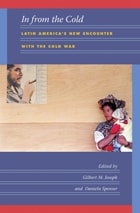
In from the Cold
Latin America's New Encounter with the Cold WarGilbert M. Joseph and Daniela Spenser, eds.
Duke University Press, 2008
The collection's contributors examine international and everyday contests over political power and cultural representation, focusing on communities and groups above and underground, on state houses and diplomatic board rooms manned by Latin American and international governing elites, on the relations among states regionally, and, less frequently, on the dynamics between the two great superpowers themselves. In addition to charting new directions for research on the Latin American Cold War, In From the Cold seeks to contribute more generally to an understanding of the conflict in the global south.
Contributors. Ariel C. Armony, Steven J. Bachelor, Thomas S. Blanton, Seth Fein, Piero Gleijeses, Gilbert M. Joseph, Victoria Langland, Carlota McAllister, Stephen Pitti, Daniela Spenser, Eric Zolov
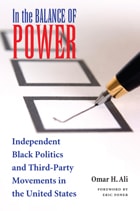
In the Balance of Power
Independent Black Politics and Third-Party Movements in the United StatesOmar H. Ali
Ohio University Press, 2008
Historically, most black voters in the United States have aligned themselves with one of the two major parties: the Republican Party from the time of the Civil War to the New Deal and, since the New Deal—and especially since the height of the modern civil rights movement—the Democratic Party. However, as In the Balance of Power convincingly demonstrates, African Americans have long been part of independent political movements and have used third parties to advance some of the most important changes in the United States, notably the abolition of slavery, the extension of voting rights, and the enforcement of civil rights.
Since the early nineteenth century, there has been an undercurrent of political independence among African Americans. They helped develop the Liberty Party in the 1840s and have continued to work with third parties to challenge the policies of the two major parties. But despite the legal gains of the modern civil rights movement, elements of Jim Crow remain deeply embedded in our electoral process.
In the Balance of Power presents a history and analysis of African American third-party movements that can help us better understand the growing diversity among black voters today.
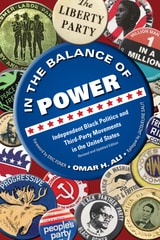
In the Balance of Power
Independent Black Politics and Third-Party Movements in the United StatesOmar H. Ali
Ohio University Press, 2020
REVISED AND EXPANDED EDITION
Reveals the multiple independent political tactics and strategies that African Americans have used to expand democracy and uphold civil and political rights since the founding of the nation.
This new edition of Ali’s groundbreaking narrative includes an epilogue by independent political analyst and leader Jacqueline Salit. New material addresses the historic presidencies of both Barack Obama and Donald Trump, as well as the rising tide of independent and anti-party sentiments.
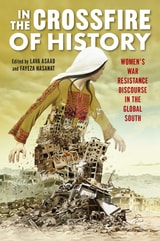
In the Crossfire of History
Women's War Resistance Discourse in the Global SouthLava Asaad
Rutgers University Press, 2022
The transformative mode of these examples expands the definition of heroism and defiance. To prevent these types of heroism from slipping into the abyss of history, this collection brings forth and celebrates women’s fortitude in conflict zones. In the Crossfire of History shines a light onwomen across the globe who are resisting the sociopolitical and economic injustices in their nation-states.
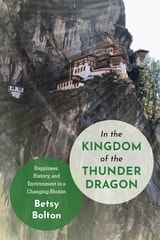
In the Kingdom of the Thunder Dragon
Happiness, History, and Environment in a Changing BhutanBetsy Bolton
Lever Press, 2025
International views on Bhutan tend to be sharply split between admiration for its democratizing development strategies and opposition to its human rights abuses—a division partly maintained by Bhutan’s tight limits on immigration and foreign travel within the country. In the first book-length study of its kind, In the Kingdom of the Thunder Dragon explores the tensions and contradictions of Bhutan’s rapid political and economic transformation from the perspective of a Fulbright scholar helping start a new master’s program in the remote east of the country.
Mingling personal narrative with historical context to engage undergraduate students and general readers, In the Kingdom of the Thunder Dragon explores Bhutan’s Vajrayana Buddhist heritage and ongoing embrace of tradition alongside development, the country’s newly minted democracy amidst a complicated history of citizenship and belonging, and the challenges the nation faces in a period of increasing globalization. Betsy Bolton further explores Bhutan’s recent events surrounding the 1990s expulsion of the Lhotshampa people and the development of GNH in the early 2000s. From here, Bolton illuminates how these historical narratives and issues have impacted Bhutanese citizens and students through stories gathered at educational and artistic institutions, festivals and community events. In the Kingdom of the Thunder Dragon is a fresh, accessible approach to Bhutanese history and will interest general readers as well as scholars of Asia, history, economics, sociology, and environmental studies.
In the Land of Mirrors
Cuban Exile Politics in the United StatesMaria de los Angeles Torres
University of Michigan Press, 2001
In the Lurch
Verbatim Theater and the Crisis of Democratic DeliberationRyan Claycomb
University of Michigan Press, 2023
But this is not just a disinterested history—Claycomb reflects on his own participation in that political fantasy, including earlier scholarly writing that articulated with breathless hopefulness the potential of verbatim theater, and on his own theatrical attendance, imbued with a belief that witnessing this idealized public sphere was a substitute for actual public participation. In the Lurch also recounts the bumpy path towards its completion, two years marked by presidential impeachments, an insurrection, a national reckoning with racism, and a global pandemic. At the heart of the book is a central question: is verbatim theater any longer an effective cultural response to what can look like the possible end of democracy?

In the Mood for Texture
The Revival of Bangkok as a Chinese CityArnika Fuhrmann
Duke University Press, 2026

In the Name of History
Joan Wallach Scott
Central European University Press, 2020
In this book Joan Wallach Scott discusses the role history has played as an arbiter of right and wrong and of those who claim to act in its name—"in the name of history." Scott investigates three different instances in which repudiation of the past was conceived as a way to a better future: the International Military Tribunal at Nuremberg in 1946, the South African Truth and Reconciliation Commission in 1996, and the ongoing movement for reparations for slavery in the United States.
Scott shows how in these cases history was not only used to explain the past but to produce a particular future. Yet both past and future were subject to the political realities of their time and defined in terms of moral absolutes, often leading to deep contradictions. These three instances demonstrate that history is not an impartial truth, rather its very meaning is constructed by those who act in its name.
In the Name of Necessity
Military Tribunals and the Loss of American Civil LibertiesMarouf Hasian
University of Alabama Press, 2005
Examining how claims of necessity have reshaped American liberty in times of war.
Though the war on terrorism is said to have generated unprecedented military situations, arguments for the Patriot Act and military tribunals following 9/11 resemble many historical claims for restricting civil liberties, more often than not in the name of necessity.
Marouf Hasian Jr. examines the major legal cases that show how various generations have represented the need for military tribunals, and how officials historically have applied the term “necessity.” George Washington cited the necessity of martial discipline in executing the British operative Major André. Tribunals tried and convicted more than 200 Sioux warriors during the Dakota Wars. President Lincoln suspended habeas corpus for many civilian and military prisoners during the Civil War. Twentieth Century military and civilian leaders selectively drafted their own codes, leading to the execution of German saboteurs during World War II. Further, General MacArthur’s tribunal to investigate the wartime activities of Japanese General Yamashita raised the specter of “victor’s justice,” anticipating the outcry that attended the Nuremberg trials.
In those cases as in current debates about the prosecution of terrorists, Hasian argues that the past is often cited selectively, neglecting historical contexts and the controversies these cases engendered.
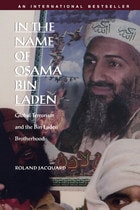
In the Name of Osama Bin Laden
Global Terrorism and the Bin Laden BrotherhoodRoland Jacquard
Duke University Press, 2002
International terrorism expert Roland Jacquard’s In the Name of Osama bin Laden presents a dramatic portrait of the world's most wanted terrorist and his extensive brotherhood--the network of people who operate “in his name.” Published originally in France the very week of September 11, as events in the United States shook the world, the book has become an international bestseller.
Jacquard details how bin Laden became an international emblem of fundamentalist, pan-Islamic, anti-U.S. fervor and the leader of a brotherhood so passionate that devotees who have never met him will act autonomously in his name. The author explains the global character of bin Laden’s organization, elaborating the extent of his sphere of influence in Europe and Asia. Jacquard reveals the construction of bin Laden’s networks—including a profile of his inner circle—and their collaboration with overlapping webs of banking, drug trafficking, religious, and terrorist organizations. He considers the brotherhood’s access to biological, chemical, and nuclear weapons and warns that, with or without bin Laden, this global terrorist force will remain a threat.
Now in English, this edition has been substantially updated in light of recent world events and expanded to include previously unpublished materials, featuring a new introduction and afterword. New documents include an April 2001 interview by the author with bin Laden; a September 24 proclamation by bin Laden to Muslims in Pakistan; and a key page from Dr. Ayman al-Zawahiri’s book justifying eternal jihad, which was smuggled out of Afghanistan in October 2001.
In the Red
The Politics of Public Debt Accumulation in Developed CountriesZsófia Barta
University of Michigan Press, 2018
In the River They Swim
Essays from Around the World on Enterprise Solutions to PovertyMichael Fairbanks
Templeton Press, 2009
The sociologist Thomas Sowell writes, "We need to confront the most blatant fact that has persisted across centuries of social history—vast ddifferences in productivity among peoples, and the economic and other consequences of such differences." Poverty demeans dignity, shrinks the soul, wastes potential, and inflicts suffering on three billion people on our planet. We must also acknowledge that, during the past fifty yyears, the record in international assistance to the least developed countries has been disappointing; the economics-based abstractions developed in the think tanks of Europe and North America are insufficient.
In the River They Swim is the antithesis to that search for solutions the next big theory of global poverty. From the fresh perspective of advisors on the frontlines of development to the insight of leaders like President Paul Kagame of Rwanda and Pastor Rick Warren, it tells the story of change in the microcosms of emerging businesses, industries, and governments. These essays display a personal nature to their work that rigorous analysis alone cannot explain.
We learn that a Sufi master can teach us about the different levels of knowledge, the "different ways to know a river." These practitioners could have written about its length, its source, its depth, its width, the power of its current, and the life it contains. They could have invested time and money to travel to that river so that they could sit on its shores and look at it, feel the sand that borders it, and watch the birds at play over it. Instead, they dove in to swim in the river, felt its current along their bodies, and tasted something of it. They wondered, briefly, if they had the strength to swim its length, and now they share the answer.
If human development is a river, the authors in this volume, and perhaps some readers, will no longer be satisfied to stand along its banks.

In the Shadow of Munich
British Policy towards Czechoslovakia from the Endorsement to the Renunciation of the Munich Agreement (1938-1942)Vít Smetana
Karolinum Press, 2008
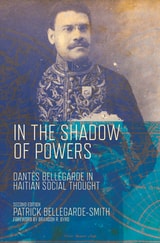
In the Shadow of Powers
Dantes Bellegarde in Haitian Social ThoughtPatrick Bellegarde-Smith
Vanderbilt University Press, 2019
Throughout much of the twentieth century and even to this day, there has been a dearth of scholarship on the intellectual and political contributions of Haitians. In the Shadow of Powers, first published in 1985, was a corrective to this oversight and remains a foundational text. Bellegarde-Smith traces the history of Haiti through the life and career of his grandfather Dantès Bellegarde, one of Haiti's influential diplomats and preeminent thinkers. As Brandon R. Byrd describes in his foreword to this new edition, "Bellegarde was driven by a subversive, racially inclusive vision of civilized progress. He believed in and continued to push for Haiti to establish an existence for itself, black people, and the colonized world independent of the considerable shadow cast by the world's military, economic, and industrial powers." Scholars and students who want to learn about the intellectual and political foundations of Haiti, its influence on other intellectuals worldwide, and its struggles against imperialism continue to find this to be an invaluable classic.
In the Shadow of Race
Jews, Latinos, and Immigrant Politics in the United StatesVictoria Hattam
University of Chicago Press, 2007
Victoria Hattam locates the origins of ethnicity in the New York Zionist movement of the early 1900s. In a major revision of widely held assumptions, she argues that Jewish activists identified as ethnics not as a means of assimilating and becoming white, but rather as a way of defending immigrant difference as distinct from race—rooted in culture rather than body and blood. Eventually, Hattam shows, the Immigration and Naturalization Service and the Census Bureau institutionalized this distinction by classifying Latinos as an ethnic group and not a race. But immigration and the resulting population shifts of the last half century have created a political opening for reimagining the relationship between immigration and race. How to do so is the question at hand.
In the Shadow of Race concludes by examining the recent New York and Los Angeles elections and the 2006 immigrant rallies across the country to assess the possibilities of forging a more robust alliance between immigrants and African Americans. Such an alliance is needed, Hattam argues, to more effectively redress the persistent inequalities in American life.

In the Shadow of Russia
Reform in Kazakahstan and UzbekistanPamela Blackmon
Michigan State University Press, 2011
In the twenty years since the dissolution of the Soviet Union, the fifteen new independent republics have embarked on unprecedented transitions from command economies into market-oriented economies.
Important motivating factors for their reform efforts included issues of geographic and economic proximity to Europe and the influence of the pre-Soviet era histories in those countries. In the Shadow of Russia builds upon the conceptual frameworks that include geography and policy choices about economic integration in an analysis of the reform efforts of Kazakhstan and Uzbekistan.
Blackmon's book addresses such central questions as: How and in what areas has a republic's previous level of integration with Soviet-era Russia influenced its present economic orientation? What are the contributing factors that explain the differences in how leaders ( of a similar regime type) developed economic reform policies? To answer these questions, the author utilizes information from both the economic and the political literature on post-communist transitions, as well from political speeches.
In the Shadow of Tungurahua
Disaster Politics in Highland EcuadorA.J. Faas
Rutgers University Press, 2023

In the Shadow of Violence
The Politics of Armed GroupsKlaus Schlichte
Campus Verlag, 2009
As civil wars and insurgencies rage around the globe, Klaus Schlichte’s In the Shadow of Violence addresses a crucial question: why do some groups succeed in violently seizing and holding power while others fail? What makes for a successful non-state armed force? Arguing that success rests on the ability of these groups to transform the power of violence into legitimate domination, both inside their ranks and in the larger society, Schlichte explores the techniques and strategies they employ—and the long shadow of violence they must overcome along the way.
In the Shadow of the Khmer Rouge
A Child Survivor's MemoirMuy Lang Lim
National University of Singapore Press, 2025
Forty-five years have passed since the end of Khmer Rouge rule in Cambodia in 1979. Angkar, the hidden, menacing face of the revolutionary leadership, is gone, yet the misery, death, and destruction they wrought in the name of revolution cannot be forgotten. In In the Shadow of the Khmer Rouge, a voice is given to these memories by a child survivor of the catastrophe that engulfed Cambodia in the 1970’s.
Muy Lang's memoir begins by recalling her gentle childhood with her Sino-Cambodian family in Phnom Penh. With the fall of the city to the Khmer Rouge and its brutal emptying, the country descended into a utopian hell in which drastic economic ideas were enforced with deadly fervor. Muy Lang was only nine years old when she and her family were marched at gunpoint out of Phnom Penh in 1975. Within three years, she was completely alone; tragically, the seven other members of her family were all killed.
Muy Lang survived nearly four years of starvation, sickness, brutality, and threatened death in the Cambodian countryside. She ultimately escaped to Thailand with the first group of refugees to navigate a treacherous descent from the border through the landmine-infested Dângrêk Mountains. In the Shadow of the Khmer Rouge pays tribute to Muy Lang’s family and to other war victims who shared their stories with her. It offers future generations a personal reflection on themes such as displacement, loss of cultural identity, hope, and resilience in the face of unimaginable circumstances, and is an unflinching account of Cambodia's darkest years.
In the Shadows of the State
Indigenous Politics, Environmentalism, and Insurgency in Jharkhand, IndiaAlpa Shah
Duke University Press, 2010
In the Smaller Scope of Conscience
The Struggle for National Repatriation Legislation, 1986–1990C. Timothy McKeown
University of Arizona Press, 2014
In 1989, The National Museum of the American Indian Act (NMAIA) was successfully passed after a long and intense struggle. One year later, the Native American Graves Protection and Repatriation Act (NAGPRA) followed. These federal repatriation statutes—arguably some of the most important laws in the history of anthropology, museology, and American Indian rights—enabled Native Americans to reclaim human remains, funerary objects, sacred objects, and objects of cultural patrimony.
Twenty years later, the controversy instigated by the creation of NMAIA and NAGPRA continues to simmer. In the Smaller Scope of Conscience is a thoughtful and detailed study of the ins and outs of the four-year process behind these laws. It is a singular contribution to the history of these issues, with the potential to help mediate the ongoing debate by encouraging all sides to retrace the steps of the legislators responsible for the acts.
Few works are as detailed as McKeown’s account, which looks into bills that came prior to NMAIA and NAGPRA and combs the legislative history for relevant reports and correspondence. Testimonies, documents, and interviews from the primary players of this legislative process are cited to offer insights into the drafting and political processes that shaped NMAIA and NAGPRA.
Above all else, this landmark work distinguishes itself from earlier legislative histories with the quality of its analysis. Invested and yet evenhanded in his narrative, McKeown ensures that this journey through history—through the strategies and struggles of different actors to effect change through federal legislation—is not only accurate but eminently intriguing.

In the Space of Theory
Postfoundational Geographies of the Nation-StateMatthew Sparke
University of Minnesota Press, 2005
In the Space of Theory details the territorial implications of the Iraq war, NAFTA, welfare reform, constitutional reform, cross-border regional development, and the legal battles of First Nations. In using antiessentialist arguments to elucidate the complexity of these developments, Sparke seeks to ground and critique postfoundational theory itself. He shows how the postfoundational arguments of Homi Bhabha, Arjun Appadurai, Timothy Mitchell, Ernesto Laclau, Chantal Mouffe, Michael Hardt, and Antonio Negri obscure politically important processes of reterritorialization at the same time they deterritorialize diverse theoretical assumptions about the nation-state. Engaged with theory and grounded in close study of cultural, political, and economic change, In the Space of Theory explores the geographies of struggle that at once underlie and undermine the hyphen in contemporary nation-states.
Matthew Sparke is associate professor of geography and international studies at the University of Washington.
In the Spirit of Alinsky
Community Organizing’s Fight to Strengthen DemocracyRobert T. Gannett Jr.
University of Illinois Press, 2026
As Gannett shows, the methods pioneered by legendary activist Saul Alinsky provide the means for channeling citizens’ anger and frustration into meaningful social change. Gannett weaves his personal journey as an “outside agitator” through in-depth studies of successful and unsuccessful campaigns. Gannett places financial sustainability, political independence, and a commitment to process as much as to purpose at the core of organizing. He also focuses on the importance of veterans mentoring the next generation to meet the challenges of the future.
Hard-headed but hopeful, In the Spirit of Alinsky distills decades of on-the-ground experience into a guide for effective radical action.
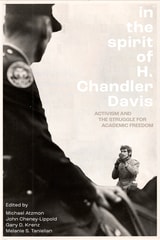
In the Spirit of H. Chandler Davis
Activism and the Struggle for Academic FreedomEdited by Michael Atzmon, John Cheney-Lippold , Gary D. Krenz, and Melanie S. Tanielian
Disobedience Press, 2026
The essays collected in this book honor H. Chandler Davis (1926-2022), a University of Michigan faculty member who became a symbol of principled dissent when suspended and fired in 1954 for refusing to testify about his political affiliations to the House Un-American Activities Committee. Invoking academic freedom and First Amendment protection, Davis was convicted of contempt of Congress. He served six months in prison before moving to Canada, where he established himself as a brilliant mathematician, prolific writer, and ardent and much beloved advocate for justice.
At a time when a new McCarthyism has come roaring back to threaten free inquiry everywhere, the 12 contributors to this book argue against censorship, the suppression of protest, the policed and surveilled campus, the self-silencing of "institutional neutrality," and other enemies of academic freedom. Also included in this volume is posthumously published work by Davis and by his late wife, the historian Natalie Zemon Davis, which reflects on the importance of facing, and not accepting, authoritarian threats.
Inspired by Chandler Davis’ courage, integrity, and devotion to the struggle against oppression, injustice, and the persecution of speech, these essays offer crucial insights into the importance of defending intellectual independence, institutional autonomy, and the right to free expression.
Contributors: Michael Bérubé, Juan Cole, H. Chandler Davis, Stefan Hanß, Marjorie Heins, Dima Khalidi, Gene Nichol, Henry Reichman, Ellen Schrecker, Joan Scott, Catharine R. Stimpson, Alan Wald, Silke-Maria Weineck, and Natalie Zemon Davis.
In the Wake of Disaster
Religious Responses to Terrorism and CatastropheHarold G Koenig
Templeton Press, 2006
In a timely book with a powerful and persuasive message, Dr. Harold G. Koenig addresses federal, state, and local government policy leaders, urging them to more fully integrate religious organizations into the formal disaster response system, and he then provides recommendations on how this can effectively be done. Koenig also advocates faith communities and organizations to learn more about the role they can play in responding to disasters and terrorism.
In the Weeds
Demonization, Legalization, and the Evolution of U.S. Marijuana PolicyClayton J. Mosher and Scott Aikins
Temple University Press, 2019
More and more states are legalizing marijuana in some form. Moreover, a majority of the U.S. population is in favor of the drug for recreational use. In the Weeds looks at how our society has become more permissive in the past 150 years—even though marijuana is still considered a Schedule I drug by the American government.
Sociologists Clayton Mosher and Scott Akins take a deep dive into marijuana policy reform, looking at the incremental developments and the historical, legal, social, and political implications of these changes. They investigate the effects, medicinal applications, and possible harms of marijuana. In the Weeds also considers arguments that youth will be heavy users of legalized cannabis, and shows how “weed” is demonized by exaggerations of the drug’s risks and claims of its lack of medicinal value. Mosher and Akins end their timely and insightful book by tracing the distinct paths to the legalization of recreational marijuana in the United States and other countries as well as discussing what the future of marijuana law holds.
In/visible War
The Culture of War in Twenty-first-Century AmericaJon Simons and John Louis Lucaites
Rutgers University Press, 2017
Yet, the normalization of twenty-first century war also renders it highly visible. War is made visible through popular, commercial, mediated culture. The spectacle of war occupies the contemporary public sphere in the forms of celebrations at athletic events and in films, video games, and other media, coming together as MIME, the Military-Industrial-Media-Entertainment Network.
Inconsistency and Indecision in the United States Supreme Court
Matthew P. Hitt
University of Michigan Press, 2019
Yet a Court that prioritizes resolving many disputes will at times produce contradictory sets of opinions or fail to provide a rationale and legal precedent for its decision at all. In either case, it produces an unreasoned judgment. Conversely, a Court that prioritizes logically consistent doctrine will fail to resolve many underlying disputes in law and society. Inconsistency and Indecision in the United States Supreme Court demonstrates that over time, institutional changes, lobbied for by the justices, substantially reduced unreasoned judgments in the Court’s output, coinciding with a reduction in the Court’s caseload. Hence, the Supreme Court historically emphasized the first goal of dispute resolution, but evolved into a Court that prioritizes the second goal of logically consistent doctrine. As a result, the Court today fails to resolve more underlying questions in law and society in order to minimize criticism of its output from other elites. In so doing, the modern Court often fails to live up to its Constitutional obligation.
Indecision in American Legislatures
Jeffrey J. Harden and Justin H. Kirkland
University of Michigan Press, 2018
Lawmaking provides many opportunities for proposals to be altered, amended, tabled, or stopped completely. The ideal legislator should assess evidence, update his or her beliefs with new information, and sometimes be willing to change course. In practice, however, lawmakers face criticism from the media, the public, and their colleagues for “flip-flopping.” Legislators may also only appear to change positions in some cases as a means of voting strategically.
This book presents a systematic examination of legislative indecision in American politics. This might occur via “waffling”—where a legislator cosponsors a bill, then votes against it at roll call. Or it might occur when a legislator votes one way on a bill, then switches her vote to the other side. In Indecision in American Legislatures, Jeffrey J. Harden and Justin H. Kirkland develop a theoretical framework to explain indecision itself, as well as the public’s attitudes toward indecision. They test their expectations with data sources from American state legislatures, the U.S. Congress, and survey questions administered to American citizens. Understanding legislative indecision from both the legislator and citizen perspectives is important for discussions about the quality of representation in American politics.
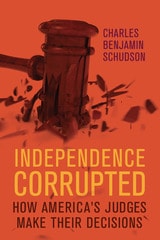
Independence Corrupted
How America's Judges Make Their DecisionsCharles Benjamin Schudson
University of Wisconsin Press, 2018
As political attacks on judges increase, Schudson calls for reforms to protect judicial independence and for vigilance to ensure justice for all. Independence Corrupted is invaluable for students and scholars, lawyers and judges, and all citizens concerned about the future of America's courts.

Independence and Revolution in Spanish America
Perspectives and ProblemsEdited by Eduardo Posada-Carbo and Anthony McFarlane
University of London Press, 1999
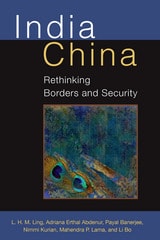
India China
Rethinking Borders and SecurityL.H.M. Ling, Adriana Erthal Abdenur, Payal Banerjee, Nimmi Kurian, Mahendra P. Lama, and Li Bo
University of Michigan Press, 2016
Challenging the Westphalian view of international relations, which focuses on the sovereignty of states and the inevitable potential for conflict, the authors from the Borderlands Study Group reconceive borders as capillaries enabling the flow of material, cultural, and social benefits through local communities, nation-states, and entire regions. By emphasizing local agency and regional interdependencies, this metaphor reconfigures current narratives about the China India border and opens a new perspective on the long history of the Silk Roads, the modern BCIM Initiative, and dam construction along the Nu River in China and the Teesta River in India.
Together, the authors show that positive interaction among people on both sides of a border generates larger, cross-border communities, which can pressure for cooperation and development. India China offers the hope that people divided by arbitrary geo-political boundaries can circumvent race, gender, class, religion, and other social barriers, to form more inclusive institutions and forms of governance.
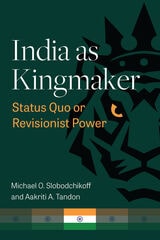
India as Kingmaker
Status Quo or Revisionist PowerMichael O. Slobodchikoff and Aakriti A. Tandon
University of Michigan Press, 2022
As India finds itself in the envious position of kingmaker, both the status quo and revisionist major powers are jockeying for India’s support for either upholding or revising the current world order. Using India’s bilateral treaties as a proxy measure of the strength of its relationship with other major powers, Slobodchikoff and Tandon determine whether India will remain neutral in its foreign policy approach or adopt a more assertive role in shaping the future global order. This book provides an in-depth analysis of India’s bilateral ties with major powers that include the United States, Russia, China, Japan, as well as the European Union (including the United Kingdom, France, and Germany) and uses network analysis to study India’s foreign policy positions with other major powers.

India's Organic Farming Revolution
What It Means for Our Global Food SystemSapna E. Thottathil
University of Iowa Press, 2014
Sapna Thottathil calls on us to rethink the politics of organic food by focusing on what it means for the people who grow and sell it—what it means for their health, the health of their environment, and also their economic and political well-being. Taking readers to the state of Kerala in southern India, she shows us a place where the so-called “Green Revolution” program of hybrid seeds, synthetic fertilizers, and rising pesticide use had failed to reduce hunger while it caused a cascade of economic, medical, and environmental problems. Farmers burdened with huge debts from buying the new seeds and chemicals were committing suicide in troubling numbers. Farm laborers suffered from pesticide poisoning and rising rates of birth defects. A sharp fall in biodiversity worried environmental activists, and everyone was anxious about declining yields of key export crops like black pepper and coffee.
In their debates about how to solve these problems, farmers, environmentalists, and policymakers drew on Kerala’s history of and continuing commitment to grassroots democracy. In 2010, they took the unprecedented step of enacting a policy that requires all Kerala growers to farm organically by 2020. How this policy came to be and its immediate economic, political, and physical effects on the state’s residents offer lessons for everyone interested in agriculture, the environment, and what to eat for dinner. Kerala’s example shows that when done right, this kind of agriculture can be good for everyone in our global food system.
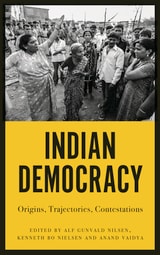
Indian Democracy
Origins, Trajectories, ContestationsEdited by Alf Gunvald Nilsen, Kenneth Bo Nielsen, and Anand Vaidya
Pluto Press, 2019
India’s pluralism has always posed a formidable challenge to its democracy, with many believing that a clash of identities based on region, language, caste, religion, ethnicity, and tribe would bring about its demise. With the meteoric rise to power of the Bharatiya Janata Party, the nation’s solidity is once again called into question: is Modi’s Hindu majoritarianism an anti-democratic attempt to transform India into a monolithic Hindu nation from which minorities and dissidents are forcibly excluded?
With examinations of the way that class and caste power shaped the making of India’s postcolonial democracy, the role of feminism, the media, and the public sphere in sustaining and challenging democracy, this book interrogates the contradictions at the heart of the Indian democratic project, examining its origins, trajectories, and contestations.

Indian Reservations in the United States
Territory, Sovereignty, and Socioeconomic ChangeKlaus Frantz
University of Chicago Press, 1999
Informed by both historical research and extensive fieldwork, this book pays special attention to the natural resource base and economic outlook of the reservations, as well as the crucial issue of tribal sovereignty. Chapters also cover the demography of American Indian groups and their socioeconomic status (including standard of living, employment, and education). A new afterword treats some of the developments since the book's initial publication in German, such as the effects of the 1988 Indian gaming law that allowed Indian reservations to operate gambling establishments (with mixed success).
"Provides a good overview of the basic questions and problems facing reservation Indians today."—Peter Bolz, Journal of American History (on the German edition)