Results by title
4030 books match the query 'Language Arts & Disciplines' and 223 start with i

Introduction to Reference Sources in the Health Sciences
Jeffrey T. Huber
American Library Association, 2014
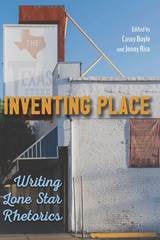
Inventing Place
Writing Lone Star RhetoricsEdited by Casey Boyle and Jenny Rice
Southern Illinois University Press, 2018
Divided into five sections corresponding to Texas regions, essays consider aesthetics, buildings, environment, food and alcohol, private and public memory, and race and class. Among the topics covered by contributors are the Imagine Austin urban planning initiative; the terroir of Texas barbecue; the racist past of Grand Saline, Texas; Denton, Texas, and authenticity as rhetorical; negative views of Texas and how the state (or any place) is subject to reinvention; social, historical, and economic networks of place and their relationship to the food we eat; and Texas gun culture and working-class character.
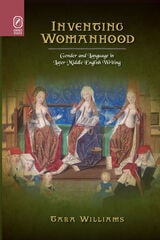
Inventing Womanhood
Gender and Language in Later Middle English WritingTara Williams
The Ohio State University Press, 2011
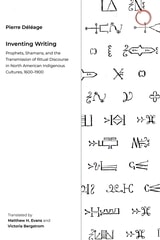
Inventing Writing
Prophets, Shamans, and the Transmission of Ritual Discourse in North American Indigenous Cultures, 1600–1900Pierre Déléage
HAU, 2026
Why have humans repeatedly devoted immense intellectual energy to inventing writing? In world history, writing was independently created four times—by the Sumerians, Egyptians, Chinese, and Mayans. These traditions developed universal scripts, systems of symbols theoretically capable of recording any utterance in the spoken language. On this basis, a long-standing scholarly view has held that the origins of writing are inseparable from the rise of states and bureaucracies.
However, this book turns our attention to another trajectory. Between 1700 and 1900, prophets and shamans in Native American societies devised “bounded” forms of writing. Unlike universal scripts, these were not intended to capture the entirety of speech. Instead, they served a precise function: to ensure the faithful transmission of ritual discourses within ceremonial frameworks. Their principles of notation differed profoundly from those of the great phonographic traditions.
Pierre Déléage’s analysis not only illuminates these overlooked episodes in the history of writing but also advances a methodological shift: rather than treating selective scripts as “failed” or “incomplete,” he interprets them on their own terms. In doing so, he opens up a broader framework for understanding writing as a diverse cultural practice, one that can emerge outside of state power, bureaucracy, or universal phonographic systems.
Now published in English translation, Inventing Writing makes the work of a leading French scholar available to new readers. It offers a groundbreaking perspective: writing does not emerge only as a universal technology of language, but also as a bounded tool shaped by ritual, institution, and culture.
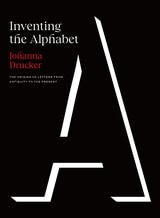
Inventing the Alphabet
The Origins of Letters from Antiquity to the PresentJohanna Drucker
University of Chicago Press, 2022
Inventing the Alphabet provides the first account of two-and-a-half millennia of scholarship on the alphabet. Drawing on decades of research, Johanna Drucker dives into sometimes obscure and esoteric references, dispelling myths and identifying a pantheon of little-known scholars who contributed to our modern understandings of the alphabet, one of the most important inventions in human history.
Beginning with Biblical tales and accounts from antiquity, Drucker traces the transmission of ancient Greek thinking about the alphabet’s origin and debates about how Moses learned to read. The book moves through the centuries, finishing with contemporary concepts of the letters in alpha-numeric code used for global communication systems. Along the way, we learn about magical and angelic alphabets, antique inscriptions on coins and artifacts, and the comparative tables of scripts that continue through the development of modern fields of archaeology and paleography.
This is the first book to chronicle the story of the intellectual history through which the alphabet has been “invented” as an object of scholarship.

Inventing the World Grant University
Chinese International Students’ Mobilities, Literacies, and IdentitiesSteven Fraiberg
Utah State University Press, 2017
Through an exploration of the literacy practices of undergraduate Chinese international students in the United States and China, Inventing the World Grant University demonstrates the ways in which literacies, mobilities, and transnational identities are constructed and enacted across institutional and geographic borders.
Steven Fraiberg, Xiqiao Wang, and Xiaoye You develop a mobile literacies framework for studying undergraduate Chinese international students enrolling at Western institutions, whose numbers have increased in recent years. Focusing on the literacy practices of these students at Michigan State University and at Sinoway International Education Summer School in China, Fraiberg, Wang, and You draw on a range of mobile methods to map the travel of languages, identities, ideologies, pedagogies, literacies, and underground economies across continents. Case studies of administrators’, teachers’, and students’ everyday literacy practices provide insight into the material and social structures shaping and shaped by a globalizing educational landscape.
Advocating an expansion of focus from translingualism to transliteracy and from single-site analyses to multi-site approaches, this volume situates local classroom practices in the context of the world grant university. Inventing the World Grant University contributes to scholarship in mobility, literacy, spatial theory, transnationalism, and disciplinary enculturation. It further offers insight into the opportunities and challenges of enacting culturally relevant pedagogies.
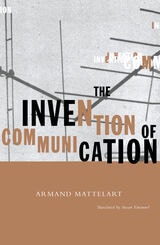
Invention Of Communication
Armand Mattelart
University of Minnesota Press, 1996
Invention as a Social Act
Karen Burke LevFevre. Foreword by Frank D'Angelo
Southern Illinois University Press, 1986
The act of inventing relates to the process of inquiry, to creativity, to poetic and aesthetic invention.
Building on the work of rhetoricians, philosophers, linguists, and theorists in other disciplines, Karen Burke LeFevre challenges a widely-held view of rhetorical invention as the act of an atomistic individual. She proposes that invention be viewed as a social act, in which individuals interact dialectically with society and culture in distinctive ways.
Even when the primary agent of invention is an individual, invention is pervasively affected by relationships of that individual to others through language and other socially shared symbol systems. LeFevre draws implications of a view of invention as a social act for writers, researchers, and teachers of writing.
Invention, Copyright, and Digital Writing
Martine Courant Rife
Southern Illinois University Press, 2013
This is the first empirical, mixed-methods study of copyright issues that speaks to writing specialists and legal scholars about the complicated intersections of rhetoric, technology, copyright law, and writing for the Internet. Martine Courant Rife opens up new conversations about how invention and copyright work together in the composing process for digital writers and how this relationship is central to contemporary issues in composition pedagogy and curriculum.
In this era of digital writing and publishing, composition and legal scholars have identified various problems with writers’ processes and the law’s construction of textual ownership, such as issues of appropriation, infringement, and fair use within academic and online contexts. Invention, Copyright, and Digital Writing unpacks digital writers’ complex perceptions of copyright, revealing how it influences what they choose to write and how it complicates their work. Rife uses quantitative and qualitative approaches and focuses on writing as a tool and a technology-mediated activity, arguing the copyright problem is about not law but invention and the attendant issues of authorship.
Looking at copyright and writing through a rhetorical lens, Rife leverages the tools and history of rhetoric to offer insights into how some of our most ancient concepts inform our understanding of the problems copyright law creates for writers. In this innovative study that will be of interest to professional and technical writers, scholars and students of writing and rhetoric, and legal professionals, Rife offers possibilities for future research, teaching, curriculum design, and public advocacy in regard to composition and changing copyright laws.

Inventive Intercourse
From Rhetorical Conflict to the Ethical Creation of Novel TruthStephen R. Yarbrough
Southern Illinois University Press, 2006
Applying interactionist discourse theory to show how we create novel beliefs
Inventive Intercourse: From Rhetorical Conflict to the Ethical Creation of Novel Truth offers a theory of discursive interaction, illustrating how we can understand human communication without resorting to the notion of language. Using the perspective of interactionist discourse theory, author Stephen Yarbrough investigates how we create novel beliefs, beliefs we could not have inferred from our established beliefs.
The volume considers a central dilemma of post-modern thought: If language is a system of conventions and rules that limit what we can say and think, how can we deliberately produce anything truly novel? While postmodernism concludes that linguistic and conceptual change within our incommensurable worlds is driven by contingency and blind mechanical forces, Yarbrough argues that this view is wrong because the notion that language mediates our perception is wrong.
Beginning with philosopher Donald Davidson’s assertion that "there is no such thing as language" in the sense of a system of conventions and rules, Yarbrough develops an interactionist theory of discourse and uses it to revise the major elements of Aristotelian rhetoric to explain how we deliberately invent novel concepts that we come to believe.
Yarbrough suggests that all conceptual change is initiated by a shift in our ethical apperception of elements of a situation and that an ethical change will have emotional consequences. Changes in our emotional responses to things will change the ways we interact with them, he says, and changes in our interaction with things will create new technical relations which we can communicate to others only by altering our habitual shared way of using signs, metaphors, and other tropes.
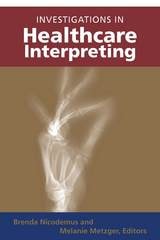
Investigations in Healthcare Interpreting
Brenda Nicodemus
Gallaudet University Press, 2014
Investigations in Healthcare Interpreting consists of ten chapters contributed by a broad array of international scholars. They address topics as diverse as the co-construction of medical conversation between interlocutors, healthcare interpretation in Ireland, and how interpreters make requests for clarification in their work. Using a variety of methodological approaches including ethnography, questionnaires, observation, and diary accounts, these scholars report on trials of simultaneous video interpreting in Austrian hospitals; direct, interpreted, and translated healthcare information for Australian deaf people; the interpretation of medical interview questions from English into ASL; and specialized psychological/psychiatric diagnostic tests for deaf and hard of hearing clients. Researchers, practitioners, and students, as well as all healthcare professionals, will find this volume to be an invaluable resource.
Investment Citizenship
Rhetoric and Affect Beyond Late NeoliberalismBlake Abbott
Michigan State University Press, 2027
This book maps the development of a social and rhetorical phenomenon called investment citizenship: a mode of citizen-subjectivity articulated primarily through financial and affective investments. Investment citizenship is both a marker of personal identity and a complex, interwoven set of rhetorics, forces, actions, and assumptions that articulate the role of investment in social life. To that end, it examines three rhetorical couplets—investment and citizenship, financial investment and affective investment, to invest and to be invested—directly and through several cultural phenomena implicated by the emergence of investment rhetoric, such as US government policy, consumerism, ownership, education, and financial planning. Taken together, these couplets both extend and challenge late neoliberalism through the various invocations and implications of investment citizenship that reconfigure the relationship between the individual and society.
Invisible People
Stories of Lives at the MarginsAlex Tizon
Temple University Press, 2021
“Somewhere in the tangle of the subject’s burden and the subject’s desire is your story.”—Alex Tizon
Every human being has an epic story. The late Pulitzer Prize–winning writer Alex Tizon told the epic stories of marginalized people—from lonely immigrants struggling to forge a new American identity to a high school custodian who penned a New Yorker short story. Edited by Tizon’s friend and former colleague Sam Howe Verhovek, Invisible People collects the best of Tizon’s rich, empathetic accounts—including “My Family’s Slave,” the Atlantic magazine cover story about the woman who raised him and his siblings under conditions that amounted to indentured servitude.
Mining his Filipino American background, Tizon tells the stories of immigrants from Cambodia and Laos. He gives a fascinating account of the Beltway sniper and insightful profiles of Surfers for Jesus and a man who tracks UFOs. His articles—many originally published in the Seattle Times and the Los Angeles Times—are brimming with enlightening details about people who existed outside the mainstream’s field of vision.
In their introductions to Tizon’s pieces, New York Times executive editor Dean Baquet, Atlantic magazine editor in chief Jeffrey Goldberg, Pulitzer Prize winners Kim Murphy and Jacqui Banaszynski, and others salute Tizon’s respect for his subjects and the beauty and brilliance of his writing. Invisible People is a loving tribute to a journalist whose search for his own identity prompted him to chronicle the lives of others.
Invoking the Invisible Hand
Social Security and the Privatization DebatesRobert Asen
Michigan State University Press, 2009
In Invoking the Invisible Hand Robert Asen scrutinizes contemporary debates over proposals to privatize Social Security. Asen argues that a rights-based rhetoric employed by Social Security's original supporters enabled advocates of privatization to align their proposals with the widely held belief that Social Security functions simply as a return on a worker's contributions and that it is not, in fact, a social insurance program.
By analyzing major debates over a preeminent American institution, Asen reveals the ways in which language is deployed to identify problems for public policy, craft policy solutions, and promote policies to the populace. He shows how debate participants seek to create favorable contexts for their preferred policies and how they connect these policies to idealized images of the nation.
Iron Age Hieroglyphic Luwian Inscriptions
Annick Payne
SBL Press, 2012

Iron in the Pines
The Story of New Jersey's Ghost Towns and Bog IronPierce, Arthur
Rutgers University Press, 1966
With warmth and accuracy, Arthur D. Pierce tells the story of the years when iron was king, and around it rose a rustic feudal economy. There were glass factories, paper mills, cotton mills, and brickmaking establishments. Here, too, were men who made those years exciting: Benedict Arnold and his first step toward treason; Charles Read, who dreamed of an empire and died in exile; Revolutionary heroes and heroines, privateers, and rogues. The author's vivid pictures of day-to-day life in the old iron communities are based upon careful research. This book proves that the human drama of documented history belies any notion that fiction is stranger than truth.
Irrepressible Reformer
Wayne A. Wiegand
American Library Association, 1996
Is Consulting for You?
American Library Association, 2008
Issues in Librarianship
Presented Papers at the ALA 2008 Annual ConferenceAmerican Library Association, 2008
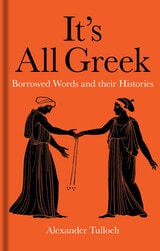
It’s All Greek
Borrowed Words and their HistoriesAlexander Tulloch
Bodleian Library Publishing, 2018
This book offers a word-by-word look at the influence of Greek on everyday words in English, telling the stories behind the etymological developments of each example and tracing their routes into modern English via Latin and European languages. It also explains connections with ancient Greek culture, in particular mythology, politics, and warfare, and includes proverbs and quotations from Greek literature. Revealing how deeply indebted we are to the language spoken in Athens 2,500 years ago, this book is the perfect gift for any logophile.

It’s Not What You Sign, It’s How You Sign It
Politeness in American Sign LanguageJack Hoza
Gallaudet University Press, 2007
The general stereotype regarding interaction between American Sign Language and English is a model of oversimplification: ASL signers are direct and English speakers are indirect. Jack Hoza’s study It’s Not What You Sign, It’s How You Sign It: Politeness in American Sign Language upends this common impression through an in-depth comparison of the communication styles between these two language communities. Hoza investigates relevant social variables in specific contexts and explores the particular linguistic strategies ASL signers and English speakers employ when they interact in these contexts.
It’s Not What You Sign, It’s How You Sign It is framed within politeness theory, an apt model to determine various interpretations of what speakers or signers mean in respect to the form of that which they say or sign. The variations reveal how linguistic and cultural differences intersect in ways that are often misinterpreted or overlooked in cross-cultural communication. To clarify these cross-linguistic differences, this volume explores two primary types of politeness and the linguistic strategies used by English speakers and ASL signers to express politeness concerns in face-to-face interaction. Hoza’s final analysis leads to a better understanding of the rich complexity of the linguistic choices of these language groups.
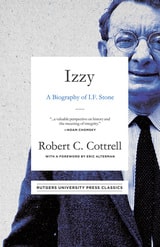
Izzy
A Biography of I. F. StoneRobert C. Cottrell
Rutgers University Press, 2020
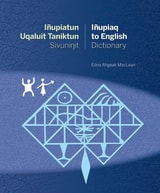
Iñupiatun Uqaluit Taniktun Sivuninit/Iñupiaq to English Dictionary
Compiled by Edna MacLean
University of Alaska Press, 2014