Results by title
8812 books match the query 'Political Science' and 348 start with i

Inside Ancient Kitchens
New Directions in the Study of Daily Meals and FeastsElizabeth A. Klarich
University Press of Colorado, 2010

Inside Appellate Courts
The Impact of Court Organization on Judicial Decision Making in the United States Courts of AppealsJonathan Matthew Cohen
University of Michigan Press, 2002
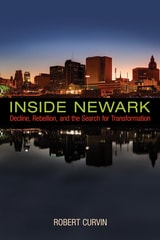
Inside Newark
Decline, Rebellion, and the Search for TransformationCurvin, Robert
Rutgers University Press, 2014
Based on historical records and revealing interviews with over one hundred residents and officials, Inside Newark traces Newark’s history from the 1950s, when the city was a thriving industrial center, to the era of Mayor Cory Booker. Along the way, Curvin covers the disturbances of July 1967, called a riot by the media and a rebellion by residents; the administration of Kenneth Gibson, the first black mayor of a large northeastern city; and the era of Sharpe James, who was found guilty of corruption. Curvin examines damaging housing and mortgage policies, the state takeover of the failing school system, the persistence of corruption and patronage, Newark’s shifting ethnic and racial composition, positive developments in housing and business complexes, and the reign of ambitious mayor Cory Booker.
Inside Newark reveals a central weakness that continues to plague Newark—that throughout this history, elected officials have not risen to the challenges they have faced. Curvin calls on those in positions of influence to work for the social and economic improvement of all groups and concludes with suggestions for change, focusing on education reform, civic participation, financial management, partnerships with agencies and business, improving Newark’s City Council, and limiting the term of the mayor. If Newark’s leadership can encompass these changes, Newark will have a chance at a true turnaround.
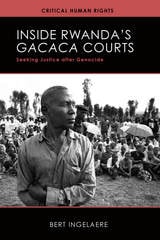
Inside Rwanda's /Gacaca/ Courts
Seeking Justice after GenocideBert Ingelaere
University of Wisconsin Press, 2018
Weaving together vivid firsthand recollections, interviews, and trial testimony with systematic analysis, Ingelaere documents how the gacaca shifted over time from confession to accusation, from restoration to retribution. He precisely articulates the importance of popular conceptions of what is true and just. Marked by methodological sophistication, extraordinary evidence, and deep knowledge of Rwanda, this is an authoritative, nuanced, and bittersweet account of one of the most important experiments in transitional justice after mass violence.

Inside a Class Action
The Holocaust and the Swiss BanksJane Schapiro
University of Wisconsin Press, 2003
On October 21, 1996, attorney Michael Hausfeld, with a team of lawyers, filed a class-action complaint against Union Bank of Switzerland, Swiss Bank Corporation, and Credit Suisse on behalf of Holocaust victims. The suit accused the banks of, among other things, acting as the chief financiers for Nazi Germany. Hausfeld wanted to use the suit to prove that the banks not only concealed and refused to return millions of dollars in dormant accounts, but that they acted as a conduit for looted assets and slave labor profits. Such behavior, he charged, violated the code of ethics known as customary international law. On August 12, 1998, the plaintiffs and banks reached a $1.25 billion settlement.
Through interviews with a wide range of people involved in the case and detailed research of documents and court transcripts, Jane Schapiro shows the ways that egos, personalities, and values clash in such a complex and emotionally charged case. Inside a Class Action provides an insider’s view of a major lawsuit from its inception to its conclusion, which will appeal to anyone interested in human rights, reparations, and international law.

Inside the Celtic Tiger
Denis O'Hearn
Pluto Press, 1998

Inside the Circle
Queer Culture and Activism in Northwest ChinaCasey James Miller
Rutgers University Press, 2023
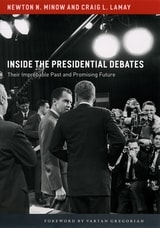
Inside the Presidential Debates
Their Improbable Past and Promising FutureNewton N. Minow and Craig L. LaMay
University of Chicago Press, 2008

Inside the TV Newsroom
Profession Under PressureLine Hassall Thomsen
Intellect Books, 2018
This book, built on years of unique access to the newsrooms of BBC News and ITV News in the United Kingdom and DR TV Avisen and TV2 Nyhedeme in Denmark, answers those questions and more. Exploring the shared professional ideals of journalists, the study analyzes how they conceive of stories as important, and how their ideals relating to their work are expressed and aspired to in everyday practice.
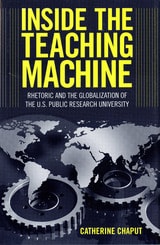
Inside the Teaching Machine
Rhetoric and the Globalization of the U.S. Public Research UniversityCatherine Chaput
University of Alabama Press, 2008
An incisive critique of the corporatized university, tracing the entanglement of academic missions with economic, political, and cultural systems.
Advocates of higher education have long contended that universities should operate above the crude material negotiations of economics and politics. Such arguments, ignore the historical reality that the American university system emerged through, and in service to, a capitalist political economy that unevenly combines corporate, state, and civil interests.
As the corporatization of U.S. universities becomes nearly impossible to deny, the common response from many academics has been a superior stand against the contamination of the professional ideal by tainted corporate interests. Inside the Teaching Machine proposes a correction to this view through the lens of historical materialism.
Chaput argues that the U.S. public research university has always been a vital component of the capitalist political economy. While conventional narratives of public higher education emphasize civic preparation and upward mobility, Chaput demonstrates that supposedly egalitarian policies like the Morrill Land-Grant Act and the G.I. Bill served the changing interests of capitalism much as education, creating a professional class that supports the capitalist political economy. Chaput also focuses on the relationship between American universities and globalization, showing how the trend toward professionalization contributes to the production of surplus value, and the ways that the American university model circulates outside the United States. Chaput concludes by advocating rhetorical strategies for the professional who opposes the capitalist logic of the global university system, proposing concrete options for engaging and redirecting globalization within the university system.
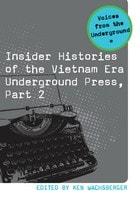
Insider Histories of the Vietnam Era Underground Press, Part 2
Ken Wachsberger
Michigan State University Press, 2011
This enlightening book offers a collection of histories of underground papers from the Vietnam Era as written and told by key staff members of the time. Their stories, building on those presented in Part 1, represent a wide range of publications: countercultural, gay, lesbian, feminist, Puerto Rican, Native American, Black, socialist, Southern consciousness, prisoners’ rights, New Age, rank-and-file, military, and more. Wachsberger notes that the underground press not only produced a few well-known papers but also was truly national and diverse in scope. His goal is to capture the essence of “the countercultural community.” This book will be a fundamental resource for anyone seeking a deeper understanding of a dramatic era in U.S. history, as well as offering a younger readership a glimpse into a generation of idealists who rose up to challenge and improve government and society.

Inspectors-General
Junkyard Dogs or Man's Best Friend?Mark Moore
Russell Sage Foundation, 1986
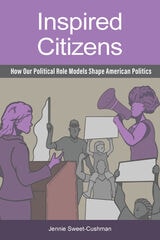
Inspired Citizens
How Our Political Role Models Shape American PoliticsJennie Sweet-Cushman
Temple University Press, 2024
Sweet-Cushman develops Inspired Citizenship Theory to show that political role models can have motivating effects on one’s political citizenship and may, in some case, insulate those who have been traditionally marginalized in American politics. Moreover, she asserts that citizens who have political role models possess very different political behaviors and attitudes than those who do not.
Inspired Citizens also considers the often-conflicting pressures and messages political role models project to citizens. Sweet-Cushman posits that role models inspire political action most effectively when they fulfill highly individualized expectations for role model identity, spurring deeper connection and a desire to emulate.
Inspired Citizens strengthens our understanding of what we should (and should not) look to political figures for in guiding democratic behaviors and inspiring productive citizenship.

Institutional Change in American Politics
The Case of Term LimitsEdited by Karl T. Kurtz, Bruce Cain, and Richard G. Niemi
University of Michigan Press, 2009
Legislative term limits adopted in the 1990s are in effect in fifteen states today. This reform is arguably the most significant institutional change in American government of recent decades. Most of the legislatures in these fifteen states have experienced a complete turnover of their membership; hundreds of experienced lawmakers have become ineligible for reelection, and their replacements must learn and perform their jobs in as few as six years.
Now that term limits have been in effect long enough for both their electoral and institutional effects to become apparent, their consequences can be gauged fully and with the benefit of hindsight. In the most comprehensive study of the subject, editors Kurtz, Cain, and Niemi and a team of experts offer their broad evaluation of the effects term limits have had on the national political landscape.
"The contributors to this excellent and comprehensive volume on legislative term limits come neither to praise the idea nor to bury it, but rather to speak dispassionately about its observed consequences. What they find is neither the horror story of inept legislators completely captive to strong governors and interest groups anticipated by the harshest critics, nor the idyll of renewed citizen democracy hypothesized by its more extreme advocates. Rather, effects have varied across states, mattering most in the states that were already most professionalized, but with countervailing factors mitigating against extreme consequences, such as a flight of former lower chamber members to the upper chamber that enhances legislative continuity. This book is must reading for anyone who wants to understand what happens to major institutional reforms after the dust has settled."
---Bernard Grofman, Professor of Political Science and Adjunct Professor of Economics, School of Social Sciences, University of California, Irvine
"A decade has passed since the first state legislators were term limited. The contributors to this volume, all well-regarded scholars, take full advantage of the distance afforded by this passage of time to explore new survey data on the institutional effects of term limits. Their book is the first major volume to exploit this superb opportunity."
---Peverill Squire, Professor, Department of Political Science, University of Iowa
Karl T. Kurtz is Director of the Trust for Representative Democracy at the National Conference of State Legislatures.
Bruce Cain is Heller Professor of Political Science and Director of the Institute of Governmental Studies at the University of California at Berkeley, and the Director of the University of California Washington Center.
Richard G. Niemi is Don Alonzo Watson Professor of Political Science at the University of Rochester.
Institutional Change, Discretion, and the Making of Modern Congress
An Economic InterpretationGlenn R. Parker
University of Michigan Press, 1992
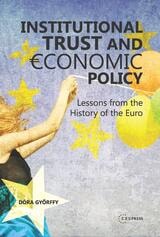
Institutional trust and economic policy Lessons from the history of the Euro
Lessons from the history of the EuroDóra Gyorffy
Central European University Press, 2013
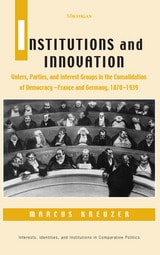
Institutions and Innovation
Voters, Parties, and Interest Groups in the Consolidation of Democracy - France and Germany, 1870-1939Marcus Kreuzer
University of Michigan Press, 2001
Institutions and Innovations analyzes the troubled history of French and German parties between 1870 and 1939 to develop a general explanation of how the development of responsive parties constitutes a key element for the consolidation of democracies, past and present. It explains why French parties responded more swiftly than German ones to very similar changes in their economic and political environments. The book demonstrates that the national differences in party responsiveness played a key role in the collapse of the German Weimar Republic (1918ñ1933) and in the survival of the French Third Republic (1870ñ1939). It addresses the general fates of French and German democracy by asking three specific questions: Why did German socialists reject Keynesianism while their French counterparts swiftly embraced it? Why did German liberals, compared to French ones, fail to modernize their logistical infrastructure and electioneering methods? Why were German conservatives less effective than French ones in fending off the challenge posed by fascist and peasant insurgent movements that arose in the 1920s and 1930s?
In answering these questions, the book engages new institutional theories and longstanding party literature to demonstrate that the electoral conduct of parties is structured in equal parts by socioeconomic and institutional constraints. The book's interdisciplinary focus sheds a critical light on the exceptionalism of purely historical accounts and reductionist and universal claims of ahistorical political science theories.
Marcus Kreuzer is Assistant Professor of Political Science, Villanova University.

Institutions and Social Order
Karol Soltan, Virginia Haufler, and Eric M. Uslaner, Editors
University of Michigan Press, 1998

Institutions in American Society
Essays in Market, Political, and Social OrganizationsJohn E. Jackson, Editor
University of Michigan Press, 1990

Insufficient Funds
Savings, Assets, Credit, and Banking Among Low-Income HouseholdsRebecca M. Blank
Russell Sage Foundation, 2009

Insurgencies
Constituent Power And The Modern StateAntonio Negri
University of Minnesota Press, 1999
Insurgencies
Constituent Power and the Modern StateAntonio Negri
University of Minnesota Press, 2009
New Edition
In the ten years since the initial publication of Insurgencies, Antonio Negri's reputation as one of the world's foremost political philosophers has grown dramatically. An invigorating appraisal of revolutionary thought, Insurgencies is both the precursor to and the historical basis for Antonio Negri and Michael Hardt's masterwork, Empire.
At the center of this book is the conflict between "constituent power," the democratic force of revolutionary innovation, and "constituted power," the fixed power of formal constitutions and central authority. This conflict, Negri argues, defines the drama of modern rebellions. Now with a foreword by Michael Hardt, Insurgencies leads to a new notion of how power and action must be understood if we are to achieve a democratic future.
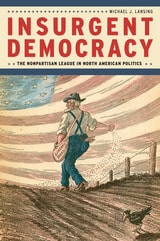
Insurgent Democracy
The Nonpartisan League in North American PoliticsMichael J. Lansing
University of Chicago Press, 2015
Michael J. Lansing aims to change that. Insurgent Democracy offers a new look at the Nonpartisan League and a new way to understand its rise and fall in the United States and Canada. Lansing argues that, rather than a spasm of populist rage that inevitably burned itself out, the story of the League is in fact an instructive example of how popular movements can create lasting change. Depicting the League as a transnational response to economic inequity, Lansing not only resurrects its story of citizen activism, but also allows us to see its potential to inform contemporary movements.
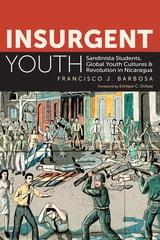
Insurgent Youth
Sandinista Students, Global Youth Cultures, and Revolution in NicaraguaFrancisco J. Barbosa
University Press of Colorado, 2026
This history of the Sandinista student movement is a window into the cultural milieu that produced a revolution where it seemed least likely to occur: among the youth of a country under the firm grip of a US-backed dictatorship whose power was secured by one of the best armed and most highly trained military forces in the region. By examining the articulation of political, gendered, and age-specific identities within the revolutionary process, Insurgent Youth sheds light on the everyday struggles of young Nicaraguans.
In the early 1970s a new emphasis on personal freedom and pleasure, under the influence of a global counterculture, challenged Sandinista gender ideology, especially masculinity, from within. This shift transformed the social world of Nicaraguan youth in general and Sandinista students in particular, eventually affecting the character of clandestine struggle and debates over revolutionary praxis within the Sandinista National Liberation Front (FSLN). Insurgent Youthshows how this new youth identity, which included the classic 1960s triumvirate of “sex, drugs, and rock ‘n’ roll,” constituted a social vernacular among young Nicaraguans of all classes—a common language and array of social practices that ultimately aided FSLN recruitment efforts among working-class youth. At the same time, this new identity posed a danger to the movement in that it embodied a tacit questioning of both mainstream and Sandinista notions of gender and the political, bringing threatening class and ideological contradictions present within the movement to the surface.
Insurgent Youth places what was happening in Nicaragua into the context of the worldwide student movement, challenging patriarchy and colonialism in Latin America and across the globe. This deep dive into the Nicaraguan revolution and the youth culture surrounding it provides a unique perspective on, and understanding of, modern Latin American history.
Insuring Inequality
Administrative Leadership in Social Security, 1935-54Jerry R. Cates
University of Michigan Press, 1983
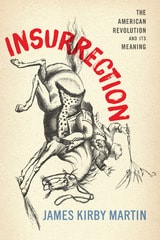
Insurrection
The American Revolution and Its MeaningJames Kirby Martin
Westholme Publishing, 2019
The Revolutionary generation believed they were living in dangerous, turbulent times. Their uprising against British imperial authority beginning in the 1760s represented an attempt to preserve their liberties in the face of what they perceived as a conspiracy from above, ultimately brought on by a tyrannical king and Parliament. The actual number of insurgents—we call them rebels or patriots—represented no more than 20 to 25 percent of the populace. Approximately the same number of persons refused to renounce their loyalty to the British Crown; and thousands of them joined British arms to crush the patriot insurrection. Not committed to supporting either side were large numbers of neutrals whose allegiance varied with their proximity to competing military forces. Once independence was secured, however, a great shift occurred. Some key Revolutionary leaders began to worry that the common people, if given too much political authority, would produce agitation from below that could destroy the delicate fabric of the newly established republic. Reckoning with this social and political disorder resulted in a series of constitutional settlements. What emerged was a more democratic system of government operating, at least theoretically, in the name of a sovereign people who had replaced the king and Parliament.
In Insurrection: The American Revolution and Its Meaning, award-winning historian James Kirby Martin discusses the causes, course, and consequences of the War for Independence. While interpretations of the Revolution and its short- and long-term meaning abound, Martin emphasizes that the insurrection against British monarchism led to more profound changes in human institutions and ideals than many of the Revolutionary leaders actually envisioned or wanted. Once unleashed, the genie of greater freedom and liberty for all could not be forced back into the bottle, no matter how much some persons would have desired.

Integrating Food into Urban Planning
Edited by Yves Cabannes and Cecilia Marocchino
University College London, 2018
Despite a growing body of literature on food and cities, the issue of planning cities in such a way that they will increase food security and nutrition not only for the affluent segments of society but also the poor, is much less discussed and much informed by practice. This volume fills this gap by putting more than twenty cities’ experiences in perspective: Toronto, New York, Providence, and Portland; Cape Town and Ghana in Africa; Milan in Europe; Lima and Belo Horizonte in South America; and, in Asia, Tokyo and Bangkok, Solo, and Yogyakarta in Indonesia.
Integrating the Rural World
Economy, Society and Politics in Central and South-Eastern Europe, 1848-1939Sorin Radu
Central European University Press, 2026
Integration and Disintegration in NATO
Processes of Alliance Cohesion and Prospects for Atlantic CommunityFrancis A. Beer
The Ohio State University Press, 1969
Francis A. Beer’s classic study of NATO, first published in 1969 at the critical time of French withdrawal, focuses on processes of Atlantic alliance cohesion and implications for cross-Atlantic relationships. At the present time, as NATO faces existential threats in the form of fresh attacks and skepticism, Beer’s foundational analysis remains essential. He surveys five key areas of alliance activity: political consultation, military forces, armaments, infrastructure, and science. Across each, he identifies a recurring pattern: nationalism, self-interest, and state-level dominance repeatedly constrain and often work against collective action, even in areas where technical logic might otherwise unify coalition members.
Significant support for cooperation, Beer argues, can emerge during periods of international crisis, when member states are pressed to set aside individual concerns for common security. International crises are challenging but need not be destructive. To the contrary, crises provide opportunities for creative institutional leadership. As the book shows, a well-articulated ideology, connected to variable coalitions in different issue areas, can bring members together to maintain and build collective political-military institutions.

Integrity in Public Life
Vernon White, Claire Foster-Gilbert, and Jane Sinclair
Haus Publishing, 2019
Intellectual Commons and the Law
A Normative Theory for Commons-Based Peer ProductionAntonios Broumas
University of Westminster Press, 2020
‘With clarity and sophistication, Antonios Broumas presents a bold new theory of intellectual commons and powerful arguments for a new body of supportive law. This book not only reveals the misleading logic of intellectual property law in our time; it reveals the rich possibilities for constructive change that legally protected commoning can bring. Highly recommended!’ — David Bollier, Director, Reinventing the Commons Program, Schumacher Center for a New Economics.
‘Liberating the Intellectual Commons from the fetters of capital accumulation and appropriation, would give us a renaissance of creative energies and empowered communities: exactly what the world needs to move away from the social and ecological devastations of our times. This book is a thoughtful and compelling argument for making this possible through the works of the law and the redesign of public domain as a common space.’ — Massimo De Angelis, Professor of Political Economy and Social Change, Co-director of the Centre for Social Justice and Change, University of East London.
‘In this pioneering book, Antonios Broumas argues that philosophically, morally, politically and economically we are in urgent need of a new legal regime that recognizes the intellectual commons, peer production and sharing as the primary practices of intellectual production, distribution and consumption. I cannot imagine a more urgent task today. A legally protected intellectual commons will lead to greater scientific and cultural innovation and creativity and will lead to an urgently needed second Enlightenment. This book should be read by lawyers, critical theorists, economists and the many professionals of science, culture and the academy.’ — Costas Douzinas, Professor of Law, Birkbeck, University of London.
‘Antonios Broumas’ book is an excellent critical analysis of the cultural commons and a must-read for everyone interested in understanding what the commons, the cultural commons, and the digital commons are all about. This work brilliantly outlines the foundations of an empirically grounded critical theory of the commons and the cultural commons in the context of the interactions of law and society.’ — Christian Fuchs, Professor of Media and Communication Studies, author of Communication and Capitalism: A Critical Theory (2020).
‘Broumas takes us on a spellbinding tour of how and why the law could and should change to accommodate the creative multitude, which engages into an emerging mode of production. He tells a vibrant story that makes us shout: “Lawmakers of the world, unite!”’ — Vasilis Kostakis, Professor of P2P Governance, Tallinn University of Technology, Faculty Associate at Harvard Law School.
At the cutting edge of contemporary wealth creation people form self-governed communities of collaborative innovation in conditions of relative equipotency and produce resources with free access to all. The emergent intellectual commons have the potential to commonify intellectual production and distribution, unleash human creativity through collaboration and democratise innovation with wider positive effects for our societies. Contemporary intellectual property laws fail to address this potential. We are, therefore, in pressing need of an institutional alternative beyond the inherent limitations of intellectual property law. This book offers an overall analysis of the moral significance of the intellectual commons and outlines appropriate modes for their regulation. Its principal thesis is that our legal systems are in need of an independent body of law for the protection and promotion of the intellectual commons, in parallel to intellectual property law. In this context, the author of the book proposes the reconstruction of the doctrine of the public domain and the exceptions and limitations of exclusive intellectual property rights into an intellectual commons law, which will underpin a vibrant non-commercial zone of creativity and innovation in intellectual production, distribution and consumption alongside commodity markets enabled by intellectual property law.
Intellectual Empathy
Critical Thinking for Social JusticeMaureen Linker
University of Michigan Press, 2014
Intellectual Foundations of the Nicaraguan Revolution
By Donald C. Hodges
University of Texas Press, 1986
In this critical study of the thought of Augusto Cesar Sandino and his followers, Donald C. Hodges has discovered a coherent ideological thread and political program, which he succeeds in tracing to Mexican and Spanish sources. Sandino's strong religious inclination in combination with his anarchosyndicalist political ideology established him as a religious seer and moral reformer as well as a political thinker and is the prototype of the curious blend of Marxism and Christianity of the late twentieth-century Nicaraguan government, the Frente Sandinista de Liberación Nacional.
Intellectual Freedom Manual, Eleventh Edition
Erin Office for Intellectual Freedom
American Library Association, 2026
When someone faces a difficult intellectual freedom (IF) issue, they usually don’t have time to wade through dense text to find the answers they need. Designed as a real-world reference, OIF’s Intellectual Freedom Manual provides trusted, comprehensive guidance for every library worker, from the volunteer to the director, in plain language. Whether you’re developing or reviewing policies, on-boarding new staff or trustees, responding to challenges and controversies, or studying librarianship, you’ll find this a vital tool, with features such as
- contributions that center the voices of Black, Indigenous, and other People of Color (BIPOC) and LGBTQIA+ people, who are often targeted by censorship efforts;
- chapters that begin with an overview explaining the big ideas and offering reflection questions;
- an introduction to IF and why it matters, drawing on ALA's core IF documents and supported with adaptable policy worksheets;
- information and best practice guidance on key topics such as access, children and youth, censorship and internet filtering, collection development and management, copyright, meeting rooms and exhibit spaces, library programming, politics and religion, privacy, and visits and requests from law enforcement;
- stories from real people whose lives have been impacted by IF, showing how library policies shape culture, protect staff and users, and affect real people;
- concise breakdowns of IF issues from legal experts, helping you understand the laws and how they apply in real situations;
- practical advice on advocating for IF, getting help when challenges arise, lobbying, and working with your elected officials;
- a thorough index to help you quickly find the information you need; and
- a helpful glossary and selected bibliography of additional resources.

Intellectual Politics in Post-Tiananmen China, Volume 16
Xudong Zhang
Duke University Press, 0
Creating a platform for further theoretical discussion about the ongoing struggle to bring about a new social system, the contributors grapple with the internal crisis or disorientation of the Chinese intellectual world as a distorted, but telling picture of the complexity of contemporary Chinese economics, politics, society, and culture. Essays offer a critical examination of the current state of Chinese intellectual discourse; a challenge to mainstream liberalism in China today and its commitment to democracy; a summary of reconsiderations of property rights, economic democracy, political participation, and the meaning of socialism in the age of flexible production; a reflection on the handover of Hong Kong in the context of a general discussion of Western colonialism in China; and an analysis of the rise of consumer nationalism and mass culture in China since the early 1990s. Intellectual Politics in Post-Tiananmen China sheds light on the evasive nature of Chinese society, and the contributors engage the Chinese problematic not only as a crisis but also as an ongoing historical dynamic.
Contributors. Rey Chow, Zhiyuan Cui, Wang Hui, Gan Yang, Xudong Zhang
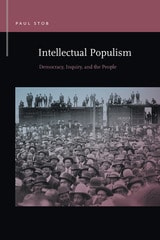
Intellectual Populism
Democracy, Inquiry, and the PeoplePaul Stob
Michigan State University Press, 2020

Intellectual Property
Trade, Competition, and Sustainable Development The World Trade Forum, Volume 3Thomas Cottier and Petros C. Mavroidis, Editors
University of Michigan Press, 2003
Largely a victory for OECD countries, the present state of intellectual property rights has important implications for developing countries. The incorporation of intellectual property rights into the WTO system will eventually change the relationship of trade, competition, and intellectual property. It will equally have to assist in providing equitable sharing of benefits in the use of plant genetic resources. All of these issues are essential for the revision of exclusions from patenting in TRIPs. This volume offers insights into how this difficult task could and should be approached in a balanced manner and will be essential reading for economists and trade and intellectual property lawyers interested in the subject. Moreover, the volume will be relevant to agricultural economists as it addresses complex problems in the interstices of trade, intellectual property, plant genetic resources, and sustainable development.
Thomas Cottier is Professor of European and International Economic Law, University of Bern, and Managing Director, World Trade Institute, University of Bern.
Petros C. Mavroidis is Professor of Law, University of Neuchâtel. He formerly worked in the Legal Affairs Division of the World Trade Organization.
Marion Panizzon is Research Fellow, University of Bern.
Simon Lacey is Research Fellow, University of Bern.
Intellectuals and Politics in Central Europe
Ivan Bernik
Central European University Press, 1999
Intellectuals and the Articulation of the Nation
Ronald Grigor Suny and Michael D. Kennedy, Editors
University of Michigan Press, 1999
What kinds of intellectual practices are influential in the making and remaking of nations? How do literary texts shape nation-making? When are intellectuals most and least relevant to developing the nation? How do liberal, socialist, and nationalist intellectuals shape national ideologies? One of the principal debates in the study of nations concerns the relative significance of elites, specifically intellectuals, in inventing the nation. Intellectuals and the Articulation of the Nation delimits the capacities of intellectuals for shaping nations, as well as the ways in which the development of nations shapes intellectual practices. The introductory chapter presents the principal debates around nation-making and the identity and practices of intellectuals. Contributors from anthropology, history, literature, political science and sociology then explore the capacities and limits of intellectuals in the formation and restructuring of national identities in general, and in Eastern Europe and the former Soviet Union in particular. Each essay is followed by a brief intellectual autobiography in which the author's own relationship to nations is explored. The editors conclude the volume by developing a general theory of national intellectual practice. The principal focus of this book—the mutual articulation of intellectuals and nations—is a key subject for students and scholars of history, cultural studies, political science, anthropology, and sociology.
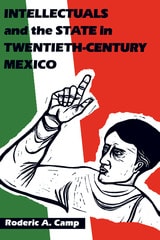
Intellectuals and the State in Twentieth-Century Mexico
By Roderic A. Camp
University of Texas Press, 1986
In developing countries, the extent to which intellectuals disengage themselves in state activities has widespread consequences for the social, political, and economic development of those societies. Roderic Camps’ examination of intellectuals in Mexico is the first study of a Latin American country to detail the structure of intellectual life, rather than merely considering intellectual ideas. Camp has used original sources, including extensive interviews, to provide new data about the evolution of leading Mexican intellectuals and their relationship to politics and politicians since 1920.

Intellectuals, Socialism, and Dissent
The East German Opposition and Its LegacyJohn C. Torpey
University of Minnesota Press, 1995
Intellectuals, Socialism, and Dissent was first published in 1995. Minnesota Archive Editions uses digital technology to make long-unavailable books once again accessible, and are published unaltered from the original University of Minnesota Press editions.
Once the Berlin Wall fell in 1989, the people of East Germany had little use for the dissident intellectuals who had helped bring it down. Intellectuals, Socialism, and Dissent offers a penetrating look into the circumstances of this fall from grace, unique among the former Communist states.
John Torpey traces the dissident intellectuals' fate to the peculiar situation of the East German regime, which sought to build "socialism in a quarter of a country" on the anti-fascist foundations of Communist opposition to Nazism. He shows how the regime's unusual history and subnational status helped sustain the East German intelligentsia's conviction that socialism could be reformed and humane-that there was a "third way" between Soviet-style socialism and the capitalism that took root in West Germany. How the pursuit of this third way both supported and undermined the regime, and both galvanized and alienated the East German people, becomes clear in Torpey's nuanced analysis. His book makes a powerful contribution to our understanding of the politics of intellectuals during one of the most painful chapters in modern German history.
John C. Torpey is currently a Jean Monnet Fellow at the European University Institute in Florence.
Intellectuals
Aesthetics, Politics, AcademicsBruce Robbins
University of Minnesota Press, 1990
Inter/Nationalism
Decolonizing Native America and PalestineSteven Salaita
University of Minnesota Press, 2016
“The age of transnational humanities has arrived.” According to Steven Salaita, the seemingly disparate fields of Palestinian Studses and American Indian studies have more in common than one may think. In Inter/Nationalism, Salaita argues that American Indian and Indigenous studies must be more central to the scholarship and activism focusing on Palestine.
Salaita offers a fascinating inside account of the Boycott, Divestment, and Sanctions (BDS) movement—which, among other things, aims to end Israel’s occupation of Palestinian land. In doing so, he emphasizes BDS’s significant potential as an organizing entity as well as its importance in the creation of intellectual and political communities that put Natives and other colonized peoples such as Palestinians into conversation. His discussion includes readings of a wide range of Native poetry that invokes Palestine as a theme or symbol; the speeches of U.S. President Andrew Jackson and early Zionist thinker Ze’ev Jabotinsky; and the discourses of “shared values” between the United States and Israel.
Inter/Nationalism seeks to lay conceptual ground between American Indian and Indigenous studies and Palestinian studies through concepts of settler colonialism, indigeneity, and state violence. By establishing Palestine as an indigenous nation under colonial occupation, this book draws crucial connections between the scholarship and activism of Indigenous America and Palestine.
Interest Group Politics in the Southern States
Ronald J. Hrebenar
University of Alabama Press, 1992
This is the first volume comprehensively to explore the dynamics of political interest groups in the twelve southern states – the types of group, lobbyists and lobbying tactics, state regulation of lobbying activity, and the power they exert in the individual states. The authors bring a new dimension to the study of southern politics, which traditionally has emphasized electoral politics and the politics of race, and their work underscores the pivotal, and at times controlling, role played by interest groups.
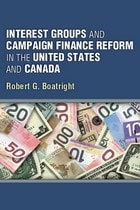
Interest Groups and Campaign Finance Reform in the United States and Canada
Robert G. Boatright
University of Michigan Press, 2011
In the early 2000s, the United States and Canada implemented new campaign finance laws restricting the ability of interest groups to make political contributions and to engage in political advertising. Whereas both nations' legislative reforms sought to reduce the role of interest groups in campaigns, these laws have had opposite results in the two nations. In the United States, interest groups remained influential by developing broad coalitions aimed at mobilizing individual voters and contributors. In Canada, interest groups largely withdrew from election campaigns, and, thus, important voices in elections have gone silent. Robert G. Boatright explains such disparate results by placing campaign finance reforms in the context of ongoing political and technological changes.
Robert G. Boatright is Associate Professor of Political Science at Clark University.
Cover photo: © iStockphoto.com / alfabravoalpharomeo
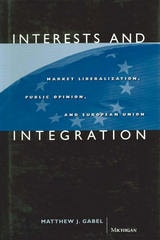
Interests and Integration
Market Liberalization, Public Opinion, and European UnionMatthew J. Gabel
University of Michigan Press, 1998
Intergovernmental Fiscal Relations
William Anderson
University of Minnesota Press, 1956
Intergovernmental Relations as Seen by Public Officials
Edward Weidner
University of Minnesota Press, 1960
Intergovernmental Relations in Education
Robert Morlan
University of Minnesota Press, 1950
Intergovernmental Relations in Public Health
Laurence Wyatt
University of Minnesota Press, 1951