Results by title
459 books match the query 'Criminology' and 5 start with j
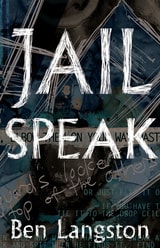
Jail Speak
Ben Langston
Ohio University Press, 2020
“Call me what you want—corrections officer, C.O., guard, jailcop, turnkey—I helped keep people there against their will. For this, the jail rewarded me with food.”
When Ben Langston took a job at the State Correctional Institute at Rockview, it was because there were few other options. At his previous job—putting labels on water bottles—he did not have cups of human waste thrown in his face. He did not have to finger sweaty armpits in search of weapons. There were no threats against his life. But the jail paid better.
Jail Speak is a memoir written from a guard’s perspective. It’s about the grind, about dehumanization, drama, punishment, and the cycles of harm perpetrated by the prison industry. It’s about masculinity and conformity and emotional detachment. It’s a look at the inside that you didn’t want to know about, and it’s for mature audiences only. Know your limits.
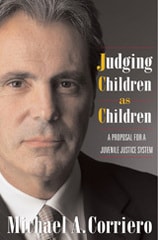
Judging Children As Children
A Proposal for a Juvenile Justice SystemMichael A. Corriero
Temple University Press, 2007

Justice And School Systems
The Role of the Courts in Education Litigationedited by Barbara Flicker
Temple University Press, 1990
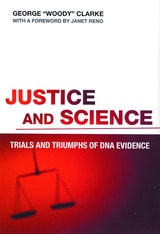
Justice and Science
Trials and Triumphs of DNA EvidenceGeorge "Woody" Clarke
Rutgers University Press, 2007
Databases of both convicted offenders and no-suspect cases demonstrate the power of DNA testing to solve the unsolvable. George “Woody” Clarke is a leading authority in legal circles and among the news media because of his expertise in DNA evidence. In this memoir, Clarke chronicles his experiences in some of the most disturbing and notorious sexual assault and murder court cases in California. He charts the beginnings of DNA testing in police investigations and the fight for its acceptance by courts and juries. He illustrates the power of science in cases he personally prosecuted or in which he assisted, including his work with the prosecution team in the trial of O. J. Simpson.
Clarke also covers cases where DNA evidence was used to exonerate. He directed a special project in San Diego County, proactively examining over six hundred cases of defendants convicted and sentenced to prison before 1993, with the goal of finding instances in which DNA typing might add new evidence and then offered testing to those inmates.
As Clarke tells the story of how he came to understand and use this new form of evidence, readers will develop a new appreciation for the role of science in the legal system.

Justice for Girls?
Stability and Change in the Youth Justice Systems of the United States and CanadaJane B. Sprott and Anthony N. Doob
University of Chicago Press, 2009
For over a century, as women have fought for and won greater freedoms, concern over an epidemic of female criminality, especially among young women, has followed. Fear of this crime wave—despite a persistent lack of evidence of its existence—has played a decisive role in the development of the youth justice systems in the United States and Canada. Justice for Girls? is a comprehensive comparative study of the way these countries have responded to the hysteria over “girl crime” and how it has affected the treatment of both girls and boys.
Tackling a century of historical evidence and crime statistics, Jane B. Sprott and Anthony N. Doob carefully trace the evolution of approaches to the treatment of young offenders. Seeking to keep youths out of adult courts, both countries have built their systems around rehabilitation. But, as Sprott and Doob reveal, the myth of the “girl crime wave” led to a punitive system where young people are dragged into court for minor offenses and girls are punished far more severely than boys. Thorough, timely, and persuasive, Justice for Girls? will be vital to anyone working with troubled youths.