Results by title
4127 books match the query 'Science' and 13 start with j
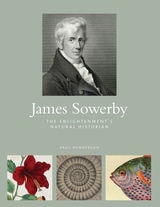
James Sowerby
The Enlightenment's Natural HistorianPaul Henderson
Royal Botanic Gardens, Kew, 2015
Henderson explores Sowerby’s artistic achievements as well as his place at the center of a thriving network of artists and scientists. Sowerby worked closely with key botanists of the time, influencing the likes of Sir Joseph Banks and James Smith, as well as Dawson Turner, James Dickson, Aylmer Lambert, and William Woodville. He also contributed illustrations to the earliest volumes of The Botanical Magazine (later known as Curtis's Botanical Magazine). Specimens from his collection round out the holdings of museums around the world, and he has become the paterfamilias of a talented line of botanical and natural science illustrators.
Henderson’s Sowerby’s Botany is beautifully illustrated with Sowerby’s artwork and includes extracts from letters, manuscripts, and natural history publications. It is a fascinating story of an influential artist working at the intersections of art and nature at a time of unprecedented scientific enlightenment.

James Van Allen
The First Eight Billion MilesAbigail Foerstner
University of Iowa Press, 2009
Astrophysicist and space pioneer James Van Allen (1914–2006), for whom the Van Allen radiation belts were named, was among the principal scientific investigators for twenty-four space missions, including Explorer I in 1958, the first successful U.S. satellite; Mariner 2’s 1962 flyby of Venus, the first successful mission to another planet; and the 1970s Pioneer 10 and Pioneer 11 missions that surveyed Jupiter and Saturn. Although he retired as a University of Iowa professor of physics and astronomy in 1985, he remained an active researcher, using his campus office to monitor data from Pioneer 10—on course to reach the edge of the solar system when its signal was lost in 2003—until a short time before his death at the age of ninety-one. Now Abigail Foerstner blends space science drama, military agendas, cold war politics, and the events of Van Allen’s lengthy career to create the first biography of this highly influential physicist.
Drawing on Van Allen’s correspondence and publications, years of interviews with him as well as with more than a hundred other people, and declassified documents from such archives as the Jet Propulsion Laboratory, the Kennedy Space Center, and the Applied Physics Laboratory, Foerstner describes Van Allen’s life from his Iowa childhood to his ?rst experiments at White Sands to the years of Explorer I until his death in 2006.
Often called the father of space science, James Van Allen led the way to mapping a new solar system based on the solar wind, massive solar storms, and cosmic rays. Pioneer 10 alone sent him more than thirty years of readings that helped push our recognition of the boundary of the solar system billions of miles past Pluto. Abigail Foerstner’s compelling biography charts the eventful life and time of this trailblazing physicist.

Jane Addams's Evolutionary Theorizing
Constructing “Democracy and Social Ethics”Marilyn Fischer
University of Chicago Press, 2019
Examining essays Addams wrote in the 1890s and showing how they were revised for Democracy and Social Ethics, Fischer draws from philosophy, history, literature, rhetoric, and more to uncover the array of social evolutionary thought Addams engaged with in her texts—from British socialist writings on the evolution of democracy to British and German anthropological accounts of the evolution of morality. By excavating Addams’s evolutionary reasoning and rhetorical strategies, Fischer reveals the depth, subtlety, and richness of Addams’s thought.

Java Man
How Two Geologists Changed Our Understanding of Human EvolutionCarl C. Swisher III, Garniss H. Curtis, and Roger Lewin
University of Chicago Press, 2001
Originally published by Scribner
2000 ISBN: 0-684-80000-4
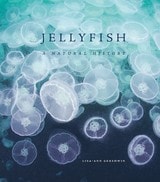
Jellyfish
A Natural HistoryLisa-ann Gershwin
University of Chicago Press, 2016
Jellyfish presents these aquarium favorites in all their extraordinary and captivating beauty. Fifty unique species, from stalked jellyfish to black sea nettles, are presented in stunning color photographs along with the most current scientific information on their anatomy, history, distribution, position in the water, and environmental status. Foremost jellyfish expert Lisa-ann Gershwin provides an insightful look at the natural history and biology of each of these spellbinding creatures, while offering a timely take on their place in the rapidly changing and deteriorating condition of the oceans. Readers will learn about immortal jellyfish who live and die and live again as well as those who camouflage themselves amid sea grasses and shells, hiding in plain sight.
Approachably written and based in the latest science and ecology, this colorful book provides an authoritative guide to these ethereal marine wonders.
Jewish Tradition and the Challenge of Darwinism
Edited by Geoffrey Cantor and Marc Swetlitz
University of Chicago Press, 2006
Darwin’s theory of evolution transformed the life sciences and made profound claims about human origins and the human condition, topics often viewed as the prerogative of religion. As a result, evolution has provoked a wide variety of religious responses, ranging from angry rejection to enthusiastic acceptance. While Christian responses to evolution have been studied extensively, little scholarly attention has been paid to Jewish reactions. Jewish Tradition and the Challenge of Darwinism is the first extended meditation on the Jewish engagement with this crucial and controversial theory.
The contributors to Jewish Tradition and the Challenge of Darwinism—from several academic disciplines and two branches of the rabbinate—present case studies showing how Jewish discussions of evolution have been shaped by the intersections of faith, science, philosophy, and ideology in specific historical contexts. Furthermore, they examine how evolutionary theory has been deployed when characterizing Jews as a race, both by Zionists and by anti-Semites. Jewish Tradition and the Challenge of Darwinism addresses historical and contemporary, as well as progressive and Orthodox, responses to evolution in America, Europe, and Israel, ultimately extending the history of Darwinism into new religious domains.
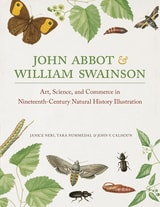
John Abbot and William Swainson
Art, Science, and Commerce in Nineteenth-Century Natural History IllustrationJanice Neri, Tara Nummedal, and John V. Calhoun
University of Alabama Press, 2019
During his lifetime (1751–ca. 1840), English-born naturalist and artist John Abbot rendered more than 4,000 natural history illustrations and profoundly influenced North American entomology, as he documented many species in the New World long before they were scientifically described. For sixty-five years, Abbot worked in Georgia to advance knowledge of the flora and fauna of the American South by sending superbly mounted specimens and exquisitely detailed illustrations of insects, birds, butterflies, and moths, on commission, to collectors and scientists all over the world.
Between 1816 and 1818, Abbot completed 104 drawings of insects on their native plants for English naturalist and patron William Swainson (1789–1855). Both Abbot and Swainson were artists, naturalists, and collectors during a time when natural history and the sciences flourished. Separated by nearly forty years in age, Abbot and Swainson were members of the same international communities and correspondence networks upon which the study of nature was based during this period.
The relationship between these two men—who never met in person—is explored in John Abbot and William Swainson: Art, Science, and Commerce in Nineteenth-Century Natural History Illustration. This volume also showcases, for the first time, the complete set of original, full-color illustrations discovered in 1977 in the Alexander Turnbull Library in Wellington, New Zealand. Originally intended as a companion to an earlier survey of insects from Georgia, the newly rediscovered Turnbull manuscript presents beetles, grasshoppers, butterflies, moths, and a wasp. Most of the insects are pictured with the flowering plants upon which Abbot thought them to feed. Abbot’s journal annotations about the habits and biology of each species are also included, as are nomenclature updates for the insect taxa.
Today, the Turnbull drawings illuminate the complex array of personal and professional concerns that informed the field of natural history in the eighteenth and nineteenth centuries. These illustrations are also treasured artifacts from times past, their far-flung travels revealing a world being reshaped by the forces of global commerce and information exchange even then. The shared project of John Abbot and William Swainson is now brought to completion, signaling the beginning of a new phase of its significance for modern readers and scholars.

John Venn
A Life in LogicLukas M. Verburgt
University of Chicago Press, 2022
John Venn (1834–1923) is remembered today as the inventor of the famous Venn diagram. The postmortem fame of the diagram has until now eclipsed Venn’s own status as one of the most accomplished logicians of his day. Praised by John Stuart Mill as a “highly successful thinker” with much “power of original thought,” Venn had a profound influence on nineteenth-century scientists and philosophers, ranging from Mill and Francis Galton to Lewis Carroll and Charles Sanders Peirce. Venn was heir to a clerical Evangelical dynasty, but religious doubts led him to resign Holy Orders and instead focus on an academic career. He wrote influential textbooks on probability theory and logic, became a fellow of the Royal Society, and advocated alongside Henry Sidgwick for educational reform, including that of women’s higher education. Moreover, through his students, a direct line can be traced from Venn to the early analytic philosophy of G. E. Moore and Bertrand Russell, and family ties connect him to the famous Bloomsbury group.
This essential book takes readers on Venn’s journey from Evangelical son to Cambridge don to explore his life and work in context. Drawing on Venn’s key writings and correspondence, published and unpublished, Lukas M. Verburgt unearths the legacy of the logician’s wide-ranging thinking while offering perspective on broader themes in religion, science, and the university in Victorian Britain. The rich picture that emerges of Venn, the person, is of a man with many sympathies—sometimes mutually reinforcing and at other times outwardly and inwardly contradictory.
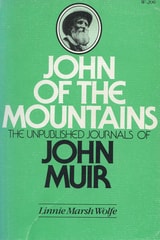
John of the Mountains
The Unpublished Journals of John MuirEdited by Linnie Marsh Wolfe
University of Wisconsin Press, 1979
The sixty extant journals and numerous notes in this volume were written from 1867 to 1911. They start seven years after the time covered in The Story of My Boyhood and Youth, Muir’s uncompleted autobiography. The earlier journals capture the essence of the Sierra Nevada and Alaska landscapes. The changing appearance of the Sierras from Sequoia north and beyond the Yosemites enthralled Muir, and the first four years of the journals reveal his dominating concern with glacial action. The later notebooks reflect his changes over the years, showing a mellowing of spirit and a deep concern for human rights.
Like all his writings, the journals concentrate on his observations in the wilderness. His devotion to his family, his many warm friendships, and his many-sided public life are hardly mentioned. Very little is said about the quarter-century battle for national parks and forest reserves. The notebooks record, in language fuller and freer than his more formal writings, the depth of his love and transcendental feeling for the wilderness. The rich heritage of his native Scotland and the unconscious music of the poetry of Burns, Milton, and the King James Bible permeate the language of his poetic fancy.
In his later life, Muir attempted to sort out these journals and, at the request of friends, published a few extracts. A year after his death in 1914, his literary executor and biographer, William Frederick Badè, also published episodes from the journals. Linnie Marsh Wolfe set out to salvage the best of his writings still left unpublished in 1938 and has thus added to our understanding of the life and thought of a complex and fascinating American figure.
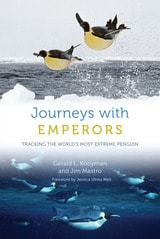
Journeys with Emperors
Tracking the World's Most Extreme PenguinGerald L. Kooyman and Jim Mastro
University of Chicago Press, 2023
The primary mission was to record the birds’ activities at sea, and the data revealed important aspects of emperor penguin behavior and physiology: for instance, that in the course of hunting for food, some of the penguins dive to depths of greater than five hundred meters (a third of a mile, which is deeper than for any other diving bird). The researchers also discovered that, crucially, most of the emperor’s life is actually spent at sea, with fledged chicks and adults making separate, perilous journeys through icy water. When chick nurturing is complete, the fledglings abandon the colony in large groups, heading north to the Southern Ocean. The adults leave at the same time, traveling one thousand kilometers eastward across the Ross Sea to a sea-ice sanctuary for molting. During this journey, they must gain enough weight to survive the month-long molt, when every feather is replaced and the birds cannot enter the water to feed. After the molt, many if not most return to the colony to breed once again. For the males, this means another fast—this time for 120 days as they incubate their eggs. The nearness of the colony to the ice edge spared the penguins the long, energy-draining march for which other colonies are well-known. It also allowed researchers to observe the penguins’ departures to and arrivals from their foraging journeys, as well as their dangerous interactions with leopard seals and killer whales.
Featuring original color photographs and complemented with online videos, Journeys with Emperors is both an eye-opening overview of the emperor penguin’s life and a thrilling tale of scientific discovery in one of the most remote, harsh, and beautiful places on Earth.

Joyce, Chaos, and Complexity
Thomas Jackson Rice
University of Illinois Press, 1997
Placing Joyce in his cultural context, Rice first traces the influence of Euclidean and non-Euclidean geometries on Dubliners and A Portrait of the Artist as a Young Man. He then demonstrates that, when later innovations in science transformed entire worldviews, Joyce recognized conventional literary modes of representation as offering only arbitrary constructions of this reality. Joyce responded in Ulysses by experimenting with perspective, embedding design, and affirming the existence of reality. Rice contends that Ulysses presages the multiple tensions of chaos theory; likewise, chaos theory can serve as a model for understanding Ulysses. In Finnegans Wake Joyce consummates his vision and anticipates the theories of complexity science through a dynamic approximation of reality.
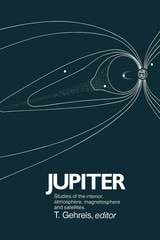
Jupiter
Studies of the interior, atmosphere, magnestosphere and satellitesTom Gehrels
University of Arizona Press, 1976
When Jupiter was first published in August, 1976, editor T. Gehrels wrote, "we may never do a better book."
Summarizing the research and data following the first flyby of Jupiter in December 1973, this work brings together the knowledge of the best scientists in the fields at the time of it's publication. The work covers the origin of Jupiter, origin and structure of the satellites, models of Jupiter, comparison of those models, and much more.

Justice and Science
Trials and Triumphs of DNA EvidenceGeorge "Woody" Clarke
Rutgers University Press, 2007
Databases of both convicted offenders and no-suspect cases demonstrate the power of DNA testing to solve the unsolvable. George “Woody” Clarke is a leading authority in legal circles and among the news media because of his expertise in DNA evidence. In this memoir, Clarke chronicles his experiences in some of the most disturbing and notorious sexual assault and murder court cases in California. He charts the beginnings of DNA testing in police investigations and the fight for its acceptance by courts and juries. He illustrates the power of science in cases he personally prosecuted or in which he assisted, including his work with the prosecution team in the trial of O. J. Simpson.
Clarke also covers cases where DNA evidence was used to exonerate. He directed a special project in San Diego County, proactively examining over six hundred cases of defendants convicted and sentenced to prison before 1993, with the goal of finding instances in which DNA typing might add new evidence and then offered testing to those inmates.
As Clarke tells the story of how he came to understand and use this new form of evidence, readers will develop a new appreciation for the role of science in the legal system.