Results by title
1882 books match the query 'Criticism and interpretation' and 69 start with j
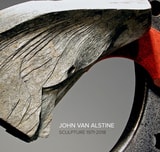
John Van Alstine
Sculpture, 1971–2018John Van Alstine
The Artist Book Foundation, 2019
For nearly fifty years, John Van Alstine has created abstract sculptures forged from steel and stone. In John Van Alstine: Sculpture, 1971–2018, three notable essayists explore the sculptor's abstract landscapes that reveal the complex synergy between natural foces and man-made elements; by grappling with the challenges of balancing stone and steel, Van Alstine's indoor, outdoor, and site-specific sculptures are measured and calculated, yet simultaneously poetic; their swooping angular lines create expansive spaces beyond the limits of their stone-and-steel frames to unveil our collective history and imagination, illuminating a deft interplay of natural energies and the human experience.
The artist weaves into his works elements of mythology, celestial navigation, implements, human figures, movement, urban forms, and found objects, while using motion, balance, and intertia to incorporate the eternal forces of gravity, tension, and erosion. In an essay on his drawings, Van Alstine details the critical role they play in the initiation and planning of his projects, offering the reader a firsthand perspective on the artist's creative process. The Artist Book Foundation is gratified to publish this lavishly illustrated monograph on an esteemed and prolific contemporary artist.
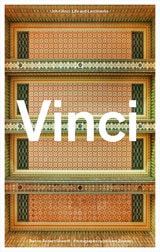
John Vinci
Life and LandmarksText by Robert Sharoff, Photographs by William Zbaren
Northwestern University Press, 2017
This illustrated biography traces Vinci’s origins as a child of Italian immigrants on Chicago’s South Side and his coming of age at the Illinois Institute of Technology, which was then under the direction of the legendary Modernist architect Ludwig Mies van der Rohe. It follows his career through his subsequent immersion in the historic preservation movement and the work of such early Chicago architects as Louis Sullivan, Frank Lloyd Wright, and John Wellborn Root.
Vinci’s pioneering restoration projects include Frank Lloyd Wright’s Robie House and Home Studio, Sullivan’s Chicago Stock Exchange Trading Room and the Carson Pirie Scott Building, and Root’s Monadnock Building. His original work, meanwhile, includes notable buildings such as the Arts Club of Chicago, numerous award-winning residences, and more than fifty major exhibitions at the Art Institute of Chicago and other museums.
John Vinci: Life and Landmarks also features portraits and profiles of Vinci’s friends and mentors over the years, including the architectural photographer Richard Nickel, the landscape designer Alfred Caldwell, the Art Institute curators James Speyer and Anne Rorimer, the architects Crombie Taylor and Myron Goldsmith, and the City of Chicago’s cultural historian Tim Samuelson.
The book includes new photos of twenty projects by noted architectural photographer William Zbaren as well as more than one hundred vintage photos and floorplans from Vinci’s personal archives, many never before published. A comprehensive catalogue raisonné rounds out this handsome and definitive work.
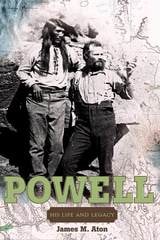
John Wesley Powell
His Life and LegacyJames M Aton
University of Utah Press, 2010
“John Wesley Powell: explorer, writer, geologist, anthropologist, land planner, bureaucrat. Which one do we focus on?” This is the question author James M. Aton poses at the beginning of his biography of Powell, though he soon decides that it is impossible to ignore any facet of Powell’s life. Powell was a polymath, one whose “divergent interests resemble one of those braided streambeds in his beloved canyon country, branching out in many directions, but ultimately beginning and ending in the same stream."
Aton beautifully tells the multidimensional stories of Powell’s childhood, his military and teaching careers, his famous and exciting explorations of the Colorado River, and the battles he waged from his influential positions within the Smithsonian’s Bureau of Ethnology and the United States Geological Survey. This new edition of John Wesley Powell: His Life and Legacy, first printed as an issue of the Boise State University Western Writers Series, includes the original biography, but also features Aton’s new interpretations of Powell’s writings on exploration, land-planning, anthropology, and irrigation, and incorporates the author’s distinguished faculty lecture on Powell and cash-register dams in the Colorado River Basin.
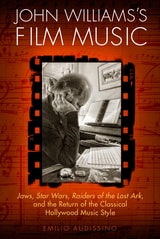
John Williams's Film Music
<i>Jaws</i>, <i>Star Wars</i>, <i>Raiders of the Lost Ark</i>, and the Return of the Classical Hollywood Music StyleEmilio Audissino
University of Wisconsin Press, 2014
Combining accessible writing with thorough scholarship, and rigorous historical accounts with insightful readings, John Williams’s Film Music explores why Williams is so important to the history of film music. Beginning with an overview of music from Hollywood’s Golden Age (1933–58), Emilio Audissino traces the turning points of Williams’s career and articulates how he revived the classical Hollywood musical style. This book charts each landmark of this musical restoration, with special attention to the scores for Jaws and Star Wars, Williams’s work as conductor of the Boston Pops Orchestra, and a full film/music analysis of Raiders of the Lost Ark. The result is a precise, enlightening definition of Williams’s “neoclassicism” and a grounded demonstration of his lasting importance, for both his compositions and his historical role in restoring part of the Hollywood tradition.
Best Special Interest Books, selected by the American Association of School Librarians
Best Books for General Audiences, selected by the Public Library Reviewers
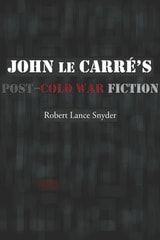
John le Carré’s Post–Cold War Fiction
Robert Lance Snyder
University of Missouri Press, 2017
This is an analysis of the first 10 post—Cold War novels of one of the most significant ethicists in contemporary fiction.
This book challenges distinctions between “popular” and “serious” literature by recognizing le Carré as one of the most significant ethicists in contemporary fiction, contributing to an overdue reassessment of his literary stature. Le Carré’s ten post–Cold War novels constitute a distinctive subset of his espionage fiction in their response to the momentous changes in geopolitics that began in the 1990s. Through a close reading of these novels, Snyder traces how—amid the “War on Terror” and transnationalism—le Carré weighs what is at stake in this conflict of deeply invested ideologies.
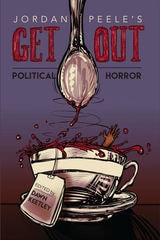
Jordan Peele's Get Out
Political HorrorEdited by Dawn Keetley
The Ohio State University Press, 2020
Jorie Graham
Essays on the PoetryEdited by Thomas Gardner
University of Wisconsin Press, 2005
These essays identify three broad concerns that run through each of her strikingly different volumes of poems: the movement of the mind in action, the role of the body in experiencing the world, and the pressures of material conditions on mind and body alike. Gardner both shows how Graham is being read at the moment and charts new areas of investigation likely to dominate thinking about her over the next decade. This collection is sure to become the crucial first step for all future work on Graham and on American poetry of the last two decades.
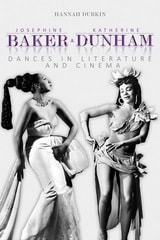
Josephine Baker and Katherine Dunham
Dances in Literature and CinemaHannah Durkin
University of Illinois Press, 2019
José Vasconcelos
The Prophet of RaceStavans, Ilan
Rutgers University Press, 2011
Joyce's City
History, Politics, and Life in DUBLINERSJack Morgan
University of Missouri Press, 2014
Joyce's Ghosts
Ireland, Modernism, and MemoryLuke Gibbons
University of Chicago Press, 2015
In Joyce’s Ghosts, Luke Gibbons mounts a powerful argument that this view is mistaken: Joyce’s Irishness is intrinsic to his modernism, informing his most distinctive literary experiments. Ireland, Gibbons shows, is not just a source of subject matter or content for Joyce, but of form itself. Joyce’s stylistic innovations can be traced at least as much to the tragedies of Irish history as to the shock of European modernity, as he explores the incomplete project of inner life under colonialism. Joyce’s language, Gibbons reveals, is haunted by ghosts, less concerned with the stream of consciousness than with a vernacular interior dialogue, the “shout in the street,” that gives room to outside voices and shadowy presences, the disruptions of a late colonial culture in crisis.
Showing us how memory under modernism breaks free of the nightmare of history, and how in doing so it gives birth to new forms, Gibbons forces us to think anew about Joyce’s achievement and its foundations.
Joyce, Bakhtin, and the Literary Tradition
Toward a Comparative Cultural PoeticsM. Keith Booker
University of Michigan Press, 1997
Joyce/Foucault
Sexual ConfessionsWolfgang Streit
University of Michigan Press, 2004
Joyce/Foucault: Sexual Confessions examines instances of sexual confession in works of James Joyce, with a special emphasis on Portrait of the Artist as a Young Man and Ulysses. Using Michel Foucault's historical analysis of Western sexuality as its theoretical underpinning, the book foregrounds the role of the Jesuit order in the spread of a confessional force, and finds this influence inscribed into Joyce's major texts. Wolfgang Streit goes on to argue that the tension between the texts' erotic passages and Joyce's criticism of even his own sexual writing energizes Joyce's narratives-and enables Joyce to develop the radical skepticism of power revealed in his work.
Wolfgang Streit is Lecturer, Ludwig Maximilians University, Munich.
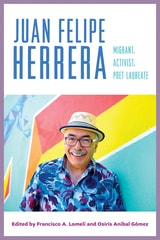
Juan Felipe Herrera
Migrant, Activist, Poet LaureateEdited by Francisco A. Lomelí and Osiris Aníbal Gómez
University of Arizona Press, 2023
For the first time, this book presents the distinguished, prolific, and highly experimental writer Juan Felipe Herrera. This wide-ranging collection of essays by leading experts offers critical approaches on Herrera, who transcends ethnic and mainstream poetics. It expertly demonstrates Herrera’s versatility, resourcefulness, innovations, and infinite creativity.
As a poet Herrera has had an enormous impact within and beyond Chicano poetics. He embodies much of the advancements and innovations found in American and Latin American poetry from the early l970s to the present. His writings have no limits or boundaries, indulging in the quotidian as well as the overarching topics of his era at different periods of his life. Both Herrera and his work are far from being unidimensional. His poetics are eclectic, incessantly diverse, transnational, unorthodox, and distinctive.
Reading Herrera is an act of having to rearrange your perceptions about things, events, historical or intra-historical happenings, and people. The essays in this work delve deeply into Juan Felipe Herrera’s oeuvre and provide critical perspectives on his body of work. They include discussion of Chicanx indigeneity, social justice, environmental imaginaries, Herrera’s knack for challenging theory and poetics, transborder experiences, transgeneric constructions, and children’s and young adult literature.
This book includes an extensive interview with the poet and a voluminous bibliography on everything by, about, and on the author. The chapters in this book offer a deep dive into the life and work of an internationally beloved poet who, along with serving as the poet laureate of California and the U.S. poet laureate, creates work that fosters a deep understanding of and appreciation for people’s humanity.
Contributors
Trevor Boffone
Marina Bernardo-Flórez
Manuel de Jesús Hernández-G.
Whitney DeVos
Michael Dowdy
Osiris Aníbal Gómez
Carmen González Ramos
Cristina Herrera
María Herrera-Sobek
Francisco A. Lomelí
Tom Lutz
Manuel M. Martín-Rodríguez
Marzia Milazzo
Maria Antònia Oliver-Rotger
Rafael Pérez-Torres
Renato Rosaldo
Donaldo W. Urioste
Luis Alberto Urrea
Santiago Vaquera-Vásquez

Julia Kristeva
Speaking the UnspeakableAnne-Marie Smith
Pluto Press, 1998
Junot Díaz and the Decolonial Imagination
Monica Hanna, Jennifer Harford Vargas, José David Saldívar, editors
Duke University Press, 2016
Junot Díaz
On the Half-Life of LoveJosé David Saldívar
Duke University Press, 2022
Just Language
Walter Benjamin, German-Jewish Exile, and the Critique of Linguistic ViolenceDennis Johannßen
University of Michigan Press, 2026
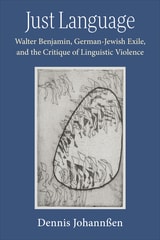
Just Language revisits the Weimar period and its representation in the postwar years to explore narratives of linguistic resistance in the works of Walter Benjamin, Theodor W. Adorno, Hannah Arendt, and Paul Celan. How did this generation of exile writers grapple with their experiences of oppression and persecution? How did they create a language of resistance during the decades that prepared the Third Reich and the Shoah?
Facing the devastations of World War I, the book explores how Walter Benjamin analyzed language’s ability to radically break the cyclical violence of war and examines his opposition to expansionism and imperialism in Weimar education and culture. Based on Benjamin’s analysis, Johannßen traces the postwar responses of Hannah Arendt and Paul Celan. While Arendt proposed strategies of metaphorical thinking to counteract the formation of totalitarianism, Celan mobilized silence as a poetic counterforce against oppression and erasure. Just Language argues that every linguistic act and practice, no matter how small or marginalized, entails the ethical task of opposing the normalization and institutionalization of political violence. By tracing how Benjamin and his interlocutors struggled against German fascism, Johannßen presents a memory-based critique of linguistic violence, opening a dialogue between German-Jewish writers and today’s debates on nondiscrimination, propaganda, and social justice.
Justified Lives
Morality and Narrative in the Films of Sam PeckinpahMichael Bliss
Southern Illinois University Press, 1993
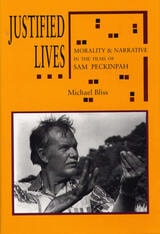
In the first book to critically examine each of the fourteen feature films Sam Peckinpah directed during his career, Michael Bliss stresses the persistent moral and structural elements that permeate Peckinpah’s work.
By examining the films in great detail, Bliss makes clear the moral framework of temptation and redemption with which Peckinpah was concerned while revealing the director’s attention to narrative. Bliss shows that each of Peckinpah’s protagonists is involved with attempting, in the words of Ridethe High Country’s Steve Judd, "to enter my house justified."
The validity of this systematic method is clearly demonstrated in the chapter devoted to The Wild Bunch. Byenumerating the doublings and triplings of action and dialogue found in the film, Bliss underscores its symbolic and structural complexity. Beginning the chapters treating Junior Bonner and The Getaway with analyses of their important title sequences, Bliss shows how these frequently disregarded pieces present in miniature the major moral and narrative concerns of the films. In his chapter on The Osterman Weekend, Bliss makes apparent Peckinpahs awareness of and concern with the self-reflexive nature of filmmaking itself.
Bliss shows that like John Ford, Peckinpah moved from optimism to pessimism. The films of the director’s early period, from The Deadly Companions to Cable Hogue, support the romantic ideals of adventure and camaraderie and affirm a potential for goodness in America. In his second group of films, which begins with Straw Dogs and ends with Bring Me the Head of Alfredo Garcia, both heroes and hope have vanished. It is only in The Osterman Weekend that Peckinpah appears finally to have renewed his capacity for hope, allowing his career to close in a positive way.