Results by title
4743 books match the query 'Religion' and 124 start with j
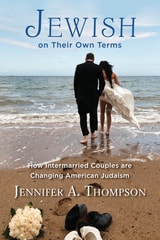
Jewish on Their Own Terms
How Intermarried Couples are Changing American JudaismThompson, Jennifer A
Rutgers University Press, 0
Over half of all American Jewish children are being raised by intermarried parents. This demographic group will have a tremendous impact on American Judaism as it is lived and practiced in the coming decades. To date, however, in both academic studies about Judaism and in the popular imagination, such children and their parents remain marginal.
Jennifer A. Thompson takes a different approach. In Jewish on Their Own Terms, she tells the stories of intermarried couples, the rabbis and other Jewish educators who work with them, and the conflicting public conversations about intermarriage among American Jews. Thompson notes that in the dominant Jewish cultural narrative, intermarriage symbolizes individualism and assimilation. Talking about intermarriage allows American Jews to discuss their anxieties about remaining distinctively Jewish despite their success in assimilating into American culture.
In contrast, Thompson uses ethnography to describe the compelling concerns of all of these parties and places their anxieties firmly within the context of American religious culture and morality. She explains how American and traditional Jewish gender roles converge to put non-Jewish women in charge of raising Jewish children. Interfaith couples are like other Americans in often harboring contradictory notions of individual autonomy, universal religious truths, and obligations to family and history.
Focusing on the lived experiences of these families, Jewish on Their OwnTerms provides a complex and insightful portrait of intermarried couples and the new forms of American Judaism that they are constructing.

Jewish-American Artists and the Holocaust
Baigell, Matthew
Rutgers University Press, 1997
Jewish themes in American art were not very visible until the last two decades, although many famous twentieth-century artists and critics were and are Jewish. Few artists responded openly to the Holocaust until the 1960s, when it finally began to act as a galvanizing force, allowing Jewish-American artists to express their Jewish identity in their work. Baigell describes how artists initially deflected their responses into abstract forms or by invoking biblical and traditional figures and then in more recent decades confronted directly Holocaust imagery and memory. He traces the development of artistic work from the late 1930s to the present in a moving study of a long overlooked topic in the history of American art.
Jewish-Catholic Engagements on Israel
Holy Land, Political Territory, or Theological Promise?Gavin D'Costa
Catholic University of America Press, 2025
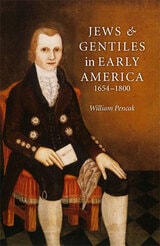
Jews and Gentiles in Early America
1654-1800William Pencak
University of Michigan Press, 2005
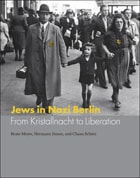
Jews in Nazi Berlin
From Kristallnacht to LiberationEdited by Beate Meyer, Hermann Simon, and Chana Schütz
University of Chicago Press, 2009
Though many of the details of Jewish life under Hitler are familiar, historical accounts rarely afford us a real sense of what it was like for Jews and their families to live in the shadow of Nazi Germany’s oppressive racial laws and growing violence. With Jews in Nazi Berlin, those individual lives—and the constant struggle they required—come fully into focus, and the result is an unprecedented and deeply moving portrait of a people.
Drawing on a remarkably rich archive that includes photographs, objects, official documents, and personal papers, the editors of Jews in Nazi Berlin have assembled a multifaceted picture of Jewish daily life in the Nazi capital during the height of the regime’s power. The book’s essays and images are divided into thematic sections, each representing a different aspect of the experience of Jews in Berlin, covering such topics as emigration, the yellow star, Zionism, deportation, betrayal, survival, and more. To supplement—and, importantly, to humanize—the comprehensive documentary evidence, the editors draw on an extensive series of interviews with survivors of the Nazi persecution, who present gripping first-person accounts of the innovation, subterfuge, resilience, and luck required to negotiate the increasing brutality of the regime.
A stunning reconstruction of a storied community as it faced destruction, Jews in Nazi Berlin renders that loss with a startling immediacy that will make it an essential part of our continuing attempts to understand World War II and the Holocaust.
Jews in Nevada
A HistoryJohn P. Marschall
University of Nevada Press, 2011
Jews have always been one of Nevada’s most active and influential ethnic minorities. They were among the state’s earliest Euro-American settlers, and from the beginning they have been involved in every area of the state’s life as businessmen, agrarians, scholars, educators, artists, politicians, and civic, professional, and religious leaders. Jews in Nevada is an engaging, multilayered chronicle of their lives and contributions to the state. Here are absorbing accounts of individuals and families who helped to settle and develop the state, as well as thoughtful analyses of larger issues, such as the reasons Jews came to Nevada in the first place, how they created homes and interacted with non-Jews, and how they preserved their religious and cultural traditions as a small minority in a sparsely populated region.
Jews in the Center
Conservative Synagogues and Their MembersWertheimer, Jack
Rutgers University Press, 2002
Why do well-educated, highly Americanized, and financially secure Jews join a synagogue and participate in its religious life? This study of Conservative Jews examines the largest movement of synagogue-affiliated Jews in the United States, a group that outnumbers the combined membership of Reform and Orthodox congregations and a population that adheres to a centrist version of Judaism. The scholars who contribute to this study ask a series of provocative questions: How do these Jews negotiate the tensions between the traditional values of their religion and modern sensibilities? What meaning do they find in synagogue participation? How crucial are rabbis in the "success" of congregations?
Written by a team of scholars employing the tools of demography, ethnography, sociology, history, and comparative religious studies, Jews in the Center offers the most comprehensive view of any religious movement within American Judaism----and indeed, one of the most detailed studies of any denomination in American religious life.
Jews in the Center seeks to understand how synagogues function as congregations and to what extent they allow for individual self-expression. By focusing on a mainstream population, this book sheds light on religious people who generally receive the least attention----the broad center who neither retreat from society nor blur all boundaries between their religion and modern American culture.
Jews in the Center
Conservative Synagogues and Their MembersWertheimer, Jack
Rutgers University Press, 2000
Why do well-educated, highly Americanized, and financially secure Jews join a synagogue and participate in its religious life? This study of Conservative Jews examines the largest movement of synagogue-affiliated Jews in the United States, a group that outnumbers the combined membership of Reform and Orthodox congregations and a population that adheres to a centrist version of Judaism. The scholars who contribute to this study ask a series of provocative questions: How do these Jews negotiate the tensions between the traditional values of their religion and modern sensibilities? What meaning do they find in synagogue participation? How crucial are rabbis in the "success" of congregations?
Written by a team of scholars employing the tools of demography, ethnography, sociology, history, and comparative religious studies, Jews in the Center offers the most comprehensive view of any religious movement within American Judaism----and indeed, one of the most detailed studies of any denomination in American religious life.
Jews in the Center seeks to understand how synagogues function as congregations and to what extent they allow for individual self-expression. By focusing on a mainstream population, this book sheds light on religious people who generally receive the least attention----the broad center who neither retreat from society nor blur all boundaries between their religion and modern American culture.
Jews, Christian Society, and Royal Power in Medieval Barcelona
Elka Klein
University of Michigan Press, 2006
Jews, Christian Society, and Royal Power in Medieval Barcelona traces the development of the Jewish community of Barcelona from 1050 to 1300. Elka Klein challenges the common perception that medieval Jews lived in relative isolation from the surrounding society, argues for the existence of significant cultural common ground between Jews and Christians, and proposes a new model for understanding Jewish communal autonomy and the relationship between Jews and their rulers.
Klein traces the development of the Jewish community of Barcelona in two contexts: the parallel development of the city of Barcelona and the changing relationship of the king to urban communities, Jewish and Christian. Until the later twelfth century, the Jewish community, like the Christian city of Barcelona, was left mostly to its own devices by the counts of Barcelona, who had neither the interest nor the power to interfere in internal affairs. Klein draws on both Hebrew and Latin sources to offer a picture of a communal elite whose power, mostly informal, derived from their influence within the community. This system changed in the later twelfth century as a result of the expansion of comitial-royal administration. Four Jewish families used their positions as bailiffs, accountants, and secretaries to consolidate power within their community. The rule of this courtier elite was short lived; two episodes of communal conflict in the early thirteenth century and increased royal activism led to the institution of a new regime of elected officials in 1241. The book concludes with an examination of the new elite and the implications of increased royal interference in internal affairs.
A central argument of Jews, Christian Society, and Royal Power in Medieval Barcelona is that it is necessary to distinguish between autonomy by default, resulting from the indifference of the ruler, who leaves a community to govern itself; and autonomy by design, guaranteed by selective royal interference. Against the view that royal interference undercut Jewish autonomy, Klein argues that autonomy by default left the community with insufficient power to enforce its decisions; because Catalan kings generally interfered in support of existing structures, autonomy by design in fact strengthened the community.
This book contributes to ongoing debates about the relationship between the cultures of the three religions in the Iberian peninsula. It joins a body of recent scholarship arguing that medieval European Jews and Christians shared considerable cultural common ground.
Jews, Christians, and the Abode of Islam
Modern Scholarship, Medieval RealitiesJacob Lassner
University of Chicago Press, 2012

Jews, Sports, and the Rites of Citizenship
Edited by Jack Kugelmass
University of Illinois Press, 2006
Jezebel Unhinged
Loosing the Black Female Body in Religion and CultureTamura Lomax
Duke University Press, 2018
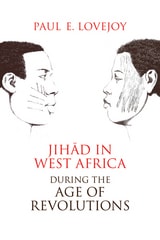
Jihad in West Africa during the Age of Revolutions
Paul E. Lovejoy
Ohio University Press, 2016
In Jihād in West Africa during the Age of Revolutions, a preeminent historian of Africa argues that scholars of the Americas and the Atlantic world have not given Africa its due consideration as part of either the Atlantic world or the age of revolutions. The book examines the jihād movement in the context of the age of revolutions—commonly associated with the American and French revolutions and the erosion of European imperialist powers—and shows how West Africa, too, experienced a period of profound political change in the late eighteenth through the mid-nineteenth centuries. Paul E. Lovejoy argues that West Africa was a vital actor in the Atlantic world and has wrongly been excluded from analyses of the period.
Among its chief contributions, the book reconceptualizes slavery. Lovejoy shows that during the decades in question, slavery expanded extensively not only in the southern United States, Cuba, and Brazil but also in the jihād states of West Africa. In particular, this expansion occurred in the Muslim states of the Sokoto Caliphate, Fuuta Jalon, and Fuuta Toro. At the same time, he offers new information on the role antislavery activity in West Africa played in the Atlantic slave trade and the African diaspora.
Finally, Jihād in West Africa during the Age of Revolutions provides unprecedented context for the political and cultural role of Islam in Africa—and of the concept of jihād in particular—from the eighteenth century into the present. Understanding that there is a long tradition of jihād in West Africa, Lovejoy argues, helps correct the current distortion in understanding the contemporary jihād movement in the Middle East, Afghanistan, Pakistan, and Africa.
Jihadism, Sectarianism and Politics in a Changing Middle East
Adib Abdulmajid
Eburon Academic Publishers, 2021
The emergence and growth of sectarian Islamist militant organizations, whether Sunni or Shia, is deemed to be the fruit of the emerging radical interpretations of the concept of jihad, and the evolution of Islamism in general. The main objective of this book is to help the reader understand the complex religio-political scene in today’s Middle East and the ideological principles and agendas of influential movements, whose beliefs and actions constitute a serious threat to cultural diversity in the region. It addresses the doctrinal tenets associated with the emergence of influential Islamist organizations and the challenges encountered by the culturally diverse populations that surround them. This book also delves into the historical events that have shaped the Middle East as we know it today. It further examines the key factors behind the rise of the most influential sectarian-guided, jihadi-based extremist groups in the recent years
Job 1–21
Interpretation and CommentaryC. L. Seow
SBL Press, 2013
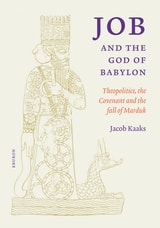
Job and the god of Babylon
Theo-politics, the Covenant and the Fall of MardukJacob Kaaks
Eburon Academic Publishers, 2011
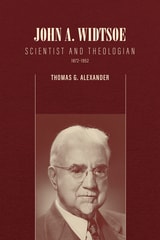
John A. Widtsoe
Scientist and Theologian, 1872-1952Alexander, Thomas G.
Signature Books, 2023
Born in Norway, John A. Widtsoe (1872–1952), was renowned for his expertise in irrigation and dry farming. His pioneering work pushed the boundaries of and contributed significantly to advancements in agricultural practices. Moreover, his forays into the field of biochemistry exemplified his relentless pursuit of scientific understanding.
Widtsoe’s journey came with challenges especially after he was called as an apostle in the Church of Jesus Christ of Latter-day Saints. As president of both Utah State Agricultural College (1907–16) and the University of Utah (1916–21), he faced controversies and obstacles head-on. Additionally, he played a significant role in overseeing the expansion of the LDS gospel in both Europe and the United States. He was highly esteemed within his church due to his ability to provide thorough and insightful explanations of various aspects of church doctrine and reconcile them with scientific truths. Throughout the early-to-mid-twentieth century, he symbolized to many members the successful integration of religious faith with secular knowledge, inspiring countless individuals to embrace both realms in harmony.
John Chrysostom on Paul
Praises and Problem PassagesMargaret M. Mitchell
SBL Press, 2022
A readily accessible text and translation for scholars and students of Paul, ancient Christian history, and biblical reception.
In this new volume in the Writings from the Greco-Roman World series, Margaret M. Mitchell collects twenty-five of John Chrysostom's lesser-known sermons on Pauline passages as well as some that focus on Paul himself. Mitchell presents the Greek text and an original translation of each of these fascinating sermons in a fresh, engaging style that seeks to recapture the vibrancy and dynamism of the live oratory behind the homilies. Extensive notes to each homily evaluate how Chrysostom dealt with some of the ethical, theological, historical, political, and literary problems present in Paul's writings. Mitchell's work on Chrysostom offers a model for scholars to explore and understand how ancient Christian interpreters found in Paul’s letters a legacy that was as problematic as it was precious.
John Chrysostom, Homilies on 1 and 2 Timothy
Pauline Allen
SBL Press, 2026
John Chrysostom, Homilies on Colossians
Pauline Allen
SBL Press, 2021
John Chrysostom, Homilies on Philippians
Pauline Allen
SBL Press, 2013
John Chrysostom, Homilies on Titus and Philemon
Pauline Allen
SBL Press, 2024
John Chrysostom, Theologian of the Eucharist
Kenneth J. Howell
Catholic University of America Press, 2024
John Donne, Body and Soul
Ramie Targoff
University of Chicago Press, 2008
For centuries readers have struggled to fuse the seemingly scattered pieces of Donne’s works into a complete image of the poet and priest. In John Donne, Body and Soul, Ramie Targoff offers a way to read Donne as a writer who returned again and again to a single great subject, one that connected to his deepest intellectual and emotional concerns.
Reappraising Donne’s oeuvre in pursuit of the struggles and commitments that connect his most disparate works, Targoff convincingly shows that Donne believed throughout his life in the mutual necessity of body and soul. In chapters that range from his earliest letters to his final sermon, Targoff reveals that Donne’s obsessive imagining of both the natural union and the inevitable division between body and soul is the most continuous and abiding subject of his writing.
“Ramie Targoff achieves the rare feat of taking early modern theology seriously, and of explaining why it matters. Her book transforms how we think about Donne.”—Helen Cooper, University of Cambridge
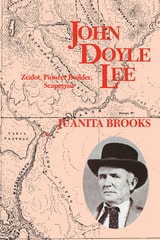
John Doyle Lee
Juanita Brooks
Utah State University Press, 1992
John D. Lee is most often remembered as the only man executed for his role in the infamous 1857 massacre by Mormons of a California-bound emigrant train at Mountain Meadows in southern Utah. This classic biography examines the circumstances and events which brought Lee to that end. It also, however, looks at the other dimensions of his active life, showing that he was a far more important and complex man than subsequent generations, eager for a dark symbol, have acknowledged. He was a leader in the Mormon colonization of southern Utah and northern Arizona. With the title Indian Farmer, he became his church's emissary to Indians in the area. During and prior to the Mormon migration west, he participated in and kept detailed accounts of the conflicts and other events in Missouri, Illinois, and along the trail. An early practitioner, and recorder, of the custom of plural marriage, he was the adopted son of Brigham Young and a close associate of other Mormon leaders. His occupations included builder, farmer, missionary, ferry operator, town founder, and faith leader.
Using Lee's extensive diaries, bolstered by numerous supporting accounts, Juanita Brooks has not only written a thorough and objective portrait of one man's life, a life which would be worthy of study even if it were not controversial, she also has provided numerous insights into early Mormon society and culture. Anyone interested in Mormon polygamy, family life, leadership, relations with Indians, or other aspects of their frontier existence will find this a storehouse of information.
This classic biography is now in its fourth Utah State University Press printing. It is unparalleled in providing a thorough and accurate account of John D. Lee's involvement in the tragic 1857 Mountain Meadows Massacre.
John Henry Livingston and the Dutch Reformed Tradition in the Early American Nation
John W. Coakley
Rutgers University Press, 2027
John Henry Livingston (1746-1825) was from a prominent New York family of merchants, lawyers and statesmen but chose to become a minister in the Dutch Reformed Church. In his twenties he studied in the Netherlands, absorbing ideas that upheld simultaneously the authority of the individual conscience and the traditional Reformed beliefs rooted in the authority of a state-supported church. Returning to New York City he served as a pastor, as his denomination’s professor charged with educating students for ministry, and eventually, president of the American Dutch church’s college, then called Queens (but later called Rutgers). Throughout his career he articulated, and defended what he saw as the harmony between the traditional body of Reformed belief and the ideals of the American state.
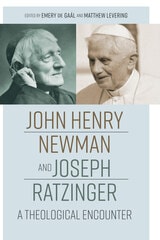
John Henry Newman and Joseph Ratzinger
A Theological EncounterEmery de Gaal
Catholic University of America Press, 2024
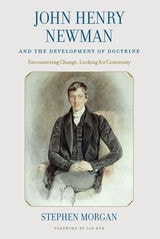
John Henry Newman and the Development of Doctrine
Encountering Change, Looking for ContinuityStephen Morgan
Catholic University of America Press, 2022
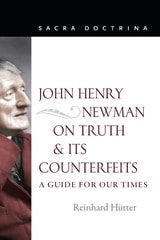
John Henry Newman on Truth and its Counterfeits
A Guide for Our TimesReinhard Hutter
Catholic University of America Press, 2020
John Paul II on the Vulnerable
Jeffrey Tranzillo
Catholic University of America Press, 2013
John Stuart Mill and the Religion of Humanity
Linda C. Raeder
University of Missouri Press, 2002
John Tracey Ellis
An American Church ReformerThomas J. Shelley
Catholic University of America Press, 2023
John and Judaism
A Contested Relationship in ContextR. Alan Culpepper
SBL Press, 2017
A window into early Judaism and Christianity
The Gospel of John was written during the period of the emergence of Christianity and its separation from Judaism and bears witness to their contested relationship. This volume contains eighteen cutting-edge essays written by an international group of scholars who interpret for students and general readers what the book tells us about first-century Judaism, the separation of the church from Judaism, and how John's anti-Jewish references are being interpreted today.
Features:
- A debate over the process that led to the separation of the church from Judaism, and John's place in that process
- A review of recent interpretations of John's anti-Jewish references
- An assessment of the current status of Jewish Christian relations
John of St. Thomas [Poinsot] on Sacred Science
Cursus Theologicus I, Question 1, Disputation 2John Of St. Thomas
St. Augustine's Press, 2012
This volume offers an English translation of John of St. Thomas’s Cursus theologicus I, question I, disputation 2. In this particular text, the Dominican master raises questions concerning the scientific status and nature of theology. At issue, here, are a number of factors: namely, Christianity’s continual coming to terms with the “Third Entry” of Aristotelian thought into Western Christian intellectual culture – specifically the Aristotelian notion of ‘science’ and sacra doctrina’s satisfaction of those requirements – the Thomistic-commentary tradition, and the larger backdrop of the Iberian Peninsula’s flourishing “Second Scholasticism.”
In this latter context, John of St. Thomas applies the theological principles of Thomas Aquinas to the Scholastic disputes preoccupying Thomist, Franciscan, and Jesuit theologians, such as Cajetan, Bañez, Luis de Molina, Vazquez, Suárez – to name only a few – in a tour de force of theological thinking throughout the entire period of Scholasticism. In the process – and not insignificantly – the status quaestionis of theology’s scientific character is clearly framed and answered according to John’s satisfaction.
Key to John of St. Thomas’s resolution of the question is his understanding of the continuity of the power of human reason with the super-intelligibility of divine revelation spelled out in terms of what he calls “virtual revelation.” This text presented in this volume is a quintessential example of the deep and abiding harmony that flourished between faith and reason as well as grace and nature within the golden era of Baroque Scholasticism.
John, Jesus, and History, Volume 1
Critical Appraisals of Critical ViewsPaul N. Anderson
SBL Press, 2007
John, Jesus, and History, Volume 2
Aspects of Historicity in the Fourth GospelPaul N. Anderson
SBL Press, 2009
This groundbreaking volume draws together an international group of leading biblical scholars to consider one of the most controversial religious topics in the modern era: Is the Gospel of John—the most theological and distinctive among the four canonical Gospels—historical or not? If not, why does John alone among the Gospels claim eyewitness connections to Jesus? If so, why is so much of John’s material unique to John? Using various methodologies and addressing key historical issues in John, these essays advance the critical inquiry into Gospel historiography and John’s place within it, leading to an impressive consensus and convergences along the way. The contributors are Paul N. Anderson; Mark Appold; Richard Bauckham; Helen K. Bond; Richard A. Burridge; James H. Charlesworth; Jaime Clark-Soles; Mary Coloe; R. Alan Culpepper; Craig A. Evans; Sean Freyne; Jeffrey Paul Garcia; Brian D. Johnson; Peter J. Judge; Felix Just, S.J.; Craig S. Keener; Edward W. Klink III; Craig R. Koester; Michael Labahn; Mark A. Matson; James F. McGrath; Susan Miller; Gail R. O’Day; Bas van Os; Tom Thatcher; Derek M. H. Tovey; Urban C. von Wahlde; and Ben Witherington III.
John, Jesus, and History, Volume 3
Glimpses of Jesus Through the Johannine LensPaul N. Anderson
SBL Press, 2016
A critical analysis of the historicity of the Gospel of John
Since it began in 2002, the John, Jesus, and History Project has assessed critically the modern disparaging of John's historicity and has found this bias wanting. In this third volume, an international group of experts demonstrate over two dozen ways in which John contributes to an enhanced historical understanding of Jesus and his ministry. This volume does not simply argue for a more inclusive quest for Jesus—one that embraces John instead of programmatically excluding it. It shows that such a quest has already indeed begun. Contributors include Paul N. Anderson, Jo-Ann A. Brant, Peder Borgen, Gary M. Burge, Warren Carter, R. Alan Culpepper, James D. G. Dunn, Robert T. Fortna, Jörg Frey, Steven A. Graham, Colin J. Humphreys, Craig Keener, Andreas Köstenberger, Tim Ling, William Loader, Linda McKinnish Bridges, James S. McLaren, Annette Merz, Wendy E. S. North, Benjamin E. Reynolds, Udo Schnelle, Donald Senior, C.P., Tom Thatcher, Michael Theobald, Jan van der Watt, Robert Webb, Stephen Witetscheck, and Jean Zumstein.
Features
- A state-of-the-art analysis of John’s contributions to the quest for the historical Jesus, including evaluative responses by leading Jesus scholars
- •An overview of paradigm shifts in Jesus scholarship and recent approaches to the Johannine riddles
- Detailed charts that illuminates John's similarities and differences form the Synoptic Gospels as well as the gospel's contributions to the historical Jesus research
John, Jesus, and History, Volume 4
Jesus Remembered in the Johannine SituationPaul N. Anderson
SBL Press, 2024
John, Jesus, and History, Volume 4: Jesus Remembered in the Johannine Situation addresses the narrative development of the Johannine corpus over as many as seven decades. Contributors connect how Jesus is presented in the Fourth Gospel to how the memory of his ministry is developed in Palestine during the earliest period (30–70 CE), in Asia Minor in the later first century (70–100 CE), and in the main and alternative streams of post-Johannine early Christianity (100 CE and later). Contributors include Paul N. Anderson, Harold W. Attridge, Giovanni Bazzana, Jonathan Bernier, Sherri Brown, Rex D. Butler, Andrew J. Byers, Stephen C. Carlson, Warren Carter, Amber M. Dillon, Jonathan A. Draper, Musa W. Dube, Charles E. Hill, Karen L. King, Peter T. Lanfer, Kasper Bro Larsen, Ian N. Mills, Alicia D. Myers, Reinhard Pummer, Tuomas Rasimus, David Rensberger, Clare K. Rothschild, Geoffrey Smith, Travis D. Trost, Meredith J. C. Warren, Kenneth L. Waters Sr., and Lorne R. Zelyck. The collection pushes Johannine, Jesus, and early Christian history studies in new directions, raising possibilities for future research.
John, Jesus, and History, Volume 5
Jesus Remembered within the Johannine TraditionPaul N. Anderson
SBL Press, 2026
Jonah
Introduction and CommentaryAmy Erickson
SBL Press, 2021
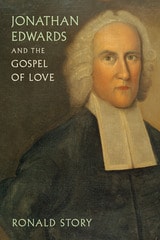
Jonathan Edwards and the Gospel of Love
Ronald Story
University of Massachusetts Press, 2012
Jonathan Edwards has long epitomized the Puritan preacher as fiery scold, fixated on the inner struggle of the soul and the eternal flames of hell. In this book, Ronald Story offers a fundamentally different view of Edwards, revealing a profoundly social minister who preached a gospel of charity and community bound by love.
The first chapters trace Edwards's life and impact, examine his reputation as an intellectual, Calvinist, and revivalist, and highlight the importance for him of the gentler, more compassionate concepts of light, harmony, beauty, and sweetness. Story then explains what Edwards means by the “Gospel of Love”—a Christian faith that is less individual than interpersonal, and whose central feature is the practice of charity to the poor and the quest for loving community in this world, the chief signs of true salvation. As Edwards preached in his sermon “Heaven Is a World of Love,” the afterlife itself is social in nature because love is social.
Drawing on Edwards's own sermons and notebooks, Story reveals the minister's belief that divine love expressed in the human family should take us beyond tribalism, sectarianism, provincialism, and nationality. Edwards offers hope, in the manner of Walter Rauschenbusch, Karl Barth, Martin Luther King Jr., and other great “improvers,” for the coming of a world without want and war. Gracefully and compellingly written, this book represents a new departure in Edwards studies, revising the long-standing yet misleading stereotype of a man whose lessons of charity, community, and love we need now more than ever.
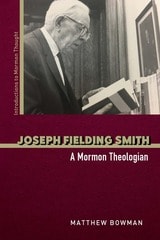
Joseph Fielding Smith
A Mormon TheologianMatthew Bowman
University of Illinois Press, 2024
Incisive and illuminating, Joseph Fielding Smith examines the worldview and development of an influential theologian and his place in American religious and intellectual history.
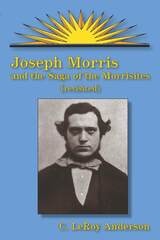
Joseph Morris
and the Saga of the Morrisites RevisitedC. Leroy Anderson
Utah State University Press, 2010
LeRoy Anderson in 1981 first published, under the title For Christ Will Come Tomorrow, his definitive study of a charismatic, millenarian prophet and the Church of Jesus Christ of the Most High. He told there of a Mormon posse’s 1862 attack on the Morrisite compound, killing Joseph Morris, and of the continuing Morrisite movement, which survived into the mid-twentieth century. In this newly revised edition, Anderson revisits his subject by referring to more recently discovered documents, considering other scholars’ continuing work on Morris’s sect and related subjects, and examining a 1980s messianic sect that claimed a direct connection to the Morrisites.
New documentary sources include a holograph “History of George Morris,” written by Joseph Morris’s brother, which Anderson quotes at length. What was once a little-studied subject has since received attention from a number of scholars. Anderson references such current work on Mormon schismatic movements and broader subjects, much of which drew on his work. Perhaps the book’s most interesting and unintended influence was on that obscure 1980s messianic sect, in Montana, which learned of Morris through Joseph Morris and the Saga of the Morrisites.
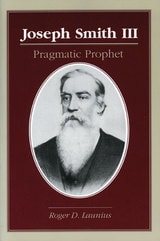
Joseph Smith III
PRAGMATIC PROPHETRoger D. Launius
University of Illinois Press, 1999
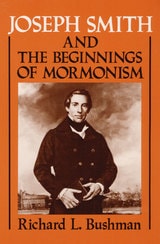
Joseph Smith and the Beginnings of Mormonism
Richard L. Bushman
University of Illinois Press, 1984
Winner of the David Woolley Evans and Beatrice Evans Biography Award and a History Book Club selection, 1985.
The core of Mormon belief was a conviction about actual events. The test of faith was not adherence to a certain confession of faith but belief that Christ was resurrected, that Joseph Smith saw God, that the Book of Mormon was true history, and that Peter, James, and John restored the apostleship. Mormonism was history, not philosophy.
It is as history that Richard L. Bushman analyzes the emergence of Mormonism in the early nineteenth century. Bushman, however, brings to his study a unique set of credentials--he is both a prize-winning historian and a faithful member of the Latter-day Saints church. For Mormons and non-Mormons alike, his book provides a very special perspective on an endlessly fascinating subject.
Building upon previous accounts and incorporating recently discovered contemporary sources, Bushman focuses on the first twenty-five years of Joseph Smith's life--up to his move to Kirtland, Ohio, in 1831. Bushman shows how the rural Yankee culture of New England and New York--especially evangelical revivalism, Christian rationalism, and folk magic--both influenced and hindered the formation of Smith's new religion.
Mormonism, Bushman argues, must be seen not only as the product of this culture, but also as an independent creation based on the revelations of its charismatic leader. In the final analysis, it was Smith's ability to breathe new life into the ancient sacred stories and to make a sacred story out of his own life which accounted for his own extraordinary influence. By presenting Smith and his revelations as they were viewed by the early Mormons themselves, Bushman leads us to a deeper understanding of their faith.
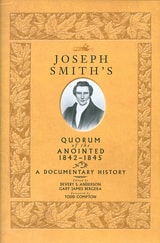
Joseph Smith's Quorum of the Anointed, 1842-1845
A Documentary HistoryDevery S. Anderson
Signature Books, 2005
Preparations to initiate the first members of Joseph Smith’s Quorum of the Anointed, or Holy Order, as it was also known, were made on May 3, 1842. The walls of the second level of the Red Brick Store were painted with garden-themed murals, the rooms fitted with carpets, potted plants, and a veil hung from the ceiling. All the while, the ground level continued to operate as Joseph Smith’s general mercantile.
In this companion volume to The Nauvoo Endowment Companies and The Development of LDS Temple Worship, 1846-2000: A Documentary History, the editors have assembled all available primary references to the Anointed Quorum and its regular gatherings, both in the Red Brick Store and elsewhere (women were initially washed and anointed in Emma Smith’s bedroom and then escorted to the store) prior to the opening of the Nauvoo Temple. The sources include excerpts from the diaries of William Clayton, Joseph Fielding, Zina D. H. Jacobs, Heber C. Kimball, John Taylor, Willard Richards, George A. Smith, Joseph Smith, Wilford Woodruff, and Brigham Young; autobiographies and reminiscences by Joseph C. Kingsbury, George Miller, and Mercy Fielding Thompson; letters from Vilate Kimball and Lucius N. Scoville; the Manuscript History of Brigham Young; General Record of the Seventies, Book B; Bathsheba W. Smith’s unedited testimony from the 1892 Temple Lot Case; other manuscripts such as the Historian’s Office Journal and “Meetings of Anointed Quorum”; and published records such as the History of the Church, Latter Day Saints’ Messenger and Advocate and Times and Seasons.
from the jacket flap:
Despite the secrecy imposed upon members of the Anointed Quorum, word of the gatherings above Joseph Smith’s store soon spread. In one instance, housekeeper Maria Jane Johnston helped prepare the special ceremonial clothing for John Smith to wear at the group’s meetings. In another, Ebenezer Robinson innocently opened the upstairs door at the mercantile and was startled to see church apostle John Taylor in a long white robe and “turban,” carrying a sword. Only Nauvoo’s elite were invited to participate in these new ceremonies?never more than ninety individuals and even fewer during Joseph Smith’s lifetime?and, as the editors of the current volume write, only those who had been introduced to the prophet’s doctrine of plural marriage.
An unusual aspect of the Quorum of the Anointed, compared to the membership in the Nauvoo Masonic Lodge, was that women were initiated as regular members. However, the women effectively disappear after Brigham Young’s assumption of leadership in 1844, following Joseph Smith’s death, and remain virtually absent until the Nauvoo Temple is completed nearly a year and a half later. Readers will also note some of the differences in protocol between what Smith instigated and what Young eventually settled on, for instance that members could be washed and anointed repeatedly but were “endowed” only once. There were not yet proxy ordinances.
Among Latter-day Saints today, temple worship is a sensitive topic; but the editors of this volume do not reveal anything that would be considered invasive or indelicate. In fact, the accounts, which come almost exclusively from the early LDS leadership itself, manifest discretion about what to report.
Never before have these primary, authoritative sources been correlated by date for comparison and fuller understanding of the gradual development of the temple ceremonies. Readers may find an added benefit in discovering some of their own ancestors’ names included in these records; but in fact, anyone interested in LDS temple worship will find this compilation of primary documents to be invaluable.
Joseph Smith
History, Methods, and MemoryRonald O. Barney
University of Utah Press, 2020
Ronald O. Barney, a former editor of the Joseph Smith Papers, applies new interpretations to Smith in history and memory, re-examining both his writings and contemporary accounts of him. The book explores the best methodologies for appraising the historical record, including a review of Smith’s world and its contextual background, an analysis of his foundational experiences, and a characterization of Smith as a man and prophet. Though the premise of re-evaluation may be unsettling to traditionalists, a modern reconsideration of the historical record’s entire range of sources is necessary to fashion a strategy for evaluating Smith and his enduring but complex legacy.
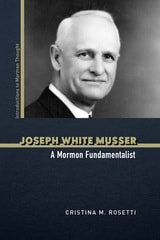
Joseph White Musser
A Mormon FundamentalistCristina M. Rosetti
University of Illinois Press, 2024
Musser’s devotion to Joseph Smith’s vision and the faith’s foundational texts reflected a widespread uneasiness with, and reaction against, changes taking place across society. Rosetti analyzes how Musser’s writing and thought knit a disparate group of outcast LDS believers into a movement. She also places Musser’s eventful life against the backdrop of a difficult period in LDS history, when the Church strained to disentangle itself from plural marriage and leaders like Musser emerged to help dissident members make sense of their lives outside the mainstream.
The first book-length account of the Mormon thinker, Joseph White Musser reveals the figure whose teachings helped mold a movement.
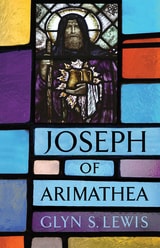
Joseph of Arimathea
Glyn S. Lewis
Westholme Publishing, 2017
“This author testifieth Joseph of Arimathea to be the first preacher of the word of God within our realms. Long after that, when Austin came from Rome, this our realm had bishops and priests there-in, as is well known to the learned of our realm.”—Elizabeth I, in a 1559 letter to Roman Catholic bishops on the precedence of the Church of England
The name Joseph of Arimathea is generally well known, either from the accounts in each of the New Testament Gospels that tell of his providing a tomb for the burial of Jesus; from his depictions in medieval and Renaissance art; from his associations with the Holy Grail that later found greater expression in medieval Arthurian stories; and even from the story that has endured in western Britain that as a trader in tin, copper, and lead, he had traveled often to the region—and with him came the Christian religion. These stories are strongly rooted, despite the lack of impeccable source material—so much so that Elizabeth I used Joseph of Arimathea as proof that the Church of England predated the Catholic church in her country. In Joseph of Arimathea Glyn S. Lewis brings these fragments together in order to provide as fully as is possible what we can infer about this first-century apostle.
The author first discusses Arimathea, a town that has yet to be positively identified. He then reviews the accounts of Joseph’s entombment of Jesus that appear in each of the four Gospels. From these earliest references, the author next consults the literary and oral tradition evidence of Joseph’s passage by ship to the south of France among a group of fugitives escaping persecution for being Christians, and his early visits to Britain as a trader in precious ores. These voyages are said to have brought him to the area around Glastonbury, which became a flourishing monastery in the Middle Ages. Whether or not Joseph of Arimathea visited Britain, his story remains an enthralling and fascinating mystery.
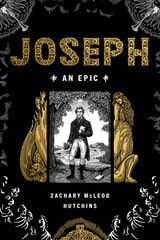
Joseph
An EpicZachary McLeod Hutchins
University of Illinois Press, 2025