Results by title
28164 books match the query 'History' and 406 start with j
Journal of Near Eastern Studies, volume 81 number 2 (October 2022)
The University of Chicago Press
University of Chicago Press Journals, 2022
Journal of Near Eastern Studies, volume 82 number 1 (April 2023)
The University of Chicago Press
University of Chicago Press Journals, 2023
Journal of Near Eastern Studies, volume 82 number 2 (October 2023)
The University of Chicago Press
University of Chicago Press Journals, 2023
Journal of Near Eastern Studies, volume 83 number 1 (April 2024)
The University of Chicago Press
University of Chicago Press Journals, 2024
Journal of Near Eastern Studies, volume 83 number 2 (October 2024)
The University of Chicago Press
University of Chicago Press Journals, 2024
Journal of Near Eastern Studies, volume 84 number 1 (April 2025)
The University of Chicago Press
University of Chicago Press Journals, 2025
Journal of Near Eastern Studies, volume 84 number 2 (October 2025)
The University of Chicago Press
University of Chicago Press Journals, 2025
Journal of Near Eastern Studies, volume 85 number 1 (April 2026)
The University of Chicago Press
University of Chicago Press Journals, 2026
Journal of Near Eastern Studies, volume 85 number 2 (October 2026)
The University of Chicago Press
University of Chicago Press Journals, 2026
Journal of the American Revolution 2015
Annual VolumeTodd Andrlik
Westholme Publishing, 2015
The Journal of the American Revolution, Annual Volume 2015, presents the journal’s best historical research and writing over the past calendar year. The volume is designed for institutions, scholars, and enthusiasts to provide a convenient overview of the latest research and scholarship in American Revolution studies. The sixty articles in the 2015 edition include:
How Samuel Adams Recruited Sons of Liberty by J. L. Bell
A Patriot–Loyalist: Playing Both Sides by Todd W. Braisted
How Old Were Redcoats? Age and Experience of British Soldiers in America by Don N. Hagist
The Great West Point Chain by Hugh T. Harrington
Raid Across the Ice: The British Operation to Capture Washington by Benjamin Huggins
So Heavy a Trial: The Burning of New York’s First Capital by Jack Kelly
An Elegant Dinner with General Washington at Valley Forge Headquarters by Nancy K. Loane
Mount Vernon: A Landscape for the New Cincinnatus by Joseph Manca
The British Spy Plot to Capture Fort Ticonderoga by John A. Nagy
The Top Ten British Losers by Andrew O’Shaughnessy
Honorable Lords and Pretend Barons: Sorting Out the Noblemen of the American Revolution by Jim Piecuch
Paul Revere’s Other Riders and Rides by Ray Raphael
William Lee and Oney Judge: A Look at George Washington and Slavery by Mary V. Thompson.
Journal of the American Revolution 2016
Annual VolumeTodd Andrlik
Westholme Publishing, 2016
Journal of the American Revolution 2017
Annual VolumeTodd Andrlik
Westholme Publishing, 2017
The forty-six articles in the 2017 edition include:
Why the British Lost the Battle of Sullivan’s Island by C. L. Bragg
The Tiger Aids the Eaglet: How India Secured America’s Independence by Richard Sambasivam
How Yorktown Almost Couldn’t Afford to Happen by John Smith
Was Richard Stockton a Hero? by Christian M. McBurney
The Southern Expedition of 1776: The American Revolution’s Best Kept Secret by Roger Smith
Religious Liberty and Its Virginia Roots by Alex Colvin
Mount Vernon During the American Revolution by Mary V. Thompson
Why God is in the Declaration but not the Constitution by Anthony J. Minna
Colonel Tench Tilghman: George Washington’s Eyes and Ears by Jeff Dacus
The Stockbridge-Mohican Community, 1775–1783 by Bryan Rindfleisch
Two Years Aboard the Welcome: The American Revolution on Lake Huron by Tyler Rudd Putman
Journal of the American Revolution 2018
Annual VolumeDon N. Hagist
Westholme Publishing, 2018
The Journal of the American Revolution, Annual Volume 2018, presents the journal’s best historical research and writing over the past calendar year. The volume is designed for institutions, scholars, and enthusiasts to provide a convenient overview of the latest research and scholarship in American Revolution studies. The forty-one articles in the 2018 edition include:
Anti-Indian Radicalization in the Early American West, 1774–1795 by Darren R. Reid
The Setauket Raid, December 1777 by Phillip R. Giffin
The 3rd New Jersey Regiment’s Plundering of Johnson Hall by Philip D. Weaver
A Proposed Alliance of the Knights of Malta and the United States of America by Bruce Ware Allen
Country Crowds in Revolutionary Massachusetts: Mobs and Militia by Ray Raphael
Lafayette: An Acerbic Tongue or an Incisive Judge of Character? by Gene Procknow
Admiral Rodney Ousts the Jews from St. Eustatius by Louis Arthur Norton
Preventing Slave Insurrection in South Carolina & Georgia, 1775–1776 by Jim Piecuch
The “P” is for Profit: Revolutionary War Privateers and the Slave Trade by Michael Thomin
The Remarkable Spanish Pilgrimage of John Adams by John L. Smith, Jr.
Thomas Paine, Deism, and the Masonic Fraternity by Shai Afsai
A Fresh Look at Major Patrick Ferguson by Wayne Lynch
Displaced: The Donation People of 1775 by Katie Turner Getty
Journal of the American Revolution 2019
Annual VolumeDon N. Hagist
Westholme Publishing, 2019
The Journal of the American Revolution, Annual Volume 2019, presents the journal’s best historical research and writing over the past calendar year. The volume is designed for institutions, scholars, and enthusiasts to provide a convenient overview of the latest research and scholarship in American Revolution and Founding Era studies. The thirty-eight articles in the 2019 edition include:
Join, or Die: Political and Religious Controversy Over Franklin’s Snake Cartoon by Daniel P. Stone
The Connecticut Captivity of William Franklin, Loyalist by Louis Arthur Norton
Revisiting the Prayer at Valley Forge by Blake McGready
John the Painter: Terrorist for America by Lars Hedbor
Who Picked the Committees at the Constitutional Convention? by David O. Stewart
Norfolk, Virginia, Sacked by North Carolina and Virginia Troops by Patrick H. Hannum
Elias Hasket Derby: The Privateer Who Pioneered the Russian Trade by Nick Deluca
Benedict Arnold’s Master Plan (for British) Victory by John Knight
China and the American Revolution by Simon Hill
Moravians in the Middle: The Gnadenhutten Massacre by Eric Sterner
Slavery Through the Eyes of Revolutionary Generals by Gene Procknow
Our Man in Minorca: Lewis Littlepage, American Volunteer with the Spanish Armed Forces by Larrie D. Ferreiro
Patrick Tonyn: Britain’s Most Effective Revolutionary-Era Royal Governor by Jim Piecuch
Jefferson’s Reckoning: The Sage of Monticello’s Haunting Final Years by Geoff Smock
Journal of the American Revolution 2020
Annual VolumeDon N. Hagist
Westholme Publishing, 2020
The Journal of the American Revolution, Annual Volume 2020, presents the journal’s best historical research and writing over the past calendar year. The volume is designed for institutions, scholars, and enthusiasts to provide a convenient overview of the latest research and scholarship in American Revolution and Founding Era studies. The thirty-six articles in the 2020 edition include:
Bernard E. Griffiths: Trumpeter Barney of the Queen’s Rangers, Chelsea Pensioner—and Freed Slave by Todd W. Braisted
The Declaration of Independence: Did John Hancock Really Say that about his Signature?—and Other Signing Stories by J. L. Bell
Les Habitants: Collaboration and Pro-American Violence in Canada, 1774–1776 by Sebastian van Bastelaer
Misadventures in the Countryside: Escape from a British Prison Ship by Katie Turner Getty
The Revolutionary Memories of New York Loyalists: Thomas Jones and William Smith, Jr. by Cho-Chien Feng
The East India Company and Parliament’s “Fateful Decision” of 1767 by Steven Neill
Massachusetts Privateers During the Siege of Boston by Alexander Cain
The Constitution Counted Free Women and Children—And It Mattered by Andrew M. Schocket, with Kinzey M. McLaren-Czerr and Colin J. Spicer
How Magna Carta Influenced the American Revolution by Jason Yonce
Putting a Price on Loyalty: Mary Loring’s List of Losses by John Knight
Journal of the American Revolution 2021
Annual VolumeDon N. Hagist
Westholme Publishing, 2021
The Journal of the American Revolution, Annual Volume 2021, presents the journal’s best historical research and writing over the past calendar year. The volume is designed for institutions, scholars, and enthusiasts to provide a convenient overview of the latest research and scholarship in American Revolution and Founding Era studies. The thirty-four articles in the 2021 edition include:
Alexander Hamilton’s Missing Years: New Discoveries and Insights into the Little Lion’s Caribbean Childhood by Ruud Stelten and Alexandre Hinton
The Lenape Origins of an Independent America: The Catalyst of Pontiac’s War, 1763–1765 by Kevin A. Conn
Impeachment: The Framers Debate and Discuss by Ray Raphael
The First Efforts to Limit the African Slave Trade by Christian M. McBurney
What Killed Prisoners of War?—A Medical Investigation by Brian Patrick O'Malley
The Mysterious March of Horatio Gates by Andrew Waters
Minorcans, New Smyrna, and the American Revolution in East Florida by George Kotlik
Stony Point: The Second Occupation, July–October 1779 by Michael J. F. Sheehan
A Demographic View of North Carolina Militia and State Troops, 1775–1783 by Douglas R. Dorney, Jr.
The Revolutionary War Origin of the Whistleblower Law by Louis Arthur Norton
Mapping the Battle of Eutaw Springs: Modern GIS Solves a Historic Mystery by Stephen John Katzberg
Journal of the American Revolution 2022
Annual VolumeDon N. Hagist
Westholme Publishing, 2022
The year’s best articles from the leading on-line source of new research on the Revolution and Founding eras
The Journal of the American Revolution, Annual Volume 2022, presents the journal’s best historical research and writing over the past calendar year. The volume is designed for institutions, scholars, and enthusiasts to provide a convenient overview of the latest research and scholarship in American Revolution and Founding Era studies. This year's articles are:
Massachusettensis and Novanglus: The Last Great Debate Prior to the War by James M. Smith
Wampum Belts to Canada: Stockbridge Indian Ambassadors’ Dangerous 1775 Peace Mission by Mark R. Anderson
Ethan Allen’s “Motley Parcel of Soldiery” at Montreal by Mark R. Anderson
The Devil at the Helm: A Quote That Went Astray by Don N. Hagist
Thomas Knowlton’s Revolution by David Price
Major Robert Rogers and the American Revolution by Scott M. Smith
La Petite Guerre and Indian Irregular Manner of War: Siblings, But Not Twins by Brian Gerring
George Washington and the First Mandatory Immunization by Richard J. Werther
French Adventurers, Patriots, and Pretentious Imposters in the Fight for American Independence by Arthur S. Lefkowitz
The Cherokee-American War from the Cherokee Perspective by Jordan Baker
The Numerical Strength of George Washington’s Army During the 1777 Philadelphia Campaign by Gary Ecelbarger and Michael C. Harris
A Reconsideration of Continental Army Numerical Strength at Valley Forge by Gary Ecelbarger and Michael C. Harris
American Indians at Valley Forge by Joseph Lee Boyle
The Discovery of a Letter from a Soldier of the First Rhode Island Regiment by Christian McBurney
“The Predicament We Are In”: How Paperwork Saved the Continental Army by Mike Matheny
Sir Henry Clinton’s Generalship by John Ferling
The Varick Transcripts and the Preservation of the War by Justin McHenry
“A Mere Youth”: James Monroe’s Revolutionary War by John A. Ruddima
Haitian Soldiers at the Siege of Savannah by Robert S. Davis
George Washington’s Culper Spy Ring: Separating Fact from Fiction by Bill Bleyer
Texas, Cattle, Cowboys, Ranchers, Indian Raids, and the American Revolution by George Kotlik
The Odyssey of Loyalist Colonel Samuel Bryan by Douglas R. Dorney, Jr.
“She Had Gone to the Army . . . to Her Husband”: Judith Lines’s Unremarked Life by John U. Rees
The Yorktown Tragedy: George Washington’s Slave Roundup by Gregory J. W. Urwin
Such as are Absolutely Free: Benjamin Thompson’s Black Troopers by Todd W. Braisted
The King of Sweden: Friendly Foe of the United States by Richard Werther
Shifting Indian Policy of the Articles of Confederation by John DeLee
Justice, Mercy, and Treason: John Marshall’s and Mercy Otis Warren’s Treatments of Benedict Arnold by Ray Mirante
A Chance Amiss: George Washington and the Fiasco of Spain’s Gift Diplomacy by Elisa Vargas
The Constitutional Convention Debates the Electoral College by Jason Yonce
Respected Citizen of Washington City: The Mystery of Will Costin, Freed Mount Vernon Slave by David O. Stewart
The Impeachment of Senator William Blount by Andrew A. Zellers-Frederick
Instinctive Temporary Unity: Examining Public Opinion During the Whiskey Rebellion by Jonathan Curran
“Good and Sufficient Testimony”: The Development of the Revolutionary War Pension Plan by Michael Barbieri
Journal of the American Revolution 2023
Annual VolumeDon N. Hagist
Westholme Publishing, 2023
The year’s best articles from the leading on-line source of new research on the American Revolution and Founding Eras
The Journal of the American Revolution, Annual Volume 2023, presents the journal’s best historical research and writing over the past calendar year. The volume is designed for institutions, scholars, and enthusiasts to provide a convenient overview of the latest research and scholarship in American Revolution and Founding Era studies. Chosen by the Journal's editorial board, this year's articles are:
Charles Thomson and the Delaware by James M. Smith
Benjamin Franklin’s Unconventional Marriage to Deborah Read by Nancy Rubin Stuart
Governor William Franklin: Sagorighweyoghsta, “Great Arbiter” or “Doer of Justice” by Joseph E. Wroblewski
One of the “Powers for Good in the World:” Mercy Otis Warren by James M. Deitch
The British Soldiers Who Marched to Concord, April 19, 1775 by Don N. Hagist
Virginian Ned Streater, African American Minute Man by Patrick H. Hannum
The 1775 Duel Between Henry Laurens and John Faucheraud Grimké by Aaron J. Palmer
Washington’s Final Retreat: Asylum? by Alexander Lenarchyk
George III’s (Implicit) Sanction of the American Revolution by M. Andrew Holowchak
Edward Hand’s American Journey by David Price
Jemima Howe, Frontier Pioneer to Wealthy Widow by Jane Strachan
Hell’s Half-Acre: The Fall of Loyalist Crean Brush by Eric Wiser
Thomas Plumb, British Soldier, Writes Home from Rhode Island by Don N. Hagist
Unraveling the Beginning and Final Phasesin the Emergence of the French Alliance by Marvin L. Simner
Marinus Willett: The Exploits of an Unheralded War Hero by Richard J. Werther
Point/Counterpoint, 1777 Style: Dueling Proclamations from Israel Putnam and William Tryon by Todd W. Braisted
Did George Washington Swear at Charles Lee During the Battle of Monmouth? by Christian McBurney
Black Drummers in a Redcoat Regiment by Don N. Hagist
Under the Banner of War: Frontier Militia and Uncontrolled Violence by Timothy C. Hemmis
Rhode Island Acts to Prevent an Enslaved Family from Being Transported to the South by Christian McBurney
British Soldier John Ward Wins Back His Pocketbook by Don N. Hagist
Anthony Wayne’s Repulse at Bull’s Ferry, July 21, 1780 by Jim Piecuch
Two Hurricanes One Week Apart in 1780 by Bob Ruppert
Top Ten Weather Interventions by Don N. Hagist
The Fruits of Victory: Loyalist Prisoners in the Aftermath of Kings Mountain by William Caldwell
Top Ten Quotes by Francis Lord Rawdon by Todd W. Braisted
Russia and the Armed Neutrality of 1780 by Eric Sterner
Prelude to Yorktown: Washington and Rochambeau in New York by Benjamin Huggins
The Abdication(s) of King George III by Bob Ruppert
Jemima Howe: Two Competing Captivity Narratives by Jane Strachan
The Articles of Confederation—A Silver Lining by Richard J. Werther
Undeceived: Who Would Write the Political Story of the Revolution? by James M. Smith
Partisan Politics and the Laws Which Shaped the First Congress by Samuel T. Lair
“Characters Pre-eminent for Virtue and Ability”: The First Partisan Application of the Electoral College by Shawn David McGhee
Weaponizing Impeachment: Justice Samuel Chase and President Thomas Jefferson’s Battle Over the Process by Al Dickenson
Insurrection and Speculation: A Farmer, Financier, and a Surprising “Sharper” Seeded the Constitution by Scott M. Smith
Natural History in Revolutionary and Post-Revolutionary America by Matteo Giuliani
A Great Englishman? British Views of George Washington, from Revolution to Rapprochement by Sam Edwards
Journal of the American Revolution 2024
Annual VolumeDon N. Hagist
Westholme Publishing, 2024
The year’s best articles from the leading on-line source of new research on the Revolution and Founding eras
The Journal of the American Revolution, Annual Volume 2024, presents the journal’s best historical research and writing over the past calendar year. The volume is designed for institutions, scholars, and enthusiasts to provide a convenient overview of the latest research and scholarship in American Revolution and Founding Era studies.
ContentsBy Stratagem and Hard Fighting: The Improbable Capture of Eleven British Ships by Mark R. Anderson
Remember Baker: A Green Mountain Boy’s Controversial Death and Its Consequences by Mark R. Anderson
John Hancock’s Politics and Personality in Ten Quotes by Brooke Barbie
The Return of Samuel Dyer: An Attempted Assassination in Revolutionary Boston by J. L. Bell
The Secrets of Samuel Dyer by J. L. Bell
Two Encounters: Captain Abraham Van Dyck, the ”Negro Man,” and Prince Pitkin by Benjamin L. Carp
The French Army in Williamsburg, Virginia, 1781–1782 by Michael Cecere
The Delcastle Cannonball by Walter A. Chiquione
Thomas Paine on Popular Government in America: Evolution of a Radical’s Thinking by Jett Conner
How the (First) West Was Won: Federalist Treaties that Reshaped the Frontier by Brady J. Crytzer
George Washington’s Information War by Benjamin George
British Soldiers Wounded at Eutaw Springs by Don N. Hagist
Emily Geiger’s Fabulous Ride by C. Leon, Harris, Harriet Imrey, Conner Runyan
Thomas Jefferson and the Conditions of Good History: Writing About the American Revolution by Andrew M. Holowchak
Mercy Otis Warren: Revolutionary Propagandist by Jonathan House
Captain James Morris of the Connecticut Light Infantry by Chip Langston
Danger at the Breach by Doug MacIntyre
Attended with Disagreeable Consequences: Cross-Border Shopping for Loyalist Provisions, 1783–1784by Stuart Lyall Manson
Smallpox Threatens an American Privateer at Sea by Christian McBurney
“The Modern American Wallace:” Relics, Revolutions, and Revolutionaries by Shawn David McGhee
“Those Noble Qualities”: Classical Pseudonyms as Reflections of Divergent Republican Value Systems by Shawn David McGhee
George Washington’s “Rules of Civility”: An Early American Literary Mystery by Shawn David McGhee
Reframing George Washington’s Clothing at the Second Continental Congress by Shawn David McGhee
John Adams and Nathanael Greene Debate the Role of the Military by Curtis F. Morgan, Jr.
The Perfidious Benjamin Church and Paul Revere by Louis Arthur Norton
Algernon Sidney and the American Revolution by David Otersen
Eutaw Springs and the Ambiguity of Victory by David Price
Charles Lee—The Continental Army’s Most Prolific Essayist General by Gene Procknow
Charles Lee’s First Inklings of Fractious American Political Battles by Gene Procknow
The Highs and Lows of Ethan Allen’s Reputation as Reported by Revolutionary-Era Newspapers by Gene Procknow
“Earned By Veteran Intrepidity”: Spencer’s Ordinary, June 26, 1781 by Conor Robison
William Walker Crosses Kings Ferry by Michael J. F. Sheehan
Early Presidential Elections: The Questionable Use of Electors to Correct Voter Imbalances by Marvin L. Simner
The Purpose of the Electoral College: A Seemingly Endless Controversy by Marvin L. Simner
Captain Luke Day: A Forgotten Leader of ”Shays’s Rebellion” by Scott M. Smith
Engaging the Glasgow by Eric Sterner
Smallpox by Inoculation: The Tragedy of New York’s Rosewell Beebe by Philip D. Weaver
The “Western Forts” of the 1783 Treaty of Paris by Richard J. Werther
Clark versus Livingston: Pettiness, Paper Money, and Elections by Eric Wise
Burlington 1776: The Forgotten Opportunity by Colin Zimmerman
Journal of the American Revolution 2025
Annual VolumeDon N. Hagist
Westholme Publishing, 2025
The year’s best articles from the leading on-line source of new research on the Revolution and Founding eras
The Journal of the American Revolution, Annual Volume 2025, presents the journal’s best historical research and writing over the past calendar year. The volume of thirty-five articles is designed for institutions, scholars, and enthusiasts to provide a convenient overview of the latest research and scholarship in American Revolution and Founding Era studies.
Journal of the Warburg and Courtauld Institutes, volume 86 number 1 (2023)
The University of Chicago Press
University of Chicago Press Journals, 2023
Journal of the Warburg and Courtauld Institutes, volume 87 number 1 (2024)
The University of Chicago Press
University of Chicago Press Journals, 2024
Journal of the Warburg and Courtauld Institutes, volume 88 number 1 (2025)
The University of Chicago Press
University of Chicago Press Journals, 2025
Journalism 1908
Birth of a ProfessionEdited by Betty Houchin Winfield
University of Missouri Press, 2008
Journalism—1908 opens a window on mass communication a century ago. It tells how the news media in the United States were fundamentally changed by the creation of academic departments and schools of journalism, by the founding of the National Press Club, and by exciting advances that included early newsreels, the introduction of halftones to print, and even changes in newspaper design.
Journalism educator Betty Houchin Winfield has gathered a team of well-known media scholars, all specialists in particular areas of journalism history, to examine the status of their profession in 1908: news organizations, business practices, media law, advertising, forms of coverage from sports to arts, and more. Various facets of journalism are explored and situated within the country’s history and the movement toward reform and professionalism—not only formalized standards and ethics but also labor issues concerning pay, hours, and job differentiation that came with the emergence of new technologies.
This overview of a watershed year is national in scope, examining early journalism education programs not only at Missouri but also at such schools as Colgate, Washington and Lee, Wisconsin, and Columbia. It also reviews the status of women in the profession and looks beyond big-city papers to Progressive Era magazines, the immigrant press, and African American publications.
Journalism—1908 commemorates a century of progress in the media and, given the place of Missouri’s School of Journalism in that history, is an appropriate celebration of that school’s centennial. It is a lode of information about journalism education history that will surprise even many of those in the field and marks a seminal year with lasting significance for the profession.
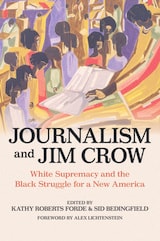
Journalism and Jim Crow
White Supremacy and the Black Struggle for a New AmericaEdited by Kathy Roberts Forde and Sid Bedingfield
University of Illinois Press, 2021
White publishers and editors used their newspapers to build, nurture, and protect white supremacy across the South in the decades after the Civil War. At the same time, a vibrant Black press fought to disrupt these efforts and force the United States to live up to its democratic ideals. Journalism and Jim Crow centers the press as a crucial political actor shaping the rise of the Jim Crow South. The contributors explore the leading role of the white press in constructing an anti-democratic society by promoting and supporting not only lynching and convict labor but also coordinated campaigns of violence and fraud that disenfranchised Black voters. They also examine the Black press’s parallel fight for a multiracial democracy of equality, justice, and opportunity for all—a losing battle with tragic consequences for the American experiment.
Original and revelatory, Journalism and Jim Crow opens up new ways of thinking about the complicated relationship between journalism and power in American democracy.
Contributors: Sid Bedingfield, Bryan Bowman, W. Fitzhugh Brundage, Kathy Roberts Forde, Robert Greene II, Kristin L. Gustafson, D'Weston Haywood, Blair LM Kelley, and Razvan Sibii
Journalism and Realism
Rendering American LifeThomas B Connery
Northwestern University Press, 2011
Journalism and Truth
Strange BedfellowsTom Goldstein
Northwestern University Press, 2007
Other disciplines, Goldstein tells us, have clear protocols for gathering evidence and searching for truth. Journalism, however, has some curious conventions that may actually work against such a goal. Looking at how journalism has changed over time--and with it, notions about accuracy and truth in reporting—Goldstein explores how these long-standing and ultimately untrustworthy conventions developed. He also examines why reliable standards of objectivity and accuracy are critical not just to a free press but to the democratic society it informs and serves. From a historical overview to a reconsideration of a misunderstood book about journalism (The Journalist and the Murderer) to a reflection on the coverage of the war in Iraq, his book offers a remarkably wide-ranging and thought-provoking account of how journalism and truth work—or fail to work—together, and why it matters.
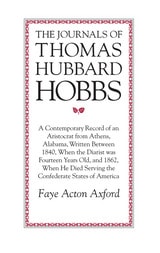
Journals of Thomas H. Hobbs
Thomas Hubbard Hobbs
University of Alabama Press, 1976
Written between 1840, when the diarist was fourteen years old, and 1862, when he died serving the Confederate States of America.
Journey into Northern Pennsylvania and the State of New York
Michel-Guillaume St. Jean de Crèvecoeur
University of Michigan Press, 1964
Journey of Five Capuchin Nuns
Madre María Rosa
Iter Press, 2009
Journey of Five Capuchin Nuns contains all the elements of a riveting adventure story. Through the eyes of the Mother Abbess, María Rosa, the reader is taken along on this journey through wars, pirates, disease, travel on the high seas, and treacherous mountain passes in the Andes. Five nuns set out in the early 1700s from their cloistered convent in Madrid, Spain, to travel halfway around the world to Lima, Peru. The journey lasted three years—an odyssey not all of them would complete. Yet, this unique historical document is so much more than a typical travel narrative. It illuminates the eighteenth-century way of life of religious women on both sides of the Atlantic basin. María Rosa’s lively prose attests to the literary connection among women religious writers of Spain and Latin America. This annotated edition and first-ever English translation of the manuscript will be of interest to scholars, students and anyone who wants to learn more about women’s history.
Journey of Navajo Oshley
An Autobiography and Life HistoryRobert McPherson
Utah State University Press, 2000
Ak'é Nýdzin, or Navajo Oshley, was born sometime between 1879 and 1893. His oral memoir is set on the northern frontier of Navajo land, principally the San Juan River basin in southeastern Utah, and tells the story of his early life near Dennehetso and his travels, before there were roads or many towns, from Monument Valley north along Comb Ridge to Blue Mountain. During the late 19th and early 20th centuries, Anglos and Navajos expanded their use and settlement of lands north of the San Juan. Grazing lands and the Anglo wage economy drew many Navajos across the river. Oshley, a sheepherder, was among the first to settle there. He cared for the herds of his extended family, while also taking supplemental jobs with the growing livestock industry in the area.
His narrative is woven with vivid and detailed portraits of Navajo culture: clan relationships, marriages and children, domestic life, the importance of livestock, complex relations with the natural world, ceremonies, trading, and hand trembling.
Journey to Texas, 1833
By Detlef Dunt. Translated by Anders Saustrup, edited and with an introduction by James C. Kearney and Geir Bentzen
University of Texas Press, 2015
In 1834, a German immigrant to Texas, D. T. F. (Detlef Thomas Friedrich) Jordt, aka Detlef Dunt, published Reise nach Texas, a delightful little book that praised Texas as “a land which puts riches in [the immigrant’s] lap, which can bring happiness to thousands and to their descendants.” Dunt’s volume was the first one written by an on-the-ground observer to encourage German immigration to Texas, and it provides an unparalleled portrait of Austin’s Colony from the lower Brazos region and San Felipe to the Industry and Frelsburg areas, where Dunt resided with Friedrich Ernst and his family.
Journey to Texas, 1833 offers the first English translation of Reise nach Texas. It brings to vivid life the personalities, scenic landscapes, and customs that Dunt encountered in colonial Texas on the eve of revolution, along with his many practical suggestions for Germans who intended to emigrate. The editors’ introduction describes the social, political, and economic conditions that prompted Europeans to emigrate to Texas and provides biographical background on Dunt and his connection with Friedrich Ernst. Also included in the volume are a bibliography of German works about Texas and an interpretive essay discussing all of the early German literature about Texas and Dunt’s place within it. Expanding our knowledge of German immigration to Texas beyond the more fully documented Hill Country communities, Journey to Texas, 1833 also adds an important chapter to the story of pre-Revolutionary Texas by a sophisticated commentator.

Journey
The Gateway Theatre Building and Company, 1884-1965Ian Brown
Intellect Books, 2013

Journeys from Scandinavia
Travelogues of Africa, Asia, and South America, 1840—2000Elisabeth Oxfeldt
University of Minnesota Press, 2010
Journeys in Church History Volume 2
Essays from the <i>Catholic Historical Review</i>Nelson H. Minnich
Catholic University of America Press, 2025
Journeys in New Worlds
Early American Women's NarrativesWilliam L. Andrews
University of Wisconsin Press, 1990
Four early American women tell their own stories: Mary Rowlandson on her capture by Indians in 1676, Boston businesswoman Sarah Kemble Knight on her travels in New England, Elizabeth Ashbridge on her personal odyssey from indentured servant to Quaker preacher, and Elizabeth House Trist, correspondent of Thomas Jefferson, on her travels from Philadelphia to Natchez. Accompanied by introductions and extensive notes.
"The writings of four hearty women who braved considerable privation and suffering in a wild, uncultivated 17th- and 18th-century America. Although confined by Old World patriarchy, these women, through their narratives, have endowed the frontier experience with a feminine identity that is generally absent from early American literature."—Publishers Weekly
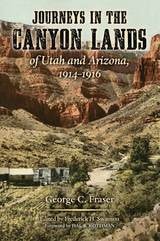
Journeys in the Canyon Lands of Utah and Arizona, 1914-1916
George C. Fraser; Edited by Frederick H. Swanson; Foreword by Hal K. Rothman
University of Arizona Press, 2005
Frederick H. Swanson has edited Fraser’s voluminous journals into a single volume covering three trips taken from 1914 to 1916. As Fraser wades the bone-chilling waters of the Zion Narrows, crosses the Grand Canyon in midsummer heat, and rides through the trackless forest of the Aquarius Plateau, he conveys impressions of the land that will fascinate any reader who wonders what the canyon country was like before it became a popular tourist destination—and one that will inform historians interested in early accounts of the region. Accompanied by a selection of photographs taken by Fraser and his fellow travelers, Journeys in the Canyon Lands brings to life the Southwest’s breathtaking backcountry on the brink of discovery.
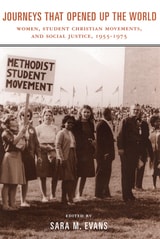
Journeys that Opened up the World
Women, Student Christian Movements, and Social Justice, 1955-1975Evans, Sara M.
Rutgers University Press, 2003
For thousands of young women in the 1950s and 1960s, involvement with the student Christian movement (SCM) changed their worldviews. Religious organizations fostered women’s leadership at a time when secular groups like Students for a Democratic Society, and the Left in general, relegated most female participants to stereotypical roles.
The SCM introduced young women to activism in other parts of the country and around the world. As leaders, thinkers, and organizers, they encountered the social realities of poverty and racial prejudice and worked to combat them. The SCM took women to Selma and Montgomery, to Africa and Latin America, and to a lifelong commitment to work for social justice.
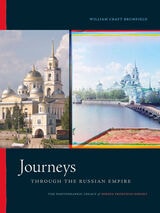
Journeys through the Russian Empire
The Photographic Legacy of Sergey Prokudin-GorskyWilliam Craft Brumfield
Duke University Press, 2020
In 1918 Prokudin-Gorsky escaped an increasingly chaotic, violent Russia and regained nearly 2,000 of his bulky glass negatives. His subsequent peripatetic existence before settling in Paris makes his collection's survival all the more miraculous. The U.S. Library of Congress acquired Prokudin-Gorsky's collection in 1948, and since then it has become a touchstone for understanding pre-revolutionary Russia. Now digitized and publicly available, his images are a sensation in Russia, where people visit websites dedicated to them.
William Craft Brumfield—photographer, scholar, and the leading authority on Russian architecture in the West—began working with Prokudin-Gorsky's photographs in 1985. He curated the first public exhibition of them in the United States and has annotated the entire collection. In Journeys through the Russian Empire, Brumfield—who has spent decades traversing Russia and photographing buildings and landscapes in their various stages of disintegration or restoration—juxtaposes Prokudin-Gorsky's images against those he took of the same buildings and areas. In examining the intersections between his own photography and that of Prokudin-Gorsky, Brumfield assesses the state of preservation of Russia's architectural heritage and calls into question the nostalgic assumptions of those who see Prokudin-Gorsky's images as the recovery of the lost past of an idyllic, pre-Soviet Russia.
This lavishly illustrated volume—which features some 400 stunning full-color images of ancient churches and mosques, railways and monasteries, towns and remote natural landscapes—is a testament to two brilliant photographers whose work prompts and illuminates, monument by monument, questions of conservation, restoration, and cultural identity and memory.
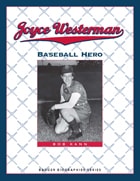
Joyce Westerman
Baseball HeroBob Kann
Wisconsin Historical Society Press, 2012
Joyce Westerman grew up on a farm in Pleasant Prairie, Wisconsin. As a kid, she cleaned the barn, picked vegetables, and helped her father cut down trees. But what she really loved to do was play baseball. Joyce played ball at recess and with friends whenever she could. She even joined her aunt’s adult softball team when she was only twelve.
As Joyce got older, she went to work at a factory in Kenosha. But when World War II broke out, she got a chance to try out for the All American Girls Professional Baseball League. Women from all over the country signed up to show off their skills. Only a few were good enough, and Joyce was one of them. For eight years, Joyce travelled around the United Stated playing ball, winning the league championship in her last season.
This addition to the Badger Biographies series for young readers tells the story of a woman who lived her dream of becoming a professional athlete. In a time when women had few opportunities for careers, and next to none in professional sports, Joyce and her teammates showed that women have what it takes.
Joyce and the Two Irelands
By Willard Potts
University of Texas Press, 2001
Uniting Catholic Ireland and Protestant Ireland was a central idea of the "Irish Revival," a literary and cultural manifestation of Irish nationalism that began in the 1890s and continued into the early twentieth century. Yet many of the Revival's Protestant leaders, including W. B. Yeats, Lady Gregory, and John Synge, failed to address the profound cultural differences that made uniting the two Irelands so problematic, while Catholic leaders of the Revival, particularly the journalist D. P. Moran, turned the movement into a struggle for greater Catholic power.
This book fully explores James Joyce's complex response to the Irish Revival and his extensive treatment of the relationship between the "two Irelands" in his letters, essays, book reviews, and fiction up to Finnegans Wake. Willard Potts skillfully demonstrates that, despite his pretense of being an aloof onlooker, Joyce was very much a part of the Revival. He shows how deeply Joyce was steeped in his whole Catholic culture and how, regardless of the harsh way he treats the Catholic characters in his works, he almost always portrays them as superior to any Protestants with whom they appear. This research recovers the historical and cultural roots of a writer who is too often studied in isolation from the Irish world that formed him.
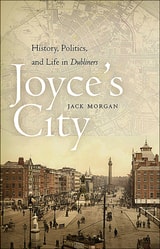
Joyce's City
History, Politics, and Life in DUBLINERSJack Morgan
University of Missouri Press, 2014
Joyce's Ghosts
Ireland, Modernism, and MemoryLuke Gibbons
University of Chicago Press, 2015
In Joyce’s Ghosts, Luke Gibbons mounts a powerful argument that this view is mistaken: Joyce’s Irishness is intrinsic to his modernism, informing his most distinctive literary experiments. Ireland, Gibbons shows, is not just a source of subject matter or content for Joyce, but of form itself. Joyce’s stylistic innovations can be traced at least as much to the tragedies of Irish history as to the shock of European modernity, as he explores the incomplete project of inner life under colonialism. Joyce’s language, Gibbons reveals, is haunted by ghosts, less concerned with the stream of consciousness than with a vernacular interior dialogue, the “shout in the street,” that gives room to outside voices and shadowy presences, the disruptions of a late colonial culture in crisis.
Showing us how memory under modernism breaks free of the nightmare of history, and how in doing so it gives birth to new forms, Gibbons forces us to think anew about Joyce’s achievement and its foundations.
Joyce's Web
The Social Unraveling of ModernismBy Margot Norris
University of Texas Press, 1992
James Joyce has long been viewed as a literary modernist who helped define and uphold modernism's fundamental concepts of the artist as martyr to bourgeois sensibilities and of an idealistic faith in artistic freedom. In this revolutionary work, however, Margot Norris proposes that Joyce's art actually critiques these modernist tenets by revealing an awareness of the artist's connections to and constraints within bourgeois society.
In sections organized around three mythologized and aestheticized figures in Joyce's works—artist, woman, and child—Norris' readings "unravel the web" of Joyce's early and late stories, novels, and experimental texts. She shows how Joyce's texts employ multiple mechanisms to expose their own distortions, silences, and lies and reveal connections between art and politics, and art and society.
This ambitious new reading not only repositions Joyce within contemporary debates about the ideological assumptions behind modernism and postmodernism, but also urges reconsideration of the phenomenon of modernism itself. It will be of interest and importance to all literary scholars.
Joyce, Bakhtin, and the Literary Tradition
Toward a Comparative Cultural PoeticsM. Keith Booker
University of Michigan Press, 1997

Joyce, Chaos, and Complexity
Thomas Jackson Rice
University of Illinois Press, 1997
Placing Joyce in his cultural context, Rice first traces the influence of Euclidean and non-Euclidean geometries on Dubliners and A Portrait of the Artist as a Young Man. He then demonstrates that, when later innovations in science transformed entire worldviews, Joyce recognized conventional literary modes of representation as offering only arbitrary constructions of this reality. Joyce responded in Ulysses by experimenting with perspective, embedding design, and affirming the existence of reality. Rice contends that Ulysses presages the multiple tensions of chaos theory; likewise, chaos theory can serve as a model for understanding Ulysses. In Finnegans Wake Joyce consummates his vision and anticipates the theories of complexity science through a dynamic approximation of reality.
Joyce/Foucault
Sexual ConfessionsWolfgang Streit
University of Michigan Press, 2004
Joyce/Foucault: Sexual Confessions examines instances of sexual confession in works of James Joyce, with a special emphasis on Portrait of the Artist as a Young Man and Ulysses. Using Michel Foucault's historical analysis of Western sexuality as its theoretical underpinning, the book foregrounds the role of the Jesuit order in the spread of a confessional force, and finds this influence inscribed into Joyce's major texts. Wolfgang Streit goes on to argue that the tension between the texts' erotic passages and Joyce's criticism of even his own sexual writing energizes Joyce's narratives-and enables Joyce to develop the radical skepticism of power revealed in his work.
Wolfgang Streit is Lecturer, Ludwig Maximilians University, Munich.
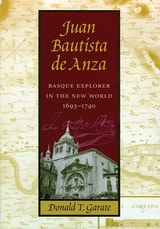
Juan Bautista de Anza
Basque Explorer in the New World, 1693-1740Donald T. Garate
University of Nevada Press, 2005
The first biography of an eighteenth-century Basque immigrant who became a silver miner, a cattle rancher, and commander of the cavalry in Sonora, Mexico. The name of Juan Bautista de Anza the younger is a fairly familiar one in the contemporary Southwest because of the various streets, schools, and other places that bear his name. Few people, however, are familiar with his father, the elder Juan Bautista de Anza, whose activities were crucial to the survival of the tenuous and far-flung settlements of Spain’s northernmost colonial frontier. For this first comprehensive biography of the elder Anza, Donald T. Garate spent more than ten years researching archives in Spain and the Americas. The result is a lively picture of the Spanish borderlands and the hardy, ambitious colonists who peopled them.
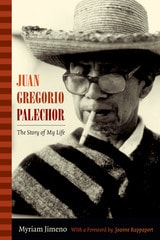
Juan Gregorio Palechor
The Story of My LifeMyriam Jimeno Translated by Andy Klatt
Duke University Press, 2014
Palechor's lively memoir is complemented by Jimeno's reflections on autobiography as an anthropological tool and on the oppressive social and political conditions faced by Colombia's indigenous peoples. A faithful and fluent transcription of Palechor's life story, this work is a uniquely valuable resource for understanding the contemporary indigenous rights movements in Colombia.
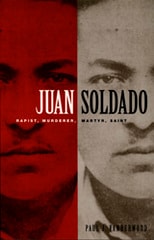
Juan Soldado
Rapist, Murderer, Martyr, SaintPaul J. Vanderwood
Duke University Press, 2004
In addition to conducting extensive archival research, Vanderwood interviewed central actors in the events of 1938, including Olga Camacho’s mother, citizens who rioted to demand Morales’s release to a lynch mob, those who witnessed his execution, and some of the earliest believers in his miraculous powers. Vanderwood also interviewed many present-day visitors to the shrine at Morales’s grave. He describes them, their petitions—for favors such as health, a good marriage, or safe passage into the United States—and how they reconcile their belief in Juan Soldado with their Catholicism. Vanderwood puts the events of 1938 within the context of Depression-era Tijuana and he locates people’s devotion, then and now, within the history of extra-institutional religious activity. In Juan Soldado, a gripping true-crime mystery opens up into a much larger and more elusive mystery of faith and belief.