Results by title
4531 books match the query 'Cultural & Ethnic Studies' and 24 start with k
Kafu the Scribbler
The Life and Writings of Nagai Kafu, 1897–1959Edward Seidensticker
University of Michigan Press, 1990

Karawitan
Source Readings in Javanese Gamelan and Vocal Music, Volume 1Edited by Judith Becker with assistance from Alan H. Feinstein
University of Michigan Press, 1984

Karawitan
Source Readings in Javanese Gamelan and Vocal Music, Volume 2Edited by Judith Becker with assistance from Alan H. Feinstein
University of Michigan Press, 1987
Karawitan
Source Readings in Javanese Gamelan and Vocal Music, Volume 3Edited by Judith Becker with assistance from Alan H. Feinstein
University of Michigan Press, 1988
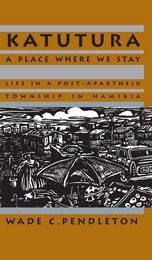
Katutura
A Place Where We Stay: Life in a Post-Apartheid Township in NamibiaWade C. Pendleton
Ohio University Press, 1995
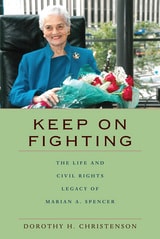
Keep On Fighting
The Life and Civil Rights Legacy of Marian A. SpencerDorothy H. Christenson
Ohio University Press, 2015
Marian Alexander Spencer was born in 1920 in the Ohio River town of Gallipolis, Ohio, one year after the “Red Summer” of 1919 that saw an upsurge in race riots and lynchings. Following the example of her grandfather, an ex-slave and community leader, Marian joined the NAACP at thirteen and grew up to achieve not only a number of civic leadership firsts in her adopted home city of Cincinnati, but a legacy of lasting civil rights victories.
Of these, the best known is the desegregation of Cincinnati’s Coney Island amusement park. She also fought to desegregate Cincinnati schools and to stop the introduction of observers in black voting precincts in Ohio. Her campaign to raise awareness of industrial toxic-waste practices in minority neighborhoods was later adapted into national Superfund legislation.
In 2012, Marian’s friend and colleague Dot Christenson sat down with her to record her memories. The resulting biography not only gives us the life story of remarkable leader but encapsulates many of the twentieth century’s greatest struggles and advances. Spencer’s story will prove inspirational and instructive to citizens and students alike.
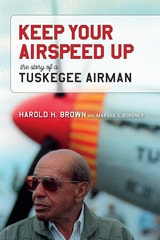
Keep Your Airspeed Up
The Story of a Tuskegee AirmanHarold H. Brown and Marsha S. Bordner
University of Alabama Press, 2017
Inspiring memoir of Colonel Harold H. Brown, one of the 930 original Tuskegee pilots, whose dramatic wartime exploits and postwar professional successes contribute to this extraordinary account.
Keep Your Airspeed Up: The Story of a Tuskegee Airman is the memoir of an African American man who, through dedication to his goals and vision, overcame the despair of racial segregation to great heights, not only as a military aviator, but also as an educator and as an American citizen.
Unlike other historical and autobiographical portrayals of Tuskegee airmen, Harold H. Brown’s memoir is told from its beginnings: not on the first day of combat, not on the first day of training, but at the very moment Brown realized he was meant to be a pilot. He revisits his childhood in Minneapolis where his fascination with planes pushed him to save up enough of his own money to take flying lessons. Brown also details his first trip to the South, where he was met with a level of segregation he had never before experienced and had never imagined possible.
During the 1930s and 1940s, longstanding policies of racial discrimination were called into question as it became clear that America would likely be drawn into World War II. The military reluctantly allowed for the development of a flight-training program for a limited number of African Americans on a segregated base in Tuskegee, Alabama. The Tuskegee Airmen, as well as other African Americans in the armed forces, had the unique experience of fighting two wars at once: one against Hitler’s fascist regime overseas and one against racial segregation at home.
Colonel Brown fought as a combat pilot with the 332nd Fighter Group during World War II, and was captured and imprisoned in Stalag VII A in Moosburg, Germany, where he was liberated by General George S. Patton on April 29, 1945. Upon returning home, Brown noted with acute disappointment that race relations in the United States hadn’t changed. It wasn’t until 1948 that the military desegregated, which many scholars argue would not have been possible without the exemplary performance of the Tuskegee Airmen.
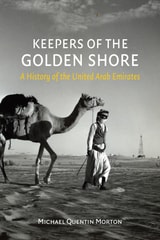
Keepers of the Golden Shore
A History of the United Arab EmiratesMichael Quentin Morton
Reaktion Books, 2016
As Michael Quentin Morton recounts, the region now known as the UAE likely began as a trading post between Mesopotamia and Oman, and since that time has been the stage of important economic and cultural exchanges. It has seen the rise and fall of a thriving pearl industry, piracy, invasions and wars, and the arrival of the oil age that would make it one of the richest countries on earth. Since the early 1970s, when seven sheikhs agreed to enter into a union, it has been a sovereign nation, carrying on the resourceful spirit—with resplendent fervor—that the brutally inhospitable landscape has long demanded of the people. Ultimately, Morton shows that the country is not only rich in oil and money but in an extraordinarily deep history and culture.
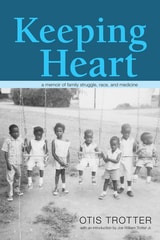
Keeping Heart
A Memoir of Family Struggle, Race, and MedicineOtis Trotter
Ohio University Press, 2015
“After saying our good-byes to friends and neighbors, we all got in the cars and headed up the hill and down the road toward a future in Ohio that we hoped would be brighter,” Otis Trotter writes in his affecting memoir, Keeping Heart: A Memoir of Family Struggle, Race, and Medicine.
Organized around the life histories, medical struggles, and recollections of Trotter and his thirteen siblings, the story begins in 1914 with his parents, Joe William Trotter Sr. and Thelma Odell Foster Trotter, in rural Alabama. By telling his story alongside the experiences of his parents as well as his siblings, Otis reveals cohesion and tensions in twentieth-century African American family and community life in Alabama, West Virginia, and Ohio.
This engaging chronicle illuminates the journeys not only of a black man born with heart disease in the southern Appalachian coalfields, but of his family and community. It fills an important gap in the literature on an underexamined aspect of American experience: the lives of blacks in rural Appalachia and in the nonurban endpoints of the Great Migration. Its emotional power is a testament to the importance of ordinary lives.
Kicking Off the Bootstraps
Environment, Development, and Community Power in Puerto RicoDéborah Berman Santana
University of Arizona Press, 1996
Kicking Off the Bootstraps is a powerful case history of such an effort. It describes a grassroots activist movement that emerged in the Puerto Rican community of Salinas to counter the poverty and economic dependence experienced by its citizens in the wake of "Operation Bootstrap," a post-World War II industrial development program. Déborah Berman Santana examines the efforts of the community to develop its own economic strategy based primarily on environmentally and socially responsible uses of local natural and human resources.
Berman Santana shows how local activists are seeking to empower the Salinas community to make decisions concerning economic development. She evaluates present-day efforts to develop positive alternatives, examining the motivations of the activists, the nature of their projects, their efforts to mobilize the community, their dealings with government and other organizations, and the obstacles they face. In a closing chapter, she addresses the potential roles of community leaders, outside activists, local businesses, and government in actualizing these alternatives.
A testimony to one community's efforts to determine its own future, Kicking Off the Bootstraps deals with real issues such as control over productive resources, quality of life, and environmental health. It also extends an examination of community-directed activism to an exploration of policy implications for sustainable development. While this concept is often too vague to be applied to real strategies, the Salinas experience provides a clear idea of what sustainable development can—and should—mean in actual practice.
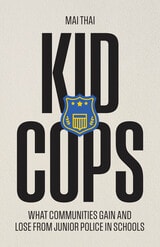
Kid Cops
What Communities Gain and Lose from Junior Police in SchoolsMai Thai
University of Chicago Press, 2026
Some might see police officers as benevolent sources of protection, but in many communities, they are often perceived as a threat due to a legacy of violent interactions and arrests for arbitrary offenses. How, then, do police sustain their presence in places where people might distrust them? In Kid Cops, sociologist Mai Thai offers one answer: junior police academies, high school programs in which police officers provide courses, mentorship, and job training to students in communities with high rates of juvenile delinquency and poverty. These school-police partnerships have expanded rapidly in the United States over the last few decades, largely in response to political unrest and police violence in the 1990s. Programs vary in their offerings, but they generally aim to ease tensions between communities and law enforcement, while also providing needed resources in neighborhoods where education and job opportunities are scarce.
Kid Cops draws on years of observations and interviews with educators, police officers, and, of course, kids. The junior police programs at each high school may have different emphases, but their common goal is for students to graduate from high school and enter college or the workforce. A second goal of the program is to cultivate a positive image of the police. Ultimately, however, Thai finds that these programs tighten the relationship between marginalized youth, schools, and the criminal justice system and strain the students’ relationships with their peers, families, and each other. These programs also distract residents from systemic issues of policing and suppress opportunities for meaningful change.
Written in an accessible tone that balances the seriousness of inequality with the playfulness of the study’s youth, Kid Cops moves beyond the narrative of detentions, suspensions, and arrests to tell a less conventional story about police in schools. It asks, does good, friendly policing exist—especially if it continues to tether low-income communities of color to the criminal justice system?
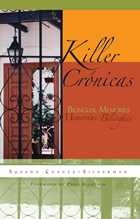
Killer Crónicas
Bilingual MemoriesSusana Chavez-Silverman
University of Wisconsin Press, 2004
Includes a chapter that was awarded first prize in El Andar magazine’s Chicano Literary Excellence Contest in the category of personal memoir.

Killing Poetry
Blackness and the Making of Slam and Spoken Word CommunitiesJohnson, Javon
Rutgers University Press, 2017
Co-winner of the 2018 Ethnography Division’s Best Book from the NCA
In recent decades, poetry slams and the spoken word artists who compete in them have sparked a resurgent fascination with the world of poetry. However, there is little critical dialogue that fully engages with the cultural complexities present in slam and spoken word poetry communities, as well as their ramifications.
In Killing Poetry, renowned slam poet, Javon Johnson unpacks some of the complicated issues that comprise performance poetry spaces. He argues that the truly radical potential in slam and spoken word communities lies not just in proving literary worth, speaking back to power, or even in altering power structures, but instead in imagining and working towards altogether different social relationships. His illuminating ethnography provides a critical history of the slam, contextualizes contemporary black poets in larger black literary traditions, and does away with the notion that poetry slams are inherently radically democratic and utopic.
Killing Poetry—at times autobiographical, poetic, and journalistic—analyzes the masculine posturing in the Southern California community in particular, the sexual assault in the national community, and the ways in which related social media inadvertently replicate many of the same white supremacist, patriarchal, and mainstream logics so many spoken word poets seem to be working against. Throughout, Johnson examines the promises and problems within slam and spoken word, while illustrating how community is made and remade in hopes of eventually creating the radical spaces so many of these poets strive to achieve.

Kindred Specters
Death, Mourning, and American AffinityChristopher Peterson
University of Minnesota Press, 2007
The refusal to recognize kinship relations among slaves, interracial couples, and same-sex partners is steeped in historical and cultural taboos. In Kindred Specters, Christopher Peterson explores the ways in which non-normative relationships bear the stigma of death that American culture vehemently denies.
Probing Derrida’s notion of spectrality as well as Orlando Patterson’s concept of “social death,” Peterson examines how death, mourning, and violence condition all kinship relations. Through Charles Chesnutt’s The Conjure Woman, Peterson lays bare concepts of self-possession and dispossession, freedom and slavery. He reads Toni Morrison’s Beloved against theoretical and historical accounts of ethics, kinship, and violence in order to ask what it means to claim one’s kin as property. Using William Faulkner’s Absalom, Absalom! he considers the political and ethical implications of comparing bans on miscegenation and gay marriage.
Tracing the connections between kinship and mourning in American literature and culture, Peterson demonstrates how racial, sexual, and gender minorities often resist their social death by adopting patterns of affinity that are strikingly similar to those that govern normative relationships. He concludes that socially dead “others” can be reanimated only if we avow the mortality and mourning that lie at the root of all kinship relations.
Christopher Peterson is visiting assistant professor of literature at Claremont McKenna College.
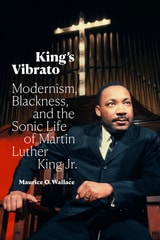
King's Vibrato
Modernism, Blackness, and the Sonic Life of Martin Luther King Jr.Maurice O. Wallace
Duke University Press, 2022
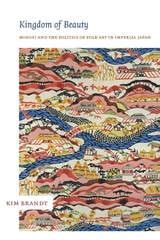
Kingdom of Beauty
Mingei and the Politics of Folk Art in Imperial JapanKim Brandt
Duke University Press, 2007
Kingdom of Beauty shows that the discovery of mingei (folk art) by Japanese intellectuals in the 1920s and 1930s was central to the complex process by which Japan became both a modern nation and an imperial world power. Kim Brandt’s account of the mingei movement locates its origins in colonial Korea, where middle-class Japanese artists and collectors discovered that imperialism offered them special opportunities to amass art objects and gain social, cultural, and even political influence. Later, mingei enthusiasts worked with (and against) other groups—such as state officials, fascist ideologues, rival folk art organizations, local artisans, newspaper and magazine editors, and department store managers—to promote their own vision of beautiful prosperity for Japan, Asia, and indeed the world. In tracing the history of mingei activism, Brandt considers not only Yanagi Muneyoshi, Hamada Shōji, Kawai Kanjirō, and other well-known leaders of the folk art movement but also the often overlooked networks of provincial intellectuals, craftspeople, marketers, and shoppers who were just as important to its success. The result of their collective efforts, she makes clear, was the transformation of a once-obscure category of pre-industrial rural artifacts into an icon of modern national style.
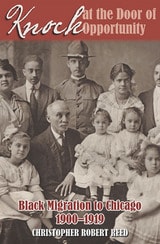
Knock at the Door of Opportunity
Black Migration to Chicago, 1900-1919Christopher Robert Reed
Southern Illinois University Press, 2014
Disputing the so-called ghetto studies that depicted the early part of the twentieth century as the nadir of African American society, this thoughtful volume by Christopher Robert Reed investigates black life in turn-of-the-century Chicago, revealing a vibrant community that grew and developed on Chicago’s South Side in the early 1900s. Reed also explores the impact of the fifty thousand black southerners who streamed into the city during the Great Migration of 1916–1918, effectively doubling Chicago’s African American population. Those already residing in Chicago’s black neighborhoods had a lot in common with those who migrated, Reed demonstrates, and the two groups became unified, building a broad community base able to face discrimination and prejudice while contributing to Chicago’s growth and development.
Reed not only explains how Chicago’s African Americans openly competed with white people for jobs, housing and an independent political voice but also examines the structure of the society migrants entered and helped shape. Other topics include South Side housing, black politics and protest, the role of institutionalized religion, the economic aspects of African American life, the push for citizenship rights and political power for African Americans, and the impact of World War I and the race riot of 1919. The first comprehensive exploration of black life in turn-of-the-century Chicago beyond the mold of a ghetto perspective, this revealing work demonstrates how the melding of migrants and residents allowed for the building of a Black Metropolis in the 1920s.
2015 ISHS Superior Achievement Award
Knowing Silence
How Children Talk about Immigration Status in SchoolAriana Mangual Figueroa
University of Minnesota Press, 2024
Learning from children about citizenship status and how it shapes their schooling
There is a persistent assumption in the field of education that children are largely unaware of their immigration status and its implications. In Knowing Silence, Ariana Mangual Figueroa challenges this “myth of ignorance.” By listening carefully to both the speech and significant silences of six Latina students from mixed-immigration-status families, from elementary school into middle school and beyond, she reveals the complex ways young people understand and negotiate immigration status and its impact on their lives.
Providing these children with iPod Touches to record their own conversations, Mangual Figueroa observes when and how they choose to talk about citizenship at home, at school, and in public spaces. Analyzing family conversations about school forms, in-class writing assignments, encounters with the police, and applications for college, she demonstrates that children grapple with the realities of citizenship from an early age. Educators who underestimate children’s knowledge, Mangual Figueroa shows, can marginalize or misunderstand these students and their families.
Combining significant empirical findings with reflections on the ethical questions surrounding research and responsibility, Mangual Figueroa models new ways scholars might collaborate with educators, children, and families. With rigorous and innovative ethnographic methodologies, Knowing Silence makes audible the experiences of immigrant-origin students in their own terms, ultimately offering teachers and researchers a crucial framework for understanding citizenship in the contemporary classroom.
Knowing What We Know
African American Women's Experiences of Violence and ViolationGarfield, Gail
Rutgers University Press, 2005
In recent years there has been an attempt by activists, service providers, and feminists to think about violence against women in more inclusive ways. In Knowing What We Know, activist and sociologist Gail Garfield argues that this effort has not gone far enough and that in order to understand violence, we must take the lived experiences of African American women seriously. Doing so, she cautions, goes far beyond simply adding voices of black women to existing academic and activist discourses, but rather, requires a radical shift in our knowledge of these women’s lives and the rhetoric used to describe them.
Bringing together a series of life-history interviews with nine women, this unique study urges a departure from established approaches that position women as victims of exclusively male violence. Instead, Garfield explores what happens when women’s ability to make decisions and act upon those choices comes into conflict with cultural and social constraints. Chapters explore how women experience racialized or class-based violence, how these forms of violence are related to gendered violence, and what these violations mean to a woman’s sense of identity. By showing how women maintain, sustain, and in some instances regain their sense of human worth as a result of their experiences of violation, Garfield complicates the existing dialogue on violence against women in new and important ways.
Knowing by Ear
Listening to Voice Recordings with African Prisoners of War in German Camps (1915–1918)Anette Hoffmann
Duke University Press, 2024
Korean "Comfort Women"
Military Brothels, Brutality, and the Redress MovementPyong Gap Min
Rutgers University Press, 2021
Korean “Comfort Women” synthesizes the previous major findings about Japanese military sexual slavery and legal recommendations, and provides new findings about the issues “comfort women” faced for an English-language audience. It also examines the transnational redress movement, revealing that the Japanese government has tried to conceal the crime of sexual slavery and to resolve the women’s human rights issue with diplomacy and economic power.
Kuria Cattle Raiders
Violence and Vigilantism on the Tanzania/Kenya FrontierMichael L. Fleisher
University of Michigan Press, 2000
The reciprocal raiding of cattle by pastoralists has a long and venerable history in East Africa, but there has been, until now, no book-length treatment of the practice, and, more importantly, no detailed case study of the newer, "modern" form of cattle raiding described here. In addition, the phenomenon of Kuria cattle raiding conveys significant implications for our understanding of informal economies and globalization processes.
Kuria Cattle Raiders engages issues of theoretical as well as practical significance for anthropologists, sociologists, criminologists, cultural ecologists, economic development agencies, and all those concerned with the pressing issues of globalization and rapid social and cultural change.
Michael L. Fleisher, a Post-Doctoral Research Fellow in the Department of Rangeland Resources, Utah State University, is currently engaged in a study of conflict among pastoralists in southern Ethiopia as part of a research project jointly administered by the University of Kentucky, Utah State University, and Cornell University under a grant from U.S.A.I.D.
Kuxlejal Politics
Indigenous Autonomy, Race, and Decolonizing Research in Zapatista CommunitiesBy Mariana Mora
University of Texas Press, 2017
Over the past two decades, Zapatista indigenous community members have asserted their autonomy and self-determination by using everyday practices as part of their struggle for lekil kuxlejal, a dignified collective life connected to a specific territory. This in-depth ethnography summarizes Mariana Mora’s more than ten years of extended research and solidarity work in Chiapas, with Tseltal and Tojolabal community members helping to design and evaluate her fieldwork. The result of that collaboration—a work of activist anthropology—reveals how Zapatista kuxlejal (or life) politics unsettle key racialized effects of the Mexican neoliberal state.
Through detailed narratives, thick descriptions, and testimonies, Kuxlejal Politics focuses on central spheres of Zapatista indigenous autonomy, particularly governing practices, agrarian reform, women’s collective work, and the implementation of justice, as well as health and education projects. Mora situates the proposals, possibilities, and challenges associated with these decolonializing cultural politics in relation to the racialized restructuring that has characterized the Mexican state over the past twenty years. She demonstrates how, despite official multicultural policies designed to offset the historical exclusion of indigenous people, the Mexican state actually refueled racialized subordination through ostensibly color-blind policies, including neoliberal land reform and poverty alleviation programs. Mora’s findings allow her to critically analyze the deeply complex and often contradictory ways in which the Zapatistas have reconceptualized the political and contested the ordering of Mexican society along lines of gender, race, ethnicity, and class.
Kwame Nkrumah
The Father of African NationalismJeffrey S. Ahlman
Ohio University Press, 1998