Results by title
2335 books match the query 'Modern' and 18 start with k
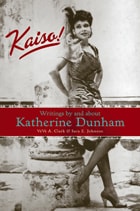
Kaiso!
Writings by and about Katherine DunhamEdited by VeVe A. Clark and Sara E. Johnson
University of Wisconsin Press, 2006
Kant and Phenomenology
Tom Rockmore
University of Chicago Press, 2010
Phenomenology, together with Marxism, pragmatism, and analytic philosophy, dominated philosophy in the twentieth century—and Edmund Husserl is usually thought to have been the first to develop the concept. His views influenced a variety of important later thinkers, such as Heidegger and Merleau-Ponty, who eventually turned phenomenology away from questions of knowledge. But here Tom Rockmore argues for a return to phenomenology’s origins in epistemology, and he does so by locating its roots in the work of Immanuel Kant.
Kant and Phenomenology traces the formulation of Kant’s phenomenological approach back to the second edition of Kant’s Critique of Pure Reason. In response to various criticisms of the first edition, Kant more forcefully put forth a constructivist theory of knowledge. This shift in Kant’s thinking challenged the representational approach to epistemology, and it is this turn, Rockmore contends, that makes Kant the first great phenomenologist. He then follows this phenomenological line through the work of Kant’s idealist successors, Fichte and Hegel. Steeped in the sources and literature it examines, Kant and Phenomenology persuasively reshapes our conception of both of its main subjects.
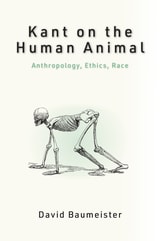
Kant on the Human Animal
Anthropology, Ethics, RaceDavid Baumeister
Northwestern University Press, 2022
David Baumeister tracks four decades of Kant’s intellectual development, surveying works published in Kant’s lifetime along with posthumously published notes and student lecture transcripts. They show the crucial role that animality plays in many previously unconnected areas of Kant’s thought, such as his account of the human’s originally quadrupedal posture, his theory of early childhood development, and his conception of the process of human racial differentiation. Beginning with a delineation of Kant’s understanding of the commonalities and differences between humans and other animals, Baumeister focuses on the contribution of animality to Kant’s views of ethics, anthropology, human nature, and race.
Placing divergent features of Kant’s thought within a unified interpretive framework, Kant on the Human Animal reveals how, for Kant, becoming human requires that animality not be eclipsed and overcome but rather disciplined and developed. What emerges is a new appreciation of Kant’s human being as the human animal it is.
Kant's Conception of Pedagogy
Toward Education for FreedomG. Felicitas Munzel
Northwestern University Press, 2012
Although Kant was involved in the education debates of his time, it is widely held that in his mature philosophical writings he remained silent on the subject. In her groundbreaking Kant’s Conception of Pedagogy, G. Felicitas Munzel finds extant in Kant’s writings the so-called missing critical treatise on education. It appears in the Doctrines of Method with which he concludes each of his major works.
In it, Kant identifies the fundamental principles for the cultivation of reason’s judgment when it comes to cognition, beauty, nature, and the exercise of morality while subject to the passions and inclinations that characterize the human experience.
From her analysis, Munzel extrapolates principles for a cosmopolitan education that parallels the structure of Kant’s republican constitution for perpetual peace. With the formal principles in place, the argument concludes with a query of the material principles that would fulfill the formal conditions required for an education for freedom.
Kant's Organicism
Epigenesis and the Development of Critical PhilosophyJennifer Mensch
University of Chicago Press, 2013
Kant's Worldview
How Judgment Shapes Human ComprehensionRudolf A. Makkreel
Northwestern University Press, 2022
To comprehend, according to Kant, is to possess sufficient insight into situations so as to also achieve some purpose. This requires that reason be applied with the discernment that reflective judgment makes possible. Comprehension, practical as well as theoretical, can fill in Kant’s world concept and his sublime evocation of a Weltanschauung with a more down-to-earth worldview.
Scholars have recently stressed Kant’s impure ethics, his nonideal politics, and his pragmatism. Makkreel complements these efforts by using Kant’s ethical, sociopolitical, religious, and anthropological writings to provide a more encompassing account of the role of human beings in the world. The result is a major contribution to our understanding of Kant and the history of European philosophy.
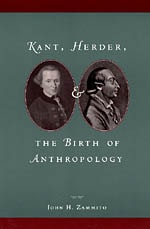
Kant, Herder, and the Birth of Anthropology
John H. Zammito
University of Chicago Press, 2001
Relying on previously unexamined sources, Zammito traces Kant's friendship with Herder as well as the personal tensions that destroyed their relationship. From this he shows how two very different philosophers emerged from the same beginnings and how, because of Herder's reformulation of Kant, anthropology was born out of philosophy.
Shedding light on an overlooked period of philosophical development, this book is a major contribution to the history of philosophy and the social sciences, and especially to the history of anthropology.

Kant, Kantianism, and Idealism
The Origins of Continental PhilosophyEdited by Thomas J. Nenon
University of Chicago Press, 2010
From Kant to Kierkegaard, from Hegel to Heidegger, continental philosophers have indelibly shaped the trajectory of Western thought since the eighteenth century. Although much has been written about these monumental thinkers, students and scholars lack a definitive guide to the entire scope of the continental tradition. The most comprehensive reference work to date, this eight-volume History of Continental Philosophy will both encapsulate the subject and reorient our understanding of it. Beginning with an overview of Kant’s philosophy and its initial reception, the History traces the evolution of continental philosophy through major figures as well as movements such as existentialism, phenomenology, hermeneutics, and poststructuralism. The final volume outlines the current state of the field, bringing the work of both historical and modern thinkers to bear on such contemporary topics as feminism, globalization, and the environment. Throughout, the volumes examine important philosophical figures and developments in their historical, political, and cultural contexts.
The first reference of its kind, A History of Continental Philosophy has been written and edited by internationally recognized experts with a commitment to explaining complex thinkers, texts, and movements in rigorous yet jargon-free essays suitable for both undergraduates and seasoned specialists. These volumes also elucidate ongoing debates about the nature of continental and analytic philosophy, surveying the distinctive, sometimes overlapping characteristics and approaches of each tradition. Featuring helpful overviews of major topics and plotting road maps to their underlying contexts, A History of Continental Philosophy is destined to be the resource of first and last resort for students and scholars alike.

Kant’s Methodology
An Essay in Philosophical ArcheologyCharles P. Bigger
Ohio University Press, 1995
Kant’s revolution in methodology limited metaphysics to the conditions of possible experience. Since, following Hume, analysis—the “method of discovery” in early modern physics—could no longer ground itself in sense or in God’s constituting reason a new arché, “origin” and “principle,” was required, which Kant found in the synthesis of the productive imagination, the common root of sensibility and understanding. Charles Bigger argues that this imaginative “between” recapitulates the ancient Gaia myth which, as used by Plato in the Timaeus, offers a way into this originary arché. Since it depends on myth and the “likely story” rather than on a self-certain apprehension of Being, this facilitates an imaginative approach to the natural sciences which, through its synthetic a priori formations, can claim to be Kantian.
Bigger explores Kant’s ethics as an alternative to metaphysics that holds open the prospect of a Good beyond Being—and phenomenology—whose traces nevertheless appear in original synthesis. Though wary of its reductive implications, Bigger uses Derrida’s difference, a medial, feminine arché, as a way into this creative and procreative metaxu (between). As Emmanuel Levinas suggests, this is Plato’s gap [chaos] between being and becoming, whose possibility, beyond both, lies in chora and the Good. This Open also presents the possibility for a new, yet still Kantian, understanding of the formal and material conditions for the natural sciences.
Kant’s Nonideal Theory of Politics
Dilek Huseyinzadegan
Northwestern University Press, 2019
This novel analysis thus challenges the common assumption that an ideal theory of cosmopolitanism constitutes Kant’s sole political legacy. Dilek Huseyinzadegan demonstrates that Kant employs a teleological worldview throughout his political writings as a means of grappling with the pressing issues of multiplicity, diversity, and plurality—issues that confront us to this day.
Kant’s Nonideal Theory of Politics is the first book-length treatment of Kant’s political thought that gives full attention to the role that history, anthropology, and geography play in his mainstream political writings. Interweaving close textual analyses of Kant’s writings with more contemporary political frameworks, this book also makes Kant accessible and responsive to fields other than philosophy. As such, it will be of interest to students and scholars working at the intersections of political theory, feminism, critical race theory, and post- and decolonial thought.
Karl Kraus and the Discourse of Modernity
Ari Linden
Northwestern University Press, 2020
Kraus’s central insight, Linden argues, is that the medial representations of such events have produced less an informed audience than one increasingly unmoved by mass violence. In the second part of the book, Linden explores this insight as he sees it inflected in the writings of Søren Kierkegaard, Walter Benjamin, and Theodor Adorno. This hidden dialogue, Linden claims, offers us a richer understanding of the often-neglected relationship between satire and critical theory writ large.
Karl Marx in America
Andrew Hartman
University of Chicago Press, 2025
To read Karl Marx is to contemplate a world created by capitalism. People have long viewed the United States as the quintessential anti-Marxist nation, but Marx’s ideas have inspired a wide range of people to formulate a more precise sense of the stakes of the American project. Historians have highlighted the imprint made on the United States by Enlightenment thinkers such as Adam Smith, John Locke, and Thomas Paine, but Marx is rarely considered alongside these figures. Yet his ideas are the most relevant today because of capitalism’s centrality to American life.
In Karl Marx in America, historian Andrew Hartman argues that even though Karl Marx never visited America, the country has been infused, shaped, and transformed by him. Since the beginning of the Civil War, Marx has been a specter in the American machine. During the Gilded Age, socialists read Marx as an antidote to the unchecked power of corporations. In the Great Depression, communists turned to Marx in hopes of transcending the destructive capitalist economy. The young activists of the 1960s were inspired by Marx as they gathered to protest an overseas war. Marx’s influence today is evident, too, as Americans have become increasingly attuned to issues of inequality, labor, and power.
After decades of being pushed to the far-left corner of intellectual thought, Marx’s ideologies have crossed over into the mainstream and are more alive than ever. Working-class consciousness is on the rise, and, as Marx argued, the future of a capitalist society rests in the hands of the people who work at the point of production. A valuable resource for anyone interested in Marx’s influence on American political discourse, Karl Marx in America is a thought-provoking account of the past, present, and future of his philosophies in American society.
Kenneth Burke and Contemporary European Thought
Rhetoric in TransitionBernard L. Brock
University of Alabama Press, 1995
Kenneth Burke and Contemporary European Thought: A Rhetoric in Transition reflects the present transitional nature of rhetoric and society. Its purpose is to relate the rhetorical theory of Burke to the theories of four major European philosophers—Jürgen Habermas, Ernesto Grassi, Foucault, and Jacques Derrida—as they discuss the nature of language and its central role in society.
This book describes a rhetorical world in transition but not a world in chaos. It points to the centrality of symbolism in theories of language and rhetoric and illustrates Burke’s influence as a pivotal things and theorist in the communication arts and sciences, suggesting that the observations regarding shifting paradigms and perspectives made by other scholars are indeed emergent in the realm of rhetoric. It also regards the powerful impact of language and symbolic action in both the critique and construction of human knowledge and augurs a central role for rhetoric in the intellectual and social transformations of this and the next century.
Kenneth Burke and the Conversation after Philosophy
Timothy W. Crusius
Southern Illinois University Press, 1999
Throughout much of his long life (1897–1993), Kenneth Burke was recognized as a leading American intellectual, perhaps the most significant critic writing in English since Coleridge. From about 1950 on, rhetoricians in both English and speech began to see him as a major contributor to the New Rhetoric. But despite Burke's own claims to be writing philosophy and some notice from reviewers and critics that his work was philosophically significant, Timothy W. Crusius is the first to access his work as philosophy.
Crusius traces Burke's commitment and contributions to philosophy prior to 1945, from Counter-Statement (1931) through The Philosophy of Literary Form (1941). While Burke might have been a late modernist thinker, Crusius shows that Burke actually starts from a position closely akin to such postmodern figures as Michel Foucault and Richard Rorty.
Crusius then examines Burke's work from A Grammar of Motives (1945) up to his last published essays, drawing most heavily on A Rhetoric of Motives, The Rhetoric of Religion, and uncollected essays from the 1970s. This part concerns Burke's contributions to human activities always closely associated with rhetoric-hermeneutics, dialectic, and praxis. Burke's highly developed notion of our species as the "symbol-using animal," argues Crusius, draws together the various strands of his later philosophy—his concern with interpretation, with dialectic and dialogue, with a praxis devoted to awareness and control of the self-deceiving and potentially self-destructive motives inherent in language itself.
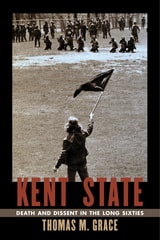
Kent State
Death and Dissent in the Long SixtiesThomas M. Grace
University of Massachusetts Press, 2016
On May 4, 1970, National Guard troops opened fire on unarmed antiwar protesters at Kent State University in Ohio, killing four students and wounding nine others, including the author of this book. The shootings shocked the American public and triggered a nationwide wave of campus strikes and protests. To many at the time, Kent State seemed an unlikely site for the bloodiest confrontation in a decade of campus unrest—a sprawling public university in the American heartland, far from the coastal epicenters of political and social change.
Yet, as Thomas M. Grace shows, the events of May 4 were not some tragic anomaly but were grounded in a tradition of student political activism that extended back to Ohio's labor battles of the 1950s. The vast expansion of the university after World War II brought in growing numbers of working-class enrollees from the industrial centers of northeast Ohio, members of the same demographic cohort that eventually made up the core of American combat forces in Vietnam. As the war's rising costs came to be felt acutely in the home communities of Kent's students, tensions mounted between the growing antiwar movement on campus, the university administration, and the political conservatives who dominated the surrounding county as well as the state government.
The deadly shootings at Kent State were thus the culmination of a dialectic of radicalization and repression that had been building throughout the decade. In the years that followed, the antiwar movement continued to strengthen on campus, bolstered by an influx of returning Vietnam veterans. After the war ended, a battle over the memory and meaning of May 4 ensued. It continues to the present day.
Kierkegaard And The Ends Of Language
Geoffrey A. Hale
University of Minnesota Press, 2002
A timely and original intervention in our understanding of this major philosopher through the lens of his influence on others
What do we read when we read Kierkegaard? How do we know? Insisting that Kierkegaard remains a far more enigmatic and paradoxical writer than is often assumed, Geoffrey A. Hale argues that the best way to approach Kierkegaard’s work and understand its significance for our own thought is to retrace its formative influence on major intellectuals of the early twentieth century.
In mutually reflective readings of Kierkegaard’s foundational texts through the work of three pivotal authors—Franz Kafka, Theodor Adorno, and Rainer Maria Rilke—Hale shows how each of these writers draws attention to the unwavering sense of human finitude that pervades all of Kierkegaard’s work and, with it, the profoundly unsettling indeterminacy in which it results. It is the very limitations of language, Hale argues, that hold it open to meaning, to interpretation, and thus to freedom. Resisting clear circumscription in this way, Kierkegaard’s work becomes all the more fruitful to us—and all the more challenging—to the extent that it resists our understanding.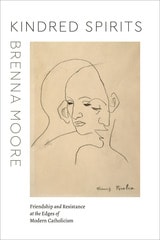
Kindred Spirits
Friendship and Resistance at the Edges of Modern CatholicismBrenna Moore
University of Chicago Press, 2021
Kindred Spirits takes us inside a remarkable network of Catholic historians, theologians, poets, and activists who pushed against both the far-right surge in interwar Europe and the secularizing tendencies of the leftist movements active in the early to mid-twentieth century. With meticulous attention to the complexity of real lives, Brenna Moore explores how this group sought a middle way anchored in “spiritual friendship”—religiously meaningful friendship understood as uniquely capable of facing social and political challenges.
For this group, spiritual friendship was inseparable from resistance to European xenophobia and nationalism, anti-racist activism in the United States, and solidarity with Muslims during the Algerian War. Friendship, they believed, was a key to both divine and human realms, a means of accessing the transcendent while also engaging with our social and political existence. Some of the figures are still well known—philosopher Jacques Maritain, Nobel Prize laureate Gabriela Mistral, influential Islamicist Louis Massignon, poet of the Harlem renaissance Claude McKay—while others have unjustly faded from memory. Much more than an idealized portrait of a remarkable group of Catholic intellectuals from the past, Kindred Spirits is a compelling exploration of both the beauty and flaws of a vibrant social network worth remembering.
Knowledge Power And Discipline
German Studies And National IdentityPier Carlo Bontempelli
University of Minnesota Press, 2003
An essential critical history of German studies as an academic discipline
German Studies has confronted many crises, as well as severe criticism and self-criticism, and yet it has managed to maintain its disciplinary system through every upheaval—the revolution of 1848, the establishment of the Second Reich in 1871, the Weimar Republic, the Nazi Third Reich, the Second World War and the reconstruction era, the creation and reunification of the two German states. Pier Carlo Bontempelli focuses on this continuity, dating back to the early nineteenth century, when the “founding fathers” of Germanistik secured its status by grounding it in a set of fixed principles, revived by each successive generation of scholars in order to legitimize their position of power—and to ensure their capacity for cultural reproduction.
Using the works of Michel Foucault and Pierre Bourdieu, Bontempelli investigates the institution and principles of German Studies and critically reconstructs its history. Mindful of the mechanisms of choice and domination operating at every turn, his book exposes the repressed social and political history of German Studies.