Results by title
8812 books match the query 'Political Science' and 44 start with k

Kafka's Prague
Klaus Wagenbach
Haus Publishing, 2020
Drawing from a range of documents and historical materials, this is the first book specifically dedicated to the relationship between Kafka and Prague. Klaus Wagenbach’s account of Kafka’s life in the city is a meticulously researched insight into the author’s family background, his education and employment, his attitude toward the town of his birth, his literary influences, and his relationships with women. The result is a fascinating portrait of the twentieth century’s most enigmatic writer and the city that provided him with so much inspiration. W. G. Sebald recognized that “literary and life experience overlap” in Kafka’s works, and the same is true of this book.
Kalmykia in Russia's Past and Present National Policies and Administrative System
Konstantin N. Maksimov
Central European University Press, 2008

Kamikaze Biker
Parody and Anomy in Affluent JapanIkuya Sato
University of Chicago Press, 1991
"Ikuya Sato's Kamikaze Biker is an exceptionally fine ethnographic analysis of a recurrent form of Japanese collective youth deviance. . . . Sato has contributed a work of value to a wide range of scholarly audiences."—Jack Katz, Contemporary Sociology
"A must for anyone interested in Japan, juvenile delinquency and/or youth behavior in general, or the impact of affluence on society."—Choice
"The volume provides a sophisticated . . . discussion of changes happening in Japanese society in the early 1980s. As such, it serves as a window on the 1990s and beyond."—Ross Mouer, Asian Studies Review
"Kamikaze Biker is a superlative study, one that might help liberate American social science from the simplistic notion that behavior not directly contributing to economic productivity should be summarily dismissed as 'dangerous' and 'deviant.' "—Los Angeles Times Book Review
Kant's International Relations
The Political Theology of Perpetual PeaceSeán Molloy
University of Michigan Press, 2017
Kant’s Nonideal Theory of Politics
Dilek Huseyinzadegan
Northwestern University Press, 2019
This novel analysis thus challenges the common assumption that an ideal theory of cosmopolitanism constitutes Kant’s sole political legacy. Dilek Huseyinzadegan demonstrates that Kant employs a teleological worldview throughout his political writings as a means of grappling with the pressing issues of multiplicity, diversity, and plurality—issues that confront us to this day.
Kant’s Nonideal Theory of Politics is the first book-length treatment of Kant’s political thought that gives full attention to the role that history, anthropology, and geography play in his mainstream political writings. Interweaving close textual analyses of Kant’s writings with more contemporary political frameworks, this book also makes Kant accessible and responsive to fields other than philosophy. As such, it will be of interest to students and scholars working at the intersections of political theory, feminism, critical race theory, and post- and decolonial thought.
Karl Korsch
Revolutionary TheoryBy Karl Korsch
University of Texas Press, 1977
There is growing interest in Europe and the United States in the work of the major German social-political philosopher Karl Korsch. Korsch participated in the turbulent struggles in Weimar Germany and while in exile continually reflected on history and politics. His work affords one of the most important interpretations of the role of Marxism in twentieth-century revolutionary movements, while developing an ongoing critical interrogation of Marxism. His thought provides an illuminating perspective on the process of revolution and counterrevolution in recent history. Karl Korsch: Revolutionary Theory is the first English anthology of his most important writings.
This collection presents Korsch's essays on a wide range of subjects, including Marxism and socialization, Lenin and the Soviet Union, the crisis of Marxism, models of revolutionary practice, fascism and counterrevolution, and Korsch's final evaluation of Marxism. Much of this work is translated into English for the first time, and many unknown essays first published in radical journals which are no longer available appear here. The volume includes Korsch's major essays written during the 1920s and 1930s as well as some of his later work.
Douglas Kellner's detailed introduction, "Korsch's Revolutionary Marxism," contains the first comprehensive critical interpretation of Korsch's work to appear in English. It provides a historical-theoretical reconstruction of Korsch's life and thought and roots his political theory in the sociopolitical context in which it evolved. The introduction has been described by Korsch scholars as a "first-class piece of exposition and interpretation" and a "serious, first-rate contribution likely to preempt the field in the English language." The editor's introduction along with the representative selection of essays provide firm grounding in the ideas and historical significance of Karl Korsch.
Karl Marx in America
Andrew Hartman
University of Chicago Press, 2025
To read Karl Marx is to contemplate a world created by capitalism. People have long viewed the United States as the quintessential anti-Marxist nation, but Marx’s ideas have inspired a wide range of people to formulate a more precise sense of the stakes of the American project. Historians have highlighted the imprint made on the United States by Enlightenment thinkers such as Adam Smith, John Locke, and Thomas Paine, but Marx is rarely considered alongside these figures. Yet his ideas are the most relevant today because of capitalism’s centrality to American life.
In Karl Marx in America, historian Andrew Hartman argues that even though Karl Marx never visited America, the country has been infused, shaped, and transformed by him. Since the beginning of the Civil War, Marx has been a specter in the American machine. During the Gilded Age, socialists read Marx as an antidote to the unchecked power of corporations. In the Great Depression, communists turned to Marx in hopes of transcending the destructive capitalist economy. The young activists of the 1960s were inspired by Marx as they gathered to protest an overseas war. Marx’s influence today is evident, too, as Americans have become increasingly attuned to issues of inequality, labor, and power.
After decades of being pushed to the far-left corner of intellectual thought, Marx’s ideologies have crossed over into the mainstream and are more alive than ever. Working-class consciousness is on the rise, and, as Marx argued, the future of a capitalist society rests in the hands of the people who work at the point of production. A valuable resource for anyone interested in Marx’s influence on American political discourse, Karl Marx in America is a thought-provoking account of the past, present, and future of his philosophies in American society.

Katrina's Imprint
Race and Vulnerability in AmericaWailoo, Keith
Rutgers University Press, 2010
Katutura
A Place Where We Stay: Life in a Post-Apartheid Township in NamibiaWade C. Pendleton
Ohio University Press, 1995
Keenie Meenie
The British Mercenaries Who Got Away with War CrimesPhil Miller
Pluto Press, 2020
Like its mysterious name, Keenie Meenie Services escaped definition and to this day has evaded sanctions. Now explosive new evidence - only recently declassified - exposes the extent of these war crimes, and the British government's tacit support for the company's operations. Including testimonies from SAS veterans, spy chiefs and diplomats, we hear from key figures battle-hardened by the Troubles in Northern Ireland and the Iranian Embassy siege. Investigative journalist Phil Miller asks, who were these mercenaries: heroes, terrorists, freedom fighters or war criminals?
This book presents the first ever comprehensive case against Keenie Meenie Services, providing long overdue evidence on the crimes of the people who make a killing from killing.

Keep On Fighting
The Life and Civil Rights Legacy of Marian A. SpencerDorothy H. Christenson
Ohio University Press, 2015
Marian Alexander Spencer was born in 1920 in the Ohio River town of Gallipolis, Ohio, one year after the “Red Summer” of 1919 that saw an upsurge in race riots and lynchings. Following the example of her grandfather, an ex-slave and community leader, Marian joined the NAACP at thirteen and grew up to achieve not only a number of civic leadership firsts in her adopted home city of Cincinnati, but a legacy of lasting civil rights victories.
Of these, the best known is the desegregation of Cincinnati’s Coney Island amusement park. She also fought to desegregate Cincinnati schools and to stop the introduction of observers in black voting precincts in Ohio. Her campaign to raise awareness of industrial toxic-waste practices in minority neighborhoods was later adapted into national Superfund legislation.
In 2012, Marian’s friend and colleague Dot Christenson sat down with her to record her memories. The resulting biography not only gives us the life story of remarkable leader but encapsulates many of the twentieth century’s greatest struggles and advances. Spencer’s story will prove inspirational and instructive to citizens and students alike.
Keep True
A Life in PoliticsHoward Pawley
University of Manitoba Press, 2011

Keeping Faith
Memoirs of a PresidentJimmy Carter
University of Arkansas Press, 1995
Keeping Hold of Justice
Encounters between Law and ColonialismJennifer Balint, Julie Evans, Mark McMillan, and Nesam McMillan
University of Michigan Press, 2020
Keeping Hold of Justice focuses on a select range of encounters between law and colonialism from the early nineteenth century to the present. It emphasizes the nature of colonialism as a distinctively structural injustice, one which becomes entrenched in the social, political, legal, and discursive structures of societies and thereby continues to affect people’s lives in the present. It charts, in particular, the role of law in both enabling and sustaining colonial injustice and in recognizing and redressing it. In so doing, the book seeks to demonstrate the possibilities for structural justice that still exist despite the enduring legacies and harms of colonialism. It puts forward that these possibilities can be found through collaborative methodologies and practices, such as those informing this book, that actively bring together different disciplines, peoples, temporalities, laws and ways of knowing. They reveal law not only as a source of colonial harm but also as a potential means of keeping hold of justice.
Keeping the World’s Environment under Review
An Intellectual History of the Global Environment OutlookJan Bakkes
Central European University Press, 2022
How do we take stock of the state and direction of the world’s environment, and what can we learn from the experience? Among the myriad detailed narratives about the condition of the planet, the Global Environment Outlook (GEO) reports—issued by the United Nations Environment Programme—stand out as the most ambitious. For nearly three decades the GEO project has not only delivered iconic global assessment reports, but through its multitude of contributors has inspired hundreds of similar processes worldwide from the regional to the local level.
This book provides an inside account of the evolution of the GEO project from its earliest days. Building on meticulous research, including interviews with former heads of the United Nations Environment Programme, diplomats, leading contributing scientists, and senior leaders of collaborating organizations, the story is told from the perspective of five GEO veterans who all played a pivotal role in shaping the periodic assessments. The GEO’s history provides striking insights and will save valuable time to those who commission, design and conduct, as well as critique and improve, assessments of environmental development in the next decade.

Ken Saro-Wiwa
Roy Doron
Ohio University Press, 2016
Hanged by the Nigerian government on November 10, 1995, Ken Saro-Wiwa became a martyr for the Ogoni people and human rights activists, and a symbol of modern Africans’ struggle against military dictatorship, corporate power, and environmental exploitation. Though he is rightly known for his human rights and environmental activism, he wore many hats: writer, television producer, businessman, and civil servant, among others. While the book sheds light on his many legacies, it is above all about Saro-Wiwa the man, not just Saro-Wiwa the symbol.
Roy Doron and Toyin Falola portray a man who not only was formed by the complex forces of ethnicity, race, class, and politics in Nigeria, but who drove change in those same processes. Like others in the Ohio Short Histories of Africa series, Ken Saro-Wiwa is written to be accessible to the casual reader and student, yet indispensable to scholars.
Kenya's Engagement with China
Discourse, Power, and AgencyAnita Plummer
Michigan State University Press, 2022
Key Concepts of Romanian History
Alternative Approaches to Socio-Political LanguagesVictor Neumann
Central European University Press, 2013
Khaki and Blue
Military and Police in British Colonial AfricaAnthony Clayton
Ohio University Press, 1989
Kicking
Jules Boykoff
Duke University Press, 2026
Kid Cops
What Communities Gain and Lose from Junior Police in SchoolsMai Thai
University of Chicago Press, 2026
Some might see police officers as benevolent sources of protection, but in many communities, they are often perceived as a threat due to a legacy of violent interactions and arrests for arbitrary offenses. How, then, do police sustain their presence in places where people might distrust them? In Kid Cops, sociologist Mai Thai offers one answer: junior police academies, high school programs in which police officers provide courses, mentorship, and job training to students in communities with high rates of juvenile delinquency and poverty. These school-police partnerships have expanded rapidly in the United States over the last few decades, largely in response to political unrest and police violence in the 1990s. Programs vary in their offerings, but they generally aim to ease tensions between communities and law enforcement, while also providing needed resources in neighborhoods where education and job opportunities are scarce.
Kid Cops draws on years of observations and interviews with educators, police officers, and, of course, kids. The junior police programs at each high school may have different emphases, but their common goal is for students to graduate from high school and enter college or the workforce. A second goal of the program is to cultivate a positive image of the police. Ultimately, however, Thai finds that these programs tighten the relationship between marginalized youth, schools, and the criminal justice system and strain the students’ relationships with their peers, families, and each other. These programs also distract residents from systemic issues of policing and suppress opportunities for meaningful change.
Written in an accessible tone that balances the seriousness of inequality with the playfulness of the study’s youth, Kid Cops moves beyond the narrative of detentions, suspensions, and arrests to tell a less conventional story about police in schools. It asks, does good, friendly policing exist—especially if it continues to tether low-income communities of color to the criminal justice system?
Kids in Cages
Surviving and Resisting Child Migrant DetentionEdited by Emily Ruehs-Navarro, Lina Caswell Muñoz, and Sarah J. Diaz
University of Arizona Press, 2024
In recent years, the plight of immigrant children has been in the national spotlight. A primary issue of concern is the experience of child migrants in detention by the U.S. government.
The authors in this volume approach the topic of child migrant detention from a range of perspectives. Some authors, particularly those who provide a legal perspective, chronicle the harms of detention, arguing that despite governmental assurances of child protection, detention is fundamentally a state-sanctioned form of violence. The social scientists in the volume have worked closely with detained youth themselves; in these chapters, authors highlight the ways in which youth survive detention, often through everyday acts of resistance and through the formation of temporary relationships. Practitioners including psychologists, activists, and faith leaders look at forms of resistance to detention. From retheorizing psychological interventions for detained youth to forming hospitality homes that act as alternatives to detention, these practitioners highlight ways forward for advocates of youth. At the heart of these narratives lies a crucial debate: the tension between harm-reduction strategies and abolition.
This interdisciplinary work brings together voices from the legal realm, the academic world, and the on-the-ground experiences of activists and practitioners.
Contributors
Stella Akello
Jessica Alaniz
Aireen Grace Andal
Samuel Arroyo
Corey Brost
Lina Caswell Muñoz
Marisa Chumil
Patricia Crowley
Iman Dadras
Sarah J. Diaz
Sandra Espinoza
Jacqueline Florian
Michael Gosch
Darlene Gramigna
Lisa Jacobs
Katherine Kaufka Walts
Corinne Kentor
Jenn M. Lilly
Kathlyn Mulcahy
Jennifer Nagda
Vida Opoku
Silvia Rodriguez Vega
Emily Ruehs-Navarro
Herlin Soto-Matute
Luis Edward Tenorio
Jajah Wu
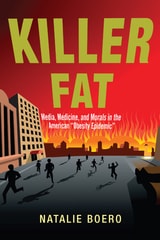
Killer Fat
Media, Medicine, and Morals in the American "Obesity Epidemic”Boero, Natalie
Rutgers University Press, 2013
In the past decade, obesity has emerged as a major public health concern in the United States and abroad. At the federal, state, and local level, policy makers have begun drafting a range of policies to fight a war against fat, including body-mass index (BMI) report cards, “snack taxes,” and laws to control how fast food companies market to children. As an epidemic, obesity threatens to weaken the health, economy, and might of the most powerful nation in the world.
In Killer Fat, Natalie Boero examines how and why obesity emerged as a major public health concern and national obsession in recent years. Using primary sources and in-depth interviews, Boero enters the world of bariatric surgeries, Weight Watchers, and Overeaters Anonymous to show how common expectations of what bodies are supposed to look like help to determine what sorts of interventions and policies are considered urgent in containing this new kind of disease.
Boero argues that obesity, like the traditional epidemics of biological contagion and mass death, now incites panic, a doomsday scenario that must be confronted in a struggle for social stability. The “war” on obesity, she concludes, is a form of social control. Killer Fat ultimately offers an alternate framing of the nation’s obesity problem based on the insights of the “Health at Every Size” movement.
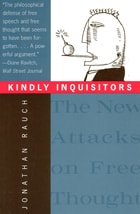
Kindly Inquisitors
The New Attacks on Free ThoughtJonathan Rauch
University of Chicago Press, 1993
"Fiercely argued. . . . What sets his study apart is his attempt to situate recent developments in a long-range historical perspective and to defend the system of free intellectual inquiry as a socially productive method of channeling prejudice."—Michiko Kakutani, New York Times
"Like no other, this book restates the core of our freedom and demonstrates how great, and disregarded, the peril to that freedom has become."—Joseph Coates, Chicago Tribune
"The philosophical defense of free speech and free thought that seems to have been forgotten. . . . A powerful argument."—Diane Ravitch, Wall Street Journal

Kindly Inquisitors
The New Attacks on Free Thought, Expanded EditionJonathan Rauch
University of Chicago Press, 2014
In this expanded edition of Kindly Inquisitors, a new foreword by George F. Will strikingly shows the book’s continued relevance, while a substantial new afterword by Rauch elaborates upon his original argument and brings it fully up to date. Two decades after the book’s initial publication, while some progress has been made, the regulation of hate speech has grown domestically—especially in American universities—and has spread even more internationally, where there is no First Amendment to serve as a meaningful check. But the answer to bias and prejudice, Rauch argues, is pluralism—not purism. Rather than attempting to legislate bias and prejudice out of existence or to drive them underground, we must pit them against one another to foster a more vigorous and fruitful discussion. It is this process that has been responsible for the growing acceptance of the moral acceptability of homosexuality over the last twenty years. And it is this process, Rauch argues, that will enable us as a society to replace hate with knowledge, both ethical and empirical.
“It is a melancholy fact that this elegant book, which is slender and sharp as a stiletto, is needed, now even more than two decades ago. Armed with it, readers can slice through the pernicious ideas that are producing the still-thickening thicket of rules, codes, and regulations restricting freedom of thought and expression.”—George F. Will, from the foreword
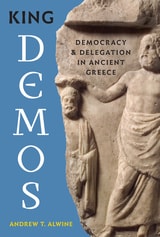
King Demos
Democracy and Delegation in Ancient GreeceAndrew T. Alwine
University of Texas Press, 2027
How ancient Greek democracies wrestled with the tension between egalitarianism and hierarchical structures necessary for organized government.
Democracy and egalitarianism are ever in tension. The ideal of direct democracy—equal participation in all aspects of governance—coexists with the reality that hierarchical structures are necessary to organize and stabilize the workings of the state. This tension consumed America’s founders. And two thousand years earlier, it had consumed the people of Athens.
King Demos shows how ancient Greek democracies wrestled with this problem, crafting what the Federalist Papers would later dream of: “a republican remedy for the diseases most incident to republican government.” As Athens grew and direct democracy became unwieldy, the Greeks developed a system of delegation, with the “people” (demos) conceived as a king with authority over a sprawling system of state officials whose day-to-day operation was handled by experts. Hierarchical structures became commonplace in the city, yet sovereign powers remained with the citizenry. Andrew Alwine argues that delegation was a stepping stone between direct and representative democracy and provided a crucial compromise, enabling the Greeks to benefit from the abilities of elite citizens while also keeping them under control.
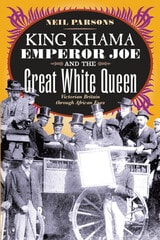
King Khama, Emperor Joe, and the Great White Queen
Victorian Britain through African EyesNeil Parsons
University of Chicago Press, 1997
The chiefs initially went to England to persuade Queen Victoria not to give their lands to ruthless Rhodes and his British South Africa Company. Abandoned by the Secretary of State for the Colonies, Joseph Chamberlain, and denied an audience with the queen, the three rulers decided to tour the British Isles to plead their case to the populace. Appealing to the middle-class morality of Victorian society, the chiefs were remarkably successful in gaining support, eventually swaying Chamberlain into drafting the agreement that secured their territories against the encroachment of Rhodesia.
Historian Neil Parsons has reconstructed this journey with the help of African archival materials and news clippings from British papers, garnered from the clippings service the chiefs had the foresight to employ. In equal parts narrative of pilgrimage, voyage of discovery, and colonial resistance, King Khama, Emperor Joe, and the Great White Queen provides a view from the other side of colonialism and imperialism. It demonstrates the nuances of cultural and religious interaction between Africans and Europeans, and it does so with the richness and depth of a fully realized novel.
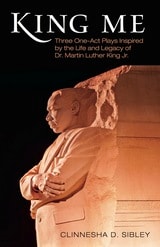
King Me
Three One-Act Plays Inspired by the Life and Legacy of Dr. Martin Luther King Jr.Clinnesha D. Sibley
University of Arkansas Press, 2013
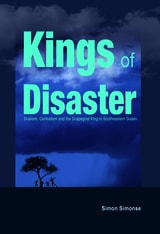
Kings of Disaster
Dualism, Centralism and the Scapegoat King in Southeastern SudanSimon Simonse
Michigan State University Press, 2018

Kissing Fidel
A Memoir of Cuban American Terrorism in the United StatesMagda Montiel Davis
University of Iowa Press, 2020
What does it mean to be instantly transformed into the most hated person in your community? After meeting Fidel Castro at a Havana reception in 1994, Cuban-born Magda Montiel Davis, founder of one of the largest immigration law firms in South Florida, soon found out. The reception—attended by hundreds of other Cuban émigrés—was videotaped for historical archives. In a seconds-long clip, Fidel pecks the traditional protocol kiss on Montiel Davis’s cheek as she thanks him for the social benefits conferred upon the Cuban people. The video, however, was mysteriously sold to U.S. reporters and aired incessantly throughout South Florida. Soon the encounter was an international cause célèbre.
Life as she knew it was over for Montiel Davis and her family, including a father who worked with the CIA to topple Fidel, a nohablo-inglés mother who lived with the family, her five children, and her Jewish Brooklyn-born attorney husband. Kissing Fidel shares the sometimes dismal, sometimes comical realities of an ordinary citizen being thrown into a world of death threats, mob attacks, and terrorism.
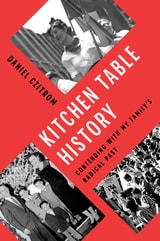
Kitchen Table History
Contending with My Family’s Radical PastDaniel Czitrom
University of Illinois Press, 2027
Czitrom follows three generations of his family as they fled violence in Eastern Europe, built new lives in America, and committed themselves to radical political movements. Their works and trials included union organizing, volunteering to fight fascism in Spain and elsewhere, harassment by the FBI, and everyday acts of survival. Czitrom describes what he discovered in his years of historical detective work while pondering the still-unanswered questions wrapped in silence and pain. He also recounts his years-long journey to balance loyalty to his family’s values with a desire to succeed, question authority, and become his own person.
An engaging blend of memoir and history, Kitchen Table History is the chronicle of a family and a personal search for the meaning of the past.
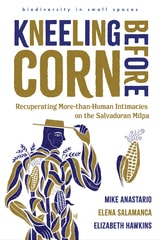
Kneeling Before Corn
Recuperating More-than-Human Intimacies on the Salvadoran MilpaMike Anastario, Elena Salamanca, and Elizabeth Hawkins
University of Arizona Press, 2024
Kneeling Before Corn focuses on the intimate relations that develop between plants and humans in the milpas of the northern rural region of El Salvador. It explores the ways in which more-than-human intimacies travel away from and return to the milpa through human networks.
Collective and multivocal, this work reflects independent lines of investigation and multiple conversations between co-authors—all of whom have lived in El Salvador for extended periods of time. Throughout the six chapters, the co-authors invite readers to consider more-than-human intimacies by rethinking, experimenting with, and developing new ways of documenting, analyzing, and knowing the intimacies that form between humans and the plants that they cultivate, conserve, long for, and eat. This book offers an innovative account of rural El Salvador in the twenty-first century.
Knowing Where It Comes From
Labeling Traditional Foods to Compete in a Global MarketFabio Parasecoli
University of Iowa Press, 2017
Labeling regimes have moved beyond intellectual property to embrace community-based protections, intangible cultural heritage, cultural landscapes, and indigenous knowledge. Reflecting a rich array of juridical, regulatory, and activist perspectives, these approaches seek to level the playing field on which food producers and consumers interact.
Knowledge Flows in a Global Age
A Transnational ApproachEdited by John Krige
University of Chicago Press, 2022
The contributors to this collection focus on what happens to knowledge and know-how at national borders. Rather than treating it as flowing like currents across them, or diffusing out from center to periphery, they stress the human intervention that shapes how knowledge is processed, mobilized, and repurposed in transnational transactions to serve diverse interests, constraints, and environments. The chapters consider both what knowledge travels and how it travels across borders of varying permeability that impede or facilitate its movement. They look closely at a variety of platforms and objects of knowledge, from tangible commodities—like hybrid wheat seeds, penicillin, Robusta coffee, naval weaponry, seed banks, satellites and high-performance computers—to the more conceptual apparatuses of plant phenotype data and statistics. Moreover, this volume decenters the Global North, tracking how knowledge moves along multiple paths across the borders of Mexico, India, Portugal, Guinea-Bissau, the Soviet Union, China, Angola, Palestine and the West Bank, as well as the United States and the United Kingdom. An important new work of transnational history, this collection recasts the way we understand and analyze knowledge circulation.
Knowledge Regulation and National Security in Postwar America
Mario Daniels and John Krige
University of Chicago Press, 2022
In this groundbreaking book, Mario Daniels and John Krige set out to show the enormous political relevance that export control regulations have had for American debates about national security, foreign policy, and trade policy since 1945. Indeed, they argue that from the 1940s to today the issue of how to control the transnational movement of information has been central to the thinking and actions of the guardians of the American national security state. The expansion of control over knowledge and know-how is apparent from the increasingly systematic inclusion of universities and research institutions into a system that in the 1950s and 1960s mainly targeted business activities. As this book vividly reveals, classification was not the only—and not even the most important—regulatory instrument that came into being in the postwar era.
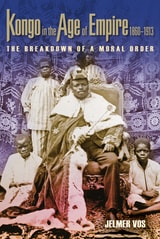
Kongo in the Age of Empire, 1860–1913
The Breakdown of a Moral OrderJelmer Vos
University of Wisconsin Press, 2015
Vos underlines that Kongo's incorporation in the European state system also had tragic consequences, including the undermining of local African structures of authority—on which the colonial system actually depended. Kongo in the Age of Empire carefully documents the involvement of Kongo's royal court in the exercise of Portuguese rule in northern Angola and the ways that Kongo citizens experienced colonial rule as an increasingly illegitimate extension of royal power.
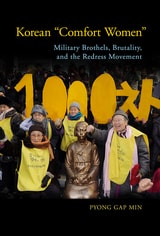
Korean "Comfort Women"
Military Brothels, Brutality, and the Redress MovementPyong Gap Min
Rutgers University Press, 2021
Korean “Comfort Women” synthesizes the previous major findings about Japanese military sexual slavery and legal recommendations, and provides new findings about the issues “comfort women” faced for an English-language audience. It also examines the transnational redress movement, revealing that the Japanese government has tried to conceal the crime of sexual slavery and to resolve the women’s human rights issue with diplomacy and economic power.
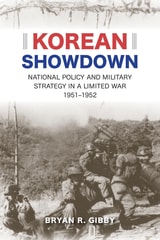
Korean Showdown
National Policy and Military Strategy in a Limited War, 1951–1952Bryan R. Gibby
University of Alabama Press, 2021
WINNER OF THE 2023 ANDREW F. KREPINEVICH JR. WRITING AWARD
A historical analysis of the policies and military strategies applied during the Korean War stalemate period.
Korean Showdown: National Policy and Military Strategy in a Limited War, 1951–1952 takes a holistic and integrative approach to strategy, operations, and tactics during the Korean War’s stalemate period and demonstrates how these matters shaped each other and influenced, or were influenced by, political and strategic policy decision-making. Bryan R. Gibby offers an analysis of the major political and military decisions affecting how the war was conducted operationally and diplomatically by examining American, Chinese, North Korean, and South Korean operations in the context of fighting a limited war with limited means, but for objectives that were not always limited in scope or ambition. The foundational political decision was Harry Truman’s voluntary repatriation policy, which extended the war by up to eighteen months. Its military counterpart was the American-led Operation Showdown, the last deliberate military offensive to coerce concessions at the negotiation table. Showdown’s failure (and the Communists’ own equally disappointing military efforts) opened up new avenues for solving the war short of a militarily imposed solution.
Gibby’s research draws on primary sources from American, Korean, and Chinese archives and publications. Many of these sources have not yet been mined in diplomatic and military histories of the Korean War. This innovative book also addresses a significant gap in the study of Korean military operations—the linkage between ground and air pressure campaigns, as well as the many Chinese and American operations conducted to establish negotiation positions. Gibby also explores many political and propagandist developments that assumed great importance in the summer of 1952, such as prisoner of war riots, the bombing of hydroelectric dams, and the South Korean constitutional crisis, which significantly influenced American and Chinese military decision-making.
Ultimately, this volume serves as a cautionary analysis of the limits of force, the necessity to understand an adversary, and the importance of strategic consensus. It also offers an effective case study on an underappreciated period of civil-military tension during the Cold War and on how civilian politicians and military leaders must collaborate to determine a realistic and effective strategy.
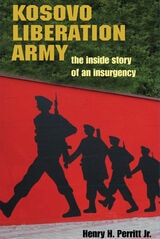
Kosovo Liberation Army
The Inside Story of an InsurgencyHenry H. Perritt Jr.
University of Illinois Press, 2008
The military intervention by NATO in Kosovo was portrayed in American media as a necessary step to prevent the Serbian armed forces from repeating the ethnic cleansing that had so deeply damaged the former Yugoslavia. Serbia trained its military on Kosovo because of an ongoing armed struggle by ethnic Albanians to wrest independence from Serbia. Warfare in the Balkans seemed to threaten the stability of Europe, as well as the peace and security of Kosovars, and yet armed resistance seemed to offer the only possibility of future stability. Leading the struggle against Serbia was the Kosovo Liberation Army, also known as the KLA.
Kosovo Liberation Army: The Inside Story of an Insurgency provides a historical background for the KLA and describes its activities up to and including the NATO intervention. Henry H. Perritt Jr. offers firsthand insight into the motives and organization of a popular insurgency, detailing the strategies of recruitment, training, and financing that made the KLA one of the most successful insurgencies of the post-cold war era. This volume also tells the personal stories of young people who took up guns in response to repeated humiliation by "foreign occupiers," as they perceived the Serb police and intelligence personnel. Perritt illuminates the factors that led to the KLA's success, including its convergence with political developments in eastern Europe, its campaign for popular support both at home and abroad, and its participation in international negotiations and a peace settlement that helped pave the long road from war to peace.
Kropotkin and the Anarchist Intellectual Tradition
Jim MacLaughlin
Pluto Press, 2015
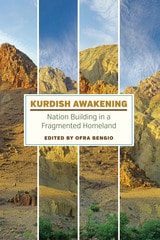
Kurdish Awakening
Nation Building in a Fragmented HomelandEdited by Ofra Bengio
University of Texas Press, 2014
Kurdish Awakening examines key questions related to Kurdish nationalism and identity formation in Syria, Iraq, Iran, and Turkey. The world’s largest stateless ethnic group, Kurds have steadily grown in importance as a political power in the Middle East, particularly in light of the “Arab Spring.” As a result, Kurdish issues—political, cultural, and historical alike—have emerged as the subject of intense scholarly interest. This book provides fresh ways of understanding the historical and sociopolitical underpinnings of the ongoing Kurdish awakening and its already significant impact on the region.
Rather than focusing on one state or angle, this anthology fills a gap in the literature on the Kurds by providing a panoramic view of the Kurdish homeland’s various parts. The volume focuses on aspects of Kurdish nationalism and identity formation not addressed elsewhere, including perspectives on literature, gender, and constitution making. Further, broad thematic essays include a discussion of the historical experiences of the Kurds from the time of their Islamization more than a millennium ago up until the modern era, a comparison of the Kurdish experience with other ethno-national movements, and a treatment of the role of tribalism in modern nation building. This collection is unique in its use of original sources in various languages. The result is an analytically rich portrayal that sheds light on the Kurds’ prospects and the challenges they confront in a region undergoing sweeping upheavals.
Kurdish Women's Stories
Houzan Mahmoud
Pluto Press, 2020
'A fascinating, inspiring journey' - Meredith Tax, author of A Road Unforeseen
Kurdistan has had a tumultuous history, and the women who lived there have experienced life like no other. From Saddam Hussein’s reign of terror beginning in the 1960s, to the fight against ISIS today, violence, revolution, and questions around identity, agency, survival, and resistance have been at the forefront of women’s lives for decades.
This book is a collection of these women’s stories written in their own words. Each story reveals a tapestry of experiences, including political activism under Saddam and armed resistance in Rojava’s PKK and YPG and Komala in Rojhalat. This is in addition to experiences of FGM and overcoming victimhood, life under extreme conservatism, as well as a look into the work of artists, poets, novelists, and performers whose work represents a complicated relationship with Kurdistan.
These rich and nuanced insights come from a group of women from a nation without a state, who are now scattered across the world. Collectively, they take the reader on a journey that will inspire feminist, anti-fascist, and anti-racist people across the world.
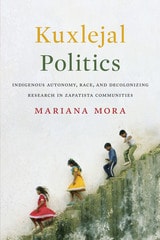
Kuxlejal Politics
Indigenous Autonomy, Race, and Decolonizing Research in Zapatista CommunitiesBy Mariana Mora
University of Texas Press, 2017
Over the past two decades, Zapatista indigenous community members have asserted their autonomy and self-determination by using everyday practices as part of their struggle for lekil kuxlejal, a dignified collective life connected to a specific territory. This in-depth ethnography summarizes Mariana Mora’s more than ten years of extended research and solidarity work in Chiapas, with Tseltal and Tojolabal community members helping to design and evaluate her fieldwork. The result of that collaboration—a work of activist anthropology—reveals how Zapatista kuxlejal (or life) politics unsettle key racialized effects of the Mexican neoliberal state.
Through detailed narratives, thick descriptions, and testimonies, Kuxlejal Politics focuses on central spheres of Zapatista indigenous autonomy, particularly governing practices, agrarian reform, women’s collective work, and the implementation of justice, as well as health and education projects. Mora situates the proposals, possibilities, and challenges associated with these decolonializing cultural politics in relation to the racialized restructuring that has characterized the Mexican state over the past twenty years. She demonstrates how, despite official multicultural policies designed to offset the historical exclusion of indigenous people, the Mexican state actually refueled racialized subordination through ostensibly color-blind policies, including neoliberal land reform and poverty alleviation programs. Mora’s findings allow her to critically analyze the deeply complex and often contradictory ways in which the Zapatistas have reconceptualized the political and contested the ordering of Mexican society along lines of gender, race, ethnicity, and class.
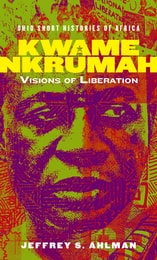
Kwame Nkrumah
Visions of LiberationJeffrey S. Ahlman
Ohio University Press, 2021