Results by title
4127 books match the query 'Science' and 25 start with k
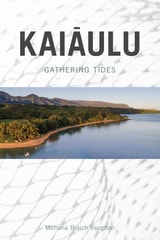
Kaiaulu
Gathering TidesMehana Blaich Vaughan
Oregon State University Press, 2018
This coast is known as a playground for tourists and backdrop for Hollywood movies, but catch from small local reefs, and the sharing of this abundance, has sustained area families for centuries, helping them to thrive through tidal waves, hurricanes, an influx of new residents, and economic recessions. Yet fishing families are increasingly invisible and many have moved away, threatened by global commodification and loss of access to coastal lands that are now private retreats for star entertainers, investors, and dot-com millionaires.
Building on two decades of interviews with more than sixty Hawaiian elders, leaders, and fishermen and women, Kaiāulu shares their stories of enduring community efforts to perpetuate kuleana, often translated to mean “rights and responsibilities.” Community actions extend kuleana to include nurturing respectful relationships with resources, guarding and cultivating fishing spots, perpetuating collective harvests and sharing, maintaining connection to family lands, reasserting local governance rooted in ancestral values, and preparing future generations to carry on.
An important contribution to scholarship in the fields of natural resource management, geography, Indigenous Studies, and Hawaiian Studies, Kaiāulu is also a skillfully written and deeply personal tribute to a community based not on ownership, but reciprocity, responsibility, and caring for the places that shape and sustain us all.
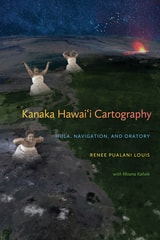
Kanaka Hawai'i Cartography
Hula, Navigation, and OratoryRenee Pualani Louis
Oregon State University Press, 2017
An important symbolic element in Hawai'ian cartography is the storied place name, which reflects Hawai'ian spatial knowledge of the environment. Many Hawai'ian place names performed in daily rituals were a conscious act of locating genealogical connections, recreating cultural landscapes, and regenerating cultural mores. They constitute a critically important body of Hawai'ian cultural knowledge. When Hawai'ian place names were incorporated into Western cartographic maps they were transformed epistemologically. They went from representing place as a repository of cultural knowledge to representing place as an object on the landscape. Hawai'ian spatial knowledge presentation is interactive, multi-sensual, and multi‐ dimensional.
Kanaka Hawai'i Cartography interweaves methodology with personal narrative and performance presentation in a playbill format. Three of the seven chapters are presented as “Acts” in a play. The remaining four chapters serve as intermissions or interludes together with a prologue and an epilogue for setting the stage and providing closure. To help make the topic more accessible, complex terms have been minimized, making academic theory easier for the educated reader to understand. The book will fill an important gap in Indigenous and Native Studies and will be welcomed by anyone interested in traditional Hawai’ian performance cartography.
Kandik Map
Linda Johnson
University of Alaska Press, 2009
Kant's Organicism
Epigenesis and the Development of Critical PhilosophyJennifer Mensch
University of Chicago Press, 2013
Kaon Physics
Edited by Jonathan L. Rosner and Bruce D. Winstein
University of Chicago Press, 2001
Topics covered include the history of kaon physics, direct CP violation in kaon decays, time reversal violation, CPT studies, theoretical aspects of kaon physics, rare kaon decays, hyperon physics, charm: CP violation and mixing, the physics of B mesons, and future opportunities for kaon physics in the twenty-first century.
Karl Popper, Science and Enlightenment
Nicholas Maxwell
University College London, 2017
Keepers of the Wolves
Richard P. Thiel
University of Wisconsin Press, 2018
This new edition brings Thiel's story into the twenty-first century, recounting his work monitoring wolves as they spread to central Wisconsin, conflicts of wolves with landowners and recreationalists, changes in state and federal policies, the establishment of a state wolf-hunting season in 2012, and Thiel's forecast for the future of wolves in Wisconsin.
Keeping the World’s Environment under Review
An Intellectual History of the Global Environment OutlookJan Bakkes
Central European University Press, 2022
How do we take stock of the state and direction of the world’s environment, and what can we learn from the experience? Among the myriad detailed narratives about the condition of the planet, the Global Environment Outlook (GEO) reports—issued by the United Nations Environment Programme—stand out as the most ambitious. For nearly three decades the GEO project has not only delivered iconic global assessment reports, but through its multitude of contributors has inspired hundreds of similar processes worldwide from the regional to the local level.
This book provides an inside account of the evolution of the GEO project from its earliest days. Building on meticulous research, including interviews with former heads of the United Nations Environment Programme, diplomats, leading contributing scientists, and senior leaders of collaborating organizations, the story is told from the perspective of five GEO veterans who all played a pivotal role in shaping the periodic assessments. The GEO’s history provides striking insights and will save valuable time to those who commission, design and conduct, as well as critique and improve, assessments of environmental development in the next decade.
Kellogg on Biotechnology
Thriving through IntegrationAlicia Loffler
Northwestern University Press, 2005
The book walks the reader through the "what"--what are some of the newest biotechnologies that will revolutionize the way we think about health?; the "how"--how to transform those technologies into profitable products and companies; and the "who"--who will benefit from these technologies?
Kellogg on Biotech is the outgrowth of a collaborative student-faculty effort called TechVentures at the Kellogg School of Management. Their research forms the raw material for Kellogg on Biotech.

Kepler's Geometrical Cosmology
J. V. Field
University of Chicago Press, 1987
Kepler has suffered from a dual image as both hero of science and eccentric mystagogue. Field's sound scholarship provides a more complete picture of the man and his work that will be of value to historians of science, mathematics, philosophy, and the late Renaissance.

Keys to the Flora of Arkansas
Edwin Smith
University of Arkansas Press, 1994
Killer Algae
Alexandre Meinesz
University of Chicago Press, 1999
This supposedly benign little plant—that no one thought could survive the waters of the Mediterranean—has now become a pernicious force. Caulerpa taxifolia now covers 10,000 acres of the coasts of France, Spain, Italy, and Croatia, and has devastated the Mediterranean ecosystem. And it continues to grow, unstoppable and toxic. When Alexandre Meinesz, a professor of biology at the University of Nice, discovered a square-yard patch of it in 1984, he warned biologists and oceanographers of the potential species invasion. His calls went unheeded. At that point, one person could have pulled the small patch out and ended the problem. Now, however, the plant has defeated the French Navy, thwarted scientific efforts to halt its rampage, and continues its destructive journey into the Adriatic Sea.
Killer Algae is the biological and political horror story of this invasion. For despite Meinesz's pleas to scientists and the French government, no agency was willing to take responsibility for the seaweed, and while the buck was passed, the killer algae grew. And through it all, the Oceanographic Museum in Monaco sought to exculpate itself. In short, Killer Algae—part detective story and part bureaucratic object lesson—is a classic case of a devastating ecological invasion and how not to deal with it.
"[U]tterly fascinating, not only because of the ecological battles [Meinesz] describes but also because of the wondrous natural phenomena involved."—Richard Bernstein, New York Times
"Akin to Rachel Carson's Silent Spring, Killer Algae shows the courage of a voice in the wilderness."—Choice
"A textbook case of how not to manage an environmental disaster."—Kirkus Reviews
"Meinesz's story is a frightening one, reading more like a science fiction thriller than a scientific account."—Publishers Weekly

Killing Time
The Autobiography of Paul FeyerabendPaul Feyerabend
University of Chicago Press, 1995
Trained in physics and astronomy, Feyerabend was best known as a philosopher of science. But he emphatically was not a builder of theories or a writer of rules. Rather, his fame was in powerful, plain-spoken critiques of "big" science and "big" philosophy. Feyerabend gave voice to a radically democratic "epistemological anarchism:" he argued forcefully that there is not one way to knowledge, but many principled paths; not one truth or one rationality but different, competing pictures of the workings of the world. "Anything goes," he said about the ways of science in his most famous book, Against Method. And he meant it.
Here, for the first time, Feyerabend traces the trajectory that led him from an isolated, lower-middle-class childhood in Vienna to the height of international academic success. He writes of his experience in the German army on the Russian front, where three bullets left him crippled, impotent, and in lifelong pain. He recalls his promising talent as an operatic tenor (a lifelong passion), his encounters with everyone from Martin Buber to Bertolt Brecht, innumerable love affairs, four marriages, and a career so rich he once held tenured positions at four universities at the same time.
Although not written as an intellectual autobiography, Killing Time sketches the people, ideas, and conflicts of sixty years. Feyerabend writes frankly of complicated relationships with his mentor Karl Popper and his friend and frequent opponent Imre Lakatos, and his reactions to a growing reputation as the "worst enemy of science."
Killing the Koala and Poisoning the Prairie
Australia, America, and the EnvironmentCorey J. A. Bradshaw and Paul R. Ehrlich
University of Chicago Press, 2015
In this book, Bradshaw and Ehrlich provide a spirited exploration of the ways in which the United States and Australia can learn from their shared problems and combine their most successful solutions in order to find and develop new resources, lower energy consumption and waste, and grapple with the dynamic effects of climate change. Peppering the book with humor, irreverence, and extensive scientific knowledge, the authors examine how residents of both countries have irrevocably altered their natural environments, detailing the most pressing ecological issues of our time, including the continuing resource depletion caused by overpopulation. They then turn their discussion to the politics behind the failures of environmental policies in both nations and offer a blueprint for what must be dramatically changed to prevent worsening the environmental crisis.
Although focused on two nations, Killing the Koala and Poisoning the Prairie clearly has global implications—the problems facing the United States and Australia are not theirs alone, and the solutions to come will benefit by being crafted in coalition. This book provides a vital opportunity to learn from both countries’ leading environmental thinkers and to heed their call for a way forward together.
Knowing Global Environments
New Historical Perspectives on the Field SciencesVetter, Jeremy
Rutgers University Press, 2011
Collectively their essays explore the history of the field sciences, through the lens of place, practice, and the production of scientific knowledge, with a wide-ranging perspective extending outwards from the local to regional, national, imperial, and global scales. The book also shows what the history of the field sciences can contribute to environmental history-especially how knowledge in the field sciences has intersected with changing environments-and addresses key present-day problems related to sustainability, such as global climate, biodiversity, oceans, and more.
Contributors to Knowing Global Environments reveal how the field sciences have interacted with practical economic activities, such as forestry, agriculture, and tourism, as well as how the public has been involved in the field sciences, as field assistants, students, and local collaborators.
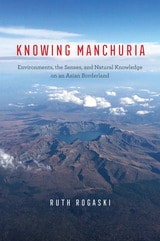
Knowing Manchuria
Environments, the Senses, and Natural Knowledge on an Asian BorderlandRuth Rogaski
University of Chicago Press, 2022
According to Chinese government reports, hundreds of plague-infected rodents fell from the skies over Gannan county on an April night in 1952. Chinese scientists determined that these flying voles were not native to the region, but were vectors of germ warfare, dispatched over the border by agents of imperialism. Mastery of biology had become a way to claim political mastery over a remote frontier. Beginning with this bizarre incident from the Korean War, Knowing Manchuria places the creation of knowledge about nature at the center of our understanding of a little-known but historically important Asian landscape.
At the intersection of China, Russia, Korea, and Mongolia, Manchuria is known as a site of war and environmental extremes, where projects of political control intersected with projects designed to make sense of Manchuria’s multiple environments. Covering more than 500,000 square miles, Manchuria’s landscapes include temperate rainforests, deserts, prairies, cultivated plains, wetlands, and Siberian taiga. With analysis spanning the seventeenth century to the present day, Ruth Rogaski reveals how an array of historical actors—Chinese poets, Manchu shamans, Russian botanists, Korean mathematicians, Japanese bacteriologists, American paleontologists, and indigenous hunters—made sense of the Manchurian frontier. She uncovers how natural knowledge, and thus the nature of Manchuria itself, changed over time, from a sacred “land where the dragon arose” to a global epicenter of contagious disease; from a tragic “wasteland” to an abundant granary that nurtured the hope of a nation.
Knowing Nature
Conversations at the Intersection of Political Ecology and Science StudiesEdited by Mara J. Goldman, Paul Nadasdy, and Matthew D. Turner
University of Chicago Press, 2011
Political ecology and science studies have found fertile meeting ground in environmental studies. While the two distinct areas of inquiry approach the environment from different perspectives—one focusing on the politics of resource access and the other on the construction and perception of knowledge—their work is actually more closely aligned now than ever before.
Knowing Nature brings together political ecologists and science studies scholars to showcase the key points of encounter between the two fields and how this intellectual mingling creates a lively and more robust ecological framework for the study of environmental politics. The contributors all actively work at the interface between these two fields, and here they use empirical material to explore questions of theoretical and practical import for understanding the politics that surround nature-society relations, from wildlife management in the Yukon to soil fertility in Kenya. In addition, they examine how various environmental knowledge claims are generated, packaged, promoted, and accepted (or rejected) by the different actors involved in specific cases of environmental management, conservation, and development. Finally, they ask what is at stake in the struggles surrounding environmental knowledge, how such struggles shape conceptions of the environment, and whose interests are served in the process.
Knowing Nukes
The Politics and Culture of the AtomWilliam Chaloupka
University of Minnesota Press, 1992
Countering critics who charge that postmodern positions on language, authority, and power cannot inform effective political responses, this compelling analysis employs these same methods to examine antinuclear politics. Star Wars (the movie and the antimissile system), the Freeze movement, Reaganism, and “lifestyle” politics all receive new treatments.
Knowing and Being
Michael Polanyi
University of Chicago Press, 1973
This collection of essays, assembled by Marjorie Grene, exemplifies the development of Polanyi's theory of knowledge which was first presented in Science, Faith, and Society and later systematized in Personal Knowledge.
Knowing by Ear
Listening to Voice Recordings with African Prisoners of War in German Camps (1915–1918)Anette Hoffmann
Duke University Press, 2024
Knowledge Flows in a Global Age
A Transnational ApproachEdited by John Krige
University of Chicago Press, 2022
The contributors to this collection focus on what happens to knowledge and know-how at national borders. Rather than treating it as flowing like currents across them, or diffusing out from center to periphery, they stress the human intervention that shapes how knowledge is processed, mobilized, and repurposed in transnational transactions to serve diverse interests, constraints, and environments. The chapters consider both what knowledge travels and how it travels across borders of varying permeability that impede or facilitate its movement. They look closely at a variety of platforms and objects of knowledge, from tangible commodities—like hybrid wheat seeds, penicillin, Robusta coffee, naval weaponry, seed banks, satellites and high-performance computers—to the more conceptual apparatuses of plant phenotype data and statistics. Moreover, this volume decenters the Global North, tracking how knowledge moves along multiple paths across the borders of Mexico, India, Portugal, Guinea-Bissau, the Soviet Union, China, Angola, Palestine and the West Bank, as well as the United States and the United Kingdom. An important new work of transnational history, this collection recasts the way we understand and analyze knowledge circulation.
Knowledge Regulation and National Security in Postwar America
Mario Daniels and John Krige
University of Chicago Press, 2022
In this groundbreaking book, Mario Daniels and John Krige set out to show the enormous political relevance that export control regulations have had for American debates about national security, foreign policy, and trade policy since 1945. Indeed, they argue that from the 1940s to today the issue of how to control the transnational movement of information has been central to the thinking and actions of the guardians of the American national security state. The expansion of control over knowledge and know-how is apparent from the increasingly systematic inclusion of universities and research institutions into a system that in the 1950s and 1960s mainly targeted business activities. As this book vividly reveals, classification was not the only—and not even the most important—regulatory instrument that came into being in the postwar era.
Knowledge in the Time of Cholera
The Struggle over American Medicine in the Nineteenth CenturyOwen Whooley
University of Chicago Press, 2013
These cholera outbreaks raised fundamental questions about medical knowledge and its legitimacy, giving fuel to alternative medical sects that used the confusion of the epidemic to challenge both medical orthodoxy and the authority of the still-new American Medical Association. In Knowledge in the Time of Cholera, Owen Whooley tells us the story of those dark days, centering his narrative on rivalries between medical and homeopathic practitioners and bringing to life the battle to control public understanding of disease, professional power, and democratic governance in nineteenth-century America.
Korea
A Cartographic HistoryJohn Rennie Short
University of Chicago Press, 2012
Kuhn's 'Structure of Scientific Revolutions' at Fifty
Reflections on a Science ClassicEdited by Robert J. Richards and Lorraine Daston
University of Chicago Press, 2016
In Kuhn’s “Structure of Scientific Revolutions” at Fifty, leading social scientists and philosophers explore the origins of Kuhn’s masterwork and its legacy fifty years on. These essays exhume important historical context for Kuhn’s work, critically analyzing its foundations in twentieth-century science, politics, and Kuhn’s own intellectual biography: his experiences as a physics graduate student, his close relationship with psychologists before and after the publication of Structure, and the Cold War framework of terms such as “world view” and “paradigm.”