Results by title
22279 books match the query 'Social Science' and 145 start with k

K-Pop Fandom
Performing Deokhu from the 1990s to TodayAreum Jeong
University of Michigan Press, 2026
Through an autoethnography of becoming a K-pop deokhu, Jeong connects their experiences to generations of K-pop fans, showing simultaneously how fandom practices have shifted over time and the intricacies of fan labor participation. This personal connection paved the way for participant-observation and co-performer witnessing methodologies in the study, which crucially allowed for collaborating with fans whose communal pursuits have been stigmatized by dominant discourses that denigrate their activities as solely addictive, uncritical, and wasteful. Jeong’s genre-spanning corpus of fan activities and analyzing its contexts and contents represents an important contribution to the making of a fan archive that is also an archive of affective labor.
Kabbalah and Art
Léo Bronstein
University Press of New England, 2002
Kachina Dolls
The Art of Hopi CarversHelga Teiwes
University of Arizona Press, 1991
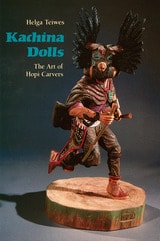
Teiwes explains the role of the Katsina spirit in Hopi religion and that of the kachina doll—the carved representation of a Katsina—in the ritual and economic life of the Hopis. In tracing the history of the kachina doll in Hopi culture, she shows how these wooden figures have changed since carvers came to be influenced by their marketability among Anglos and how their carving has been characterized by increasingly refined techniques. Unique to this book are Teiwes's description of the most recent trends in kachina doll carving and her profiles of twenty-seven modern carvers, including such nationally known artists as Alvin James Makya and Cecil Calnimptewa. Enhancing the text are more than one hundred photographs, including twenty-five breathtaking color plates that bring to life the latest examples of this popular art form.
Kachina and the Cross
Carroll L Riley
University of Utah Press, 1999
In The Kachina and the Cross, Carroll Riley weaves elements of archaeology, anthropology, and history to tell a dramatic story of conflict between the Pueblo Indians and Franciscan missionaries in the seventeenth-century Spanish colony of New Mexico.
Until now, histories of the early Southwest have tended to concentrate on the Spanish presence, with little mention of Indian resistance or the decade-long war that eventually erupted. In The Kachina and the Cross Riley completes the picture by utilizing archaeological and anthropological research from the past forty years, fleshing out the story of the first century of sustained Spanish-Pueblo relations.

Kafu the Scribbler
The Life and Writings of Nagai Kafu, 1897–1959Edward Seidensticker
University of Michigan Press, 1990
Kaiaulu
Gathering TidesMehana Blaich Vaughan
Oregon State University Press, 2018
This coast is known as a playground for tourists and backdrop for Hollywood movies, but catch from small local reefs, and the sharing of this abundance, has sustained area families for centuries, helping them to thrive through tidal waves, hurricanes, an influx of new residents, and economic recessions. Yet fishing families are increasingly invisible and many have moved away, threatened by global commodification and loss of access to coastal lands that are now private retreats for star entertainers, investors, and dot-com millionaires.
Building on two decades of interviews with more than sixty Hawaiian elders, leaders, and fishermen and women, Kaiāulu shares their stories of enduring community efforts to perpetuate kuleana, often translated to mean “rights and responsibilities.” Community actions extend kuleana to include nurturing respectful relationships with resources, guarding and cultivating fishing spots, perpetuating collective harvests and sharing, maintaining connection to family lands, reasserting local governance rooted in ancestral values, and preparing future generations to carry on.
An important contribution to scholarship in the fields of natural resource management, geography, Indigenous Studies, and Hawaiian Studies, Kaiāulu is also a skillfully written and deeply personal tribute to a community based not on ownership, but reciprocity, responsibility, and caring for the places that shape and sustain us all.

Kaija Saariaho
Pirkko Moisala
University of Illinois Press, 2008
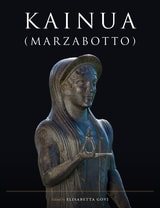
Kainua (Marzabotto)
Edited by Elisabetta Govi
University of Texas Press, 2023
This volume brings together leading scholars of Etruria to provide up-to-date findings from the key archaeological site of Kainua. Located in what is now the Italian town of Marzabotto, Kainua is the only Etruscan site whose complete urban layout has been preserved, making it possible to trace houses, roads, drainage systems, cemeteries, craft workshops, and an acropolis.
Under excavation since the 1850s, Kainua offers a trove of insights into Etruscan culture and society. The volume’s editor, Elisabetta Govi, and her fellow experts examine the material evidence underlying our understanding of the history, economy, religion, and social structures of Kainua, including trade routes that linked the city with the wider Mediterranean. Particularly exciting are recent discoveries of sanctuaries dedicated to Tinia and Uni, analogous to the Greek Zeus and Hera, which provide new information about Etruscan cults. Kainua (Marzabotto) also draws on the latest research to reconstruct the city’s foundation rites, a sacred charter, and urban plan. Finally, the authors explore the site’s archaeological history, discussing new knowledge made possible since the introduction of modern techniques of remote sensing and 3D modeling.
Kaiparowits Plateau and Glen Canyon Prehistory
An Interpretation Based on Ceramics UUAP 71Florence C. Lister
University of Utah Press, 1964
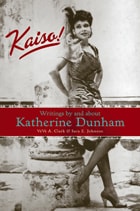
Kaiso!
Writings by and about Katherine DunhamEdited by VeVe A. Clark and Sara E. Johnson
University of Wisconsin Press, 2006

Kaleidoscope
Redrawing an American Family TreeMargaret Jones Bolsterli
University of Arkansas Press, 2015
Kaleidoscope is the story of this discovery, and it is the story, too, of the rise and fall of the Chavis fortunes in Mississippi, from the family’s first appearance on a frontier farm in 1829 to ownership of over a thousand acres and the slaves to work them by 1860. Bolsterli learns that in the 1850s, when all free colored people were ordered to leave Mississippi or be enslaved, Jordan Chavis’s white neighbors successfully petitioned the legislature to allow him to remain, unmolested, even as three of his sons and a daughter moved to Arkansas and Illinois. She learns about the agility with which the old man balanced on a tightrope over chaos to survive the war and then take advantage of the opportunities of newly awarded citizenship during Reconstruction. The story ends with the family’s loss of everything in the 1870s, after one of the exiled sons returns to Mississippi to serve in the Reconstruction legislature and a grandson attempts unsuccessfully to retain possession of the land. In Kaleidoscope, long-silenced truths are revealed, inviting questions about how attitudes toward race might have been different in the family and in America if the truth about this situation and thousands of others like it could have been told before.

Kali's Child
The Mystical and the Erotic in the Life and Teachings of RamakrishnaJeffrey J. Kripal
University of Chicago Press, 1998
In a substantial new preface to this second edition, Kripal answers his critics, addresses the controversy the book has generated in India, and traces the genealogy of his work in the history of psychoanalytic discourse on mysticism, Hinduism, and Ramakrishna himself. Kali's Child has already proven to be provocative, groundbreaking, and immensely enjoyable.
"Only a few books make such a major contribution to their field that from the moment of publication things are never quite the same again. Kali's Child is such a book."—John Stratton Hawley, History of Religions
Winner of the American Academy of Religion's History of Religions Prize for the Best First Book of 1995

Kamikaze Biker
Parody and Anomy in Affluent JapanIkuya Sato
University of Chicago Press, 1991
"Ikuya Sato's Kamikaze Biker is an exceptionally fine ethnographic analysis of a recurrent form of Japanese collective youth deviance. . . . Sato has contributed a work of value to a wide range of scholarly audiences."—Jack Katz, Contemporary Sociology
"A must for anyone interested in Japan, juvenile delinquency and/or youth behavior in general, or the impact of affluence on society."—Choice
"The volume provides a sophisticated . . . discussion of changes happening in Japanese society in the early 1980s. As such, it serves as a window on the 1990s and beyond."—Ross Mouer, Asian Studies Review
"Kamikaze Biker is a superlative study, one that might help liberate American social science from the simplistic notion that behavior not directly contributing to economic productivity should be summarily dismissed as 'dangerous' and 'deviant.' "—Los Angeles Times Book Review

Kamikaze Diaries
Reflections of Japanese Student SoldiersEmiko Ohnuki-Tierney
University of Chicago Press, 2006
This moving history presents diaries and correspondence left by members of the tokkotai and other Japanese student soldiers who perished during the war. Outside of Japan, these kamikaze pilots were considered unbridled fanatics and chauvinists who willingly sacrificed their lives for the emperor. But the writings explored here by Emiko Ohnuki-Tierney clearly and eloquently speak otherwise. A significant number of the kamikaze were university students who were drafted and forced to volunteer for this desperate military operation. Such young men were the intellectual elite of modern Japan: steeped in the classics and major works of philosophy, they took Descartes’ “I think, therefore I am” as their motto. And in their diaries and correspondence, as Ohnuki-Tierney shows, these student soldiers wrote long and often heartbreaking soliloquies in which they poured out their anguish and fear, expressed profound ambivalence toward the war, and articulated thoughtful opposition to their nation’s imperialism.
A salutary correction to the many caricatures of the kamikaze, this poignant work will be essential to anyone interested in the history of Japan and World War II.
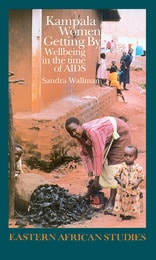
Kampala Women Getting By
Wellbeing in the Time of AIDSSandra Wallman
Ohio University Press, 1996
What do ordinary women in an African city do in the face of “serious enough” infections in themselves and signs of acute illness in their young children? How do they manage? What does it take to get by? How do they maintain the wellbeing of the household in a setting without what would be considered as basic health provision in an American or European city?
Professor Wallman focuses on women in a densely-populated part of Kampala called Kamwokya. With the help of a team of Ugandans and non-Ugandans, a vivid picture emerges, enhanced by color photographs, sketches and maps.
Women are largely responsible for the management of illness in all members of the family. Young children are at particular risk and the women have to take the first crucial decisions about treatment. Formal health resources are scarce and so they most often resort to an extraordinary range of treatments provided in the informal economy. A holistic picture of all the options that local people recognize is drawn, and an enriched understanding of problems and opportunities for health care in tropical cities emerges.
Multidisciplinary work on sexually transmitted disease is rare, even in this time of AIDS, and the book effectively maps the social contexts of its perception and management. Moreover, it focuses on women as ordinary citizens, selected by residence and not by reference to known medical conditions or high risk behavior. It is important too that the field strategies have encouraged local informants to become active participants in the definition of local problems and their solutions.
Kanaka Hawai'i Cartography
Hula, Navigation, and OratoryRenee Pualani Louis
Oregon State University Press, 2017
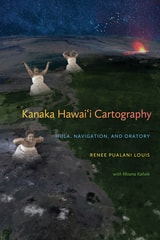
An important symbolic element in Hawai'ian cartography is the storied place name, which reflects Hawai'ian spatial knowledge of the environment. Many Hawai'ian place names performed in daily rituals were a conscious act of locating genealogical connections, recreating cultural landscapes, and regenerating cultural mores. They constitute a critically important body of Hawai'ian cultural knowledge. When Hawai'ian place names were incorporated into Western cartographic maps they were transformed epistemologically. They went from representing place as a repository of cultural knowledge to representing place as an object on the landscape. Hawai'ian spatial knowledge presentation is interactive, multi-sensual, and multi‐ dimensional.
Kanaka Hawai'i Cartography interweaves methodology with personal narrative and performance presentation in a playbill format. Three of the seven chapters are presented as “Acts” in a play. The remaining four chapters serve as intermissions or interludes together with a prologue and an epilogue for setting the stage and providing closure. To help make the topic more accessible, complex terms have been minimized, making academic theory easier for the educated reader to understand. The book will fill an important gap in Indigenous and Native Studies and will be welcomed by anyone interested in traditional Hawai’ian performance cartography.
Kandik Map
Linda Johnson
University of Alaska Press, 2009

Kandila
Samo Ceremonialism and Interpersonal RelationshipsR. Daniel Shaw
University of Michigan Press, 1991
This is an ethnographic study of the Samo people of Papua New Guinea. Centered on the structural role of ritual in tribal life, the book meticulously traces how complex ceremonial systems dictate social structures, kinship bonds, and village interactions. Shaw explores the critical pathway of male initiation rites, illustrating how communal ceremonies serve as a dynamic mechanism to transform personal identities and establish essential networks of social solidarity. By examining the intricate ways in which ritual acts, symbolic objects, and collective moods mediate daily life, Kandila provides anthropologists with invaluable insights into how a distinct cultural identity is preserved and reproduced through structured interpersonal relationships.

Kant, Herder, and the Birth of Anthropology
John H. Zammito
University of Chicago Press, 2001
Relying on previously unexamined sources, Zammito traces Kant's friendship with Herder as well as the personal tensions that destroyed their relationship. From this he shows how two very different philosophers emerged from the same beginnings and how, because of Herder's reformulation of Kant, anthropology was born out of philosophy.
Shedding light on an overlooked period of philosophical development, this book is a major contribution to the history of philosophy and the social sciences, and especially to the history of anthropology.
Kaqchikel Chronicles
The Definitive EditionWith translation and exegesis by Judith M. Maxwell and Robert M. Hill II
University of Texas Press, 2006
The collection of documents known as the Kaqchikel Chronicles consists of rare highland Maya texts, which trace Kaqchikel Maya history from their legendary departure from Tollan/Tula through their migrations, wars, the Spanish invasion, and the first century of Spanish colonial rule. The texts represent a variety of genres, including formal narrative, continuous year-count annals, contribution records, genealogies, and land disputes.
While the Kaqchikel Chronicles have been known to scholars for many years, this volume is the first and only translation of the texts in their entirety. The book includes two collections of documents, one known as the Annals of the Kaqchikels and the other as the Xpantzay Cartulary. The translation has been prepared by leading Mesoamericanists in collaboration with Kaqchikel-speaking linguistic scholars. It features interlinear glossing, which allows readers to follow the translators in the process of rendering colonial Kaqchikel into modern English. Extensive footnoting within the text restores the depth and texture of cultural context to the Chronicles. To put the translations in context, Judith Maxwell and Robert Hill have written a full scholarly introduction that provides the first modern linguistic discussion of the phonological, morphological, syntactic, and pragmatic structure of sixteenth-century Kaqchikel. The translators also tell a lively story of how these texts, which derive from pre-contact indigenous pictographic and cartographic histories, came to be converted into their present form.
Karanis
Reports 1924-28: Topographic and Architectural Report of Excavations During the Seasons 1924-1928By Arthur E.R. Boak and Enoch E. Peterson
University of Michigan Press, 1931
Karanis
Temples, Coin Hoards, Botanical and Zoological Reports: Seasons 1924-1931Edited by Arthur E.R. Boak
University of Michigan Press, 1933

Karawitan
Source Readings in Javanese Gamelan and Vocal Music, Volume 1Edited by Judith Becker with assistance from Alan H. Feinstein
University of Michigan Press, 1984

Karawitan
Source Readings in Javanese Gamelan and Vocal Music, Volume 2Edited by Judith Becker with assistance from Alan H. Feinstein
University of Michigan Press, 1987

Karawitan
Source Readings in Javanese Gamelan and Vocal Music, Volume 3Edited by Judith Becker with assistance from Alan H. Feinstein
University of Michigan Press, 1988
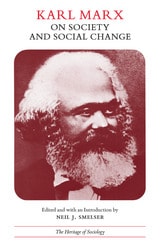
Karl Marx on Society and Social Change
With Selections by Friedrich EngelsKarl Marx
University of Chicago Press, 1975
The first section, "The Structure of Society," contains Marx's writings on the material basis of classes, the basis of the state, and the basis of the family. Among the writings included in this section are Marx's well-known summary from the Preface of A Contribution to a Critique of Political Economy and his equally famous observations on the functional significance of religion in relation to politics.
The second section is titled "The Sweep of Historical Change." The first selection here contains Marx's first statement of the main precapitalist forms of production. The second selection focuses on capitalism, its contradictions, and its impending destruction. Two brief final selections treat the nature of communism, particularly its freedom from the kinds of contradictions that have plagued all earlier forms of societies.
The last section, "The Mechanisms of Change," reproduces several parts of Marx's analysis of the mechanisms by which contradictions develop in capitalism and generate group conflicts. Included is an analysis of competition and its effects on the various classes, a discussion of economic crises and their effects on workers, and Marx's presentation of the historical specifics of the class struggle.
In his comprehensive Introduction to the selections, Professor Smelser provides a biography of Marx, indentifies the various intellectual traditions which formed the background for Marx's writings, and discusses the selections which follow. The editor describes Marx's conception of society as a social system, the differences between functionalism and Marx's theories, and the dynamics of economic and political change as analyzed by Marx.

Karl Marx on Society and Social Change
With Selections by Friedrich EngelsKarl Marx
University of Chicago Press, 1975
This volume presents those writings of Marx that best reveal his contribution to sociology, particularly to the theory of society and social change. The editor, Neil J. Smelser, has divided these selections into three topical sections and has also included works by Friedrich Engels.
The first section, "The Structure of Society," contains Marx's writings on the material basis of classes, the basis of the state, and the basis of the family. Among the writings included in this section are Marx's well-known summary from the Preface of A Contribution to a Critique of Political Economy and his equally famous observations on the functional significance of religion in relation to politics.
The second section is titled "The Sweep of Historical Change." The first selection here contains Marx's first statement of the main precapitalist forms of production. The second selection focuses on capitalism, its contradictions, and its impending destruction. Two brief final selections treat the nature of communism, particularly its freedom from the kinds of contradictions that have plagued all earlier forms of societies.
The last section, "The Mechanisms of Change," reproduces several parts of Marx's analysis of the mechanisms by which contradictions develop in capitalism and generate group conflicts. Included is an analysis of competition and its effects on the various classes, a discussion of economic crises and their effects on workers, and Marx's presentation of the historical specifics of the class struggle.
In his comprehensive Introduction to the selections, Professor Smelser provides a biography of Marx, indentifies the various intellectual traditions which formed the background for Marx's writings, and discusses the selections which follow. The editor describes Marx's conception of society as a social system, the differences between functionalism and Marx's theories, and the dynamics of economic and political change as analyzed by Marx.

Karma Of Brown Folk
Vijay Prashad
University of Minnesota Press, 2001
The popular book challenging the idea of a model minority, now in paperback!
“How does it feel to be a problem?” asked W. E. B. Du Bois of black Americans in his classic The Souls of Black Folk. A hundred years later, Vijay Prashad asks South Asians “How does it feel to be a solution?” In this kaleidoscopic critique, Prashad looks into the complexities faced by the members of a “model minority”-one, he claims, that is consistently deployed as "a weapon in the war against black America."
On a vast canvas, The Karma of Brown Folk attacks the two pillars of the “model minority” image, that South Asians are both inherently successful and pliant, and analyzes the ways in which U.S. immigration policy and American Orientalism have perpetuated these stereotypes. Prashad uses irony, humor, razor-sharp criticism, personal reflections, and historical research to challenge the arguments made by Dinesh D’Souza, who heralds South Asian success in the U.S., and to question the quiet accommodation to racism made by many South Asians. A look at Deepak Chopra and others whom Prashad terms “Godmen” shows us how some South Asians exploit the stereotype of inherent spirituality, much to the chagrin of other South Asians. Following the long engagement of American culture with South Asia, Prashad traces India’s effect on thinkers like Cotton Mather and Henry David Thoreau, Ravi Shankar’s influence on John Coltrane, and such essential issues as race versus caste and the connection between antiracism activism and anticolonial resistance.
The Karma of Brown Folk locates the birth of the “model minority” myth, placing it firmly in the context of reaction to the struggle for Black Liberation. Prashad reclaims the long history of black and South Asian solidarity, discussing joint struggles in the U.S., the Caribbean, South Africa, and elsewhere, and exposes how these powerful moments of alliance faded from historical memory and were replaced by Indian support for antiblack racism. Ultimately, Prashad writes not just about South Asians in America but about America itself, in the tradition of Tocqueville, Du Bois, Richard Wright, and others. He explores the place of collective struggle and multiracial alliances in the transformation of self and community-in short, how Americans define themselves.

Karnali Under Stress
Livelihood Strategies and Seasonal Rhythms in a Changing Nepal HimalayaBarry C. Bishop
University of Chicago Press, 1990
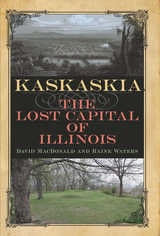
Kaskaskia
The Lost Capital of IllinoisDavid MacDonald and Raine Waters
Southern Illinois University Press, 2019
At the outset the Kaskaskia tribe, along with Jesuit missionaries and French traders, settled near the confluence of the Kaskaskia and Mississippi rivers, about sixty miles south of modern-day St. Louis. The town quickly became the largest French town and most prosperous settlement in the Illinois Country. After French control ended, Kaskaskia suffered under corrupt British and then inept American rule. In the 1790s the town revived and became the territorial capital, and in 1818 it became the first state capital. Along the way Kaskaskia was beset by disasters: crop failures, earthquakes, tornadoes, floods, epidemics, and the loss of the capital-city title to Vandalia. Likewise, human activity and industry eroded the river’s banks, causing the river to change course and eventually wash away the settlement. All that remains of the state’s first capital today is a village several miles from the original site.
MacDonald and Waters focus on the town’s growth, struggles, prosperity, decline, and obliteration, providing an overview of its domestic architecture to reveal how its residents lived. Debunking the notion of a folklore tradition about a curse on the town, the authors instead trace those stories to late nineteenth-century journalistic inventions. The result is a vibrant, heavily illustrated, and highly readable history of Kaskaskia that sheds light on the entire early history of Illinois.

Katherine Mansfield's Fiction
Patrick D. Morrow
University of Wisconsin Press, 1993
This book attempts to analyze a major part of Mansfield's fiction, concentrating on an analysis of the various textures, themes, and issues, plus the point of view virtuosity that she accomplished in her short lifetime (34 years). Many of her most famous works, such as "Prelude" and "Bliss," are explicated, along with many of her less famous and unfinished stories.

Katutura
A Place Where We Stay: Life in a Post-Apartheid Township in NamibiaWade C. Pendleton
Ohio University Press, 1995
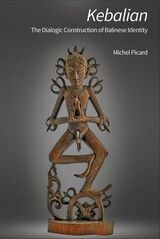
Kebalian
The Dialogic Construction of Balinese IdentityMichel Picard
National University of Singapore Press, 2024
Over the past one hundred years, the Balinese have been challenged by colonial occupation, political turbulence, and, most recently, tourism. In response, they have come to rely on the idea of “Kebalian,” or Balinese-ness. Kebalian is likened to a tree whose roots are religion (agama), the trunk is tradition (adat), and the fruits, Balinese culture (budaya). To understand how this sense of Balinese-ness came to be, Michel Picard examines the dialogues that the Balinese have engaged in both among themselves and with outsiders by conducting over a hundred interviews with Balinese opinion leaders, officials, and religious reformers. A key throughline in the construction of Kebalian is what Picard identifies as a twofold process of “religionization” and “Hinduization.” This process began with the first years of the incorporation of Bali into the Dutch East Indies and became more urgent with Indonesia’s independence. Kebalian today encompasses the tension between those Balinese eager to defend their customary ritual practices and advocates of Hinduism who deny that such local traditions qualify as agama. Kebalian presents a fascinating picture of religious change, identities in motion, and culture. Scholars of religion, cultural change, and Southeast Asian area studies will find this to be a fascinating and important book.

Keep On Fighting
The Life and Civil Rights Legacy of Marian A. SpencerDorothy H. Christenson
Ohio University Press, 2015
Marian Alexander Spencer was born in 1920 in the Ohio River town of Gallipolis, Ohio, one year after the “Red Summer” of 1919 that saw an upsurge in race riots and lynchings. Following the example of her grandfather, an ex-slave and community leader, Marian joined the NAACP at thirteen and grew up to achieve not only a number of civic leadership firsts in her adopted home city of Cincinnati, but a legacy of lasting civil rights victories.
Of these, the best known is the desegregation of Cincinnati’s Coney Island amusement park. She also fought to desegregate Cincinnati schools and to stop the introduction of observers in black voting precincts in Ohio. Her campaign to raise awareness of industrial toxic-waste practices in minority neighborhoods was later adapted into national Superfund legislation.
In 2012, Marian’s friend and colleague Dot Christenson sat down with her to record her memories. The resulting biography not only gives us the life story of remarkable leader but encapsulates many of the twentieth century’s greatest struggles and advances. Spencer’s story will prove inspirational and instructive to citizens and students alike.

Keep Your Airspeed Up
The Story of a Tuskegee AirmanHarold H. Brown and Marsha S. Bordner
University of Alabama Press, 2017
Inspiring memoir of Colonel Harold H. Brown, one of the 930 original Tuskegee pilots, whose dramatic wartime exploits and postwar professional successes contribute to this extraordinary account.
Keep Your Airspeed Up: The Story of a Tuskegee Airman is the memoir of an African American man who, through dedication to his goals and vision, overcame the despair of racial segregation to great heights, not only as a military aviator, but also as an educator and as an American citizen.
Unlike other historical and autobiographical portrayals of Tuskegee airmen, Harold H. Brown’s memoir is told from its beginnings: not on the first day of combat, not on the first day of training, but at the very moment Brown realized he was meant to be a pilot. He revisits his childhood in Minneapolis where his fascination with planes pushed him to save up enough of his own money to take flying lessons. Brown also details his first trip to the South, where he was met with a level of segregation he had never before experienced and had never imagined possible.
During the 1930s and 1940s, longstanding policies of racial discrimination were called into question as it became clear that America would likely be drawn into World War II. The military reluctantly allowed for the development of a flight-training program for a limited number of African Americans on a segregated base in Tuskegee, Alabama. The Tuskegee Airmen, as well as other African Americans in the armed forces, had the unique experience of fighting two wars at once: one against Hitler’s fascist regime overseas and one against racial segregation at home.
Colonel Brown fought as a combat pilot with the 332nd Fighter Group during World War II, and was captured and imprisoned in Stalag VII A in Moosburg, Germany, where he was liberated by General George S. Patton on April 29, 1945. Upon returning home, Brown noted with acute disappointment that race relations in the United States hadn’t changed. It wasn’t until 1948 that the military desegregated, which many scholars argue would not have been possible without the exemplary performance of the Tuskegee Airmen.
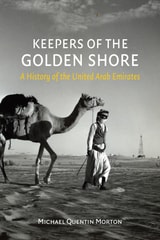
Keepers of the Golden Shore
A History of the United Arab EmiratesMichael Quentin Morton
Reaktion Books, 2016
As Michael Quentin Morton recounts, the region now known as the UAE likely began as a trading post between Mesopotamia and Oman, and since that time has been the stage of important economic and cultural exchanges. It has seen the rise and fall of a thriving pearl industry, piracy, invasions and wars, and the arrival of the oil age that would make it one of the richest countries on earth. Since the early 1970s, when seven sheikhs agreed to enter into a union, it has been a sovereign nation, carrying on the resourceful spirit—with resplendent fervor—that the brutally inhospitable landscape has long demanded of the people. Ultimately, Morton shows that the country is not only rich in oil and money but in an extraordinarily deep history and culture.

Keepers of the Sacred Chants
The Poetics of Ritual Power in an Amazonian SocietyJonathan D. Hill
University of Arizona Press, 1993

Keepin' It Real
Essays on Race in Contemporary AmericaElwood David Watson
Intellect Books, 2019
America’s racial problems aren’t going away any time soon. Keepin’ It Real will serve as a marker of the arguments we’re having right now, and an argument for the changes we need to make to become the better nation we’ve long imagined ourselves to be.
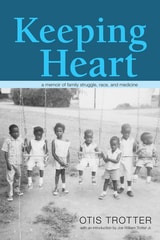
Keeping Heart
A Memoir of Family Struggle, Race, and MedicineOtis Trotter
Ohio University Press, 2015
“After saying our good-byes to friends and neighbors, we all got in the cars and headed up the hill and down the road toward a future in Ohio that we hoped would be brighter,” Otis Trotter writes in his affecting memoir, Keeping Heart: A Memoir of Family Struggle, Race, and Medicine.
Organized around the life histories, medical struggles, and recollections of Trotter and his thirteen siblings, the story begins in 1914 with his parents, Joe William Trotter Sr. and Thelma Odell Foster Trotter, in rural Alabama. By telling his story alongside the experiences of his parents as well as his siblings, Otis reveals cohesion and tensions in twentieth-century African American family and community life in Alabama, West Virginia, and Ohio.
This engaging chronicle illuminates the journeys not only of a black man born with heart disease in the southern Appalachian coalfields, but of his family and community. It fills an important gap in the literature on an underexamined aspect of American experience: the lives of blacks in rural Appalachia and in the nonurban endpoints of the Great Migration. Its emotional power is a testament to the importance of ordinary lives.

Keeping the Immigrant Bargain
The Costs and Rewards of Success in AmericaVivian Louie
Russell Sage Foundation, 2012
Keewaydinoquay, Stories from My Youth
Keewaydinoquay Peschel
University of Michigan Press, 2006
Michael Blake's Dances with Wolves transformed denigrating Indian sterotypes and created widespread interest in Native American culture. The subsequent popularity of books on this topic underscores the power of a tale well told. While Blake's story relates the early chapters of Native Americans' survival struggles, later accounts of this struggle remain untold.
The Indians of Hungry Hollow authentically presents these later chapters. The days of Hungry Hollow have long passed, but the opportunity to capture its lessons of community, strong values, and an urge to thrive in matters of the heart and soul are still very much with us.
These are stories of survival, community, sharing, and caring. The situations are often dire: winter in the middle of the Depression; an Indian settlement illegally taken from its inhabitants and set on fire; boaters stranded by bad weather and threatened with death. But if the situations are extreme, the telling of the stories is consistently optimistic yet completely without self-pity or sentimentality, and the characters always find a way through the darkness.
Dunlop's unique style of storytelling is compelling and informative, and these historically significant stories help to elucidate the transition of the American Indian culture from post-tribal days to the present.
Bill Dunlop is a respected Ottawa elder and storyteller. Marcia Fountain-Blacklidge is a professional writer, counselor, and consultant.
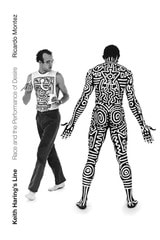
Keith Haring's Line
Race and the Performance of DesireRicardo Montez
Duke University Press, 2020
Ken Follett
The Transformation of a WriterCarlos Ramet
University of Wisconsin Press, 1999

Ken Saro-Wiwa
Roy Doron
Ohio University Press, 2016
Hanged by the Nigerian government on November 10, 1995, Ken Saro-Wiwa became a martyr for the Ogoni people and human rights activists, and a symbol of modern Africans’ struggle against military dictatorship, corporate power, and environmental exploitation. Though he is rightly known for his human rights and environmental activism, he wore many hats: writer, television producer, businessman, and civil servant, among others. While the book sheds light on his many legacies, it is above all about Saro-Wiwa the man, not just Saro-Wiwa the symbol.
Roy Doron and Toyin Falola portray a man who not only was formed by the complex forces of ethnicity, race, class, and politics in Nigeria, but who drove change in those same processes. Like others in the Ohio Short Histories of Africa series, Ken Saro-Wiwa is written to be accessible to the casual reader and student, yet indispensable to scholars.

Kenneth Burke and Contemporary European Thought
Rhetoric in TransitionBernard L. Brock
University of Alabama Press, 1995
Kenneth Burke and Contemporary European Thought: A Rhetoric in Transition reflects the present transitional nature of rhetoric and society. Its purpose is to relate the rhetorical theory of Burke to the theories of four major European philosophers—Jürgen Habermas, Ernesto Grassi, Foucault, and Jacques Derrida—as they discuss the nature of language and its central role in society.
This book describes a rhetorical world in transition but not a world in chaos. It points to the centrality of symbolism in theories of language and rhetoric and illustrates Burke’s influence as a pivotal things and theorist in the communication arts and sciences, suggesting that the observations regarding shifting paradigms and perspectives made by other scholars are indeed emergent in the realm of rhetoric. It also regards the powerful impact of language and symbolic action in both the critique and construction of human knowledge and augurs a central role for rhetoric in the intellectual and social transformations of this and the next century.
Kenneth Burke's Dramatism and Popular Arts
C. Ronald Kimberling
University of Wisconsin Press, 1982
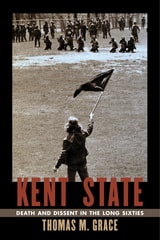
Kent State
Death and Dissent in the Long SixtiesThomas M. Grace
University of Massachusetts Press, 2016
On May 4, 1970, National Guard troops opened fire on unarmed antiwar protesters at Kent State University in Ohio, killing four students and wounding nine others, including the author of this book. The shootings shocked the American public and triggered a nationwide wave of campus strikes and protests. To many at the time, Kent State seemed an unlikely site for the bloodiest confrontation in a decade of campus unrest—a sprawling public university in the American heartland, far from the coastal epicenters of political and social change.
Yet, as Thomas M. Grace shows, the events of May 4 were not some tragic anomaly but were grounded in a tradition of student political activism that extended back to Ohio's labor battles of the 1950s. The vast expansion of the university after World War II brought in growing numbers of working-class enrollees from the industrial centers of northeast Ohio, members of the same demographic cohort that eventually made up the core of American combat forces in Vietnam. As the war's rising costs came to be felt acutely in the home communities of Kent's students, tensions mounted between the growing antiwar movement on campus, the university administration, and the political conservatives who dominated the surrounding county as well as the state government.
The deadly shootings at Kent State were thus the culmination of a dialectic of radicalization and repression that had been building throughout the decade. In the years that followed, the antiwar movement continued to strengthen on campus, bolstered by an influx of returning Vietnam veterans. After the war ended, a battle over the memory and meaning of May 4 ensued. It continues to the present day.
Key Concepts in Critical Cultural Studies
Edited by Linda Steiner and Clifford Christians
University of Illinois Press, 2010
Key Concepts in Public Archaeology
Edited by Gabriel Moshenska
University College London, 2017
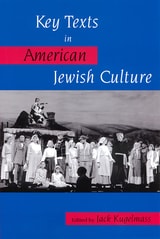
Key Texts in American Jewish Culture
Kugelmass, Jack
Rutgers University Press, 2003
Contributors come from a variety of disciplines, including American studies, anthropology, comparative literature, history, music, religious studies, and women's studies. Each provides an analysis of a specific text in art, music, television, literature, homily, liturgy, or history. Some of the works discussed, such as Philip Roth's novel Counterlife, the musical Fiddler on the Roof, and Irving Howe's World of Our Fathers, are already widely acknowledged components of the American Jewish studies canon. Others-such as Bridget Loves Bernie, infamous for the hostile reception it received among American Jews+ may be considered "key texts" because of the controversy they provoked. Still others, such as Joshua Liebman's Piece of Mind and the radio and TV sitcom The Goldbergs, demonstrate the extent to which American Jewish culture and mainstream American culture intermingle with and borrow from each other.