Results by title
18284 books match the query 'United States' and 92 start with k
KOTEX, KLEENEX, HUGGIES
KIMBERLY-CLARK AND THE CONSUMER REVOLUTION IN AMERICAN BUSINESSThomas Heinrich and Bob Batchelor
The Ohio State University Press, 2004
Kafka's Law
"The Trial" and American Criminal JusticeRobert P. Burns
University of Chicago Press, 2014
With Kafka’s Law, Robert P. Burns shows how The Trial provides an uncanny lens through which to consider flaws in the American criminal justice system today. Burns begins with the story, at once funny and grim, of Josef K., caught in the Law’s grip and then crushed by it. Laying out the features of the Law that eventually destroy K., Burns argues that the American criminal justice system has taken on many of these same features. In the overwhelming majority of contemporary cases, police interrogation is followed by a plea bargain, in which the court’s only function is to set a largely predetermined sentence for an individual already presumed guilty. Like Kafka’s nightmarish vision, much of American criminal law and procedure has become unknowable, ubiquitous, and bureaucratic. It, too, has come to rely on deception in dealing with suspects and jurors, to limit the role of defense, and to increasingly dispense justice without the protection of formal procedures. But, while Kennedy may be correct in his grim assessment, a remedy is available in the tradition of trial by jury, and Burns concludes by convincingly arguing for its return to a more central place in American criminal justice.
Kaiso!
Writings by and about Katherine DunhamEdited by VeVe A. Clark and Sara E. Johnson
University of Wisconsin Press, 2006
Kaleidoscope
Redrawing an American Family TreeMargaret Jones Bolsterli
University of Arkansas Press, 2015
Kaleidoscope is the story of this discovery, and it is the story, too, of the rise and fall of the Chavis fortunes in Mississippi, from the family’s first appearance on a frontier farm in 1829 to ownership of over a thousand acres and the slaves to work them by 1860. Bolsterli learns that in the 1850s, when all free colored people were ordered to leave Mississippi or be enslaved, Jordan Chavis’s white neighbors successfully petitioned the legislature to allow him to remain, unmolested, even as three of his sons and a daughter moved to Arkansas and Illinois. She learns about the agility with which the old man balanced on a tightrope over chaos to survive the war and then take advantage of the opportunities of newly awarded citizenship during Reconstruction. The story ends with the family’s loss of everything in the 1870s, after one of the exiled sons returns to Mississippi to serve in the Reconstruction legislature and a grandson attempts unsuccessfully to retain possession of the land. In Kaleidoscope, long-silenced truths are revealed, inviting questions about how attitudes toward race might have been different in the family and in America if the truth about this situation and thousands of others like it could have been told before.
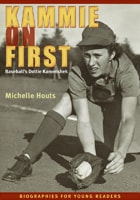
Kammie on First
Baseball’s Dottie KamenshekMichelle Houts
Ohio University Press, 2014
Dorothy Mary Kamenshek was born to immigrant parents in Norwood, Ohio. As a young girl, she played pickup games of sandlot baseball with neighborhood children; no one, however, would have suspected that at the age of seventeen she would become a star athlete at the national level.
The outbreak of World War II and the ensuing draft of able-bodied young men severely depleted the ranks of professional baseball players. In 1943, Philip K. Wrigley, owner of the Chicago Cubs, led the initiative to establish a new league—a women’s league—to fill the ballparks while the war ground on in Europe and the Pacific. Kamenshek was selected and assigned to the Rockford Peaches in their inaugural season and played first base for a total of ten years, becoming a seven-time All-Star and holder of two league batting titles. When injuries finally put an end to her playing days, she went on to a successful and much quieter career in physical therapy. Fame came again in 1992, when Geena Davis portrayed a player loosely based on Kamenshek in the hit movie A League of Their Own.
Kammie on First is a real-life tale that will entertain and inspire young readers, both girls and boys. It is the first book in a new series, Biographies for Young Readers, from Ohio University Press.
Kandik Map
Linda Johnson
University of Alaska Press, 2009
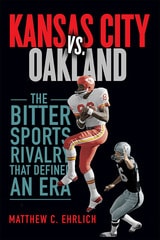
Kansas City vs. Oakland
The Bitter Sports Rivalry That Defined an EraMatthew C. Ehrlich
University of Illinois Press, 2019
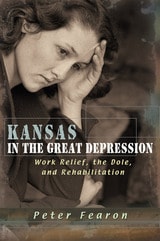
Kansas in the Great Depression
Work Relief, the Dole, and RehabilitationPeter Fearon
University of Missouri Press, 2007
No part of the United States escaped the ravages of the Great Depression, but some coped with it better than others. This book examines New Deal relief programs in Kansas throughout the Depression, focusing on the relationship between the state and the federal government to show how their successful operation depended on the effectiveness of that partnership.
Ranging widely over all of Kansas’s 105 counties, Peter Fearon provides a detailed analysis of the key relief programs for both urban and rural areas and shows that the state’s Republican administration—led by FDR’s later presidential opponent Governor Alf Landon—effectively ran New Deal welfare policies. As early as 1933, federal officials reported the Kansas central relief administration to be one of the most efficient in the country, and funding for farm policies was generous enough to keep many Kansas farm families off the relief rolls. Indeed, historically high levels of social spending ensured that New Deal initiatives were radical for their day, but Fearon shows that, especially in Kansas, fears of the debilitating effects of the dole and the insistence on means testing and work relief served as conservative balances to the threat of a dependency culture.
Drawing on extensive research at the county level, Fearon examines relief problems from the perspective of recipients, social workers, and poor commissioners, all of whom had to cope with inadequate and fluctuating funding. He plumbs the sometimes volatile relationships between social workers and their clients to illustrate the formidable difficulties faced by the former and explain reasons for—and effects of—strikes and riots by the latter. He also investigates the operation of work relief, considers the treatment of women and blacks in the distribution of welfare resources, and assesses the effects of the WPA on employment—showing that the majority of those eligible were unable to secure positions and were forced to fall back on county relief.
Kansas in the Great Depression is an insightful look at how federal, state, and local authorities worked together to deal with a national emergency, revealing the complexities of policy initiatives not generally brought to light in studies at the national level while establishing important links between pre-Roosevelt policies and the New Deal. It reaffirms the virtues of government programs run by dedicated public officials as it opens a new window on Americans helping Americans in their darkest hours.
Kansas’s War
The Civil War in DocumentsPearl T. Ponce
Ohio University Press, 2011
When the Civil War broke out in April 1861, Kansas was in a unique position. It had been a state for mere weeks, and already its residents were intimately acquainted with civil strife. Since its organization as a territory in 1854, Kansas had been the focus of a national debate over the place of slavery in the Republic. By 1856, the ideological conflict developed into actual violence, earning the territory the sobriquet “Bleeding Kansas.” Because of this steady escalation in violence, the state’s transition from peace to war was not as abrupt as that of other states.
Kansas’s War illuminates the new state’s main preoccupations: the internal struggle for control of policy and patronage; border security; and issues of race—especially efforts to come to terms with the burgeoning African American population and Native Americans’ coninuing claims to nearly one-fifth of the state’s land. These documents demonstrate how politicians, soldiers, and ordinary Kansans were transformed by the war.
Karl Marx in America
Andrew Hartman
University of Chicago Press, 2025
To read Karl Marx is to contemplate a world created by capitalism. People have long viewed the United States as the quintessential anti-Marxist nation, but Marx’s ideas have inspired a wide range of people to formulate a more precise sense of the stakes of the American project. Historians have highlighted the imprint made on the United States by Enlightenment thinkers such as Adam Smith, John Locke, and Thomas Paine, but Marx is rarely considered alongside these figures. Yet his ideas are the most relevant today because of capitalism’s centrality to American life.
In Karl Marx in America, historian Andrew Hartman argues that even though Karl Marx never visited America, the country has been infused, shaped, and transformed by him. Since the beginning of the Civil War, Marx has been a specter in the American machine. During the Gilded Age, socialists read Marx as an antidote to the unchecked power of corporations. In the Great Depression, communists turned to Marx in hopes of transcending the destructive capitalist economy. The young activists of the 1960s were inspired by Marx as they gathered to protest an overseas war. Marx’s influence today is evident, too, as Americans have become increasingly attuned to issues of inequality, labor, and power.
After decades of being pushed to the far-left corner of intellectual thought, Marx’s ideologies have crossed over into the mainstream and are more alive than ever. Working-class consciousness is on the rise, and, as Marx argued, the future of a capitalist society rests in the hands of the people who work at the point of production. A valuable resource for anyone interested in Marx’s influence on American political discourse, Karl Marx in America is a thought-provoking account of the past, present, and future of his philosophies in American society.
Karma Of Brown Folk
Vijay Prashad
University of Minnesota Press, 2001
The popular book challenging the idea of a model minority, now in paperback!
“How does it feel to be a problem?” asked W. E. B. Du Bois of black Americans in his classic The Souls of Black Folk. A hundred years later, Vijay Prashad asks South Asians “How does it feel to be a solution?” In this kaleidoscopic critique, Prashad looks into the complexities faced by the members of a “model minority”-one, he claims, that is consistently deployed as "a weapon in the war against black America."
On a vast canvas, The Karma of Brown Folk attacks the two pillars of the “model minority” image, that South Asians are both inherently successful and pliant, and analyzes the ways in which U.S. immigration policy and American Orientalism have perpetuated these stereotypes. Prashad uses irony, humor, razor-sharp criticism, personal reflections, and historical research to challenge the arguments made by Dinesh D’Souza, who heralds South Asian success in the U.S., and to question the quiet accommodation to racism made by many South Asians. A look at Deepak Chopra and others whom Prashad terms “Godmen” shows us how some South Asians exploit the stereotype of inherent spirituality, much to the chagrin of other South Asians. Following the long engagement of American culture with South Asia, Prashad traces India’s effect on thinkers like Cotton Mather and Henry David Thoreau, Ravi Shankar’s influence on John Coltrane, and such essential issues as race versus caste and the connection between antiracism activism and anticolonial resistance.
The Karma of Brown Folk locates the birth of the “model minority” myth, placing it firmly in the context of reaction to the struggle for Black Liberation. Prashad reclaims the long history of black and South Asian solidarity, discussing joint struggles in the U.S., the Caribbean, South Africa, and elsewhere, and exposes how these powerful moments of alliance faded from historical memory and were replaced by Indian support for antiblack racism. Ultimately, Prashad writes not just about South Asians in America but about America itself, in the tradition of Tocqueville, Du Bois, Richard Wright, and others. He explores the place of collective struggle and multiracial alliances in the transformation of self and community-in short, how Americans define themselves.
Kaskaskia Under the French Regime
Natalia Maree Belting. Foreword by Carl J. Ekberg
Southern Illinois University Press, 2003
“The Illinois Habitant,” writes Natalia Maree Belting, “was a gay soul; he seemed shockingly carefree to later, self-righteous puritans from the American colonies. He danced on Sunday after mass, was passionately attached to faro and half a dozen other card games, and played billiards at all hours. He gossiped long over a friendly pipe and congenial mug of brandy in the half-dusk of his porch or in the noisy tavern.”
First published in 1948, Kaskaskia under the French Regime is a social and economic history of French Kaskaskia from 1703 to 1765. Using a readable, journalistic style, Belting brings to life the prairie terrain, the Kaskaskia mission, early architecture, building methods and materials, the beginnings of government, domestic tools and utensils, commerce, and the social customs of the pioneer.
In 1703, Kaskaskia was little more than a mission station in Illinois territory inhabited by a few French traders, their Indian wives, and a priest. Later in the century, the settlement became a flourishing French village filled with rows of low one-story French-style houses lining the streets. But the unique native and French bonds began when the explorers Louis Joliet and Pierre Marquette discovered a peaceful tribe, the Kaskaskia, while journeying along the Illinois River.
This historic friendship grew into a unique colonial culture, the remnants which can be seen through numerous primary source documents. Belting draws on and translates from eighteenth century French the Kaskaskia Manuscripts, in which French notaries recorded parish marriage contracts, property transactions (including slave sales), and estate inventories. She also examines the papers of the Marquis de Vaudreuil, among them the most complete census ever conducted in French Illinois, which provides a household-by-household enumeration of the population. What results is a comprehensive depiction of the lives and livelihood of French settlers in colonial Illinois.
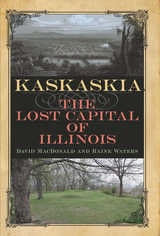
Kaskaskia
The Lost Capital of IllinoisDavid MacDonald and Raine Waters
Southern Illinois University Press, 2019
At the outset the Kaskaskia tribe, along with Jesuit missionaries and French traders, settled near the confluence of the Kaskaskia and Mississippi rivers, about sixty miles south of modern-day St. Louis. The town quickly became the largest French town and most prosperous settlement in the Illinois Country. After French control ended, Kaskaskia suffered under corrupt British and then inept American rule. In the 1790s the town revived and became the territorial capital, and in 1818 it became the first state capital. Along the way Kaskaskia was beset by disasters: crop failures, earthquakes, tornadoes, floods, epidemics, and the loss of the capital-city title to Vandalia. Likewise, human activity and industry eroded the river’s banks, causing the river to change course and eventually wash away the settlement. All that remains of the state’s first capital today is a village several miles from the original site.
MacDonald and Waters focus on the town’s growth, struggles, prosperity, decline, and obliteration, providing an overview of its domestic architecture to reveal how its residents lived. Debunking the notion of a folklore tradition about a curse on the town, the authors instead trace those stories to late nineteenth-century journalistic inventions. The result is a vibrant, heavily illustrated, and highly readable history of Kaskaskia that sheds light on the entire early history of Illinois.
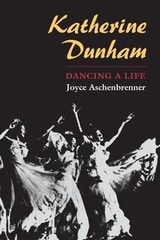
Katherine Dunham
DANCING A LIFEJoyce Aschenbrenner
University of Illinois Press, 2002
Founder of the first self-supporting African American dance company, Dunham relied on her fieldwork as an anthropologist to fundamentally change modern dance. She shaped new dance techniques and introduced other cultures to U.S. and European audiences by fusing Caribbean and African-based movement with ballet and modern dance. Her revolutionary approaches to dance and its greater connection to the world have influenced a generation of dancers, theatrical performers, and scholars. She believes that dance involves the development of an entire person and the rituals and traditions of dance are integral to the study of culture. Throughout her career she has been a living model of the socially responsible artist working to whet cultural appetites and combat social injustice.
Joyce Aschenbrenner's multifaceted portrait blends personal observations based on her own interactions with Dunham, archival documents, and interviews with Dunham's colleagues, students, and members of the Katherine Dunham Dance Company.
Integrating these sources, Aschenbrenner characterizes the social, familial, and cultural environment of Dunham's upbringing and the intellectual and artistic community she embraced at the University of Chicago that laid the groundwork for her development as a dancer, anthropologist, and humanitarian. The book vividly depicts Dunham's and her dancers' touring experiences and includes detailed descriptions of her community cultural and educational programs in East St. Louis.

Katrina's Imprint
Race and Vulnerability in AmericaWailoo, Keith
Rutgers University Press, 2010

Kearney's Own
The History of the First New Jersey Brigade in the Civil WarGottfried, Bradley M
Rutgers University Press, 2005
From the first battle at Bull Run to the surrender of Lee's army at Appomattox four years later, only one federal infantry brigade experienced the entire Civil War as a cohesive unit. While most units were composed of regiments from different states that were disbanded after three years, the First New Jersey Brigade was the enduring exception.
Despite the group's remarkable coherency, it started as many military units did during the early stages of the war-a disorganized ragtag outfit that was poorly trained and ill-prepared for battle. This quickly changed, however, with the appointment of General Philip Kearny in the fall of 1861. Kearny transformed the troops, making them among the most disciplined and effective commands in the Army of the Potomac. A series of notable victories earned the soldiers an impressive reputation and, with it, thousands of others voluntarily came forward to enlist. Even when they suffered heavy losses, the New Jersey regiments fought exceptionally well and served key roles in dozens of battles, including the Peninsula, Seven Days, Second Bull Run, Antietam, Chancellorsville, Wilderness, Spotsylvania, Cold Harbor, Early's Valley, and the Petersburg Campaigns.
In Kearny's Own, Bradley M. Gottfried weaves together compelling accounts of battles fought with a wealth of letters and diaries to tell the story of this famous brigade from a uniquely personal perspective. The hopes, fears, and sorrows of the men come through vividly as accounts reveal how civilians were physically and emotionally transformed into soldiers. Primary sources also provide insight to what the war meant to the men who fought for the Union.
Fourteen maps illustrate the battles and marches, while detailed appendices include statistical breakdowns of losses and outline the fates of the men whose letters and diaries are used as sources. In this first book published on the subject, Gottfried not only provides a long-overdue history of the First New Jersey Brigade, he offers a human window into the turbulent and trying experiences of war.
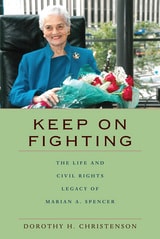
Keep On Fighting
The Life and Civil Rights Legacy of Marian A. SpencerDorothy H. Christenson
Ohio University Press, 2015
Marian Alexander Spencer was born in 1920 in the Ohio River town of Gallipolis, Ohio, one year after the “Red Summer” of 1919 that saw an upsurge in race riots and lynchings. Following the example of her grandfather, an ex-slave and community leader, Marian joined the NAACP at thirteen and grew up to achieve not only a number of civic leadership firsts in her adopted home city of Cincinnati, but a legacy of lasting civil rights victories.
Of these, the best known is the desegregation of Cincinnati’s Coney Island amusement park. She also fought to desegregate Cincinnati schools and to stop the introduction of observers in black voting precincts in Ohio. Her campaign to raise awareness of industrial toxic-waste practices in minority neighborhoods was later adapted into national Superfund legislation.
In 2012, Marian’s friend and colleague Dot Christenson sat down with her to record her memories. The resulting biography not only gives us the life story of remarkable leader but encapsulates many of the twentieth century’s greatest struggles and advances. Spencer’s story will prove inspirational and instructive to citizens and students alike.
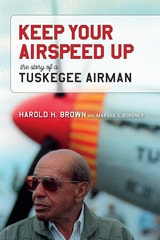
Keep Your Airspeed Up
The Story of a Tuskegee AirmanHarold H. Brown and Marsha S. Bordner
University of Alabama Press, 2017
Inspiring memoir of Colonel Harold H. Brown, one of the 930 original Tuskegee pilots, whose dramatic wartime exploits and postwar professional successes contribute to this extraordinary account.
Keep Your Airspeed Up: The Story of a Tuskegee Airman is the memoir of an African American man who, through dedication to his goals and vision, overcame the despair of racial segregation to great heights, not only as a military aviator, but also as an educator and as an American citizen.
Unlike other historical and autobiographical portrayals of Tuskegee airmen, Harold H. Brown’s memoir is told from its beginnings: not on the first day of combat, not on the first day of training, but at the very moment Brown realized he was meant to be a pilot. He revisits his childhood in Minneapolis where his fascination with planes pushed him to save up enough of his own money to take flying lessons. Brown also details his first trip to the South, where he was met with a level of segregation he had never before experienced and had never imagined possible.
During the 1930s and 1940s, longstanding policies of racial discrimination were called into question as it became clear that America would likely be drawn into World War II. The military reluctantly allowed for the development of a flight-training program for a limited number of African Americans on a segregated base in Tuskegee, Alabama. The Tuskegee Airmen, as well as other African Americans in the armed forces, had the unique experience of fighting two wars at once: one against Hitler’s fascist regime overseas and one against racial segregation at home.
Colonel Brown fought as a combat pilot with the 332nd Fighter Group during World War II, and was captured and imprisoned in Stalag VII A in Moosburg, Germany, where he was liberated by General George S. Patton on April 29, 1945. Upon returning home, Brown noted with acute disappointment that race relations in the United States hadn’t changed. It wasn’t until 1948 that the military desegregated, which many scholars argue would not have been possible without the exemplary performance of the Tuskegee Airmen.
Keep the Wretches in Order
America's Biggest Mass Trial, the Rise of the Justice Department, and the Fall of the IWWDean A. Strang
University of Wisconsin Press, 2020
In the first legal history of this federal trial, Dean Strang shows how the case laid the groundwork for a fundamentally different strategy to stifle radical threats, and had a major role in shaping the modern Justice Department. As the trial unfolded, it became an exercise of raw force, raising serious questions about its legitimacy and revealing the fragility of a criminal justice system under great external pressure.
Keepers of the Flame
NFL Films and the Rise of Sports MediaTravis Vogan
University of Illinois Press, 2014
Drawing on research at the NFL Films Archive and the Pro Football Hall of Fame and interviews with media pioneer Steve Sabol and others, Travis Vogan shows how NFL Films has constructed a consistent, romanticized, and remarkably visible mythology for the National Football League. The company packages football as a visceral and dramatic sequence of violent, beautiful, graceful, and heroic gridiron battles. Historically proven formulas for presentation--such as the dramatic voiceovers once provided by John Facenda's baritone, the soaring scores of Sam Spence's rousing background music, and the epic poetry found in Steve Sabol's scripts--are still used today.
From the Vincent Price-narrated Strange but True Football Stories to the currently running series Hard Knocks, NFL Films distinguishes the NFL from other sports organizations and from other media and entertainment. Vogan tells the larger story of the company's relationship with and vast influence on our culture's representations of sport, the expansion of sports television beyond live game broadcasts, and the emergence of cable television and Internet sports media.
Keepers of the Flame: NFL Films and the Rise of Sports Media presents sports media as an integral facet of American popular culture and NFL Films as key to the transformation of professional football into the national obsession commonly known as America's Game.
Keeping Faith
Memoirs of a PresidentJimmy Carter
University of Arkansas Press, 1995
Keeping Heart
A Memoir of Family Struggle, Race, and MedicineOtis Trotter
Ohio University Press, 2015
“After saying our good-byes to friends and neighbors, we all got in the cars and headed up the hill and down the road toward a future in Ohio that we hoped would be brighter,” Otis Trotter writes in his affecting memoir, Keeping Heart: A Memoir of Family Struggle, Race, and Medicine.
Organized around the life histories, medical struggles, and recollections of Trotter and his thirteen siblings, the story begins in 1914 with his parents, Joe William Trotter Sr. and Thelma Odell Foster Trotter, in rural Alabama. By telling his story alongside the experiences of his parents as well as his siblings, Otis reveals cohesion and tensions in twentieth-century African American family and community life in Alabama, West Virginia, and Ohio.
This engaging chronicle illuminates the journeys not only of a black man born with heart disease in the southern Appalachian coalfields, but of his family and community. It fills an important gap in the literature on an underexamined aspect of American experience: the lives of blacks in rural Appalachia and in the nonurban endpoints of the Great Migration. Its emotional power is a testament to the importance of ordinary lives.
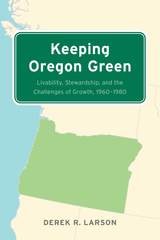
Keeping Oregon Green
Livability, Stewardship, and the Challenges of Growth, 1960–1980Derek R. Larson
Oregon State University Press, 2016
Keeping Oregon Green is a new history of the signature accomplishments of Oregon’s environmental era: the revitalization of the polluted Willamette River, the Beach Bill that preserved public access to the entire coastline, the Bottle Bill that set the national standard for reducing roadside litter, and the nation’s first comprehensive land use zoning law, colloquially known as LDCD. To these case studies is added the largely forgotten tale of what would have been Oregon’s second National Park, intended to preserve the Oregon Dunes as one of the country’s first National Seashores.
Through the detailed study of the historical, political, and cultural contexts of these environmental conflicts the author uncovers new dimensions in familiar stories linked to the concepts of “livability” and environmental stewardship. Linking events in Oregon to the national environmental awakening of the 1960s-1970s, the innovative environmental policies that carried Oregon to a position of national leadership are shown to be products of place and culture as much as politics. While political leaders played critical roles in framing new laws, the advocacy of ordinary citizens-- farmers, students, business leaders, and factory workers --drove a movement that crossed partisan, geographic, and class lines to make Oregon the nation’s environmental showplace of the 1970s.
Drawing on extensive archival research, source materials ranging from poetry to congressional hearings, and firmly rooted in the cultural, economic, and political history of the Pacific Northwest, Keeping Oregon Green argues that the state’s environmental legacy is not just the product of visionary leadership, but rather a complex confluence of events, trends, and personalities that could only have happened when and where it did. The linked concepts of livability and stewardship behind Oregon’s success were not transferrable to other places or times, dooming efforts to repeat the state’s signature achievements elsewhere to failure.
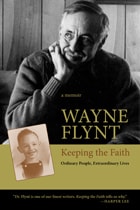
Keeping the Faith
Ordinary People, Extraordinary LivesWayne Flynt
University of Alabama Press, 2011
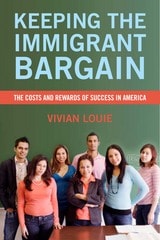
Keeping the Immigrant Bargain
The Costs and Rewards of Success in AmericaVivian Louie
Russell Sage Foundation, 2012
Keewaydinoquay, Stories from My Youth
Keewaydinoquay Peschel
University of Michigan Press, 2006
Michael Blake's Dances with Wolves transformed denigrating Indian sterotypes and created widespread interest in Native American culture. The subsequent popularity of books on this topic underscores the power of a tale well told. While Blake's story relates the early chapters of Native Americans' survival struggles, later accounts of this struggle remain untold.
The Indians of Hungry Hollow authentically presents these later chapters. The days of Hungry Hollow have long passed, but the opportunity to capture its lessons of community, strong values, and an urge to thrive in matters of the heart and soul are still very much with us.
These are stories of survival, community, sharing, and caring. The situations are often dire: winter in the middle of the Depression; an Indian settlement illegally taken from its inhabitants and set on fire; boaters stranded by bad weather and threatened with death. But if the situations are extreme, the telling of the stories is consistently optimistic yet completely without self-pity or sentimentality, and the characters always find a way through the darkness.
Dunlop's unique style of storytelling is compelling and informative, and these historically significant stories help to elucidate the transition of the American Indian culture from post-tribal days to the present.
Bill Dunlop is a respected Ottawa elder and storyteller. Marcia Fountain-Blacklidge is a professional writer, counselor, and consultant.
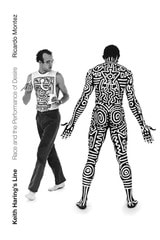
Keith Haring's Line
Race and the Performance of DesireRicardo Montez
Duke University Press, 2020
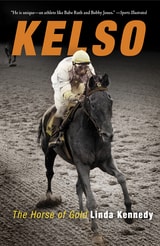
Kelso
The Horse of GoldLinda Kennedy
Westholme Publishing, 2007
Praise for Kelso: The Horse of Gold:
“Ms. Kennedy has captured the grandeur of the horse in a simple, straightforward way that will charm and excite those who saw Kelso run and remember his stirring deeds. . . . Kelso's racing record through eight seasons is simply breathtaking.”—Wall Street Journal
“In this concise, entertaining account, Kennedy tells the story of Kelso, a scrawny ungainly gelding who just happened to be one of the greatest Thoroughbreds that ever lived.”—Publishers Weekly
“An excellent portrayal... so intense that one has the sensation of being right there with the crowd and cheering Kelso on.”—Tom Trotter, Former New York Racing Secretary
“He was the greatest horse I ever rode.”—Eddie Arcaro, rider of Triple Crown champions Whirlaway, Assault, and Citation
At his three-year debut in June 1960, no one could know that Mrs. Allaire DuPont’s small, deerlike gelding named Kelso would come to dominate American racing like no other horse before or since. For five unprecedented years, he would reign as Horse of the Year, setting records and endearing himself to millions of fans. Always considered among the top four horses of all time—with Man O' War, Secretariat, and Citation—for many, Kelso is the greatest racehorse, since he won at sprints and endurance races, won on turf and dirt, carried unprecedented handicap weights, and raced both foreign and national thoroughbreds. Kelso was crowned champion of the Jockey Gold Cup, one of the most prestigious racing events, an astounding five straight times. Like Seabiscuit, Kelso was not earmarked as a contender and missed the Triple Crown races. But Kelso's greatness was decisive: he regularly defeated Triple Crown race winners. In Kelso: The Horse of Gold, Linda Kennedy tells the remarkable story of one of the greatest athletes of the ages, recreating the excitement of "Kelly's" unique and brilliant career while placing his unparalleled achievements in the context of racing history.

Kenneth Burke's Dramatism and Popular Arts
C. Ronald Kimberling
University of Wisconsin Press, 1982
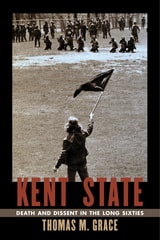
Kent State
Death and Dissent in the Long SixtiesThomas M. Grace
University of Massachusetts Press, 2016
On May 4, 1970, National Guard troops opened fire on unarmed antiwar protesters at Kent State University in Ohio, killing four students and wounding nine others, including the author of this book. The shootings shocked the American public and triggered a nationwide wave of campus strikes and protests. To many at the time, Kent State seemed an unlikely site for the bloodiest confrontation in a decade of campus unrest—a sprawling public university in the American heartland, far from the coastal epicenters of political and social change.
Yet, as Thomas M. Grace shows, the events of May 4 were not some tragic anomaly but were grounded in a tradition of student political activism that extended back to Ohio's labor battles of the 1950s. The vast expansion of the university after World War II brought in growing numbers of working-class enrollees from the industrial centers of northeast Ohio, members of the same demographic cohort that eventually made up the core of American combat forces in Vietnam. As the war's rising costs came to be felt acutely in the home communities of Kent's students, tensions mounted between the growing antiwar movement on campus, the university administration, and the political conservatives who dominated the surrounding county as well as the state government.
The deadly shootings at Kent State were thus the culmination of a dialectic of radicalization and repression that had been building throughout the decade. In the years that followed, the antiwar movement continued to strengthen on campus, bolstered by an influx of returning Vietnam veterans. After the war ended, a battle over the memory and meaning of May 4 ensued. It continues to the present day.
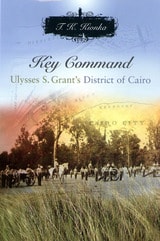
Key Command
Ulysses S. Grant's District of CairoT. K. Kionka
University of Missouri Press, 2006
Key Texts in American Jewish Culture
Kugelmass, Jack
Rutgers University Press, 2003
Contributors come from a variety of disciplines, including American studies, anthropology, comparative literature, history, music, religious studies, and women's studies. Each provides an analysis of a specific text in art, music, television, literature, homily, liturgy, or history. Some of the works discussed, such as Philip Roth's novel Counterlife, the musical Fiddler on the Roof, and Irving Howe's World of Our Fathers, are already widely acknowledged components of the American Jewish studies canon. Others-such as Bridget Loves Bernie, infamous for the hostile reception it received among American Jews+ may be considered "key texts" because of the controversy they provoked. Still others, such as Joshua Liebman's Piece of Mind and the radio and TV sitcom The Goldbergs, demonstrate the extent to which American Jewish culture and mainstream American culture intermingle with and borrow from each other.
Khabaar
An Immigrant Journey of Food, Memory, and FamilyMadhushree Ghosh
University of Iowa Press, 2022
Khabaar is a food memoir and personal narrative that braids the global journeys of South Asian food through immigration, migration, and indenture. Focusing on chefs, home cooks, and food stall owners, the book questions what it means to belong and what does belonging in a new place look like in the foods carried over from the old country? These questions are integral to the author’s own immigrant journey to America as a daughter of Indian refugees (from what’s now Bangladesh to India during the 1947 Partition of India); as a woman of color in science; as a woman who left an abusive marriage; and as a woman who keeps her parents’ memory alive through her Bengali food.

Kicking Center
Gender and the Selling of Women's Professional SoccerAllison, Rachel
Rutgers University Press, 2018
Girls and young women participate in soccer at record levels and the Women’s National Team regularly draws media, corporate, and popular attention. Yet despite increased representation and visibility, gender disparities in opportunity, compensation, training resources, and media airtime persist in soccer, and two professional leagues for women have failed since 2000.
In Kicking Center, Rachel Allison investigates a women’s soccer league seeking to break into the male-dominated center of U.S. professional sport. Through an examination of the challenges and opportunities identified by those working for and with this league, she demonstrates how gender inequality is both constructed and contested in professional sport. Allison details the complex constructions of race, class, gender, and sexuality in the selling and marketing of women’s soccer in a half-changed sports landscape characterized by both progress and backlash, and where professional sports are still understood to be men’s territory.
Kid on the Sandlot
Congress and Professional Sports, 1910–1992Stephen R. Lowe
University of Wisconsin Press, 1995
Lowe provides concise, interpretive narrative of Congress’s involvement in professional sports. Testimony is included from such colorful figures as Jackie Robinson, Casey Stengel, Pete Rozelle, Muhammad Ali, Sonny Liston, and Don King. Leading congressmen and senators are also included.
Kidnapped From That Land
The Government Raids on the Short Creek PolygamistMartha S Bradley
University of Utah Press, 1993
In the early morning hours of July 26, 1953, several hundred Arizona state officials and police officers moved into the polygamist community of Short Creek, Arizona, to serve warrants on thirty-six men and eighty-six women. Officials staging the raid believed they were rescuing the community’s 263 children from a life of bondage and immorality.
Kidnapped from that Land is the first book to bring together the story of the 1953 raid and two previous raids in 1935 and 1944. Martha Bradley tells the story with insight and compassion for the families that were fragmented by the arrests. She also deals with the complex legal issues that persist in both Arizona and Utah, where the practice of polygamy is a felony that is no longer prosecuted.
Kidnapped from that Land will appeal to those interested in the study of Mormon history, of polygamy, and of western regional and American social history.
Kidnapping the Enemy
The Special Operations to Capture Generals Charles Lee and Richard PrescottChristian M. McBurney
Westholme Publishing, 2024
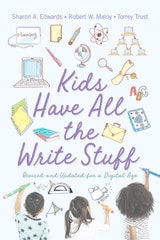
Kids Have All the Write Stuff
Revised and Updated for a Digital AgeRobert W. Maloy
University of Massachusetts Press, 2019
You'll discover:
· how to implement writing as a part of daily life with family and friends;
· processes and invitations fit for young writers;
· strategies for connecting writing to math and coding;
· writing materials and technologies; and
· creative and practical writing ideas, from fiction, nonfiction, and videos to blogs and emails.
In order to connect writing to today's digital revolution, veteran educators Sharon A. Edwards, Robert W. Maloy, and Torrey Trust reveal how digital tools can inspire children to write, and a helpful companion website brings together a range of resources and technologies. This essential book offers enjoyment and inspiration to young writers!

Kids Rule!
Nickelodeon and Consumer CitizenshipSarah Banet-Weiser
Duke University Press, 2007
Banet-Weiser draws on interviews with nearly fifty children as well as with network professionals; coverage of Nickelodeon in both trade and mass media publications; and analysis of the network’s programs. She provides an overview of the media industry within which Nickelodeon emerged in the early 1980s as well as a detailed investigation of its brand-development strategies. She also explores Nickelodeon’s commitment to “girl power,” its ambivalent stance on multiculturalism and diversity, and its oft-remarked appeal to adult viewers. Banet-Weiser does not condemn commercial culture nor dismiss the opportunities for community and belonging it can facilitate. Rather she contends that in the contemporary media environment, the discourses of political citizenship and commercial citizenship so thoroughly inform one another that they must be analyzed in tandem. Together they play a fundamental role in structuring children’s interactions with television.
Kids in Cages
Surviving and Resisting Child Migrant DetentionEdited by Emily Ruehs-Navarro, Lina Caswell Muñoz, and Sarah J. Diaz
University of Arizona Press, 2024
In recent years, the plight of immigrant children has been in the national spotlight. A primary issue of concern is the experience of child migrants in detention by the U.S. government.
The authors in this volume approach the topic of child migrant detention from a range of perspectives. Some authors, particularly those who provide a legal perspective, chronicle the harms of detention, arguing that despite governmental assurances of child protection, detention is fundamentally a state-sanctioned form of violence. The social scientists in the volume have worked closely with detained youth themselves; in these chapters, authors highlight the ways in which youth survive detention, often through everyday acts of resistance and through the formation of temporary relationships. Practitioners including psychologists, activists, and faith leaders look at forms of resistance to detention. From retheorizing psychological interventions for detained youth to forming hospitality homes that act as alternatives to detention, these practitioners highlight ways forward for advocates of youth. At the heart of these narratives lies a crucial debate: the tension between harm-reduction strategies and abolition.
This interdisciplinary work brings together voices from the legal realm, the academic world, and the on-the-ground experiences of activists and practitioners.
Contributors
Stella Akello
Jessica Alaniz
Aireen Grace Andal
Samuel Arroyo
Corey Brost
Lina Caswell Muñoz
Marisa Chumil
Patricia Crowley
Iman Dadras
Sarah J. Diaz
Sandra Espinoza
Jacqueline Florian
Michael Gosch
Darlene Gramigna
Lisa Jacobs
Katherine Kaufka Walts
Corinne Kentor
Jenn M. Lilly
Kathlyn Mulcahy
Jennifer Nagda
Vida Opoku
Silvia Rodriguez Vega
Emily Ruehs-Navarro
Herlin Soto-Matute
Luis Edward Tenorio
Jajah Wu

Kids in the Middle
How Children of Immigrants Negotiate Community Interactions for Their FamiliesKatz, Vikki S
Rutgers University Press, 2014
Through a unique interdisciplinary approach that combines elements of sociology and communication approaches, Katz investigates not only how immigrant children connect their families with local institutional networks, but also how they engage different media forms to bridge gaps between their homes and mainstream American culture. Drawing from extensive firsthand research, Katz takes us inside an urban community in Southern California and the experiences of a specific community of Latino immigrant families there. In addition to documenting the often-overlooked contributions that children of immigrants make to their families’ community encounters, the book provides a critical set of recommendations for how service providers and local institutions might better assist these children in fulfilling their family responsibilities. The story told in Kids in the Middle reveals an essential part of the immigrant experience that transcends both geographic and ethnic boundaries.
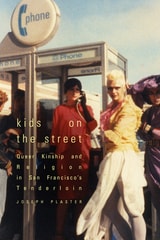
Kids on the Street
Queer Kinship and Religion in San Francisco's TenderloinJoseph Plaster
Duke University Press, 2023
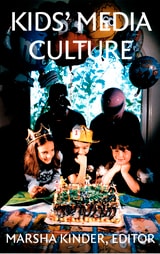
Kids' Media Culture
Marsha Kinder, ed.
Duke University Press, 1999
As part of their argument that children’s reactions to mass media are far more complex and dynamic than previously thought, contributors examine the rise of mass media in postwar America. They explore how books, cartoons, and television shows of the 1950s and 1960s—such as Lassie and Dennis the Menace—helped redefine American identity and export an image of a particularly American optimism and innocence worldwide. Other essays take up the controversies surrounding such shows as Sesame Street, My So-Called Life, and Mighty Morphin Power Rangers. After discussing the differences in how children and adults react to such programs, the collection focuses on television in schools and the ways that mass media convey messages about gender and socialization.
Kids’ Media Culture makes clear that children are active, engaged participants in the media culture surrounding them. This volume will be compelling reading for those interested in television and cultural studies as well as anyone interested in children’s education and welfare.
Contributors. Heather Gilmour, Sean Griffin, Heather Hendershot, Henry Jenkins, Yasmin B. Kafai, Jyotsna Kapur, Marsha Kinder, Susan Murray, Elissa Rashkin, Ellen Seiter, Lynn Spigel, Karen Orr Vered

Kill for Peace
American Artists Against the Vietnam WarBy Matthew Israel
University of Texas Press, 2013
The Vietnam War (1964–1975) divided American society like no other war of the twentieth century, and some of the most memorable American art and art-related activism of the last fifty years protested U.S. involvement. At a time when Pop Art, Minimalism, and Conceptual Art dominated the American art world, individual artists and art collectives played a significant role in antiwar protest and inspired subsequent generations of artists. This significant story of engagement, which has never been covered in a book-length survey before, is the subject of Kill for Peace.
Writing for both general and academic audiences, Matthew Israel recounts the major moments in the Vietnam War and the antiwar movement and describes artists’ individual and collective responses to them. He discusses major artists such as Leon Golub, Edward Kienholz, Martha Rosler, Peter Saul, Nancy Spero, and Robert Morris; artists’ groups including the Art Workers’ Coalition (AWC) and the Artists Protest Committee (APC); and iconic works of collective protest art such as AWC’s Q. And Babies? A. And Babies and APC’s The Artists Tower of Protest. Israel also formulates a typology of antiwar engagement, identifying and naming artists’ approaches to protest. These approaches range from extra-aesthetic actions—advertisements, strikes, walk-outs, and petitions without a visual aspect—to advance memorials, which were war memorials purposefully created before the war’s end that criticized both the war and the form and content of traditional war memorials.

Killer Apps
War, Media, MachineJeremy Packer and Joshua Reeves
Duke University Press, 2020
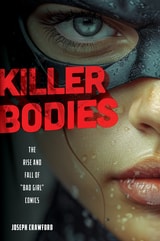
Killer Bodies
The Rise and Fall of "Bad Girl" ComicsJoseph Crawford
Rutgers University Press, 2026
Killer Bodies offers a history of the single most critically derided subgenre in American superhero comics: the “bad girl” comics of the 1990s, which chronicled the blood-soaked adventures of barely dressed and improbably proportioned action heroines for an audience of adolescent boys. While not in any way attempting to rehabilitate the genre, which for the most part amply deserved its reputation as sexist and borderline pornographic, this book situates it within its original cultural context, as the result of a matrix of influences that included third-wave feminism, neopaganism, “girl power,” the rise of the internet, the growing popularity of manga, supermodel beauty ideals, and the mainstreaming of pornography. It explores why and how the figure of the antiheroic, physically aggressive, sexually objectified heroine arose within American comics culture, and the commercial and ideological factors that led to the genre’s rapid rise and equally rapid decline amidst the crisis-racked comics industry of the mid-1990s.
Killer Crónicas
Bilingual MemoriesSusana Chavez-Silverman
University of Wisconsin Press, 2004
Includes a chapter that was awarded first prize in El Andar magazine’s Chicano Literary Excellence Contest in the category of personal memoir.
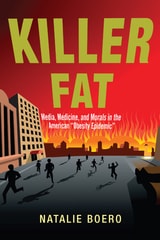
Killer Fat
Media, Medicine, and Morals in the American "Obesity Epidemic”Boero, Natalie
Rutgers University Press, 2013
In the past decade, obesity has emerged as a major public health concern in the United States and abroad. At the federal, state, and local level, policy makers have begun drafting a range of policies to fight a war against fat, including body-mass index (BMI) report cards, “snack taxes,” and laws to control how fast food companies market to children. As an epidemic, obesity threatens to weaken the health, economy, and might of the most powerful nation in the world.
In Killer Fat, Natalie Boero examines how and why obesity emerged as a major public health concern and national obsession in recent years. Using primary sources and in-depth interviews, Boero enters the world of bariatric surgeries, Weight Watchers, and Overeaters Anonymous to show how common expectations of what bodies are supposed to look like help to determine what sorts of interventions and policies are considered urgent in containing this new kind of disease.
Boero argues that obesity, like the traditional epidemics of biological contagion and mass death, now incites panic, a doomsday scenario that must be confronted in a struggle for social stability. The “war” on obesity, she concludes, is a form of social control. Killer Fat ultimately offers an alternate framing of the nation’s obesity problem based on the insights of the “Health at Every Size” movement.

Killer Show
The Station Nightclub Fire, America’s Deadliest Rock ConcertJohn Barylick
University Press of New England, 2015
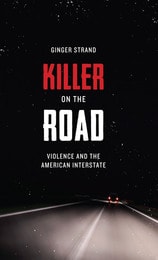
Killer on the Road
Violence and the American InterstateBy Ginger Strand
University of Texas Press, 2012
Starting in the 1950s, Americans eagerly built the planet’s largest public work: the 42,795-mile National System of Interstate and Defense Highways. Before the concrete was dry on the new roads, however, a specter began haunting them—the highway killer. He went by many names: the “Hitcher,” the “Freeway Killer,” the “Killer on the Road,” the “I-5 Strangler,” and the “Beltway Sniper.” Some of these criminals were imagined, but many were real. The nation’s murder rate shot up as its expressways were built. America became more violent and more mobile at the same time.
Killer on the Road tells the entwined stories of America’s highways and its highway killers. There’s the hot-rodding juvenile delinquent who led the National Guard on a multistate manhunt; the wannabe highway patrolman who murdered hitchhiking coeds; the record promoter who preyed on “ghetto kids” in a city reshaped by freeways; the nondescript married man who stalked the interstates seeking women with car trouble; and the trucker who delivered death with his cargo. Thudding away behind these grisly crime sprees is the story of the interstates—how they were sold, how they were built, how they reshaped the nation, and how we came to equate them with violence.
Through the stories of highway killers, we see how the “killer on the road,” like the train robber, the gangster, and the mobster, entered the cast of American outlaws, and how the freeway—conceived as a road to utopia—came to be feared as a highway to hell.