Results by title
28164 books match the query 'History' and 165 start with k

Keeping the Faith
Ordinary People, Extraordinary LivesWayne Flynt
University of Alabama Press, 2011

Keeping the Immigrant Bargain
The Costs and Rewards of Success in AmericaVivian Louie
Russell Sage Foundation, 2012
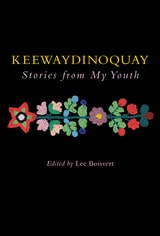
Keewaydinoquay, Stories from My Youth
Keewaydinoquay Peschel
University of Michigan Press, 2006
Michael Blake's Dances with Wolves transformed denigrating Indian sterotypes and created widespread interest in Native American culture. The subsequent popularity of books on this topic underscores the power of a tale well told. While Blake's story relates the early chapters of Native Americans' survival struggles, later accounts of this struggle remain untold.
The Indians of Hungry Hollow authentically presents these later chapters. The days of Hungry Hollow have long passed, but the opportunity to capture its lessons of community, strong values, and an urge to thrive in matters of the heart and soul are still very much with us.
These are stories of survival, community, sharing, and caring. The situations are often dire: winter in the middle of the Depression; an Indian settlement illegally taken from its inhabitants and set on fire; boaters stranded by bad weather and threatened with death. But if the situations are extreme, the telling of the stories is consistently optimistic yet completely without self-pity or sentimentality, and the characters always find a way through the darkness.
Dunlop's unique style of storytelling is compelling and informative, and these historically significant stories help to elucidate the transition of the American Indian culture from post-tribal days to the present.
Bill Dunlop is a respected Ottawa elder and storyteller. Marcia Fountain-Blacklidge is a professional writer, counselor, and consultant.
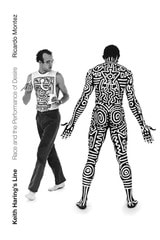
Keith Haring's Line
Race and the Performance of DesireRicardo Montez
Duke University Press, 2020
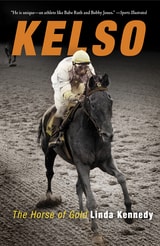
Kelso
The Horse of GoldLinda Kennedy
Westholme Publishing, 2007
Praise for Kelso: The Horse of Gold:
“Ms. Kennedy has captured the grandeur of the horse in a simple, straightforward way that will charm and excite those who saw Kelso run and remember his stirring deeds. . . . Kelso's racing record through eight seasons is simply breathtaking.”—Wall Street Journal
“In this concise, entertaining account, Kennedy tells the story of Kelso, a scrawny ungainly gelding who just happened to be one of the greatest Thoroughbreds that ever lived.”—Publishers Weekly
“An excellent portrayal... so intense that one has the sensation of being right there with the crowd and cheering Kelso on.”—Tom Trotter, Former New York Racing Secretary
“He was the greatest horse I ever rode.”—Eddie Arcaro, rider of Triple Crown champions Whirlaway, Assault, and Citation
At his three-year debut in June 1960, no one could know that Mrs. Allaire DuPont’s small, deerlike gelding named Kelso would come to dominate American racing like no other horse before or since. For five unprecedented years, he would reign as Horse of the Year, setting records and endearing himself to millions of fans. Always considered among the top four horses of all time—with Man O' War, Secretariat, and Citation—for many, Kelso is the greatest racehorse, since he won at sprints and endurance races, won on turf and dirt, carried unprecedented handicap weights, and raced both foreign and national thoroughbreds. Kelso was crowned champion of the Jockey Gold Cup, one of the most prestigious racing events, an astounding five straight times. Like Seabiscuit, Kelso was not earmarked as a contender and missed the Triple Crown races. But Kelso's greatness was decisive: he regularly defeated Triple Crown race winners. In Kelso: The Horse of Gold, Linda Kennedy tells the remarkable story of one of the greatest athletes of the ages, recreating the excitement of "Kelly's" unique and brilliant career while placing his unparalleled achievements in the context of racing history.
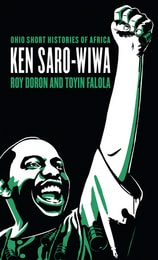
Ken Saro-Wiwa
Roy Doron
Ohio University Press, 2016
Hanged by the Nigerian government on November 10, 1995, Ken Saro-Wiwa became a martyr for the Ogoni people and human rights activists, and a symbol of modern Africans’ struggle against military dictatorship, corporate power, and environmental exploitation. Though he is rightly known for his human rights and environmental activism, he wore many hats: writer, television producer, businessman, and civil servant, among others. While the book sheds light on his many legacies, it is above all about Saro-Wiwa the man, not just Saro-Wiwa the symbol.
Roy Doron and Toyin Falola portray a man who not only was formed by the complex forces of ethnicity, race, class, and politics in Nigeria, but who drove change in those same processes. Like others in the Ohio Short Histories of Africa series, Ken Saro-Wiwa is written to be accessible to the casual reader and student, yet indispensable to scholars.
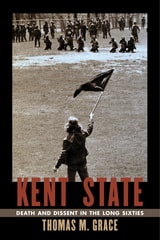
Kent State
Death and Dissent in the Long SixtiesThomas M. Grace
University of Massachusetts Press, 2016
On May 4, 1970, National Guard troops opened fire on unarmed antiwar protesters at Kent State University in Ohio, killing four students and wounding nine others, including the author of this book. The shootings shocked the American public and triggered a nationwide wave of campus strikes and protests. To many at the time, Kent State seemed an unlikely site for the bloodiest confrontation in a decade of campus unrest—a sprawling public university in the American heartland, far from the coastal epicenters of political and social change.
Yet, as Thomas M. Grace shows, the events of May 4 were not some tragic anomaly but were grounded in a tradition of student political activism that extended back to Ohio's labor battles of the 1950s. The vast expansion of the university after World War II brought in growing numbers of working-class enrollees from the industrial centers of northeast Ohio, members of the same demographic cohort that eventually made up the core of American combat forces in Vietnam. As the war's rising costs came to be felt acutely in the home communities of Kent's students, tensions mounted between the growing antiwar movement on campus, the university administration, and the political conservatives who dominated the surrounding county as well as the state government.
The deadly shootings at Kent State were thus the culmination of a dialectic of radicalization and repression that had been building throughout the decade. In the years that followed, the antiwar movement continued to strengthen on campus, bolstered by an influx of returning Vietnam veterans. After the war ended, a battle over the memory and meaning of May 4 ensued. It continues to the present day.
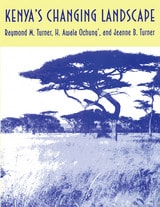
Kenya's Changing Landscape
Raymond M. Turner
University of Arizona Press, 1998
Turner's discussions of the photographs and the conclusions he draws provide an important reference for ecologists, geographers, botanists, and other researchers attempting similar studies. By documenting vegetation change in a region broadly similar climatically to North America's subtropical deserts and grasslands but different in its wildlife and its human culture, the book shows that the endpoints of landscape status are similar despite the vastly different histories of these two regions of the world.
Kenya's Running Women
A HistoryMichelle M Sikes
Michigan State University Press, 2023

Kepler's Geometrical Cosmology
J. V. Field
University of Chicago Press, 1987
Kepler has suffered from a dual image as both hero of science and eccentric mystagogue. Field's sound scholarship provides a more complete picture of the man and his work that will be of value to historians of science, mathematics, philosophy, and the late Renaissance.
Key Command
Ulysses S. Grant's District of CairoT. K. Kionka
University of Missouri Press, 2006

Key Concepts of Romanian History
Alternative Approaches to Socio-Political LanguagesVictor Neumann
Central European University Press, 2013
Khaki and Blue
Military and Police in British Colonial AfricaAnthony Clayton
Ohio University Press, 1989
Kibbutz Buchenwald
Survivors and PioneersJudith Tydor Baumel
Rutgers University Press, 1997
Kibbutz Buchenwald is the story of a nightmare that became a dream and a dream that became a reality. Emerging from the depths of the liberated concentration camp Buchenwald in the spring of 1945, a group of sixteen gaunt and battered young men organized and formed Kibbutz Buchenwald, the first agricultural collective in postwar Germany designed to prepare Jews for emigation to Palestine. What caused a handful of survivors to take their fate into their own hands within days of their liberation, at a time when most survivors were passively awaiting orders from the occupying forces? From what wellsprings did they draw the physical and emotional strength to begin life anew as Zionist pioneers in a world which had turned upside down?
Judith Baumel's moving account of this courageous group is divided into two parts. Part One, entitled "The Dream," examines the kibbutz from its creation in Germany until the departure of the founding group for Palestine in the summer of 1945. Part Two, "The Reality," follows the members of Kibbutz Buchenwald into Palestine, where they eventually established their own independent settlement in 1948. This settlement exists as Kibbutz Netzer Sereni today.
Drawing from the diaries of the kibbutz's founding members, Baumel provides a detailed account of an incredible story and places the central narrative in the larger contexts of communal living, European politics after the war, and the link between European Jewry and Israeli postwar nationhood. An afterword, "Where Are They Now," briefly describes the later life of each of the original kibbutz members.
Kid Cops
What Communities Gain and Lose from Junior Police in SchoolsMai Thai
University of Chicago Press, 2026
Some might see police officers as benevolent sources of protection, but in many communities, they are often perceived as a threat due to a legacy of violent interactions and arrests for arbitrary offenses. How, then, do police sustain their presence in places where people might distrust them? In Kid Cops, sociologist Mai Thai offers one answer: junior police academies, high school programs in which police officers provide courses, mentorship, and job training to students in communities with high rates of juvenile delinquency and poverty. These school-police partnerships have expanded rapidly in the United States over the last few decades, largely in response to political unrest and police violence in the 1990s. Programs vary in their offerings, but they generally aim to ease tensions between communities and law enforcement, while also providing needed resources in neighborhoods where education and job opportunities are scarce.
Kid Cops draws on years of observations and interviews with educators, police officers, and, of course, kids. The junior police programs at each high school may have different emphases, but their common goal is for students to graduate from high school and enter college or the workforce. A second goal of the program is to cultivate a positive image of the police. Ultimately, however, Thai finds that these programs tighten the relationship between marginalized youth, schools, and the criminal justice system and strain the students’ relationships with their peers, families, and each other. These programs also distract residents from systemic issues of policing and suppress opportunities for meaningful change.
Written in an accessible tone that balances the seriousness of inequality with the playfulness of the study’s youth, Kid Cops moves beyond the narrative of detentions, suspensions, and arrests to tell a less conventional story about police in schools. It asks, does good, friendly policing exist—especially if it continues to tether low-income communities of color to the criminal justice system?

Kid on the Sandlot
Congress and Professional Sports, 1910–1992Stephen R. Lowe
University of Wisconsin Press, 1995
Lowe provides concise, interpretive narrative of Congress’s involvement in professional sports. Testimony is included from such colorful figures as Jackie Robinson, Casey Stengel, Pete Rozelle, Muhammad Ali, Sonny Liston, and Don King. Leading congressmen and senators are also included.

Kidnapped From That Land
The Government Raids on the Short Creek PolygamistMartha S Bradley
University of Utah Press, 1993
In the early morning hours of July 26, 1953, several hundred Arizona state officials and police officers moved into the polygamist community of Short Creek, Arizona, to serve warrants on thirty-six men and eighty-six women. Officials staging the raid believed they were rescuing the community’s 263 children from a life of bondage and immorality.
Kidnapped from that Land is the first book to bring together the story of the 1953 raid and two previous raids in 1935 and 1944. Martha Bradley tells the story with insight and compassion for the families that were fragmented by the arrests. She also deals with the complex legal issues that persist in both Arizona and Utah, where the practice of polygamy is a felony that is no longer prosecuted.
Kidnapped from that Land will appeal to those interested in the study of Mormon history, of polygamy, and of western regional and American social history.
Kidnapping the Enemy
The Special Operations to Capture Generals Charles Lee and Richard PrescottChristian M. McBurney
Westholme Publishing, 2024
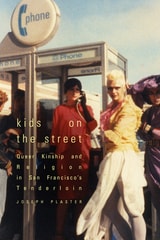
Kids on the Street
Queer Kinship and Religion in San Francisco's TenderloinJoseph Plaster
Duke University Press, 2023

Kilimanjaro Porters and Guides
History and Tourism on Africa's Highest MountainLeslie Anne Hadfield
Michigan State University Press, 2026
Mt. Kilimanjaro, Africa’s tallest mountain, draws tens of thousands of tourists annually. Many attempt to climb its nineteen thousand feet snow-covered peak, an arduous trek that can span several days. Like the climbers who scale Everest, they are aided by local porters, cooks, and guides. But unlike Everest’s Sherpas, who have been extensively documented and profiled, the Chagga people of the Kilimanjaro mountain crews remain nearly anonymous.
The Chagga people, who were the first settlers near Kilimanjaro, have been an essential part of the climbing industry that has developed since the colonial period. Kilimanjaro Porters and Guidesreveals the history of these porters, cooks, and guides. The book takes us from early Chagga settlement, through European colonialism and African independence, to today. It argues that while the Kilimanjaro climbing industry developed in a colonial context, local Tanzanian actors have played an integral role in determining access to and understanding of the mountain. They also have been central to climbers’ successes, mountain crew culture, and the evolution of key industry features—even as they have struggled in the postcolonial period.

Kill for Peace
American Artists Against the Vietnam WarBy Matthew Israel
University of Texas Press, 2013
The Vietnam War (1964–1975) divided American society like no other war of the twentieth century, and some of the most memorable American art and art-related activism of the last fifty years protested U.S. involvement. At a time when Pop Art, Minimalism, and Conceptual Art dominated the American art world, individual artists and art collectives played a significant role in antiwar protest and inspired subsequent generations of artists. This significant story of engagement, which has never been covered in a book-length survey before, is the subject of Kill for Peace.
Writing for both general and academic audiences, Matthew Israel recounts the major moments in the Vietnam War and the antiwar movement and describes artists’ individual and collective responses to them. He discusses major artists such as Leon Golub, Edward Kienholz, Martha Rosler, Peter Saul, Nancy Spero, and Robert Morris; artists’ groups including the Art Workers’ Coalition (AWC) and the Artists Protest Committee (APC); and iconic works of collective protest art such as AWC’s Q. And Babies? A. And Babies and APC’s The Artists Tower of Protest. Israel also formulates a typology of antiwar engagement, identifying and naming artists’ approaches to protest. These approaches range from extra-aesthetic actions—advertisements, strikes, walk-outs, and petitions without a visual aspect—to advance memorials, which were war memorials purposefully created before the war’s end that criticized both the war and the form and content of traditional war memorials.
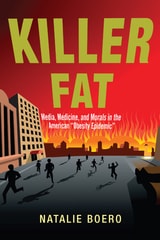
Killer Fat
Media, Medicine, and Morals in the American "Obesity Epidemic”Boero, Natalie
Rutgers University Press, 2013
In the past decade, obesity has emerged as a major public health concern in the United States and abroad. At the federal, state, and local level, policy makers have begun drafting a range of policies to fight a war against fat, including body-mass index (BMI) report cards, “snack taxes,” and laws to control how fast food companies market to children. As an epidemic, obesity threatens to weaken the health, economy, and might of the most powerful nation in the world.
In Killer Fat, Natalie Boero examines how and why obesity emerged as a major public health concern and national obsession in recent years. Using primary sources and in-depth interviews, Boero enters the world of bariatric surgeries, Weight Watchers, and Overeaters Anonymous to show how common expectations of what bodies are supposed to look like help to determine what sorts of interventions and policies are considered urgent in containing this new kind of disease.
Boero argues that obesity, like the traditional epidemics of biological contagion and mass death, now incites panic, a doomsday scenario that must be confronted in a struggle for social stability. The “war” on obesity, she concludes, is a form of social control. Killer Fat ultimately offers an alternate framing of the nation’s obesity problem based on the insights of the “Health at Every Size” movement.

Killer Show
The Station Nightclub Fire, America’s Deadliest Rock ConcertJohn Barylick
University Press of New England, 2015

Killer on the Road
Violence and the American InterstateBy Ginger Strand
University of Texas Press, 2012
Starting in the 1950s, Americans eagerly built the planet’s largest public work: the 42,795-mile National System of Interstate and Defense Highways. Before the concrete was dry on the new roads, however, a specter began haunting them—the highway killer. He went by many names: the “Hitcher,” the “Freeway Killer,” the “Killer on the Road,” the “I-5 Strangler,” and the “Beltway Sniper.” Some of these criminals were imagined, but many were real. The nation’s murder rate shot up as its expressways were built. America became more violent and more mobile at the same time.
Killer on the Road tells the entwined stories of America’s highways and its highway killers. There’s the hot-rodding juvenile delinquent who led the National Guard on a multistate manhunt; the wannabe highway patrolman who murdered hitchhiking coeds; the record promoter who preyed on “ghetto kids” in a city reshaped by freeways; the nondescript married man who stalked the interstates seeking women with car trouble; and the trucker who delivered death with his cargo. Thudding away behind these grisly crime sprees is the story of the interstates—how they were sold, how they were built, how they reshaped the nation, and how we came to equate them with violence.
Through the stories of highway killers, we see how the “killer on the road,” like the train robber, the gangster, and the mobster, entered the cast of American outlaws, and how the freeway—conceived as a road to utopia—came to be feared as a highway to hell.
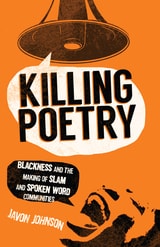
Killing Poetry
Blackness and the Making of Slam and Spoken Word CommunitiesJohnson, Javon
Rutgers University Press, 2017
Co-winner of the 2018 Ethnography Division’s Best Book from the NCA
In recent decades, poetry slams and the spoken word artists who compete in them have sparked a resurgent fascination with the world of poetry. However, there is little critical dialogue that fully engages with the cultural complexities present in slam and spoken word poetry communities, as well as their ramifications.
In Killing Poetry, renowned slam poet, Javon Johnson unpacks some of the complicated issues that comprise performance poetry spaces. He argues that the truly radical potential in slam and spoken word communities lies not just in proving literary worth, speaking back to power, or even in altering power structures, but instead in imagining and working towards altogether different social relationships. His illuminating ethnography provides a critical history of the slam, contextualizes contemporary black poets in larger black literary traditions, and does away with the notion that poetry slams are inherently radically democratic and utopic.
Killing Poetry—at times autobiographical, poetic, and journalistic—analyzes the masculine posturing in the Southern California community in particular, the sexual assault in the national community, and the ways in which related social media inadvertently replicate many of the same white supremacist, patriarchal, and mainstream logics so many spoken word poets seem to be working against. Throughout, Johnson examines the promises and problems within slam and spoken word, while illustrating how community is made and remade in hopes of eventually creating the radical spaces so many of these poets strive to achieve.
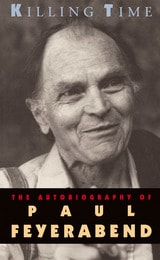
Killing Time
The Autobiography of Paul FeyerabendPaul Feyerabend
University of Chicago Press, 1995
Trained in physics and astronomy, Feyerabend was best known as a philosopher of science. But he emphatically was not a builder of theories or a writer of rules. Rather, his fame was in powerful, plain-spoken critiques of "big" science and "big" philosophy. Feyerabend gave voice to a radically democratic "epistemological anarchism:" he argued forcefully that there is not one way to knowledge, but many principled paths; not one truth or one rationality but different, competing pictures of the workings of the world. "Anything goes," he said about the ways of science in his most famous book, Against Method. And he meant it.
Here, for the first time, Feyerabend traces the trajectory that led him from an isolated, lower-middle-class childhood in Vienna to the height of international academic success. He writes of his experience in the German army on the Russian front, where three bullets left him crippled, impotent, and in lifelong pain. He recalls his promising talent as an operatic tenor (a lifelong passion), his encounters with everyone from Martin Buber to Bertolt Brecht, innumerable love affairs, four marriages, and a career so rich he once held tenured positions at four universities at the same time.
Although not written as an intellectual autobiography, Killing Time sketches the people, ideas, and conflicts of sixty years. Feyerabend writes frankly of complicated relationships with his mentor Karl Popper and his friend and frequent opponent Imre Lakatos, and his reactions to a growing reputation as the "worst enemy of science."
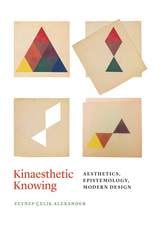
Kinaesthetic Knowing
Aesthetics, Epistemology, Modern DesignZeynep Çelik Alexander
University of Chicago Press, 2017
In this book, Alexander offers the first major intellectual history of kinaesthetic knowing and its influence on the formation of modern art and architecture and especially modern design education. Focusing in particular on Germany and tracing the story up to the start of World War II, Alexander reveals the tension between intellectual meditation and immediate experience to be at the heart of the modern discourse of aesthetics, playing a major part in the artistic and teaching practices of numerous key figures of the period, including Heinrich Wölfflin, Hermann Obrist, August Endell, László Moholy-Nagy, and many others. Ultimately, she shows, kinaesthetic knowing did not become the foundation of the human sciences, as some of its advocates had hoped, but it did lay the groundwork—at such institutions as the Bauhaus—for modern art and architecture in the twentieth century.
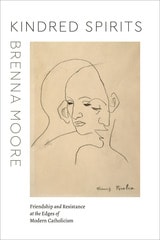
Kindred Spirits
Friendship and Resistance at the Edges of Modern CatholicismBrenna Moore
University of Chicago Press, 2021
Kindred Spirits takes us inside a remarkable network of Catholic historians, theologians, poets, and activists who pushed against both the far-right surge in interwar Europe and the secularizing tendencies of the leftist movements active in the early to mid-twentieth century. With meticulous attention to the complexity of real lives, Brenna Moore explores how this group sought a middle way anchored in “spiritual friendship”—religiously meaningful friendship understood as uniquely capable of facing social and political challenges.
For this group, spiritual friendship was inseparable from resistance to European xenophobia and nationalism, anti-racist activism in the United States, and solidarity with Muslims during the Algerian War. Friendship, they believed, was a key to both divine and human realms, a means of accessing the transcendent while also engaging with our social and political existence. Some of the figures are still well known—philosopher Jacques Maritain, Nobel Prize laureate Gabriela Mistral, influential Islamicist Louis Massignon, poet of the Harlem renaissance Claude McKay—while others have unjustly faded from memory. Much more than an idealized portrait of a remarkable group of Catholic intellectuals from the past, Kindred Spirits is a compelling exploration of both the beauty and flaws of a vibrant social network worth remembering.
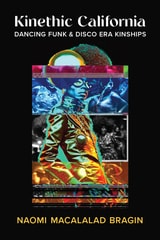
Kinethic California
Dancing Funk and Disco Era KinshipsNaomi Macalalad Bragin
University of Michigan Press, 2024
2025 American Society for Theatre Research Errol Hill Award Winner
- 2026 Dance Studies Association Oscar G. Brockett Award Shortlist Finalist
- 2025 Association for Theatre in Higher Education Outstanding Book Award for Scholarly Achievement Shortlist Finalist
Kinethic California: Dancing Funk and Disco Era Kinships documents the emergence of new forms of black social and vernacular dance invented by youth living in 1970s California, who helped build the foundations of contemporary hip hop/streetdance culture. Naomi Macalalad Bragin weaves interviews and ethnographies of first-generation (1960s-70s) dancers of strutting, boogaloo, robotting, popping, locking, waacking, and punking styles, as it advances a theory of dance as kinetic kinship formation through a focus on techniques and practices of the dancers themselves. She offers that the term given to these collective movement practices is kinethic to bring attention to motion at the core of black aesthetics that generate dances as forms of kinship beyond blood relation. Kinethics reorient dancers toward kinetic kinship in ways that give continuity to black dance lineages under persistent conditions of disappearance and loss. As dancers engage kinethics, they reinvent gestural vocabularies that describe worlds they imagine into knowing-being.
The stories in Kinethic California attend to the aesthetics of everyday movement, seen through the lens of young artists who, from childhood, listened to their family’s soul and funk records, observed the bent-leg strolls and rhythmic handshakes of people moving through their neighborhoods, and watched each other move at house parties, school gyms, and around-the-way social clubs. Their aesthetic sociality and geographic movement provided materials for collective study and creative play. Bragin attends to such multidirectional conversations between dancer, community, and tradition, by which California dance lineages emerge and take flight.
King Cotton Diplomacy
Foreign Relations of the Confederate States of AmericaFrank L. Owsley Sr., revised by Harriet Chappell Owsley, and with a new Preface by Howard Jones
University of Alabama Press, 2008
The exhaustive, definitive study of Southern attempts to gain international support for the Confederacy by leveraging the cotton supply for European intervention during the Civil War. Using previously untapped sources from Britain and France, along with documents from the Confederacy’s state department, Frank Owsley’s King Cotton Diplomacy is the first archival-based study of Confederate diplomacy.
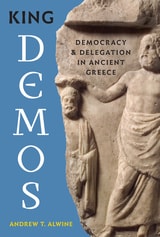
King Demos
Democracy and Delegation in Ancient GreeceAndrew T. Alwine
University of Texas Press, 2027
How ancient Greek democracies wrestled with the tension between egalitarianism and hierarchical structures necessary for organized government.
Democracy and egalitarianism are ever in tension. The ideal of direct democracy—equal participation in all aspects of governance—coexists with the reality that hierarchical structures are necessary to organize and stabilize the workings of the state. This tension consumed America’s founders. And two thousand years earlier, it had consumed the people of Athens.
King Demos shows how ancient Greek democracies wrestled with this problem, crafting what the Federalist Papers would later dream of: “a republican remedy for the diseases most incident to republican government.” As Athens grew and direct democracy became unwieldy, the Greeks developed a system of delegation, with the “people” (demos) conceived as a king with authority over a sprawling system of state officials whose day-to-day operation was handled by experts. Hierarchical structures became commonplace in the city, yet sovereign powers remained with the citizenry. Andrew Alwine argues that delegation was a stepping stone between direct and representative democracy and provided a crucial compromise, enabling the Greeks to benefit from the abilities of elite citizens while also keeping them under control.
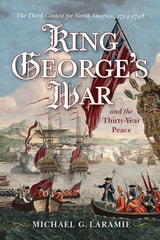
King George's War and the Thirty Year Peace
The Third Contest for North AmericaMichael G. Laramie
Westholme Publishing, 2027
King George’s War and the Thirty-Year Peace continues the contest for North America from the end of Queen Anne’s War in 1713, marking the beginning of the Thirty-Year Peace, through the start of King George’s War in 1744, to its conclusion with the signing of Treaty of Aix-la-Chapelle four years later. While there would be little fighting between the French, Spanish, and British colonies in North America during the Thirty-Year Peace—the Franco-Spanish conflict of 1719 being an exception—for the French and British internally it did not prove to be peaceful. Conflicts with former Indigenous allies erupted, including with the Three Years War, the Yamassee War, and the Natchez and Chickasaw Wars. In the south the peace was ruptured by the opening of the War of Jenkin’s Ear in 1739, which led to an attempt by South Carolina and the new colony of Georgia to seize Spanish St. Augustine, and a counter-attack by St. Augustine and Cuba aimed at the destruction of the two British colonies. While this Anglo-Spanish conflict would shift farther south into the Caribbean, to the north, news of another war between France and Britain would arrive in 1744. King George’s War, the North American component of Europe’s War of Austrian Succession, would start in Nova Scotia with French attacks on the weakly held British colony. This provocation inspired a response in the form of one of the boldest expeditions of the colonial period—Massachusetts Governor William Shirley’s successful campaign against Louisbourg on Cape Breton Island. With the French fortress in British hands and the cry of delenda est Canadaechoing through the American colonial assemblies, Shirley turned to the conquest of French Canada and convinced London to dispatch a fleet to assist in the capture of Montreal and Quebec. In Paris, news of Louisbourg’s surrender elicited an unexpected reaction in the form of one of the largest French naval expeditions ever sent to North America, with explicit orders to retake Cape Breton and expel the British from Nova Scotia. Thus, by the summer of 1746, both British and French sentries scanned the eastern horizon daily for a fleet that would determine the destiny of the conflict, but neither would be happy with what they found.
The final volume in Michael G. Laramie’s acclaimed histories of the European struggle for North America that set the stage for the French and Indian War, King George’s War and the Thirty-Year Peace: The Third Contest for North America, 1714–1748, takes the reader along with the combatants into the field and waterways, including Native American, French, Spanish, Provincial, and British. Based on a rich variety of primary sources and fully illustrated with original maps, this volume joins the author’s King William’s War and Queen Anne’s War as the modern history of these lesser-known—but enormously important—conflicts that shaped the political story of North America.

King James and Letters of Homoerotic Desire
David M. Bergeron
University of Iowa Press, 1999
What can we know of the private lives of early British sovereigns? Through the unusually large number of letters that survive from King James VI of Scotland/James I of England (1566-1625), we can know a great deal. Using original letters, primarily from the British Library and the National Library of Scotland, David Bergeron creatively argues that James' correspondence with certain men in his court constitutes a gospel of homoerotic desire. Bergeron grounds his provocative study on an examination of the tradition of letter writing during the Renaissance and draws a connection between homosexual desire and letter writing during that historical period.
King James, commissioner of the Bible translation that bears his name, corresponded with three principal male favorites—Esmé Stuart (Lennox), Robert Carr (Somerset), and George Villiers (Buckingham). Esmé Stuart, James' older French cousin, arrived in Scotland in 1579 and became an intimate adviser and friend to the adolescent king. Though Esmé was eventually forced into exile by Scottish nobles, his letters to James survive, as does James' hauntingly allegorical poem Phoenix. The king's close relationship with Carr began in 1607. James' letters to Carr reveal remarkable outbursts of sexual frustration and passion.
A large collection of letters exchanged between James and Buckingham in the 1620s provides the clearest evidence for James' homoerotic desires. During a protracted separation in 1623, letters between the two raced back and forth. These artful, self-conscious letters explore themes of absence, the pleasure of letters, and a preoccupation with the body. Familial and sexual terms become wonderfully intertwined, as when James greets Buckingham as "my sweet child and wife."
King James and Letters of Homoerotic Desire presents a modern-spelling edition of seventy-five letters exchanged between Buckingham and James. Across the centuries, commentators have condemned the letters as indecent or repulsive. Bergeron argues that on the contrary they reveal an inward desire of king and subject in a mutual exchange of love.

King John
William Shakespeare
Arizona Center for Medieval and Renaissance Studies, 2023
In this modern take on Shakespeare’s King John, Brighde Mullins navigates the political twists and turns of early English monarchy. Mullins’s translation parses Shakespeare’s language carefully, with a focus on its sonic qualities. Her version focuses on the listener, developing the play for the immense pleasure of it—the fortuitous juxtapositions of the fates of these characters.
This translation of King John was written as part of the Oregon Shakespeare Festival’s Play On! project, which commissioned new translations of thirty-nine Shakespeare plays. These translations present the work of “The Bard” in language accessible to modern audiences while never losing the beauty of Shakespeare’s verse. Enlisting the talents of a diverse group of contemporary playwrights, screenwriters, and dramaturges from diverse backgrounds, this project reenvisions Shakespeare for the twenty-first century. These volumes make these works available for the first time in print—a new First Folio for a new era.
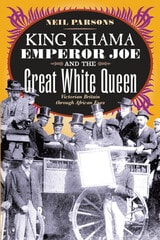
King Khama, Emperor Joe, and the Great White Queen
Victorian Britain through African EyesNeil Parsons
University of Chicago Press, 1997
The chiefs initially went to England to persuade Queen Victoria not to give their lands to ruthless Rhodes and his British South Africa Company. Abandoned by the Secretary of State for the Colonies, Joseph Chamberlain, and denied an audience with the queen, the three rulers decided to tour the British Isles to plead their case to the populace. Appealing to the middle-class morality of Victorian society, the chiefs were remarkably successful in gaining support, eventually swaying Chamberlain into drafting the agreement that secured their territories against the encroachment of Rhodesia.
Historian Neil Parsons has reconstructed this journey with the help of African archival materials and news clippings from British papers, garnered from the clippings service the chiefs had the foresight to employ. In equal parts narrative of pilgrimage, voyage of discovery, and colonial resistance, King Khama, Emperor Joe, and the Great White Queen provides a view from the other side of colonialism and imperialism. It demonstrates the nuances of cultural and religious interaction between Africans and Europeans, and it does so with the richness and depth of a fully realized novel.
King Lear and the Naked Truth
Rethinking the Language of Religion and ResistanceJudy Kronenfeld
Duke University Press, 1998
Kronenfeld’s focus expands from the text of Shakespeare’s play to a discussion of a shared Christian culture—a shared language and set of values—a common discursive field that frames the social ethics of the play. That expanded focus is used to address the multiple ways that clothing and nakedness function in the play, as well as the ways that these particular images and terms are understood in that shared context. As Kronenfeld moves beyond Lear to uncover the complex resonances of clothing and nakedness in sermons, polemical tracts, legislation, rhetoric, morality plays, and actual or alleged practices such as naked revolts by Anabaptists and the Adamians’ ritual disrobing during religious services, she demonstrates that many key terms and concepts of the period cannot be tied to a single ideology. Instead, they represent part of an intricate network of thought shared by people of seemingly opposite views, and it is within such shared cultural networks that dissent, resistance, and creativity can emerge. Warning her readers not to take the language of literary texts out of the linguistic context within which it first appeared, Kronenfeld has written a book that reinterprets the linguistic model that has been the basis for much poststructuralist criticism.
King Philip's War
Civil War in New England, 1675-1676James D. Drake
University of Massachusetts Press, 1999
Sometimes described as “America's deadliest war,” King Philip's War proved a critical turning point in the history of New England, leaving English colonists decisively in command of the region at the expense of native peoples. Although traditionally understood as an inevitable clash of cultures or as a classic example of conflict on the frontier between Indians and whites, in the view of James D. Drake it was neither. Instead, he argues, King Philip's War was a civil war, whose divisions cut across ethnic lines and tore apart a society composed of English colonizers and Native Americans alike. According to Drake, the interdependence that developed between English and Indian in the years leading up to the war helps explain its notorious brutality. Believing they were dealing with an internal rebellion and therefore with an act of treason, the colonists and their native allies often meted out harsh punishments. The end result was nothing less than the decimation of New England's indigenous peoples and the consequent social, political, and cultural reorganization of the region. In short, by waging war among themselves, the English and Indians of New England destroyed the world they had constructed together. In its place a new society emerged, one in which native peoples were marginalized and the culture of the New England Way receded into the past.
King William's War
The First Contest for North America, 1689–1697Michael Laramie
Westholme Publishing, 2027
Fought in New York, New England, and Canada, the Conflict that Began the Long French and English Struggle for the New World
While much has been written on the French and Indian War of 1754–1763, the colonial conflicts that preceded it have received comparatively little attention. Yet in King William’s War, the first clash between England and France for control of North America, the patterns of conflict for the next seventy years were laid, as were the goals and objectives of both sides, as well as the realization that the colonies of the two nations could not coexist.
King William’s War actually encompassed several proxy wars being fought by the English and the French through their native allies. The Beaver Wars was a long running feud between the Iroquois Confederacy, New France, and New France’s native allies over control of the lucrative fur trade. Fueled by English guns and money, the Iroquois attempted to divert the French fur trade towards their English trading partners in Albany, and in the process gain control over other Indian tribes. To the east the pro-French Wabanaki of Maine, Nova Scotia, and New Brunswick had earlier fought a war with New England, but English expansion and French urgings, aided by foolish moves and political blunders on the part of New England, erupted into a second Wabanaki War on the eve of King William’s War. Thus, these two conflicts officially became one with the arrival of news of a declaration of war between France and England in 1689. The next nine years saw coordinated attacks, including French assaults on Schenectady, New York, and Massachusetts, and English attacks around Montreal and on Nova Scotia. The war ended diplomatically, but started again five years later in Queen Anne’s War.
A riveting history full of memorable characters and events, and supported by extensive primary source material, King William’s War: The First Contest for North America, 1689–1697 by Michael G. Laramie is the first book-length treatment of a war that proved crucial to the future of North America.

King of Hearts
Drag Kings in the American SouthBaker A. Rogers
Rutgers University Press, 2022
King of Hearts shows how drag king performers are thriving in an unlikely location: Southern Bible Belt states like Tennessee, Georgia, and South Carolina. Based on observations and interviews with sixty Southern drag kings, this study reveals how they are challenging the region’s gender norms while creating a unique community with its own distinctive Southern flair. Reflecting the region’s racial diversity, it profiles not only white drag kings, but also those who are African American, multiracial, and Hispanic.
Queer scholar Baker A. Rogers—who has also performed as drag king Macon Love—takes you on an insider’s tour of Southern drag king culture, exploring its history, the communal bonds that unite it, and the controversies that have divided it. King of Hearts offers a groundbreaking look at a subculture that presents a subversion of gender norms while also providing a vital lifeline for non-gender-conforming Southerners.
King of the Cowboys, Queen of the West
Roy Rogers and Dale EvansRaymond E. White
University of Wisconsin Press, 2006
King of the Cowboys, Queen of the West presents these two celebrities in the most comprehensive and inclusive account to date. Part narrative, part reference, this impeccably researched, highly accessible survey spans the entire scope of Rogers's and Evans's careers, illuminating and celebrating their place in twentieth-century American popular culture. Following the pair through each stage of their professional and personal trajectories, author Raymond E. White explores the unique alchemy of the singing cowboy and his free-spirited yet feminine partner. In a dual biography, he shows how Rogers and Evans carefully husbanded their public image and—of particular note—incorporated their Christian faith into their performances. And in a series of exhaustive appendixes, he documents their contributions to each medium they worked in. Testifying to both the breadth and the longevity of their careers, the book includes radio logs, discographies, filmographies, and comicographies that will delight historians and collectors alike. With its engaging tone and meticulous research, King of the Cowboys, Queen of the West is bound to become the definitive source on the lives of these two great American icons.

King of the Queen City
The Story of King RecordsJon Hartley Fox. Foreword by Dave Alvin
University of Illinois Press, 2014

King of the World
The Life of Louis XIVPhilip Mansel
University of Chicago Press, 2020
Philip Mansel’s King of the World is the most comprehensive and up-to-date biography in English of this hypnotic, flawed figure who continues to captivate our attention. This lively work takes Louis outside Versailles and shows the true extent of his global ambitions, with stops in London, Madrid, Constantinople, Bangkok, and beyond. We witness the importance of his alliance with the Spanish crown and his success in securing Spain for his descendants, his enmity with England, and his relations with the rest of Europe, as well as Asia, Africa, and the Americas. We also see the king’s effect on the two great global diasporas of Huguenots and Jacobites, and their influence on him as he failed in his brutal attempts to stop Protestants from leaving France. Along the way, we are enveloped in the splendor of Louis’s court and the fascinating cast of characters who prostrated and plotted within it.
King of the World is exceptionally researched, drawing on international archives and incorporating sources who knew the king intimately, including the newly released correspondence of Louis’s second wife, Madame de Maintenon. Mansel’s narrative flair is a perfect match for this grand figure, and he brings the Sun King’s world to vivid life.
This is a global biography of a global king, whose power was extensive but also limited by laws and circumstances, and whose interests and ambitions stretched far beyond his homeland. Through it all, we watch Louis XIV progressively turn from a dazzling, attractive young king to a belligerent reactionary who sets France on the path to 1789. It is a convincing and compelling portrait of a man who, three hundred years after his death, still epitomizes the idea of le grand monarque.
King's Vibrato
Modernism, Blackness, and the Sonic Life of Martin Luther King Jr.Maurice O. Wallace
Duke University Press, 2022
King
The Social Archaeology of a Late Mississippian Town in Northwestern GeorgiaDavid Hally
University of Alabama Press, 2008
At the time of Spanish contact in A.D. 1540, the Mississippian inhabitants of the great valley in northwestern Georgia and adjacent portions of Alabama and Tennessee were organized into a number of chiefdoms distributed along the Coosa and Tennessee rivers and their major tributaries. The administrative centers of these polities were large settlements with one or more platforms mounds and a plaza. Each had a large resident population, but most polity members lived in a half dozen or so towns located within a day’s walk of the center. This book is about one such town, located on the Coosa River in Georgia and known to archaeologists as the King site.
Excavations of two-thirds of the 5.1 acre King site reveal a detailed picture of the town’s domestic and public architecture and overall settlement plan. Intensive analysis of architectural features, especially of domestic structures, enables a better understanding of the variation in structure size, compass orientation, construction stages, and symbolic cosmological associations; the identification of multi-family households; and the position of individual structures within the town’s occupation sequence or life history. Comparison of domestic architecture and burials reveals considerable variation between households in house size, shell bead wealth, and prominence of adult members. One household is preeminent in all these characteristics and may represent the household of the town chief or his matrilineal extended family. Analysis of public architectural features has revealed the existence of a large meeting house with likely historical connections to 18th-century Creek town houses; a probable cosmological basis for the town’s physical layout; and an impressive stockade-and-ditch defensive perimeter.
The King site represents a nearly ideal opportunity to identify the kinds of status positions that were held by individual inhabitants; analyze individual households and investigate the roles they played in King site society; reconstruct the community that existed at King, including size, life history, symbolic associations, and integrative mechanisms; and place King in the larger regional political system. With excavations dating back to 1973, and supported in part by the National Endowment for the Humanities and the National Geographic Society, this is social archaeology at its best.
Kingdom Come
The Politics of Faith and Freedom in Segregationist South Africa and BeyondTshepo Masango Chéry
Duke University Press, 2023

Kingdom at Any Cost
Right-Wing Visions of Apocalypse in AmericaJohnnie Chamberlin
Parkhurst Brothers, Inc., 2009
Kingdom of Beauty
Mingei and the Politics of Folk Art in Imperial JapanKim Brandt
Duke University Press, 2007
Kingdom of Beauty shows that the discovery of mingei (folk art) by Japanese intellectuals in the 1920s and 1930s was central to the complex process by which Japan became both a modern nation and an imperial world power. Kim Brandt’s account of the mingei movement locates its origins in colonial Korea, where middle-class Japanese artists and collectors discovered that imperialism offered them special opportunities to amass art objects and gain social, cultural, and even political influence. Later, mingei enthusiasts worked with (and against) other groups—such as state officials, fascist ideologues, rival folk art organizations, local artisans, newspaper and magazine editors, and department store managers—to promote their own vision of beautiful prosperity for Japan, Asia, and indeed the world. In tracing the history of mingei activism, Brandt considers not only Yanagi Muneyoshi, Hamada Shōji, Kawai Kanjirō, and other well-known leaders of the folk art movement but also the often overlooked networks of provincial intellectuals, craftspeople, marketers, and shoppers who were just as important to its success. The result of their collective efforts, she makes clear, was the transformation of a once-obscure category of pre-industrial rural artifacts into an icon of modern national style.

Kingdom on the Mississippi Revisited
NAUVOO IN MORMON HISTORYEdited by Roger D. Launius and John E. Hallwas
University of Illinois Press, 1996
of understanding reflective of the latest and best in Mormon history."
-- Paul M. Edwards, author of Our Legacy of Faith: A Brief History
of the RLDS
Who were the Nauvoo Mormons? Were they Jacksonian Americans or did they
embody some other weltanschaung? Why did this tiny Illinois town
become such a protracted battleground for the Mormons and non-Mormons
in the region? And what is the larger meaning of the Nauvoo experience
for the various inheritors of the legacy of Joseph Smith, Jr.?
Kingdom on the Mississippi Revisited includes fourteen thoughtful
explanations that represent the most insightful and imaginative work on
Mormon Nauvoo published in the last thirty years. The range of topics
includes the Nauvoo Legion, the Mormon press, the political kingdom of
God, the opposition of non-Mormons, the martyrdom of Joseph Smith, and
the meaning of Nauvoo for Mormons. The introduction provides a critique
of Nauvoo scholarship, and a closing bibliographical essay analyzes the
historical literature on the Mormon experience at Nauvoo.
Kingdoms Of The Yoruba
Robert S. Smith
University of Wisconsin Press, 1988
The twenty million Yorubas are one of the largest and most important groups of people on the African continent. Historically they were organized in a series of autonomous kingdoms and their past is richly recorded in oral tradition and archaeology. From the fifteenth century onwards there are descriptions by visitors and from the nineteenth century there are abundant official reports from administrators and missionaries.
Yoruba sculpture in stone, metal, ivory, and wood is famous. Less well-known are the elaborate and carefully designed constitutional forms which were evolved in the separate kingdoms, the methods of warfare and diplomacy, the oral literature, and the religion based on the worship of a “high god” surrounded by a pantheon of more accessible deities. Many of these aspects are shown in the drawings and photographs which have been used—for the first time—to illustrate this distinguished work.
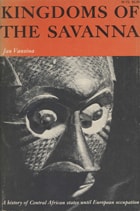
Kingdoms of the Savanna
Jan Vansina
University of Wisconsin Press, 0
"This signal contribution to African history and the writing of history more generally has emerged from the scholarship of one who is ranked by many as among the foremost of the contemporary historians of sub-Saharan Africa." —The American Historical Review