Results by title
3576 books match the query 'American' and 132 start with l
L.A. Private Eyes
Dahlia Schweitzer
Rutgers University Press, 2019
Watch a video of the author speaking about this topic: https://goo.gl/Xr9RFD
And also: https://www.dropbox.com/s/mkqw3mplruf7jje/Detective%20Talk%20Full.mp4?dl=0 (https://www.dropbox.com/s/mkqw3mplruf7jje/Detective%20Talk%20Full.mp4?dl=0)
La Chica's Field Guide to Banzai Living
Jennifer Hasegawa
Omnidawn, 2019
Hasegawa’s poems not only rearrange our ways of seeing the world, but they also reset the language we use in it. Banzai, with a literal translation of “10,000 years,” was used by the Japanese as a rallying cry in imperialistic and militaristic contexts. Today, the understanding of this word has shifted to a comparatively neutral translation of the enthusiastic expression “Hurrah!” in both in Japan and beyond. In La Chica’s Field Guide to Banzai Living, Hasegawa aims to reclaim banzai, recasting the language of war and unwavering loyalty and forming it into one that stands against aggression and racism and embraces tolerance and self-acceptance. Here banzai becomes a rallying cry not of war but of grand potential. La Chica’s Field Guide to Banzai Living chronicles a celebratory life and poetry filled with wonder.
La Far
Eric Linsker
University of Iowa Press, 2014
Lacemakers
Claire McQuerry
Southern Illinois University Press, 2012

Ladders To Fire
New Expanded EditionAnaïs Nin
Ohio University Press, 1959
After struggling with her own press and printing her own works, Anaïs Nin succeeded in getting Ladders to Fire accepted and published in 1946. This recognition marked a milestone in her life and career. Admitted into the fellowship of American novelists, she maintained the individuality of her literary style. She resisted realistic writing and drew on the experience and intuitions of her diary to forge a novelistic style emphasizing free association, the language of emotion, spontaneity, and improvisation.
Ladders to Fire is the first volume of Nin’s celebrated series of novels called Cities of the Interior
For Anaïs Nin, her writing and her life were not separable, they were both part of the same experience. She claimed that “is it the fiction writer who edited the diary.”
Anaïs Nin continues to find an audience, whether for her fiction, her diaries, or her own life story, which has enjoyed the attention of biographers and filmmakers. This 1995 reissue of Ladders to Fire has a new cover and foreword.
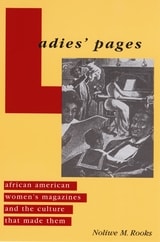
Ladies' Pages
African American Women's Magazines and the Culture That Made ThemRooks, Noliwe M
Rutgers University Press, 2004
Beginning in the late nineteenth century, mainstream magazines established ideal images of white female culture, while comparable African American periodicals were cast among the shadows. Noliwe M. Rooks’s Ladies’ Pages sheds light on the most influential African American women’s magazines––Ringwood’s Afro-American Journal of Fashion, Half-Century Magazine for the Colored Homemaker, Tan Confessions, Essence, and O, the Oprah Magazine––and their little-known success in shaping the lives of black women.
Ladies’ Pages demonstrates how these rare and thought-provoking publications contributed to the development of African American culture and the ways in which they in turn reflect important historical changes in black communities. What African American women wore, bought, consumed, read, cooked, and did at home with their families were all fair game, and each of the magazines offered copious amounts of advice about what such choices could and did mean. At the same time, these periodicals helped African American women to find work and to develop a strong communications network. Rooks reveals in detail how these publications contributed to the concepts of black sexual identity, rape, migration, urbanization, fashion, domesticity, consumerism, and education. Her book is essential reading for everyone interested in the history and culture of African Americans.
Lake Country
A Series of JourneysKathleen Stocking
University of Michigan Press, 1994
Lame God
M. B. McLatchey
Utah State University Press, 2013
In The Lame God, author M. B. McLatchey reminds us of the inevitable bond between art and empathy. With a controlled language that finds its echo chamber in the immortal themes and characters of classical literature, this courageous work accompanies the author on her journey through a parent’s anguish in the face of a horrific crime. Using the art of poetry she gives voice to a suffering—and a love—that might otherwise go unheard.
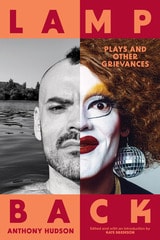
Lamp Back
Plays and Other GrievancesAnthony Hudson, Kate Bredeson
Northwestern University Press, 2027
A major collection of performance works by artist and agitator Anthony Hudson
Lamp Back: Plays and Other Grievances collects nearly a decade of work by Anthony Hudson, a queer Indigenous artist and agitator also known as Portland, Oregon’s premier drag clown, Carla Rossi. Whether fumbling with a lamp in a satirical takedown of land acknowledgments or confronting the history of redface in pop culture, Hudson alternates between Rossi’s cackling “ghost of white privilege” and more earnest, vulnerable confessionals as himself—all with a deep commitment to bitter humor and brutal honesty. In these performance works, a mixed-race Native boy plays a pilgrim in his kindergarten Thanksgiving pageant. A young artist recounts the racism in their favorite musical and the larger American theater system. A drag queen storytime goes disastrously wrong and calls for an exorcism with a plunger. Kate Bredeson’s unflinching introduction speaks to Hudson’s work through a cultural and historical lens and illuminates the importance of his project to filet the American Empire.

Lamps at High Noon
Jack S. Balch
University of Illinois Press, 1941
Charlie Gest, the wide-eyed and well-intentioned protagonist of the novel, confronts firsthand the project's sometimes underhanded efforts to monitor the political views of its writers. Named assistant director of the project in Monroe (a fictional St. Louis), Gest is vaguely aware that the program's good intentions do not always overshadow the abuses it tolerates, which include shielding corporate interests and avoiding hiring highly qualified black writers. Gest is hounded by a nagging suspicion that, like lamps that burn in broad daylight, the issues at stake in the work stoppage are not the ones that most need addressing.
Part radical socialist commentary, part absurdist theater, Balch's novel offers a peerless critical engagement of the economic constraints and political exigencies surrounding debates over the federal funding of art since the New Deal.
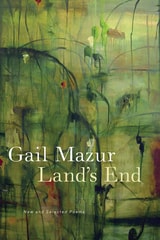
Land's End
New and Selected PoemsGail Mazur
University of Chicago Press, 2020
In Land’s End, we see Mazur writing with the kind of lyric authority, ever-deepening emotional range, and intellectual and social scope that her readers have come to expect in her poetry. Beautifully crafted elegies meet with reflections on her own life, her family, and artists who have come and gone. In the title poem, she leads readers through a garden, where new and old growth twists together in an “almanac of inheritances” that conjures the rich memory of poets who have passed on. In this space of remembrance, Mazur also charges us with the responsibility of nurturing art and artists of the future, especially in the face of the disheartening absurdities of contemporary politics. Contemplating the growth and decay so entwined in life, these poems invite us to consider both inevitable brokenness and necessary hope, writing “My work now: to continue learning to absorb the loss, / and live.”
Through tidal creeks and the weightless scenes of ukiyo-e woodcuts, in artists’ studios and along the frozen Charles River, Mazur connects passionately with the world around her. Carrying with her the undeniable presence of loss and of time past, she engages deeply with the present, her historic memory informing a deep concern for contemporary life. Reading Land’s End, we find ourselves with the poet:
together we’d have energies to do battle forever.
Landlocked
Julia McConnell
Michigan State University Press, 2023
Landscape Portrait Figure Form
Dean Rader
Omnidawn, 2014
Landscape with Bloodfeud
Wendy Barnes
University of Massachusetts Press, 2022
Landscape with Human Figure
Rafael Campo
Duke University Press, 2002
Lanford Wilson
Early Stories, Sketches, and PoemsDavid Crespy
University of Missouri Press, 2026
Last Day of My Face
James Shea
University of Iowa Press, 2025
Rich with reversals, short poems are wedged against skittery contemplations, and an easeful tone coexists with a vein of darkness. Akin to lucid dreaming, this startling volume builds toward a final poem that gathers fragments of selves into a wondrous whole.
Last Lake
Reginald Gibbons
University of Chicago Press, 2016
A slow parade of old west enthusiasts,
camp song and hymn, came in along the winding
way where rural declined to suburban, slow
riders and wagoners passing a cow staked
to graze, some penned cattle looking vacantly
up—not in vacant lots the ancient icons
of wealth they had been in odes, prayers and epics,
in sacrifices and customs of bride-price
or dowry. (It’s good people no longer make
blood sacrifices, at gas stations and stores,
for example, and in the crunching gravel
parking lots of small churches—oh but we do.)
“The evening forgives the alleyway,” Reginald Gibbons writes in his tenth book of poems—but such startling simplicities are overwhelmed in us by the everyday and the epochal. Across the great range of Gibbons’s emblematic, vividly presented scenes, his language looks hard at and into experience and feeling. Words themselves have ideas, and have eyes—inwardly looking down through their own meanings, as the poet considers a lake in the Canadian north, a Chicago neighborhood, a horse caravan in Texas, a church choir, a bookshelf, or an archeological dig on the steppes near the Volga River. The last lake is the place of both awe and elegy.
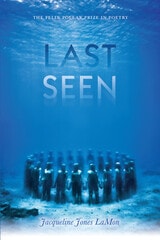
Last Seen
Jacqueline Jones LaMon
University of Wisconsin Press, 2011
Inspired by actual case histories of long-term missing African American children, this provocative and heartrending collection of poems evokes the experience of what it means to be among the missing in contemporary America. This thought-provoking collection of persona poems looks at absence from the standpoint of the witnesses surrounding the void and offers an intimate depiction of those impossible moments of aftermath lived by those who remain accounted for and present. While enabling us to question our own sense of identity, this unique collection of poems reveals the blurred edges of separation between them and us and the impact that the missing have upon our present and future.
Finalist, NAACP Image Awards
Late Fire, Late Snow
New and Uncollected PoemsRobert Francis
University of Massachusetts Press, 1992
Late Invocation for Magic
Jim Daniels
Michigan State University Press, 2026
In poems selected from his long career, Jim Daniels focuses on Detroit and other Rust Belt cities, where issues of class and race and justice play out in the streets and kitchens and backyards and garages of the Americans trying to live and make a living there. Known for his courage, clarity, and accessibility, Daniels examines the tension between our idealized country and the messier cultural and economic divides, often focusing on those who can’t afford or have access to “magic.”
Late Psalm
Betshy Sholl
University of Wisconsin Press, 2004
Late Psalm takes themes from those ancient songs of joy and grief and transposes them into the language of contemporary life.
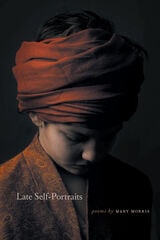
Late Self-Portraits
Mary Morris
Michigan State University Press, 2022
From “Dinner with Hades”:
He shows me a birthday cake, candled. My name is written in pomegranate
seeds. It’s like vertigo. Just before he seeks to devour, he halts to birdsong—
sound of goldfinch, bluebird, hawk, lilting of sparrows. Of whippoorwill
and dove. Wings flap, so many wings, a cool breeze as leaves unfurl into a
once forgotten green and I am back on earth, held in my mother’s arms.
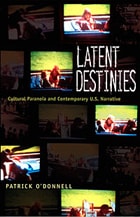
Latent Destinies
Cultural Paranoia and Contemporary U.S. NarrativePatrick O Donnell
Duke University Press, 2000
O’Donnell argues that paranoia on the broadly cultural level is essentially a narrative process in which history and postmodern identity are negotiated simultaneously. The result is an erasure of historical temporality—the past and future become the all-consuming, self-aware present. To explain and exemplify this, O’Donnell looks at such books and films as Libra, JFK, The Crying of Lot 49, The Truman Show, Reservoir Dogs, Empire of the Senseless, Oswald’s Tale, The Executioner’s Song, Underworld, The Killer Inside Me, and Groundhog Day. Organized around the topics of nationalism, gender, criminality, and construction of history, Latent Destinies establishes cultural paranoia as consonant with our contradictory need for multiplicity and certainty, for openness and secrecy, and for mobility and historical stability.
Demonstrating how imaginative works of novels and films can be used to understand the postmodern historical condition, this book will interest students and scholars of American literature and cultural studies, postmodern theory, and film studies.

Laughing Africa
Terese Svoboda
University of Iowa Press, 1990
There is a large intelligence present in Terese Svoboda's poetry and not a shred of sentimentality. From the dramatic coming-of-age in the title poem to the question posed in the last section, "What will I say to my child as it snows / that last winter's papery afterglow?" she continually searches for a responsible, compassionate world, one in which the only illusion is art.
The mythological central poem, "The Ranchhand's Daughter," shows the gods of isolation and incest warring against each other, destroying a triangle of love and cut into the granite-faced Badlands. It is only in the sensuous landscape of the domestic that possible redemption occurs: the father who dreams of running for president, the mother who signs in the mirror, the couple in the shower with "confidence rising between them." Faced with the inevitable losses, Svoboda strives for meaning and beauty.
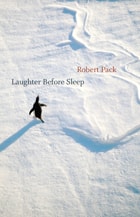
Laughter Before Sleep
Robert Pack
University of Chicago Press, 2011
One of America’s most eminent nature poets, Robert Pack has won the acclaim of writers, critics, and readers from Stephen Jay Gould to Mark Strand. In his latest collection, Laughter Before Sleep, Pack carries on his themes of family and friends, responsibility to the natural world of evolved diversity, the transience of life, the fragility of happiness, and the consolations offered by art and music.
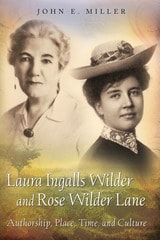
Laura Ingalls Wilder and Rose Wilder Lane
Authorship, Place, Time, and CultureJohn E. Miller
University of Missouri Press, 2008
Interpreting these writers in their larger historical and cultural contexts, Miller reconsiders their formidable artistic, political, and literary contributions to American cultural life in the 1930s. He looks at what was happening in 1932—from depression conditions and politics to chain stores and celebrity culture—to shed light on Wilder’s life, and he shows how actual “little houses” established ideas of home that resonated emotionally for both writers.
In considering each woman’s ties to history, Miller compares Wilder with Frederick Jackson Turner as a frontier mythmaker and examines Lane’s unpublished history of Missouri in the context of a contemporaneous project, Thomas Hart Benton’s famous Jefferson City mural. He also looks at Wilder’s Missouri Ruralist columns to assess her pre–Little House values and writing skills, and he readdresses her literary treatment of Native Americans. A final chapter shows how Wilder’s and Lane’s conservative political views found expression in their work, separating Lane’s more libertarian bent from Wilder’s focus on writing moralist children’s fiction.
These nine thoughtful essays expand the critical discussion on Wilder and Lane beyond the Little House. Miller portrays them as impassioned and dedicated writers who were deeply involved in the historical changes and political challenges of their times—and contends that questions over the books’ authorship do not do justice to either woman’s creative investment in the series. Miller demystifies the aura of nostalgia that often prevents modern readers from seeing Wilder as a real-life woman, and he depicts Lane as a kindred artistic spirit, helping readers better understand mother and daughter as both women and authors.

Law and Liberty in Early New England
Criminal Justice and Due Process, 1620-1692Edgar J. McManus
University of Massachusetts Press, 2009
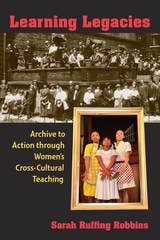
Learning Legacies
Archive to Action through Women's Cross-Cultural TeachingSarah Ruffing Robbins
University of Michigan Press, 2017
Learning to Live with Crime
American Crime Narrative in the Neoconservative TurnChristopher P. Wilson
The Ohio State University Press, 2010
Since the mid-1960s, the war on crime has reshaped public attitudes about state authority, criminal behavior, and the responsibilities of citizenship. But how have American writers grappled with these changes? What happens when a journalist approaches the workings of organized crime not through its legendary Godfathers but through a workaday, low-level figure who informs on his mob? Why is it that interrogation scenes have become so central to prime-time police dramas of late? What is behind writers’ recent fascination with “cold case” homicides, with private security, or with prisons?
In Learning to Live with Crime, Christopher P. Wilson examines this war on crime and how it has made its way into cultural representation and public consciousness. Under the sway of neoconservative approaches to criminal justice and public safety, Americans have been urged to see crime as an inevitable risk of modern living and to accept ever more aggressive approaches to policing, private security, and punishment. The idea has been not simply to fight crime but to manage its risks; to inculcate personal vigilance in citizens; and to incorporate criminals’ knowledge through informants and intelligence gathering. At its most scandalous, this study suggests, contemporary law enforcement has even come to mimic crime’s own operations.
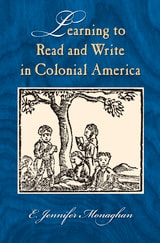
Learning to Read and Write in Colonial America
E. Jennifer Monaghan
University of Massachusetts Press, 2005
An experienced teacher of reading and writing and an award-winning historian, E. Jennifer Monaghan brings to vibrant life the process of learning to read and write in colonial America. Ranging throughout the colonies from New Hampshire to Georgia, she examines the instruction of girls and boys, Native Americans and enslaved Africans, the privileged and the poor, revealing the sometimes wrenching impact of literacy acquisition on the lives of learners.
For the most part, religious motives underlay reading instruction in colonial America, while secular motives led to writing instruction. Monaghan illuminates the history of these activities through a series of deeply researched and readable case studies. An Anglican missionary battles mosquitoes and loneliness to teach the New York Mohawks to write in their own tongue. Puritan fathers model scriptural reading for their children as they struggle with bereavement. Boys in writing schools, preparing for careers in counting houses, wield their quill pens in the difficult task of mastering a “good hand.” Benjamin Franklin learns how to compose essays with no teacher but himself. Young orphans in Georgia write precocious letters to their benefactor, George Whitefield, while schools in South Carolina teach enslaved black children to read but never to write.
As she tells these stories, Monaghan clears new pathways in the analysis of colonial literacy. She pioneers in exploring the implications of the separation of reading and writing instruction, a topic that still resonates in today's classrooms.
Monaghan argues that major improvements occurred in literacy instruction and acquisition after about 1750, visible in rising rates of signature literacy. Spelling books were widely adopted as they key text for teaching young children to read; prosperity, commercialism, and a parental urge for gentility aided writing instruction, benefiting girls in particular. And a gentler vision of childhood arose, portraying children as more malleable than sinful. It promoted and even commercialized a new kind of children's book designed to amuse instead of convert, laying the groundwork for the “reading revolution” of the new republic.
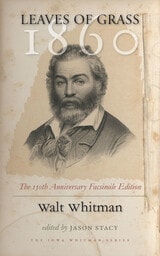
Leaves of Grass, 1860
The 150th Anniversary Facsimile EditionWhitman, Walt
University of Iowa Press, 2009
In May 1860, Walt Whitman published a third edition of Leaves of Grass. His timing was compelling. Printed during a period of regional, ideological, and political divisions, written by a poet intimately concerned with the idea of a United States as “essentially the greatest poem,” this new edition was Whitman’s last best hope for national salvation. Now available in a facsimile edition, Leaves of Grass, 1860 faithfully reproduces Whitman’s attempt to create a “Great construction of the New Bible” to save the nation on the eve of civil war and, for the first time, frames the book in historical rather than literary terms.
In his third edition, Whitman added 146 new poems to the 32 that comprised the second edition, reorganized the book into a bible of American civic religion that could be cited chapter and verse, and included erotic poetry intended to bind the nation in organic harmony. This 150th anniversary edition includes a facsimile reproduction of the original 1860 volume, a thought-provoking introduction by antebellum historian and Whitman scholar Jason Stacy that situates Whitman in nineteenth-century America, and annotations that provide detailed historical context for Whitman’s poems.
A profoundly rich product of a period when America faced its greatest peril, this third edition finds the poet transforming himself into a prophet of spiritual democracy and the Whitman we celebrate today—boisterous, barbaric, and benevolent. Reprinting it now continues the poet’s goal of proclaiming for “the whole of America for each / individual, without exception . . . uncompromising liberty and equality.”
Leaving
Laton Carter
University of Chicago Press, 2004
Leaving Tulsa
Jennifer Elise Foerster
University of Arizona Press, 2013
In her first magical collection of poetry, Jennifer Elise Foerster weaves together a mythic and geographic exploration of a woman’s coming of age in a dislocated time. Leaving Tulsa, a book of road elegies and laments, travels from Oklahoma to the edges of the American continent through landscapes at once stark and lush, ancient and apocalyptic. The imagery that cycles through the poems—fire, shell, highway, wing—gives the collection a rich lyrical-dramatic texture. Each poem builds on a theme of searching for a lost “self”—an “other” America—that crosses biblical, tribal, and ecological mythologies.
In Leaving Tulsa, Foerster is not afraid of the strange or of estrangement. The narrator occupies a space in between and navigates the offbeat experiences of a speaker that is of both Muscogee and European heritage. With bold images and candid language, Foerster challenges the perceptions of what it means to be Native, what it means to be a woman, and what it means to be an American today. Ultimately, these brave and luminous poems engage and shatter the boundaries of time, self, and continent.
Foerster’s journey transcends both geographic space and the confines of the page to live vividly in the mind of the reader.
Ledger
Wheeler, Susan
University of Iowa Press, 2005
Left in the West
Literature, Culture, and Progressive Politics in the American WestGioia Woods
University of Nevada Press, 2018
From the early 19th century to the present, a remarkably complex and varied body of literary and cultural production has emerged out of progressive social movements. While the literary left in the West shared many interests with other regional expressions—labor, class, anti-fascism, and anti-imperialism, the influence of Manifest Destiny—the distinct history of settler colonialism in western territories caused western leftists to develop concerns unique to the region.
Chapters in the volume provide an impressive range of analysis, covering artists and movements from suffragist writers to bohemian Californian photographers, from civil rights activists to popular folk musicians, from Latinx memoirists to Native American experimental writers, to name just a few.
The unique consideration of the West as a socio-political region establishes a framework for political critique that moves beyond class consequences, anti-fascism, and civil liberties, and into distinct Western concerns such as Native American sovereignty, environmental exploitation, and the legacies of settler colonialism. What emerges is a deeper understanding of the region and its unique people, places, and concerns.
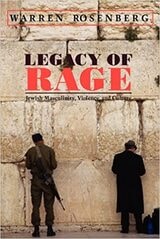
Legacy of Rage
Jewish Masculinity, Violence, and CultureWarren Rosenberg
University of Massachusetts Press, 2009
From Biblical depictions of heroic warriors like King David to the medieval Jewish legend of the Golem (a fierce man of clay created by Cabalistic magic) to the fictional Alexander Portnoy, Jewish ideas of manhood reflect a simultaneous resistance and attraction to violence. According to Rosenberg, it is an ambivalence shaped by millennia of oppression as well as by the clash of Western ideas of masculinity with Eastern European rabbinical injunctions against violent action. The result has been not only gender confusion, but a suppressed rage evident in a broad range of texts created by Jewish men, from nineteenth-century Yiddish stories to contemporary Hollywood films. Isaac Babel, Henry Roth, Norman Mailer, Saul Bellow, Philip Roth, David Mamet, Barry Levinson, and Steven Spielberg are just some of the writers and filmmakers whose lives and works are marked by this legacy of rage.
Yet if the need to affirm masculinity through violence remains an unacknowledged aspect of Jewish male identity, Rosenberg argues, it is not a historical inevitability. As the work of Cynthia Ozick and Tony Kushner suggests, it is possible to construct new ideas of Jewish manhood by exposing the hidden fallacies of the old.
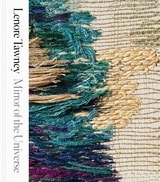
Lenore Tawney
Mirror of the UniverseEdited by Karen Patterson
University of Chicago Press, 2019
Raised and trained in Chicago before she moved to New York, Tawney had a storied career. She was known for employing an ancient Peruvian gauze weave technique to create a painterly effect that appeared to float in space rather than cling to the wall, as well as for being one of the first artists to blend sculptural techniques with weaving practices and, in the process, pioneered a new direction in fiber art. Despite her prominence on the New York art scene, however, she has only recently begun to receive her due from the greater art world. Accompanying a retrospective at the John Michael Kohler Arts Center, this catalog features a comprehensive biography of Tawney, additional essays on her work, and two hundred full-color illustrations, making it of interest to contemporary artists, art historians, and the growing audience for fiber art.
Copublished with the John Michael Kohler Arts Center.
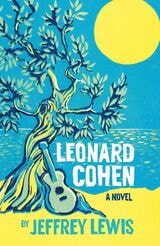
Leonard Cohen
A NovelJeffrey Lewis
Haus Publishing, 2025
The Leonard Cohen at the center of Leonard Cohen: A Novel is an everyman, a would-be artist, a would-be lover, a would-be tragic figure, yet a man haunted by the greatness of his namesake. He struggles to compete. He struggles to be more than a punchline in his own mind. He struggles, in particular, to write one song as great as the least of the great Leonard Cohen's songs.
At the center of Leonard's life is Daphne. In their meeting on a Greek island, a contemporary fable of Daphne and Apollo plays out. But even with Daphne, Leonard is shadowed by the other Leonard Cohen, whom he fears is the real Apollo. The ancient myth haunts the fated lovers, and the nobody Leonard Cohen’s life becomes at once a mystery, a miracle, and a myth on its own terms.
Once upon a time, Apollo fell hard for Daphne, who turned herself into a laurel tree. No less a fate awaits the protagonists of this slender yet universal novel, where art, love, and fame all fatefully intertwine.
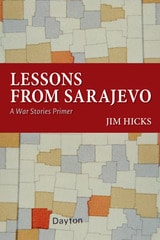
Lessons from Sarajevo
A War Stories PrimerJim Hicks
University of Massachusetts Press, 2013
Hicks explores the limitations of the sentimental tradition in war representation and asks how the work of artists and writers can help us to move beyond the constraints of that tradition. Ranging from Walt Whitman's writings on the Civil War to the U.S. wars in Iraq and Afghanistan, and focusing on the innovative and creative artistic expressions arising out of the wars of the former Yugoslavia, Hicks examines how war has been perceived, described, and interpreted. He analyzes the limitations on knowledge caused by perspective and narrative position and looks closely at the distinct yet overlapping roles of victims, observers, and aggressors. In the end, he concludes, war stories today should be valued according to the extent they make it impossible for us to see these positions as assigned in advance, and immutable.
Let It Be Broke
Ed Pavlic
Four Way Books, 2020
Let Us Watch Richard Wilbur
A Biographical StudyRobert Bagg
University of Massachusetts Press, 2017
Pulitzer Prize–winning poet Richard Wilbur (b. 1921) is part of a notable literary cohort, American poets who came to prominence in the mid-twentieth century. Wilbur's verse is esteemed for its fluency, wit, and optimism; his ingeniously rhymed translations of French drama by Molière, Racine, and Corneille remain the most often staged in the English-speaking world; his essays possess a scope and acumen equal to the era's best criticism. This biography examines the philosophical and visionary depth of his world-renowned poetry and traces achievements spanning seventy years, from political editorials about World War II to war poems written during his service to his theatrical career, including a contentious collaboration with Leonard Bernstein and Lillian Hellman.
Wilbur's life has been mistakenly seen as blessed, lacking the drama of his troubled contemporaries. Let Us Watch Richard Wilbur corrects that view and explores how Wilbur's perceived “normality” both enhanced and limited his achievement. The authors augment the life story with details gleaned from access to his unpublished journals, family archives, candid interviews they conducted with Wilbur and his wife, Charlee, and his correspondence with Robert Lowell, Elizabeth Bishop, John Berryman, John Malcolm Brinnin, James Merrill, and others.
Lethal Theater
Susannah Nevison
The Ohio State University Press, 2019
Reckons with the rituals of violence that underpin the American prison system, asking readers to consider the act and complications of looking at violence and suffering.
In Lethal Theater, Susannah Nevison offers a stark and lyrical reckoning with the hidden architectures of the American prison system. These poems inhabit the charged territory where medicine and punishment converge, revealing how the body becomes both patient and instrument under state control. Moving through histories of wartime confinement, interrogation, and isolation, Nevison writes a poetry of witness to the carceral state, illuminating what is so often kept from view.
With precision and moral force, Nevison examines the shadows cast by medical experimentation on imprisoned bodies, the blurred boundary between hospital anesthesia and the drugs used in lethal injection protocols, and the rituals of surveillance that shape life behind bars. This is a work rooted in the medical humanities of confinement, an inquiry into how suffering is recorded, observed, and, at times, rendered invisible.
Lethal Theater makes visible the brutal logics beneath state-sanctioned pain and insists on the urgency—and responsibility—of looking closely at what the nation asks its incarcerated to endure.
Letters from the Headwaters
Aaron Abeyta
University Press of Colorado, 2014
Through epistolary essays and poems, American Book Award- and Colorado Book Award-winning author and poet Aaron A. Abeyta captures the soul of the cultural and geographical crossroads of the driest quadrant in the nation, the Colorado headwaters, source to all the rivers in the southwestern and mid-western United States. Originating from and expanding on the themes of twenty-five years of “Headwaters” conferences at Western State Colorado University, these essays and poems embrace the region’s past while also exploring the struggles of a present that seeks a sustainable future for the borderlands that define the very cross-cultural essence of the American experience.
Letters from the Leelanau
Essays of People and PlaceKathleen Stocking
University of Michigan Press, 1990
Letters of Transit
Theodore Worozbyt
University of Massachusetts Press, 2008
Letters to J. D. Salinger
Edited by Chris Kubica and Will Hochman
University of Wisconsin Press, 2014
Salinger continues to maintain his silence, but Holden Caulfield, Franny and Zooey, and Seymour Glass—the unforgettable characters of his novel and short stories—continue to speak to generations of readers and writers. Letters to Salinger includes more than 150 personal letters addressed to Salinger from well-known writers, editors, critics, journalists, and other luminaries, as well as from students, teachers, and readers around the world, some of whom have just discovered Salinger for the first time. Their voices testify to the lasting impressions Salinger’s ideas and emotions have made on so many diverse lives.
Contributors include Marvin Bell, Frederick Busch, Stephen Collins, Nicholas Delbanco, Warren French, Herbert Gold, W. P. Kinsella, Molly McQuade, Stewart O’Nan, Robert O’Connor, Ellis Paul, Molly Peacock, Sanford Pinsker, George Plimpton, Gerald Rosen, Sid Salinger, David Shields, Joseph Skibell, Melanie Rae Thon, Alma Luz Villanueva, Katharine Weber, and many others
Letters to Women
New Letters, volume 2Theodore Dreiser. Edited by Thomas P. Riggio
University of Illinois Press, 2008
Theodore Dreiser led a long and controversial life, almost always pursuing some serious question, and not rarely pursuing women. This collection, the second volume of Dreiser correspondence to be published by the University of Illinois Press, gathers previously unpublished letters Dreiser wrote to women between 1893 and 1945, many of them showing personal feelings Dreiser revealed nowhere else. Here he both preens and mocks himself, natters and scolds, relates his jaunts with Mencken and his skirmishes with editors and publishers. He admits his worries, bemoans his longings, and self-consciously embarks on love letters that are unafraid to smolder and flame. To one reader he sends “Kisses, Kisses, Kisses, for your sweety mouth” and urges his needy requests: “Write me a love-letter Honey girl.” Alongside such amorous play, he often expressed his deepest feelings on philosophical, religious, and social issues that characterize his public writing.
Chronologically arranged and meticulously edited by Thomas P. Riggio, these letters reveal how wide and deep Dreiser’s needs were. Dreiser often discussed his writing in his letters to women friends, telling them what he wanted to do, where he thought he succeeded and failed, and seeking approval or criticism. By turns seductive, candid, coy, and informative, these letters provide an intimate view of a master writer who knew exactly what he was after.
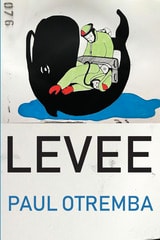
Levee
Paul Otremba
Four Way Books, 2019
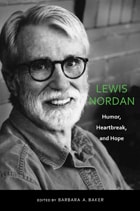
Lewis Nordan
Humor, Heartbreak, and HopeEdited by Barbara A. Baker
University of Alabama Press, 2012
A vibrant tribute to Lewis Nordan’s unforgettable blend of Southern surrealism, dark humor, and deep humanity.
Lewis Nordan: Humor, Heartbreak, and Hope is a rich collection of essays that examines the life and work of one of the South’s most distinctive literary voices. Edited by Barbara A. Baker, this volume brings together scholars and writers who explore Nordan’s use of magical realism, dark humor, and emotional vulnerability to portray the complexities of life in the Mississippi Delta. Through themes of race, poverty, family, and resilience, the contributors illuminate how Nordan’s fiction captures both the pain and beauty of the Southern experience. This book is essential reading for fans of Southern literature, cultural studies, and American fiction.
Written by scholars and fiction writers who represent a fascinating range of experience—from a Shakespearean scholar to English professors to a former student of Nordan’s—this is a rich array of essays, poems, and visual arts in tribute to this increasingly important writer. The collection deepens the base of scholarship on Nordan, and contextualizes his work in relation to other important southern writers such as William Faulkner and Eudora Welty.
Nordan was born and raised in Mississippi before moving to Alabama to pursue his Ph.D. at Auburn University. He taught for several years at the University of Arkansas in Fayetteville and retired from the University of Pittsburgh, where he was a professor of English. Nordan has written four novels, three collections of short stories, and a memoir entitled Boy with Loaded Gun. His second novel, Wolf Whistle, won the Southern Book Award, and his subsequent novel, The Sharpshooter Blues, won the Notable Book Award from the American Library Association and the Fiction Award from the Mississippi Institute of Arts and Letters. Nordan is renowned for his distinctive comic writing style, even while addressing more serious personal and cultural issues such as heartbreak, loss, violence, and racism. He transforms tragic characters and events into moments of artistic transcendence, illuminating what he calls the “history of all human beings.”