Results by title
5159 books match the query 'Biography' and 234 start with l
La Follette Insurgent Spirit
David P. Thelen
University of Wisconsin Press, 1986
La Follette’s Autobiography
A Personal Narrative of Political ExperiencesRobert M. La Follette; Foreword by Matthew Rothschild
University of Wisconsin Press, 2013
La Merica
Images Of Italian Greenhorn ExperienceMichael A. La Sorte
Temple University Press, 2003
La Mettrie
Medicine, Philosophy, and EnlightenmentKathleen Wellman
Duke University Press, 1992
Wellman’s study presents La Mettrie as an advocate of progressive medical theory and practice who consistently applied his medical concerns to the reform of philosophy, morals, and society. By examining his training with the Dutch physician Hermann Boerhaave, his satires lampooning the ignorance and venality of the medical profession, and his medical treatises on subjects ranging from vertigo to veneral disease, Wellman illuminates the medical roots of La Mettrie’s philosophy. She shows how medicine encouraged La Mettrie to undertake an impiricist critique of the philosophical tradition and provided the foundation for a medical materialism that both shaped his understanding of the possibilities of moral and social reform and led him to espouse the cause of the philosophers.
Elucidating the medical view of nature, human beings, and society that the Enlightenment and La Mettrie in particular bequethed to the modern world, La Mettrie makes an important contribution to our understanding of both that period and our own.
La Partera
Story of a MidwifeFran Leeper Buss
University of Michigan Press, 2001
This is Jesusita's story, told in her own words. She describes her early training as a midwife, her forced departure from home due to two unmarried pregnancies, and her solitary struggle to support her children. La Partera tells how she gradually emerged as a leader in her community, painstakingly building by hand a small maternity center for her patients while gaining the respect of the Anglo medical community.
As Jesusita's story unfolds, so too does the story of the women of the region. Supplemental sections by the author illuminate Jesusita's culture and past, along with a historical account of the network of medical care provided by Hispanic and Anglo female healers. Illustrated with photographs of both people and places, La Partera reflects the culture of an era through the prism of Jesusita's hard and useful life.
Fran Leeper Buss lives and teaches in Tucson, Arizona.
La Partera
Story of a MidwifeFran Leeper Buss
University of Michigan Press, 1980
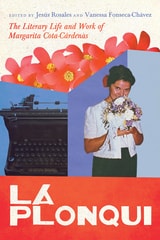
La Plonqui
The Literary Life and Work of Margarita Cota-CárdenasEdited by Jesús Rosales and Vanessa Fonseca-Chávez
University of Arizona Press, 2023
Nicknamed “La Plonky” by her family after a made-up childhood song, Cota-Cárdenas grew up in California, taught almost exclusively in Arizona, and produced five major works (two novels and three books of poetry) that offer an expansive literary production spanning from the 1960s to today. Her perspectives on Chicana identity, the Chicanx movement, and the sociopolitical climate of Arizona and the larger U.S.-Mexico border region represent a significant contribution to the larger body of Chicanx literature. Additionally, the volume explores her perspectives on issues of gender, sexuality, and identity related to the Chicanx experience over time.
Divided into three major parts, this collection begins with an introduction, followed by two testimonial essays written by the author herself and a longtime colleague, as well as an interview with the author. The second section contains nine essays by well-established literary critics that analyze Cota-Cárdenas’s literary output within a Chicano Movement literary context and offer new readings of Cota-Cárdenas’s fiction and poetry. The third part presents poetry and fiction from Cota-Cárdenas, including an excerpt from a work in progress. As a whole, the collection aims to affirm Margarita Cota-Cárdenas’s significant role in shaping the field of Chicana literature and emphasizes the importance of honoring a celebrated author who wrote a majority of her works in Spanish—one of the few Chicana writers to do so.
Contributors
Laura Elena Belmonte
Margarita Cota-Cárdenas
José R. Flores
Vanessa Fonseca-Chávez
Carolyn González
Gabriella Gutiérrez y Muhs
Manuel M. Martín-Rodríguez
Kirsten F. Nigro
Margarita E. Pignataro
Tey Diana Rebolledo
Jesús Rosales
Charles St-Georges
Javier Villarreal
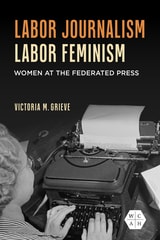
Labor Journalism, Labor Feminism
Women at the Federated PressVictoria M. Grieve
University of Illinois Press, 2026
These journalists wrote women into labor news by shedding light on essential issues like the need for equal pay and an end to discrimination. Their work increased women’s visibility in unions and the workforce while revealing that not only class but gender and race shaped their on-the-job experiences. Grieve also examines labor feminism within the larger stories of links between the Old Left and New Left and the FP’s pioneering role in articulating early iterations of intersectional feminism.
A compelling portrait of four women and a movement, Labor Journalism, Labor Feminism looks at an essential labor press organization and profiles politically active, leftist women who created relationships, established networks, and worked for social change.

Labor Leaders in America
Edited by Melvyn Dubofsky and Warren Van Tine
University of Illinois Press, 1987
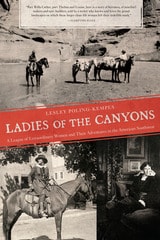
Ladies of the Canyons
A League of Extraordinary Women and Their Adventures in the American SouthwestLesley Poling-Kempes
University of Arizona Press, 2015
Educated, restless, and inquisitive, Natalie Curtis, Carol Stanley, Alice Klauber, and Mary Cabot Wheelwright were plucky, intrepid women whose lives were transformed in the first decades of the twentieth century by the people and the landscape of the American Southwest. Part of an influential circle of women that included Louisa Wade Wetherill, Alice Corbin Henderson, Mabel Dodge Luhan, Mary Austin, and Willa Cather, these ladies imagined and created a new home territory, a new society, and a new identity for themselves and for the women who would follow them.
Their adventures were shared with the likes of Theodore Roosevelt and Robert Henri, Edgar Hewett and Charles Lummis, Chief Tawakwaptiwa of the Hopi, and Hostiin Klah of the Navajo. Their journeys took them to Monument Valley and Rainbow Bridge, into Canyon de Chelly, and across the high mesas of the Hopi, down through the Grand Canyon, and over the red desert of the Four Corners, to the pueblos along the Rio Grande and the villages in the mountains between Santa Fe and Taos.
Although their stories converge in the outback of the American Southwest, the saga of Ladies of the Canyons is also the tale of Boston’s Brahmins, the Greenwich Village avant-garde, the birth of American modern art, and Santa Fe’s art and literary colony.
Ladies of the Canyons is the story of New Women stepping boldly into the New World of inconspicuous success, ambitious failure, and the personal challenges experienced by women and men during the emergence of the Modern Age.

Ladies of the Lights
Michigan Women in the U.S. Lighthouse ServicePatricia Majher
University of Michigan Press, 2010
"A great read about some great ladies, Pat Majher's Ladies of the Lights pays long overdue homage to an overlooked part of Great Lakes maritime history in which a select group of stalwart women beat the odds to succeed in a field historically reserved for men."
---Terry Pepper, Executive Director of Great Lakes Lighthouse Keeper's Association
Michigan once led the country in the number of lighthouses, and they're still a central part of the mystique and colorful countryside of the state. What even the region's lighthouse enthusiasts might not know is the rich history of female lighthouse keepers in the area.
Fifty women served the sailing communities on Lakes Huron, Michigan, and Superior, as well as on the Detroit River, for more than 100 years. From Catherine Shook, who raised eight children while maintaining the Pointe Aux Barques light at the entrance to Saginaw Bay; to Eliza Truckey, who assumed responsibility for the lighthouse in Marquette while her husband fought for four years in the Civil War; to Elizabeth Whitney, whose combined service on Beaver Island and in Harbor Springs totaled forty-one years---the stories of Michigan's "ladies of the light" are inspiring.
This is no technical tome documenting the minutiae of Michigan's lighthouse specifications. Rather, it's a detailed, human portrait of the women who kept those lighthouses running, defying the gender expectations of their time.
Patricia Majher is Editor of Michigan History magazine, published by the Historical Society of Michigan. Prior, she was Assistant Director of the Michigan Women's Historical Center and Hall of Fame in Lansing, Michigan. In addition, she has been writing both advertising and editorial copy for almost thirty years and has been a frequent contributor to Michigan newspapers and magazines.
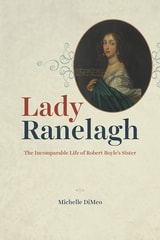
Lady Ranelagh
The Incomparable Life of Robert Boyle's SisterMichelle DiMeo
University of Chicago Press, 2021
Philosophers, mathematicians, politicians, and religious authorities sought her opinion on everything from decimalizing the currency to producing Hebrew grammars. She practiced medicine alongside distinguished male physicians, treating some of the most elite patients in London. Her medical recipes, political commentaries, and testimony concerning the philosophers’ stone gained international circulation. She was an important influence on Boyle and a formidable thinker in her own right.
Drawing from a wealth of new archival sources, Michelle DiMeo fills out Lady Ranelagh’s legacy in the context of a historically sensitive and nuanced interpretation of gender, science, and religion. The book re-creates the intellectual life of one of the most respected and influential women in seventeenth-century Europe, revealing how she managed to gain the admiration of diverse contemporaries, effect social change, and shape contemporary science.

Lafayette and the Liberal Ideal 1814-1824
Politics and Conspiracy in an Age of ReactionSylvia Neely
Southern Illinois University Press, 1991
Sylvia Neely provides both the first scholarly study of Lafayette’s life after the French Revolution and a detailed analysis of French politics during the early Restoration.
Lafayette, advocating a liberalism based on the American example, used both legal and illegal means to overturn a conservative government. The personification of liberalism for many of his contemporaries, he and his friends Benjamin Constant, Voyer d’Argenson, and Charles Goyet saw themselves as fighters in an international struggle that set liberalism against the forces of reaction and obscurantism. Although he ultimately failed, Lafayette was convinced that the liberal ideals derived from the Enlightenment and from his personal mentor, George Washington, would prevail.
Neely makes Lafayette’s actions clear by considering seriously the principles that guided his life and by describing the political climate of the early nineteenth century. She discloses previously overlooked features of the revolutions of the 1820s which account for the divisions among the revolutionary groups. She also examines relationships between Lafayette and the prominent writers and thinkers of the period, among them Augustin Thierry, Jeremy Bentham, Lady Morgan, and Frances Wright.
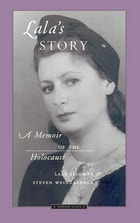
Lala's Story
A Memoir of the HolocaustLala Fishman
Northwestern University Press, 1997
Born into a middle-class Jewish family in 1932, Lala Weintraub grew up in Lvov, Poland. When the Nazis came, Lala—who had blond hair and blue eyes—survived by convincing them she was a Christian. This book tells her remarkable story. Fiercely determined and greatly aided by her Aryan looks, she managed to convince everyone—German soldiers, interrogators, fellow Poles—that she was a Polish gentile. Within a year after the Germans captured Lvov, many of Lala's family members were missing and presumed dead.
Lala's Story follows her as she moves from town to town, driven by her fear of being discovered. More than a story of survival, this is the story of a young girl's resolute struggle to defy, resist, and ultimately defeat the evil forces pursuing her.
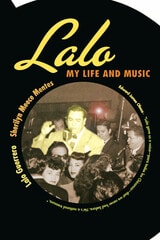
Lalo
My Life and MusicLalo Guerrero and Sherilyn Meece Mentes
University of Arizona Press, 2002
Lalo's autobiography takes readers on a musical rollercoaster, from his earliest enjoyment of Latino and black sounds in Tucson to his burgeoning career in Los Angeles singing with Los Carlistas, the quartet with which he began his recording career in 1938. During the fifties and sixties his music dominated the Latin American charts in both North and South America, and his song "Canción Mexicana" has become the unofficial anthem of Mexico. Through the years, Lalo mastered boleros, rancheras, salsas, mambos, cha-chas, and swing; he performed protest songs, children's music, and corridos that told of his people's struggles. Riding the crest of changing styles, he wrote pachuco boogies in one period and penned clever Spanish parodies of American hit songs in another. For all of these contributions to American music, Lalo was awarded a National Medal of the Arts from President Clinton.
Lalo's story is also the story of his times. We meet his family and earliest musical associates—including his long relationship with Manuel Acuña, who first got Lalo into the recording studio—and the many performers he counted as friends, from Frank Sinatra to Los Lobos. We relive the spirit of the nightclubs where he was a headliner and the one-night stands he performed all over the Southwest. We also discover what life was like in old Tucson and in mid-century L.A. as seen through the eyes of this uniquely creative artist. "In 1958," Guerrero recalls, "I wrote a song about a Martian who came to Earth to clear up certain misunderstandings about Mars. Now I have decided that it is time to set some things straight about Lalo Guerrero." Lalo does just that, in an often funny, sometimes sentimental story that traces the musical genius of a man whose talent has taken him all over the world, but who still believes in giving back to the community. His story is a gift to that community.
The book also features a detailed discography, compiled by Lalo's son Mark, tracing his recorded output from the days of 78s to his most recent CDs.
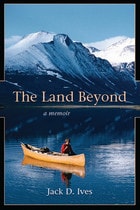
Land Beyond
A MemoirJack Ives
University of Alaska Press, 2010
Geographer Jack Ives moved to Canada in 1954, and soon after he played an instrumental role in the establishment of the McGill Sub-Arctic Research Laboratory in central Labrador-Ungava. This fascinating account of his fifty-plus years living and working in the arctic is simultaneously a light-hearted, winning memoir and a call to action on the issues of environmental awareness and conservation that are inextricably intertwined with life in the north. Mixing personal impressions of key figures of the postwar scientific boom with the intellectual drama of field research, The Land Beyond is a memorable depiction of a life in science.
Land of Opportunity
One Family's Quest for the American Dream in the Age of CrackWilliam M. Adler
University of Michigan Press, 2021
Landbridge
Life in FragmentsY-Dang Troeung
Duke University Press, 2024
Landscape for a Good Woman
A Story of Two LivesCarolyn Kay Steedman
Rutgers University Press, 1987
This book is about lives lived out on the borderlands, lives for which the central interpretative devices of the culture don't quite work. It has a childhood at its centre - my childhood, a personal past - and it is about the disruption of that fifties childhood by the one my mother had lived out before me, and the stories she told about it.'
Intricate and inspiring, this unusual book uses autobiographical elements to depict a mother and her daughter and two working-class childhoods (Burnley in the 1920s, South London in the 1950s) and to find a place for their stories in history and politics, in psychoanalysis and feminism.
'Provocative and quite dazzling in its ambitions. . . Beautifully written, intellectually compelling'.' Judith Walkowitz
--From 500 Great Books by Women; review by Jesse Larsen.
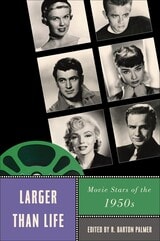
Larger Than Life
Movie Stars of the 1950sPalmer, R. Barton
Rutgers University Press, 2010
Larger Than Life offers a comprehensive view of the star system in 1950s Hollywood and also in-depth discussions of the decade's major stars, including Montgomery Clift, Judy Holliday, Jerry Lewis, James Mason, Marilyn Monroe, Kim Novak, Bing Crosby, Gene Kelly, Jayne Mansfield, and Audrey Hepburn.
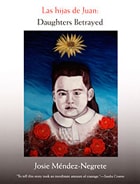
Las hijas de Juan
Daughters BetrayedJosie Méndez-Negrete
Duke University Press, 2006
Méndez-Negrete was born in Mexico, in the state of Zacatecas. She recalls a joyous childhood growing up in the midst of Tabasco, a vibrant town filled with extended family. Her father, though, had dreams of acquiring wealth in el norte. He worked sun-up to sun-down in the fields of south Texas. Returning home to Mexico, his pockets full of dollars, he spent evenings drinking and womanizing.
When Méndez-Negrete was eleven, her father moved the family to the United States, where they eventually settled in California’s Santa Clara Valley. There her father began molesting his daughters, viciously beating them and their mother. Within the impoverished immigrant family, the abuse continued for years, until a family friend brought it to the attention of child welfare authorities. Méndez-Negrete’s father was tried, convicted, and imprisoned.
Las hijas de Juan is told chronologically, from the time Méndez-Negrete was a child until she was a young adult trying, along with the rest of her family, to come to terms with her father’s brutal legacy. It is a harrowing story of abuse and shame compounded by cultural and linguistic isolation and a system of patriarchy that devalues the experiences of women and girls. At the same time, Las hijas de Juan is an inspiring tale, filled with strong women and hard-won solace found in traditional Mexican cooking, songs, and storytelling.
Last Cavalier
The Life and Times of John A. Lomax, 1867-1948Nolan Porterfield
University of Illinois Press, 1996
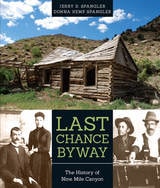
Last Chance Byway
The History of Nine Mile CanyonJerry D Spangler and Donna Kemp Spangler
University of Utah Press, 2015
The history of Nine Mile Canyon is not so much a story of those who lived and died there as it is of those whose came with dreams and left broke and disillusioned, although there were exceptions. Sam Gilson, the irascible U.S. marshal and famed polygamist hunter, became wealthy speculating in a hydrocarbon substance bearing his name, Gilsonite, a form of asphalt. The famed African American Buffalo Soldiers constructed a freight road through the canyon that for a time turned the Nine Mile Road into one of the busiest highways in Utah. Others who left their mark include famed outlaw hunter Joe Bush, infamous bounty hunter Jack Watson, the larger-than-life cattle baron Preston Nutter, and Robert Leroy Parker (known to most as Butch Cassidy).
Winner of the Charles Redd Center Clarence Dixon Taylor Historical Research Award.
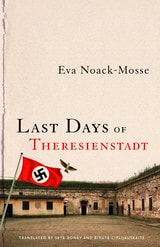
Last Days of Theresienstadt
Eva Noack-Mosse; Translated by Skye Doney and Biruté Ciplijauskaité
University of Wisconsin Press, 2018
Noack-Mosse's aim in documenting the horrors of daily life within Theresienstadt was to ensure that such a catastrophe could never be repeated. She also gathered from surviving inmates information about earlier events within the walled fortress, witnessed the defeat and departure of the Nazis, saw the arrival of the International Red Cross and the Soviet Army takeover of the camp and town, assisted in administration of the camp's closure, and aided displaced persons in discovering the fates of their family and friends. After the war ended, and she returned home, Noack-Mosse cross-referenced her data with that of others to provide evidence of Nazi crimes. At least 35,000 people died at Theresienstadt and another 90,000 were sent on to death camps.
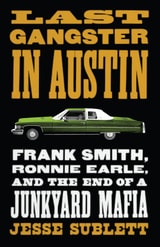
Last Gangster in Austin
Frank Smith, Ronnie Earle, and the End of a Junkyard MafiaJesse Sublett
University of Texas Press, 2021
Ronnie Earle was a Texas legend. During his three decades as the district attorney responsible for Austin and surrounding Travis County, he prosecuted corrupt corporate executives and state officials, including the notorious US congressman Tom DeLay. But Earle maintained that the biggest case of his career was the one involving Frank Hughey Smith, the ex-convict millionaire, alleged criminal mastermind, and Dixie Mafia figure.
With the help of corrupt local authorities, Smith spent the 1970s building a criminal empire in auto salvage and bail bonds. But there was one problem: a rival in the salvage business threatened his dominance. Smith hired arsonists to destroy the rival; when they botched the job, he sent three gunmen, but the robbery they planned was a bloody fiasco. Investigators were convinced that Smith was guilty, but many were skeptical that the newly elected and inexperienced Earle could get a conviction. Amid the courtroom drama and underworld plots the book describes, Willie Nelson makes a cameo. So do the private eyes, hired guns, and madams who kept Austin not only weird but also riddled with vice. An extraordinary true story, Last Gangster in Austin paints an unusual picture of the Texas capital as a place that was wild, wonderful, and as crooked as the dirt road to paradise.
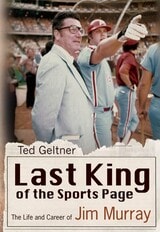
Last King of the Sports Page
The Life and Career of Jim MurrayTed Geltner
University of Missouri Press, 2012
Part crusader, part comedian, Jim Murray was a once-in-a-generation literary talent who just happened to ply his trade on newsprint, right near the box scores and race results. During his lifetime, Murray rose through the ranks of journalism, from hard-bitten 1940s crime reporter, to national Hollywood correspondent, to the top sports columnist in the United States. In Last King of the Sports Page: The Life and Career of Jim Murray, Ted Geltner chronicles Jim Murray’s experiences with twentieth-century American sports, culture, and journalism.
Last Mountain Dancer
Hard-Earned Lessons in Love, Loss, and Honky-Tonk Outlaw LifeChuck Kinder
West Virginia University Press, 2018
This gonzo-style metamemoir follows Chuck Kinder on a wild tour of the back roads of his home state of West Virginia, where he encounters Mountain State legends like Sid Hatfield, Dagmar, Robert C. Byrd, the Mothman, Chuck Yeager, Soupy Sales, Don Knotts, and Jesco White, the “Dancing Outlaw.”
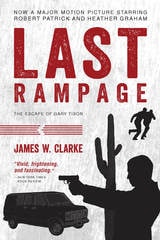
Last Rampage
The Escape of Gary TisonJames W. Clarke
University of Arizona Press, 1999
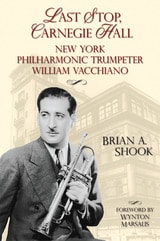
Last Stop, Carnegie Hall
New York Philharmonic Trumpeter William VacchianoBrian A. Shook
University of North Texas Press, 2011
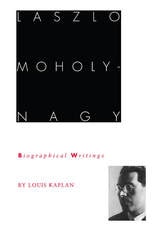
Laszlo Moholy-Nagy
Biographical WritingsLouis Kaplan
Duke University Press, 1995
In Laszlo Moholy-Nagy, Louis Kaplan applies the Derridean deconstructivist model of the "signature effect" to an intellectual biography of a Constructivist artist. Inhabiting the borderline between life and work, the book demonstrates how the signature inscribed by "Moholy" operates in a double space, interweaving signified object and signifying matter, autobiography and auto-graphy. Through interpretative readings of over twenty key artistic and photographic works, Kaplan graphically illustrates Moholy’s signature effect in action. He shows how this effect plays itself out in the complex of relations between artistic originality and plagiarism, between authorial identity and anonymity, as well as in the problematic status of the work of art in the age of technical reproduction. In this way, the book reveals how Moholy’s artistic practice anticipates many of the issues of postmodernist debate and thus has particular relevance today. Consequently, Kaplan clarifies the relationship between avant-garde Constructivism and contemporary deconstruction.
This new and innovative configuration of biography catalyzed by the life writing of Moholy-Nagy will be of critical interest to artists and writers, literary theorists, and art historians.
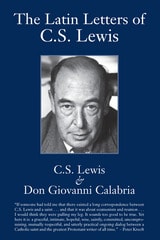
Latin Letters of C.S. Lewis
C.S. Lewis and Don Giovanni Calabria
St. Augustine's Press, 1999
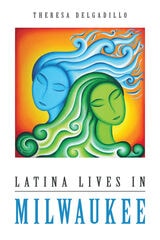
Latina Lives in Milwaukee
Theresa Delgadillo
University of Illinois Press, 2015
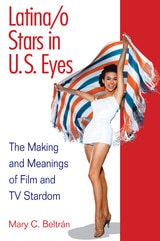
Latina/o Stars in U.S. Eyes
The Making and Meanings of Film and TV StardomMary C. Beltran
University of Illinois Press, 2008
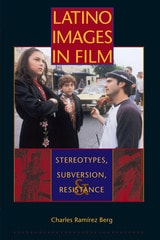
Latino Images in Film
Stereotypes, Subversion, and ResistanceBy Charles Ramírez Berg
University of Texas Press, 2002
The bandido, the harlot, the male buffoon, the female clown, the Latin lover, and the dark lady—these have been the defining, and demeaning, images of Latinos in U.S. cinema for more than a century. In this book, Charles Ramírez Berg develops an innovative theory of stereotyping that accounts for the persistence of such images in U.S. popular culture. He also explores how Latino actors and filmmakers have actively subverted and resisted such stereotyping.
In the first part of the book, Berg sets forth his theory of stereotyping, defines the classic stereotypes, and investigates how actors such as Raúl Julia, Rosie Pérez, José Ferrer, Lupe Vélez, and Gilbert Roland have subverted stereotypical roles. In the second part, he analyzes Hollywood's portrayal of Latinos in three genres: social problem films, John Ford westerns, and science fiction films. In the concluding section, Berg looks at Latino self-representation and anti-stereotyping in Mexican American border documentaries and in the feature films of Robert Rodríguez. He also presents an exclusive interview in which Rodríguez talks about his entire career, from Bedhead to Spy Kids, and comments on the role of a Latino filmmaker in Hollywood and how he tries to subvert the system.
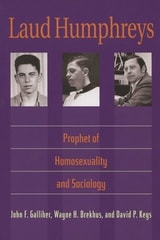
Laud Humphreys
Prophet of Homosexuality and SociologyJohn F. Galliher, Wayne Brekhus, and David P. Keys
University of Wisconsin Press, 2004
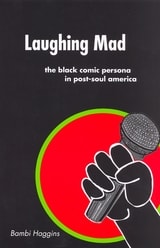
Laughing Mad
The Black Comic Persona in Post-Soul AmericaHaggins, Bambi
Rutgers University Press, 2007
Winner of the 2008 Katherine Singer Kovacs Book Award
Prior to the civil rights movement, comedians performed for audiences that were clearly delineated by race. Black comedians performed for black audiences and white comedians performed for whites. Yet during the past forty-five years, black comics have become progressively more central to mainstream culture.
In Laughing Mad , Bambi Haggins looks at how this transition occurred in a variety of media and shows how this integration has paved the way for black comedians and their audiences to affect each other. Historically, African American performers have been able to use comedy as a pedagogic tool, interjecting astute observations about race relations while the audience is laughing. And yet, Haggins makes the convincing argument that the potential of African American comedy remains fundamentally unfulfilled as the performance of blackness continues to be made culturally digestible for mass consumption.
Rather than presenting biographies of individual performers, Haggins focuses on the ways in which the comic persona is constructed and changes across media, from stand-up, to the small screen, to film. She examines the comic televisual and cinematic personae of Dick Gregory, Bill Cosby, Flip Wilson, and Richard Pryor and considers how these figures set the stage for black comedy in the next four decades. She reads Eddie Murphy and Chris Rock as emblematic of the first and second waves of post-civil rights era African American comedy, and she looks at the socio-cultural politics of Whoopi Goldberg's comic persona through the lens of gender and crossover. Laughing Mad also explores how the comedy of Dave Chappelle speaks to and for the post-soul generation.
A rigorous analytic analysis, this book interrogates notions of identity, within both the African American community and mainstream popular culture. Written in engaging and accessible prose, it is also a book that will travel from the seminar room, to the barbershop, to the kitchen table, allowing readers to experience the sketches, stand-up, and film comedies with all the laughter they deserve.
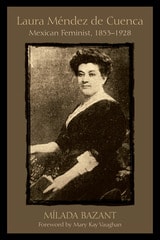
Laura Méndez de Cuenca
Mexican Feminist, 1853–1928Mílada Bazant; Foreword by Mary Kay Vaughan
University of Arizona Press, 2018
In the early 1870s, when conservative religious thought permeated all aspects of Mexican life, she was one of very few women to gain admission to an extraordinary constellation of male poets, playwrights, and novelists, who were also the publicists and statesmen of the time. She entered this world through her poetry, intellect, curiosity, assertiveness, but her personal life was fraught with tragedy: she had a child out of wedlock by poet Manuel Acuña, who killed himself shortly thereafter. She later married another poet, Agustín Fidencio Cuenca, and had seven other children. All but two of her children died, as did Agustín.
As a penniless young widow facing social rejection, Laura became a teacher and an important force in Mexico’s burgeoning educational reform program. She moved abroad—first to San Francisco, then St. Louis, then Berlin. In these places where she was not known and women had begun to move confidently in the public sphere, she could walk freely, observe, mingle, make friends across many circles, learn, think, and express her opinions. She wrote primarily for a Mexican public and always returned to Mexico because it was her country’s future that she strove to create.
Now, for the first time in English, Mílada Bazant shares with us the trajectory of a leading Mexican thinker who applied the power of the pen to human feeling, suffering, striving, and achievement.
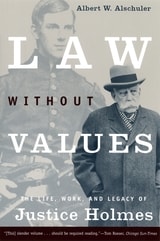
Law Without Values
The Life, Work, and Legacy of Justice HolmesAlbert W. Alschuler
University of Chicago Press, 2000

Lawfully Wedded Husband
How My Gay Marriage Will Save the American FamilyJoel Derfner
University of Wisconsin Press, 2013
Add to the mix a reality show whose director forces them to keep signing and notarizing applications for a wedding license until the cameraman gets a shot she likes; a family marriage history that includes adulterers, arms smugglers, and poisoners; and discussions of civil rights, Sophocles, racism, grammar, and homemade Ouija boards—coupled with Derfner's gift for getting in his own way—and what results is a story not just of gay marriage and the American family but of what it means to be human.
Le Corbusier's Formative Years
Charles-Edouard Jeanneret at La Chaux-de-FondsH. Allen Brooks
University of Chicago Press, 1997
"There is much in this fine volume for anyone interested not just in architecture, but in the roots of human creativity and in the origins of the most powerful artistic current of our century. . . . This book is a life's work of scholarship. It has been well spent."—Toronto Globe and Mail
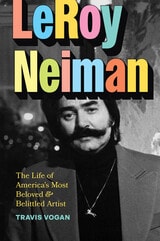
LeRoy Neiman
The Life of America’s Most Beloved and Belittled ArtistTravis Vogan
University of Chicago Press, 2024
LeRoy Neiman—the cigar-smoking and mustachioed artist famous for his Playboy illustrations, sports paintings, and brash interviews—stood among the twentieth century’s most famous, wealthy, and polarizing artists. His stylish renderings of musicians, athletes, and sporting events captivated fans but baffled critics, who accused Neiman of debasing art with popular culture. Neiman cashed in on the controversy, and his extraordinary popularity challenged the norms of what art should be, where it belongs, and who should have access to it.
The story of a Depression-era ragamuffin–turned–army chef–turned–celebrity artist, Neiman’s biography is a rollicking ride through twentieth-century American history, punctuated by encounters with the likes of Muhammad Ali, Frank Sinatra, Joe Namath, and Andy Warhol. In the whirlwind of his life, Neiman himself once remarked that even he didn’t know who he really was—but, he said, the fame and money that came his way made it all worth it. In this first biography of the captivating and infamous man, Travis Vogan hunts for the real Neiman amid the America that made him.
.
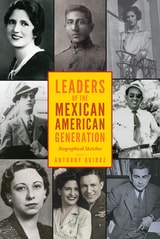
Leaders of the Mexican American Generation
Biographical EssaysAnthony Quiroz
University Press of Colorado, 2016
Leaders of the Mexican American Generation explores the lives of a wide range of influential members of the US Mexican American community between 1920 and 1965 who paved the way for major changes in their social, political, and economic status within the United States.
Including feminist Alice Dickerson Montemayor, to San Antonio attorney Gus García, and labor activist and scholar Ernesto Galarza, the subjects of these biographies include some of the most prominent idealists and actors of the time. Whether debating in a court of law, writing for a major newspaper, producing reports for governmental agencies, organizing workers, holding public office, or otherwise shaping space for the Mexican American identity in the United States, these subjects embody the core values and diversity of their generation.
More than a chronicle of personalities who left their mark on Mexican American history, Leaders of the Mexican American Generation cements these individuals as major players in the history of activism and civil rights in the United States. It is a rich collection of historical biographies that will enlighten and enliven our understanding of Mexican American history.
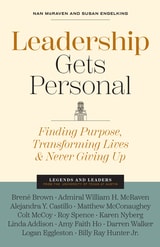
Leadership Gets Personal
Finding Purpose, Transforming Lives, and Never Giving UpNan McRaven and Susan Engelking
University of Texas Press, 2026
How the University of Texas shaped twelve people who changed the world.
College is a time for personal growth. But any Biology 101 student knows that growth (personal or otherwise) requires the right environment. Collecting the revealing and deeply personal stories of twelve UT alumni who became leaders in their fields, Leadership Gets Personal honors the transformative impact of the Forty Acres on those who learn and grow there.
Matthew McConaughey, Academy Award-winning actor and #1 New York Times best-selling author, was destined for law school, but with the encouragement of his UT community, he realized he was a born storyteller. Brené Brown, author of the #1 New York Times bestseller Dare to Lead, struggled for years before finding her purpose in the Social Work Department. Dr. Amy Ho knew she wanted to change the American health care system, and at UT she gained the confidence and skills to make a difference. Astronaut Karen Nyberg was a shy kid; her UT graduate studies propelled her to space. And Darren Walker would go on to become president of the Ford Foundation, taking inspiration from the financial aid counselors who made sure he got the education he yearned for. For these and other outstanding alumni profiled here, the road was often rocky. Through perseverance, humility, and collaboration, they learned not only to exercise leadership but to live it.

Learning Politics From Sivaram
The Life and Death of a Revolutionary Tamil Journalist in Sri LankaMark P. Whitaker
Pluto Press, 2007
This remarkable book is both an intimate portrait of the man and a fascinating account of the political dilemmas that he faced—and that still face us today. It explains how an educated man adopts a position of supporting violence. And while his position softens, Sivaram remains critical of the liberal principles that govern Western policy. Written by a close friend, this unique account highlights some of the most difficult political questions facing us today.
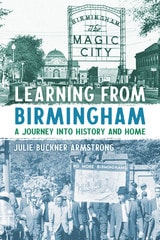
Learning from Birmingham
A Journey into History and HomeJulie Buckner Armstrong
University of Alabama Press, 2023
A steel town daughter’s search for truth and beauty in Birmingham, Alabama
“As Birmingham goes, so goes the nation,” Fred Shuttlesworth observed when he invited Martin Luther King Jr. to the city for the transformative protests of 1963. From the height of the Civil Rights Movement through its long aftermath, images of police dogs, fire hoses and four girls murdered when Ku Klux Klan members bombed the Sixteenth Street Baptist Church have served as an uncomfortable racial mirror for the nation. Like many white people who came of age in the Civil Rights Movement’s wake, Julie Buckner Armstrong knew little about this history. Only after moving away and discovering writers like Toni Morrison and Alice Walker did she realize how her hometown and family were part of a larger, ongoing story of struggle and injustice.
When Armstrong returned to Birmingham decades later to care for her aging mother, Shuttlesworth’s admonition rang in her mind. By then an accomplished scholar and civil rights educator, Armstrong found herself pondering the lessons Birmingham holds for a twenty-first century America. Those lessons extended far beyond what a 2014 Teaching Tolerance report describes as the common distillation of the Civil Rights Movement into “two names and four words: Martin Luther King Jr, Rosa Parks, and ‘I have a dream.’” Seeking to better understand a more complex local history, its connection to broader stories of oppression and resistance, and her own place in relation to it, Armstrong embarked on a journey to unravel the standard Birmingham narrative to see what she would find.
Beginning at the center, with her family’s 1947 arrival to a housing project near the color line, within earshot of what would become known as Dynamite Hill, Armstrong works her way over time and across the map. Weaving in stories of her white working-class family, classmates, and others not traditionally associated with Birmingham’s civil rights history, including members of the city’s LGBTQ community, she forges connections between the familiar and lesser-known. The result is a nuanced portrait of Birmingham--as seen in public housing, at old plantations, in segregated neighborhoods, across contested boundary lines, over mountains, along increasingly polluted waterways, beneath airport runways, on highways cutting through town, and under the gaze of the iconic statue of Vulcan.
In her search for truth and beauty in Birmingham, Armstrong draws on the powers of place and storytelling to dig into the cracks, complicating easy narratives of civil rights progress. Among the discoveries she finds in America’s racial mirror is a nation that has failed to recognize itself in the horrific images from Birmingham’s past and to acknowledge the continuing inequalities that make up the Civil Right’s Movement’s unfinished business. Learning from Birmingham reminds us that stories of civil rights, structural oppression, privilege, abuse, race and gender bias, and inequity are difficult and complicated, but their telling, especially from multiple stakeholder perspectives, is absolutely necessary.
Leave The Dishes In The Sink
Alison Comish Thorne
Utah State University Press, 2002
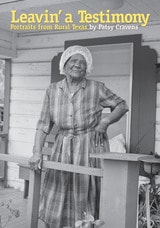
Leavin' a Testimony
Portraits from Rural TexasBy Patsy Cravens
University of Texas Press, 2006
First settled by Stephen F. Austin's colonists in the early nineteenth century, Colorado County has deep roots in Texas history. Mainly rural and agrarian until late in the twentieth century, Colorado County was a cotton-growing region whose population was about evenly divided between blacks and whites. These life-long neighbors led separate and unequal lives, memories of which still linger today. To preserve those memories, Patsy Cravens began interviewing and photographing the older residents of Colorado County in the 1980s. In this book, she presents photographs and recollections of the last generation, black and white, who grew up in the era of Jim Crow segregation.
The folks in Colorado County have engrossing stories to tell. They recall grinding poverty and rollicking fun in the Great Depression, losing crops and livestock to floods, working for the WPA, romances gone wrong and love gone right, dirty dancing, church and faith, sharecropping, quilting, raising children, racism and bigotry, and even the horrific lynching of two African American teenagers in 1935. The Colorado County residents' stories reveal an amazing resiliency and generosity of spirit, despite the hardships that have filled most of their lives. They also capture a rural way of life that was once common across the South, but is now gone forever.
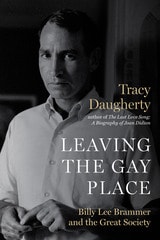
Leaving the Gay Place
Billy Lee Brammer and the Great SocietyBy Tracy Daugherty
University of Texas Press, 2018
Acclaimed by critics as a second F. Scott Fitzgerald, Billy Lee Brammer was once one of the most engaging young novelists in America. “Brammer’s is a new and major talent, big in scope, big in its promise of even better things to come,” wrote A. C. Spectorsky, a former staffer at the New Yorker. When he published his first and only novel, The Gay Place, in 1961, literary luminaries such as David Halberstam, Willie Morris, and Gore Vidal hailed his debut. Morris deemed it “the best novel about American politics in our time.” Halberstam called it “a classic . . . [a] stunning, original, intensely human novel inspired by Lyndon Johnson. . . . It will be read a hundred years from now.” More recently, James Fallows, Gary Fisketjon, and Christopher Lehmann have affirmed The Gay Place’s continuing relevance, with Lehmann asserting that it is “the one truly great modern American political novel.”
Leaving the Gay Place tells a sweeping story of American popular culture and politics through the life and work of a writer who tragically exemplifies the highs and lows of the country at mid-century. Tracy Daugherty follows Brammer from the halls of power in Washington, DC, where he worked for Senate majority leader Johnson, to rock-and-roll venues where he tripped out with Janis Joplin, and ultimately to back alleys of self-indulgence and self-destruction. Constantly driven to experiment with new ways of being and creating—often fueled by psychedelics—Brammer became a cult figure for an America on the cusp of monumental change, as the counterculture percolated through the Eisenhower years and burst out in the sixties. In Daugherty’s masterful recounting, Brammer’s story is a quintessential American story, and Billy Lee is our wayward American son.
Leaving the Pink House
Ladette Randolph
University of Iowa Press, 2014
On September 12, 2001, Randolph and her husband bought a dilapidated farmhouse on twenty acres outside Lincoln, Nebraska, and set about gutting and rebuilding the house themselves. They had nine months to complete the work. The project, undertaken at a time of national unrest and uncertainty, led Randolph to reflect on the houses of her past and the stages of her life that played out in each, both painful and joyful. As the couple struggles to bring the dilapidated house back to life, Randolph simultaneously traces the contours of a life deeply shaped by the Nebraska plains, where her family has lived for generations, and how those roots helped her find the strength to overcome devastating losses as a young adult. Weaving together strands of departures and arrivals, new houses and deep roots, cycles of change and the cycles of the seasons, Leaving the Pink House is a richly layered and compelling memoir of the meaning of home and family, and how they can never really leave us, even if we leave them.
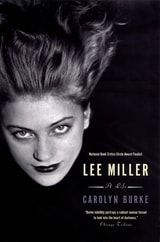
Lee Miller
A LifeCarolyn Burke
University of Chicago Press, 2007