Results by title
975 books match the query 'Case studies' and 56 start with l

La Normalizacion del Deficiente
Actitudes del Profesorado (Teachers' Attitudes toward Mainstreaming Handicapped Children in Spain)Francisco Alberto Chueca y Mora
University of Michigan Press, 1988

Laboring For Rights
edited by Gerald Hunt
Temple University Press, 1999
The chapters included in Laboring for Rights give a global vision to the increasingly important subject of equity in the workplace. They offer a much-needed look at labor's involvement with current international workplace conditions from such diverse countries as the United States, Canada, Australia, Germany, Britain, France, the Netherlands, and South Africa, as well as parts of the South Pacific. Some of these countries have strong and progressive labor unions; some, like the U.S., have relatively weak labor organizations. But whatever the context, as these articles demonstrate, there seems to be a growing and in some instances prospering gay/lesbian labor alliance in many parts of the world.
Laboring for Rights is a pioneering text in an important new area of labor study. It will engage readers interested in equality in the workplace, labor and organizational studies, gay and lesbian activism, and international, comparative studies.

Landscape for a Good Woman
A Story of Two LivesCarolyn Kay Steedman
Rutgers University Press, 1987
This book is about lives lived out on the borderlands, lives for which the central interpretative devices of the culture don't quite work. It has a childhood at its centre - my childhood, a personal past - and it is about the disruption of that fifties childhood by the one my mother had lived out before me, and the stories she told about it.'
Intricate and inspiring, this unusual book uses autobiographical elements to depict a mother and her daughter and two working-class childhoods (Burnley in the 1920s, South London in the 1950s) and to find a place for their stories in history and politics, in psychoanalysis and feminism.
'Provocative and quite dazzling in its ambitions. . . Beautifully written, intellectually compelling'.' Judith Walkowitz
--From 500 Great Books by Women; review by Jesse Larsen.
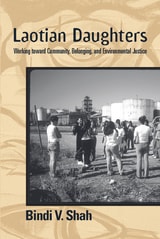
Laotian Daughters
Working toward Community, Belonging, and Environmental JusticeBindi V. Shah
Temple University Press, 2011
Laotian Daughters focuses on second-generation environmental justice activists in Richmond, California. Bindi Shah's pathbreaking book charts these young women's efforts to improve the degraded conditions in their community and explores the ways their activism and political practices resist the negative stereotypes of race, class, and gender associated with their ethnic group.
Using ethnographic observations, interviews, focus groups, and archival data on their participation in Asian Youth Advocates—a youth leadership development project—Shah analyzes the teenagers' mobilization for social rights, cross-race relations, and negotiations of gender and inter-generational relations. She also addresses issues of ethnic youth, and immigration and citizenship and how these shape national identities.
Shah ultimately finds that citizenship as a social practice is not just an adult experience, and that ethnicity is an ongoing force in the political and social identities of second-generation Laotians.

Las hijas de Juan
Daughters BetrayedJosie Méndez-Negrete
Duke University Press, 2006
Méndez-Negrete was born in Mexico, in the state of Zacatecas. She recalls a joyous childhood growing up in the midst of Tabasco, a vibrant town filled with extended family. Her father, though, had dreams of acquiring wealth in el norte. He worked sun-up to sun-down in the fields of south Texas. Returning home to Mexico, his pockets full of dollars, he spent evenings drinking and womanizing.
When Méndez-Negrete was eleven, her father moved the family to the United States, where they eventually settled in California’s Santa Clara Valley. There her father began molesting his daughters, viciously beating them and their mother. Within the impoverished immigrant family, the abuse continued for years, until a family friend brought it to the attention of child welfare authorities. Méndez-Negrete’s father was tried, convicted, and imprisoned.
Las hijas de Juan is told chronologically, from the time Méndez-Negrete was a child until she was a young adult trying, along with the rest of her family, to come to terms with her father’s brutal legacy. It is a harrowing story of abuse and shame compounded by cultural and linguistic isolation and a system of patriarchy that devalues the experiences of women and girls. At the same time, Las hijas de Juan is an inspiring tale, filled with strong women and hard-won solace found in traditional Mexican cooking, songs, and storytelling.

Last Rampage
The Escape of Gary TisonJames W. Clarke
University of Arizona Press, 1999
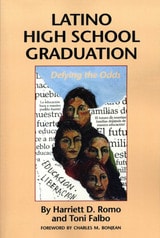
Latino High School Graduation
Defying the OddsBy Harriett D. Romo and Toni Falbo
University of Texas Press, 1996
While high school drop-out rates have steadily declined among white and African American students over the 1970s and 1980s a constant 35 percent of Latino students continued to quit school before graduation. In this pioneering work, Harriett Romo and Toni Falbo reveal how a group of at-risk Latino students defied the odds and earned a high school diploma.
Romo and Falbo tracked the progress of 100 students in Austin, Texas, from 1989 to 1993. Drawing on interviews with the students and their parents, school records, and fieldwork in the schools and communities, the authors identify both the obstacles that caused many students to drop out and the successful strategies that other students and their parents pursued to ensure high school graduation.
The authors conclude with seven far-reaching recommendations for changes in the public schools. Sure to provoke debate among all school constituencies, this book will be required reading for school administrators, teachers, parents, legislators, and community leaders.
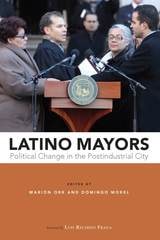
Latino Mayors
Political Change in the Postindustrial CityMarion Orr
Temple University Press, 2018
As recently as the early 1960s, Latinos were almost totally excluded from city politics. This makes the rise of Latino mayors in the past three decades a remarkable American story—one that explains ethnic succession, changing urban demography, and political contexts. The vibrant collection Latino Mayors features case studies of eleven Latino mayors in six American cities: San Antonio, Los Angeles, Denver, Hartford, Miami, and Providence.
The editors and contributors analyze Latino mayors for their governing styles and policies. They describe how candidates shaped race, class, and economic issues—particularly in deracialized campaigns. Latino Mayors also addresses coalition politics, political incorporation, and how community groups operate, as well as the challenges these pioneers have faced in office from political tensions and governance issues that sometimes even harm Latinos.
Ultimately, Latino Mayors charts the performances, successes, and failures of these elected officials to represent their constituents in a changing economic and urban environment.
Contributors include: Stefanie Chambers, Carlos E. Cuéllar, Emily M. Farris, Maria Ilcheva, Robert Preuhs, Heywood T. Sanders, Ellen Shiau, and the editors.
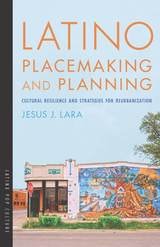
Latino Placemaking and Planning
Cultural Resilience and Strategies for ReurbanizationJesus J. Lara
University of Arizona Press, 2018
Latino Placemaking and Planning offers a pathway to define, analyze, and evaluate the role that placemaking can have with respect to Latino communities in the context of contemporary urban planning, policy, and design practices. Using strategically selected case studies, Jesus J. Lara examines how Latinos contribute to the phenomenon of urban revitalization through the (re)appropriation of physical space for their own use and the consequent transformation of what were previously economically downtrodden areas into vibrant commercial and residential centers.
The book examines the formation of urban cultures and reurbanization strategies from the perspective of Latino urbanism and is divided into four key sections, which address (1) emerging new urban geographies; (2) the power of place and neighborhood selection; (3) Latino urbanism case studies; and (4) lessons and recommendations for “reurbanizing” the city. Latino Placemaking and Planning illustrates the importance of placemaking for Latino communities and provides accessible strategies for planners, students, and activists to sustainable urban revitalization.
Laughing Saints and Righteous Heroes
Emotional Rhythms in Social Movement GroupsErika Summers Effler
University of Chicago Press, 2010
To explore these questions, Erika Summers Effler undertook three years of ethnographic fieldwork with two groups: anti–death penalty activists STOP and the Catholic Workers, who strive to alleviate poverty. In both communities, members must contend with problems that range from the broad to the intimately personal. Adverse political conditions, internal conflict, and fluctuations in financial resources create a backdrop of daily frustration—but watching an addict relapse or an inmate’s execution are much more devastating setbacks. Summers Effler finds that overcoming these obstacles, recovering from failure, and maintaining the integrity of the group require a constant process of emotional fine-tuning, and she demonstrates how activists do this through thoughtful analysis and a lucid rendering of their deeply affecting stories.

Law And Order And School
Daily Life In Educ Program For Juv DelinqShira Birnbaum
Temple University Press, 2001
As educational and justice agencies increasingly turn to private subcontractors to deliver an array of services and growing numbers of young people are channeled into non-traditional educational settings and correctional institutions, it is imperative that educators and the general public understand how these institutions work and what problems their students and staffs encounter. This on-the-ground examination of the education within the juvenile justice system will open your eyes to how we educate some of our neediest children.

Law Librarianship in the Age of AI
Ellyssa Kroski
American Library Association, 2019
Futurists predict that in the next ten years the profession of “lawyer” will splinter into job titles like “legal process analyst” or “legal knowledge engineer.” And some in the field are already taking a proactive approach — in fact, more than two dozen law schools have developed innovation centers to explore artificial intelligence (AI) and the law. In a competitive marketplace, both firms and individuals need to familiarize themselves with the dazzling array of new products and enhanced features capable of improving efficiency. Written by leading practitioners and visionaries like Robert Ambrogi, this groundbreaking survey of current practices and future trends offers an incisive examination of the evolving roles for law librarians. Readers will learn how AI technology is changing law school curricula, lawyer practice, marketing, and other key aspects of the field through coverage of such topics as
- the benefits of AI to law librarianship, including areas like legal research, contract review, compliance, and administration, and their associated risks;
- four professional ethics rules that apply to the use or (non-use) of AI;
- how lawyers and staff work side by side with AI, utilizing intelligence like RAVN ACE or FastCase to attack the drudgery of due diligence and document review;
- surprising machine-learning insights from tokenizing, stemming, and lemmatizing the text of Shakespeare’s plays;
- the potential for chatbots and new natural language processing products to improve access to justice; and
- ways to develop sought-after skills through new technology departments, practice management groups, and legal innovation labs.
Reading this collection will give you a firm grasp of the innovations, tools, benefits, and risks of AI in law librarianship.

Law and Justice in the 1950s
Case Studies From a Neglected DecadeEdited by Fiona Cownie and Rosemary Auchmuty
University of London Press, 2026
The 1950s were a decade of considerable legal development in England and Wales, despite often being regarded as very conservative in contrast to the more radical 1960s and 1970s. This collection illustrates the breadth of those developments, providing a sociolegal perspective on a range of topics across criminal, property, family, commercial, environmental, and public law, as well as legal education.
Drawing on case studies from the Great London Smog in 1952, the treatment of women in the Wolfenden Report, divorce law reform, the takeover battle for the Savoy Hotel in 1953, law on the radio, and more, this book throws new light on current debates about the relationship between law and issues of justice, inclusion, and equality in different spheres of activity.
Written for historians and legal specialists alike, Law and Justice in the 1950s explores the stories behind the laws in this neglected decade. In revealing the historical context, arguments, and controversies raised at the time and the different perspectives of the parties involved, it offers a greater understanding of why we have the law we have now and of these issues as they continue to be played out in the early twenty-first century.
Leadership Gets Personal
Finding Purpose, Transforming Lives, and Never Giving UpNan McRaven and Susan Engelking
University of Texas Press, 2026
How the University of Texas shaped twelve people who changed the world.
College is a time for personal growth. But any Biology 101 student knows that growth (personal or otherwise) requires the right environment. Collecting the revealing and deeply personal stories of twelve UT alumni who became leaders in their fields, Leadership Gets Personal honors the transformative impact of the Forty Acres on those who learn and grow there.
Matthew McConaughey, Academy Award-winning actor and #1 New York Times best-selling author, was destined for law school, but with the encouragement of his UT community, he realized he was a born storyteller. Brené Brown, author of the #1 New York Times bestseller Dare to Lead, struggled for years before finding her purpose in the Social Work Department. Dr. Amy Ho knew she wanted to change the American health care system, and at UT she gained the confidence and skills to make a difference. Astronaut Karen Nyberg was a shy kid; her UT graduate studies propelled her to space. And Darren Walker would go on to become president of the Ford Foundation, taking inspiration from the financial aid counselors who made sure he got the education he yearned for. For these and other outstanding alumni profiled here, the road was often rocky. Through perseverance, humility, and collaboration, they learned not only to exercise leadership but to live it.

Leading Change In Academic Libraries
Colleen Boff
Assoc of College & Research Libraries, 2020

Learning Centers for School Libraries
Maura Madigan
American Library Association, 2021
This book offers
- Step-by-step directions for both the educator and learner and all necessary handouts, including directions and worksheets. The reader can use the book to quickly and easily set up centers. Some centers require only photocopies and basic materials to get started.
- Guidance on how to create cross-curricular centers that target the AASL Standards and other content-area standards. A table is provided to enable educators to create centers that address specific standards or content areas. Centers for distance learning are also identified.
- Suggested modifications for both struggling and advanced learners, plus ideas for collaborating with other educators. These features broaden the potential audience beyond elementary school learners.
Learning by Doing in Markets, Firms, and Countries
Edited by Naomi R. Lamoreaux, Daniel M. G. Raff, and Peter Temin
University of Chicago Press, 1998
The first three essays in this volume explore techniques firms have used to both manage information to create valuable asymmetries and to otherwise suppress unwelcome competition. The next three focus on the ways in which firms have built special capabilities over time, capabilities that have been both sources of competitive advantage and resistance to new opportunities. The last two extend the notion of learning from the level of firms to that of nations. The collection as a whole builds on the previous two volumes to make the connection between information structure and product market outcomes in business history.
Learning from Case Studies in Chaplaincy
Towards Practice Based Evidence and ProfessionalismEdited by Renske Kruizinga, Jacques Körver, Martin Walton, and Martjin Stoutjesdijk
Eburon Academic Publishers, 2020
The recent body of case-study work on chaplaincy care synthesizes the inherent narrative nature of chaplaincy with the structured rigors of contemporary care research. This volume is composed of contributions from both practitioners and academic researchers, joining reflections on the challenges of case studies in chaplaincy care with specific results. Drawing on reflections on methodology and professionalization in chaplaincy, the volume hopes to contribute to answering the question of how and why chaplaincy works.
Learning from Libraries that Use WordPress
Content-Management System Best Practices and Case StudiesKyle M. Jones
American Library Association, 2012

Learning the Hard Way
Masculinity, Place, and the Gender Gap in EducationMorris, Edward
Rutgers University Press, 2012
An avalanche of recent newspapers, weekly newsmagazines, scholarly journals, and academic books has helped to spark a heated debate by publishing warnings of a “boy crisis” in which male students at all academic levels have begun falling behind their female peers. In Learning the Hard Way, Edward W. Morris explores and analyzes detailed ethnographic data on this purported gender gap between boys and girls in educational achievement at two low-income high schools—one rural and predominantly white, the other urban and mostly African American. Crucial questions arose from his study of gender at these two schools. Why did boys tend to show less interest in and more defiance toward school? Why did girls significantly outperform boys at both schools? Why did people at the schools still describe boys as especially “smart”?
Morris examines these questions and, in the process, illuminates connections of gender to race, class, and place. This book is not simply about the educational troubles of boys, but the troubled and complex experience of gender in school. It reveals how particular race, class, and geographical experiences shape masculinity and femininity in ways that affect academic performance. His findings add a new perspective to the “gender gap” in achievement.

Learning to Leave
The Irony of Schooling in a Coastal CommunityMichael Corbett
West Virginia University Press, 2020
Least Cost Analysis of Social Landscapes
Archaeological Case StudiesDevin A. White
University of Utah Press, 2012
A growing number of archaeologists are applying Geographic Information Science (GIS) technologies to their research problems and questions. Advances in GIS and its use across disciplines allows for collaboration and enables archaeologists to ask ever more sophisticated questions and develop increasingly elaborate models on numerous aspects of past human behavior. Least cost analysis (LCA) is one such avenue of inquiry. While least cost studies are not new to the social sciences in general, LCA is relatively new to archaeology; until now, there has been no systematic exploration of its use within the field.
This edited volume presents a series of case studies illustrating the intersection of archaeology and LCA modeling at the practical, methodological, and theoretical levels. Designed to be a guidebook for archaeologists interested in using LCA in their own research, it presents a wide cross-section of practical examples for both novices and experts. The contributors to the volume showcase the richness and diversity of LCA’s application to archaeological questions, demonstrate that even simple applications can be used to explore sophisticated research questions, and highlight the challenges that come with injecting geospatial technologies into the archaeological research process.
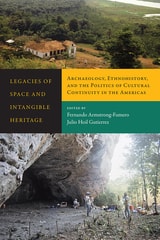
Legacies of Space and Intangible Heritage
Archaeology, Ethnohistory, and the Politics of Cultural Continuity in the AmericasFernando Armstrong-Fumero
University Press of Colorado, 2017
Legacies of Space and Intangible Heritage is an interdisciplinary exploration of the intersections between the study and management of physical sites and the reproduction of intangible cultural legacies. The volume provides nine case studies that explore different ways in which place is mediated by social, political, and ecological processes that have deep historical roots and that continue to affect the politics of heritage management.
Spaces of human habitation are both historical records of the past and key elements in reproducing the knowledge and values that define lives in the present. Practices, knowledge, and skills that communities recognize as part of their culture—and that a range of legal statutes define as protected intangible heritages—are threatened by increased migration, the displacement of indigenous peoples, and limits on access to culturally or historically significant sites. This volume addresses how different physical environments contribute to the reproduction of cultural forms even in the wake of these processes of displacement and change. Case studies from North and South America reveal a pattern of abandonment and reestablishment of settlements and show how collective memory drives people back to culturally meaningful sites.
This tendency for communities to return to the sites that shaped their collective histories, along with the growing importance granted to intangible heritage, challenges archaeologists and other heritage workers to find new ways of incorporating the cultural legacies that link societies to place into the work of research and stewardship. By examining the politics of cultural continuity through the lenses of archaeology and ethnohistory, Legacies of Space and Intangible Heritage demonstrates this complex relationship between a people’s heritage and the landscape that affects the making of "place."
Contributors: Rani Alexander, Hannah Becker, Minette Church, Bonnie Clark, Chip Colwell, Winifred Creamer, Emiliana Cruz, T. J. Ferguson, Julio Hoil Gutierrez, Jonathan Haas, Saul Hedquist, Maren Hopkins, Stuart B. Koyiyumptewa, Christine Kray, Henry Marcelo Castillo, Anna Roosevelt, Jason Yaeger, Keiko Yoneda

Legacy of a False Promise
A Daughter's ReckoningMargaret Fuchs Singer
University of Alabama Press, 2009
Margaret Fuchs was thirteen in June 1955 when she learned that her parents had been Communists while working for the U.S. government in the 1930s and '40s. This book chronicles the years during which her parents were exposed and her father was subpoenaed before the House Un-American Activities Committee. Eventually he named names, and subsequently lost his job as a law professor at American University, and was blacklisted from teaching ever again. Legacy of a False Promise also details the author's quest as an adult to learn whether or not her parents ever spied for the Soviet Union.
Based on eight years of research using family records, FBI files, American University archives, personal interviews, and the recently declassified Venona cables, Legacy of a False Promise offers unique insights into the McCarthy Era. Most "red-diaper babies" who have written on the subject had parents who refused to give in to HUAC's demands. Singer's work instead recounts the shame and series of betrayals that her father's decision to name names brought to her family. Furthermore, it explores the campaign of the liberal anti-Communist movement to publicize its political position while defending a fired ex-Communist professor, the nature and activities of secret Communist underground cells, and the motivation of New Deal government workers who spied for the Soviets.
This is a poignant meditation on family secrets, father-daughter relationships in times of crisis, teenage loneliness in the midst of trauma, and the effects of parents' actions on the lives of their children. It also serves as a timely reminder of the dangers of sacrificing civil liberties in the name of national security.
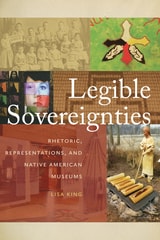
Legible Sovereignties
Rhetoric, Representations, and Native American MuseumsLisa King
Oregon State University Press, 2017
King tracks the exhibit spaces at the Saginaw Chippewa Indian Tribe of Michigan’s Ziibiwing Center, Haskell Indian Nation University’s Cultural Center and Museum, and the Smithsonian’s Washington, DC branch of the National Museum of the American Indian over their first ten years, from their opening until the summer of 2014. Far from formulaic, each site has developed its own rhetorical approaches to reaching its public, revealing multiple challenges and successes in making Native self-representation legible and accessible.
Through documentation and analysis of the inaugural exhibits and recent installations, interviews with curators and staff, and investigation into audience reception of these spaces, Legible Sovereignties argues that there can be no single blanket solution for effective Indigenous self-representation. Instead, Legible Sovereignties demonstrates the nuanced ways in which each site must balance its rhetorical goals and its audience's needs, as well as its material constraints and opportunities, in order to reach its visitors and have Indigenous voices heard.

Leopold and Loeb
THE CRIME OF THE CENTURYHal Higdon
University of Illinois Press, 1975
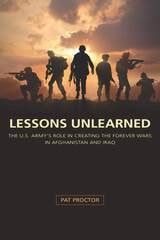
Lessons Unlearned
The U.S. Army's Role in Creating the Forever Wars in Afghanistan and IraqPat Proctor
University of Missouri Press, 2020
In this blunt critique of the senior leadership of the U.S. Army, Proctor contends that after the fall of the Soviet Union, the U.S. Army stubbornly refused to reshape itself in response to the new strategic reality, a decision that saw it struggle through one low-intensity conflict after another—some inconclusive, some tragic—in the 1980s and 1990s, and leaving it largely unprepared when it found itself engaged—seemingly forever—in wars in Afghanistan and Iraq. The first book-length study to connect the failures of these wars to America’s disastrous performance in the war on terror, Proctor’s work serves as an attempt to convince Army leaders to avoid repeating the same mistakes.
Liberty and the Search for Identity
Ivan Zoltan Denes
Central European University Press, 2006
Librarians as Community Partners
An Outreach HandbookCarol Smallwood
American Library Association, 2010
Libraries Designed for Kids
Nolan Lushington
American Library Association, 2008

Libraries amid Protest
Books, Organizing, and Global ActivismSherrin Frances
University of Massachusetts Press, 2020
Libraries amid Protest unpacks how these protest libraries—labor-intensive, temporary installations in parks and city squares, poorly protected from the weather, at odds with security forces—continue to arise. In telling the stories of these surprising and inspiring spaces through interviews and other research, Sherrin Frances confronts the complex history of American public libraries. She argues that protest libraries function as the spaces of opportunity and resistance promised, but not delivered, by American public libraries.

Libraries that Learn
Keys to Managing Organizational KnowledgeJennifer A. Bartlett
American Library Association, 2019
Library Consortia
Models for Collaboration and SustainabilityValerie Horton
American Library Association, 2014
Library Improvement through Data Analytics
Lesley S. J. Farmer
American Library Association, 2016
Library Next
Seven Action Steps for ReinventionCatherine Murray-Rust
American Library Association, 2021
After a career of more than 40 years, Murray-Rust, former Dean of Libraries at Georgia Tech and a self-proclaimed library disrupter, sees our profession’s central challenge as simply this: how to turn the library outward in order to make a difference in the lives of individuals and the community. In this book she encourages readers to look an uncertain library future square in the eye. She shares stories from her transformational years at Georgia Tech Libraries which present both inspiration and practical advice on how to stand up for values while changing the ways we act upon them. Organized around seven action steps for change, this book offers takeaways and activities you can adapt to your work style and organizational culture. You will learn from such stories and lessons as
- the three different kinds of information you need for measuring impact;
- using new frameworks, outside fragmented, risk-adverse library structures, to get the work done;
- the limitations of trying to manage your way through major cultural change;
- embedding in the community to develop visions and strategies for improvement;
- painful and challenging times that set Murray-Rust on a path of self-learning;
- how an uncomfortable assignment led to a sought-after seat at the table for a university-wide capital construction project;
- the bold promise that got the library onto the high-priority list for renovation;
- visiting a Toyota plant to learn how to encourage employee engagement and creativity; and
- learning to listen with the "turning outward" philosophy of Harwood Institute.
Library Service And Learning
Empowering Students, InspiringTheresa McDevitt
American Library Association, 2018

Limits of the Numerical
The Abuses and Uses of QuantificationEdited by Christopher Newfield, Anna Alexandrova, and Stephen John
University of Chicago Press, 2022
Numbers are both controlling and fragile. They drive public policy, figuring into everything from college rankings to vaccine efficacy rates. At the same time, they are frequent objects of obfuscation, manipulation, or outright denial. This timely collection by a diverse group of humanists and social scientists challenges undue reverence or skepticism toward quantification and offers new ideas about how to harmonize quantitative with qualitative forms of knowledge.
Limits of the Numerical focuses on quantification in several contexts: climate change; university teaching and research; and health, medicine, and well-being more broadly. This volume shows the many ways that qualitative and quantitative approaches can productively interact—how the limits of the numerical can be overcome through equitable partnerships with historical, institutional, and philosophical analysis. The authors show that we can use numbers to hold the powerful to account, but only when those numbers are themselves democratically accountable.
Lincoln's Legacy
Ethics and PoliticsEdited by Phillip Shaw Paludan
University of Illinois Press, 2007
The four new essays in Lincoln's Legacy describe major ethical problems that the sixteenth president navigated what can be learned from how he did so. The distinguished and award-winning Lincoln scholars William Miller, Mark E. Neely Jr., Phillip Shaw Paludan, and Mark Summers describe Lincoln’s attitudes and actions during encounters with questions of politics, law, constitutionalism, patronage, and democracy. The remarkably focused essays include an assessment of Lincoln's virtues in the presidency, the first study on Lincoln and patronage in more than a decade, a challenge to the cliché of Lincoln the democrat, and a study of habeas corpus, Lincoln, and state courts. On the eve of the bicentennial celebration of Lincoln’s birth, Lincoln’s Legacy highlights his enduring importance in contemporary conversations about law, politics, and democracy.
Lineages of Despotism and Development
British Colonialism and State PowerMatthew Lange
University of Chicago Press, 2009
Traditionally, social scientists have assumed that past imperialism hinders the future development prospects of colonized nations. Challenging this widespread belief, Matthew Lange argues in Lineages of Despotism and Development that countries once under direct British imperial control have developed more successfully than those that were ruled indirectly.
Combining statistical analysis with in-depth case studies of former British colonies, this volume argues that direct rule promoted cogent and coherent states with high levels of bureaucratization and inclusiveness, which contributed to implementing development policy during late colonialism and independence. On the other hand, Lange finds that indirect British rule created patrimonial, weak states that preyed on their own populations. Firmly grounded in the tradition of comparative-historical analysis while offering fresh insight into the colonial roots of uneven development, Lineages of Despotism and Development will interest economists, sociologists, and political scientists alike.
Linked Data for Cultural Heritage
Ed Jones
American Library Association, 2016
Linked Labor Histories
New England, Colombia, and the Making of a Global Working ClassAviva Chomsky
Duke University Press, 2008
Chomsky examines labor and management at two early-twentieth-century Massachusetts factories: one that transformed the global textile industry by exporting looms around the world, and another that was the site of a model program of labor-management collaboration in the 1920s. She follows the path of the textile industry from New England, first to the U.S. South, and then to Puerto Rico, Japan, Mexico, Central America, the Caribbean, and Colombia. She considers how towns in Rhode Island and Massachusetts began to import Colombian workers as they struggled to keep their remaining textile factories going. Most of the workers eventually landed in service jobs: cleaning houses, caring for elders, washing dishes.
Focusing on Colombia between the 1960s and the present, Chomsky looks at the Urabá banana export region, where violence against organized labor has been particularly acute, and, through a discussion of the AFL-CIO’s activities in Colombia, she explores the thorny question of U.S. union involvement in foreign policy. In the 1980s, two U.S. coal mining companies began to shift their operations to Colombia, where they opened two of the largest open-pit coal mines in the world. Chomsky assesses how different groups, especially labor unions in both countries, were affected. Linked Labor Histories suggests that economic integration among regions often exacerbates regional inequalities rather than ameliorating them.
Literacy & Libraries
Learning from Case StudiesAmerican Library Association, 2001

Little Saigons
Staying Vietnamese in AmericaKarin Aguilar–San Juan
University of Minnesota Press, 2009
Karin Aguilar-San Juan examines the contradictions of Vietnamese American community and identity in two emblematic yet different locales: Little Saigon in suburban Orange County, California (widely described as the capital of Vietnamese America) and the urban "Vietnamese town" of Fields Corner in Boston, Massachusetts. Their distinctive qualities challenge assumptions about identity and space, growth amid globalization, and processes of Americanization.
With a comparative and race-cognizant approach, Aguilar-San Juan shows how places like Little Saigon and Fields Corner are sites for the simultaneous preservation and redefinition of Vietnamese identity. Intervening in debates about race, ethnicity, multiculturalism, and suburbanization as a form of assimilation, this work elaborates on the significance of place as an integral element of community building and its role in defining Vietnamese American-ness.
Staying Vietnamese, according to Aguilar-San Juan, is not about replicating life in Viet Nam. Rather, it involves moving toward a state of equilibrium that, though always in flux, allows refugees, immigrants, and their U.S.-born offspring to recalibrate their sense of self in order to become Vietnamese anew in places far from their presumed geographic home.

Living Spirit, Living Practice
Poetics, Politics, EpistemologyRuth Frankenberg
Duke University Press, 2004
Christians, Jews, Muslims, Buddhists, Hindus, and other practitioners come together here, speaking in terms both familiar and surprising. Whether discussing an Episcopalian deacon, a former Zen Buddhist who is now a rabbi, a Chicano monastic, an immigrant Muslim woman, a Japanese American Tibetan Buddhist, or a gay African American practicing in the Hindu tradition, Frankenberg illuminates the most intimate, local, and singular aspects of individual lives while situating them within the broad, dynamic canvas of the U.S. religious landscape.
Living in a Lean-To
Philippine Negrito Foragers in TransitionNavin K. Rai with a foreword by Karl L. Hutterer
University of Michigan Press, 1990
Living on the Edge in Suburbia
From Welfare to WorkfareTerese Lawinski
Vanderbilt University Press, 2010
In contrast to accounts of inner-city poor families, these suburban parents' stories reveal a broad array of precipitating circumstances leading to their downward economic slide and to welfare. They also provide insight into the bureaucratic machinations, rigid rules and mandates, disciplining techniques, and catch-22s that create an insecure environment for many families today. Many of these stories show that the need for welfare over time extends well beyond the federal government's five-year lifetime limit on welfare. Policies emphasizing work first also restrict access to education and further hinder parents' ability to gain a toehold in the economy.
In this tale of people and policies, the author shows how the interests of governments are often at variance with those of vulnerable families, and how some government actions place more pressure on lives replete with stress.

Living the Drama
Community, Conflict, and Culture among Inner-City BoysDavid J. Harding
University of Chicago Press, 2010
David J. Harding studied sixty adolescent boys growing up in two very poor areas and one working-class area. In the first two, violence and neighborhood identification are inextricably linked as rivalries divide the city into spaces safe, neutral, or dangerous. Consequently, Harding discovers, social relationships are determined by residential space. Older boys who can navigate the dangers of the streets serve as role models, and friendships between peers grow out of mutual protection. The impact of community goes beyond the realm of same-sex bonding, Harding reveals, affecting the boys’ experiences in school and with the opposite sex. A unique glimpse into the world of urban adolescent boys, Living the Drama paints a detailed, insightful portrait of life in the inner city.
Lobbying the Autocrat
The Dynamics of Policy Advocacy in NondemocraciesMax Grömping and Jessica C. Teets, Editors
University of Michigan Press, 2023
Although authoritarian countries often repress independent citizen activity, lobbying by civil society organizations is actually a widespread phenomenon. Using case studies such as China, Russia, Belarus, Cambodia, Malaysia, Montenegro, Turkey, and Zimbabwe, Lobbying the Autocrat shows that citizen advocacy organizations carve out niches in the authoritarian policy process, even influencing policy outcomes. The cases cover a range of autocratic regime types (one-party, multi-party, personalist) on different continents, and encompass different systems of government to explore citizen advocacy ranging from issues such as social welfare, women’s rights, election reform, environmental protection, and land rights. They show how civil society has developed adaptive capacities to the changing levels of political repression and built resilience through ‘tactful contention’ strategies. Thus, within the bounds set by the authoritarian regimes, adaptive lobbying may still bring about localized responsiveness and representation.
However, the challenging conditions of authoritarian advocacy systems identified throughout this volume present challenges for both advocates and autocrats alike. The former are pushed by an environment of constant threat and uncertainty into a precarious dance with the dictator: just the right amount of acquiescence and assertiveness, private persuasion and public pressure, and the flexibility to change quickly to suit different situations. An adaptive lobbyist survives and may even thrive in such conditions, while others often face dire consequences. For the autocrat on the other hand, the more they stifle the associational sphere in an effort to prevent mass mobilization, the less they will reap the informational benefits associated with it. This volume synthesizes the findings of the comparative cases to build a framework for understanding how civil society effectively lobbies inside authoritarian countries.
Local Justice in America
Jon Elster
Russell Sage Foundation, 1995
Local Officials and the Struggle to Transform Cities
A View from Post-Apartheid South AfricaEdited by Claire Bénit-Gbaffou
University College London, 2024
Why are even progressive local authorities with the will to improve seldom able to change cities? Why does it seem almost impossible to redress spatial inequalities, deliver and maintain basic services, elevate impoverished areas, and protect marginalized communities? Why do municipalities in the Global South refuse to work with prevailing social informalities, and resort instead to interventions that are known to displace and aggravate the very issues they aim to address?
Local Officials and the Struggle to Transform Cities analyzes these challenges in South African cities, where the brief post-apartheid moment opened a window for progressive city government and made research into state practices both possible and necessary. The book interrogates city officials’ practices through a comparative gaze into other ‘progressive moments’ in large cities in Brazil, the United States, and India. It considers the instruments that these officials invent to implement urban policies, the agency these officials develop, and the constraints they navigate in governing unequal cities. Claire Bénit-Gbaffou captures in this book actual officials’ practices through first-hand experience, state ethnographies, and engaged research. This reveals day-to-day practices that question generalized explanations of state failure in complex urban societies as essential malevolence, contextual weakness, corruption, and inefficiency.
This book opens the black box of the workings of the state, with the hope of opening paths for the construction of progressive policies in contemporary cities.