Results by title
883 books match the query 'Historical' and 41 start with l
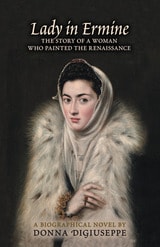
Lady in Ermine
The Story of a Woman Who Painted the Renaissance. A Biographical NovelDonna DiGiuseppe
Arizona Center for Medieval and Renaissance Studies, 2019
Lady in Ermine: The Story of a Woman Who Painted the Renaissance reveals the discovery of an historic figure who embodies the struggle of women throughout the ages while immersing the reader in the sixteenth century world of the Renaissance figures she paints.
As a girl in Lombardy, Sofonisba Anguissola trains to paint with mannerist masters, and though society frowns upon women having such ambition, Sofonisba’s father unwaveringly encourages her. A royal tour by Prince Philip of Spain inspires her lifelong dream: to perfect the king’s portrait and show his truth on canvas, the highest calling for a Renaissance portraitist. Her drive to vindicate her loving father, a bastard of nobility, propels her. Politics of the Spanish empire brings Sofonisba to the heart of the royal court in Madrid. She aspires to achieve her goal while others at court work to undermine her as a female artist. Tragedy unfolds in the royal household, but in the process, Sofonisba finds her opportunity to paint the King of Spain, honoring her family name with her success. In life after court, Sofonisba navigates two marriages, royal appointments, love, hardship, and bankruptcy, while leaving a legacy of hundreds of paintings and influencing generations of artists from Anthony van Dyck to Peter Paul Rubens. This is her story.
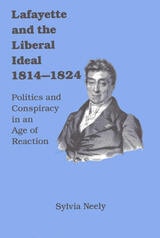
Lafayette and the Liberal Ideal 1814-1824
Politics and Conspiracy in an Age of ReactionSylvia Neely
Southern Illinois University Press, 1991
Sylvia Neely provides both the first scholarly study of Lafayette’s life after the French Revolution and a detailed analysis of French politics during the early Restoration.
Lafayette, advocating a liberalism based on the American example, used both legal and illegal means to overturn a conservative government. The personification of liberalism for many of his contemporaries, he and his friends Benjamin Constant, Voyer d’Argenson, and Charles Goyet saw themselves as fighters in an international struggle that set liberalism against the forces of reaction and obscurantism. Although he ultimately failed, Lafayette was convinced that the liberal ideals derived from the Enlightenment and from his personal mentor, George Washington, would prevail.
Neely makes Lafayette’s actions clear by considering seriously the principles that guided his life and by describing the political climate of the early nineteenth century. She discloses previously overlooked features of the revolutions of the 1820s which account for the divisions among the revolutionary groups. She also examines relationships between Lafayette and the prominent writers and thinkers of the period, among them Augustin Thierry, Jeremy Bentham, Lady Morgan, and Frances Wright.
Lakanal the Regicide
John Charles Dawson
University of Alabama Press, 1948
Revolution, Republic, and Reform: The Life of a French Enlightenment Statesman in an Age of Upheaval.
After being comparatively neglected for several generations, Joseph Lakanal received many posthumous honors. These memorials of esteem were the tribute of the men of the Third French Republic to an outstanding character of the First Republic, established by the National Convention in 1792.
In numerous towns and cities of France streets and boulevards were named for Lakanal, among them Paris, Tours, Toulouse, and Montpellier. Elementary schools received his name at Perigueux, Cette, Beziers. Secondary schools were named in his honor, such as the Lycee Lakanal at Paris and the College Lakanal at Beziers. At least two monuments were erected to his memory, the more imposing of which was a life-sized statue in bronze at Foix in his native Ariege. The ancient adage that a prophet is not without honor save in his own country was not true of Lakanal.
Lakanal belonged to a group of thinkers at the end of the eighteenth century known as Ideologists, a derogatory term applied to them by First Consul Bonaparte. When, during the period of the Consulate, Bonaparte had signed a Concordat with the Pope whereby Catholicism was restored to France, and when in 1802 he had sought to put into force the terms of the Concordat, he found a stumbling-block to his plans in the membership of the Class of Moral and Political Sciences of the lnstitut de France. In this group were to be found the most influential free-thinkers of the day: Lakanal, Garat, Cabanis, Volney, Ginguene, Mercier, Naigeon, Destutt de Tracy and others who had been consistently hostile to the Church, and who had become hostile to the ambition of Bonaparte.
On the political side, Lakanal was an austere democrat, and remained one all his life. Had he been willing to compromise, he would undoubtedly have gone far under Napoleon. His career is quite in contrast with that of Talleyrand, whose chameleon-like qualities enabled him to occupy high place in the Revolution, the Consulate, the Empire, the Restoration, and the more liberal government of Louis Philippe.
In his profound belief in democracy and public education, and in the wide variety of his knowledge and interest in the various sciences, Lakanal is to be compared with Thomas Jefferson. The two men were of the same school of thought and possessed much in, common. In his passion for public education Lakanal may also be compared to Horace Mann.

Lake Song
A Novel in StoriesLesley Pratt Bannatyne
The Ohio State University Press, 2025
Selected by Deesha Philyaw as winner of the AWP Grace Paley Prize in Short Fiction
Shortlisted, 2026 Massachusetts Book Award, Fiction Category
The linked stories of Lake Song, set in the fictional town of Kinder Falls in New York’s Finger Lakes region, span decades to plumb the complexities, violence, and compassion of small-town life as the twentieth century hurtles forward. Against a backdrop of historical events—bootlegging, Klan attacks, gold smuggling, the Albany Ketchup Murders, the 1965 Northeast blackout—a generations-long mystery unwinds. In 1906 Mavis Staunch drowns in Okisee Lake days after she refuses to sell her land to a trio of brothers. The same night, one of the brothers, Angus Epps, doesn’t come home. Few suspect the two events are connected, and no one imagines the role that a ten-year-old boy, a canoe, and a pack of coyotes play in the tragedies. Spiritualists, grifters, sugar makers, arsonists, seekers, and saleswomen wind through each other’s lives and across decades to add layers of resonance to each captivating story. The mercurial lake that unites the people of Kinder Falls sustains as much as it haunts, both witness and diary.

Land Beyond
A MemoirJack Ives
University of Alaska Press, 2010
Geographer Jack Ives moved to Canada in 1954, and soon after he played an instrumental role in the establishment of the McGill Sub-Arctic Research Laboratory in central Labrador-Ungava. This fascinating account of his fifty-plus years living and working in the arctic is simultaneously a light-hearted, winning memoir and a call to action on the issues of environmental awareness and conservation that are inextricably intertwined with life in the north. Mixing personal impressions of key figures of the postwar scientific boom with the intellectual drama of field research, The Land Beyond is a memorable depiction of a life in science.
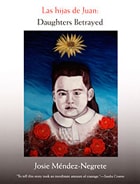
Las hijas de Juan
Daughters BetrayedJosie Méndez-Negrete
Duke University Press, 2006
Méndez-Negrete was born in Mexico, in the state of Zacatecas. She recalls a joyous childhood growing up in the midst of Tabasco, a vibrant town filled with extended family. Her father, though, had dreams of acquiring wealth in el norte. He worked sun-up to sun-down in the fields of south Texas. Returning home to Mexico, his pockets full of dollars, he spent evenings drinking and womanizing.
When Méndez-Negrete was eleven, her father moved the family to the United States, where they eventually settled in California’s Santa Clara Valley. There her father began molesting his daughters, viciously beating them and their mother. Within the impoverished immigrant family, the abuse continued for years, until a family friend brought it to the attention of child welfare authorities. Méndez-Negrete’s father was tried, convicted, and imprisoned.
Las hijas de Juan is told chronologically, from the time Méndez-Negrete was a child until she was a young adult trying, along with the rest of her family, to come to terms with her father’s brutal legacy. It is a harrowing story of abuse and shame compounded by cultural and linguistic isolation and a system of patriarchy that devalues the experiences of women and girls. At the same time, Las hijas de Juan is an inspiring tale, filled with strong women and hard-won solace found in traditional Mexican cooking, songs, and storytelling.
Last Stands
StoriesStories by Gordon Weaver
University of Missouri Press, 2004

Laughing Stock
Thomas S. Stribling
University of Alabama Press, 2003
In the intense blossoming of American literary talent between the World Wars, T.S. Stribling took his place with Faulkner, Hemingway, Dos Passos, and other members of his generation with the Pulitzer Prize in 1933 for his bestselling novel The Store. In Laughing Stock, Stribling’s autobiography, the gifted writer reflects with humor, irony, and passion on his trajectory from a remote southern town to the literary heights of Paris and New York.
Laughing Whitefish
Robert Traver
Michigan State University Press, 2011

Lay Down with Dogs
Hugh Otis Bynum and the Scottsboro First Monday BombingByron Woodfin
University of Alabama Press, 2002
The gripping story of the attempted murder of Scottsboro attorney and state legislator Loy Campbell
“As with any good book about a great event, this one has a little of everything—suspense, humor, pathos, melodrama.” —Journal of Southern History
On a quiet December morning in 1972, Scottsboro attorney and former state legislator Loy Campbell started his car and detonated a bomb hidden beneath the hood. The explosion tore through the vehicle, cost him both legs, and nearly killed him, shattering the calm of the northeast Alabama town. Lay Down with Dogs reconstructs the attempted assassination of Campbell and subsequent trial. As Alabama’s young and ambitious attorney general, Bill Baxley took personal charge of the case. He led the state’s investigation and prosecution against those accused of planning and financing the assassination attempt, most notably Hugh Otis Bynum Jr., one of the most powerful local figures in Scottsboro. More than a crime story, it is a gripping account of violence, power, and survival at a volatile moment in modern Southern history.
Drawing on court records, investigative files, contemporary journalism, and firsthand testimony, Byron Woodfin offers the most comprehensive account of the bombing and its aftermath. With the skill of an experienced historian and storyteller, the narrative follows both the painstaking investigation and the dramatic prosecution that ultimately exposed the forces behind the attack. The author’s deep familiarity with Alabama history and legal culture lends authority and insight, while a clear, compelling prose style keeps the story moving with the momentum of a true‑crime classic.
Lay Down with Dogs will appeal to readers of Southern history, legal history, and true crime, as well as anyone interested in justice, civic life, and unsolved tensions in twentieth‑century America. It is ideal for scholars, students, and general readers seeking a powerful, unsettling, and unforgettable story rooted in real events.
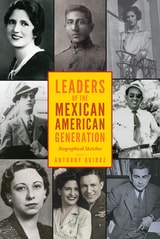
Leaders of the Mexican American Generation
Biographical EssaysAnthony Quiroz
University Press of Colorado, 2016
Leaders of the Mexican American Generation explores the lives of a wide range of influential members of the US Mexican American community between 1920 and 1965 who paved the way for major changes in their social, political, and economic status within the United States.
Including feminist Alice Dickerson Montemayor, to San Antonio attorney Gus García, and labor activist and scholar Ernesto Galarza, the subjects of these biographies include some of the most prominent idealists and actors of the time. Whether debating in a court of law, writing for a major newspaper, producing reports for governmental agencies, organizing workers, holding public office, or otherwise shaping space for the Mexican American identity in the United States, these subjects embody the core values and diversity of their generation.
More than a chronicle of personalities who left their mark on Mexican American history, Leaders of the Mexican American Generation cements these individuals as major players in the history of activism and civil rights in the United States. It is a rich collection of historical biographies that will enlighten and enliven our understanding of Mexican American history.
Leaves from the Note-Book of a New York Detective
The Private Record of J.B.John Babbington Williams
Westholme Publishing, 2008
A welcome link to the chain connecting the early masters of detective fiction.... The collection offers a window into the early days of American detective fiction and the power of deductive thinking."—Sarah Weinman, Los Angeles Times
"This story collection featuring New York City private detective James Brampton will intrigue Sherlock Holmes fans, given the number of eerie parallels between the two characters."—Publishers Weekly
"It is the observation of small things that makes a good detective, for it is often the most trivial circumstance which supplies the first link in the chain." —James Brampton
Twenty years before the Sherlock Holmes mysteries were written, a fictional New York private investigator was celebrated for his ability to solve crimes based on the principles of observation and deductive reasoning that later became Holmes' hallmark. Originally published in 1864 and never before reprinted, Leaves from the Note-Book of a New York Detective features twenty-nine cases of James Brampton, the first American detective hero to appear in fiction. The book opens with a chance meeting between a medical doctor, John Babbington Williams (the actual author of the stories), and detective James Brampton. They become acquaintances, and after Brampton has retired after twenty years of service, he sends his case notebooks to Dr. Williams to be edited and published. The result is a stunning collection of intriguing mysteries, including "The Defrauded Heir," "The Phantom Face," "A Satanic Compact," and "The Walker Street Tragedy." In case after case, using his power of observation, detective Brampton is able prove the innocence of the wrongly accused. Never before reprinted, this first modern edition of this important work now takes its place once more in the development of detective fiction between Edgar Allan Poe and Arthur Conan Doyle, the casebook of the original American detective hero.
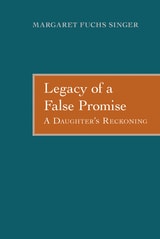
Legacy of a False Promise
A Daughter's ReckoningMargaret Fuchs Singer
University of Alabama Press, 2009
Margaret Fuchs was thirteen in June 1955 when she learned that her parents had been Communists while working for the U.S. government in the 1930s and '40s. This book chronicles the years during which her parents were exposed and her father was subpoenaed before the House Un-American Activities Committee. Eventually he named names, and subsequently lost his job as a law professor at American University, and was blacklisted from teaching ever again. Legacy of a False Promise also details the author's quest as an adult to learn whether or not her parents ever spied for the Soviet Union.
Based on eight years of research using family records, FBI files, American University archives, personal interviews, and the recently declassified Venona cables, Legacy of a False Promise offers unique insights into the McCarthy Era. Most "red-diaper babies" who have written on the subject had parents who refused to give in to HUAC's demands. Singer's work instead recounts the shame and series of betrayals that her father's decision to name names brought to her family. Furthermore, it explores the campaign of the liberal anti-Communist movement to publicize its political position while defending a fired ex-Communist professor, the nature and activities of secret Communist underground cells, and the motivation of New Deal government workers who spied for the Soviets.
This is a poignant meditation on family secrets, father-daughter relationships in times of crisis, teenage loneliness in the midst of trauma, and the effects of parents' actions on the lives of their children. It also serves as a timely reminder of the dangers of sacrificing civil liberties in the name of national security.

Legal Rights
Historical and Philosophical PerspectivesAustin Sarat and Thomas R. Kearns, Editors
University of Michigan Press, 1997
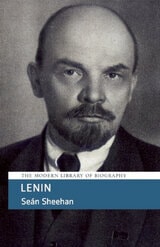
Lenin
Seán Sheehan
Haus Publishing, 2003

Leon and Louise
Alex Capus
Haus Publishing, 2011

Leopold and Loeb
THE CRIME OF THE CENTURYHal Higdon
University of Illinois Press, 1975

Les Paul
Guitar WizardBob Jacobson
Wisconsin Historical Society Press, 2012
This addition to the Badger Biographies series for young readers tells the story of Les Paul, the legendary “Wizard of Waukesha,” who pioneered the solid body electric guitar, multi-track recording, and many other musical inventions. Fascinated since boyhood with musical technology, the young Les moved from experimenting with his mother’s player piano and phonograph to developing his own amplifier and tinkering with crystal radios.
After leaving his hometown of Waukesha at age 17 to pursue a musical career—a decision his mother supported—the budding jazz guitarist lived in Chicago, New York, and Los Angeles, in each city finding a new audience and new musical partnerships. A regular on the radio, Les became a fixture in early television, appearing on the Ed Sullivan Show, and later, a show of his own with partner Mary Ford. Along the way, he overcame numerous physical challenges, including recovery from electric shock and rehabilitation after a horrific car accident—both of which threatened his musical career. And yet, Les Paul pushed musical technology forward more than any other musician of the twentieth century. This Grammy Hall of Fame inductee died in 2009, making Les Paul: Guitar Wizard a timely addition to the series. This lively story is rounded out with sidebars on radio call letters and how an electric guitar works, a full discography, and over 60 historic photographs.
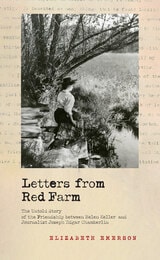
Letters from Red Farm
The Untold Story of the Friendship between Helen Keller and Journalist Joseph Edgar ChamberlinElizabeth Emerson
University of Massachusetts Press, 2021
Informed by previously unpublished letters and extensive research, Letters from Red Farm explores for the first time Keller's deep and enduring friendship with the man who became her literary mentor and friend for over forty years. Written by Chamberlin's great-great granddaughter, this engaging story imparts new insights into Keller's life and personality, introduces the irresistible Chamberlin to a modern public, and follows Keller's burgeoning interest in social activism, as she took up the causes of disability rights, women's issues, and pacifism.
Letters from the Southwest
Charles Lummis; Edited by James W. Byrkit
University of Arizona Press, 0
In the fall of 1884, journalist Charles Lummis set out on foot from Ohio to California on assignment for the Los Angeles Times. The reports he mailed ahead to that newspaper were later refashioned for the book A Tramp Across the Continent, a work that helped to establish Lummis as the most active promoter of Southwestern culture who ever lived.
Lummis wrote another set of letters during his journey, however, which he sent back to Ohio for publication by the Chillicothe Leader. Although these letters contain basically the same narrative as those sent to Los Angeles and later found in A Tramp, the Ohio letters more closely reflect the author’s thoughts and observations while on the journey. In fact, a comparison of the two drafts indicates that Lummis spent considerable effort removing spontaneous details from the Ohio letters in favor or a more commercial, self-promoting, and politic reporting for the California paper.
The twenty-four Ohio letters, assembled here by James W. Byrkit, offer a far more candid look at the Southwest than Lummis was later to bring to print, as well as greater insight into the author’s own personality. Byrkit’s introductory essay provides the background for Lummis’s career, compares the three bodies of work relating to the trek, and offers an account of Lummis’s transformation from chronicler to promoter.
Lewis and Clark in Missouri
Ann Rogers
University of Missouri Press, 2002
Life Under the Palms
The Sublime World of the Anti-colonialist Jacob HaafnerPaul van der Velde
National University of Singapore Press, 2019
With the help of generous excerpts from Haafner's own writings, including material newly translated into English, Paul van der Velde tells an affecting story of a young man who made a world for himself along the Coromandel Coast, in Ceylon and Calcutta, but who returned to Europe to live the last years of his life in Amsterdam, suffering an acute nostalgia for Asia. This will be compelling reading for anyone interested in European response to the cultures of Asia.
Life in the Leatherwoods
New EditionJohn Quincy Wolf
University of Arkansas Press, 2000
Originally published by Memphis State University Press in 1974, this new edition includes additional writings of John Q. Wolf and a continuation of the autobiographical narrative after his 1887 move to Batesville. Wolf’s writings are valuable resources for southern historians, folklorists, general readers, and scholars of Ozarkiana because they provide a rare glimpse into the social and family life of a largely misunderstood and stereotyped people—the independent hill farmers of the Arkansas Ozarks of the 1870s and 1880s. With Life in the Leatherwoods, Wolf bestows a benediction upon a society that existed vibrantly and humorously in his memory—one that has now forever disappeared from the American countryside.

Lifespan Narratives
Ten Stories from a Time of Disruption; Chronicle of Emotions, Notebook 3Alexander Kluge
Seagull Books, 2025
A poignant exploration of post–World War II life, blending fictional and non-fictional stories that challenge traditions and reflect on the enduring impact of historical disruptions.
Lifespan Narratives has to do with stories, fictitious and not, which present a sad chronicle and question tradition from several different perspectives. Originally comprising Alexander Kluge’s first book, these stories were written between the years 1958 and 1962, in which he emphasizes the importance of continuously questioning our past. He underscores the necessity of recounting lifespan narratives even from today’s viewpoint, proposing that “life in a time of disruption” should be viewed as a constant experiential substance, transcending any single era.
In Lifespan Narratives, readers are invited to explore the enduring impact of historical disruptions through Kluge’s masterful storytelling, which remains as relevant today as it was in the years following the Second World War. For this edition, the English translation of a selection of stories by Leila Vennewitz has been expanded by Alexander Booth in conjunction with the author.
Like Wine Through Water
A NovelKathleen Hill
Northwestern University Press, 2027
A pivotal summer in the life of Maria Branwell, the mother of the Brontë sisters
In imagined diary entries from the summer of 1812, twenty-nine-year-old Maria Branwell is pondering a momentous choice. Far from her Cornish home, working with her aunt and uncle at their Methodist boys’ school on the moors of Yorkshire, she has just been introduced to the Irish clergyman Patrick Brontë. The two are powerfully drawn to one another, resulting in a proposal Maria accepts wholeheartedly—yet reservations begin to surface. From her earliest years she has felt marked by an uncommon destiny, one she had assumed incompatible with an ordinary life of marriage and children. Does marriage fit into that destiny? Or is there a different path to take? The choice of this woman forgotten by history will alter the course of literature forever.
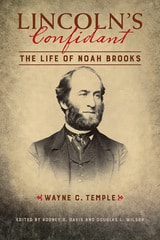
Lincoln's Confidant
The Life of Noah BrooksWayne C. Temple, Edited by Douglas L. Wilson and Rodney O. Davis: Introduction by Michael Burlingame
University of Illinois Press, 2019
Best remembered as one of the president's few true intimates, Brooks was also a nationally recognized man of letters, who mingled with the likes of Mark Twain and Bret Harte. Temple draws on archives and papers long thought lost to re-create Brooks's colorful life and relationship with Lincoln. Brooks's closeness to the president made him privy to Lincoln's thoughts on everything from literature to spirituality. Their frank conversations contributed to the wealth of journalism and personal observations that would make Brooks's writings a much-quoted source for historians and biographers of Lincoln.
A carefully researched and well-documented scholarly resource, Lincoln's Confidant is the story of an extraordinary friendship by one of the luminaries of Lincoln scholarship.
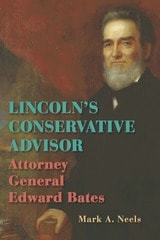
Lincoln’s Conservative Advisor
Attorney General Edward BatesMark A. Neels
Southern Illinois University Press, 2025
How a traditionalist became part of Lincoln's volatile team of rivals
Edward Bates, a founding father of Missouri and leader of the Missouri Whig Party, served as Abraham Lincoln’s attorney general during the American Civil War. The first full biography of Bates in nearly sixty years, Lincoln’s Conservative Advisor reveals a striking portrait of this complex figure in Lincoln’s cabinet.
Author Mark A. Neels begins with Bates’s youth in Virginia and follows him through his political and judicial career, his candidacy as a Republican presidential nominee in 1860, and his appointment to Abraham Lincoln’s cabinet as attorney general. Bates became an essential advisor to the president on key legal, military, and political matters from emancipation to civil liberties and equal rights, and his official opinion on Habeas Corpus would have a permanent effect on presidential authority and separation of powers. When Lincoln drafted the Emancipation Proclamation, Bates found himself at odds with the president and the radical anti-slavery members of the cabinet. But more than simply highlighting the conflict within Lincoln’s administration, Bates’s example lays bare the strong philosophical divisions within the Republican Party during the Civil War era. These divisions were present at the party’s inception, crystallized during the war, and ultimately sparked a political realignment during Reconstruction. Bates was at the center of this divide for most of its existence, and in some cases assisted in its promulgation.
Bates, a fierce opponent of radical Republicanism, embodies the conflict among Republicans over issues of slavery and citizenship. In both judicial and elective office, he was compelled by a sense of duty to defy the populism of President Andrew Jackson and Senator Thomas Hart Benton, and, later, the proslavery forces that threatened to tear the nation apart. Though he had owned slaves, Bates represented at least one enslaved woman’s suit for freedom, released from bondage the people he had enslaved, and aided Lincoln in his efforts to end slavery nationwide. Bates’s opinion on citizenship as attorney general helped pave the way for equal rights. His opinions were not always popular with either his colleagues or the greater populace, but Bates remained true to his conservative principles—a set of values shared by a large swath of Lincoln’s Republican Party—which positioned him as a leading opponent of radical Republicanism during the Reconstruction Era.
Little Man
A NovelNorris Norman
Parkhurst Brothers, Inc., 2017
Little Red Riding Hood in the Red Light District
Manlio Argueta
Northwestern University Press, 1998
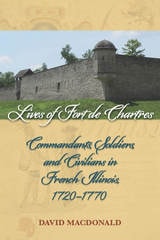
Lives of Fort de Chartres
Commandants, Soldiers, and Civilians in French Illinois, 1720–1770David MacDonald
Southern Illinois University Press, 2016
Fort de Chartres, built in 1719-1720 in the heart of what would become the American Midwest, embodied French colonial power for half a century. Lives of Fort de Chartres, by David MacDonald, details the French colonial experience in Illinois from 1720 to 1770 through vivid depictions of the places, people, and events around the fort and its neighboring villages.
In the first section, MacDonald explores the fascinating history of French Illinois and the role of Fort de Chartres in this history, focusing on native peoples, settlers, slaves, soldiers, villages, trade routes, military administration, and the decline of French rule in Illinois. The second section profiles the fort’s twelve distinctive and often colorful commandants, who also served as administrative heads of French Illinois. These men’s strong personalities served them well when dealing simultaneously with troops, civilians, and Indians and their multifaceted cultures. In the third section, MacDonald presents ten thought-provoking biographies of people whose lives intersected with Fort de Chartres in various ways, from a Kaskaskia Indian woman known as “the Mother of French Illinois” to an ill-fated chicken thief and a European aristocrat. Subjects treated in the book include French–Native American relations, the fur trade, early Illinois agriculture, and tensions among different religious orders. Together, the biographies and historical narrative in the volume illuminate the challenges that shaped the French colonies in America.
The site of Fort de Chartres, recognized as a National Historic Landmark in 1966, still exists today as a testament to the ways in which French, British, Spanish, and American histories have intertwined. Both informative and entertaining, Lives of Fort de Chartres contributes to a more complete understanding of the French colonial experience in the Midwest and portrays a vital and vigorous community well worth our appreciation.
Living in Harmony
A Legacy of LoveSue Cato Gennings
Parkhurst Brothers, Inc., 2017
Sue Cato Gennings’ first novel traces two young immigrant brothers from early adulthood in Tidewater Virginia to successful entrepreneurship in northern Georgia during the late Nineteenth and early Twentieth Centuries. Penniless but energetic, the brothers struggle to refine and realize their dreams of family and business success. Their paths explore themes of family, ambition, honor, and maturation, finding resolutions as distinct as their characters.
Lloyd George
Hugh Purcell
Haus Publishing, 2006

Lord Selkirk
A LifeJ.M. Bumsted
University of Manitoba Press, 2008
The product of three decades of research, this is the definitive biography of Lord Selkirk. Bumsted’s passionate prose and thoughtful analysis illuminate not only the man, but also the political and economic realities of the British empire at the turn of the nineteenth century. He analyzes Selkirk’s position within these realities, showing how his paternalistic attitudes informed his “social experiments” in colonization and translated into unpredictable, and often tragic, outcomes. Bumsted also provides extensive detail on the complexities of colonization, the Scottish Enlightenment, Scottish peerage, the fur trade, the Red River settlement, and early British-Canadian politics.
Lost in a Labyrinth of Red Tape
The Story of an Immigration that FailedArmin Schmid and Renate Schmid
Northwestern University Press, 1996
Lottie Deno
A Novel of the Civil War and the American SouthwestFrank Thurmond
Parkhurst Brothers, Inc., 2024
Loving Little Egypt
A NovelThomas McMahon
University of Chicago Press, 1986
Lucifer Unemployed
Aleksander Wat
Northwestern University Press, 1990
The title story finds a superbly ironic Lucifer wandering the Europe of the late 1920s in search of a mission: what impact can a devil have in a godless time? What is his sorcery in a society far more diablical than the devil himself? Too idealistic for a world full of modern cruelties, the unemployable Lucifer finally finds the only means of guaranteed immortality. In "The Eternally Wandering Jew," steady Jewish conversion to Christianity results in Nathan the Talmudist reigning as Pope Urban IX. The hilarious satire on power, "Kings in Exile," unfolds with the dethroned monarchs of Europe meeting to found their own republic in an uninhabited island in the Indian Ocean.
Lucius Fairchild
Civil War HeroStuart Stotts
Wisconsin Historical Society Press, 2010
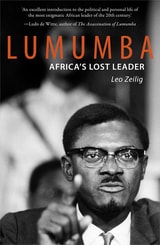
Lumumba
Africa’s Lost LeaderLeo Zeilig
Haus Publishing, 2008
This second edition of the only full biography of Lumumba presents his life and quest for the Congo’s liberation, which influenced how the Cold War would be fought in Africa and the nature of the independence granted to huge swaths of the globe after 1945. For those fighting for freedom, Lumumba became a figure of resistance against the imperial colonizers of the world. Including new archival material and information gained from British intelligence, this new edition is a valuable introduction to a pivotal figure of the twentieth century.
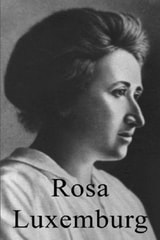
Luxemburg
Harry Harmer
Haus Publishing, 2003
Lydia Maria Child
A Radical American LifeLydia Moland
University of Chicago Press, 2022
By 1830, Lydia Maria Child had established herself as something almost unheard of in the American nineteenth century: a beloved and self-sufficient female author. Best known today for the immortal poem “Over the River and through the Wood,” Child had become famous at an early age for spunky self-help books and charming children’s stories. But in 1833, Child shocked her readers by publishing a scathing book-length argument against slavery in the United States—a book so radical in its commitment to abolition that friends abandoned her, patrons ostracized her, and her book sales plummeted. Yet Child soon drew untold numbers to the abolitionist cause, becoming one of the foremost authors and activists of her generation.
Lydia Maria Child: A Radical American Life tells the story of what brought Child to this moment and the extraordinary life she lived in response. Through Child’s example, philosopher Lydia Moland asks questions as pressing and personal in our time as they were in Child’s: What does it mean to change your life when the moral future of your country is at stake? When confronted by sanctioned evil and systematic injustice, how should a citizen live? Child’s lifetime of bravery, conviction, humility, and determination provides a wealth of spirited guidance for political engagement today.