Results by title
94 books match the query 'Lessons' and 40 start with l
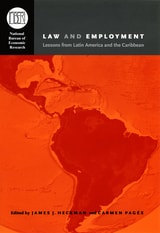
Law and Employment
Lessons from Latin America and the CaribbeanEdited by James J. Heckman and Carmen Pages
University of Chicago Press, 2004
Numerous labor regulations that were introduced or reformed in Latin America in the past thirty years have had important economic consequences. Nobel Prize-winning economist James J. Heckman and Carmen Pagés document the behavior of firms attempting to stay in business and be competitive while facing the high costs of complying with these labor laws. They challenge the prevailing view that labor market regulations affect only the distribution of labor incomes and have little or no impact on efficiency or the performance of labor markets. Using new micro-evidence, this volume shows that labor regulations reduce labor market turnover rates and flexibility, promote inequality, and discriminate against marginal workers.
Along with in-depth studies of Colombia, Peru, Brazil, Argentina, Chile, Uruguay, Jamaica, and Trinidad, Law and Employment provides comparative analysis of Latin American economies against a range of European countries and the United States. The book breaks new ground by quantifying not only the cost of regulation in Latin America, the Caribbean, and in the OECD, but also the broader impact of this regulation.
Leadership
Lessons from a Life in DiplomacySimon Mcdonald
Haus Publishing, 2023
Simon McDonald argues that we should reflect on the nature and strategies of leadership before entering a leadership role, and we should look to examples of others to help us in shaping our own approaches.
Over nearly four decades in Her Majesty's Diplomatic Service, McDonald worked for four permanent under-secretaries and a dozen senior ambassadors before becoming a permanent under-secretary himself and leading the Service—which has over 14,000 staff members in 270 countries—for five years. He also worked directly for six foreign secretaries and under five prime ministers. Observing these people undertaking such important and difficult work, McDonald saw the behaviors which helped them achieve their objectives, as well as those which hindered them.
In this book, McDonald synthesizes the skills he’s learned through his many years working in diplomacy, offering an insightful contribution amid heightening debates over the leadership of the United Kingdom. Considering the future of British leadership, he makes a case for the reform of the monarchy, the cabinet, civil service, and, in particular, the House of Lords, of which he has been a member since 2021.
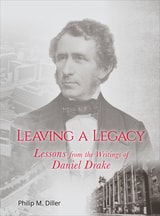
Leaving a Legacy
Lessons from the Writings of Daniel DrakePhilip Diller
University of Minnesota Press, 2019
Leaving a Legacy: Lessons from the Writings of Daniel Drake is a selective collection of excerpts from the vast writings from the nineteenth-century doctor and medical pioneer Daniel Drake. From Drake’s life, documented here in his own words from excerpts of lectures, personal journal entries, presentations, speeches, books, and letters to his children, readers learn about the scope of his accomplishments in medicine, contributions to his community, and dedication to his family. Diller goes beyond biography to contextualize Drake’s life choices and what made him a role model for today’s physicians. Diller selected one hundred and eighty thematically arranged excerpts, which he paired with original reflection questions to guide the reader through thought-provoking prompts. In doing so, Diller presents the lessons from Drake’s remarkable life and work as a guide for others who wish to build an enduring legacy.
Left Populism in Europe
Lessons from Jeremy Corbyn to PodemosMarina Prentoulis
Pluto Press, 2021
Lessons and Legacies I
The Meaning of the Holocaust in a Changing WorldPeter Hayes
Northwestern University Press, 1991
Lessons and Legacies II
Teaching the Holocaust in a Changing WorldDonald G. Schilling
Northwestern University Press, 1998
Lessons and Legacies II focuses on matters unique to Holocaust education. Consisting of selected papers delivered at the second Lessons and Legacies conference in 1992, the volume is organized in three sections: Issues, Resources, and Applications. Taken individually, the essays speak directly to specific concerns surrounding Holocaust education: the growing maturity of the Holocaust as a field of study; the difficult issue of explaining the perpetrators' behavior; the process of decision-making within Jewish communities during the Holocaust; issues of gender and family; the scope and content of survivor literature; and the structure of courses and the implications of being an educator in the field. Taken as a whole, the volume speaks to the reciprocal and mutually reinforcing relationship between teaching and scholarship in this important field.
Lessons and Legacies III
Memory, Memorialization, and DenialPeter Hayes
Northwestern University Press, 1999
A collection of nineteen essays, this book is organized into four sections: the first focuses on how various fields of study can open new perspectives on the Holocaust and sharpen old ones; the second examines culture and politics in Germany before and after 1933; the third addresses the problems associated with the memorialization of those years; and the final section examines the shocking denials of the Holocaust.
Lessons and Legacies IV
Reflections on Religion, Justice, Sexuality, and GenocideLarry V. Thompson
Northwestern University Press, 2003
Variously concerned with issues of guilt and victimization, the essays examine individuals like Pius XII and Romano Guardini and the institutions of organized religion as well as the roles of the Jewish Councils and the retributive judicial proceedings in Hungary. They reveal that victimization within the Holocaust experience is surprisingly open-ended, with Jewish women doubly victimized by their gender; postwar Germans viewing themselves as the epoch's greatest victims; Poles, whether Jewish or not, victimized beyond others because of their proximity to the epicenter of the Holocaust; and German university students corrupted by ideological inculcation and racist propaganda.
Though offering no "positive lessons" or comforting assurances, these essays add to the ongoing examination of Holocaust consequences and offer insightful analyses of facets previously minimized or neglected. Together they illustrate that matters of gender, sexuality, and proximity are crucial for shaping perceptions of a Holocaust reality that will always remain elusive.
Lessons and Legacies IX
Memory, History, and Responsibility: Reassessments of the Holocaust, Implications for the FutureJonathan Petropoulos
Northwestern University Press, 2010
Memory, History, and Responsibility: Reassessments of the Holocaust, Implications for the Future contains the highlights from the ninth "Lessons and Legacies" conference. The conference, held during the height of the genocide in Darfur, sought to reexamine how the darkness of the Holocaust continues to shadow human existence more than sixty years after World War II left the Third Reich in ruins.
The collection opens with Saul Friedländer’s call for interdisciplinary approaches to Holocaust research. The essays that follow draw on the latest methodologies in the fields of history, literature, philosophy, religion, film, and gender studies, among others. Together both the leading scholars of the Holocaust and the next generation of scholars engage the difficult reality—as raised by editors Petropoulos, Rapaport, and Roth in their introduction—that the legacies of the Holocaust have not proved sufficient in intervening against human-made mass death, let alone preventing or eliminating it.
Lessons and Legacies V
The Holocaust and JusticeRonald Smelser
Northwestern University Press, 2002
Seeking a historical context, the contributors ask, What were the political, social, psychological, and ideological prerequisites for this tragedy? Considering the courts and trials both during and immediately after World War II, and recent cases against aging perpetrators, the contributors examine the legal circumstances for trying to provide justice, the dimming impact of passing time, and other issues that complicate litigation. Their inquiry extends to questions about memory--how it is shaped and reshaped and whether it can be reliable--and about the re-creation of events of the Holocaust by a second generation. Does reassembling the evidence through the lenses of a later generation provide a deeper understanding, and does this understanding include a sense of justice accomplished?
Lessons and Legacies VI
New Currents in Holocaust ResearchJeffry Diefendorf
Northwestern University Press, 2004
Several of the essays-such as one on nonarmed "amidah" or resistance and others on the role of gender in the behavior of perpetrators and victims-provide innovative and potentially significant interpretive frameworks for the field of Holocaust studies. Others; for instance, the rounding up of Jews in Italy, Nazi food policy in Eastern Europe, and Nazi anti-Jewish scholarship, emphasize the importance of new sources for reconstructing the historical record. Still others, including essays on the 1964 Frankfurt trial of Auschwitz guards and on the response of the Catholic Church to the question of German guilt, bring a new depth and sophistication to highly charged, sharply politicized topics. Together these essays will inform the future of the Holocaust in scholarly research and in popular understanding.
Lessons and Legacies VII
The Holocaust in International PerspectiveDagmar Herzog
Northwestern University Press, 2006
A thorough, thoughtful, and insightful introduction clarifies the volume's themes and concisely places them within the larger context of Holocaust scholarship; and an introductory essay by Omer Bartov brings into focus the numerous paradoxes structuring early twenty-first-century retrospective thinking about the significance of the Holocaust as a central theme of the twentieth century.
Lessons and Legacies VIII
From Generation to GenerationDoris L. Bergen
Northwestern University Press, 2008
Primo Levi opened his memoir Survival in Auschwitz with a call to remember, reflect upon, and teach about the Holocaust—or to face the rejection of subsequent generations. The transmittal of this urgent knowledge between generations was the theme of the eighth Lessons and Legacies Conference on the Holocaust, and it is the focus of this volume. The circular formulation—from generation to generation—points backward and forward: where do we locate the roots of the Holocaust, and how do its repercussions manifest themselves? The contributors address these questions from various perspectives—history, cultural studies, psychiatry, literature, and sociology. They also bring to bear the personal aspect of associated issues such as continuity and rupture. What has the generation of the Shoah passed on to its descendants? What have subsequent generations taken from these legacies? Contributions by scholars, some of whom are survivors and children of survivors, remind us that the Holocaust does—and must—remain present from generation to generation.
Lessons and Legacies X
Back to the Sources: Reexamining Perpetrators, Victims, and BystandersSara R Horowitz
Northwestern University Press, 2012
Lessons and Legacies XI
Expanding Perspectives on the Holocaust in a Changing WorldEdited and with an introduction by Hilary Earl and Karl A. Schleunes
Northwestern University Press, 2015
Lessons and Legacies XII
New Directions in Holocaust Research and EducationEdited and with an introduction by Wendy Lower and Lauren Faulkner Rossi
Northwestern University Press, 2017
Lessons and Legacies XIII
New Approaches to an Integrated History of the Holocaust: Social History, Representation, TheoryEdited and with an introduction by Alexandra Garbarini and Paul B. Jaskot
Northwestern University Press, 2018
Lessons and Legacies XIV
The Holocaust in the Twenty-First Century; Relevance and Challenges in the Digital AgeEdited and with an introduction by Tim Cole and Simone Gigliotti
Northwestern University Press, 2021
The Holocaust in the Twenty-First Century: Relevance and Challenges in the Digital Age challenges a number of key themes in Holocaust studies with new research. Essays in the section “Tropes Reconsidered” reevaluate foundational concepts such as Primo Levi’s gray zone and idea of the muselmann. The chapters in “Survival Strategies and Obstructions” use digital methodologies to examine mobility and space and their relationship to hiding, resistance, and emigration. Contributors to the final section, “Digital Methods, Digital Memory,” offer critical reflections on the utility of digital methods in scholarly, pedagogic, and public engagement with the Holocaust.
Although the chapters differ markedly in their embrace or eschewal of digital methods, they share several themes: a preoccupation with the experiences of persecution, escape, and resistance at different scales (individual, group, and systemic); methodological innovation through the adoption and tracking of micro- and mezzohistories of movement and displacement; varied approaches to the practice of Saul Friedländer’s “integrated history”; the mainstreaming of oral history; and the robust application of micro- and macrolevel approaches to the geographies of the Holocaust. Taken together, these chapters incorporate gender analysis, spatial thinking, and victim agency into Holocaust studies. In so doing, they move beyond existing notions of perpetrators, victims, and bystanders to portray the Holocaust as a complex and multilayered event.
Lessons and Legacies, Volume XV
The Holocaust: Global Perspectives, National Narratives, Local ContextsErin McGlothlin; Avinoam Patt
Northwestern University Press, 2024
The contributions to this volume not only indicate the intellectual vibrancy and diversity of cutting-edge research in Holocaust studies but also reflect multiple approaches to the necessary work of expanding the canon of research in the field and of adopting varied disciplinary perspectives, engaging with global perspectives as well as local studies.
This collection’s chapters manifest three broad categories: history, literature, and memory; at the same time, however, as the interdisciplinary nature of these chapters indicate, these categories should not be regarded as mutually exclusive or discrete. On the contrary, they overlap and intersect in compelling ways, demonstrating the dynamic character of contemporary Holocaust studies, which views history, narrative representation, and commemoration as mutually informative. Further, the contributors continue the recent trend in Holocaust studies whereby specific regional and national narratives are integrated into a more global approach to the event: Newer studies have continued to incorporate what was once termed the periphery into a more global examination of the experiences of Jewish refugees in flight to Latin America, Africa, and the Soviet Union. At the same time, very specific local studies deepen our knowledge of the mechanics of genocide, along with the experiences of refugees in flight, and the subsequent dimensions of Holocaust memory and representation.
Lessons and Legacies, Volume XVI
Rethinking ParadigmsSarah Phillips Casteel and Jennifer V. Evans
Northwestern University Press, 2027
Bringing forth new perspectives previously unrepresented in Holocaust studies
Lessons and Legacies, Volume XVI: Rethinking Paradigms does the difficult but crucial work of thinking through new methods and modes of representation that speak to where we find ourselves in Holocaust studies today, responding to—and developing new tools to analyze—the shifting shape of Holocaust memory: spatially, temporally, and in and across diverse media. The collection foregrounds the challenges visual sources pose to how we think about the Holocaust, including how it is represented differently in visual media, from photography to graphic novels, and establishes translation as a crucial concept for reframing Holocaust testimony and memory. The contributing authors also model ethical, nuanced ways to conduct comparative, connective work that challenges Eurocentric narratives of the Holocaust. The volume concludes with a section on memory work and activism that approaches the subject of post-1945 memory through different lenses to surface lesser-known aspects of Holocaust history.
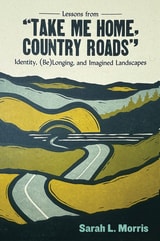
Lessons from "Take Me Home, Country Roads"
Identity, (Be)Longing, and Imagined LandscapesSarah L. Morris
West Virginia University Press, 2025
This book examines “Country Roads” as it illuminates a universal sense of belonging to place even as it obscures the literality of the place it names. In examining “Country Roads” as anthem, text, artifact, and rhetoric, this work untangles ideas related to place, belonging, identity, and pedagogy. Sarah L. Morris uses the Welsh term hiraeth, which is an existential longing for an idealized, sometimes imaginary home, as a governing framework for this work. She explores the song in various contexts, such as how it pertains to West Virginia geography and heritage and the diversity of these beliefs, external perceptions of the state, concepts of home and belonging, and the song as a phenomenon across different media platforms. “Take Me Home, Country Roads,” while being about West Virginia, has registered as a global phenomenon.
Lessons from East Asia
Danny M. Leipziger, Editor
University of Michigan Press, 2001
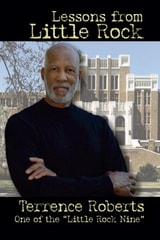
Lessons from Little Rock
Terrance Roberts
Butler Center for Arkansas Studies, 2009
Lessons from Sarajevo
A War Stories PrimerJim Hicks
University of Massachusetts Press, 2013
Hicks explores the limitations of the sentimental tradition in war representation and asks how the work of artists and writers can help us to move beyond the constraints of that tradition. Ranging from Walt Whitman's writings on the Civil War to the U.S. wars in Iraq and Afghanistan, and focusing on the innovative and creative artistic expressions arising out of the wars of the former Yugoslavia, Hicks examines how war has been perceived, described, and interpreted. He analyzes the limitations on knowledge caused by perspective and narrative position and looks closely at the distinct yet overlapping roles of victims, observers, and aggressors. In the end, he concludes, war stories today should be valued according to the extent they make it impossible for us to see these positions as assigned in advance, and immutable.

Lessons from a Multispecies Studio
Uncovering Ecological Understanding and Biophilia through Creative ReciprocityJulie Andreyev
Intellect Books, 2021
In this highly original book, Julie Andreyev explores agency and consciousness through her encounters with other lifeforms—companion dogs, wild birds, mineral beings, plant life, and forest communities—to illuminate the ways creativity can play a part in generating a renewed sense of wonder and kinship with nature. Drawing from her extensive work in interspecies collaborative art, each chapter weaves together personal reflection, interdisciplinary research, and critical thought with new media, sound, generative, indeterminacy, and other art methods. The threads converge on this main point: the need to move away from anthropocentrism and towards ecological understanding through reciprocity and biophilia. The local journeys in each chapter are guided by more-than-human ways of knowing, which provide an expanded sense of the world and underscore the imperative to act. This book invites readers to step into other worlds, re-sense life, and re-think their relationship with the planet and all of its inhabitants. In proposing an expanded field of aesthetics, Andreyev offers new applied approaches from interspecies art to help shape and evolve human outlooks, emotions, and actions.
Lessons from a Quechua Strongwoman
Ideophony, Dialogue, and PerspectiveJanis B. Nuckolls
University of Arizona Press, 2010
This book is a fascinating look at ideophones—words that communicate succinctly through imitative sound qualities. They are at the core of Quechua speakers’ discourse—both linguistic and cultural—because they allow agency and reaction to substances and entities as well as beings. Nuckolls shows that Luisa Cadena’s utterances give every individual, major or minor, a voice in her narrative. Sometimes as subtle as a barely felt movement or unintelligible sound, the language supports an amazingly wide variety of voices.
Cadena’s narratives and commentaries on everyday events reveal that sound imitation through ideophones, representations of dialogues between humans and nonhumans, and grammatical distinctions between a speaking self and an other are all part of a language system that allows for the possibility of shared affects, intentions, moral values, and meaningful, communicative interactions between humans and nonhumans.
Lessons from the Great Gardeners
Forty Gardening Icons and What They Teach UsMatthew Biggs
University of Chicago Press, 2016
Entries for each gardening great highlight their iconic plants and garden designs, revealing both the gardeners’ own influences and the seeds—sometimes literal—that they sowed for gardens yet to sprout. From André Le Nôtre in seventeenth-century France, who drew on his training as an architect and hydraulic engineer to bring the topiary form to Vaux-le-Vicomte and Versailles, to the work of High Line and Lurie Garden designer Piet Oudolf, and Thomas Jefferson’s advice on creating protected garden microclimates for help growing early crops and tender fruit like figs (with peas, a Jefferson favorite), Lessons from the Great Gardeners is a resource as rich as the soil from which it springs.
Featuring lush illustrations harvested from the archives of the Royal Horticultural Society, as well as sections on a dozen international gardens that showcase the lessons of the greats, this homage to the love of good, clean dirt is sure to inspire readers to get out in the sun and dig.
Lessons from the Intersexed
Kessler, Suzanne J
Rutgers University Press, 1998
From the moment intersexuality-the condition of having physical gender markers (genitals, gonads, or chromosomes) that are neither clearly female nor male-is suspected and diagnosed, social institutions are mobilized in order to maintain the two seemingly objective sexual categories. Infants' bodies are altered, and what was "ambiguous" is made "normal." Kessler's interviews with pediatric surgeons and endocrinologists reveal how the intersex condition is normalized for parents and she argues that the way in which intersexuality is managed by the medical and psychological professions displays our culture's beliefs about gender and genitals.
Parents of intersexed children are rarely heard from, but in this book they provide another perspective on reasons for genital surgeries and the quality of medical and psychological management. Although physicians educate parents about how to think about their children's condition, Kessler learned from parents of intersexed children that some parents are able to accept atypical genitals. Based on analysis of the medical literature and interview with adults who had received treatment as interesexed children, Kessler proposes new approaches for physicians to use in talking with parents and children. She also evaluates the appearance of a politicized vanguard, many of who are promoting an intersexual identity, who seek to alter the way physicians respond to intersexuality.
Kessler explores the possibilities and implications of suspending a commitment to two "natural" genders and addresses gender destabilization issues arising from intersexuality. She thus compels readers to re-think the meaning of gender, genitals, and sexuality.
"This is a brave book. Kessler says things that need to be said, and she says them clearly, concisely, and with respect for the people whose lives are most affected by the questions she confronts. A must read for anyone concerned with intersex issues." --Holly Devor, author of Gender Blending: Confronting the Limits of Duality and FTM: Female-to-Male Transsexuals in Society.
"While the physician's response to an infant with ambiguous genitalia has been to produce categories like the 'successful vagina' and the 'good enough penis,' Kessler takes her cues from intersexuals themselves. This book is a brilliant and long overdue call for the reevaluation of gender variability." --Judith Halberstam, author of Female Masculinity
"Fascinating in what it tells us not only about situation in which sex assignment is uncertain but about the astonishingly weak empirical foundations on which the medical orthodoxies of binary sex and gender are built. A must for anyone interested in the ways widely accepted social beliefs and scientific explanations generate and reinforce each other." --Ruth Hubbard, author of The Politics of Women's Biology and Exploding the Gene Myth
Lessons from the Northern Ireland Peace Process
Edited by Timothy J. White; Foreword by Martin Mansergh
University of Wisconsin Press, 2013
Lessons from the Past
The Moral Use of History in Fourth-Century ProseFrances Pownall
University of Michigan Press, 2003
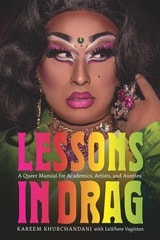
Lessons in Drag
A Queer Manual for Academics, Artists, and AuntiesKareem Khubchandani with LaWhore Vagistan
Brandeis University Press, 2025
Lessons in Drag brings to life a vibrant and thought-provoking dialogue between scholar Kareem Khubchandani and his drag persona LaWhore Vagistan. Beginning with an intimate interview, the book unfolds in alternating chapters where the two exchange insights, stories, and critiques. Khubchandani delves into the lessons LaWhore’s drag practice offers about academia—shaping his approaches to research, teaching, and writing—while Vagistan reveals how Khubchandani’s scholarship influences her performances, inspiring her understanding of fashion, music, divas, and aunties. Together, their reflections and conversations weave a compelling tapestry of drag’s instructive power. Witty, bold, and deeply personal, Lessons in Drag is both an invitation to explore drag as a practice and a celebration of its transformative potential.
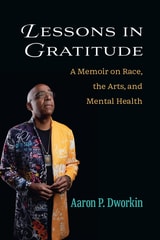
Lessons in Gratitude
A Memoir on Race, the Arts, and Mental HealthAaron P. Dworkin
University of Michigan Press, 2024
Aaron’s unique journey, which begins with his adoption by a white Jewish couple from Chicago at two weeks of age, leads him to the ultimate reunification with his birth family at the age of 31. Lessons of Gratitude is a coming of age story that examines the difficulties of biracial identity across generations and the challenges that mixed race families still face today. It is also a painful and honest adoption memoir, further complicating the narrator’s experiences of racial identity throughout his life and shaping his experiences with his own children. Through his work in the arts and the impact of this work, Dworkin has been able to “pay forward” the first thing that offered him unconditional love—music.
Lessons in Gratitude
A Memoir on Race, the Arts, and Mental HealthAaron P. Dworkin
University of Michigan Press, 2024
Aaron’s unique journey, which begins with his adoption by a white Jewish couple from Chicago at two weeks of age, leads him to the ultimate reunification with his birth family at the age of 31. Lessons in Gratitude is a coming of age story that examines the difficulties of biracial identity across generations and the challenges that mixed race families still face today. It is also a painful and honest adoption memoir, further complicating the narrator’s experiences of racial identity throughout his life and shaping his experiences with his own children. Through his work in the arts and the impact of this work, Dworkin has been able to “pay forward” the first thing that offered him unconditional love—music.
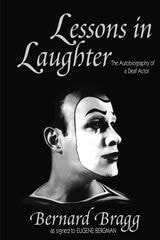
Lessons in Laughter
The Autobiography of a Deaf ActorBernard Bragg
Gallaudet University Press, 1989
To succeed as an actor is a rare feat. To succeed as a deaf actor is nothing short of amazing. Lessons in Laughter is the story of Bernard Bragg and his astonishing lifelong achievements in the performing arts.
Born deaf of deaf parents, Bernard Bragg has won international renown as an actor, director, playwright, and lecturer. Lessons in Laughter recounts in stories that are humorous, painful, touching, and outrageous, the growth of his dream of using the beauty of sign language to act. He starred in his own television show “The Quiet Man,” helped found The National Theatre of the Deaf, and traveled worldwide to teach his acting methods.
Lessons in Leadership
Steve Adubato, PhD
Rutgers University Press, 2016
Lessons in Modern Hebrew
Level 1Edna Amir Coffin
University of Michigan Press, 1977
Lessons in Modern Hebrew
Level 2Edna Amir Coffin
University of Michigan Press, 1978
A comprehensive introduction to modern Israeli Hebrew, Lessons in Modern Hebrew: Level I and Level II provide English-speaking students and well-motivated individuals with all the basic classroom tools necessary for mastery of the language. The lessons introduce the student to the core vocabulary which is then included in reading passages, conversational text, and written communication. All grammatical features of modern Hebrew are thoroughly explained and reinforced by drills and exercises. The books have been classroom-tested at the University of Michigan. Both audio-lingual and cognitive approaches are used.
Cassettes are available from the University of Michigan Language Resource Center: Phone: (734) 764-0424; Email: lrc.contact@umich.edu.
Lessons in Mortality
Doctors and Patients Struggling TogetherAllen B. Weisse, M.D.
University of Missouri Press, 2006

Lessons of Romanticism
A Critical CompanionThomas Pfau and Robert F. Gleckner, eds.
Duke University Press, 1998
With over twenty essays on such diverse topics as the aesthetic and pedagogical purposes of art exhibits in London, the materiality of late Romantic salon culture, the extracanonical status of Jane Austen and Fanny Burney, and Romantic imagery in Beethoven’s music and letters, Lessons of Romanticism reveals the practices that were at the heart of European Romantic life. Focusing on the six decades from 1780 to 1832, this collection is arranged thematically around gender and genre, literacy, marginalization, canonmaking, and nationalist ideology. As Americanists join with specialists in German culture, as Austen is explored beside Beethoven, and as discussions on newly recovered women’s writings follow fresh discoveries in long-canonized texts, these interdisciplinary essays not only reflect the broad reach of contemporary scholarship but also point to the long-neglected intertextual and intercultural dynamics in the various and changing faces of Romanticism itself.
Contributors. Steven Bruhm, Miranda J. Burgess, Joel Faflak, David S. Ferris, William Galperin, Regina Hewitt, Jill Heydt-Stevenson, H. J. Jackson, Theresa M. Kelley, Greg Kucich, C. S. Matheson, Adela Pinch, Marc Redfield, Nancy L. Rosenblum, Marlon B. Ross, Maynard Solomon, Richard G. Swartz, Nanora Sweet, Joseph Viscomi, Karen A. Weisman, Susan I. Wolfson
Letters from the Editor
Lessons on Journalism and LifeWilliam F. Woo & Philip Meyer
University of Missouri Press, 2007
William F. Woo, born in China, was the first person outside the Pulitzer family to edit the St. Louis Post-Dispatch and the first Asian American to edit a major American newspaper. After forty years in the newsroom, Woo embarked on a second career in 1996 teaching journalism at Stanford University, where he wrote weekly informal essays to his students in the same personal style that characterized his columns for the Post-Dispatch. Each made a philosophical point about journalism and society and their delicate relationship over the last half of the twentieth century.
Woo was revered as both a writer and a reporter, and this volume collects some of the best of those essays to the next generation of journalists on their craft’s high purpose. As inspiration for students from someone who knew the ropes, it distills the essence of the values that define independent journalism while offering them invaluable food for thought about their future professions.
The essays touch on a wide range of subjects. Woo reflects on journalism as a public trust, requiring the publication of stories that give readers a better understanding of society and equip them to change it for the better. He also ponders print journalism conducted in the face of broadcast and online competition along with the transformation of newspapers from privately owned to publicly traded companies. Here too are personal reflections on the Pulitzer family’s impact on journalism and on the tensions between a journalist’s personal and professional life, as well as the conflicts posed by political advocacy versus free speech or a reporter’s expertise versus a newspaper’s credibility.
Woo’s idealistic spirit conveys the virtues of his era’s newspaper journalism to the next generation of journalists—and most likely to the next generation of news media as well. Even as new students of journalism have an eye on an electronic future, Woo’s essays come straight from a newsman’s heart and soul to remind them of values worth preserving.