Results by title
1228 books match the query 'Library & Information Science' and 79 start with l
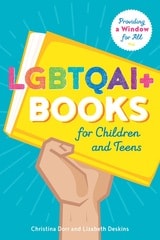
LGBTQAI+ Books for Children and Teens
Providing a Window for AllChristina Dorr
American Library Association, 2018

LJ Guide to E-Reference Resources
American Library Association, 2009

Latin American and Caribbean Library Resources in the British Isles
A DirectoryAlan Biggins and Valerie Cooper
University of London Press, 2001
Launching Large-Scale Library Initiatives
Innovation and CollaborationValerie Horton
American Library Association, 2021
The necessity for library leaders to demonstrate that libraries are innovative, collaborative, and can provide eye-catching, transformational services and programs to their communities cannot be understated. But libraries do not suffer from a lack of big ideas. What library workers really need is a roadmap for making those impactful ideas become reality. Based in part on her extensive experience coordinating large-scale initiatives, this guide from ASCLA Leadership and Professional Achievement Award-winning consultant Horton will walk you through formulating and shaping your ideas into sellable, actionable projects. You’ll learn
- techniques drawn from project management experts and researchers from many fields;
- why Big Hairy Audacious Goals (BHAG) are worth your time and effort;
- guidance on upscaling your idea into a project or service that can be launched at a statewide, community wide, or library consortium level;
- several case studies of large-scale library projects, with analysis of why they were successful;
- how to successfully combine foundational principles of innovation with practical methods for collaboration;
- methods for extending your reach beyond your usual sphere to partner with other libraries and organizations;
- how to sharpen your skills of persuasion;
- no-nonsense advice on leading teams of disparate individuals; and
- evaluative tips for affirming the project is on the right track and then correcting course as needed.

Law Librarianship in the Age of AI
Ellyssa Kroski
American Library Association, 2019
Futurists predict that in the next ten years the profession of “lawyer” will splinter into job titles like “legal process analyst” or “legal knowledge engineer.” And some in the field are already taking a proactive approach — in fact, more than two dozen law schools have developed innovation centers to explore artificial intelligence (AI) and the law. In a competitive marketplace, both firms and individuals need to familiarize themselves with the dazzling array of new products and enhanced features capable of improving efficiency. Written by leading practitioners and visionaries like Robert Ambrogi, this groundbreaking survey of current practices and future trends offers an incisive examination of the evolving roles for law librarians. Readers will learn how AI technology is changing law school curricula, lawyer practice, marketing, and other key aspects of the field through coverage of such topics as
- the benefits of AI to law librarianship, including areas like legal research, contract review, compliance, and administration, and their associated risks;
- four professional ethics rules that apply to the use or (non-use) of AI;
- how lawyers and staff work side by side with AI, utilizing intelligence like RAVN ACE or FastCase to attack the drudgery of due diligence and document review;
- surprising machine-learning insights from tokenizing, stemming, and lemmatizing the text of Shakespeare’s plays;
- the potential for chatbots and new natural language processing products to improve access to justice; and
- ways to develop sought-after skills through new technology departments, practice management groups, and legal innovation labs.
Reading this collection will give you a firm grasp of the innovations, tools, benefits, and risks of AI in law librarianship.
Leadership
Strategic Thinking, Decision Making, Communication, and Relationship BuildingAnn M. Martin
American Library Association, 2022
Leading And Managing Archives And Manuscripts Programs
Peter Gottlieb
American Library Association, 2019

Leading Change In Academic Libraries
Colleen Boff
Assoc of College & Research Libraries, 2020
Leading Kids to Books Through Crafts
American Library Association, 2000
Leading Kids to Books Through Magic
American Library Association, 1996
Leading Libraries
How to Create a Service CultureWyoma vanDuinkerken
American Library Association, 2015
Leading Together
Irene M.H. Herold
Assoc of College & Research Libraries, 2021
Leading and Managing Archives and Records Programs
Bruce W. Dearstyne
American Library Association, 2008
Leading for School Librarians
There Is No Other OptionHilda K. Weisburg
American Library Association, 2017
Leading the Reference Renaissance
Marie L. Radford
American Library Association, 2011
Learner-Centered Pedagogy
Principles and PracticeKevin Michael Klipfel
American Library Association, 2017
Today's emphasis on metrics and personalization make evidence-based instruction an imperative. In this practice-based handbook, the authors draw on the research of the humanistic psychologist and educator Carl Rogers to present an empathetic approach to information literacy sessions, reference service, and outreach. With an eye on everyday library work, they offer concrete, empirically-based strategies to connect with learners at all levels. Offering plentiful examples of pedagogy in action, this book covers:
- 6 cognitive principles for organizing information literacy instruction, with sample worksheets and organization tools for instruction planning;
- how to establish rapport and kindle learners' motivation;
- tactics for transcending "cite 5 sources" and other uninspiring research assignments;
- educational evidence debunking the mythical perception that because students are skilled at computers and mobile technology, they already know how to do research;
- questions to keep in mind for inspiring autonomous learning;
- the power of story, as described by Joan Didion, Brené Brown's Ted Talk, and educational psychology research;
- the science behind information overload; and
- a balanced framework for evaluating specific educational technology tools.
Fusing theory with practice, this handbook is a valuable resource to help every practitioner connect with learners more effectively.
Learning Beyond The Classroom
Engaging Stud In Info LiteracySilvia Vong
Assoc of College & Research Libraries, 2020
Learning Centers for School Libraries
Maura Madigan
American Library Association, 2021
This book offers
- Step-by-step directions for both the educator and learner and all necessary handouts, including directions and worksheets. The reader can use the book to quickly and easily set up centers. Some centers require only photocopies and basic materials to get started.
- Guidance on how to create cross-curricular centers that target the AASL Standards and other content-area standards. A table is provided to enable educators to create centers that address specific standards or content areas. Centers for distance learning are also identified.
- Suggested modifications for both struggling and advanced learners, plus ideas for collaborating with other educators. These features broaden the potential audience beyond elementary school learners.
Learning from Libraries that Use WordPress
Content-Management System Best Practices and Case StudiesKyle M. Jones
American Library Association, 2012
Learning in Action
Designing Successful Graduate Student Work Experiences in Academic LibrariesArianne Hartsell-Gundy
Assoc of College & Research Libraries, 2022
How do you supervise a graduate student working in a library—and not just adequately, but well? What is a valuable and meaningful work experience? How can libraries design more equitable and ethical positions for students?
Learning in Action: Designing Successful Graduate Student Work Experiences in Academic Libraries provides practical, how-to guidance on creating and managing impactful programs as well as meaningful personal experiences for students and library staff in academic libraries. Fourteen chapters are divided into four thorough sections:
- Creating Access Pathways
- Developing, Running, and Evolving Programs for LIS Students
- Working with Graduate Students without an LIS Background: Mutual Opportunities for Growth
- Centering the Person
Learning in Action brings together a range of topics and perspectives from authors of diverse backgrounds and institutions to offer practical inspiration and a framework for creating meaningful graduate student work experiences at your institutions.
Legal Reference for Librarians
How and Where to Find the AnswersPaul D. Healey
American Library Association, 2014
Legislative Advocacy and Public Policy Work for Academic and Research Library Workers
Perspectives and StrategiesRaymond Pun
Assoc of College & Research Libraries, 2025
Legislative Advocacy and Public Policy Work for Academic and Research Library Workers is a comprehensive resource addressing our specific roles in influencing the various legislative and public policies that directly impact academic libraries, our academic communities, and the library community at large. It explores the ways academic and research library workers are engaging in advocacy, from testifying at governmental levels to collaborating with diverse constituents and legislators to bringing our academic advocacy efforts to discussions within state and regional library associations.
As educators and researchers, library workers bring invaluable expertise to the legislative table. We can help ensure that decisions affecting academic and research libraries and their communities are informed, equitable, and aligned with the values of intellectual freedom and lifelong learning. Legislative Advocacy and Public Policy Work for Academic and Research Library Workers offers ways to make meaningful legislative and policy impacts.
Less Is More
A Practical Guide to Weeding School Library CollectionsDonna J. Baumbach
American Library Association, 2006
Lessons Inspired by Picture Books for Primary Grades
Maureen Schlosser
American Library Association, 2019
Drawing on compelling picture books that can be used to directly support the AASL National School Library Standards for Learners, School Librarians, and School Libraries, this ready-to-go toolkit of lessons, worksheets, anchor charts, assessments, and rubrics is specifically designed to build learner competencies while examining big ideas inspired by picture books. An invaluable timesaver, this resource provides
- 21 lesson units that cover the six Shared Foundations, each utilizing a formatted template that’s easy to follow and incorporates the four Domains (Think, Create, Share, Grow);
- a picture book synopsis for each unit, followed by lesson objectives, essential questions, materials, and duration;
- worksheets, anchor charts, and exit slips tailored for each picture book and lesson;
- “Quick Tips” that offer helpful ideas and suggestions to consider during the lesson; and
- an appendix that includes rubrics to facilitate assessment in all six foundations.
Let the Games Begin!
Engaging Students with Interactive Information Literacy InstructionTheresa R. McDevitt
American Library Association, 2011
Let's Pretend
50 Start-To-Finish Preschooler Programs for the Busy Librarian That Foster ImaginationAmerican Library Association, 2010
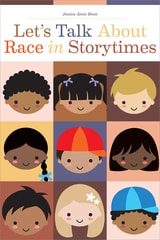
Let’s Talk About Race in Storytimes
Jessica Anne Bratt
American Library Association, 2021
Foreword by Kirby McCurtis
With the help of this book’s adaptable storytime activities, tools for self-reflection, and discussion starters, children’s librarians will learn how to put anti-racism work into their professional practice while fostering an environment that celebrates all identities.As the weekly lists of best-sellers demonstrate, many people want to engage with racial issues. But when it comes to talking about race, they often don’t know how or are hesitant to take the first steps. This includes children's librarians, who are taking seriously our profession’s calls for diversity, equity, and inclusion. They already know that popular storytimes can be an effective way to increase community representation and belonging at the library. Incorporating race into storytimes is an ideal way to foster inclusion by normalizing conversations about these issues. This book will help public and school librarians face their own biases, showing them how to have honest discussions with children, their caregivers, and storytime attendees, as well as their colleagues. In this book, you will discover
- several ready-to-use library storytimes that incorporate racial themes, complete with sample activities and booklists;
- an anti-oppression framework, based on the author’s own real-world practice, that is customizable for different settings and situations;
- concrete suggestions for overcoming fears and awkwardness when it comes to talking about race, with advice on practicing new language, making space to connect around appropriate cultural books for read alouds, and evaluating books for storytime;
- interactive self-reflecting worksheets which explore planning picture book introductions and songs for inclusive storytimes, providing age-appropriate glimpses into history, and suggested affirmations in describing skin tone, hair, and language;
- advocacy talking points centered on social justice that will encourage discussion with co-workers and other library staff; and
- guidance on community engagement, relationship building, and intentionally trying to diversify your world in order to truly become an anti-bias practitioner.
Leveraging Wikipedia
Connecting Communities of KnowledgeMerrilee Proffitt
American Library Association, 2018
Librarians Serving Diverse Populations
Challenges AndLori Mestre
Assoc of College & Research Libraries, 2011
Librarians Serving Diverse Populations
Challenges and OpportunitiesLori Mestre
Assoc of College & Research Libraries, 2011
Librarians and Instructional Designers
Collaboration and InnovationJoe Eshleman
American Library Association, 2016
Librarians as Community Partners
An Outreach HandbookCarol Smallwood
American Library Association, 2010
Libraries As Agencies Of Culture
(Volume 42, No. 3 Of American Studies)Thomas Augst
University of Wisconsin Press, 2002
Libraries Designed for Kids
Nolan Lushington
American Library Association, 2008
Libraries Got Game
Aligned Learning through Modern Board GamesBrian Mayer
American Library Association, 2009
Libraries Promoting Reflective Dialogue In A Time Of Political
Andrea Baer
Assoc of College & Research Libraries, 2019
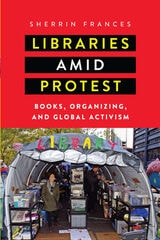
Libraries amid Protest
Books, Organizing, and Global ActivismSherrin Frances
University of Massachusetts Press, 2020
Libraries amid Protest unpacks how these protest libraries—labor-intensive, temporary installations in parks and city squares, poorly protected from the weather, at odds with security forces—continue to arise. In telling the stories of these surprising and inspiring spaces through interviews and other research, Sherrin Frances confronts the complex history of American public libraries. She argues that protest libraries function as the spaces of opportunity and resistance promised, but not delivered, by American public libraries.
Libraries and Democracy
Nancy Kranich
American Library Association, 2001
Libraries and Sustainability
Programs and Practices for Community ImpactRené Tanner, Adrian K. Ho, Monika Antonelli, and Rebekkah Smith Aldrich
American Library Association, 2021
As a core value of librarianship, sustainability is not an end point but a mindset, a lens through which operational and outreach decisions can be made. And it extends beyond an awareness of the roles that libraries can play in educating and advocating for a sustainable future. As the programs and practices in this resource demonstrate, sustainability can also encompass engaging with communities in discussions about resilience, regeneration, and social justice. Inspiring yet assuredly pragmatic, the many topics explored in this book edited by members of ALA's Sustainability Round Table and ALA’s Special Task Force on Sustainability include
- a discussion of why sustainability matters to libraries and their user communities;
- real-life examples of sustainability programming, transformative community partnerships, collective responses for climate resilience, and green building practices;
- lessons learned and recommendations from library workers who have been active in putting sustainability into practice;
- the intersection of sustainability with the work of equity, diversity, and inclusion;
- suggestions regarding the revision of library and information science curriculum in light of the practical need to build community resilience;
- an examination of how libraries’ efforts to support Doughnut Economics can bolster the United Nations' work on the Sustainable Development Goals, which seek to address the global impacts of climate change; and
- potential collaborators for future sustainability-related initiatives.
Libraries and the Affordable Care Act
Helping the Community Understand Health-Care OptionsFrancisca American Library Association
American Library Association, 2015
Libraries and the Mobile Web
Cody Hanson
American Library Association, 0
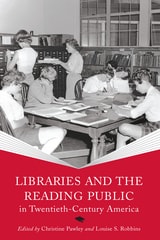
Libraries and the Reading Public in Twentieth-Century America
Edited by Christine Pawley and Louise S. Robbins
University of Wisconsin Press, 2013
Libraries and the Substance Abuse Crisis
Supporting Your CommunityCindy Grove
American Library Association, 2020
The opioid epidemic, and other behavioral health issues such as alcohol and drug abuse, directly impact every community across the nation; and, by extension, public libraries’ daily work. Because libraries are not only trusted guardians of information but also vital community centers, people struggling with addictive behaviors as well as their family members and friends often turn to the library for help. But many library workers feel overwhelmed, finding themselves unprepared for serving these patrons in an effective and empathetic way. This book encourages readers to turn their fears and uncertainty into strengths and empowerment, offering to-the-point guidance on welcoming people with substance use disorders and their loved ones through policy, materials, outreach, collaboration, programs, and services. Written by a frontline librarian whose personal experiences inform the book, this resource
- explores the library’s role in the fight against addiction and how to become part of the solution by combating stigma;
- provides background on understanding how substance abuse and related behaviors affect different age groups and populations;
- explains how to be proactive regarding library safety and security by carefully crafting library policies and effectively communicating them to staff;
- offers real world guidance on training library staff, including pointers on recognizing observable signs of drug abuse and responding appropriately and safely to uncomfortable or potentially dangerous situations;
- discusses safeguards such as a needle disposal unit, defibrillator, and Naloxone;
- gives tips on marketing, outreach, and programming, from putting together displays of materials and resources to partnering with local organizations; and
- recommends useful websites, documentaries, and additional resources for further learning.
Libraries that Learn
Keys to Managing Organizational KnowledgeJennifer A. Bartlett
American Library Association, 2019
Libraries, Leadership, and Scholarly Communication
Essays by Rick AndersonRick Anderson
American Library Association, 2016
Libraries, Mission, and Marketing
Linda Wallace
American Library Association, 2004
Libraries, Mission, and Marketing
Linda Wallace
American Library Association, 0
Library Camps and Unconferences
American Library Association, 2010
Library Collections for Teens
Manga and Graphic NovelsAmerican Library Association, 2010
Library Consortia
Models for Collaboration and SustainabilityValerie Horton
American Library Association, 2014