Results by title
1107 books match the query 'Memoirs' and 48 start with l
Lambs in Winter
Sketches of a Vermont Life Through Seasons of ChangeAlexis Lathem
University of Massachusetts Press, 2025
Finding hope in a small farm, an engaged community, and an age-old connection to the earth
After half a lifetime spent moving from place to place, Alexis Lathem at last settled down with her husband on a small farm near Vermont’s largest city. The lyric essays of Lambs in Winter take readers through the seasonal cycles of raising sheep and hens and growing fruits and vegetables while confronting the challenges of winter storms, summer floods, invasive weeds, and pests and diseases.
Ever conscious of her place in a historically colonized and ecologically degraded landscape, Lathem wrestles with ethical questions that come to many rural dwellers who—following Thoreau—set out to “live deliberately,” in a time of climate crisis, persistent racial inequity, and growing economic inequality. Likewise, she grapples with the moral complexities of small-scale animal husbandry. Through her efforts at self-provisioning, without holding illusions of the self-reliant individual, Lathem finds herself deeply embedded in the community and reliant on others, especially as her region deals with repeated catastrophic flooding brought on by climate change.
Through elegant prose and insightful investigations into pressing contemporary issues, Lathem evokes the world of her farm and the surrounding countryside with a spiritual awareness of the human journey on this earth. Living in place, attuned to the unfolding changes in the world around her, gives her much to grieve, but the pages of Lambs in Winter are luminous with moments of joy and beauty.
Last Bonanza Kings
The Bourns of San FranciscoFerol Egan
University of Nevada Press, 2009
Much of the wealth from the great mining bonanzas of the nineteenth century American West flowed into San Francisco and made possible the growth of the city and some fabulous personal fortunes. Among the wealthiest and most powerful of the Bonanza Kings were William Bowers Bourn I and his son and successor, William Bowers Bourn II. Their wealth came from rich mines in Nevada’s Comstock Lode and Treasure Hill and California’s Sierra foothills, as well as astute business ventures in the booming port city of San Francisco. Last Bonanza Kings tells their story with all the colorful detail and sweeping sense of epic drama that the characters and their times demand, setting them into the turbulent context of an age of rampant financial and civic growth, major technological advances in mining, lavish philanthropy, and opulent personal lifestyles.
Last Days of Theresienstadt
Eva Noack-Mosse; Translated by Skye Doney and Biruté Ciplijauskaité
University of Wisconsin Press, 2018
Noack-Mosse's aim in documenting the horrors of daily life within Theresienstadt was to ensure that such a catastrophe could never be repeated. She also gathered from surviving inmates information about earlier events within the walled fortress, witnessed the defeat and departure of the Nazis, saw the arrival of the International Red Cross and the Soviet Army takeover of the camp and town, assisted in administration of the camp's closure, and aided displaced persons in discovering the fates of their family and friends. After the war ended, and she returned home, Noack-Mosse cross-referenced her data with that of others to provide evidence of Nazi crimes. At least 35,000 people died at Theresienstadt and another 90,000 were sent on to death camps.

Lawfully Wedded Husband
How My Gay Marriage Will Save the American FamilyJoel Derfner
University of Wisconsin Press, 2013
Add to the mix a reality show whose director forces them to keep signing and notarizing applications for a wedding license until the cameraman gets a shot she likes; a family marriage history that includes adulterers, arms smugglers, and poisoners; and discussions of civil rights, Sophocles, racism, grammar, and homemade Ouija boards—coupled with Derfner's gift for getting in his own way—and what results is a story not just of gay marriage and the American family but of what it means to be human.
Leadership Gets Personal
Finding Purpose, Transforming Lives, and Never Giving UpNan McRaven and Susan Engelking
University of Texas Press, 2026
How the University of Texas shaped twelve people who changed the world.
College is a time for personal growth. But any Biology 101 student knows that growth (personal or otherwise) requires the right environment. Collecting the revealing and deeply personal stories of twelve UT alumni who became leaders in their fields, Leadership Gets Personal honors the transformative impact of the Forty Acres on those who learn and grow there.
Matthew McConaughey, Academy Award-winning actor and #1 New York Times best-selling author, was destined for law school, but with the encouragement of his UT community, he realized he was a born storyteller. Brené Brown, author of the #1 New York Times bestseller Dare to Lead, struggled for years before finding her purpose in the Social Work Department. Dr. Amy Ho knew she wanted to change the American health care system, and at UT she gained the confidence and skills to make a difference. Astronaut Karen Nyberg was a shy kid; her UT graduate studies propelled her to space. And Darren Walker would go on to become president of the Ford Foundation, taking inspiration from the financial aid counselors who made sure he got the education he yearned for. For these and other outstanding alumni profiled here, the road was often rocky. Through perseverance, humility, and collaboration, they learned not only to exercise leadership but to live it.
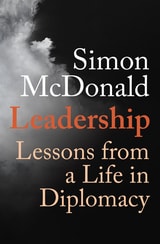
Leadership
Lessons from a Life in DiplomacySimon Mcdonald
Haus Publishing, 2023
Simon McDonald argues that we should reflect on the nature and strategies of leadership before entering a leadership role, and we should look to examples of others to help us in shaping our own approaches.
Over nearly four decades in Her Majesty's Diplomatic Service, McDonald worked for four permanent under-secretaries and a dozen senior ambassadors before becoming a permanent under-secretary himself and leading the Service—which has over 14,000 staff members in 270 countries—for five years. He also worked directly for six foreign secretaries and under five prime ministers. Observing these people undertaking such important and difficult work, McDonald saw the behaviors which helped them achieve their objectives, as well as those which hindered them.
In this book, McDonald synthesizes the skills he’s learned through his many years working in diplomacy, offering an insightful contribution amid heightening debates over the leadership of the United Kingdom. Considering the future of British leadership, he makes a case for the reform of the monarchy, the cabinet, civil service, and, in particular, the House of Lords, of which he has been a member since 2021.
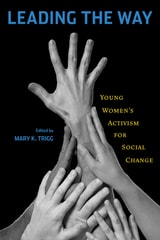
Leading the Way
Young Women's Activism for Social ChangeTrigg, Mary K
Rutgers University Press, 2009
Bringing together graduates of a women's leadership certificate program at Rutgers University's Institute for Women's Leadership, these essays provide a contrasting picture to assumptions about the current death of feminism, the rise of selfishness and individualism, and the disaffected Millennium Generation. Reflecting on a critical juncture in their lives, the years during college and the beginning of careers or graduate studies, the contributors' voices demonstrate the ways that diverse, young, educated women in the United States are embodying and formulating new models of leadership, at the same time as they are finding their own professional paths, ways of being, and places in the world. They reflect on controversial issues such as gay marriage, gender, racial profiling, war, immigration, poverty, urban education, and health care reform in a post-9/11 era.
Leading the Way introduces readers to young women who are being prepared and empowered to assume leadership roles with men in all public arenas, and to accept equal responsibility for making positive social change in the twenty-first century.
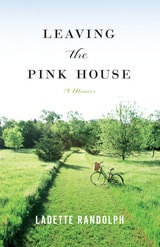
Leaving the Pink House
Ladette Randolph
University of Iowa Press, 2014
On September 12, 2001, Randolph and her husband bought a dilapidated farmhouse on twenty acres outside Lincoln, Nebraska, and set about gutting and rebuilding the house themselves. They had nine months to complete the work. The project, undertaken at a time of national unrest and uncertainty, led Randolph to reflect on the houses of her past and the stages of her life that played out in each, both painful and joyful. As the couple struggles to bring the dilapidated house back to life, Randolph simultaneously traces the contours of a life deeply shaped by the Nebraska plains, where her family has lived for generations, and how those roots helped her find the strength to overcome devastating losses as a young adult. Weaving together strands of departures and arrivals, new houses and deep roots, cycles of change and the cycles of the seasons, Leaving the Pink House is a richly layered and compelling memoir of the meaning of home and family, and how they can never really leave us, even if we leave them.
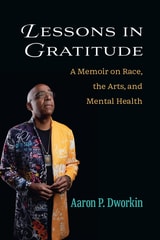
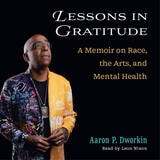
Lessons in Gratitude
A Memoir on Race, the Arts, and Mental HealthAaron P. Dworkin
University of Michigan Press, 2024
Aaron’s unique journey, which begins with his adoption by a white Jewish couple from Chicago at two weeks of age, leads him to the ultimate reunification with his birth family at the age of 31. Lessons of Gratitude is a coming of age story that examines the difficulties of biracial identity across generations and the challenges that mixed race families still face today. It is also a painful and honest adoption memoir, further complicating the narrator’s experiences of racial identity throughout his life and shaping his experiences with his own children. Through his work in the arts and the impact of this work, Dworkin has been able to “pay forward” the first thing that offered him unconditional love—music.
Lessons in Gratitude
A Memoir on Race, the Arts, and Mental HealthAaron P. Dworkin
University of Michigan Press, 2024
Aaron’s unique journey, which begins with his adoption by a white Jewish couple from Chicago at two weeks of age, leads him to the ultimate reunification with his birth family at the age of 31. Lessons in Gratitude is a coming of age story that examines the difficulties of biracial identity across generations and the challenges that mixed race families still face today. It is also a painful and honest adoption memoir, further complicating the narrator’s experiences of racial identity throughout his life and shaping his experiences with his own children. Through his work in the arts and the impact of this work, Dworkin has been able to “pay forward” the first thing that offered him unconditional love—music.
Let Burn
Rachel K. Wentz
Michigan State University Press, 2013
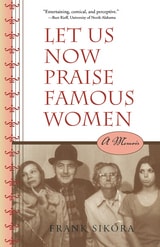
Let Us Now Praise Famous Women
A MemoirFrank Sikora
University of Alabama Press, 2005
An affectionate, humorous account of small town Alabama during the civil rights era.
When Frank Sikora's six-year-old daughter contracted pneumonia in 1962, his wife Millie vowed that would be the last winter she would spend in Ohio. Despite their misgivings about the racial tensions erupting there, they moved their family of six south, where Frank hoped to fulfill his dream of becoming a newspaper reporter. But when those dreams didn't materialize immediately, mounting bills, repossession, and eviction forced them to move in with Millie's parents, Dan and Minnie Belle Helms, in rural Wellington, Alabama.
With even slimmer prospects for employment in impoverished Calhoun County, the Sikoras came to depend heavily upon the Helmses and extended family members and all their lives became closely intertwined. The Helmses were uneducated, unpolished people, but Sikora's narration of his life with them—often humorous but never condescending—provides a compelling portrait of the attitudes and lifestyle of poor whites in Alabama during the second half of the 20th century, just as James Agee's monumental work, Let Us Now Praise Famous Men, illuminated the Depression years in Hale County, Alabama. Sikora illustrates how resourceful, southern women, in particular, held their families together through trying times.
Interwoven with this commentary on rural white culture in the Deep South is the story of Sikora's developing career as a newsman. Determined to succeed, he finally lands a job with the Gadsden Times reporting the news of black citizens. From that introduction to journalism, Sikora becomes one of Alabama's most acclaimed chroniclers of the civil rights movement, eventually writing some of the acknowledged masterpieces about the subject. Like his landmark book, Selma, Lord, Selma, Sikora's newest work tells the stories of ordinary Alabamians and their perspectives on extraordinary times.
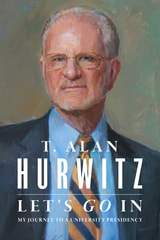
Let’s Go In
My Journey to a University PresidencyT. Alan Hurwitz
Gallaudet University Press, 2020
Additional images, videos, and supplemental readings are available at the Gallaudet University Press/Manifold online platform.
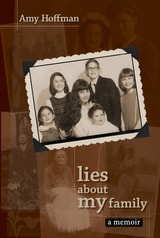
Lies About My Family
A MemoirAmy Hoffman
University of Massachusetts Press, 2013
All of Amy Hoffman's grandparents came to the United States during the early twentieth century from areas in Poland and Russia that are now Belarus and Ukraine. Like millions of immigrants, they left their homes because of hopeless poverty, looking for better lives or at the least a chance of survival. Because of the luck, hard work, and resourcefulness of the earlier generations, Hoffman and her five siblings grew up in a middle-class home, healthy, well fed, and well educated. An American success story? Not quite—or at least not quite the standard version. Hoffman's research in the Ellis Island archives along with interviews with family members reveal that the real lives of these relatives were far more complicated and interesting than their documents might suggest.
Hoffman and her siblings grew up as observant Jews in a heavily Catholic New Jersey suburb, as political progressives in a town full of Republicans, as readers in a school full of football players and their fans.
As a young lesbian, she distanced herself from her parents, who didn't understand her choice, and from the Jewish community, with its organization around family and unquestioning Zionism. However, both she and her parents changed and evolved, and by the end of this engaging narrative, they have come to new understandings, of themselves and one another.
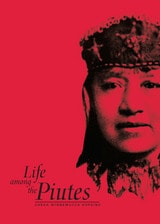
Life Among the Piutes
Their Wrongs and ClaimsSarah Winnemucca Hopkins
University of Nevada Press, 1994
This autobiographical work was written by one of the country's most well-known Native American women, Sarah Winnemucca. She was a Paiute princess and a major figure in the history of Nevada; her tribe still resides primarily in the state. Life Among the Piutes deals with Winnemucca's life and the plight of the Paiute Indians. Life Among the Piutes is Winnemucca's powerful legacy to both white and Paiute cultures. Following the oral tradition of Native American people, she reaches out to readers with a deeply personal appeal for understanding. She also records historical events from a unique perspective. She managed to record the Native American viewpoint of whites settling the West, told in a language that was not her own and by a woman during the time when even white women were not allowed to vote. Sarah Winnemucca dedicated her life to improving the living and social conditions for her people. She gave more than 400 speeches across the United States and Europe to gain support for the Paiutes. She died of tuberculosis in 1891. Life Among the Piutes was originally published in 1883.

Life Is What Happens While You Make Other Plans
A Memoir by Jerry Kolins
Michigan Publishing Services, 2021
Life in the Leatherwoods
New EditionJohn Quincy Wolf
University of Arkansas Press, 2000
Originally published by Memphis State University Press in 1974, this new edition includes additional writings of John Q. Wolf and a continuation of the autobiographical narrative after his 1887 move to Batesville. Wolf’s writings are valuable resources for southern historians, folklorists, general readers, and scholars of Ozarkiana because they provide a rare glimpse into the social and family life of a largely misunderstood and stereotyped people—the independent hill farmers of the Arkansas Ozarks of the 1870s and 1880s. With Life in the Leatherwoods, Wolf bestows a benediction upon a society that existed vibrantly and humorously in his memory—one that has now forever disappeared from the American countryside.
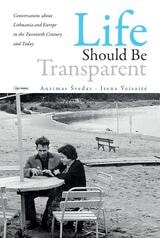
Life should be Transparent
Conversations about Lithuania and Europe in the Twentieth Century and TodayAurimas Svedas
Central European University Press, 2020
This book of thirteen conversations introduces us to the life of an exceptional person—theatre critic, Germanist, and long-time chair of the Open Lithuania Fund board—Irena Veisaitė. The dialogue between Lithuanian historian Aurimas Švedas and a woman who reflects deeply on her experiences reveals both one individual’s historically dramatic life and the fate of Europe and Lithuania in the twentieth century.
Through the complementary lenses of history and memory, we confront with Veisaitė the horrific events of the Holocaust, which brought about the end of the Lithuanian Jewish world. We also meet an array of world-class cultural figures, see fragments of legendary theatre performances, and hear meaningful words that were spoken or heard decades ago.
This book’s interlocutors do not so much seek to answer the question “What was it like?” but instead repeatedly ask each other: “What, how, and why do we remember? What is the meaning of our experiences? How can history help us to live in the present and create the future? How do we learn to understand and forgive?”
A series of Veisaitė’s texts, statements, and letters, presented at the end of the book suggest further ways of answering these questions.
Light on the Devils
Coming of Age on the KlamathLouise Wagenknecht
Oregon State University Press, 2011
When Louise Wagenknecht’s family arrived in the remote logging town of Happy Camp in 1962, a boundless optimism reigned. Whites and Indians worked together in the woods and the lumber mills of northern California’s Klamath country. Logging and lumber mills, it seemed, would hold communities together forever.
But that booming prosperity would come to an end. Looking back on her teenage years spent along the Klamath River, Louise Wagenknecht recounts a vanishing way of life. She explores the dynamics of family relationships and the contradictions of being female in a western logging town in the 1960s. And she paints an evocative portrait of the landscape and her relationship with it.
Light on the Devils is a captivating memoir of place. It will appeal to general readers interested in the rural West, personal memoir, history, and natural history.
Lights in Cold Rooms
A Psychologist Reflects on Family, Aging, Love & LossJoan Cusack Handler
CavanKerry Press, 2025
Lights in Cold Rooms shares Joan Cusack Handler’s personal experiences with depression as a licensed psychologist with forty years of experience treating patients. For many, including Handler, quarantine precluded the preferred treatment of psychotherapy. Handler turned to her own pathology to teach herself and others how to navigate both isolation and depression. Feelings of anxiousness and impending mortality intensified as she faced the death of her older sister and grappled with the guilt that erupted when she learned that an in-person memorial service was impossible. Opening both her personal history and pathology to public view, Handler chronicles her confrontation with eighty years of family dynamics and explores the path she took to return to a place of hope.
Like Love
Michele Morano
The Ohio State University Press, 2020
Crushes. Infatuations. Attractions. Unexpected, inexplicable allure. Entanglements steeped in taboo and disruption. In Like Love, nothing is off limits.
In these remarkable essays, Michele Morano explores the pleasures, possibilities, strangeness, and lessons of unconsummated romance. With insight and imagination, Like Love interweaves poignant, humorous episodes from adulthood with the backstory of a young family’s turbulent breakup. When Morano was an adolescent in blue-collar Poughkeepsie, New York, her mother left her father for a woman in an era when LGBTQ parents were widely viewed as “unfit.” Through the turmoil, adolescent Morano paid attention, tucking away the stories that were shaping her and guiding her understanding of love.
Turning romantic clichés inside out and challenging us to rethink our notions about what it means to love, Like Love tells hard and necessary truths about the importance of desire in growing, traveling, mourning, parenting, and figuring out who you are in the world. With precision and depth, Morano explores what it means to find ourselves in relationships that are not quite—but almost—like love.
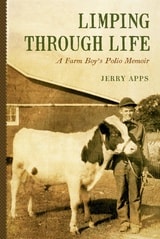
Limping through Life
A Farm Boy’s Polio MemoirJerry Apps
Wisconsin Historical Society Press, 2013
A Farm Boy’s Polio Memoir
Jerry Apps
“Families throughout the United States lived in fear of polio throughout the late 1940s and early 1950s, and now the disease had come to our farm. I can still remember that short winter day and the chilly night when I first showed symptoms. My life would never be the same.”
—from the Introduction
Polio was epidemic in the United States starting in 1916. By the 1930s, quarantines and school closings were becoming common, as isolation was one of the only ways to fight the disease. The Sauk vaccine was not available until 1955; in that year, Wisconsin’s Fox River valley had more polio cases per capita than anywhere in the United States. In his most personal book, Jerry Apps, who contracted polio at age twelve, reveals how the disease affected him physically and emotionally, profoundly influencing his education, military service, and family life and setting him on the path to becoming a professional writer.
A hardworking farm kid who loved playing softball, young Jerry Apps would have to make many adjustments and meet many challenges after that winter night he was stricken with a debilitating, sometimes fatal illness. In Limping through Life he explores the ways his world changed after polio and pays tribute to those family members, teachers, and friends who helped him along the way.
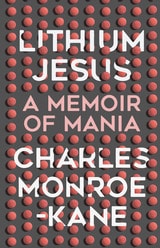
Lithium Jesus
A Memoir of ManiaCharles Monroe-Kane
University of Wisconsin Press, 2020
From Baby Doc’s Haiti to the Czech Velvet Revolution, and from sex, drugs, and a stabbing to public humiliation by the leader of the free world, Monroe-Kane burns through his twenties and several bridges of youthful idealism before finally saying: enough.
In a memoir that blends engaging charm with unflinching frankness, Monroe-Kane gives his testimony of mental illness, drug abuse, faith, and love. By the end of Lithium Jesus there may be a voice in your head, too, saying “Do more, be more, live more. And fear less.”
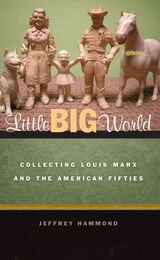
Little Big World
Collecting Louis Marx and the American FiftiesJeffrey Hammond
University of Iowa Press, 2010
Jeffrey Hammond’s Little Big World: Collecting Louis Marx and the American Fifties is the story of a middle-aged man’s sudden compulsion to collect the toys of his childhood: specifically themed playsets produced by the Louis Marx Toy Company. Hammond never made a conscious decision to become a collector of any kind, so he was surprised when his occasional visits to web sites turned into hours spent gazing at, and then impulsively purchasing, the tiny plastic people and animals in the Civil War set, the Fort Apache set, Roy Rogers Ranch, and Happi-Time Farm—just a few of the dozens of playsets the Marx Company produced.
Hammond interweaves childhood memories with reflections on what they reveal about the culture and values of cold war America, offering an extended meditation on toys as powerful catalysts for the imagination of both children and adults. Never sentimentalizing his childhood in an effort to get his old toys back, Hammond exposes the dangers of nostalgia by casting an unsettling light on the culture of the fifties and the era’s lasting impact on those who grew up in it.
Writing in a lovably quirky voice, Hammond not only attempts to understand his personal connection to the Marx toys but also examines the psychology of his fellow eBay denizens. In this warm, funny, and contemplative work, the reader encounters an online community of serious adult collectors who, as the author suspects, are driven to obsession by middle-aged nostalgia. When Hammond questions this preoccupation with the past, he comes to realize that his own collecting has prevented him from moving forward. With this insight, he offers an insider’s take on the culture and psychology of collecting.
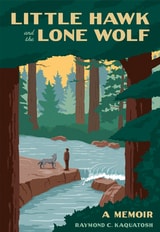
Little Hawk and the Lone Wolf
A MemoirRaymond Kaquatosh
Wisconsin Historical Society Press, 2014
After his father’s death, eight-year-old Ray was sent to an Indian boarding school in Keshena. There he experienced isolation and despair, but also comfort and kindness. Upon his return home, Ray remained a lonely boy in a full house until he met and befriended a lone timber wolf. The unusual bond they formed would last through both their lifetimes. As Ray grew into a young man, he left the reservation more frequently. Yet whenever he returned—from school and work, from service in the Marines, and finally from postwar Wausau with his future wife—the wolf waited.
In this rare first-person narrative of a Menominee Indian’s coming of age, Raymond Kaquatosh shares a story that is wise and irreverent, often funny, and in the end, deeply moving.
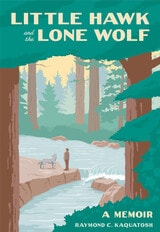
Little Hawk and the Lone Wolf
A MemoirRaymond Kaquatosh
Wisconsin Historical Society Press, 2022
After his father’s death, eight-year-old Ray was sent to an Indian boarding school in Keshena. There he experienced isolation and despair, but also comfort and kindness. Upon his return home, Ray remained a lonely boy in a full house until he met and befriended a lone timber wolf. The unusual bond they formed would last through both their lifetimes. As Ray grew into a young man, he left the reservation more frequently. Yet whenever he returned—from school and work, from service in the Marines, and finally from postwar Wausau with his future wife—the wolf waited.
In this rare first-person narrative of a Menominee Indian’s coming of age, Raymond Kaquatosh shares a story that is wise and irreverent, often funny, and in the end, deeply moving.
Live Nude Girl
My Life as an ObjectKathleen Rooney
University of Arkansas Press, 2008
Livin' the Blues
Memoirs of a Black Journalist and PoetFrank Marshall Davis
University of Wisconsin Press, 1993
Frank Marshall Davis was a prominent poet, journalist, jazz critic, and civil rights activist on the Chicago and Atlanta scene from the 1920s through 1940s. He was an intimate of Langston Hughes and Richard Wright and an influential editor at the Chicago Evening Bulletin, the Chicago Whip, the Chicago Star, and the Atlanta World. He renounced his writing career in 1948 and moved to Hawaii, forgotten until the Black Arts Movement rediscovered him in the 1960s.
Because of his early self-exile from the literary limelight, Davis's life and work have been shrouded in mystery. Livin' the Blues offers us a chance to rediscover this talented poet and writer and stands as an important example of black autobiography, similar in form, style, and message to those of Langston Hughes and Richard Wright.
"Both a social commentary and intellectual exploration into African American life in the twentieth century."—Charles Vincent, Atlanta History
Living Off the Pacific Ocean Floor
Stories of a Commercial FishermanGeorge Moskovita
Oregon State University Press, 2015
In a career that spanned over 60 years, George Moskovita met with many maritime adventures, recounted for the reader in a clear, direct, and unsentimental style. He saw the fishery he had helped build devastated by foreign factory processing ships. He bought, repaired, traded, and sank more boats than most fishermen would work on in a lifetime. Along the way, he managed to raise four daughters with his wife, June. The name of one of his last boats, the Four Daughters, reflects the central importance of family life to a man who was often at sea. Moskovita’s memoir provides a unique glimpse of Pacific maritime life in the 20th century, small-town coastal life after World War II, and the early days of fishery development in Oregon.
With an introduction and textual notes by Carmel Finley, an historian of science, and Mary Hunsicker, an aquatic and fisheries scientist, this book will be invaluable to fishery students and professionals interested in the biology, ecology, and history of oceans and commercial fishing. It will also have broad appeal to readers of Oregon history and maritime adventure, and anyone else who has ever stood at the western edge of the continent and wondered what life was like at sea.
Living a Country Year
Wit and Wisdom from the Good Old DaysJerry Apps
Wisconsin Historical Society Press, 2018
“Even with the all the hard work, we had more time (perhaps we took more time) to enjoy what was all around us: nights filled with starlight, days with clear blue skies and puffy clouds. Wonderful smells everywhere—fresh mown hay, wildflowers, and apple blossoms. Interesting sounds—the rumble of distant thunder, an owl calling in the woods, a flock of Canada geese winging over in the fall.”
In this paperback edition of a beloved Jerry Apps classic, the rural historian tells stories from his childhood days on a small central Wisconsin dairy farm in the 1930s and 1950s. From a January morning memory of pancakes piled high after chores, to a June day spent learning to ride a pony named Ginger, Jerry moves through the turn of the seasons and teaches gentle lessons about life on the farm. With recipes associated with each month and a new introduction exclusive to this 2nd edition, Living a Country Year celebrates the rhythms of rural life with warmth and humor.
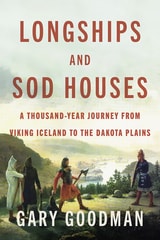
Longships and Sod Houses
A Thousand-Year Journey from Viking Iceland to the Dakota PlainsGary Goodman
University of Minnesota Press, 2026
A direct descendant of a tenth-century Viking marauder traces his lineage from medieval Iceland to the Dakota plains
Gary Goodman first heard that his 24x great-grandfather was a tenth-century Viking pirate and mercenary at a family reunion, when a cousin told him that they were the direct descendants of an Icelandic poet and cold-blooded killer named Egil Skallagrímsson. Also known as “Egil the Bastard,” Goodman’s forefather was the subject of Egil’s Saga, one of the great Icelandic epics of the early Middle Ages. Spurred by this revelation of his family’s lineage, Goodman set out to discover the route his ancestors had traveled from medieval Iceland to the North Dakota plains in the later 1800s.
Drawing on Egil’s Saga, family records, and travels through Iceland, England, and Ireland, Goodman traces his ancestral line from Iceland—the family’s homeland for over a thousand years until a volcanic eruption forced them to migrate—to the hardscrabble plains of the Dakota Territory. His panoramic view ranges from the Viking invasion of England in the early Middle Ages to the disappearance of a short-lived Icelandic settlement on the Mouse River in North Dakota in the late 1800s. Along the way, Goodman sketches the highlights of Egil’s Saga, making the centuries-old epic accessible to today’s readers.
With candor, dry wit, and some bemusement, Goodman shares his trip through history from the perspective of a descendant of an original Viking marauder. An innovative, time-bending family history, Longships and Sod Houses is a noteworthy saga in its own right.
Retail e-book files for this title are screen-reader friendly with images accompanied by short alt text and/or extended descriptions.
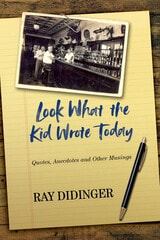
Look What the Kid Wrote Today
Quotes, Anecdotes and Other MusingsRay Didinger
Temple University Press, 2026
When Ray Didinger was a young sports columnist, his proud grandfather would tape his articles on the mirror of his Southwest Philadelphia bar and tell his customers, “Look what the kid wrote today.” That phrase is now the title of Didinger’s latest book, a fond look back on his award-winning career.
In Look What the Kid Wrote Today, Didinger reflects on walking the historic Merion golf course with Jack Nicklaus, shooting pool with Mean Joe Greene, touring Foxcatcher Farms with John du Pont and hanging out with Mark Wahlberg on the set of Invincible. He also writes about helping to heal the rift between the Philadelphia Eagles and arguably their greatest player, Chuck Bednarik. It is a story that went untold until now.
Didinger takes the reader through the many stages of his fifty-plus years in sports media, from his time as an Emmy Award-winning producer at NFL Films, which involved writing scripts for the likes of Tom Selleck, Gary Busey, and Oscar winner James Coburn. Now a playwright, Didinger also devotes a chapter to the 2025 premiere of his critically acclaimed production Spinner.
Candid and insightful, Look What the Kid Wrote Today is Didinger at his best.
Looking Forward, Looking Upward
My Life, My Friendship with Sir John, and the Early Years of the John Templeton FoundationRobert L. Herrmann
Templeton Press, 2013
Looking for Strangers
The True Story of My Hidden Wartime ChildhoodDori Katz
University of Chicago Press, 2013
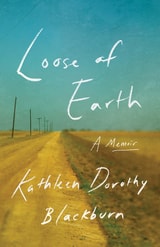
Loose of Earth
A MemoirKathleen Dorothy Blackburn
University of Texas Press, 2024
An arresting memoir of love and unbending religion, toxicity and disease, and one family’s desperate wait for a miracle that never came.
Kathleen Dorothy Blackburn was the oldest of five children, a twelve-year-old from Lubbock, Texas, whose evangelical family eschewed public education for homeschooling, and wove improbable scientific theories into literal interpretations of the Bible. Then her father, a former air force pilot, was diagnosed with cancer at the age of thirty-eight, and, “it was like throwing gasoline on the Holy Spirit.” Stirred by her mother, the family committed to an extreme diet and sought deliverance from equally extreme sources: a traveling tent preacher, a Malaysian holy man, a local faith-healer who led services called “Miracles on 34th Street.”
What they didn’t know at the time was that their lives were entangled with a larger, less visible environmental catastrophe. Fire-fighting foams containing carcinogenic compounds had contaminated the drinking water of every military site where her father worked. Commonly referred to as “forever chemicals,” the presence of PFAS in West Texas besieged a landscape already burdened with vanishing water, taking up residence in wells and in the bloodstreams of people who lived there. An arresting portrait of the pernicious creep of decline, and a powerful cry for environmental justice, Loose of Earth captures the desperate futility and unbending religious faith that devastated a family, leaving them waiting for a miracle that would never come.
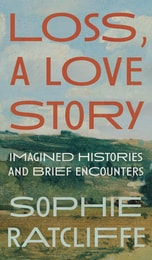
Loss, A Love Story
Imagined Histories and Brief EncountersSophie Ratcliffe
Northwestern University Press, 2024
Part memoir, part imagined history, this unique personal essay depicts the intimate experience of childhood bereavement, lost love affairs, and the complicated realities of motherhood and marriage. Framed by an extended train journey, author Sophie Ratcliffe turns to the novels, novelists, and heroines who have shaped her emotional and romantic landscapes. She transports us with her to survey the messiness of everyday life, all while reflecting on steam propulsion and pop songs, handbags and honeymoons, Anna Karenina and Anthony Trollope, former lovers and forgotten muses. Frank, funny, tender, and transporting, Loss, A Love Story asks why we fall in, and out, of love—and how we might understand doing so amid the ongoing upheavals and unwritten futures of the twenty-first century.
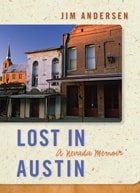
Lost in Austin
A Nevada MemoirJim Andersen
University of Nevada Press, 2009
In 1974 Jim Andersen and his wife, tired of the congestion and high taxes in California, decided to start a new life in rural Nevada. They settled on Austin, a town of about 250 people perched on a mountainside along the legendary Highway 50, “the loneliest road in America.” In the middle of the nineteenth century, Austin was a free-wheeling boomtown at the center of a silver bonanza. By the time the Andersens arrived, it had shrunk to a quiet, isolated community of self-sufficient souls who ran their lives, economy, and local government their own way, with ingenuity, wit, and a certain disregard for convention. Andersen’s account of his life in Austin is a charming, sometimes hilarious account of city folks adapting to life in a small town. He addresses such matters as making a living from a variety of odd jobs, some of them odder than others; serving as a deputy sheriff, deputy coroner, and elected justice of the peace, and administering Austin’s unique version of justice; raising a family; finding ways to have fun; and exploring the austerely beautiful backcountry of central Nevada. He also introduces some of Austin’s residents and their stories, and describes the way the community comes together for entertainment or to respond to crises.Lost in Austin is fascinating reading for anyone who cherishes nostalgic memories of living in a small town, or who contemplates moving to one. It offers an engaging portrait of a Nevada that exists far from the glitz and glitter of Las Vegas and Reno, “a happy Bermuda Triangle” where rugged individualism and community spirit flourish amidst sagebrush and vast open spaces.
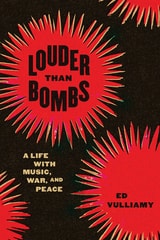
Louder Than Bombs
A Life with Music, War, and PeaceEd Vulliamy
University of Chicago Press, 2020
Describing the artists, songs, and concerts that most influenced him, Vulliamy brings together the two largest threads of his life—music and war. Louder Than Bombs covers some of the most important musical milestones of the past fifty years, from Jimi Hendrix playing “Machine Gun” at the Isle of Wight Festival in 1970 to the Bataclan in Paris under siege in 2015. Vulliamy was present for many of these historic moments, and with him as our guide, we see them afresh, along the way meeting musicians like B. B. King, Graham Nash, Patti Smith, Daniel Barenboim, Gustavo Dudamel, and Bob Dylan. Vulliamy peppers the book with short vignettes—which he dubs 7" singles—recounting some of his happiest memories from a lifetime with music. Whether he’s working as an extra in the Vienna State Opera’s production of Aida, buying blues records in Chicago, or drinking coffee with Joan Baez, music is never far from his mind. As Vulliamy discovers, when horror is unspeakable, when words seem to fail us, we can turn to music for expression and comfort, or for rage and pain. Poignant and sensitively told, Louder Than Bombs is an unforgettable record of a life bursting with music.

Love Is My Favorite Flavor
A Midwestern Dining Critic Tells AllWini Moranville
University of Iowa Press, 2024
Amidst the vast changes that have occurred over the years, Love Is My Favorite Flavor underscores the timelessness of what it is we seek when we entrust restaurateurs with our hard-earned money and our hard-won leisure time. Dining out may have changed dramatically since the 1970s, but the joys of being in the hands of people who care deeply about our time at their tables have not.
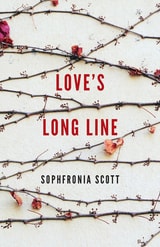
Love’s Long Line
Sophfronia Scott
The Ohio State University Press, 2018
Sophfronia Scott turns an unflinching eye on her life to deliver a poignant collection of essays ruminating on faith, motherhood, race, and the search for meaningful connection in an increasingly disconnected world.
In Love’s Long Line, Scott contemplates what her son taught her about grief after the shootings at his school, Sandy Hook Elementary; how a walk with Lena Horne became a remembrance of love for Scott’s illiterate and difficult steelworker father; the unexpected heartache of being a substitute school bus driver; and the satisfying fantasy of paying off a mortgage. Scott’s road is also a spiritual journey ignited by an exploration of her first name, the wonder of her physical being, and coming to understand why her soul must dance like Saturday Night Fever’s Tony Manero.
Inspired by Annie Dillard’s observation in Holy the Firm that we all “reel out love’s long line alone . . . like a live wire loosed in space to longing and grief everlasting,” Scott’s essays acknowledge the loneliness, longing, and grief exacted by a fearless engagement with the everyday world. But she shows that by holding the line, there is an abundance of joy and forgiveness and grace to be had as well.
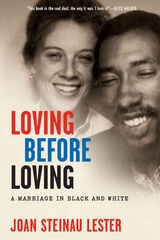
Loving Before Loving
A Marriage in Black and WhiteJoan Steinau Lester
University of Wisconsin Press, 2026
Braiding intellectual, personal, and political history, Lester tells the story of a writer and activist fighting for love and justice before, during, and after the Supreme Court’s 1967 decision striking down bans on interracial marriage in Loving v. Virginia. She describes her own shifts in consciousness, from an activist climbing police barricades by day and reading and writing late into the night to a woman navigating the coming-out process in midlife, before finding the publishing success she had dreamed of. Speaking candidly about every facet of her life, Lester illuminates her journey to fulfillment and healing.
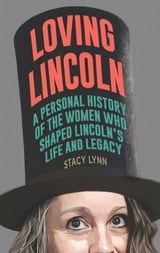
Loving Lincoln
A Personal History of the Women Who Shaped Lincoln's Life and LegacyStacy Lynn
Southern Illinois University Press, 2025
WINNER, 2026 Illinois State Historical Society Russell P. Strange Book of the Year Award!
Rediscovering Lincoln through the female gaze
Abraham Lincoln belongs to everybody. The women he interacted with helped forge the outstanding moral character of America's greatest president. This unique Abraham Lincoln biography features thirty historical and personal essays, and within them, the stories of more than ninety women, each with their own mini biographies in an appendix. Among them are Lincoln’s friends, clients, and extended family, as well as writers, artists, and—blurring the lines between history and memoir—author Stacy Lynn herself.
As a professional Lincoln scholar and editor, Lynn was often frustrated that male historians often overlooked Lincoln’s love for and friendship with women. Here, she posits a new paradigm—one that, instead of downplaying women, lifts up their interactions with Lincoln.
Lincoln understood the importance of the women in his life, and he put women’s wellbeing at the center of his personal, professional, and political ethos. He was loved by two strong pioneer mothers as well as sisters, friends, nieces, friends’ daughters, and his wife. He served women clients during his long legal career. As president, he met with women, dedicating time to hear their concerns despite the burdens of office. He replied to letters women wrote him. He believed in their capabilities and revolutionized the role of women in the workforce. After Lincoln’s death, women continued to shape his legacy. Mary Lincoln ensured his burial among friends, artist Vinnie Ream sculpted his statue in the US Capitol, and biographer Ida Tarbell provided a nuanced portrayal of his life. Harriet Monroe and Ruth Painter Randall further cemented his place in literature and history.
Lynn presents a fresh perspective on Lincoln, connecting his story to the stories of women and showcasing his kindness, sensitivity, and moral center. She explores how women shaped Lincoln’s inspirational legacy and pays homage to all the women who gave Lincoln to the world. Lynn’s unique blending of history, biography, and her own story reveals the ways in which an emotional connection to the historical figures one studies opens the door to richer human and historical understanding. By inviting readers to feel the past as well as read it, Lynn demonstrates that history matters most when it engages our minds and hearts.
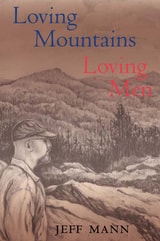
Loving Mountains, Loving Men
Memoirs of a Gay AppalachianJeff Mann
Ohio University Press, 2005
Loving Mountains, Loving Men
Memoirs of a Gay AppalachianJeff Mann
Ohio University Press, 2023
Loving Rachel
A Family's Journey from GriefJane Bernstein
University of Illinois Press, 2007
In 1983, Jane Bernstein had everything she ever wanted: a healthy four-year-old daughter, Charlotte; a happy marriage; a highly praised first novel; and a brand new baby, Rachel. But by the time Rachel was six weeks old,
a neuro-ophthalmologist told Jane and her husband that their baby was blind. Although there was some hope that Rachel might gain partial vision as she grew, her condition was one that often resulted in seizure disorders and intellectual impairment. So began a series of medical and emotional setbacks that were to plague Rachel and her parents and strain their marriage to the breaking point. Spanning the first four years of Rachel’s life, Loving Rachel is a heartbreaking chronicle of a marriage and a compelling story of parental love told with searing honesty and surprising humor.
Lowest White Boy
Greg Bottoms
West Virginia University Press, 2019
An innovative, hybrid work of literary nonfiction, Lowest White Boy takes its title from Lyndon Johnson’s observation during the civil rights era: “If you can convince the lowest white man he’s better than the best colored man, he won’t notice you’re picking his pocket.”
Greg Bottoms writes about growing up white and working class in Tidewater, Virginia, during school desegregation in the 1970s. He offers brief stories that accumulate to reveal the everyday experience of living inside complex, systematic racism that is often invisible to economically and politically disenfranchised white southerners—people who have benefitted from racism in material ways while being damaged by it, he suggests, psychologically and spiritually. Placing personal memories against a backdrop of documentary photography, social history, and cultural critique, Lowest White Boy explores normalized racial animus and reactionary white identity politics, particularly as these are collected and processed in the mind of a child.
Lucky That Way
Rediscovering My Father's WorldPamela Gerhardt
University of Missouri Press, 2013
“I decide that from now on we should listen to him. His lip may be deflated and his left side paralyzed, but he knows. And he has made terrible mistakes. But he knows. He knows. We are lucky that way.”
Lucky That Way, a nuanced, richly engaging memoir, chronicles the joys and tribulations of a daughter who rediscovers her father as he nears the end of his life. Ernie Gerhardt, an artist and teacher, is largely estranged from his five children, but when he suffers a debilitating stroke, his daughter Pamela must fly to Las Vegas to tend to him. When she arrives to find Ernie newly and shockingly fragile, she is hit by an unexpected wave of tenderness.
As she watches over him in intensive care, she recalls turning points in her family history—the early death of her mother and her father’s turn to heavy drinking--and reflects on the idiosyncrasies that make an imperfect and unique family, on what it means to become old, on what happens when parents are no longer the caregivers but the cared-for, and on how a family copes with their responsibility to the elderly.
Written in a crisp, engaging style, the story is less about the drudgery of finding the right mix of medicines, at-home caregivers, and rehabilitation centers and more about the emotional ramifications of caring for the sick under the weight of sometimes flawed attachments.
People make mistakes, grow old, get sick, and pass on from this world. Lucky That Way examines the irritations and comforts of contemporary family bonds. Gerhardt sifts through the complicated, multi-layered relationships for both wry comedy and high drama and records a string of triumphs and mishaps as Ernie and his five adult children struggle to manage his life and find meaning before their time runs out.
The emerging theme of imperfect humans struggling with life's great mysteries will strike a chord of recognition with the tens of thousands of Baby-Boomers and Gen-Xers who are currently facing similar circumstances with their elderly loved ones. Pamela Gerhardt’s heartfelt story about a family coming to terms with their aging father’s illness and imminent death takes readers on an emotional roller coaster that highlights love, loss, humor, and sadness.
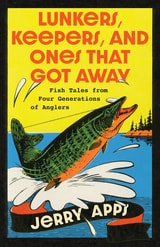
Lunkers, Keepers, and Ones that Got Away
Fish Tales from Four Generations of AnglersJerry Apps
Wisconsin Historical Society Press, 2025
From his first experiences going fishing with his pa as a boy, Jerry Apps was hooked. Eighty-some years later, Apps reflects on a lifetime of fishing and the memories and lessons hauled in along the way. As he recounts the simple pleasures of casting a line from shore on a warm summer evening or reeling in a lunker on opening day of trout season, he reminds us of the values fishing can teach people of all ages: persistence, resourcefulness, and the importance of caring for our natural world.
Along with his best-loved fish tales, Apps includes fishing photos from the family album and favorite angling locales, lingo, bait, and gear. He draws on interviews with fellow fishermen and -women, his own journal entries recorded over decades, and his popular newspaper column Outdoor Notebook. And, since it’s a tradition among fishing folks to pass along tales told by others, he shares stories that have come his way from extended family and friends—some of them funny, some poignant, many embellished, and all of them keepers. Humorous pen-and-ink illustrations made by artist Sid Boyum to commemorate the annual fishing season opener add charm to this delightful volume.
In Lunkers, Keepers, and Ones that Got Away, Apps captures the exciting, heartwarming, and nostalgia-inducing experiences that fishing brings to avid and casual anglers alike.