Results by title
1325 books match the query 'Psychology' and 42 start with l
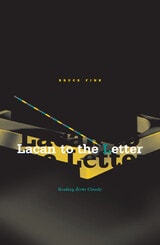
Lacan To The Letter
Reading Ecrits CloselyBruce Fink
University of Minnesota Press, 2004
An analysis of Lacan’s thought by way of a close, authoritative reading of his Écrits
To read Lacan closely is to follow him to the letter, to take him literally, making the wager that he comes right out and says what he means in many cases, though much of his argument must be reconstructed through a line-by-line examination. And this is precisely what Bruce Fink does in this ambitious book, a fine analysis of Lacan’s work on language and psychoanalytic treatment conducted on the basis of a very close reading of texts in his Écrits: A Selection.
As a translator and renowned proponent of Lacan’s works, Fink is an especially adept and congenial guide through the complexities of Lacanian literature and concepts. He devotes considerable space to notions that have been particularly prone to misunderstanding, notions such as “the sliding of the signified under the signifier,” or that have gone seemingly unnoticed, such as “the ego is the metonymy of desire.” Fink also pays special attention to psychoanalytic concepts, like affect, that Lacan is sometimes thought to neglect, and to controversial concepts, like the phallus. From a parsing of Lacan’s claim that “commenting on a text is like doing an analysis,” to sustained readings of “The Instance of the Letter in the Unconscious,” “The Direction of the Treatment,” and “Subversion of the Subject” (with particular attention given to the Graph of Desire), Fink’s book is a work of unmatched subtlety, depth, and detail, providing a valuable new perspective on one of the twentieth century’s most important thinkers.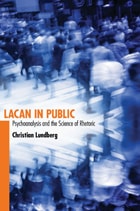
Lacan in Public
Psychoanalysis and the Science of RhetoricChristian Lundberg
University of Alabama Press, 2012
Lacan in Public argues that Lacan’s contributions to the theory of rhetoric are substantial and revolutionary and that rhetoric is, in fact, the central concern of Lacan’s entire body of work.
Lacan’s conception of rhetoric, Christian Lundberg argues in Lacan in Public, upsets and extends the received wisdom of American rhetorical studies—that rhetoric is a science, rather than an art; that rhetoric is predicated not on the reciprocal exchange of meanings, but rather on the impossibility of such an exchange; and that rhetoric never achieves a correspondence with the real-world circumstances it attempts to describe.
As Lundberg shows, Lacan’s work speaks directly to conversations at the center of current rhetorical scholarship, including debates regarding the nature of the public and public discourses, the materiality of rhetoric and agency, and the contours of a theory of persuasion.
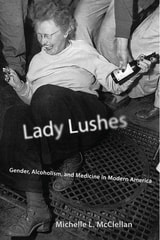
Lady Lushes
Gender, Alcoholism, and Medicine in Modern AmericaMcClellan, Michelle L
Rutgers University Press, 2017
In Lady Lushes, medical historian Michelle L. McClellan traces the story of the female alcoholic from the late-nineteenth through the twentieth century. She draws on a range of sources to demonstrate the persistence of the belief that alcohol use is antithetical to an idealized feminine role, particularly one that glorifies motherhood. Lady Lushes offers a fresh perspective on the importance of gender role ideology in the formation of medical knowledge and authority.

Landscape for a Good Woman
A Story of Two LivesCarolyn Kay Steedman
Rutgers University Press, 1987
This book is about lives lived out on the borderlands, lives for which the central interpretative devices of the culture don't quite work. It has a childhood at its centre - my childhood, a personal past - and it is about the disruption of that fifties childhood by the one my mother had lived out before me, and the stories she told about it.'
Intricate and inspiring, this unusual book uses autobiographical elements to depict a mother and her daughter and two working-class childhoods (Burnley in the 1920s, South London in the 1950s) and to find a place for their stories in history and politics, in psychoanalysis and feminism.
'Provocative and quite dazzling in its ambitions. . . Beautifully written, intellectually compelling'.' Judith Walkowitz
--From 500 Great Books by Women; review by Jesse Larsen.
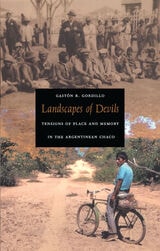
Landscapes of Devils
Tensions of Place and Memory in the Argentinean ChacoGastón R. Gordillo
Duke University Press, 2004
As Gordillo explains, the bush is the result of social, cultural, and political processes that intertwine this place with other geographies. Labor exploitation, state violence, encroachment by settlers, and the demands of Anglican missionaries all transformed this land. The Toba’s lives have been torn between alienating work in sugar plantations and relative freedom in the bush, between moments of domination and autonomy, abundance and poverty, terror and healing. Part of this contradictory experience is culturally expressed in devils, evil spirits that acquire different features in different places. The devils are sources of death and disease in the plantations, but in the bush they are entities that connect with humans as providers of bush food and healing power. Enacted through memory, the experiences of the Toba have produced a tense and shifting geography. Combining extensive fieldwork conducted over a decade, historical research, and critical theory, Gordillo offers a nuanced analysis of the Toba’s social memory and a powerful argument that geographic places are not only objective entities but also the subjective outcome of historical forces.

Language and Interpretation in Psychoanalysis
Marshall Edelson
University of Chicago Press, 1984
Last Writings on the Philosophy of Psychology, Volume 1
Ludwig Wittgenstein
University of Chicago Press, 1996
G. H. von Wright and Heikki Nyman both teach at the University of Helsinki.
Laughing Saints and Righteous Heroes
Emotional Rhythms in Social Movement GroupsErika Summers Effler
University of Chicago Press, 2010
To explore these questions, Erika Summers Effler undertook three years of ethnographic fieldwork with two groups: anti–death penalty activists STOP and the Catholic Workers, who strive to alleviate poverty. In both communities, members must contend with problems that range from the broad to the intimately personal. Adverse political conditions, internal conflict, and fluctuations in financial resources create a backdrop of daily frustration—but watching an addict relapse or an inmate’s execution are much more devastating setbacks. Summers Effler finds that overcoming these obstacles, recovering from failure, and maintaining the integrity of the group require a constant process of emotional fine-tuning, and she demonstrates how activists do this through thoughtful analysis and a lucid rendering of their deeply affecting stories.
Law and the Postmodern Mind
Essays on Psychoanalysis and JurisprudencePeter Goodrich and David Gray Carlson, Editors
University of Michigan Press, 1998

Lawful Repair
Reimagining Law Through Queer DissentDanish Sheikh
Duke University Press, 2027
Leading Edges in Social and Behavioral Science
R. Duncan Luce
Russell Sage Foundation, 1990

Leading for School Librarians
There Is No Other OptionHilda K. Weisburg
American Library Association, 2017
Learner-Centered Pedagogy
Principles and PracticeKevin Michael Klipfel
American Library Association, 2017
Today's emphasis on metrics and personalization make evidence-based instruction an imperative. In this practice-based handbook, the authors draw on the research of the humanistic psychologist and educator Carl Rogers to present an empathetic approach to information literacy sessions, reference service, and outreach. With an eye on everyday library work, they offer concrete, empirically-based strategies to connect with learners at all levels. Offering plentiful examples of pedagogy in action, this book covers:
- 6 cognitive principles for organizing information literacy instruction, with sample worksheets and organization tools for instruction planning;
- how to establish rapport and kindle learners' motivation;
- tactics for transcending "cite 5 sources" and other uninspiring research assignments;
- educational evidence debunking the mythical perception that because students are skilled at computers and mobile technology, they already know how to do research;
- questions to keep in mind for inspiring autonomous learning;
- the power of story, as described by Joan Didion, Brené Brown's Ted Talk, and educational psychology research;
- the science behind information overload; and
- a balanced framework for evaluating specific educational technology tools.
Fusing theory with practice, this handbook is a valuable resource to help every practitioner connect with learners more effectively.
Learning and Physiological Regulation
Barry R. Dworkin
University of Chicago Press, 1993
Learning from the High Priestess
Affect, Femme Care, and Somatic PracticeAnn Cvetkovich
Duke University Press, 2026
Legitimating New Religions
Lewis, James R
Rutgers University Press, 2003
James R. Lewis has written the first book to deal explicitly with the issue of how emerging religions legitimate themselves. He contends that a new religion has at least four different, though overlapping, areas where legitimacy is a concern: making converts, maintaining followers, shaping public opinion, and appeasing government authorities. The legitimacy that new religions seek in the public realm is primarily that of social acceptance. Mainstream society's acknowledgement of a religion as legitimate means recognizing its status as a genuine religion and thus recognizing its right to exist. Through a series of wide-ranging case studies Lewis explores the diversification of legitimation strategies of new religions as well the tactics that their critics use to de-legitimate such groups. Cases include the Movement for Spiritual Inner Awareness, Native American prophet religions, spiritualism, the Church of Christ-Scientist, Scientology, Church of Satan, Heaven's Gate, Unitarianism, Hindu reform movements, and Soka Gakkai, a new Buddhist sect.
Since many of the issues raised with respect to newer religions can be extended to the legitimation strategies deployed by established religions, this book sheds an intriguing new light on classic questions about the origin of all religions.

Lesbian Psychologies
EXPLORATIONS AND CHALLENGESEdited by the Boston Lesbian Psychologies Collective
University of Illinois Press, 1987
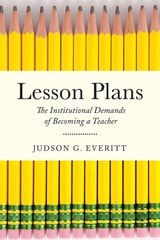
Lesson Plans
The Institutional Demands of Becoming a TeacherEveritt, Judson G.
Rutgers University Press, 2017
In Lesson Plans, Judson G. Everitt takes readers into the everyday worlds of teacher training, and reveals the complexities and dilemmas teacher candidates confront as they learn how to perform a job that many people assume anybody can do. Using rich qualitative data, Everitt analyzes how people make sense of their prospective jobs as teachers, and how their introduction to this profession is shaped by the institutionalized rules and practices of higher education, K-12 education, and gender. Trained to constantly adapt to various contingencies that routinely arise in schools and classrooms, teacher candidates learn that they must continually try to reconcile the competing expectations of their jobs to meet students’ needs in an era of accountability. Lesson Plans reveals how institutions shape the ways we produce teachers, and how new teachers make sense of the multiple and complicated demands they face in their efforts to educate students.
Lessons in Mortality
Doctors and Patients Struggling TogetherAllen B. Weisse, M.D.
University of Missouri Press, 2006
Libidinal Currents
Sexuality and the Shaping of ModernismJoseph Allen Boone
University of Chicago Press, 1997
Challenging overarching theories of the novel by carefully mapping the historical contexts that have influenced modern experimental narratives, Boone constructs a model for interpreting sexuality that reaches from Freud's theory of the libidinal instincts to Foucault's theory of sexual discourse. The most ambitious study yet written on the links between literary modernity and the psychology of sex, Boone's Libidinal Currents will be a landmark book in the study of modernist fiction, gay studies/queer theory, feminist criticism, and studies in sexuality and gender.

Life Breaks In
A Mood AlmanackMary Cappello
University of Chicago Press, 2016
Some books start at point A, take you by the hand, and carefully walk you to point B, and on and on.
This is not one of those books. This book is about mood, and how it works in and with us as complicated, imperfectly self-knowing beings existing in a world that impinges and infringes on us, but also regularly suffuses us with beauty and joy and wonder. You don’t write that book as a linear progression—you write it as a living, breathing, richly associative, and, crucially, active, investigation. Or at least you do if you’re as smart and inventive as Mary Cappello.
What is a mood? How do we think about and understand and describe moods and their endless shadings? What do they do to and for us, and how can we actively generate or alter them? These are all questions Cappello takes up as she explores mood in all its manifestations: we travel with her from the childhood tables of “arts and crafts” to mood rooms and reading rooms, forgotten natural history museums and 3-D View-Master fairytale tableaux; from the shifting palette of clouds and weather to the music that defines us and the voices that carry us. The result is a book as brilliantly unclassifiable as mood itself, blue and green and bright and beautiful, funny and sympathetic, as powerfully investigative as it is richly contemplative.
“I’m one of those people who mistrusts a really good mood,” Cappello writes early on. If that made you nod in recognition, well, maybe you’re one of Mary Cappello’s people; you owe it to yourself to crack Life Breaks In and see for sure.
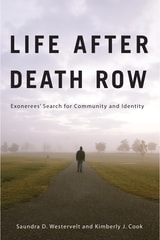
Life after Death Row
Exonerees' Search for Community and IdentitySaundra D. Westervelt and Kimberly J. Cook
Rutgers University Press, 2012
Life after Death Row examines the post-incarceration struggles of individuals who have been wrongly convicted of capital crimes, sentenced to death, and subsequently exonerated.
Saundra D. Westervelt and Kimberly J. Cook present eighteen exonerees’ stories, focusing on three central areas: the invisibility of the innocent after release, the complicity of the justice system in that invisibility, and personal trauma management. Contrary to popular belief, exonerees are not automatically compensated by the state or provided adequate assistance in the transition to post-prison life. With no time and little support, many struggle to find homes, financial security, and community. They have limited or obsolete employment skills and difficulty managing such daily tasks as grocery shopping or banking. They struggle to regain independence, self-sufficiency, and identity.
Drawing upon research on trauma, recovery, coping, and stigma, the authors weave a nuanced fabric of grief, loss, resilience, hope, and meaning to provide the richest account to date of the struggles faced by people striving to reclaim their lives after years of wrongful incarceration.
Listening Awry
Music And Alterity In German CultureDavid Schwarz
University of Minnesota Press, 2006
Listening Deeply
An Approach to Understanding and Consulting in Organizational Culture, Second EditionHoward F. Stein
University of Missouri Press, 2017
This new edition of Listening Deeply updates historical context, theory, method, and organizational stories. A psychodynamic orientation informs much of the book and the language Stein uses is direct. His lessons are useful to the manager in any kind of organization, as well as practitioners of psychology, sociology, business management, medicine, and education.
Listening Subjects
Music, Psychoanalysis, CultureDavid Schwarz
Duke University Press, 1997
Schwarz applies the ideas of post-Lacanian psychoanalytic theorists Slavoj Zizek, Julia Kristeva, and Kaja Silverman to an analysis of diverse works. In a discussion of John Adams’s opera Nixon in China, he presents music listening as a fantasy of being enclosed in a second skin of enveloping sound. He looks at the song cycles of Franz Schubert as an examination and expression of epistemological doubts at the advent of modernism, and traverses fantasy "space" in his exploration of the white noise at the end of the Beatles’ "I Want You (She’s So Heavy)." Schwarz also considers the psychosexual undercurrent in Peter Gabriel’s "Intruder" and the textual and ideological structures of German Oi Musik. Concluding with a reading of two compositions by Diamanda Galás, he reveals how some performances can simultaneously produce terror and awe, abjection and rage, pleasure and displeasure. This multilayered study transcends other interventions in the field of musicology, particularly in its groundbreaking application of literary theory to popular and classical music.

Lived Time
Phenomenological and Psychopathological StudiesEugène Minkowski; translated by Nancy Metzel; with a new foreword by Dan Zahavi
Northwestern University Press, 2019
First published in French in 1933 as Le temps vécu, this edition of this classic work of phenomenological psychiatry and psychopathology includes a new foreword by Dan Zahavi that presents some of Minkowski’s main ideas and discusses his contemporary relevance.

Lives of the Psychics
The Shared Worlds of Science and MysticismFred M. Frohock
University of Chicago Press, 2000
Lives of the Psychics, a journey through the terrain of psychic phenomena, tries to answer these questions through interviews with practicing psychics, a survey of the heroic attempts of researchers to test psychic abilities in controlled experiments, and an exploration of out-of-body, near-death, and mystical experiences. Fred M. Frohock brings together a wide variety of psychic claims and examines them with a rich set of materials—interviews, critical anecdotes, history, multiple theories of the paranormal—that allows him to use whatever tools are necessary to illuminate beliefs in the supernatural. He relates real-life events to scientific studies, so the reader is a party not only to fantastic experiences and first-hand stories of the paranormal but also to the rationales for these experiences proposed by scientists. There is no more rewarding guide to the limits and powers of science in explaining psychic phenomena.
To a field filled with uncertainty and suspicion, Frohock brings a discerning eye, a critical sensibility, and a fundamental sense of curiosity about the role of mysticism in science. Even skeptics will be intrigued.
Living Between Danger and Love
The Limits of ChoiceJones, Kathleen B.
Rutgers University Press, 1999
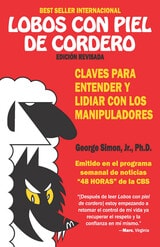
Lobos Con Piel De Cordero
Claves Para Entender Y Lidial Con Los ManipuladoresGeorge K. Simon, Ph.D.
Parkhurst Brothers, Inc., 2020
El Dr. George Simon sabe cómo algunas personas tocan la fibra sensible de otras. Tus hijos-en especial las adolescentes-son expertos en esto, al igual que tu pareja. Puede que tus compaiieros de trabajo desacrediten tus esfuerzos calladamente pretendiendo ser serviciales, o que tu jefe se aproveche de tus flaquezas. Las personas manipuladoras persiguen dos propósitos: ganar y quedar bien al hacerlo. A menudo, aquellos de quienes abusan apenas perciben lo que está pasando. Esta reveladora obra te abrirá los ojos y en ella descubrirás …
• 4 motivos par las que a las víctimas les cuesta tanto romper con susrelaciones abusivas
• tácticas que utilizan las manipuladores para imponer sus intenciones ocultas y justificar su comportamiento
• tácnicas para redefinir las reglas del juego entre tú y el abusador
• cómo detectar aquellos puntos débiles de tu carácter que tienden a hacerte caer en las redes de las manipuladores
• 12 técnicas de fortalecimiento personal que te ayudarán a tener mayor firmeza en todas tus relaciones
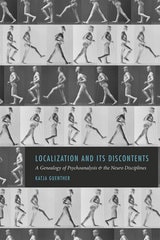
Localization and Its Discontents
A Genealogy of Psychoanalysis and the Neuro DisciplinesKatja Guenther
University of Chicago Press, 2015
Given these differences, it is remarkable that both fields found resources for their development in the same tradition of late nineteenth-century German medicine: neuropsychiatry. In Localization and Its Discontents, Katja Guenther investigates the significance of this common history, drawing on extensive archival research in seven countries, institutional analysis, and close examination of the practical conditions of scientific and clinical work. Her remarkable accomplishment not only reframes the history of psychoanalysis and the neuro disciplines, but also offers us new ways of thinking about their future.
Logic, Language and Computation
Edited by Jerry Seligman and Dag Westerståhl
CSLI, 1996
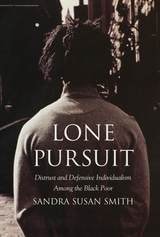
Lone Pursuit
Distrust and Defensive Individualism Among the Black PoorSandra Susan Smith
Russell Sage Foundation, 2007

Long Dark Road
Bill King and Murder in Jasper, TexasBy Ricardo C. Ainslie
University of Texas Press, 2004
On a long dark road in deep East Texas, James Byrd Jr. was dragged to his death behind a pickup truck one summer night in 1998. The brutal modern-day lynching stunned people across America and left everyone at a loss to explain how such a heinous crime could possibly happen in our more racially enlightened times. Many eventually found an answer in the fact that two of the three men convicted of the murder had ties to the white supremacist Confederate Knights of America. In the ex-convict ringleader, Bill King, whose body was covered in racist and satanic tattoos, people saw the ultimate monster, someone so inhuman that his crime could be easily explained as the act of a racist psychopath. Few, if any, asked or cared what long dark road of life experiences had turned Bill King into someone capable of committing such a crime.
In this gripping account of the murder and its aftermath, Ricardo Ainslie builds an unprecedented psychological profile of Bill King that provides the fullest possible explanation of how a man who was not raised in a racist family, who had African American friends in childhood, could end up on death row for viciously killing a black man. Ainslie draws on exclusive in-prison interviews with King, as well as with Shawn Berry (another of the perpetrators), King's father, Jasper residents, and law enforcement and judicial officials, to lay bare the psychological and social forces—as well as mere chance—that converged in a murder on that June night. Ainslie delves into the whole of King's life to discover how his unstable family relationships and emotional vulnerability made him especially susceptible to the white supremacist ideology he adopted while in jail for lesser crimes.
With its depth of insight, Long Dark Road not only answers the question of why such a racially motivated murder happened in our time, but it also offers a frightening, cautionary tale of the urgent need to intervene in troubled young lives and to reform our violent, racist-breeding prisons. As Ainslie chillingly concludes, far from being an inhuman monster whom we can simply dismiss, "Bill King may be more like the rest of us than we care to believe."
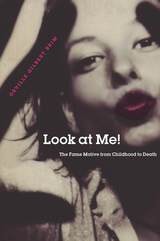
Look at Me!
The Fame Motive from Childhood to DeathOrville Gilbert Brim
University of Michigan Press, 2010
Four million adults in the United States say that becoming famous is the most important goal in their lives. In any random sampling of one hundred American adults, two will have fame as their consuming desire. What motivates those who set fame as their priority, where did the desire come from, how does the pursuit of fame influence their lives, and how is it expressed? Based on the research of Orville Gilbert Brim, award-winning scholar in the field of child and human development, Look at Me! answers those questions.
Look at Me! examines the desire to be famous in people of all ages, backgrounds, and social status and how succeeding or failing affects their lives and their personalities. It explores the implications of the pursuit of fame throughout a person's lifetime, covering the nature of the desire; fame, money, and power; the sources of fame; how people find a path to fame; the kinds of recognition sought; creating an audience; making fame last; and the resulting, often damaged, life of the fame-seeker.
In our current age of celebrity fixation and reality television, Brim gives us a social-psychological perspective on the origins of this pervasive desire for fame and its effects on our lives.
"Look at Me! is a fascinating in-depth study of society's obsession with fame. If you ever wondered what it's like to be famous, why fame comes to some and is sought by others, it's all here . . ."
---Jeffrey L. Bewkes, Chairman and CEO, Time Warner
"In a voice filled with wisdom and insight, daring and self-reflection, Orville Brim masterfully traces the developmental origins and trajectory of fame. Look at Me! lets us see---with new eyes---the cultural priorities and obsessions that feed our individual hunger and appetites. A rare and rewarding book."
---Sara Lawrence-Lightfoot, Emily Hargroves Fisher Professor of Education at Harvard University and author of Respect and The Third Chapter
Orville Gilbert Brim has had a long and distinguished career. He is the former director of the John D. and Catherine T. MacArthur Foundation Research Network on Successful Midlife Development, former president of the Foundation for Child Development, former president of the Russell Sage Foundation, and author and coauthor of more than a dozen books about human development, intelligence, ambition, and personality.
Cover image ©iStockphoto.com/susib
Looking at Lives
American Longitudinal Studies of the Twentieth CenturyErin Phelps
Russell Sage Foundation, 2002
Lost Time
On Remembering and Forgetting in Late Modern CultureDavid Gross
University of Massachusetts Press, 2000
What is the value of memory in human culture? More specifically, what role should remembering—and forgetting—play in our daily lives? These are the central questions that David Gross addresses in this original and thought-provoking book.
For centuries, Gross points out, remembering was considered essential not only to the perpetuation of society but to the maintenance of individual existence. Survival often depended on the memory of how to perform specific tasks, what values to honor, and what personal or collective identity to assume. Remembering, in short, put one in touch with the things that mattered, engendering wholeness and wisdom. Forgetting, on the other hand, led to emptiness, ignorance, and death.
With the advent of modernity, however, doubts about the value of memory grew while the negative implications of forgetting were reevaluated. In many quarters, forgetting came to be defended for the way it frees us from the past, opening the door to new perceptions, new possibilities, and new beginnings.
Now, in late modernity, Gross argues, we find ourselves in an unprecedented situation. For the first time in history, we are able to decide, without the pressure of social or cultural constraints, whether we want to remember or forget and to live our lives accordingly. But which is the better choice? Should we build our lives upon the meanings and values of a faded past? If so, what ought we to remember, and for what purpose? Or should we instead opt to forget what has come before and focus our attention on the present and future, thereby perpetually reinventing ourselves and the world we inhabit? According to Gross, our answers to these questions will determine not only who we are but what we will become as we pass from late modernity into the terra incognita of the “postmodern” age.

Love Apocalypse
New Intimacies and the Decline of Marriage and FertilityAlex J. Nelson
Rutgers University Press, 2026
Marriage and fertility rates are falling around the world, upending social security planning and threatening economic growth. In Love Apocalypse, anthropologists present their insights into this society-altering demographic shift, drawing on their research into the ways love, romantic relationships, and family are being transformed by cultural, social, and economic forces. Each case study in this volume examines a unique cultural context from either Asia (China, South Korea, Japan, India), Europe (Germany, Lithuania), or Latin America (Cuba, Peru), grounded in years of ethnographic research into how communities’ experiences and perceptions of love, marriage, and family are changing in response to economic precarity, shifting gender relations, status competition, and diversifying cultural norms. It is increasingly clear that marriage and two-parent nuclear families will not be the universal norm of the twenty-first century even if this arrangement was largely idealized a mere generation ago. However, this does not mean the end of love, intimacy, or family but rather its transformation and the emergence of new intimate relationships and adaptations to the challenges and opportunities of life in the twenty-first century.

Love In A Time Of Hate
Hollander, Nancy Caro
Rutgers University Press, 1997
Love That Works
Art & Science Of GivingBruce Brander
Templeton Press, 2004
This original, highly readable book poses a clear distinction between our customary form of love, which almost guarantees failure, and higher, more generous ways of loving that can succeed and enrich both individuals and society as a whole. Love That Works draws on history, psychology, and the theology and science of love to offer a proposal on how to be successful in love and romance. It starts by showing why love fails to meet expectations, often ending sadly or even tragically.
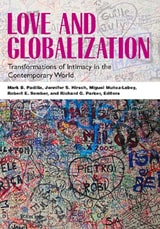
Love and Globalization
Transformations of Intimacy in the Contemporary WorldMark B. Padilla
Vanderbilt University Press, 2007
The richly-textured ethnographies provoke a series of questions about emerging vocabularies for friendship and romance; the adoption of cultural forms from faraway places; the emergence of new desires, pleasures, and emotions that circulate as commodities in the global marketplace; and the ways economic processes shape public and private expressions of sexual intimacy.
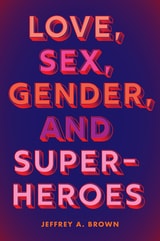
Love, Sex, Gender, and Superheroes
Jeffrey A. Brown
Rutgers University Press, 2022
Love, Sex, Gender, and Superheroes examines a full range of superhero media, from comics to films to television to merchandising. With a keen eye for the genre’s complex and internally contradictory mythology, comics scholar Jeffrey A. Brown considers its mixed messages. Superhero comics may reinforce sex roles with their litany of phallic musclemen and slinky femme fatales, but they also blur gender binaries with their emphasis on transformation and body swaps. Similarly, while most heroes have heterosexual love interests, the genre prioritizes homosocial bonding, and it both celebrates and condemns gendered and sexualized violence.
With examples spanning from the Golden Ages of DC and Marvel comics up to recent works like the TV series The Boys, this study provides a comprehensive look at how superhero media shapes our perceptions of love, sex, and gender.
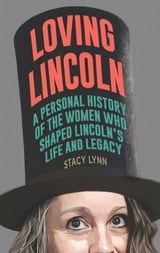
Loving Lincoln
A Personal History of the Women Who Shaped Lincoln's Life and LegacyStacy Lynn
Southern Illinois University Press, 2025
WINNER, 2026 Illinois State Historical Society Russell P. Strange Book of the Year Award!
Rediscovering Lincoln through the female gaze
Abraham Lincoln belongs to everybody. The women he interacted with helped forge the outstanding moral character of America's greatest president. This unique Abraham Lincoln biography features thirty historical and personal essays, and within them, the stories of more than ninety women, each with their own mini biographies in an appendix. Among them are Lincoln’s friends, clients, and extended family, as well as writers, artists, and—blurring the lines between history and memoir—author Stacy Lynn herself.
As a professional Lincoln scholar and editor, Lynn was often frustrated that male historians often overlooked Lincoln’s love for and friendship with women. Here, she posits a new paradigm—one that, instead of downplaying women, lifts up their interactions with Lincoln.
Lincoln understood the importance of the women in his life, and he put women’s wellbeing at the center of his personal, professional, and political ethos. He was loved by two strong pioneer mothers as well as sisters, friends, nieces, friends’ daughters, and his wife. He served women clients during his long legal career. As president, he met with women, dedicating time to hear their concerns despite the burdens of office. He replied to letters women wrote him. He believed in their capabilities and revolutionized the role of women in the workforce. After Lincoln’s death, women continued to shape his legacy. Mary Lincoln ensured his burial among friends, artist Vinnie Ream sculpted his statue in the US Capitol, and biographer Ida Tarbell provided a nuanced portrayal of his life. Harriet Monroe and Ruth Painter Randall further cemented his place in literature and history.
Lynn presents a fresh perspective on Lincoln, connecting his story to the stories of women and showcasing his kindness, sensitivity, and moral center. She explores how women shaped Lincoln’s inspirational legacy and pays homage to all the women who gave Lincoln to the world. Lynn’s unique blending of history, biography, and her own story reveals the ways in which an emotional connection to the historical figures one studies opens the door to richer human and historical understanding. By inviting readers to feel the past as well as read it, Lynn demonstrates that history matters most when it engages our minds and hearts.