Results by title
1214 books match the query 'Subjects & Themes' and 51 start with l
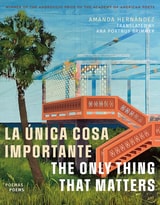
La única cosa importante / The Only Thing That Matters
Poemas / PoemsAmanda Hernández; Translated by Ana Portnoy Brimmer
University of Arizona Press, 2027
The poems featured in this award-winning collection contemplate the realities of the contemporary Puerto Rican experience. Rooted in the archipelago’s landscapes and the emotional topographies of diaspora, this collection confronts the fallout from colonialism while celebrating the sustaining power of friendship, memory, artistry, and collective love.
Holding together a scattered geography, the poems recognize land as both tangible territory and collective imaginary, reflecting on interconnected political, social, and economic crises that shape the intimacies of everyday life. With striking clarity and intimate reverence, Amanda Hernández names the fractures—and the hopes—that shape contemporary Puerto Rican life, ultimately affirming love as the force that endures.
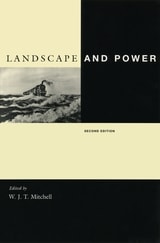
Landscape and Power, Second Edition
Edited by W. J. T. Mitchell
University of Chicago Press, 2002
The first edition of this book, published in 1994, reshaped the direction of landscape studies by considering landscape not simply as an object to be seen or a text to be read, but as an instrument of cultural force, a central tool in the creation of national and social identities. This second edition adds not only a new preface, but five new essays—from Edward Said, W. J. T. Mitchell, Jonathan Bordo, Michael Taussig, and Robert Pogue Harrison—extending the scope of the book in remarkable ways.
Landscape and Power continues to be a central text for students and scholars who want to understand the importance of landscape to the making of our social, political, and cultural world.
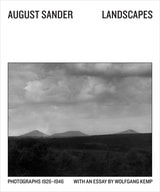
Landscapes
Photographs 1926-1946August Sander
University of Chicago Press, 2016
These photographs showcase a variety of scenes, from a sunrise over Cologne to the slopes of the Rhine valley. The Rhine River flows through many of these pictures, its dynamic curves and lively current leading the eye through an intriguing mix of natural and urban landscapes. A new essay by art historian Wolfgang Kemp provides context for Sander’s work while introducing his contemporaries, including the writer Hans Ludwig Mathar and the painter Franz M. Jansen. Also explored are the ties between Sander’s landscapes and his portrait photography, which is celebrated worldwide. Crucially, Kemp highlights the need to consider the Rhineland’s unique political situation in the 1920s and 1930s for any discussion of Sander’s artistic approach.
Shining welcome light on the full range of Sander’s practice, this book offers a glorious journey through the landscapes that most affected him.
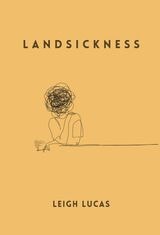
Landsickness
Leigh Lucas
Tupelo Press, 2024
Landsickness explores the inelegant progress of grief and pursues a relentless search for evidence of the beloved’s presence through the physics of splashes, the history of seasickness, and the science of depression. While full of tenderness, the poems employ humor and honesty to observe the ugliness of grief and the failure of elegy to restore the dead.
From the funeral to the office of her dead-end job to navigating the streets of New York, the speaker experiences a series of false starts as she learns to cope with her new life. Still, there is a real sense of progression in the collection’s end, even as the speaker continues to ask herself: “Why am I obsessed with the physics of his fall?"
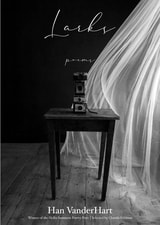
Larks
PoemsHan VanderHart
Ohio University Press, 2025
The core of Larks is rural and mythic and true, existential and domestic, tender while full of sharp grief and documentation. Circling genealogies of silence and harm in a southern family, Larks centers on the relationship and memories of three sisters and Ovid’s telling of Philomel. In a landscape inhabited as much by farm animals (cows, goats, chickens, and barn kittens) as by the family, the lyric poem parses and articulates the self’s history—from the experience of a sister’s home birth to the traumatic erasure (and recovery) of the speaker’s memory. A work of poetic memoir, Larks asks if poetry can hold the heaviest truths we carry. The answer is a resounding yes.
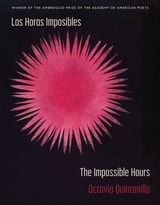
Las Horas Imposibles / The Impossible Hours
Octavio Quintanilla; Translated by Octavio Quintanilla and Natalia Treviño
University of Arizona Press, 2025
Presented in Spanish with English translations, this poetry collection comprises lyric and concrete poems—or frontextos—that explore intimacy and different shades of violence as a means to reconcile the speaker’s sense of belonging in the world. From the opening poem to the last in the first section, Quintanilla captures the perilous journeys that migrants undertake crossing borders as well as the paths that lovers forge to meet their endless longing. These themes are skillfully woven by Quintanilla, guiding us back and forth across the Rio Grande to encounter the apparitions of the disappeared and to witness the willingness of many to risk life and limb for a better life. The second half of the collection is one long poem, a letter addressed to a lost lover who will never get to read the speaker’s secret thoughts. Haunted by loss—of parents, of children, of the self—the speaker reaches an inevitable epiphany: “[A]nd sometimes it’s hard to know / on which side of the river I stand.” Stylistically, these poems destabilize our notions and expectations of genre and lyricism.
Las Horas Imposibles / The Impossible Hours is more than just an exercise in poetic virtuosity; it is an excavation into the complexities of what it means to be a human being in our contemporary world.
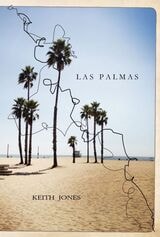
Las Palmas
Keith Jones
Omnidawn, 2026
The poems of Las Palmas conjure, walk beside, and tarry with the entangled grief of the long histories and violences in which we are all still embedded. Jones offers homage to the anguished beauties and truths that poet Jay Wright once said were “the disturbances” that “our ancestors create in us.” Grounded in musicality and haptics, Las Palmas seeks to salvage and mend while meditating on materiality, loss, cartography, kinship, displacement, coloniality, the “modern” world, and climate disasters. Throughout this collection, Keith Jones finds truth and community amid despair and the cruelest of circumstances, working through traumatic intimacies and mapping new imaginaries.
Las Palmas is the winner of the 2023 Omnidawn Poetry Chapbook Contest, selected by Brody Parrish Craig.
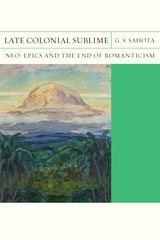
Late Colonial Sublime
Neo-Epics and the End of RomanticismG. S. Sahota
Northwestern University Press, 2018
By bringing together distinct literary canons—both metropolitan and colonial, hegemonic and subaltern, Western and Eastern, all of which took shape upon the common realities of imperial capitalism—Late Colonial Sublime takes an original dialectical approach. It experiments with fragments, parallaxes, and constellational form to explore the aporias of modernity as well as the possible futures they may signal in our midst. A bold intervention into contemporary debates that synthesizes a wealth of sources, this book will interest readers and scholars in world literature, critical theory, postcolonial criticism, and South Asian studies.
Late Fire, Late Snow
New and Uncollected PoemsRobert Francis
University of Massachusetts Press, 1992
Late Invocation for Magic
Jim Daniels
Michigan State University Press, 2026
In poems selected from his long career, Jim Daniels focuses on Detroit and other Rust Belt cities, where issues of class and race and justice play out in the streets and kitchens and backyards and garages of the Americans trying to live and make a living there. Known for his courage, clarity, and accessibility, Daniels examines the tension between our idealized country and the messier cultural and economic divides, often focusing on those who can’t afford or have access to “magic.”
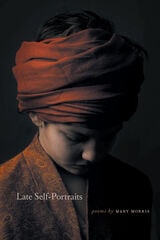
Late Self-Portraits
Mary Morris
Michigan State University Press, 2022
From “Dinner with Hades”:
He shows me a birthday cake, candled. My name is written in pomegranate
seeds. It’s like vertigo. Just before he seeks to devour, he halts to birdsong—
sound of goldfinch, bluebird, hawk, lilting of sparrows. Of whippoorwill
and dove. Wings flap, so many wings, a cool breeze as leaves unfurl into a
once forgotten green and I am back on earth, held in my mother’s arms.
Late Theory
Fredric Jameson, or The Persistence of ReadingPhillip E. Wegner
University of Minnesota Press, 2026
A bold, dialectic engagement with Fredric Jameson’s thought
Fredric Jameson (1934–2024) is widely regarded as the most influential literary and cultural theorist of the past fifty years. The culmination of more than three decades of sustained engagement with Jameson’s work, Late Theory offers a critical response to his late writings, namely the final volumes of his “Poetics of Social Forms,” to develop an original and dialectical reading practice in conversation with his evolving thought.
Jameson’s final works bring renewed clarity to three foundational concerns that structure his intellectual legacy. These are the problem of periodization and the challenge of grasping the present as a historical category, the dangers posed by the rise of moralizing modes of critique in literary and cultural studies, and the radical interpretive potential unlocked by allegory and the semiotic method. Phillip E. Wegner shows how these late interventions mark not a conclusion but an extension of Jameson’s long-standing project: envisioning the dialectic as a living, collective form of reasoning—a “thought mode of the future” capable of transforming our lives.
At its core, Late Theory is a passionate argument for cultural and aesthetic education as a practice of solidarity and imagination. Foregrounding Jameson’s enduring effort to build heterogeneous communities of readers committed to shared inquiry, Wegner affirms the urgency of reading, teaching, and thinking together in a moment of crisis for the university and global culture.
Retail e-book files for this title are screen-reader friendly with images accompanied by short alt text and/or extended descriptions.
Laurence Sterne’s A Sentimental Journey
A Legacy to the WorldW. B. Gerard
Bucknell University Press, 2021
Leap & Grow Feathers
Yona Harvey
Four Way Books, 2026
Both an instruction and a divination, Leap & Grow Feathers is an extraordinary transmission. In her third full-length collection, Yona Harvey listens — to her predecessors, her instincts, and her environment — gleaning sense from the static fraying our nerves, knowing the personal and the historical travel along the same frequency. Responding to the physical disruption and emotional disassociation of of the COVID-19 pandemic, the poet argues that the societal insistence on returning to “business as usual” reflects an institutional, academic, and political ineptitude to provide either physiological healing or social repair, a structural denial that erodes our humanity. As authoritarianism and ecological devastation progressively encroach on our lives, these poems prioritize hoodoo, spirit, intuition, and ancestral conversations in their readings, invoking the carekeeping and persistence of Harriet Tubman, Nikki Giovanni, and the countless forbears, unnamed and named, who traveled the Middle Passage and the Kalunga Crossing. This book channels the power and promise of that legacy as well as the full emotional range of sisterhood, the heartache and borrowed strength and shared laughter. Its humor, whitespace, sparseness, and longform narratives elicit reader participation and, in turn, enduring consideration. "This float. This bob. This drown. This rock. // (This Rock. This Rock.) // This Great Goddamn." What do we find in this vastness, the simultaneity of the ever expanding time that lies ahead and full presence of history consolidating here now? An invitation to join Harvey in her vow: “May I never pretend, / May eye be I.” This collection unveils our vision so we can see it all, not only yesterday’s “Nina Simone lyric / Spun out over a newborn Sunday” in this very moment but also the music unfurling over each incipient morning of the future world we might build together. Leap & Grow Feathers describes and directs: everything we need to survive, to shelter one another, and to protect the Earth lives already in our bodies, our lineages, and our lore.
Lear’s Other Shadow
A Cultural History of Queen LearThomas G. Olsen
University of Delaware Press, 2025
Leonardo, The Last Supper
Pinin Brambilla Barcilon and Pietro C. Marani
University of Chicago Press, 2001
The technical problems with the Last Supper began as soon as Leonardo started to paint it. He jettisoned the traditional fresco technique of applying paint to wet plaster, a method unsuited to Leonardo's slow and thorough execution, and created the work instead with an experimental technique that involved painting directly on the dry plaster. With this renegade method, Leonardo rendered one of the most enduring painting techniques volatile and unstable. Added to this initial complication have been centuries of pollution, tourists, candle smoke, and the ravages of age, not to mention food fights in the refectory staged by Napoleonic soldiers and Allied bombs in 1943. By the middle of the twentieth century, the Last Supper was in desperate need of a complete restoration.
Pinin Brambilla Barcilon was chosen to head this twenty-year project, and Leonardo, The Last Supper is the official record of her remarkable effort. It first documents the cleaning and removal of the overpainting performed in the other attempts at restoration and then turns to Barcilon's meticulous additions in watercolor, which were based on Leonardo's preparatory drawings, early copies of the painting, and contemporary textual descriptions. This book presents full-scale reproductions of details from the fresco that clearly display and distinguish Leonardo's hand from that of the restorer. With nearly 400 sumptuous color reproductions, the most comprehensive technical documentation of the project by Barcilon, and an introductory essay by art historian and project codirector Pietro C. Marani that focuses on the history of the fresco, Leonardo, The Last Supper is an invaluable historic record, an extraordinarily handsome book, and an essential volume for anyone who appreciates the beauty, technical achievements, and fate of Renaissance painting.
Lessons from Sarajevo
A War Stories PrimerJim Hicks
University of Massachusetts Press, 2013
Hicks explores the limitations of the sentimental tradition in war representation and asks how the work of artists and writers can help us to move beyond the constraints of that tradition. Ranging from Walt Whitman's writings on the Civil War to the U.S. wars in Iraq and Afghanistan, and focusing on the innovative and creative artistic expressions arising out of the wars of the former Yugoslavia, Hicks examines how war has been perceived, described, and interpreted. He analyzes the limitations on knowledge caused by perspective and narrative position and looks closely at the distinct yet overlapping roles of victims, observers, and aggressors. In the end, he concludes, war stories today should be valued according to the extent they make it impossible for us to see these positions as assigned in advance, and immutable.
Let It Be Broke
Ed Pavlic
Four Way Books, 2020
Let Them Tell You
New and Selected Short StoriesNancy Lord
University of Alaska Press, 2026
Nancy Lord, one of Alaska’s best-known writers, has been writing fiction and nonfiction in Alaska for more than fifty years. Let Them Tell You gathers selected stories from her three previous short fiction books, each first published in a different decade, alongside newer work, some published in journals and some unpublished until now.
Lord first wrote as a way to think about her life in Alaska when she was a young woman, and her curiosity took her farther afield with each book. Some stories draw on personal experience; others from newspaper headlines, historical events, and myths. Some respond to earlier writers and their literary works. Some are serious about social concerns and matters of justice; some are seriously funny. Animals and children, seekers and dreamers—in one case an entire community—all take turns as central characters. This collection traces Lord’s writerly influences and her concerns for both humankind and the natural world and suggests the ways writers and readers alike travel through time and imagined lives, learning as they go about cruelties, compassion, and the human heart. An introduction by the author and an afterword by scholar Eric Heyne supplement the stories with context about the writer’s journey and the evolution of Alaska literature.
Lord’s close observation of the natural world is a hallmark of her work, as is her attention to environmental themes and social issues. Let Them Tell You demonstrates the range of her talent for presenting not only variations on life in Alaska but the human condition on a larger and timeless scale.
Lethal Theater
Susannah Nevison
The Ohio State University Press, 2019
Reckons with the rituals of violence that underpin the American prison system, asking readers to consider the act and complications of looking at violence and suffering.
In Lethal Theater, Susannah Nevison offers a stark and lyrical reckoning with the hidden architectures of the American prison system. These poems inhabit the charged territory where medicine and punishment converge, revealing how the body becomes both patient and instrument under state control. Moving through histories of wartime confinement, interrogation, and isolation, Nevison writes a poetry of witness to the carceral state, illuminating what is so often kept from view.
With precision and moral force, Nevison examines the shadows cast by medical experimentation on imprisoned bodies, the blurred boundary between hospital anesthesia and the drugs used in lethal injection protocols, and the rituals of surveillance that shape life behind bars. This is a work rooted in the medical humanities of confinement, an inquiry into how suffering is recorded, observed, and, at times, rendered invisible.
Lethal Theater makes visible the brutal logics beneath state-sanctioned pain and insists on the urgency—and responsibility—of looking closely at what the nation asks its incarcerated to endure.
Letters from Limbo
Jeanne Marie Beaumont
CavanKerry Press, 2016

Letters from the Black Ark
D.S. Marriott
Omnidawn, 2023
The poems in this collection center on the word “dub,” which accrues a subtle lyrical connotation throughout its various forms and meanings—to bestow, vest, crown, and also to suspend, reverb, echo, and sever. Dub poetry plays with revealing and concealing, while also pointing the way to the conditions that produce black poetic music. In D.S. Marriott’s poetry, tragic catastrophes of current black existence—London knife crime, the Windrush scandal, Grenfell, and deadly race violence—are portrayed as questions of language. To speak this language, as Marriott’s poem show, is to take on the forces that cause rupture. Throughout these poems of loss, exile, and obliteration, the poet foresees his downfall and metamorphosis, ultimately realizing too late that he cannot transcend the reverberations and echoes laden with black social death.
Levee
Paul Otremba
Four Way Books, 2019
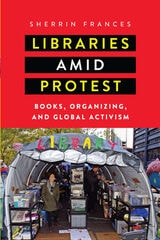
Libraries amid Protest
Books, Organizing, and Global ActivismSherrin Frances
University of Massachusetts Press, 2020
Libraries amid Protest unpacks how these protest libraries—labor-intensive, temporary installations in parks and city squares, poorly protected from the weather, at odds with security forces—continue to arise. In telling the stories of these surprising and inspiring spaces through interviews and other research, Sherrin Frances confronts the complex history of American public libraries. She argues that protest libraries function as the spaces of opportunity and resistance promised, but not delivered, by American public libraries.

Life at the End of Life
Finding Words Beyond WordsMarcia Brennan
Intellect Books, 2017
Those questions are at the heart of this unique book. Bridging disparate fields, including art history, medical humanities, and religious studies, Life at the End of Life explores the ways in which art can provide a means for rendering otherwise abstract, deeply personal, and spiritual experiences vividly concrete and communicable, even as they remain open-ended and transcendent. In the face of death, suffering, and uncertainty, Brennan shows how artistic expression can offer valuable aesthetic and metaphysical avenues for understanding and for making meaning.
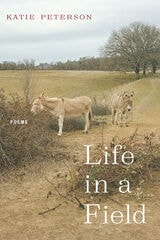
Life in a Field
PoemsKatie Peterson
Omnidawn, 2021
A lyric fable, Life in a Field intersperses Katie Peterson’s slow-moving, cinematic, and sensual writing with three folios of photographs by Young Suh. Introspection, wish, dream, and memory mark this tale, which is set in a location resembling twenty-first-century California—with vistas and orchards threatened by drought and fires. This is also a place of enchantment, a fairy-tale landscape where humans and animals live as equals. As the girl and the donkey grow up, they respond to the difficulties of contemporary civilization, asking a question that meets our existential moment: What do you do with the story you didn’t wish for? A narrator’s voice combines candor with distance, attempting to find a path through our familiar strife, toward a future that feels all but impossible, and into what remains of beauty and pleasure. Life in a Field tries to reverse our accelerating destruction of the natural world, reminding us of “the cold clarity we need to continue on this earth.”
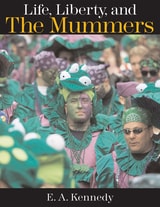
Life, Liberty, and the Mummers
Ed Kennedy
Temple University Press, 2007
Noted photographer E. A. Kennedy spent four years documenting the Mummers and their parade. He has personally selected the striking images included here -- more than 150 in all -- and he has written an engaging history of the parade itself. As Kennedy explains, and as his photos make clear, "mummery" is a way of life for Mummers, who have deep attachments to their clubs, associations, and brigades.
For all its glitz, the Mummers Parade remains a folk parade. This is the captivating story of the folks behind the parade.
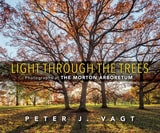
Light Through the Trees
Photographs at The Morton ArboretumPeter J. Vagt
University of Illinois Press, 2022
“I don’t compose pictures, I find them in the colors, patterns, and shadows of the trees in front of me. While I walk, I let my feelings well up in my consciousness. My feelings guide me to find what I’m seeing and feeling and distill it into a picture.”
A beloved and popular Illinois institution, The Morton Arboretum welcomes one million annual visitors to walk its trails and view the 4,200 tree species on the grounds. Peter Vagt has photographed the Arboretum for over twenty years. This collection showcases eighty-five of his favorite works, each one in full color. Vagt's close attention to place and time reflects both his profound connection to the Arboretum and its preeminence as a sanctuary for anyone in search of transcendence in nature.
A celebration of The Morton Arboretum in its centenary year, Light Through the Trees is the perfect keepsake or gift for anyone who admires trees and believes in their restorative power.
Lightning from the Depths
An Anthology of Albanian PoetryRobert Elsie and Janice Mathie-Heck
Northwestern University Press, 2008
If a people
Have no poets
And no poetry of their own
For a National Anthology
Then treachery and barking
Will do the trick
With these words, a challenge is laid down in this new volume of Albanian poetry. Albania, however, has a dynamic tradition of literature. Lightning from the Depths is the first English collection to present the full range of Albanian verse. Albanian literature has had many lives. The early Christian traditions disappeared as Islam and the Ottoman Empire took over. Muslim literature, too, withered when the nation strove to become an independent European country. The beginnings of a modern tradition were quashed by the Stalinists. All along this rocky path, poets have turned the political strife, poverty, and isolation their nation has often experienced into culture, both celebrating and questioning the society in which they live. Lightning from the Depths opens readers’ eyes to a new political and cultural world populated artists who can spin despair into poetry.
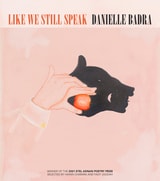
Like We Still Speak
Danielle Badra
University of Arkansas Press, 2021
Conversation and memory are at the heart of Danielle Badra’s Like We Still Speak, winner of the 2021 Etel Adnan Poetry Prize. In her elegiac and formally inventive debut, Badra carries on talking with the sister and father she has lost, often setting her words alongside theirs and others’ in polyphonic poems that can be read in multiple directions. Badra invites the reader to engage in this communal space where she investigates inheritance, witnessing, intimacy, and survival.
“This is a deeply spiritual book, all the more so because of its clarity and humility. Yet, we cannot walk away from the addictive command that so many of these poems ask us to follow: to read them along plural paths whose order changes while their immeasurable spirit remains unbound. Each poem is a singular vessel—of narratives, embodiments that correspond with memories, memories that recollect passion. . . . Like We Still Speak is a sanctum. Inside it, we are enthralled by beauty, consoled by light, sustained by making.”
—Fady Joudah and Hayan Charara, from the Preface
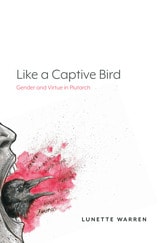
Like a Captive Bird
Gender and Virtue in PlutarchLunette Warren
Lever Press, 2023
The full extent of Plutarch’s moral educational program remains largely understudied, at least in those aspects pertaining to women and the gendered other. As a result, scholarship on his views on women have differed significantly in their conclusions, with some scholars suggesting that he is overwhelmingly positive towards women and marriage and perhaps even a “precursor to feminism,” and others arguing that he was rather negative on the issue. Like a Captive Bird: Gender and Virtue in Plutarch is an examination of these educational methods employed in Plutarch’s work to regulate the expression of gender identity in women and men. In six chapters, author Lunette Warren analyzes Plutarch’s ideas about women and gender in Moralia and Lives. The book examines the divergences between real and ideal, the aims and methods of moral philosophy and psychagogic practice as they relate to identity formation, and Plutarch’s theoretical philosophy and metaphysics.
Warren argues that gender is a flexible mode of being that expresses a relation between body and soul, and that gender and virtue are inextricably entwined. Plutarch’s expression of gender is also an expression of a moral condition that signifies relationships of power, Warren claims, especially power relationships between the husband and wife. Uncovered in these texts is evidence of a redistribution of power, which allows some women to dominate other women and, in rare cases, men too. Like a Captive Bird offers a unique and fresh interpretation of Plutarch’s metaphysics which centers gender as one of the organizational principles of nature. It is aimed at scholars of Plutarch, ancient philosophy, and ancient gender studies, especially those who are interested in feminist studies of antiquity.
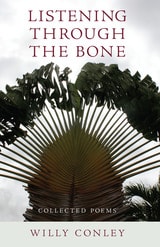
Listening through the Bone
Collected PoemsWilly Conley
Gallaudet University Press, 2018
In Listening through the Bone, Willy Conley bears witness to life’s moments and renders them into poems that are at once irreverent and tender. His poetry examines life cycles, the natural world, and his experiences as a Deaf individual. It is presented in five parts:
- Inaudibles
- Existentials
- Quizzicals
- Irrevocables
- Environmentals
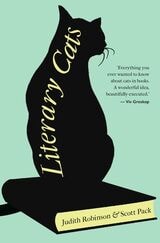
Literary Cats
Judith Robinson and Scott Pack
Bodleian Library Publishing, 2022
From Puss in Boots to T. S. Eliot’s Jellicles, cats have long inspired an incredible range of fiction, memoir, and poetry. This book celebrates the connections between our favorite feline friends and the literary imagination, diving into ancient myths and fables, much-loved children’s books, classic literature, and contemporary novels.
Featuring famous fictional characters such as Lewis Carroll’s Cheshire Cat, Beatrice Potter’s Tom Kitten, and Edgar Allan Poe’s Pluto, Literary Cats explores the role of felines across literary genres. This light-hearted history also uncovers their domestication, early cultural beginnings, and religious associations. The collection also reveals the history of several real-life cats such as Bob, the famous London street cat, as well as cats belonging to authors Ernest Hemingway, Patricia Highsmith, Muriel Spark, and more. A section on cats in world literature introduces narrator cats and cat companions from Japan, Eastern Europe, France, Greece, Germany, and Finland, demonstrating their enduring worldwide appeal.
Literary Histories in Portuguese
João Cezar De Castro Rocha
Tagus Press, 2014
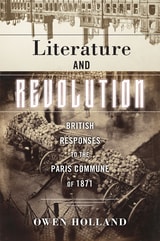
Literature and Revolution
British Responses to the Paris Commune of 1871Owen Holland
Rutgers University Press, 2022
This book examines how a heterogeneous group of authors in Britain responded to the Commune. In doing so, it provides the first full-length critical study of the reception and representation of the Commune in Britain during the closing decades of the nineteenth century, showing how discussions of the Commune functioned as a screen to project hope and fear, serving as a warning for some and an example to others. Writers considered in the book include John Ruskin, Edward Bulwer-Lytton, Eliza Lynn Linton, Mary Elizabeth Braddon, Anne Thackeray Ritchie, Margaret Oliphant, George Gissing, Henry James, William Morris, Alfred Austin and H.G. Wells. As the book shows, many, but not all, of these writers responded to the Commune with literary strategies that sought to stabilize bourgeois subjectivity in the wake of the traumatic shock of a revolutionary event. The book extends critical understanding of the Commune’s cultural afterlives and explores the relationship between literature and revolution.
Little Sound
Katherine Gibbel
University of Chicago Press, 2026
Attentive to echo and resonance, this debut collection ranges across and makes connections among natural, musical, and literary histories.
The title for Katherine Gibbel’s debut collection plays with the etymology of the sonnet, or sonnetto in Italian: a little song or little sound. Exploring the possibility of words and the limits inherent in both language and form, Little Sound asks its reader, “Did you hear that?” and tunes in to what echoes when we listen.
Divided into three long poems, Little Sound explores language, gossip, reading practices, love, and death, tracing webs of meaning across a range of seemingly disparate topics. Gibbel’s speaker interrogates partial histories and turns them into meditations on the literary, the natural, and the personal, including the subdivided memorial prairies of the Midwest, family history, pipe organs, and medieval theology. Associative, funny, curious, bell-like, and elaborately architectural, Gibbel’s poems offer a study in emotional nuance, knowing winks, and sonic attentiveness.
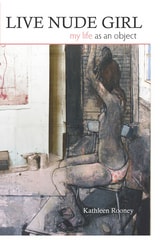
Live Nude Girl
My Life as an ObjectKathleen Rooney
University of Arkansas Press, 2008
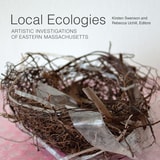
Local Ecologies
Artistic Investigations of Eastern MassachusettsEdited by Kirsten Swenson and Rebecca Uchill
Amherst College Press, 2026
Local Ecologies: Artistic Investigations of Eastern Massachusetts is an innovative multimedia exploration of the entangled natural and cultural ecologies of Eastern Massachusetts. The book’s rich archive of essays, interviews, and artistic projects reveals the region’s layered Indigenous, colonial, and industrial histories, showing how art can deepen understanding of place. The volume foregrounds multiple ways of knowing and making place—through observation, research, memory, and collective action—offering the reader models for ongoing engagement with the region and beyond.
Developed through a multiyear collaboration among artists, scholars, activists, and community stakeholders, this volume takes its name from an initiative hosted by three University of Massachusetts campuses (Boston, Dartmouth, and Lowell) in 2019 and 2020. Through essays, videos, sound artworks, artist books, and other intermedia offerings, the book’s contributors reflect on sites such as Walden Pond, Deer Island in Boston Harbor, New Bedford Harbor, and the Merrimack River, tracing histories of use and interpretation of place, and exploring contemporary responses to those legacies through creative acts of reclamation. At a moment when the infrastructures of cultural memory are increasingly under threat, Local Ecologies insists on art as a vital mode of collective reckoning and possibility.
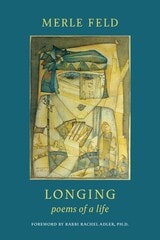
Longing
Poems of a LifeMerle Feld
Central Conference of American Rabbis, 2023
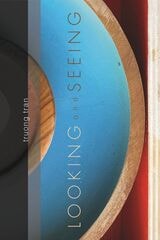
Looking and Seeing/Seeing and Looking
Damon Potter and Truong Tran
Omnidawn, 2023
This book brings together different perspectives under two titles, considering the lives and experiences of two friends, one Vietnamese American and one white. Looking And Seeing is a poetic work of yearning, regret, and righteous indignation. In Truong Tran’s poetry, what is said and what is written reveal our complexities. Composed as an investigation of his own being and body as a brown person moving through white spaces, this collection moves alongside Tran’s friend and collaborator Damon Potter. Seeing and Looking offers a record of Potter’s perspective as a white man examining who he is and wants to be and the complications of trying to be good while also benefiting from histories of oppression. Potter considers death—both his own future death and the deaths of his friends—while grappling with how to witness horrors, wonders, and his self.
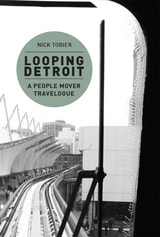
Looping Detroit
A People Mover TravelogueNick Tobier
Michigan Publishing Services, 2016
Looping Detroit invites artists and writers to ride the small loop as an explorer, mining the environs around each station as a poetic ramble, a psycho geographic wander, a cultural inquiry that simultaneously ponders the poetics of circulating above the city streets while probing the greater narrative of Detroit’s public transit conundrum.
Contributors include award-winning Detroit novelists Lolita Hernandez and Michael Zardoorian, poets Gloria House and Walter Lacy, music producer Cornelius Harris, Chace MicWrite Morris, frontman of the Detroit hip-hop trio Coldmen Young, and radio producer Zak Rosen.
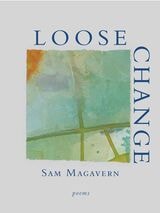
Loose Change
Sam Magavern
Tupelo Press, 2026
A luminous, darkly playful collection of poems that moves with equal ease through myth, scripture, history, domestic life, and the surreal textures of contemporary existence.
In three interwoven sections—”King David,” “Loose Change,” and “Life with Atropos”—Sam Magavern’s Loose Change reimagines biblical figures, philosophers, ordinary laborers, animals, and dreamers with a voice that is by turns comic, tender, metaphysical, and elegiac. These poems assemble a mosaic of loss, desire, absurdity, memory, and endurance, finding flashes of beauty and meaning in the discarded, the humble, and the half-forgotten. With formal agility and a distinctive wit, Loose Change affirms poetry’s power to transfigure the everyday while confronting time, mortality, and longing with both gravity and radiance.
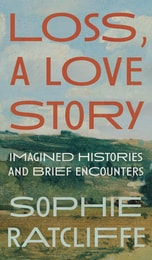
Loss, A Love Story
Imagined Histories and Brief EncountersSophie Ratcliffe
Northwestern University Press, 2024
Part memoir, part imagined history, this unique personal essay depicts the intimate experience of childhood bereavement, lost love affairs, and the complicated realities of motherhood and marriage. Framed by an extended train journey, author Sophie Ratcliffe turns to the novels, novelists, and heroines who have shaped her emotional and romantic landscapes. She transports us with her to survey the messiness of everyday life, all while reflecting on steam propulsion and pop songs, handbags and honeymoons, Anna Karenina and Anthony Trollope, former lovers and forgotten muses. Frank, funny, tender, and transporting, Loss, A Love Story asks why we fall in, and out, of love—and how we might understand doing so amid the ongoing upheavals and unwritten futures of the twenty-first century.
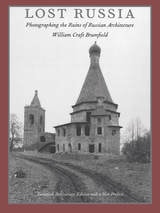
Lost Russia
Photographing the Ruins of Russian ArchitectureWilliam Craft Brumfield
Duke University Press, 1995
The twentieth century in Russia has been a cataclysm of rare proportions, as war, revolution, famine, and massive political terror tested the limits of human endurance. The results of this assault on Russian culture are particularly evident in ruined architectural monuments, some of which are little known even within Russia itself. Over the past four decades William Craft Brumfield, noted historian and photographer of Russian architecture, has traveled throughout Russia and photographed many of these neglected, lost buildings, poignant and haunting in their ruin. Lost Russia provides a unique view of Brumfield’s acclaimed work, which illuminates Russian culture as reflected in these remnants of its distinctive architectural traditions.
Capturing the quiet, ineffable beauty that graces these buildings, these photographs are accompanied by a text that provides not only a brief historical background for Russian architecture, but also Brumfield’s personal impressions, thoughts, and insights on the structures he views. Churches and monasteries from the fifteenth to the twentieth century as well as abandoned, ruined manor houses are shown—ravaged by time, willful neglect, and cultural vandalism. Brumfield also illustrates examples of recent local initiatives to preserve cultural landmarks from steady decline and destruction.
Concluding with photographs of the remarkable log architecture found in Russia’s far north, Lost Russia is a book for all those concerned with the nation’s cultural legacy, history, and architecture, and with historic and cultural preservation generally. It will also interest those who appreciate the fine art of exceptional photography.
Love Is My Savior
The Arabic Poems of RumiNesreen Rumi
Michigan State University Press, 2016
This dual-language volume opens a treasury of Rumi’s mystic thought and startling poetry. His verses pulsate with desire and longing, with sensuality, and with ecstatic celebration. Rumi found in his mystic poetry a vehicle for the expression of the endless spiritual bounties of love. He placed love at the center of his faith and doctrine, and he pronounced it to be the goal of his life and the only form of true worship. This collection is stunningly rendered in English by an award-winning poet and a distinguished translator of Arabic poetry.

Love Letter To Who Owns The Heavens
Corey Van Landingham
Tupelo Press, 2021
“What love poem / could be written when men can no longer / look up?” this book asks, always in a state of flux between doubt and belief—in wars, in gods, in fathers, in love. Through epistolary addresses to these figures of power and others, these poems attempt to make bodies concrete and dangerous, immediate and addressable, once again.
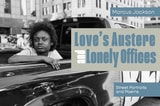
Love’s Austere and Lonely Offices
Street Portraits and PoemsMarcus Jackson
Northwestern University Press, 2026
An astounding collection of photographs from a renowned poet
Created during the tumultuous years of 2020 and 2021, Love’s Austere and Lonely Offices: Street Portraits and Poems intersects the lens of accomplished poet and photographer Marcus Jackson with his words. The focus: the Black experience and existence. Amid isolation, protest, and survival, Jackson is the aperture and scribe giving visual consciousness and breath to these human portraits. His camera strips the view of endless cycles of social and moral injustices, presenting a resonant collection of photographs that make space for the moments and the people whose beings represent the ongoing interplay between history, society, and the individual soul.
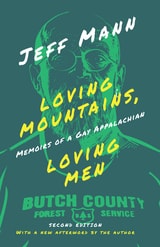
Loving Mountains, Loving Men
Memoirs of a Gay AppalachianJeff Mann
Ohio University Press, 2023
Lucky Fish
Aimee Nezhukumatathil
Tupelo Press, 2011
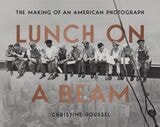
Lunch on a Beam
The Making of an American PhotographChristine Roussel
Brandeis University Press, 2026
Lunch on a Beam, also known as Lunch Atop a Skyscraper, shows ironworkers eating lunch on a steel beam during the construction of Rockefeller Center’s RCA Building in 1932. It’s a photo so famous you can likely picture it in your mind: seated in a row, eleven men chat and break bread 850 feet above the ground, the dense cityscape behind them. While the scene may look spontaneous, the photo was taken during a publicity shoot to promote Rockefeller Center’s new skyscraper. And despite the image’s renown, for years, little information was available about its subjects or its photographer.
In Lunch on a Beam, Rockefeller Center archivist Christine Roussel interweaves the art, architectural, and social history behind the photograph with her personal experience as a confidante to the financiers who developed Rockefeller Center. She tells the stories of the fearless photographers, brazen publicity men, the ironworkers, and their immigrant and Indigenous communities. This portrait of eleven construction workers, she points out, is also a celebration of the nation’s richest man. She examines how, in the depths of the Great Depression, John D. Rockefeller, Jr., took it upon himself to build a monument to American industry and sell it to the public.
Featuring striking images from the Rockefeller Center Archives, Lunch on a Beam calls attention to the fascinating paradoxes contained in a single photo and celebrates the men who built an architectural marvel at great personal risk. This is a story of art and commerce, and the role of a photograph in the mythmaking of New York City.