Results by title
18284 books match the query 'United States' and 698 start with l
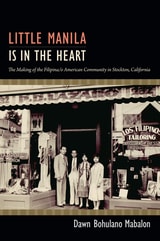
Little Manila Is in the Heart
The Making of the Filipina/o American Community in Stockton, CaliforniaDawn Bohulano Mabalon
Duke University Press, 2013
Mabalon draws on oral histories, newspapers, photographs, personal archives, and her own family's history in Stockton. She reveals how Filipina/o immigrants created a community and ethnic culture shaped by their identities as colonial subjects of the United States, their racialization in Stockton as brown people, and their collective experiences in the fields and in the Little Manila neighborhood. In the process, Mabalon places Filipinas/os at the center of the development of California agriculture and the urban West.

Little Saigons
Staying Vietnamese in AmericaKarin Aguilar–San Juan
University of Minnesota Press, 2009
Karin Aguilar-San Juan examines the contradictions of Vietnamese American community and identity in two emblematic yet different locales: Little Saigon in suburban Orange County, California (widely described as the capital of Vietnamese America) and the urban "Vietnamese town" of Fields Corner in Boston, Massachusetts. Their distinctive qualities challenge assumptions about identity and space, growth amid globalization, and processes of Americanization.
With a comparative and race-cognizant approach, Aguilar-San Juan shows how places like Little Saigon and Fields Corner are sites for the simultaneous preservation and redefinition of Vietnamese identity. Intervening in debates about race, ethnicity, multiculturalism, and suburbanization as a form of assimilation, this work elaborates on the significance of place as an integral element of community building and its role in defining Vietnamese American-ness.
Staying Vietnamese, according to Aguilar-San Juan, is not about replicating life in Viet Nam. Rather, it involves moving toward a state of equilibrium that, though always in flux, allows refugees, immigrants, and their U.S.-born offspring to recalibrate their sense of self in order to become Vietnamese anew in places far from their presumed geographic home.
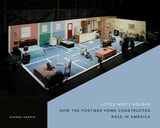
Little White Houses
How the Postwar Home Constructed Race in AmericaDianne Harris
University of Minnesota Press, 2013
A rare exploration of the racial and class politics of architecture, Little White Houses examines how postwar media representations associated the ordinary single-family house with middle-class whites to the exclusion of others, creating a powerful and invidious cultural iconography that continues to resonate today. Drawing from popular and trade magazines, floor plans and architectural drawings, television programs, advertisements, and beyond, Dianne Harris shows how the depiction of houses and their interiors, furnishings, and landscapes shaped and reinforced the ways in which Americans perceived white, middle-class identities and helped support a housing market already defined by racial segregation and deep economic inequalities.
After describing the ordinary postwar house and its orderly, prescribed layout, Harris analyzes how cultural iconography associated these houses with middle-class whites and an ideal of white domesticity. She traces how homeowners were urged to buy specific kinds of furniture and other domestic objects and how the appropriate storage and display of these possessions was linked to race and class by designers, tastemakers, and publishers. Harris also investigates lawns, fences, indoor-outdoor spaces, and other aspects of the postwar home and analyzes their contribution to the assumption that the rightful owners of ordinary houses were white.
Richly detailed, Little White Houses adds a new dimension to our understanding of race in America and the inequalities that persist in the U.S. housing market.
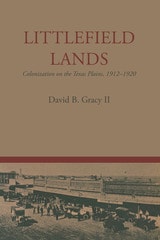
Littlefield Lands
Colonization on the Texas Plains, 1912–1920By David B. Gracy II
University of Texas Press, 1968
The phenomenon of colonization by big land companies, common throughout the history of the United States, came late to the Panhandle-Plains of West Texas. Ranchers held sway there up into the 20th century. Then, realizing that the future followed the plow, they, joined by business owners and speculators, founded towns on their land, competed for railroad connections, provided irrigation wells and other improvements, and engaged in a variety of advertising activities to interest prospective settlers and to sell the land to farmers at a profit. Trainloads of such "prospectors" were brought in to tour the land; and salesmen of all kinds roamed all the more settled states painting enticing pictures of the fertile lands which their employers offered for sale.
Major George W. Littlefield created the Littlefield Lands Company and founded the town of Littlefield, Texas, in 1912, in order to sell as farmland a part of his Yellow House Ranch. His sales manager, Arthur P. Duggan (his nephew by marriage, and grandfather of the author of this study), used many of the techniques then current to attract buyers for the Lamb County land in and around Littlefield. He dug wells and operated a demonstration farm; he planted trees, planned a park, and otherwise beautified the town; he helped to create and maintain a school, a bank, and a number of businesses; and he negotiated contracts and coordinated the activities of innumerable independent land agents.
Because the role of the big land company in the settlement of the United States has not, on the whole, received the attention which it deserves, this detailed examination of the operations of one such company is of particular significance. Most of the book is devoted to the creation of the company, the steps taken to make the area attractive to potential settlers, and the problems which beset the building of the community. One chapter discusses the techniques and the difficulties of selling land through independent agents. The final chapter considers the people who moved onto the Littlefield tracts—where they came from, why they came, what their reactions were to the plains country, and how they learned to cope with their new environment. An appendix gives pertinent information about all land transactions conducted by the company between 1912 and 1920, and about each buyer.
For this study the author made use of previously unknown records discovered while he was gathering information for a biography of Major Littlefield.
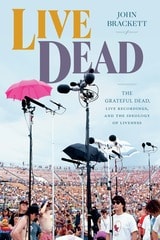
Live Dead
The Grateful Dead, Live Recordings, and the Ideology of LivenessJohn Brackett
Duke University Press, 2023

Live Fast, Love Hard
The Faron Young StoryDiane Diekman
University of Illinois Press, 2012
As one of the best-known honky tonkers to appear in the wake of Hank Williams’s death, Faron Young was a popular presence on Nashville’s music scene for more than four decades. The Singing Sheriff produced a string of Top Ten hits, placed over eighty songs on the country music charts, and founded the long-running country music periodical Music City News in 1963. Flamboyant, impulsive, and generous, he helped and encouraged a new generation of talented songwriter-performers that included Willie Nelson and Bill Anderson. In 2000, four years after his untimely death, Faron was inducted into the Country Music Hall of Fame.
Presenting the first detailed portrayal of this lively and unpredictable country music star, Diane Diekman masterfully draws on extensive interviews with Young’s family, band members, and colleagues. Impeccably researched, Diekman’s narrative also weaves anecdotes from Louisiana Hayride and other old radio shows with ones from Young’s business associates, including Ralph Emery. Her unique insider’s look into Young’s career adds to an understanding of the burgeoning country music entertainment industry during the key years from 1950 to 1980, when the music expanded beyond its original rural roots and blossomed into a national (ultimately, international) enterprise. Echoing Young’s characteristic ability to entertain and surprise fans, Diekman combines an account of his public career with a revealing, intimate portrait of his personal life.
Live Form
Women, Ceramics, and CommunityJenni Sorkin
University of Chicago Press, 2016
Sorkin focuses on three Americans who promoted ceramics as an advanced artistic medium: Marguerite Wildenhain, a Bauhaus-trained potter and writer; Mary Caroline (M. C.) Richards, who renounced formalism at Black Mountain College to pursue new performative methods; and Susan Peterson, best known for her live throwing demonstrations on public television. Together, these women pioneered a hands-on teaching style and led educational and therapeutic activities for war veterans, students, the elderly, and many others. Far from being an isolated field, ceramics offered a sense of community and social engagement, which, Sorkin argues, crucially set the stage for later participatory forms of art and feminist collectivism.
Live From the Trenches
The Changing Role of the Television News CorrespondentEdited by Joe S. Foote. Foreword by Ted Koppel
Southern Illinois University Press, 1998
From Edward R. Murrow to "Sixty Minutes" and CNN, the television news correspondent has become a fixture of American journalism in the latter half of the twentieth century. The correspondent's role has changed, however, as centralized control, changing technology, "infotainment," and profit margin have influenced the way that television networks operate and television news is reported.
In spite of the flood of literature dealing with the American television networks, the evening anchors, and prime-time personalities, little has been written about the "the foot soldier of network news." Live from the Trenches fills that gap, providing the first examination of television news correspondents and their work, with much of the analysis coming from the correspondents themselves.
The correspondents:
Jim Bittermann, a former ABC Paris correspondent, has been the CNN Paris correspondent since 1996. He received a National News Emmy for his coverage of the 1988 Sudan famine.
Chris Bury, correspondent for "Nightline" since 1993, has covered foreign and domestic stories from Waco to Whitewater.
Michael Murrie, after a dozen years in television news at KSDK in St. Louis, is an associate professor and director of the Telecommunications Master's Program for the Department of Radio-Television at Southern Illinois University at Carbondale.
Roger O'Neil, NBC News Denver bureau chief and correspondent since 1983, was the lead reporter for NBC during the Oklahoma City bombing trial of Timothy McVeigh.
Walter C. Rodgers, bureau chief and correspondent in Jerusalem, joined CNN in 1993 as the Berlin correspondent. Prior to joining CNN, he worked for ABC for twelve years.
Marlene Sanders broke barriers for women throughout her career and has won three Emmies. As a correspondent at ABC News in 1964, she was the first woman to anchor a prime-time network newscast.
George Strait is the primary ABC News correspondent for medical and health news. Among his many awards are the Alfred I. duPont Award and Gold Medal Award from the National Association of Black Journalists.
Ed Turner is CNN's first editor-at-large. Based in Washington, he represents the CNN News Group globally.
Garrick Utley joined CNN in 1997 after thirty years covering more than seventy countries for ABC.
Live Nude Girl
My Life as an ObjectKathleen Rooney
University of Arkansas Press, 2008
Live Wire
Women and Brotherhood in the Electrical IndustryAuthored by Fran Moccio
Temple University Press, 2010
Belonging to a union can bring higher wages, fringe benefits, greater job security and, sometimes, training. But unions—still known as "brotherhoods"—often remain rigidly segregated by gender, despite the fact that sexual harassment and discrimination in employment are illegal. Live Wire is an in-depth case study of Local 3 of the International Brotherhood of Electrical Workers, arguably the most powerful and influential building trades local in the United States. Francine Moccio brings to life forty years of public policy failure that has resulted in restricted opportunities for women in skilled blue-collar jobs.
Live Wire is a unique foray into the gender dynamics of one trade and one union in historical depth, based on extensive primary, secondary, and archival research. It contributes much-needed research about sex segregation in blue-collar occupations, particularly in unions and fraternal organizations. And it provides important insights into complex interactions of work, union, and family life.

Lives and Legends of the Christmas Tree Ships
Fred Neuschel
University of Michigan Press, 2007
Lives and Legends of the Christmas Tree Ships brings the maritime heritage of the Great Lakes to life, using the tragic story of the schooner Rouse Simmons as a porthole into the robust but often forgotten communities that thrived along Lake Michigan from the Civil War to World War I.
Memorialized in songs, poems, fiction, and even a musical, the infamous ship that went down in a Thanksgiving storm while delivering Christmas trees to Chicago has long been shrouded in myth and legend. As a result, the larger story of the captain, crew, and affected communities has often been overlooked. Fred Neuschel delves into this everyday life of camaraderie, drudgery, ambition, and adventure—with tales of the Midwest’s burgeoning immigrant groups and rapid industrialization—to create a true story that is even more fascinating than the celebrated legends.
Lives in Play
Autobiography and Biography on the Feminist StageRyan Claycomb
University of Michigan Press, 2014
Lives in Play explores the centrality of life narratives to women's drama and performance from the 1970s to the present moment. In the early days of second-wave feminism, the slogan was "The personal is the political." These autobiographical and biographical "true stories" have the political impact of the real and have also helped a range of feminists tease out the more complicated aspects of gender, sex, and sexuality in a Western culture that now imagines itself to be "postfeminist."
The book covers a broad range of texts and performances, from performance artists like Karen Finley, Holly Hughes, and Bobby Baker to playwrights like Suzan-Lori Parks, Maria Irene Fornes, and Sarah Kane. The book examines biography and autobiography together to link their narrative tactics and theatrical approaches and show the persistent and important uses of life writing strategies for theater artists committed to advancing women's rights and remaking women's representations.
Lives in Play argues that these writers and artists have not only responded to the vibrant conversations in feminist theory but also have anticipated and advanced these ideas, theorizing gender onstage for specific ends. Ryan Claycomb demonstrates how these performances work through tensions between performative identity and the essentialized body, between the truth value of life stories and the constructed nature of gender and narrative alike, and between writing and performing as modes of feminist representation.
The book will appeal to scholars in performance studies, women's studies, and literature, including those in the growing field of auto/biography studies.

Lives in the Law
Austin Sarat, Lawrence Douglas, and Martha Merrill Umphrey, Editors
University of Michigan Press, 2002
Lives of Fort de Chartres
Commandants, Soldiers, and Civilians in French Illinois, 1720–1770David MacDonald
Southern Illinois University Press, 2016
Fort de Chartres, built in 1719-1720 in the heart of what would become the American Midwest, embodied French colonial power for half a century. Lives of Fort de Chartres, by David MacDonald, details the French colonial experience in Illinois from 1720 to 1770 through vivid depictions of the places, people, and events around the fort and its neighboring villages.
In the first section, MacDonald explores the fascinating history of French Illinois and the role of Fort de Chartres in this history, focusing on native peoples, settlers, slaves, soldiers, villages, trade routes, military administration, and the decline of French rule in Illinois. The second section profiles the fort’s twelve distinctive and often colorful commandants, who also served as administrative heads of French Illinois. These men’s strong personalities served them well when dealing simultaneously with troops, civilians, and Indians and their multifaceted cultures. In the third section, MacDonald presents ten thought-provoking biographies of people whose lives intersected with Fort de Chartres in various ways, from a Kaskaskia Indian woman known as “the Mother of French Illinois” to an ill-fated chicken thief and a European aristocrat. Subjects treated in the book include French–Native American relations, the fur trade, early Illinois agriculture, and tensions among different religious orders. Together, the biographies and historical narrative in the volume illuminate the challenges that shaped the French colonies in America.
The site of Fort de Chartres, recognized as a National Historic Landmark in 1966, still exists today as a testament to the ways in which French, British, Spanish, and American histories have intertwined. Both informative and entertaining, Lives of Fort de Chartres contributes to a more complete understanding of the French colonial experience in the Midwest and portrays a vital and vigorous community well worth our appreciation.
Lives of Lawyers Revisited
Transformation and Resilience in the Organizations of PracticeMichael J. Kelly
University of Michigan Press, 2009
The past two decades have seen profound changes in the legal profession. Lives of Lawyers Revisited extends Michael Kelly’s work in the original Lives of Lawyers, offering unique insights into the nature of these changes, examined through stories of five extraordinarily varied law practices. By placing the spotlight on organizations as phenomena that generate their own logic and tensions, Lives of Lawyers Revisited speaks to the experience of many lawyers and anticipates important issues on the professional horizon.
"Michael Kelly has done it again! His Lives of Lawyers Revisited is a very easy read about some very difficult notions like 'litigation blindness' and law as a business. It presents some fascinating perspectives on our profession."
—J. Michael McWilliams, Past President, American Bar Association
"The best single book about the American realities and possibilities of the American legal profession, combining an empathic and insightful account of law practice with a penetrating analysis of the wider context of professional work."
—Marc Galanter, University of Wisconsin
"Michael Kelly believes that professional values and conduct are not realized in codes, but in the experiences of practice, and that practice draws its routines and ideals from organizations. Through his studies of lawyers in various firms, closely observed and sympathetically described, Kelly reveals how differently organizations adapt to the intense pressures of today's practice environment. His method of linking individual life-experiences to organizational strategies and the external constraints of competition and client demands infuses realism and richness into the concept of professionalism and makes this one of the most interesting and original books on professions and professionalism to appear in years."
—Robert W. Gordon, Yale Law School
"In his two volumes of Lives of Lawyers, Michael Kelly explores legal ethics in an unusual, and unusually rewarding, way. Rather than focusing on rules or arguments, Kelly looks at the kind of lives lawyers lead. Ethics, Socrates thought, is about how to live one's life, and Kelly takes the Socratic question to heart. He explores the institutions lawyers work in and the choices they make. He writes with intelligence, great insight, and above all with heart. This is a superb book."
—David Luban, Georgetown University
Michael J. Kelly is President and Chairman of the Board of the National Senior Citizens Law Center, an advocacy group for older Americans of limited means.
Lives of Lawyers
Journeys in the Organizations of PracticeMichael Kelly
University of Michigan Press, 1994
Lives on the Edge
Single Mothers and Their Children in the Other AmericaValerie Polakow
University of Chicago Press, 1994
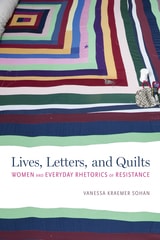
Lives, Letters, and Quilts
Women and Everyday Rhetorics of ResistanceVanessa Kraemer Sohan
University of Alabama Press, 2020
In Lives, Letters, and Quilts: Women and Everyday Rhetorics of Resistance, Vanessa Kraemer Sohan applies a translingual and transmodal framework informed by feminist rhetorical practice to three distinct case studies that demonstrate women using unique and effective rhetorical strategies in political, religious, and artistic contexts. These case studies highlight a diverse set of actors uniquely situated by their race, gender, class, or religion, but who are nevertheless connected by their capacity to envision and recontextualize the seemingly ordinary means and materials available to them in order to effectively persuade others.
The Great Depression provides the backdrop for the first case study, a movement whereby thousands of elderly citizens proselytized and fundraised for a monthly pension plan dreamt up by a California doctor in the hopes of lifting themselves out of poverty. Sohan investigates how the Townsend Plan’s elderly supporters—the Townsendites—worked within and across language, genre, mode, and media to enable them for the first time to be recognized by others, and themselves, as a viable political constituency.
Next, Sohan recounts the story of Quaker minister Eliza P. Kirkbride Gurney who met President Abraham Lincoln in 1862. Their subsequent epistolary exchanges concerning conscientious objectors made such an impression on him that one of her letters was rumored to be in his pocket the night of his assassination. Their exchanges and Gurney’s own accounts of her transnational ministry in her memoir provide useful examples of how, throughout history, women rhetors have adopted and transformed typically underappreciated forms of rhetoric—such as the epideictic—for their particular purposes.
The final example focuses on the Gee’s Bend quiltmakers—a group of African American women living in rural Alabama who repurpose discarded work clothes and other cast-off fabrics into the extraordinary quilts for which they are known. By drawing on the means and materials at hand to create celebrated works of art in conditions of extreme poverty, these women show how marginalized artisans can operate both within and outside the bounds of established aesthetic traditions and communicate the particulars of their experience across cultural and economic divides.
Livin' the Blues
Memoirs of a Black Journalist and PoetFrank Marshall Davis
University of Wisconsin Press, 1993
Frank Marshall Davis was a prominent poet, journalist, jazz critic, and civil rights activist on the Chicago and Atlanta scene from the 1920s through 1940s. He was an intimate of Langston Hughes and Richard Wright and an influential editor at the Chicago Evening Bulletin, the Chicago Whip, the Chicago Star, and the Atlanta World. He renounced his writing career in 1948 and moved to Hawaii, forgotten until the Black Arts Movement rediscovered him in the 1960s.
Because of his early self-exile from the literary limelight, Davis's life and work have been shrouded in mystery. Livin' the Blues offers us a chance to rediscover this talented poet and writer and stands as an important example of black autobiography, similar in form, style, and message to those of Langston Hughes and Richard Wright.
"Both a social commentary and intellectual exploration into African American life in the twentieth century."—Charles Vincent, Atlanta History
Living Between Danger and Love
The Limits of ChoiceJones, Kathleen B.
Rutgers University Press, 1999
Living Color
Race and Television in the United StatesSasha Torres, ed.
Duke University Press, 1998
Ranging across television genres, historical periods, and racial formations, Living Color—as it positions race as a key element of television’s cultural influence—moves the discussion out of a black-and-white binary and illustrates how class, gender, and sexuality interact with images of race. In addition to essays on representations of "Oriental" performers and African Americans in the early years of television, this collection also examines how the celebrity of the late MTV star Pedro Zamora countered racist and homophobic discourses; reveals how news coverage on drug use shifted from the white middle-class cocaine user in the early 1980s to the black "crack mother" of the 1990s; and takes on TV coverage of the Rodney King beating and the subsequent unrest in Los Angeles. Other essays consider O.J. Simpson’s murder trial, comparing television’s treatment of Simpson to that of Michael Jackson, Magic Johnson, Michael Jordan, and Clarence Thomas and look at the racism directed at Asian Americans by the recurring "Dancing Itos" on Jay Leno’s Tonight Show.
Living In The Country Growing Weird
A Deep Rural AdventureDennis Parks
University of Nevada Press, 2001
Parks created a pottery school that attracts students from around the world and developed for himself an international reputation as the creator of powerful, innovative works in clay. Meanwhile, he and his family had to master the skills required of those who choose to live in the back country--growing and hunting their own food, renovating or building from scratch the structures they needed for residences or studios, resolving conflicts with neighbors, inventing their own amusements. The transformation from middle-class urbanity to small-town simplicity is, as Parks reveals, a lurching and sometimes hilarious process, and the achievement of self-sufficiency is similarly fraught with unexpected challenges.

Living In The Depot
The Two-Story Railroad StationH. Roger Grant
University of Iowa Press, 1997
At the heart of this excellent book are the striking and rare postcards that provide a comprehensive visual review of this popular building type from coast to coast. Over 150 illustrations feature the gingerbread structures of the Northeast, the simple buildings of the Gold Rush West, and the mission-style stations of the Southwest in this first book to concentrate on this overlooked aspect of railroad history.
Living Labor
Fiction, Film, and Precarious WorkJoseph B. Entin
University of Michigan Press, 2023
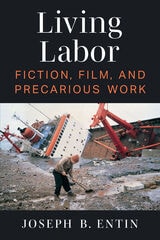
Cover attribution: Allan Sekula, Shipwreck and worker, Istanbul, from TITANIC’s wake, 1998/2000. Courtesy of the Allan Sekula Studio.
Living Legislation
Durability, Change, and the Politics of American LawmakingEdited by Jeffery A. Jenkins and Eric M. Patashnik
University of Chicago Press, 2012
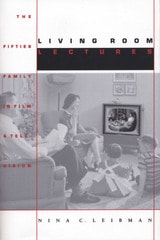
Living Room Lectures
The Fifties Family in Film and TelevisionBy Nina C. Leibman
University of Texas Press, 1995
With a breadwinner dad, a homemaker mom, and squeaky-clean kids, the 1950s television family has achieved near mythological status as a model of what real families "ought" to be. Yet feature films of the period often portrayed families in trouble, with parents and children in conflict over appropriate values and behaviors. Why were these representations of family apparently so far apart?
Nina Leibman analyzes many feature films and dozens of TV situation comedy episodes from 1954 to 1963 to find surprising commonalities in their representations of the family. Redefining the comedy as a family melodrama, she compares film and television depictions of familial power, gender roles, and economic attitudes. Leibman's explorations reveal how themes of guilt, deceit, manipulation, anxiety, and disfunctionality that obviously characterize such movies as Rebel without a Cause,A Summer Place, and Splendor in the Grass also crop up in such TV shows as The Adventures of Ozzie and Harriet,Father Knows Best,Leave It to Beaver,The Donna Reed Show, and My Three Sons.
Drawing on interviews with many of the participants of these productions, archival documents, and trade journals, Leibman sets her discussion within a larger institutional history of 1950s film and television. Her discussions shed new light not only on the reasons for both media's near obsession with family life but also on changes in American society as it reconfigured itself in the postwar era.
Living Spirit, Living Practice
Poetics, Politics, EpistemologyRuth Frankenberg
Duke University Press, 2004
Christians, Jews, Muslims, Buddhists, Hindus, and other practitioners come together here, speaking in terms both familiar and surprising. Whether discussing an Episcopalian deacon, a former Zen Buddhist who is now a rabbi, a Chicano monastic, an immigrant Muslim woman, a Japanese American Tibetan Buddhist, or a gay African American practicing in the Hindu tradition, Frankenberg illuminates the most intimate, local, and singular aspects of individual lives while situating them within the broad, dynamic canvas of the U.S. religious landscape.
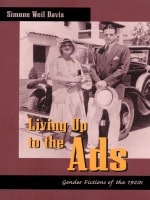
Living Up to the Ads
Gender Fictions of the 1920sSimone Weil Davis
Duke University Press, 2000
Materials from advertising firms—including memos, manuals, meeting minutes, and newsletters—are considered alongside the fiction of Sinclair Lewis, Nella Larsen, Bruce Barton, F. Scott Fitzgerald, and Zelda Fitzgerald. Davis engages such books as Babbitt, Quicksand, and Save Me the Waltz in original and imaginative ways, asking each to participate in her discussion of commodity culture, gender, and identity. To illuminate the subjective, day-to-day experiences of 1920s consumerism in the United States, Davis juxtaposes print ads and industry manuals with works of fiction. Capturing the maverick voices of some of the decade’s most influential advertisers and writers, Davis reveals the lines that were drawn between truths and lies, seduction and selling, white and black, and men and women.
Davis’s methodology challenges disciplinary borders by employing historical, sociological, and literary practices to discuss the enduring links between commodity culture, gender, and identity construction. Living Up to the Ads will appeal to students and scholars of advertising, American studies, women’s studies, cultural studies, and early-twentieth-century American history.
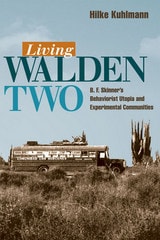
Living Walden Two
B. F. Skinner's Behaviorist Utopia and Experimental CommunitiesHilke Kuhlmann
University of Illinois Press, 2004
In the novel, behavioral engineers use positive reinforcement in organizing and "gently guiding" all aspects of society, leaving the rest of the citizens "free" to lead happy and carefree lives. Among the real-world communities, a recurrent problem in moving past the planning stages was the nearly ubiquitous desire among members to be gentle guides, coupled with strong resistance to being guided.
In an insightful and often hilarious narrative, Hilke Kuhlmann explores the dynamics of the communities, with an in-depth examination of the two surviving Skinnerian communities: Comunidad Los Horcones in Mexico, and Twin Oaks in Virginia. Drawing on extensive interviews with the founders and key players in the Walden Two communities, Kuhlmann redefines the criteria for their success by focusing on the tension between utopian blueprints for a new society and communal experiments' actual effects on individual lives.
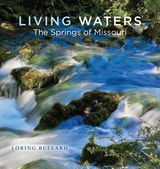
Living Waters
The Springs of MissouriLoring Bullard
Moon City Press, 2020
From the earliest times, springs were also sources of fascination. “Where does all that water come from? Why is it so cold?” Bullard gives us the science of spring hydrogeology; at the same time, he reminds us that springs were once revered symbols of renewal, purification, and everlasting life. They are no longer as central to the lives of Missourians. But are they still important to us? The answer to that question (and others) can be found in Living Waters.
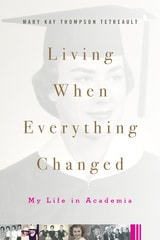
Living When Everything Changed
My Life in AcademiaMary Kay Thompson Tetreault
Rutgers University Press, 2019
In this compelling memoir, Mary Kay Thompson Tetreault describes how a Catholic girl from small-town Nebraska discovered her callings as a feminist, as an academic, and as a university administrator. She recounts her experiences at three very different schools: the small progressive Lewis & Clark College, the massive regional university of Cal State Fullerton, and the rapidly expanding Portland State University. Reflecting on both her accomplishments and challenges, she considers just how much second-wave feminism has transformed academia and how much reform is still needed.
With remarkable candor and compassion, Thompson Tetreault provides an intimate personal look at an era when both women’s lives and university culture changed for good.
The Acknowledgments were inadvertently left out of the first printing of this book. We apologize for the oversight, and offer them here instead. Future printings will include this information. (https://d3tto5i5w9ogdd.cloudfront.net/wp-content/uploads/2019/08/29185420/Thompson-Tetreault-Acknowledgments.pdf)
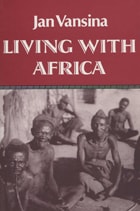
Living With Africa
Jan M. Vansina
University of Wisconsin Press, 1994
"I'm not an ethnologist, I'm a historian!" Vansina was to repeat again and again to those who assumed that people without written texts have no history. His discovery that he could analyze Kuba oral tradition using the same methods he had learned for interpreting medieval dirges was a historiographical breakthrough, and his first book, Oral Tradition as History, is considered the seminal work that gave the study of precolonial African history both the scholarly justification and the self-confidence it had been lacking.
Living with Africa is a compelling memoir of Vansina's life and career on three continents, interwoven with the story of African history as a scholarly specialty. In the background of his narrative are the collapse of colonialism in Africa and the emergence of newly independent nations; in the foreground are the first conferences on African history, the founding of journals and departments, and the efforts of Africans to establish a history curriculum for the schools in their new nations.
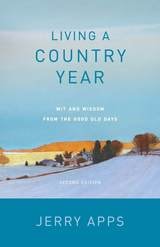
Living a Country Year
Wit and Wisdom from the Good Old DaysJerry Apps
Wisconsin Historical Society Press, 2018
“Even with the all the hard work, we had more time (perhaps we took more time) to enjoy what was all around us: nights filled with starlight, days with clear blue skies and puffy clouds. Wonderful smells everywhere—fresh mown hay, wildflowers, and apple blossoms. Interesting sounds—the rumble of distant thunder, an owl calling in the woods, a flock of Canada geese winging over in the fall.”
In this paperback edition of a beloved Jerry Apps classic, the rural historian tells stories from his childhood days on a small central Wisconsin dairy farm in the 1930s and 1950s. From a January morning memory of pancakes piled high after chores, to a June day spent learning to ride a pony named Ginger, Jerry moves through the turn of the seasons and teaches gentle lessons about life on the farm. With recipes associated with each month and a new introduction exclusive to this 2nd edition, Living a Country Year celebrates the rhythms of rural life with warmth and humor.
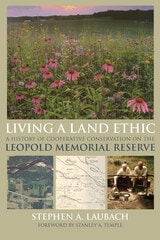
Living a Land Ethic
A History of Cooperative Conservation on the Leopold Memorial ReserveStephen A. Laubach
University of Wisconsin Press, 2014
Living a Land Ethic chronicles the formation of the 1,600-acre reserve surrounding the Shack. When the Leopold Memorial Reserve was founded in 1967, five neighboring families signed an innovative agreement to jointly care for their properties in ways that honored Aldo Leopold's legacy. In the ensuing years, the Reserve's Coleman and Leopold families formed the Sand County Foundation and the Aldo Leopold Foundation. These organizations have been the primary stewards of the Reserve, carrying on a tradition of ecological restoration and cooperative conservation. Author Stephen A. Laubach draws from the archives of both foundations, including articles of incorporation, correspondence, photos, managers' notes, and interviews to share with readers the Reserve's untold history and its important place in the American conservation movement.
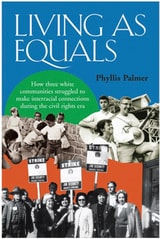
Living as Equals
How Three White Communities Struggled to Make Interracial Connections During the Civil Rights EraPhyllis Palmer
Vanderbilt University Press, 2008
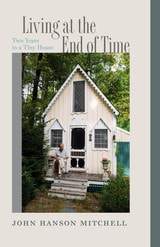
Living at the End of Time
Two Years in a Tiny HouseJohn Hanson Mitchell
University Press of New England, 2014
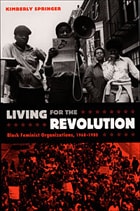
Living for the Revolution
Black Feminist Organizations, 1968–1980Kimberly Springer
Duke University Press, 2005
The organizations that Springer examines were the first to explicitly use feminist theory to further the work of previous black women’s organizations. As she describes, they emerged in response to marginalization in the civil rights and women’s movements, stereotyping in popular culture, and misrepresentation in public policy. Springer compares the organizations’ ideologies, goals, activities, memberships, leadership styles, finances, and communication strategies. Reflecting on the conflicts, lack of resources, and burnout that led to the demise of these groups, she considers the future of black feminist organizing, particularly at the national level. Living for the Revolution is an essential reference: it provides the history of a movement that influenced black feminist theory and civil rights activism for decades to come.
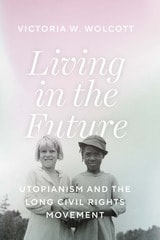
Living in the Future
Utopianism and the Long Civil Rights MovementVictoria W. Wolcott
University of Chicago Press, 2022
Utopian thinking is often dismissed as unrealistic, overly idealized, and flat-out impractical—in short, wholly divorced from the urgent conditions of daily life. This is perhaps especially true when the utopian ideal in question is reforming and repairing the United States’ bitter history of racial injustice. But as Victoria W. Wolcott provocatively argues, utopianism is actually the foundation of a rich and visionary worldview, one that specifically inspired the major figures of the Civil Rights Movement in ways that haven’t yet been fully understood or appreciated.
Wolcott makes clear that the idealism and pragmatism of the Civil Rights Movement were grounded in nothing less than an intensely utopian yearning. Key figures of the time, from Martin Luther King Jr. and Pauli Murray to Father Divine and Howard Thurman, all shared a belief in a radical pacificism that was both specifically utopian and deeply engaged in changing the current conditions of the existing world. Living in the Future recasts the various strains of mid-twentieth-century civil rights activism in a utopian light, revealing the power of dreaming in a profound and concrete fashion, one that can be emulated in other times that are desperate for change, like today.
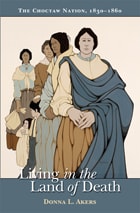
Living in the Land of Death
The Choctaw Nation, 1830-1860Donna L. Akers
Michigan State University Press, 2004
With the Indian Removal Act of 1830, the Choctaw people began their journey over the Trail of Tears from their homelands in Mississippi to the new lands of the Choctaw Nation. Suffering a death rate of nearly 20 percent due to exposure, disease, mismanagement, and fraud, they limped into Indian Territory, or, as they knew it, the Land of the Dead (the route taken by the souls of Choctaw people after death on their way to the Choctaw afterlife). Their first few years in the new nation affirmed their name for the land, as hundreds more died from whooping cough, floods, starvation, cholera, and smallpox.
Living in the Land of the Dead depicts the story of Choctaw survival, and the evolution of the Choctaw people in their new environment. Culturally, over time, their adaptation was one of homesteads and agriculture, eventually making them self-sufficient in the rich new lands of Indian Territory. Along the Red River and other major waterways several Choctaw families of mixed heritage built plantations, and imported large crews of slave labor to work cotton fields. They developed a sub-economy based on interaction with the world market. However, the vast majority of Choctaws continued with their traditional subsistence economy that was easily adapted to their new environment.
The immigrant Choctaws did not, however, move into land that was vacant. The U.S. government, through many questionable and some outright corrupt extralegal maneuvers, chose to believe it had gained title through negotiations with some of the peoples whose homelands and hunting grounds formed Indian Territory. Many of these indigenous peoples reacted furiously to the incursion of the Choctaws onto their rightful lands. They threatened and attacked the Choctaws and other immigrant Indian Nations for years. Intruding on others’ rightful homelands, the farming-based Choctaws, through occupation and economics, disrupted the traditional hunting economy practiced by the Southern Plains Indians, and contributed to the demise of the Plains ways of life.
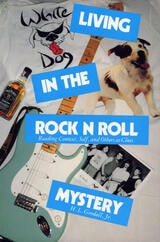
Living in the Rock N Roll Mystery
Reading Context, Self, and Others as CluesH. L. Goodall, Jr.
Southern Illinois University Press, 1991
Mystery, rather than “problem,” provides the context that the cultural ethnographer best uses to approach the experience of both the living and the writing of culture. In this work, H. L. Goodall, Jr., continues his discussion of the cultural ethnographer as detective through an investigation of what he calls the “rock n roll mystery.”
Using Bakhtin’s notion of “Carnival,” Goodall positions rock n roll as an important aspect of the American cultural experience using its lyrics and rhythm as a force of resistance to the dominant bureaucratic order. He argues that interpretive ethnography, where sentences use rhythms and emotions along with words to construct a work, parallels rock n roll in its creation of multiple voices struggling for creative and interpretive presence and space in the text. As there is no privileged text in the social life of rock n roll, there is no privileged voice in the writing of interpretive ethnography. It is, instead, a reading and writing method within the field of communication and the field of cultural studies that challenges the “existing wisdom.”
Goodall invites the reader to join him in the role of the detective who confronts, enters, and then participates in the mysteries of living. Through the use of his interpretive method, Goodall is able to move under the skin of experience to disclose the relationship among self, other(s), and context, an understanding only achieved by “going beneath the often cosmetic surfaces of cultural traffic to where symbols mingle with the driven stuff of life.” Because the “stuff of life” is laid out on the pages of this book, Goodall’s text is as compelling as a good novel and in some ways more intimate.

Living in the Shadow of a Hell Ship
The Survival Story of U.S. Marine George Burlage, a WWII Prisoner-of-War of the JapaneseGeorgianne Burlage
University of North Texas Press, 2020
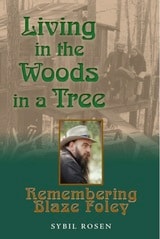
Living in the Woods in a Tree
Remembering Blaze FoleySybil Rosen
University of North Texas Press, 2008
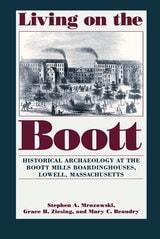
Living on the Boott
Historical Archaeology at the Boott Mills Boardinghouses of Lowell, MassachusettsStephen A. Mrozowski
University of Massachusetts Press, 1996
Lowell, Massachusetts was the first fully planned industrial city in the United States, and the Boott Mill, established in the 1820s along the Merrimack River, stood at the center of this bold experiment in industrial capitalism. For decades, the company-owned boardinghouses that housed the mills' workers were as much a part of the Lowell system as the looms themselves: a managed, closely supervised domestic world where the rhythms of mill life extended from the factory floor into every corner of daily existence.
Living on the Boott brings this vanished world back to life through rigorous historical archaeology. Drawing on excavations conducted at the Boott Mills boardinghouse complex, Stephen A. Mrozowski, Grace H. Ziesing, and Mary C. Beaudry examine the material remains of the men and women who lived and worked in Lowell's textile industry from the early nineteenth century through its long decline. Through painstaking analysis of ceramics, faunal assemblages, tobacco-related artifacts, and other recovered objects, the authors reconstruct the daily lives, diets, domestic routines, and social relationships of successive generations of boardinghouse residents—from the young "mill girls" recruited from rural New England who made Lowell famous, to the Irish immigrant workers who increasingly replaced them as the century progressed.
The result is a richly documented social history written not from official records alone, but from the objects people actually used, discarded, and left behind. The book illuminates how class, gender, ethnicity, and labor intersected in the intimate spaces of the boardinghouse, and documents the profound changes in living conditions as the Lowell system evolved and the workforce transformed. A landmark contribution to historical archaeology, industrial archaeology, and the history of American labor, Living on the Boott demonstrates the unique power of archaeological evidence to recover the lives of those too often overlooked by conventional historical sources.
Living on the Edge
An American Generation’s Journey through the Twentieth CenturyRichard A. Settersten Jr., Glen H. Elder Jr., and Lisa D. Pearce
University of Chicago Press, 2021
Drawing from the iconic longitudinal Berkeley Guidance Study, Living on the Edge reveals the hopes, struggles, and daily lives of the 1900 generation. Most surprising is how relevant and relatable the lives and experiences of this generation are today, despite the gap of a century. From the reorganization of marriage and family roles and relationships to strategies for adapting to a dramatically changing economy, the challenges faced by this earlier generation echo our own time. Living on the Edge offers an intimate glimpse into not just the history of our country, but the feelings, dreams, and fears of a generation remarkably kindred to the present day.
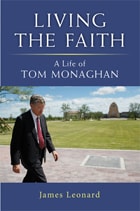
Living the Faith
A Life of Tom MonaghanJames Leonard
University of Michigan Press, 2012
Who is Tom Monaghan?
Is he the four-year-old kid whose father died on Christmas Eve and whose mother sent him to an orphanage and then a juvenile detention home?
Is he the entrepreneurial genius who built Domino's Pizza from a hole-in-the-wall pizzeria in Michigan into an American brand as world-conquering as Ford or Coke?
Is he the religious visionary who sold Domino's for $1 billion to create an orthodox Catholic university, law school, and special interest law firm with the goal of transforming America to reflect his conservative values?
He's all that and more. With extensive interviews with friends and enemies plus unprecedented access to the man himself, but wholly without his authorization, Living the Faith illuminates Tom Monaghan, the man and the myth.
Living the Faithis the much-needed, definitive biography of one of the most fascinating and controversial figures in the realms of American business and religion. Through eighteen hard-boiled chapters, journalist James Leonard follows Monaghan on his path from a heartbroken kid who climbed into his father's coffin to the business tycoon who purchased the world-champion Detroit Tigers and spent a fortune on his own air force, navy, and island to the religious visionary who founded a university to make saints and a public interest law firm to overturn evolution.
A sympathetic but critical perspective of the man and his works, this book is for believers, nonbelievers, and agnostics; for conservatives, liberals, and independents; for the rich, the poor, and the shrinking middle class. Mainly, however, this book is for those who want the facts about Tom Monaghan—and the truth about the effect religion had on one man and the effect that man had on the world.

Living with Earthquakes in the Pacific Northwest
Robert S. Yeats
Oregon State University Press, 1998

Living with His Camera
Jane Gallop
Duke University Press, 2003
Living with His Camera is Gallop’s nuanced meditation on photography and the place it has in her private life and in her family. A reflection on family, it attempts—like Blau’s photographs themselves—to portray the realities of family life beyond the pieties of conventional representations. Living with His Camera is about some of the most pressing issues of visuality and some of the most basic issues of daily life. Gallop considers intimate photographs of moments both dramatic and routine: of herself giving birth to son Max or crying in the midst of an argument with Blau, pouring herself cereal as Max colors at the breakfast table, or naked, sweeping the floor. With her trademark candor, humor, and critical acumen, Gallop mixes personal reflection with close readings of Roland Barthes’s Camera Lucida, Susan Sontag’s On Photography, Kathryn Harrison’s novel Exposure, and Pierre Bourdieu’s Photography.
Presenting his photographs and her text, Living with His Camera is a portrait of a couple whose professional activity is part of their private lives and whose private life is viewed through their professional gazes. While most of us set aside rigorous thought when we turn to the sentimental realm of home life, Gallop and Blau look at each other not only with great affection but also with the keen focus of a sharp, critical gaze.
Living with Moral Disagreement
The Enduring Controversy about Affirmative ActionMichele S. Moses
University of Chicago Press, 2016
Central to Moses’s analysis is the argument that we need to understand disagreements about affirmative action as inherently moral, products of conflicts between deeply held beliefs that shape differing opinions on what justice requires of education policy. As she shows, differing opinions on affirmative action result from different conceptual values, for instance, between being treated equally and being treated as an equal or between seeing race-consciousness as a pernicious political force or as a necessary variable in political equality. As Moses shows, although moral disagreements about race-conscious policies and similar issues are often seen as symptoms of dysfunctional politics, they in fact create rich opportunities for discussions about diversity that nourish democratic thought and life.
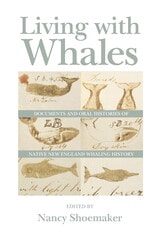
Living with Whales
Documents and Oral Histories of Native New England Whaling HistoryNancy Shoemaker
University of Massachusetts Press, 2014
Native Americans along the coasts of southern New England and Long Island have had close ties to whales for thousands of years. They made a living from the sea and saw in the world's largest beings special power and meaning. After English settlement in the early seventeenth century, the region's natural bounty of these creatures drew Natives and colonists alike to develop whale hunting on an industrial scale. By the nineteenth century, New England dominated the world in whaling, and Native Americans contributed substantially to whaleship crews.
In Living with Whales, Nancy Shoemaker reconstructs the history of Native whaling in New England through a diversity of primary documents: explorers' descriptions of their “first encounters,” indentures, deeds, merchants' accounts, Indian overseer reports, crew lists, memoirs, obituaries, and excerpts from journals kept by Native whalemen on their voyages. These materials span the centuries-long rise and fall of the American whalefishery and give insight into the far-reaching impact of whaling on Native North American communities. One chapter even follows a Pequot Native to New Zealand, where many of his Maori descendants still reside today.
Whaling has left behind a legacy of ambivalent emotions. In oral histories included in this volume, descendants of Wampanoag and Shinnecock whalemen reflect on how whales, whaling, and the ocean were vital to the survival of coastal Native communities in the Northeast, but at great cost to human life, family life, whales, and the ocean environment.

Living with the Coast of Alaska
Owen Mason, William Neal, and Orrin H. Pilkey
Duke University Press, 1997
Facing two oceans and three seas, Alaska's coastline stretches through bays, fjords, and around islands for 45,000 miles. Living with the Coast of Alaska, a new volume in the Living with the Shore series, is a user's guide for both present and future inhabitants of Alaska. Providing individual property owners in all regions of the state with the fundamentals of hazard recognition and mitigation strategy, the authors discuss the geological history of Alaska and its relation to the area's cultural history and present customized hazard risk assessments for coastal communities.
Describing the dynamic nature of natural seismic events and coastal processes in Alaska, the authors emphasize the multiplicity of potential effects that result from a unique combination of geology, climate, and the sea. Earthquakes, volcanic eruptions, tsunami waves, avalanches, glacial advances, storm surges, flash flooding, wind channeling, and shoreline erosion combined with human-induced hazards such as oil spills, fire, and beach and offshore mining accidents make living with danger a way of life in Alaska. The authors provide information on federal and state laws and programs regarding natural disasters and coastal zone management as well as practical suggestions for the design and construction of buildings. For private, commercial, and public developments, this book offers a manual to help Alaskans make informed decisions to minimize, if not avoid, damage and danger.