Results by title
2817 books match the query 'Nature' and 84 start with l
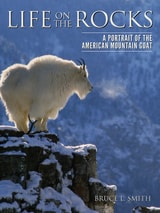
Life on the Rocks
A Portrait of the American Mountain GoatBruce L. Smith
University Press of Colorado, 2014
Color photographs and accounts of Smith's personal experiences living in Montana's Selway-Bitterroot Wilderness Area accompany descriptions of the American mountain goat's natural history. Smith explores their treacherous habitat, which spans the perilous cliffs and crags of the Rocky, Cascade, and Coast mountain ranges. The physical and behavioral adaptations of these alpine athletes enable them to survive a host of dangers, including six-month-long winters, scarce food sources, thunderous avalanches, social strife, and predators like wolves, bears, lions, wolverines, and eagles. Smith also details the challenges these animals face as their territory is threatened by expanding motorized access, industrial activities, and a warming climate.
Life on the Rocks showcases the elegance and charm of this little-known creature, thriving in some of North America's harshest wilderness. Smith's volume will appeal to wildlife enthusiasts, wildland travelers, and conservationists interested in the future of the American mountain goat.
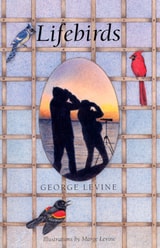
Lifebirds
Levine, George
Rutgers University Press, 1995
In the tradition of Annie Dillard, this book is a set of meditations on nature, in this case specifically on the way birds and birding are entangled with life, with work, family, and friends. While it delicately narrates loving engagement with birds, it is not a field guide. Its author is a birder, not a professional ornithologist. Although the book does in fact offer a surprising amount of detail about birds, it is primarily a consideration of the experience and human significance of seeing birds, rather than of the birds in themselves as objects of systematic study. It attempts to convey something of the extraordinary variety and excitement of birding, the complications and subtleties of bird identification, the implication of birding in the imagination and the world against which it is usually defined.
While one doesn’t have to be interested in birds to read it with pleasure, it attempts to seduce the reader into the birding experience through a series of autobiographical memoirs with birds at their center. It is not meant for experts, except as experts might be interested in how a journeyman experiences their more significantly constructed world. In the end the book is about a lot more than birds. It is about “lifebirds,” with all the many meanings that word might seem to imply.
Lifeblood
Oil, Freedom, and the Forces of CapitalMatthew T. Huber
University of Minnesota Press, 2013
If our oil addiction is so bad for us, why don’t we kick the habit? Looking beyond the usual culprits—Big Oil, petro-states, and the strategists of empire—Lifeblood finds a deeper and more complex explanation in everyday practices of oil consumption in American culture. Those practices, Matthew T. Huber suggests, have in fact been instrumental in shaping the broader cultural politics of American capitalism.
How did gasoline and countless other petroleum products become so central to our notions of the American way of life? Huber traces the answer from the 1930s through the oil shocks of the 1970s to our present predicament, revealing that oil’s role in defining popular culture extends far beyond material connections between oil, suburbia, and automobility. He shows how oil powered a cultural politics of entrepreneurial life—the very American idea that life itself is a product of individual entrepreneurial capacities. In so doing he uses oil to retell American political history from the triumph of New Deal liberalism to the rise of the New Right, from oil’s celebration as the lifeblood of postwar capitalism to increasing anxieties over oil addiction.
Lifeblood rethinks debates surrounding energy and capitalism, neoliberalism and nature, and the importance of suburbanization in the rightward shift in American politics. Today, Huber tells us, as crises attributable to oil intensify, a populist clamoring for cheap energy has less to do with American excess than with the eroding conditions of life under neoliberalism.
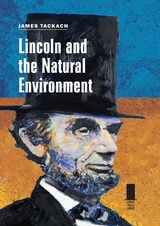
Lincoln and the Natural Environment
James Tackach
Southern Illinois University Press, 2019
In this groundbreaking environmental biography of Abraham Lincoln, James Tackach maps Lincoln’s lifelong relationship with the natural world from his birth and boyhood on Midwestern farms through his political career and presidency dealing with the effects of the Industrial Revolution and the Civil War.
Lincoln was born in a generation that grew up on farms but began to move to cities as industrialization transformed the American economy. Turning away from the outdoor, manual labor of his youth, he chose careers in law and politics but always found solace outside first on the prairies of Illinois and, later, at the woodsy presidential retreat. As Tackach shows, Lincoln relied on examples and metaphors from the natural world in his speeches and writings.
As a member of the Whig Party Lincoln endorsed the Industrial Revolution, which transformed the nation’s economy and its physical, social, and cultural landscapes, and advocated for the creation of railroads, canals, roads, and bridges to facilitate growth and the distribution of products. But he and his party failed to take steps to protect the natural environment. Surveying the destruction of the environment in the mid-nineteenth century, Tackach outlines how some American writers, the first voices for protection and conservation, began to call attention to the results of deforestation and the overhunting of animals during Lincoln’s lifetime.
As commander in chief during the Civil War, Lincoln approved a strategy that included significant infrastructure and environmental damage. In the South, where most of the battles occurred, Union troops burned cities and towns and destroyed plantations, farms, and natural landscapes. Tackach argues that, midway through his presidency, Lincoln seemed to sense that postwar Reconstruction would have to be spiritual, political, economic, and environmental in order to heal the nation’s wounds. He signed the Morrill Act, creating the land-grant colleges, and the environmentally progressive Yosemite Grant Act, which preserved thousands of acres of forest in California.
The first scholar to thoroughly investigate Lincoln’s lifelong relationship with the natural environment, Tackach paints Lincoln’s personal and professional life against the backdrop of nineteenth-century American environmental history, issues, and writers, providing insights into contemporary environmental issues.
Linking Human Rights and the Environment
Edited by Romina Picolotti and Jorge Daniel Taillant
University of Arizona Press, 2003
Lions in the Balance
Man-Eaters, Manes, and Men with GunsCraig Packer
University of Chicago Press, 2015
Monsters take many forms: from man-eating lions to the people who hunt them, from armed robbers to that midnight knock at the door of a cheap hotel room in Dar es Salaam. And celebrated biologist Craig Packer has faced them all. Head on.
With Lions in the Balance, Packer takes us back into the complex, tooth-and-claw world of the African lion, offering revealing insights into both the lives of one of the most iconic and dangerous animals on earth and the very real risks of protecting them. A sequel to his prize-winning Into Africa—which gave many readers their first experience of fieldwork in Africa, of cooperative lions on dusty savannas, and political kidnappings on the shores of Lake Tanganyika—this new diary-based chronicle of cutting-edge research and heartbreaking corruption will both alarm and entertain. Packer’s story offers a look into the future of the lion, one in which the politics of conservation will require survival strategies far more creative and powerful than those practiced anywhere in the world today.
Packer is sure to infuriate millionaires, politicians, aid agencies, and conservationists alike as he minces no words about the problems he encounters. But with a narrative stretching from far flung parts of Africa to the corridors of power in Washington, DC, and marked by Packer’s signature humor and incredible candor, Lions in the Balance is a tale of courage against impossible odds, a masterly blend of science, adventure, and storytelling, and an urgent call to action that will captivate a new generation of readers.
Liquid Relations
Contested Water Rights and Legal ComplexityRoth, Dik
Rutgers University Press, 2005
Water management plays an increasingly critical role in national and international policy agendas. Growing scarcity, overuse, and pollution, combined with burgeoning demand, have made socio-political and economic conflicts almost unavoidable. Proposals to address water shortages are usually based on two key assumptions: (1) water is a commodity that can be bought and sold and (2) “states,” or other centralized entities, should control access to water.
Liquid Relations criticizes these assumptions from a socio-legal perspective. Eleven case studies examine laws, distribution, and irrigation in regions around the world, including the United States, Nepal, Indonesia, Chile, Ecuador, India, and South Africa. In each case, problems are shown to be both ecological and human-made. The essays also consider the ways that gender, ethnicity, and class differences influence water rights and control.
In the concluding chapter, the editors draw on the essays’ findings to offer an alternative approach to water rights and water governance issues. By showing how issues like water scarcity and competition are embedded in specific resource use and management histories, this volume highlights the need for analyses and solutions that are context-specific rather than universal.
Listen to the Land
Conservation ConversationsDennis Boyer
University of Wisconsin Press, 2009
Each of the extraordinarily varied perspectives that Boyer recreates here considers the question, How do I interact with the Earth? Each has something important to say that expands our understanding of conservation and environmentalism. Listen to the Land encourages you to read a conversation or two and then go outside and start one of your own.
Listening at Lookout Creek
Nature in Spiritual PracticeGretel Van Wieren
Oregon State University Press, 2019
It wasn’t always like this. For years, Van Wieren studied and attempted to emulate the lives of the mystics. As a pastor in rural, dairy-farming New York, she walked the fields and woods behind the parsonage daily. Remembering that time in her life, Van Wieren concludes that she is out of practice, and she goes to the H. J. Andrews Experimental Forest in Oregon’s western Cascade Mountains to conduct a spiritual experiment: Is it possible to rediscover a deep sense of connection with the natural world, and can it be done, with children, in today’s high-tech, hyper-busy world?
Listening at Lookout Creek weaves philosophical and spiritual interpretations of the natural world with personal, hands-on experiences of particular landed places. It will be of interest to students of environmental ethics, religion, and nature, conservation practitioners, hunting and fishing enthusiasts, and all those who work to connect children with nature.
Listening to Cougar
Marc Bekoff
University Press of Colorado, 2007
Contributors include: Rick Bass, Marc Bekoff, Janay Brun, Julia B. Corbett, Deanna Dawn, J. Frank Dobie, Suzanne Duarte, Steve Edwards, Joan Fox, Gary Gildner, Wendy Keefover-Ring, Ted Kerasote, Christina Kohlruss, Barry Lopez, BK Loren, Cara Blessley Lowe, Steve Pavlik, David Stoner, and Linda Sweanor.
Marc Bekoff has published twenty books, including The Emotional Lives of Animals, and is a professor emeritus of ecology and evolutionary biology at the University of Colorado at Boulder. Writer and photographer Cara Blessley Lowe is author of Spirit of the Rockies and co-founder of The Cougar Fund.
BK Loren, in Listening to Cougar: "If the lion, in all its dark, nocturnal otherness, in all its light, internal sameness, does not exist for future generations, if we destroy its habitat, or call open season on it, what could we possibly find to replace it? It is precisely because we fear large predators that we need them. They hold within them so many things that we have lost, or are on the verge of losing, personally and collectively, permanently and forever. If we sacrifice the fear, we also sacrifice the strength, the wildness, the beauty, the awe." Foreword by Jane Goodall
Listening to the Land
Stories from the Cacapon and Lost River ValleyJamie S. Ross
West Virginia University Press, 2013
Although still rural and mostly forested, development and land fragmentation in the Cacapon and Lost River Valley have increased over the last decades. Listening to the Land: Stories from the Cacapon and Lost River Valley is a conversation between the people of this Valley and their land, chronicling this community’s dedication to preserving its farms, forests, and rural heritage.
Lively Cities
Reconfiguring Urban EcologyMaan Barua
University of Minnesota Press, 2023
A journey through unexplored spaces that foreground new ways of inhabiting the urban
One of the fundamental dimensions of urbanization is its radical transformation of nature. Today domestic animals make up more than twice the biomass of people on the planet, and cities are replete with nonhuman life. Yet current accounts of the urban remain resolutely anthropocentric. Lively Cities departs from conventions of urban studies to argue that cities are lived achievements forged by a multitude of entities, drawing attention to a suite of beings—human and nonhuman—that make up the material politics of city making.
From macaques and cattle in Delhi to the invasive parakeet colonies in London, Maan Barua examines the rhythms, paths, and agency of nonhumans across the city. He reconceptualizes several key themes in urban thought, including infrastructure, the built environment, design, habitation, and everyday practices of dwelling and provides a critical intervention in animal and urban studies. Generating fresh conversations between posthumanism, postcolonialism, and political economy, Barua reveals how human and nonhuman actors shape, integrate, subsume, and relate to urban space in fascinating ways.
Through novel combinations of ethnography and ethology, and focusing on interlocutors that are not the usual suspects animating urban theory, Barua’s work considers nonhuman lifeworlds and the differences they make in understanding urbanicity. Lively Cities is an agenda-setting intervention, ultimately proposing a new grammar of urban life.

Living New World Monkeys (Platyrrhini), Volume 1
With an Introduction to PrimatesPhilip Hershkovitz
University of Chicago Press, 1978
Hershkovitz opens the study with a brief history and a definition, characterization, and comparison of primates as a taxonomic unit. Basing his work on nearly all known genera of living primates, the author deals with New World monkeys from comparative anatomical and evolutionary points of view. He examines display characters, pelage, the evolution of color patterns, primate locomotion, cranial and dental morphology, and the central nervous system.
The final and most extensive part of the volume is devoted to the taxonomy and biology of the family Callitrichidae, comprising marmosets and tamarins, and the family Callimiconidae, represented by the callimico alone. Hershkovitz concludes with an exhaustive bibliography of more than 2,500 published works and a gazetteer of essential geographic data.

Living at the End of Time
Two Years in a Tiny HouseJohn Hanson Mitchell
University Press of New England, 2014
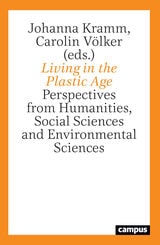
Living in the Plastic Age
Perspectives from Humanities, Social Sciences and Natural SciencesEdited by Johanna Kramm and Carolin Völker
Campus Verlag, 2022
The anthology Living in the Plastic Age focuses on the multidimensional facets of plastics and microplastics from different disciplinary angles. Small plastic fragments (microplastics) and larger plastic waste can be found even on the remotest island. Plastic waste all over the planet is the visual footprint of humanity’s consumerism and mass production. Plastics shape the relationship between society and nature in such a profound way that we can today speak of the “Plastic Age.” This anthology aims to question the role of plastics in our society and the implications plastics have for the environment and human health. The detection of this emergent contaminant opens up a new field of scientific engagement for natural sciences on the effects of (micro-) plastics for the environment and the social sciences on new governance regimes on marine litter as well as on solution strategies to combat plastic waste.
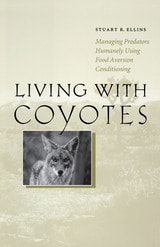
Living with Coyotes
Managing Predators Humanely Using Food Aversion ConditioningBy Stuart R. Ellins
University of Texas Press, 2005
The coyote may well be North America's most adaptable large predator. While humans have depleted or eliminated most other native predators, the coyote has defied all attempts to exterminate it, simultaneously expanding its range from coast to coast and from wilderness to urban areas. As a result, coyotes are becoming the focus of increasing controversy and emotion for people across the continent— from livestock growers who would like to eradicate coyotes to conservationists who would protect them at any cost.
In this thoughtful, well-argued, and timely book, Stuart Ellins makes the case that lethal methods of coyote management do not work and that people need to adopt a more humane way of coexisting with coyotes. Interweaving scientific data about coyote behavior and natural history with decades of field experience, he shows how endlessly adaptive coyotes are and how attempts to kill them off have only strengthened the species through natural selection. He then explains the process of taste aversion conditioning—which he has successfully employed—to stop coyotes from killing domestic livestock and pets. Writing frankly as an advocate of this effective and humane method of controlling coyotes, he asks, "Why are we mired in the use of archaic, inefficient, unsophisticated, and barbaric methods of wildlife management in this age of reason and high technology? This question must be addressed while there is still a wildlife to manage."

Living with Earthquakes in California
Robert S. Yeats
Oregon State University Press, 2001
Living with Earthquakes in the Pacific Northwest
Robert S. Yeats
Oregon State University Press, 1998
Living with Earthquakes in the Pacific Northwest
A Survivor's Guide, Second Edition, Revised and ExpandedRobert S. Yeats
Oregon State University Press, 2004
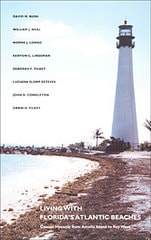
Living with Florida's Atlantic Beaches
Coastal Hazards from Amelia Island to Key WestDavid M. Bush, William J. Neal, Norma J. Longo, Kenyon C. Lindeman, Deborah F. Pilkey, Luciana Slomp Esteves, John D. Congleton, and Orrin H. Pilkey
Duke University Press, 2004
From Amelia Island just south of Georgia to Key West's southern tip, beaches are one of Florida's greatest assets. Yet these beaches are in danger: rapid structural development on a highly erodible coast make them vulnerable to some of nature's greatest storms. The same development that has been driven by the attraction of beautiful beaches and coastal amenities now threatens those very resources. In turn, coastal structures are at risk from sea-level rise, shoreline retreat, winter storms, and hurricanes. Most of the methods for reducing losses associated with storms protect property only in the short term—at a growing cost in dollars and loss of natural habitat in the long term.
Living with Florida's Atlantic Beaches is a guide to mitigating or reducing losses of property, human life, and natural resources by living with, rather than just at, the shore. This illustrated volume provides an introduction to coastal processes and geology as well as a brief history of coastal hazards and short-sighted human responses. This is the first volume in the Living with the Shore series to discuss the significant long-term impact of dredge-and-fill beach construction on living marine resources. Guidance is provided for long-term risk reduction in the form of tips on storm-resistant construction and site evaluation; maps for evaluating relative vulnerability to hazards are also included. A brief review of coastal regulations will help property owners understand and navigate the various permit requirements for developing coastal property. Living with Florida's Atlantic Beaches is an invaluable source of information for everyone from the curious beach visitor to the community planner, from the prudent property investor to the decision-making public official.
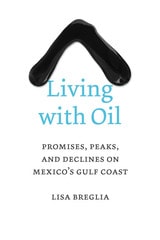
Living with Oil
Promises, Peaks, and Declines on Mexico’s Gulf CoastBy Lisa Breglia
University of Texas Press, 2013
For decades, Mexico has been one of the world’s top non-OPEC oil exporters, but since the 2004 peak and subsequent decline of the massive offshore oilfield—Cantarell—the prospects for the country have worsened. Living with Oil takes a unique look at the cultural and economic dilemmas in this locale, focusing on residents in the fishing community of Isla Aguada, Campeche, who experienced the long-term repercussions of a 1979 oil spill that at its height poured out 30,000 barrels a day, a blowout eerily similar to the 2010 Deepwater Horizon disaster.
Tracing the interplay of the global energy market and the struggle it creates between citizens, the state, and multinational corporations, this study also provides lessons in the tug-of-war between environmentalism and the lure of profits. In Mexico, oil has held status as a symbol of nationalist pride as well as a key economic asset that supports the state’s everyday operations. Capturing these dilemmas in a country now facing a national security crisis at the hands of violent drug traffickers, cultural anthropologist Lisa Breglia covers issues of sovereignty, security, and stability in Mexico’s post-peak future.
The first in-depth account of the local effects of peak oil in Mexico, emphasizing the everyday lives and livelihoods of coastal Campeche residents, Living with Oil demonstrates important aspects of the political economy of energy while showing vivid links between the global energy marketplace and the individual lives it affects.

Living with the East Florida Shore
Orrin H. Pilkey, Dinesh Sharma, Harold Wanless, Larry Doyle, Orrin H. Pilkey Sr., William J. Neal, and Barbara Gruver
Duke University Press, 1984
More than one transplanted Floridian has paid $150,000 for a beautiful condominium with a sea view only to learn that, to keep the building from becoming part of the view, considerable additional money must be spent to build and repair seawalls or to pump up new beaches by dredging sand from offshore.
Most of Florida's beachfront property lies on narrow strips of sand called barrier islands, which are low in elevation and subject to flooding during storms and hurricanes. Some of the construction is poor, adding to the problems facing homeowners, most whom came from other parts of the country with little awareness of the hazards of beaches. In Living with the East Florida Shore, Orrin H. Pilkey, Jr., of Duke University, along with his co-authors, has described the varied problems that confront the east shore of Florida today.
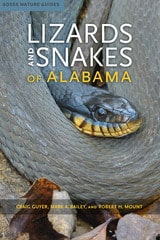
Lizards and Snakes of Alabama
Craig Guyer, Mark A. Bailey, and Robert H. Mount
University of Alabama Press, 2019
The Definitive Guide to Alabama’s Reptilian Wildlife.
Lizards and Snakes of Alabama is the most comprehensive taxonomy gathered since Robert H. Mount’s seminal 1975 volume on the reptiles and amphibians of Alabama. This richly illustrated guide provides an up-to-date summary of the taxonomy and life history of lizards and snakes native to, or introduced to, the state.
Alabama possesses one of the most species-rich biotas in north temperate areas and this richness is reflected in some groups of lizards, such as skinks, and especially in snakes. The authors examine all known species within the state and describe important regional variations in each species, including changes in species across the many habitats that comprise the state. Significant field studies, especially of Alabama’s threatened and endangered species, have been performed and are used to inform discussion of each account.
The life-history entry for each species is comprised of scientific and common names, full-color photographs, a morphological description, discussion of habits and life cycle, and a distribution map depicting the species range throughout the state, as well as notes on conservation and management practices. The illustrated taxonomic keys provided for families, genera, species, and subspecies are of particular value to herpetologists.
This extensive guide will serve as a single resource for understanding the rich natural history of Alabama by shedding light on an important component of that biodiversity. Accessible to all, this volume is valuable to both the professional herpetologist and the general reader interested in snakes and lizards.
Local Organic
Food Rhetorics and Community Writing for ImpactVeronica House
Utah State University Press, 2025
Local Organic offers writing and rhetoric faculty and graduate students an ecological methodology to produce, teach, and theorize writing to help communities engage with a wide array of social issues and to work toward individual and community-level impacts.
Locavore Adventures
One Chef's Slow Food JourneyWeaver, Jim
Rutgers University Press, 2012
America’s fast food culture reflects not only what we eat—foods that are processed and packaged for convenience—but also how we eat—munching as we multitask and not really tasting the super-sized meals we ingest. But in recent years, a more thoughtful philosophy about food has emerged. Developed in Italy, where fresh ingredients and artisanal techniques are prized, the Slow Food movement has rapidly gained a following in North America. The skeptics among us might wonder if it is possible truly to enjoy a Slow Food lifestyle—one based around local, seasonal ingredients—in our fast-paced world.
In Locavore Adventures, acclaimed New Jersey chef and restaurateur Jim Weaver shares his personal story of how he came to solve this problem—building a local slow food culture that is ecologically responsible and also yields delicious results. Weaver tells of his odyssey founding the Central New Jersey chapter of Slow Food, connecting local farmers, food producers, and chefs with the public to forge communities that value the region’s unique bounty. More than forty recipes throughout the book, from Hot Smoked Brook Trout with Asparagus Puree and Pickled Cippollini Onions to Zuppa di Mozzarella, will inspire readers to be creative in their own kitchens. Locavore Adventures is a thoughtful memoir about growing a sustainable food culture and a guide to slowing down, savoring locally grown food, and celebrating life.
Lonesome Landscapes
Stories from National Conservation LandsAndrew Gulliford
University of Utah Press, 2026
While the National Park Service is widely known, far fewer Americans are familiar with the Bureau of Land Management’s vast National Conservation Lands—thirty-seven million acres spanning eleven western states and Alaska. Lonesome Landscapes is the first comprehensive history of this system from public domain lands to the designation of national monuments and conservation areas in the twenty-first century.
Drawing from archives, interviews, and field reporting, Gulliford reveals the unsung heroes who safeguarded these lands, from pioneering rangers to grassroots advocates in Native American and Hispanic communities. With vivid stories of explorers, cowboys, hermits, and even an alligator named Clem, this book blends scholarship with storytelling. Lonesome Landscapes is both a definitive history and a call to keep America’s wild places in public hands—an essential read for anyone passionate about the West.
Looking for Hickories
The Forgotten Wildness of the Rural MidwestTom Springer
University of Michigan Press, 2008
A new voice reveals the unique character of the upper Midwest
In the spirit of other writers who share an affinity for the natural world---authors such as Robert Frost, Emerson, and Bill Bryson---Looking for Hickories is Tom Springer's ode to the people, natural beauty, and lore of the Midwest, a place where bustling communities neighbor a fragile mosaic of quiet woods, fertile meadows, and miles of farmland.
Touching and humorous by turns, Looking for Hickories captures the essence of the upper Midwest's character with subjects particular to the region yet often universal in theme, from barn building to land preservation to the neglected importance of various trees in the landscape.
Like Frost's best poems, Springer's essays often begin with delight and end in wisdom. They mingle a generosity of spirit and the childlike pleasure of discovery with a grown-up sense of a time and a place, if not lost, then in danger of disappearing altogether---things to treasure and preserve for today and tomorrow.
Loose of Earth
A MemoirKathleen Dorothy Blackburn
University of Texas Press, 2024
An arresting memoir of love and unbending religion, toxicity and disease, and one family’s desperate wait for a miracle that never came.
Kathleen Dorothy Blackburn was the oldest of five children, a twelve-year-old from Lubbock, Texas, whose evangelical family eschewed public education for homeschooling, and wove improbable scientific theories into literal interpretations of the Bible. Then her father, a former air force pilot, was diagnosed with cancer at the age of thirty-eight, and, “it was like throwing gasoline on the Holy Spirit.” Stirred by her mother, the family committed to an extreme diet and sought deliverance from equally extreme sources: a traveling tent preacher, a Malaysian holy man, a local faith-healer who led services called “Miracles on 34th Street.”
What they didn’t know at the time was that their lives were entangled with a larger, less visible environmental catastrophe. Fire-fighting foams containing carcinogenic compounds had contaminated the drinking water of every military site where her father worked. Commonly referred to as “forever chemicals,” the presence of PFAS in West Texas besieged a landscape already burdened with vanishing water, taking up residence in wells and in the bloodstreams of people who lived there. An arresting portrait of the pernicious creep of decline, and a powerful cry for environmental justice, Loose of Earth captures the desperate futility and unbending religious faith that devastated a family, leaving them waiting for a miracle that would never come.
Loss and Wonder at the World’s End
Laura A. Ogden
Duke University Press, 2021
Love of Country
A Journey through the HebridesMadeleine Bunting
University of Chicago Press, 2017
After years of hearing about Scotland as a place deeply interwoven with the story of her family, Madeleine Bunting was driven to see for herself this place so symbolic and full of history. Most people travel in search of the unfamiliar, to leave behind the comfort of what’s known to explore some suitably far-flung corner of the globe. From the first pages, it’s clear that Madeleine Bunting’s Love of Country marks a different kind of journey—one where all paths lead to a closer understanding of home, but a home bigger than Bunting’s corner of Britain, the drizzly, busy streets of London with their scream of sirens and high-rise developments crowding the sky. Over six years, Bunting returned again and again to the Hebrides, fascinated by the question of what it means to belong there, a question that on these islands has been fraught with tenacious resistance and sometimes tragedy. With great sensitivity, she takes readers through the Hebrides’ history of dispossession and displacement, a history that can be understand only in the context of Britain’s imperial past, and she shows how the Hebrides have been repeatedly used to define and imagine Britain. In recent years, the relationship between Britain and Scotland has been subject to its most testing scrutiny, and Bunting’s travels became a way to reflect on what might be lost and what new possibilities might lie ahead.
For all who have wondered how it might feel to stand face-out at the edge of home, Love of Country is a revelatory journey through one of the world’s most remote, beautiful landscapes that encourages us to think of the many identities we wear as we walk our paths, and how it is possible to belong to many places while at the same time not wholly belonging to any.
Loving Animals
Toward a New Animal AdvocacyKathy Rudy
University of Minnesota Press, 2013
The contemporary animal rights movement encompasses a wide range of sometimes-competing agendas from vegetarianism to animal liberation. For people for whom pets are family members—animal lovers outside the fray—extremist positions in which all human–animal interaction is suspect often discourage involvement in the movement to end cruelty to other beings. In Loving Animals, Kathy Rudy argues that in order to achieve such goals as ending animal testing and factory farming, activists need to be better attuned to the profound emotional, even spiritual, attachment that many people have with the animals in their lives.
Offering an alternative to both the acceptance of animal exploitation and radical animal liberation, Rudy shows that a deeper understanding of the nature of our feelings for and about animals can redefine the human–animal relationship in a positive way. Through extended interviews with people whose lives are intertwined with animals, analysis of the cultural representation of animals, and engaging personal accounts, she explores five realms in which humans use animals: as pets, for food, in entertainment, in scientific research, and for clothing. In each case she presents new methods of animal advocacy to reach a more balanced and sustainable relationship association built on reciprocity and connection.
Using this intense emotional bond as her foundation, Rudy suggests that the nearly universal stories we tell of living with and loving animals will both broaden the support for animal advocacy and inspire the societal changes that will improve the lives of animals—and humans—everywhere.
Loving God's Wildness
The Christian Roots of Ecological Ethics in American LiteratureJeffrey Bilbro
University of Alabama Press, 2015
Loving God’s Wildness rediscovers the environmental roots of America’s Puritan heritage. In tracing this history, Jeffrey Bilbro demonstrates how the dualistic Christianity that the Puritans brought to America led them to see the land as an empty wilderness that God would turn into a productive source of marketable commodities. Bilbro carefully explores the effect of this dichotomy in the nature writings of Henry David Thoreau, John Muir, Willa Cather, and Wendell Berry.
Thoreau, Muir, Cather, and Berry imaginatively developed the Puritan theological tradition to propose practical, physical means by which humans should live and worship within the natural temple of God’s creation. They reshaped Puritan dualism, each according to the particular needs of his or her own ecological and cultural contexts, into a theology that demands care for the entire created community. While differing in their approaches and respective ecological ethics, the four authors Bilbro examines all share the conviction that God remains active in creation and that humans ought to relinquish their selfish ends to participate in his wild ecology.
Loving God’s Wildness fills a critical gap in literary criticism and environmental studies by offering a sustained, detailed argument regarding how Christian theology has had a profound and enduring legacy in shaping the contours of the American ecological imagination. Literary critics, scholars of religion and environmental studies, and thoughtful Christians who are concerned about environmental issues will profit from this engaging new book.
Loving Orphaned Space
The Art and Science of Belonging to EarthMrill Ingram
Temple University Press, 2022
How we relate to orphaned space matters. Voids, marginalia, empty spaces—from abandoned gas stations to polluted waterways—are created and maintained by politics, and often go unquestioned. In Loving Orphaned Space, Mrill Ingram provides a call to action to claim and to cherish these neglected spaces and make them a source of inspiration through art and/or remuneration.
Ingram advocates not only for “urban greening” and “green planning,” but also for “radical caring.” These efforts create awareness and understanding of ecological connectivity and environmental justice issues—from the expropriation of land from tribal nations, to how race and class issues contribute to creating orphaned space. Case studies feature artists, scientists, and community collaborations in Chicago, New York, and Fargo, ND, where grounded and practical work of a fundamentally feminist nature challenges us to build networks of connection and care.
The work of environmental artists who venture into and transform these disconnected sites of infrastructure allow us to rethink how to manage the enormous amount of existing overlooked and abused space. Loving Orphaned Space provides new ways humans can negotiate being better citizens of Earth.
Lunkers, Keepers, and Ones that Got Away
Fish Tales from Four Generations of AnglersJerry Apps
Wisconsin Historical Society Press, 2025
From his first experiences going fishing with his pa as a boy, Jerry Apps was hooked. Eighty-some years later, Apps reflects on a lifetime of fishing and the memories and lessons hauled in along the way. As he recounts the simple pleasures of casting a line from shore on a warm summer evening or reeling in a lunker on opening day of trout season, he reminds us of the values fishing can teach people of all ages: persistence, resourcefulness, and the importance of caring for our natural world.
Along with his best-loved fish tales, Apps includes fishing photos from the family album and favorite angling locales, lingo, bait, and gear. He draws on interviews with fellow fishermen and -women, his own journal entries recorded over decades, and his popular newspaper column Outdoor Notebook. And, since it’s a tradition among fishing folks to pass along tales told by others, he shares stories that have come his way from extended family and friends—some of them funny, some poignant, many embellished, and all of them keepers. Humorous pen-and-ink illustrations made by artist Sid Boyum to commemorate the annual fishing season opener add charm to this delightful volume.
In Lunkers, Keepers, and Ones that Got Away, Apps captures the exciting, heartwarming, and nostalgia-inducing experiences that fishing brings to avid and casual anglers alike.