Results by title
22279 books match the query 'Social Science' and 714 start with l
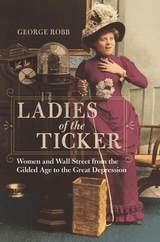
Ladies of the Ticker
Women and Wall Street from the Gilded Age to the Great DepressionGeorge Robb
University of Illinois Press, 2017
George Robb’s pioneering study explores the financial methods, accomplishments, and careers of three generations of women. Plumbing sources from stock brokers’ ledgers to media coverage, Robb reveals the many ways women invested their capital while exploring their differing sources of information, approaches to finance, interactions with markets, and levels of expertise. He also rediscovers the forgotten women bankers, brokers, and speculators who blazed new trails--and sparked public outcries over women’s unsuitability for the predatory rough-and-tumble of market capitalism.
Entertaining and vivid with details, Ladies of the Ticker sheds light on the trailblazers who transformed Wall Street into a place for women’s work.
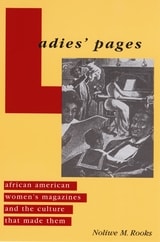
Ladies' Pages
African American Women's Magazines and the Culture That Made ThemRooks, Noliwe M
Rutgers University Press, 2004
Beginning in the late nineteenth century, mainstream magazines established ideal images of white female culture, while comparable African American periodicals were cast among the shadows. Noliwe M. Rooks’s Ladies’ Pages sheds light on the most influential African American women’s magazines––Ringwood’s Afro-American Journal of Fashion, Half-Century Magazine for the Colored Homemaker, Tan Confessions, Essence, and O, the Oprah Magazine––and their little-known success in shaping the lives of black women.
Ladies’ Pages demonstrates how these rare and thought-provoking publications contributed to the development of African American culture and the ways in which they in turn reflect important historical changes in black communities. What African American women wore, bought, consumed, read, cooked, and did at home with their families were all fair game, and each of the magazines offered copious amounts of advice about what such choices could and did mean. At the same time, these periodicals helped African American women to find work and to develop a strong communications network. Rooks reveals in detail how these publications contributed to the concepts of black sexual identity, rape, migration, urbanization, fashion, domesticity, consumerism, and education. Her book is essential reading for everyone interested in the history and culture of African Americans.
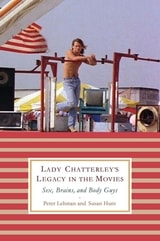
Lady Chatterley's Legacy in the Movies
Sex, Brains, and Body GuysLehman, Peter
Rutgers University Press, 2010
Peter Lehman and Susan Hunt relate a host of wide-ranging films to a literary tradition dating back to D. H. Lawrence's Lady Chatterley's Lover and an emerging body culture of our time. Through an engaging and compelling narrative, they argue that the hero's body, lovemaking style, and penis-revealed through extensive male nudity-celebrate conformity to norms of masculinity and male sexuality. Simultaneously, these films denigrate the vital, creative, erotic world of the mind. Just when women began to successfully compete with men in the workplace, these movies, if you will, unzip the penis as the one thing women do not have but want and need for their fulfillment.
But Lehman and Hunt also find signs of a yearning for alternative forms of sexual and erotic pleasure in film, embracing diverse bodies and vibrant minds. Lady Chatterley's Legacy in the Movies shows how filmmakers, spectators, and all of us can be empowered to dethrone the body guy, his privileged body, and preferred style of lovemaking, replacing it with a wide range of alternatives.

Lady Dicks and Lesbian Brothers
Staging the Unimaginable at the WOW Café TheatreKate Davy
University of Michigan Press, 2010
"A rich and detailed picture of a particular historical moment that has now passed . . . I found myself immersed in the world of the East Village theatre scene and its connections to the larger world of feminism, theatre, and politics. Davy's long-standing association with this world pays off handsomely---it is impossible to imagine that anyone could write a more informative portrait."
---Charlotte Canning, University of Texas at Austin
"After hosting two annual international women's performance festivals in 1980 and '81, Peggy Shaw, Lois Weaver, and comrades put on such extravaganzas as the Freudian Slip party and the Debutante Ball (a coming-out party if ever there was one) to raise the first several months' rent for a narrow vestibule on East 11th Street, where they could keep the creativity going year-round. There, on a stage no bigger than a queen-sized mattress, . . . artists honed their craft, giving birth to a celebratory feminist-and-tinsel-tinged queer aesthetic. By the mid '80s . . . the rent quadrupled, and WOW moved to a city-owned building on East 4th Street, where it has flourished ever since, presenting hundreds---if not thousands---of plays, solo shows, concerts, dance pieces, cabarets, and sundry performances that defy classification."
---Alisa Solomon, Village Voice
Out of a small, hand-to-mouth, women's theater collective called the WOW Café located on the lower east side of Manhattan, there emerged some of the most important theater troupes and performance artists of the 1980s and 1990s, including the Split Britches Company, the Five Lesbian Brothers, Carmelita Tropicana, Holly Hughes, Lisa Kron, Deb Margolin, Reno, Peggy Shaw, and Lois Weaver. The WOW (Women's One World) Café Theatre appeared on the cultural scene at a critical turning point in both the women's movement and feminist theory, putting a witty, hilarious, gender-bending and erotically charged aesthetic on the stage for women in general and lesbians in particular.
The storefront that became the WOW Café Theatre saw dozens of excitingly original and enormously funny performances created, performed, and turned over at lightning speed---a kind of "hit and run" theater. As the demands on the space increased, the women behind WOW organized as a collective and moved their theater to an abandoned doll factory where it continues to operate today. For three decades the WOW Café has nurtured fledgling women writers, designers, and performers who continue to create important performance work.
Lady Dicks and Lesbian Brothers provides a critical history of this avant-garde venture whose ongoing "system of anarchy" has been largely responsible for its thirty-year staying power, after dozens of other women's theaters have collapsed. WOW artists were creating a wholly original cultural landscape across which women could represent themselves on their own terms. Parody, cross-dressing, zany comedy, and an unbridled eroticism are hallmarks of WOW's aesthetic, combined---importantly and powerfully---with a presumptive address to the audience as if everyone onstage, in the audience, and in the world is lesbian. Author Kate Davy's extensive research included in-depth interviews with WOW veterans; newspaper reviews of the earliest productions; and rare, unpublished photographs. The book also includes a chronology of productions that have highlighted WOW's performance schedule since the early '80s.
Kate Davy is currently Provost and Vice Chancellor for Academic Affairs at the University of Michigan-Dearborn. Her previous books include Richard Foreman: Plays and Manifestos and Richard Foreman and the Ontological-Hysteric Theatre.

Lady Dicks and Lesbian Brothers
Staging the Unimaginable at the WOW Café TheatreKate Davy
University of Michigan Press, 2010
"A rich and detailed picture of a particular historical moment that has now passed . . . I found myself immersed in the world of the East Village theatre scene and its connections to the larger world of feminism, theatre, and politics. Davy's long-standing association with this world pays off handsomely---it is impossible to imagine that anyone could write a more informative portrait."
---Charlotte Canning, University of Texas at Austin
"After hosting two annual international women's performance festivals in 1980 and '81, Peggy Shaw, Lois Weaver, and comrades put on such extravaganzas as the Freudian Slip party and the Debutante Ball (a coming-out party if ever there was one) to raise the first several months' rent for a narrow vestibule on East 11th Street, where they could keep the creativity going year-round. There, on a stage no bigger than a queen-sized mattress, . . . artists honed their craft, giving birth to a celebratory feminist-and-tinsel-tinged queer aesthetic. By the mid '80s . . . the rent quadrupled, and WOW moved to a city-owned building on East 4th Street, where it has flourished ever since, presenting hundreds---if not thousands---of plays, solo shows, concerts, dance pieces, cabarets, and sundry performances that defy classification."
---Alisa Solomon, Village Voice
Out of a small, hand-to-mouth, women's theater collective called the WOW Café located on the lower east side of Manhattan, there emerged some of the most important theater troupes and performance artists of the 1980s and 1990s, including the Split Britches Company, the Five Lesbian Brothers, Carmelita Tropicana, Holly Hughes, Lisa Kron, Deb Margolin, Reno, Peggy Shaw, and Lois Weaver. The WOW (Women's One World) Café Theatre appeared on the cultural scene at a critical turning point in both the women's movement and feminist theory, putting a witty, hilarious, gender-bending and erotically charged aesthetic on the stage for women in general and lesbians in particular.
The storefront that became the WOW Café Theatre saw dozens of excitingly original and enormously funny performances created, performed, and turned over at lightning speed---a kind of "hit and run" theater. As the demands on the space increased, the women behind WOW organized as a collective and moved their theater to an abandoned doll factory where it continues to operate today. For three decades the WOW Café has nurtured fledgling women writers, designers, and performers who continue to create important performance work.
Lady Dicks and Lesbian Brothers provides a critical history of this avant-garde venture whose ongoing "system of anarchy" has been largely responsible for its thirty-year staying power, after dozens of other women's theaters have collapsed. WOW artists were creating a wholly original cultural landscape across which women could represent themselves on their own terms. Parody, cross-dressing, zany comedy, and an unbridled eroticism are hallmarks of WOW's aesthetic, combined---importantly and powerfully---with a presumptive address to the audience as if everyone onstage, in the audience, and in the world is lesbian. Author Kate Davy's extensive research included in-depth interviews with WOW veterans; newspaper reviews of the earliest productions; and rare, unpublished photographs. The book also includes a chronology of productions that have highlighted WOW's performance schedule since the early '80s.
Kate Davy is currently Provost and Vice Chancellor for Academic Affairs at the University of Michigan-Dearborn. Her previous books include Richard Foreman: Plays and Manifestos and Richard Foreman and the Ontological-Hysteric Theatre.
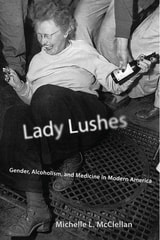
Lady Lushes
Gender, Alcoholism, and Medicine in Modern AmericaMcClellan, Michelle L
Rutgers University Press, 2017
In Lady Lushes, medical historian Michelle L. McClellan traces the story of the female alcoholic from the late-nineteenth through the twentieth century. She draws on a range of sources to demonstrate the persistence of the belief that alcohol use is antithetical to an idealized feminine role, particularly one that glorifies motherhood. Lady Lushes offers a fresh perspective on the importance of gender role ideology in the formation of medical knowledge and authority.
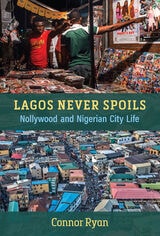
Lagos Never Spoils
Nollywood and Nigerian City LifeConnor Ryan
University of Michigan Press, 2023
Winner of the Society for Cinema and Media Studies, Media Industries Scholarly Interest Group Outstanding Book Award
The slogan “Lagos shall not spoil,” found in print media, political campaigns, and common conversation, represents a shared expression of the optimism the city embodies. However, on city streets the phrase also appears scrawled in irreverent variations—“Lagos cannot spoil more than this!”—that meet the frustrations of city life with irony. In both cases, the slogan captures the resilience and persistence with which residents of Lagos live on, despite it all. This book examines the circumstances that make it possible for residents to persist in pursuing their various projects and for the city to remain a platform that supports these projects and creates space for even more to emerge. Author Connor Ryan argues that residents continually work to combine contingency and endurance in opportunistic ways that make the city work for them, and as such, Lagos never spoils: it endures.
What makes Lagos remarkable is what residents have made of it, and Nollywood—the industry and the body of films—both embodies and represents this continual urban transformation. Lagos Never Spoils traces how Nollywood arose from the social milieu of Lagos and, in turn, generates a repertoire of stories, images, styles, and sentiments with which audiences come to grips with city life. The book traces the evolution of the screen media industry in Lagos and explores how this corresponds with historical phases in the city’s representation onscreen. It discusses important urban spaces of production and consumption, including historic movie halls, video marketplaces, film sets, and multiplex cinemas. Across six chapters, it attends to celluloid films about oil-boom wealth, television sitcoms about urban tricksters, video melodramas about urban crisis, glossy romantic comedies about young professionals, and dark thrillers on streaming platforms about the pleasure of moral transgression. In this fashion, the book offers new approaches to the interpretation of screen texts produced in and about Lagos, a place that is today the most influential image of West African city life.
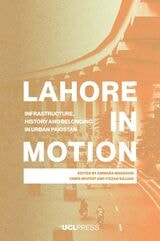
Lahore in Motion
Infrastructure, History and Belonging in Urban PakistanEdited by Ammara Maqsood, Chris Moffat, and Fizzah Sajjad
University College London, 2025
Follow Lahore’s Orange Line metro corridor to discover the tensions between development and displacement, progress and preservation, in one of the world’s great metropolises.
Lahore is a city in constant flux, and the frictions that characterize urban life are vividly apparent along the tracks of its first metro rail corridor, opened in 2020. Lahore in Motion follows the Orange Line’s 27-kilometer path, bringing together reflections from academics, activists, artists, and architects on the ways that infrastructure shapes urban belonging. The book offers a novel methodology for assessing how this mega-project has reconfigured neighborhoods, sparked new desires for modernity, and deepened existing social differences while destabilizing others.
Each chapter unfolds through the lens of a particular metro stop, providing intimate glimpses into the frictions generated by development where connectivity and fragmentation, aspiration and dispossession collide. Engaging with broader debates on urban transformation in the Global South, Lahore in Motion goes against familiar narratives of top-down development, revealing a city animated by resistance and reinventing itself in response. An eye-opening, beautifully written work for all interested in urbanism, infrastructure, politics, and the intimate rhythms of everyday life in one of the world’s most dynamic cities.
Lake Superior Copper and the Indians
Miscellaneous Studies of Great Lakes PrehistoryEdited by James B. Griffin
University of Michigan Press, 1951
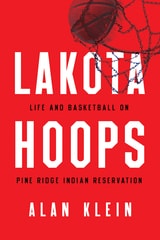
Lakota Hoops
Life and Basketball on Pine Ridge Indian ReservationAlan Klein
Rutgers University Press, 2020
In Lakota Hoops, anthropologist Alan Klein trains his experienced eye on the ways that Lakota traditions find a seamless expression in the sport. In a variety of way such as weaving time-honored religious practices into the game or extending the warrior spirit of Crazy Horse to the players on the court, basketball has become a preferred way of finding continuity with the past. But the game is also well suited to the present and has become the largest regular gathering for all Lakota, promoting national pride as well as a venue for the community to creatively and aggressively confront white bigotry when needed.
Richly researched and filled with interviews with Pine Ridge residents, including both male and female players, Lakota Hoops offers a compelling look at the highs and lows of a community that has made basketball its own.
Land Filled with Flies
A Political Economy of the KalahariEdwin N. Wilmsen
University of Chicago Press, 1989
"[A] major work. . . . Anthropologists will, and should, use Wilmsen's meticulously detailed study to revise their early lectures in the introductory course, and no future study of African 'foragers' should ignore it."—Parker Shipton, American Anthropologist
"An impressive book. . . . The reader need only read the first few pages to judge both the quality and ambitiousness of the work. . . . Essential reading."—David R. Penna, Africa Today
Land Grab
Green Neoliberalism, Gender, and Garifuna Resistance in HondurasKeri Vacanti Brondo
University of Arizona Press, 2013
Employing approaches from feminist political ecology, critical race studies, and ethnic studies,Keri Vacanti Brondo illuminates three contemporary development paradoxes in Honduras: the recognition of the rights of indigenous people at the same time as Garifuna are being displaced in the name of development; the privileging of foreign research tourists in projects that promote ecotourism but result in restricting Garifuna from traditional livelihoods; and the contradictions in Garifuna land-rights claims based on native status when mestizos are reserving rights to resources as natives themselves.
Land Uprising
Native Story Power and the Insurgent Horizons of Latinx IndigeneitySimón Ventura Trujillo
University of Arizona Press, 2020
Trujillo situates his inquiry in the cultural production of La Alianza Federal de Mercedes, a formative yet understudied organization of the Chicanx movement of the 1960s and 1970s. La Alianza sought to recover Mexican and Spanish land grants in New Mexico that had been dispossessed after the Mexican-American War. During graduate school, Trujillo realized that his grandparents were activists in La Alianza. Written in response to this discovery, Land Uprising bridges La Alianza’s insurgency and New Mexican land grant struggles to the writings of Leslie Marmon Silko, Ana Castillo, Simon Ortiz, and the Zapatista Uprising in Chiapas, Mexico. In doing so, the book reveals uncanny connections between Chicanx, Latinx, Latin American, and Native American and Indigenous studies to grapple with Native land reclamation as the future horizon for Chicanx and Latinx indigeneities.
Land for the People
The State and Agrarian Conflict in IndonesiaAnton Lucas
Ohio University Press, 2013
Half of Indonesia’s massive population still lives on farms, and for these tens of millions of people the revolutionary promise of land reform remains largely unfulfilled. The Basic Agrarian Law, enacted in the wake of the Indonesian revolution, was supposed to provide access to land and equitable returns for peasant farmers. But fifty years later, the law’s objectives of social justice have not been achieved.
Land for the People provides a comprehensive look at land conflict and agrarian reform throughout Indonesia’s recent history, from the roots of land conflicts in the prerevolutionary period and the Sukarno and Suharto regimes, to the present day, in which democratization is creating new contexts for people’s claims to the land. Drawing on studies from across Indonesia’s diverse landscape, the contributors examine some of the most significant issues and events affecting land rights, including shifts in policy from the early postrevolutionary period to the New Order; the Land Administration Project that formed the core of land policy during the late New Order period; a long-running and representative dispute over a golf course in West Java that pitted numerous local farmers against the government and local elites; Suharto’s notorious “million hectare” project that resulted in loss of access to land and resources for numerous indigenous farmers in Kalimantan; and the struggle by Bandung’s urban poor to be treated equitably in the context of commercial land development. Together, these essays provide a critical resource for understanding one of Indonesia’s most pressing and most influential issues.
Contributors: Afrizal, Dianto Bachriadi, Anton Lucas, John McCarthy, John Mansford Prior, Gustaaf Reerink, Carol Warren, and Gunawan Wiradi.
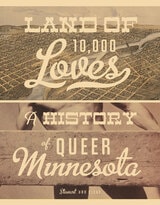
Land of 10,000 Loves
A History of Queer MinnesotaStewart Van Cleve
University of Minnesota Press, 2012
For too long, LGBTQ communities—including Minnesota’s—have been maligned, misrepresented, and often outright ignored. Myths regarding the queer experience have grown and become embedded in local and national consciousness. The absence of queer stories over time in local historical and popular writing only served to further this ignorance, but great strides have been made in recent decades to celebrate Minnesota’s vibrant queer history. Add to this rising chorus an enchanting new voice: Land of 10,000 Loves, Stewart Van Cleve’s wide-ranging and unprecedented illustrated history of queer life in Minnesota.
Drawing from the renowned Tretter Collection at the University of Minnesota—a vast collection of books, photographs, films, and other historical artifacts that Van Cleve calls “one of the most comprehensive accounts of international queer history in the world”—Land of 10,000 Loves blends oral history, archival narrative, newspaper accounts, and fascinating illustrations to paint a remarkable picture of Minnesota’s queer history. More than 120 concise historical essays lead readers from the earliest evidences of queer life in Minnesota before the Second World War—for example, Oscar Wilde’s visit to Minnesota and “rumors” at the Alexander Ramsey house—to riverfront vice districts, protest and parade sites, bars, 1970s collectives, institutions, public spaces, and private homes. More than 130 illustrations illuminate these histories with images of pride guides, archival photographs, and advertisements from local queer bars among other extraordinary pieces of ephemera and artifacts. Many of the stories and images are well known, while others have been all but forgotten, until now.
Building on foundational works of regional queer history such as The Evening Crowd at Kirmser’s and Queer Twin Cities, the historical vignettes of Land of 10,000 Loves show us that Minnesota—from its biggest cities to its smallest towns—has been, as Van Cleve notes, “queer, to a certain extent, since the very beginning.” Land of 10,000 Loves honors this rich and diverse legacy and is a compelling testament to the sacrifices, scandals, and victories that have affected and continue to affect the lives of queer Minnesotans.
Land of Famished Beings
West Papuan Theories of HungerSophie Chao
Duke University Press, 2025
Land of Hope
Chicago, Black Southerners, and the Great MigrationJames R. Grossman
University of Chicago Press, 1989
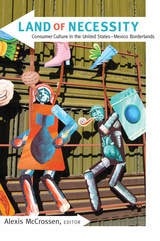
Land of Necessity
Consumer Culture in the United States–Mexico BorderlandsAlexis McCrossen, ed.
Duke University Press, 2009
In Land of Necessity, historians and anthropologists unravel the interplay of the national and transnational and of scarcity and abundance in the region split by the 1,969-mile boundary line dividing Mexico and the United States. This richly illustrated volume, with more than 100 images including maps, photographs, and advertisements, explores the convergence of broad demographic, economic, political, cultural, and transnational developments resulting in various forms of consumer culture in the borderlands. Though its importance is uncontestable, the role of necessity in consumer culture has rarely been explored. Indeed, it has been argued that where necessity reigns, consumer culture is anemic. This volume demonstrates otherwise. In doing so, it sheds new light on the history of the U.S.-Mexico borderlands, while also opening up similar terrain for scholarly inquiry into consumer culture.
The volume opens with two chapters that detail the historical trajectories of consumer culture and the borderlands. In the subsequent chapters, contributors take up subjects including smuggling, tourist districts and resorts, purchasing power, and living standards. Others address home décor, housing, urban development, and commercial real estate, while still others consider the circulation of cinematic images, contraband, used cars, and clothing. Several contributors discuss the movement of people across borders, within cities, and in retail spaces. In the two afterwords, scholars reflect on the U.S.-Mexico borderlands as a particular site of trade in labor, land, leisure, and commodities, while also musing about consumer culture as a place of complex political and economic negotiations. Through its focus on the borderlands, this volume provides valuable insight into the historical and contemporary aspects of the big “isms” shaping modern life: capitalism, nationalism, transnationalism, globalism, and, without a doubt, consumerism.
Contributors. Josef Barton, Peter S. Cahn, Howard Campbell, Lawrence Culver, Amy S. Greenberg, Josiah McC. Heyman, Sarah Hill, Alexis McCrossen, Robert Perez, Laura Isabel Serna, Rachel St. John, Mauricio Tenorio-Trillo, Evan R. Ward
Land of Opportunity
One Family's Quest for the American Dream in the Age of CrackWilliam M. Adler
University of Michigan Press, 2021

Land of Their Choice
The Immigrants Write HomeTheodore C. Blegen, Editor
University of Minnesota Press, 1955
Land of Their Choice was first published in 1955. Minnesota Archive Editions uses digital technology to make long-unavailable books once again accessible, and are published unaltered from the original University of Minnesota Press editions.
This collection of "American letters" that immigrants wrote to friends and relatives in the lands they had left tells a little-known human story that is part of the larger saga of America. It constitutes a kind of composite diary of everyday people at the grass roots of American life.
The letters published here, written by Norwegian immigrants in the middle of the nineteenth century, are truly representative of a great body of historical material - literally millions of such letters that immigrants of every nationality wrote to the people back home. Describing their journeys, the new country, the problems and pleasures of daily life, the letters afford new insight into the American past and at the same time reflect the image of America that was projected into the minds of Europeans in an era when millions were crossing the seas and moving west.
The letters were written from many different parts of the United States. Many relate the experiences of settlers in the Middle West, particularly in Illinois, Wisconsin, Iowa, and Minnesota. But there are also accounts of pioneer life in Texas and as far away from the Atlantic crossing as California.
The story of Oleana, the ill-fated Utopian project established in Pennsylvania by the famous Norwegian violinist, Ole Bull, is revealed in a collection of letters written by settlers in this project. An English translation of the amusing ballad of Oleana adds verve to this section. Another fascinating portion of the volume is devoted to first-hand accounts of the transatlantic gold rush that drew Norwegians directly by ship from their native land to California in the 1850's.
There are some letters written by leaders in Norwegian-American history, such as Johann
R. Reiersen, who was a well-known newspaper editor in Christianssand, Norway, before he migrated to America, and the Rev. J.W. Dietrichson who sought to establish the Church of Norway on American soil and whose letters, now translated into English for the first time, relate his experiences in Wisconsin.
Land of Water, City of the Dead
Religion and Cahokia's EmergenceSarah E. Baires
University of Alabama Press, 2017
Explores the embodiment of religion in the Cahokia land and how places create, make meaningful, and transform practices and beliefs
Cahokia, the largest city of the Mississippian mound cultures, lies outside present-day East St. Louis. Land of Water, City of the Dead reconceptualizes Cahokia’s emergence and expansion (ca. 1050–1200), focusing on understanding a newly imagined religion and complexity through a non-Western lens. Sarah E. Baires argues that this system of beliefs was a dynamic, lived component, based on a broader ontology, with roots in other mound societies. This religion was realized through novel mortuary practices and burial mounds as well as through the careful planning and development of this early city’s urban landscape.
Baires analyzes the organization and alignment of the precinct of downtown Cahokia with a specific focus on the newly discovered and excavated Rattlesnake Causeway and the ridge-top mortuary mounds located along the site axes. Land of Water, City of the Dead also presents new data from the 1954 excavations of the ridge-top mortuary Wilson Mound and a complete analysis of the associated human remains. Through this skeletal analysis, Baires discusses the ways that Cahokians processed and buried their ancestors, identifying unique mortuary practices that include the intentional dismemberment of human bodies and burial with marine shell beads and other materials.
Land of the Tejas
Native American Identity and Interaction in Texas, A.D. 1300 to 1700By John Wesley Arnn III
University of Texas Press, 2012
Combining archaeological, historical, ethnographic, and environmental data, Land of the Tejas represents a sweeping, interdisciplinary look at Texas during the late prehistoric and early historic periods. Through this revolutionary approach, John Wesley Arnn reconstructs Native identity and social structures among both mobile foragers and sedentary agriculturalists. Providing a new methodology for studying such populations, Arnn describes a complex, vast, exotic region marked by sociocultural and geographical complexity, tracing numerous distinct peoples over multiple centuries.
Drawing heavily on a detailed analysis of Toyah (a Late Prehistoric II material culture), as well as early European documentary records, an investigation of the regional environment, and comparisons of these data with similar regions around the world, Land of the Tejas examines a full scope of previously overlooked details. From the enigmatic Jumano Indian leader Juan Sabata to Spanish friar Casanas's 1691 account of the vast Native American Tejas alliance, Arnn's study shines new light on Texas's poorly understood past and debunks long-held misconceptions of prehistory and history while proposing a provocative new approach to the process by which we attempt to reconstruct the history of humanity.
Land's End
Capitalist Relations on an Indigenous FrontierTania Murray Li
Duke University Press, 2014
The book challenges complacent, modernization narratives promoted by development agencies that assume inefficient farmers who lose out in the shift to high-value export crops can find jobs elsewhere. Decades of uneven and often jobless growth in Indonesia meant that for newly landless highlanders, land's end was a dead end. The book also has implications for social movement activists, who seldom attend to instances where enclosure is initiated by farmers rather than coerced by the state or agribusiness corporations. Li's attention to the historical, cultural, and ecological dimensions of this conjuncture demonstrates the power of the ethnographic method and its relevance to theory and practice today.
Land's Language
On Mapuche Memory, Translation, and the Territorial AporiaEthan Madarieta
Northwestern University Press, 2026
Presenting a new framework for understanding indigeneity and Indigenous peoples’ demands for territorial restitution
Asserting that the work of critical theory today must attend to an epistemic locality rather than the universalizing impulse of its European intellectual genealogy, Ethan Madarieta makes central to his study the literatures and philosophy of the Mapuche peoples of Wallmapu (comprising south-central regions of what are currently known as Chile and Argentina). In doing so, he argues that the primary site of settler and Indigenous antagonisms is not “land,” as is ubiquitously asserted, but the overlapping and incommensurate conceptual orders within which land and body are constituted and accrue meaning.
Land’s Language works to unsettle the stability and universality of how land and body are understood by calling into question what can or will be restored or returned and to whom. Drawing on Latin American and Mapuche historical, philosophical, and literary studies in dialogue with global critical theory and Anglophone critical Indigenous studies, this book demonstrates how Mapuche knowledge and thought, and that of each Indigenous nation across the planet, offer ways to live in ethical relation beyond that of the state and under the wider systemic hegemony of colonial racial capitalism.
Land, Livelihood, and Civility in Southern Mexico
Oaxaca Valley Communities in HistoryBy Scott Cook
University of Texas Press, 2014
In the Valley of Oaxaca in Mexico’s Southern Highland region, three facets of sociocultural life have been interconnected and interactive from colonial times to the present: first, community land as a space to live and work; second, a civil-religious system managed by reciprocity and market activity wherein obligations of citizenship, office, and festive sponsorships are met by expenditures of labor-time and money; and third, livelihood. In this book, noted Oaxacan scholar Scott Cook draws on thirty-five years of fieldwork (1965–1990) in the region to present a masterful ethnographic historical account of how nine communities in the Oaxaca Valley have striven to maintain land, livelihood, and civility in the face of transformational and cumulative change across five centuries.
Drawing on an extensive database that he accumulated through participant observation, household surveys, interviews, case studies, and archival work in more than twenty Oaxacan communities, Cook documents and explains how peasant-artisan villagers in the Oaxaca Valley have endeavored over centuries to secure and/or defend land, worked and negotiated to subsist and earn a living, and striven to meet expectations and obligations of local citizenship. His findings identify elements and processes that operate across communities or distinguish some from others. They also underscore the fact that landholding is crucial for the sociocultural life of the valley. Without land for agriculture and resource extraction, occupational options are restricted, livelihood is precarious and contingent, and civility is jeopardized.
Land, Memory, Reconstruction, and Justice
Perspectives on Land Claims in South AfricaCherryl Walker
Ohio University Press, 2010
Land is a significant and controversial topic in South Africa. Addressing the land claims of those dispossessed in the past has proved to be a demanding, multidimensional process. In many respects the land restitution program that was launched as part of the county’s transition to democracy in 1994 has failed to meet expectations, with ordinary citizens, policymakers, and analysts questioning not only its progress but also its outcomes and parameters.
Land, Memory, Reconstruction, and Justice brings together a wealth of topical material and case studies by leading experts in the field who present a rich mix of perspectives from politics, sociology, geography, social anthropology, law, history, and agricultural economics. The collection addresses both the material and the symbolic dimensions of land claims, in rural and urban contexts, and explores the complex intersection of issues confronting the restitution program, from the promotion of livelihoods to questions of rights, identity, and transitional justice.
A valuable contribution to the field of land and agrarian studies, both in South Africa and internationally, it is undoubtedly the most comprehensive treatment to date of South Africa’s postapartheid land claims process and will be essential reading for scholars and students of land reform for years to come.
Land, Politics, and Memory in Five Nija'ib' K'iche' Títulos
"The Title and Proof of Our Ancestors"Mallory Matsumoto
University Press of Colorado, 2017
Land, Politics, and Memory in Five Nija’ib’ K’iche’ Títulos is a careful analysis and translation of five Highland Maya títulos composed in the sixteenth century by the Nija’ib’ K’iche’ of Guatemala. The Spanish conquest of Highland Guatemala entailed a series of sweeping changes to indigenous society, not the least of which were the introduction of the Roman alphabet and the imposition of a European system of colonial government. Introducing the history of these documents and placing them within the context of colonial-era Guatemala, this volume provides valuable information concerning colonial period orthographic practice, the K’iche’ language, and language contact in Highland Guatemala.
For each text, author Mallory E. Matsumoto provides a photographic copy of the original document, a transliteration of its sixteenth-century modified Latin script, a transcription into modern orthography, an extensive morphologic analysis, and a line-by-line translation into English, as well as separate prose versions of the transcription and translation. No complete English translation of this set of manuscripts has been available before, nor has any Highland Maya título previously received such extensive analytical treatment.
Offering insight into the reality of indigenous Highland communities during this period, Land, Politics, and Memory in Five Nija’ib’ K’iche’ Títulos is an important primary source for linguists, historians, and experts in comparative literature. It will also be of significant interest to students and scholars of ethnohistory, linguistics, Latin American studies, anthropology, and archaeology.
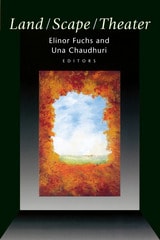
Land/Scape/Theater
Elinor Fuchs and Una Chaudhuri, Editors
University of Michigan Press, 2002
Embracing subjects as diverse as the "landscape dramaturgy" of Suzan-Lori Parks, Artaud's trip to the Sierra Madre,Gertrude Stein's landscape theory and practice, Guillermo Gomez-Peña's "border subjects," and Bayreuth and Disneyland as cultic sites, Land/Scape/Theater draws on a broad range of theory, dramatic texts, and performance. All aspects of modern theater, these essays suggest, including the bedrock Aristotelian constituents of plot and character, have a landscape dimension that often goes unrecognized.
With its broad theoretical range and cross-disciplinary reach, Land/Scape/Theater will interest theater theorists and practitioners and cultural studies specialists, including historians of landscape. Theater students, scholars, teachers, directors, designers, and actors will find here a new framework and a new vocabulary for understanding both theater and the larger culture.
Landbridge
Life in FragmentsY-Dang Troeung
Duke University Press, 2024
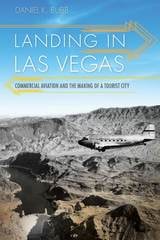
Landing in Las Vegas
Commercial Aviation and the Making of a Tourist CityDaniel K. Bubb
University of Nevada Press, 2017
At the beginning of the twentieth century, Las Vegas was a dusty, isolated desert town. By century’s end, it was the country’s fastest-growing city, a world-class travel destination with a lucrative tourist industry hosting millions of visitors a year. This transformation came about in large part because of a symbiotic relationship between airlines, the city, and the airport, facilitated by the economic democratization and deregulation of the airline industry, the development of faster and more comfortable aircraft, and the ambitious vision of Las Vegas city leaders and casino owners. Landing in Las Vegas is a compelling study of the role of fast, affordable transportation in overcoming the vast distances of the American West and binding western urban centers to the national and international tourism, business, and entertainment industries.
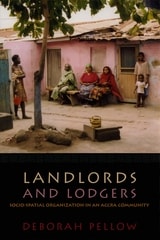
Landlords and Lodgers
Socio-Spatial Organization in an Accra CommunityDeborah Pellow
University of Chicago Press, 2008
“This richly observed and lovingly constructed portrait of a distinctive community will be of interest to spatially informed scholars of religion, immigration, minority communities, and gender.”—Gender, Place and Culture
“This theoretically informed, well-researched, and closely written book should be quite useful. . . . A fine case study of urban sense of place in a unique, yet in some ways emblematic, West African neighborhood.”—Gareth Myers, Professional Geographer
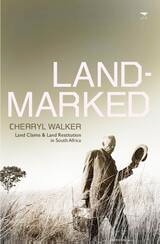
Landmarked
Land Claims and Land Restitution in South AfricaCherryl Walker
Ohio University Press, 2008
The year 2008 is the deadline set by President Mbeki for the finalization of all land claims by people who were dispossessed under the apartheid and previous white governments. Although most experts agree this is an impossible deadline, it does provide a significant political moment for reflection on the ANC government’s program of land restitution since the end of apartheid.
Land reform (and land restitution within that) remains a highly charged issue in South Africa, one that deserves more in–depth analysis. Drawing on her experience as Rural Land Claims Commissioner in KwaZulu–Natal from 1995 to 2000, Professor Cherryl Walker provides a multilayered account of land reform in South Africa, one that covers general critical commentary, detailed case material, and personal narrative. She explores the master narrative of loss and restoration, which has been fundamental in shaping the restitution program; offers a critical overview of the achievements of the program as a whole; and discusses what she calls the “non–programmatic limits to land reform,” including urbanization, environmental constraints and the impact of HIV/AIDS.
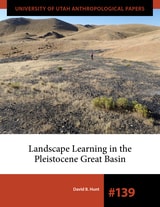
Landscape Learning in the Pleistocene Great Basin
David B. Hunt
University of Utah Press, 2025
Hunt seeks insight into the initial development of adaptive strategies related to the procurement of essential resources within a region. Incorporating data from archaeological investigation at the Old River Bed Delta in Utah and focusing specifically on the lithics recovered, Hunt develops what he terms the Discoverability Model. He proposes this model as a way for archaeologists to begin quantifying the qualitative aspects of colonization and landscape learning models.
Landscape With Figures
Nature & Culture New EnglandKent C. Ryden
University of Iowa Press, 2001

Landscape for a Good Woman
A Story of Two LivesCarolyn Kay Steedman
Rutgers University Press, 1987
This book is about lives lived out on the borderlands, lives for which the central interpretative devices of the culture don't quite work. It has a childhood at its centre - my childhood, a personal past - and it is about the disruption of that fifties childhood by the one my mother had lived out before me, and the stories she told about it.'
Intricate and inspiring, this unusual book uses autobiographical elements to depict a mother and her daughter and two working-class childhoods (Burnley in the 1920s, South London in the 1950s) and to find a place for their stories in history and politics, in psychoanalysis and feminism.
'Provocative and quite dazzling in its ambitions. . . Beautifully written, intellectually compelling'.' Judith Walkowitz
--From 500 Great Books by Women; review by Jesse Larsen.
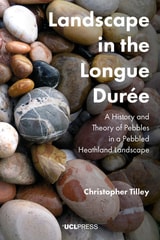
Landscape in the Longue Durée
A History and Theory of Pebbles in a Pebbled Heathland LandscapeChristopher Tilley
University College London, 2017

Landscape of Fear
Stephen King's American GothicTony Magistrale
University of Wisconsin Press, 1988
One of the very first books to take Stephen King seriously, Landscape of Fear (originally published in 1988) reveals the source of King's horror in the sociopolitical anxieties of the post-Vietnam, post-Watergate era. In this groundbreaking study, Tony Magistrale shows how King's fiction transcends the escapism typical of its genre to tap into our deepest cultural fears: "that the government we have installed through the democratic process is not only corrupt but actively pursuing our destruction, that our technologies have progressed to the point at which the individual has now become expendable, and that our fundamental social institutions-school, marriage, workplace, and the church-have, beneath their veneers of respectability, evolved into perverse manifestations of narcissism, greed, and violence."
Tracing King's moralist vision to the likes of Twain, Hawthorne, and Melville, Landscape of Fear establishes the place of this popular writer within the grand tradition of American literature. Like his literary forbears, King gives us characters that have the capacity to make ethical choices in an imperfect, often evil world. Yet he inscribes that conflict within unmistakably modern settings. From the industrial nightmare of "Graveyard Shift" to the breakdown of the domestic sphere in The Shining, from the techno-horrors of The Stand to the religious fanaticism and adolescent cruelty depicted in Carrie, Magistrale charts the contours of King's fictional landscape in its first decade.
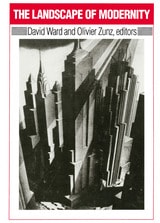
Landscape of Modernity
Essays on New York City, 1900-1940David Ward
Russell Sage Foundation, 1992
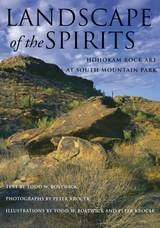
Landscape of the Spirits
Hohokam Rock Art at South Mountain ParkText by Todd W. Bostwick; Photographs by Peter Krocek; Illustrations by Todd W. Bostwick and Peter Krocek
University of Arizona Press, 2002
Todd Bostwick, an archaeologist who has studied the Hohokam for more than twenty years, and Peter Krocek, a professional photographer with a passion for archaeology, have combed the South Mountains to locate nearly all of the ancient petroglyphs found in the canyons and ridges. Their years of learning the landscape and investigating the ancient designs have resulted in a book that explores this wealth of prehistoric rock art within its natural and cultural contexts, revealing what these carvings might mean, how they got there, and when they were made.
Landscape of the Spirits is the first book to cover these ancient images and is one of the most comprehensive treatments of a rock art location ever published. It conveys the range of different rock art elements and compositions found in the South Mountains—animals, humans, and geometric shapes, as well as celestial and calendrical markings at key sites—through accurate descriptions, drawings, and photographs. Interpretations of the petroglyphs are based on Native American ethnographic accounts and consider the most recent theories concerning shamanism and archaeoastronomy.
Written in a simple and accessible style, Landscape of the Spirits is an indispensable volume for anyone exploring the South Mountains, and for rock art enthusiasts everywhere who wish to broaden their understanding of the prehistoric world. It is both an authoritative overview of these ancient wonders and an unprecedented benchmark in southwestern rock art research at a single geographic location.

Landscape, Memory and History
Anthropological PerspectivesEdited by Pamela J. Stewart and Andrew Strathern
Pluto Press, 2003
Contributors from North America, Australia, New Zealand, Taiwan, and Europe explore a wide variety of case studies that includes seascapes in Jamaica; the Solomon Islands; the forests of Madagascar; Aboriginal and European notions of landscape in Australia; place and identity in 19th century maps and the bogs of Ireland; contemporary concerns over changing landscapes in Papua New Guinea; and representations of landscape and history in the poetry of the Scottish Borders.
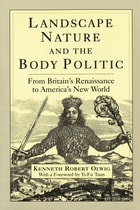
Landscape, Nature, and the Body Politic
From Britain's Renaissance to America's New WorldKenneth Robert Olwig
University of Wisconsin Press, 2002
Landscape, Nature, and the Body Politic explores the origins and lasting influences of two contesting but intertwined discourses that persist today when we use the words landscape, country, scenery, nature, national. In the first sense, the land is a physical and bounded body of terrain upon which the nation state is constructed (e.g., the purple mountain majesties above the fruited plain, from sea to shining sea). In the second, the country is constituted through its people and established through time and precedence (e.g., land where our fathers died, land of the Pilgrims’ pride). Kenneth Robert Olwig’s extended exploration of these discourses is a masterful work of scholarship both broad and deep, which opens up new avenues of thinking in the areas of geography, literature, theater, history, political science, law, and environmental studies.
Olwig tracks these ideas though Anglo-American history, starting with seventeenth-century conflicts between the Stuart kings and the English Parliament, and the Stuart dream of uniting Scotland with England and Wales into one nation on the island of Britain. He uses a royal production of a Ben Jonson masque, with stage sets by architect Inigo Jones, as a touchstone for exploring how the notion of "landscape" expands from artful stage scenery to a geopolitical ideal. Olwig pursues these contested concepts of the body politic from Europe to America and to global politics, illuminating a host of topics, from national parks and environmental planning to theories of polity and virulent nationalistic movements.
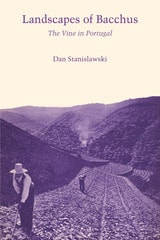
Landscapes Of Bacchus
The Vine in PortugalBy Dan Stanislawski
University of Texas Press, 1970
In a country of disparate parts and of long, unbroken historical experience, there may be one dominant feature, a clue to the character of its regions. In Portugal the vine serves as this clue.
The vine has been an important aspect of the Iberian landscape since prehistoric times, and farmers still use Roman methods of cultivation that have been adapted to regional physical conditions and to socioeconomic structure. Southern Portugal today is almost vineless, but in the north three areas can be distinguished by their vine forms and their products. Dan Stanislawski examines these areas in detail.
High tree-vines surround plots of grain in the Minho Province. The grains and the slightly acid Green Wines provide subsistence and cash for the densely settled area of owner-operated small farms.
In the hanging garden terrace of the Douro, vines grown on tawny, baked schist slopes yield world-famous Port Wine, a product that must conform to strict quantity and quality controls supervised by the central government.
Mature table wines are produced in the Dão, an isolated cul-de-sac where cordons of vines are planted on small, individually owned plots. Control of wine-making is exercised by a central governing group and by producers’ cooperatives.
Various wines originate in central Portugal. The lesser demarcated zones of Setubal, Colares, Carcavelos, and Bucelas yield fine wines. In other parts of the central region several wine types are produced in bulk. Some are used for blending and some for aging into quality table wines, but none is distinguished as a wine whose character is derived from its geographical location.
Dan Stanislawski demonstrates that vine form differences—and differences in the resulting product, wine—mirror the Portuguese historical experience and indicate regional distinctions in Portuguese life styles.
Landscapes and Social Transformations on the Northwest Coast
Colonial Encounters in the Fraser ValleyJeff Oliver
University of Arizona Press, 2010
The Fraser Valley has long been a scene of natural resource appropriation—furs and fish, timber and agriculture—with settlement patterns and land claims centering on the use of these materials. Oliver demonstrates how social change and cultural understanding are tied to the way that people use and remake the landscape. Drawing on ethnographic texts, archaeological evidence, cartography, and historical writing, he has created a deep history of the valley that enables us to view how human entanglements with landscape were creative of a variety of contentious issues. By capturing the multiple dynamics that were operating in the past, Oliver shows us not only how landscape transformations were implicated in constructing different perceptions of place but also how such changes influenced peoples’ understanding of history and identity.
This groundbreaking work examines engagement between people and the environment across a variety of themes, from aboriginal appropriation of nature to colonists’ reworking of physical and conceptual geographies, demonstrating the consequences of these interactions as they permeated various social and cultural spheres. It offers a new lens for viewing a region as it provides fresh insight into such topics as landscape change, perceptions of place, and Indigenous-white relations.
Landscapes in Transition
B. Finlayson
Council for British Research in the Levant, 2010
Landscapes of Accumulation
Real Estate and the Neoliberal Imagination in Contemporary IndiaLlerena Guiu Searle
University of Chicago Press, 2016
In Landscapes of Accumulation, Llerena Guiu Searle examines India’s booming developments and offers a nuanced ethnographic treatment of late capitalism. India’s land, she shows, is rapidly transforming from a site of agricultural and industrial production to an international financial resource. Drawing on intensive fieldwork with investors, developers, real estate agents, and others, Searle documents the new private sector partnerships and practices that are transforming India’s built environment, as well as widely shared stories of growth and development that themselves create self-fulfilling prophecies of success. As a result, India’s cities are becoming ever more inaccessible to the country’s poor. Landscapes of Accumulation will be a welcome contribution to the international study of neoliberalism, finance, and urban development and will be of particular interest to those studying rapid—and perhaps unsustainable—development across the Global South.
Landscapes of Activism
Civil Society, HIV and AIDS Care in Northern MozambiqueReed, Joel Christian
Rutgers University Press, 2018
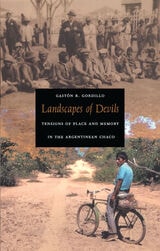
Landscapes of Devils
Tensions of Place and Memory in the Argentinean ChacoGastón R. Gordillo
Duke University Press, 2004
As Gordillo explains, the bush is the result of social, cultural, and political processes that intertwine this place with other geographies. Labor exploitation, state violence, encroachment by settlers, and the demands of Anglican missionaries all transformed this land. The Toba’s lives have been torn between alienating work in sugar plantations and relative freedom in the bush, between moments of domination and autonomy, abundance and poverty, terror and healing. Part of this contradictory experience is culturally expressed in devils, evil spirits that acquire different features in different places. The devils are sources of death and disease in the plantations, but in the bush they are entities that connect with humans as providers of bush food and healing power. Enacted through memory, the experiences of the Toba have produced a tense and shifting geography. Combining extensive fieldwork conducted over a decade, historical research, and critical theory, Gordillo offers a nuanced analysis of the Toba’s social memory and a powerful argument that geographic places are not only objective entities but also the subjective outcome of historical forces.
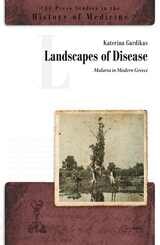
Landscapes of Disease
Malaria in Modern GreeceKaterina Gardikas
Central European University Press, 2018
Malaria has existed in Greece since prehistoric times. Its prevalence fluctuated depending on climatic, socioeconomic and political changes. The book focuses on the factors that contributed to the spreading of the disease in the years between independent statehood in 1830 and the elimination of malaria in the 1970s.
By the nineteenth century, Greece was the most malarious country in Europe and the one most heavily infected with its lethal form, falciparum malaria. Owing to pressures on the environment from economic development, agrarian colonization and heightened mobility, the situation became so serious that malaria became a routine part of everyday life for practically all Greek families, further exacerbated by wars. The country’s highly fragmented geography and its variable rainfall distribution created an environment that was ideal for sustaining and spreading of diseases, which, in turn, affected the tolerance of the population to malaria. In their struggle with physical suffering and death, the Greeks developed a culture of avid quinine consumption and were likewise eager to embrace the DDT spraying campaign of the immediate post WW II years, which, overall, had a positive demographic effect.
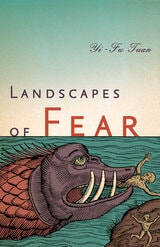
Landscapes of Fear
Yi-Fu Tuan
University of Minnesota Press, 2013
To be human is to experience fear, but what is it exactly that makes us fearful? Landscapes of Fear—written immediately after his classic Space and Place—is renowned geographer Yi-Fu Tuan’s influential exploration of the spaces of fear and of how these landscapes shift during our lives and vary throughout history.
In a series of linked essays that journey broadly across place, time, and cultures, Tuan examines the diverse manifestations and causes of fear in individuals and societies: he describes the horror created by epidemic disease and supernatural visions of witches and ghosts; violence and fear in the country and the city; fears of drought, flood, famine, and disease; and the ways in which authorities devise landscapes of terror to instill fear and subservience in their own populations.
In this groundbreaking work—now with a new preface by the author—Yi-Fu Tuan reaches back into our prehistory to discover what is universal and what is particular in our inheritance of fear. Tuan emphasizes that human fear is a constant; it causes us to draw what he calls our “circles of safety” and at the same time acts as a foundational impetus behind curiosity, growth, and adventure.
Landscapes of Movement and Predation
Perspectives from Archaeology, History, and AnthropologyBrenda J. Bowser and Catherine M. Cameron
University of Arizona Press, 2024
Landscapes of predation also developed in precolonial times in places where people were subjected to repeated ruthless attacks and dislocation. With contributions from archaeologists and a historian, the book provides a startling new perspective on an aspect of the past that is often overlooked: the role of violence in shaping where, how, and with whom people lived. Using ethnohistoric, ethnographic, historic, and archaeological data, the authors explore the actions of both predators and their targets and uncover the myriad responses people took to protect themselves.
Contributors
Fernando Almeida
Thomas John Biginagwa
Brenda J. Bowser
Catherine M. Cameron
Charles Cobb
Robbie Ethridge
Thiago Kater
Richard M. Leventhal
Lydia Wilson Marshall
Cliverson Pessoa
Neil Price
Ben Raffield
Andrés Reséndez
Samantha Seyler
Fabíola Andréa Silva