Results by title
4155 books match the query 'State & Local' and 163 start with l
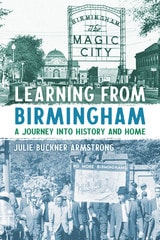
Learning from Birmingham
A Journey into History and HomeJulie Buckner Armstrong
University of Alabama Press, 2023
A steel town daughter’s search for truth and beauty in Birmingham, Alabama
“As Birmingham goes, so goes the nation,” Fred Shuttlesworth observed when he invited Martin Luther King Jr. to the city for the transformative protests of 1963. From the height of the Civil Rights Movement through its long aftermath, images of police dogs, fire hoses and four girls murdered when Ku Klux Klan members bombed the Sixteenth Street Baptist Church have served as an uncomfortable racial mirror for the nation. Like many white people who came of age in the Civil Rights Movement’s wake, Julie Buckner Armstrong knew little about this history. Only after moving away and discovering writers like Toni Morrison and Alice Walker did she realize how her hometown and family were part of a larger, ongoing story of struggle and injustice.
When Armstrong returned to Birmingham decades later to care for her aging mother, Shuttlesworth’s admonition rang in her mind. By then an accomplished scholar and civil rights educator, Armstrong found herself pondering the lessons Birmingham holds for a twenty-first century America. Those lessons extended far beyond what a 2014 Teaching Tolerance report describes as the common distillation of the Civil Rights Movement into “two names and four words: Martin Luther King Jr, Rosa Parks, and ‘I have a dream.’” Seeking to better understand a more complex local history, its connection to broader stories of oppression and resistance, and her own place in relation to it, Armstrong embarked on a journey to unravel the standard Birmingham narrative to see what she would find.
Beginning at the center, with her family’s 1947 arrival to a housing project near the color line, within earshot of what would become known as Dynamite Hill, Armstrong works her way over time and across the map. Weaving in stories of her white working-class family, classmates, and others not traditionally associated with Birmingham’s civil rights history, including members of the city’s LGBTQ community, she forges connections between the familiar and lesser-known. The result is a nuanced portrait of Birmingham--as seen in public housing, at old plantations, in segregated neighborhoods, across contested boundary lines, over mountains, along increasingly polluted waterways, beneath airport runways, on highways cutting through town, and under the gaze of the iconic statue of Vulcan.
In her search for truth and beauty in Birmingham, Armstrong draws on the powers of place and storytelling to dig into the cracks, complicating easy narratives of civil rights progress. Among the discoveries she finds in America’s racial mirror is a nation that has failed to recognize itself in the horrific images from Birmingham’s past and to acknowledge the continuing inequalities that make up the Civil Right’s Movement’s unfinished business. Learning from Birmingham reminds us that stories of civil rights, structural oppression, privilege, abuse, race and gender bias, and inequity are difficult and complicated, but their telling, especially from multiple stakeholder perspectives, is absolutely necessary.
Learning from the Land, Teachers Guide and Student Materials, 2nd Edition
Bobbie Malone
Wisconsin Historical Society Press, 2021
Learning from the Land
Wisconsin Land UseBobbie Malone
Wisconsin Historical Society Press, 1998
Learning from the Land
Wisconsin Land Use, TGBobbie Malone
Wisconsin Historical Society Press, 1999

Learning from the Land
Wisconsin Land Use; 2nd EditionBobbie Malone
Wisconsin Historical Society Press, 2011
How has the landscape of Wisconsin affected its history? How have people living here changed that landscape over time? What are the implications for the future? The second edition of Learning from the Land addresses these and other questions, asking elementary and middle school readers to think about land use issues throughout Wisconsin's history. This revised edition includes expanded chapters on logging and the lumber industry, land use and planning, and agriculture in the 20th century from farmers' markets to organic farming. New profiles of Gaylord Nelson, pioneer of Earth Day, and Will Allen, founder of Growing Power in Milwaukee, round out this history of land use in Wisconsin.
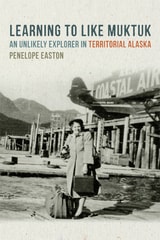
Learning to Like Muktuk
An Unlikely Explorer in Territorial AlaskaPenelope S. Easton
Oregon State University Press, 2014
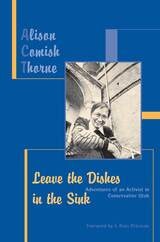
Leave The Dishes In The Sink
Alison Comish Thorne
Utah State University Press, 2002
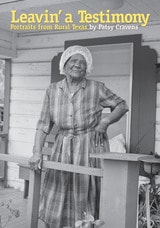
Leavin' a Testimony
Portraits from Rural TexasBy Patsy Cravens
University of Texas Press, 2006
First settled by Stephen F. Austin's colonists in the early nineteenth century, Colorado County has deep roots in Texas history. Mainly rural and agrarian until late in the twentieth century, Colorado County was a cotton-growing region whose population was about evenly divided between blacks and whites. These life-long neighbors led separate and unequal lives, memories of which still linger today. To preserve those memories, Patsy Cravens began interviewing and photographing the older residents of Colorado County in the 1980s. In this book, she presents photographs and recollections of the last generation, black and white, who grew up in the era of Jim Crow segregation.
The folks in Colorado County have engrossing stories to tell. They recall grinding poverty and rollicking fun in the Great Depression, losing crops and livestock to floods, working for the WPA, romances gone wrong and love gone right, dirty dancing, church and faith, sharecropping, quilting, raising children, racism and bigotry, and even the horrific lynching of two African American teenagers in 1935. The Colorado County residents' stories reveal an amazing resiliency and generosity of spirit, despite the hardships that have filled most of their lives. They also capture a rural way of life that was once common across the South, but is now gone forever.
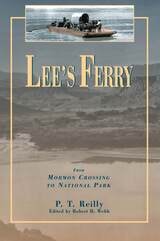
Lee's Ferry
From Mormon Crossing to National ParkP. T. Reilly and Robert H. Webb
Utah State University Press, 1999
The Colorado River and its deeply entrenched canyons create a lengthy barrier to travel in the interior West. Here and there, ancient Indian foot trails descend canyon walls and find access to the river, but one of the few places between California and Nevada where wheeled vehicles can approach it is at the mouth of the Pahreah River, between Glen Canyon and the river's steep drop toward Grand Canyon. Here, from the mid-19th until well into the 20th century, Lee's Ferry was a primary link between Utah and Arizona. Mormons trying to reach potential Indian converts and new lands for colonization to the south first developed the site. John D. Lee and parts of his family, seeking an inconspicuous spot after the Mountain Meadows massacre, first took up residence at what they called Lonely Dell. In subsequent decades, many interesting and important western characters passed through this topographical and historical funnel, from John Wesley Powell to Buffalo Bill. As river exploration and adventure increased, the place became as important to those using the river-surveyors, miners, river runners-as to folks crossing it. In recognition of its importance, Lee's Ferry has been partially restored as a historic site in the national park system.
P. T. Reilly, himself a legend on the river as boatman and chronicler, wrote the detailed and colorful history this place demanded, focusing on stories of the hodgepodge of people it attracted. He died before he finished reworking his massive narrative into book form, but Robert H. Webb, author of Grand Canyon: A Century of Change, completed that job and selected rare historical photos from the Reilly collection at Northern Arizona University to illustrate it. An epilogue by Richard Quartaroli provides a biographical sketch of P. T. Reilly.
Left in the Midwest
St. Louis Progressive Activism in the 1960s and 1970sAmanda L. Izzo
University of Missouri Press, 2023
Despite St. Louis’s mid-twentieth-century reputation as a conservative and sleepy midwestern metropolis, the city and its surrounding region have long played host to dynamic forms of social-movement organizing. This was especially the case during the 1960s and 1970s, when a new generation of local activists lent their energies to the ongoing struggles for Black freedom, lesbian and gay liberation, feminist social transformations, environmental protection, an end to the Vietnam War, and more. This volume, the first of its kind, offers fifteen scholarly contributions that together bring into focus the exceptional range of progressive activist projects that took shape in a single midwestern city during these tumultuous decades.
In contrast to scholarship that seeks to interpret the era’s social-movement initiatives in a primarily national context, the works presented in this expansive collection emphasize the importance of locality, neighborhood, community institutions, and rooted social networks. Documenting wrenching forces of metropolitan change as well as grassroots resilience, Left in the Midwest shows us how place powerfully shaped agendas, worldviews, and opportunities for the disparate groups that dedicated themselves to progressive visions for their city. By revising our sense of the region’s past, this volume also expands our sense of the possibilities that the future may hold for activist movements seeking change in St. Louis and beyond.
Left in the West
Literature, Culture, and Progressive Politics in the American WestGioia Woods
University of Nevada Press, 2018
From the early 19th century to the present, a remarkably complex and varied body of literary and cultural production has emerged out of progressive social movements. While the literary left in the West shared many interests with other regional expressions—labor, class, anti-fascism, and anti-imperialism, the influence of Manifest Destiny—the distinct history of settler colonialism in western territories caused western leftists to develop concerns unique to the region.
Chapters in the volume provide an impressive range of analysis, covering artists and movements from suffragist writers to bohemian Californian photographers, from civil rights activists to popular folk musicians, from Latinx memoirists to Native American experimental writers, to name just a few.
The unique consideration of the West as a socio-political region establishes a framework for political critique that moves beyond class consequences, anti-fascism, and civil liberties, and into distinct Western concerns such as Native American sovereignty, environmental exploitation, and the legacies of settler colonialism. What emerges is a deeper understanding of the region and its unique people, places, and concerns.
Legends and Lore of Southern Illinois
John W. Allen
Southern Illinois University Press, 1963
In the 1950s and ‘60s, John W. Allen told the people of southern Illinois about themselves—about their region, its history, and its folkways—in his series of newspaper articles, “It Happened in Southern Illinois.” Each installment of the series depicted a single item of interest—a town, a building, an enterprise, a person, an event, a custom. Originally published in 1963, Legends & Lore of Southern Illinois brings together a selection of these articles preserving a valuable body of significant local history and cultural lore.
During territorial times and early statehood, southern Illinois was the most populous and most influential part of the state. But the advent of the steamboat and the building of the National Road made the lands to the west and north more easily accessible, and the later settlers struck out for the more expansive and fertile prairies. The effect of this movement was to isolate that section of the state known as Egypt and halt its development, creating what Allen termed “an historical eddy.” Bypassed as it was by the main current of westward expansion and economic growth, its culture changed very slowly. Methods, practices, and the tools of the pioneer continued in use for a long time. The improved highways and better means of communication of the twentieth century brought a marked change upon the region, and daily life no longer differed materially from that of other areas.
Against such a cultural and historical backdrop, Mr. Allen wrote these sketches of the people of southern Illinois—of their folkways and beliefs, their endeavors, successes, failures, and tragedies, and of the land to which they came. There are stories here of slaves and their masters, criminals, wandering peddlers, politicians, law courts and vigilantes, and of boat races on the rivers. Allen also looks at the region’s earlier history, describing American Indian ruins, monuments, and artifacts as well as the native population’s encounters with European settlers.
Many of the vestiges of the region’s past culture have all but disappeared, surviving only in museums and in the written record. This new paperback edition of Legends & Lore of Southern Illinois brings that past culture to life again in Allen’s descriptive, engaging style.
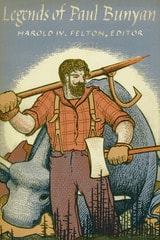
Legends of Paul Bunyan
Harold W. Felton
University of Minnesota Press, 2008
The collected lore of Minnesota's favorite lumberjack hero
Paul Bunyan is a true American folk character, created in logging camp bunkhouses by men who spun exaggerated stories that combined hard work and fantasy.
While the origins of Paul Bunyan and his sidekick Babe the Blue Ox are hazy, many storytellers have over the years contributed their own takes to produce an existing body of work--a true American legend--that matches the size of the lumberjack himself. Collected in colorful and engaging sections such as "Paul the Man," "Paul and the Animal Kingdom," and "The Wonderful Big Blue Ox, Babe," Legends of Paul Bunyan features more than thirty authors celebrating the largest lumberman, including stories by such Bunyan luminaries as James Stevens and W. B. Laughead, as well as such literary icons as Robert Frost and Carl Sandburg.
Legends of the Common Stream
John Hanson Mitchell
University of Massachusetts Press, 2021
While Mitchell never leaves the brook's shores, he draws from a range of traditions and takes readers on excursions to regions and cultures across the globe and across time, making the case that our contemporary separation from nature goes hand in hand with our alienation from the world of myth. This book seeks to restore these broken relationships and offers the reminder that while cultures may come and go, the stream goes on forever.

Legislators and Politicians
Iowa's Women LawmakersSuzanne O'Dea Schenken
University of Iowa Press, 1995

Lending Power
How Self-Help Credit Union Turned Small-Time Loans into Big-Time ChangeHoward E. Covington Jr.
Duke University Press, 2017
In Lending Power journalist and historian Howard E. Covington Jr. narrates the compelling story of Self-Help's founders and coworkers as they built a progressive and community-oriented financial institution. First established to assist workers displaced by closed furniture and textile mills, Self-Help created a credit union that expanded into providing home loans for those on the margins of the financial market, especially people of color and single mothers.
Using its own lending record, Self-Help convinced commercial banks to follow suit, extending its influence well beyond North Carolina. In 1999 its efforts led to the first state law against predatory lending. A decade later, as the Great Recession ravaged the nation's economy, its legislative victories helped influence the Dodd-Frank Wall Street Reform and Consumer Protection Act and the formation of the Consumer Financial Protection Bureau. Self-Help also created a federally chartered credit union to expand to California and later to Illinois and Florida, where it assisted ailing community-based credit unions and financial institutions.
Throughout its history, Self-Help has never wavered from its mission to use Dr. Martin Luther King Jr.'s vision of justice to extend economic opportunity to the nation's unbanked and underserved citizens. With nearly two billion dollars in assets, Self-Help also shows that such a model for nonprofits can be financially successful while serving the greater good. At a time when calls for economic justice are growing ever louder, Lending Power shows how hard-working and dedicated people can help improve their communities.
Let Us Alone
The Origins of Baltimore's Police StateMichael Casiano
University of Illinois Press, 2025
Let Us Now Praise Famous Women
A MemoirFrank Sikora
University of Alabama Press, 2005
An affectionate, humorous account of small town Alabama during the civil rights era.
When Frank Sikora's six-year-old daughter contracted pneumonia in 1962, his wife Millie vowed that would be the last winter she would spend in Ohio. Despite their misgivings about the racial tensions erupting there, they moved their family of six south, where Frank hoped to fulfill his dream of becoming a newspaper reporter. But when those dreams didn't materialize immediately, mounting bills, repossession, and eviction forced them to move in with Millie's parents, Dan and Minnie Belle Helms, in rural Wellington, Alabama.
With even slimmer prospects for employment in impoverished Calhoun County, the Sikoras came to depend heavily upon the Helmses and extended family members and all their lives became closely intertwined. The Helmses were uneducated, unpolished people, but Sikora's narration of his life with them—often humorous but never condescending—provides a compelling portrait of the attitudes and lifestyle of poor whites in Alabama during the second half of the 20th century, just as James Agee's monumental work, Let Us Now Praise Famous Men, illuminated the Depression years in Hale County, Alabama. Sikora illustrates how resourceful, southern women, in particular, held their families together through trying times.
Interwoven with this commentary on rural white culture in the Deep South is the story of Sikora's developing career as a newsman. Determined to succeed, he finally lands a job with the Gadsden Times reporting the news of black citizens. From that introduction to journalism, Sikora becomes one of Alabama's most acclaimed chroniclers of the civil rights movement, eventually writing some of the acknowledged masterpieces about the subject. Like his landmark book, Selma, Lord, Selma, Sikora's newest work tells the stories of ordinary Alabamians and their perspectives on extraordinary times.
Let me tell you what I've learned
Texas Wisewomen SpeakBy PJ Pierce
University of Texas Press, 2002
Barbara Jordan spoke for many Texas women when she told a reporter, "I get from the soil and spirit of Texas the feeling that I, as an individual, can accomplish whatever I want to, and that there are no limits, that you can just keep going, just keep soaring. I like that spirit." Indeed, the sense of limitless possibilities has inspired countless Texas women—sometimes in the face of daunting obstacles—to build lives rich in work, family, friends, faith, and community involvement.
In this collection of interviews conducted by PJ Pierce, twenty-five Texas women ranging in age from 53 to 93 share the wisdom they've acquired through living unconventional lives. Responding to the question "What have you found that really matters about life?" they offer keen insights into motherhood, career challenges, being a minority, marriage and widowhood, anger, assertiveness, managing change, persevering, power, speaking out, fashioning success from failure, writing your own job description, loving a younger man, and recognizing opportunities disguised as disaster—to name only a few of their topics. In her introduction, Pierce describes how she came to write the book and how she chose her subjects to represent a cross-section of career paths and ethnic groups and all geographic areas of Texas. A topical index makes it easy to compare several women's views on a given subject.
Letters Home to Sarah
The Civil War Letters of Guy C. Taylor, Thirty-Sixth Wisconsin VolunteersGuy C. Taylor; Edited by Kevin L. Alderson and Patsy Alderson; Introduction by Kathryn Shively Meier
University of Wisconsin Press, 2012
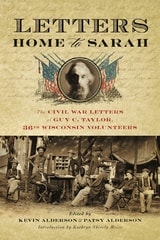
From the initial mustering and training of his regiment at Camp Randall in Wisconsin, through the siege of Petersburg in Virginia, General Lee’s surrender at Appomattox, and the postwar Grand Review of the Armies parade in Washington, D.C., Taylor conveys in vivid detail his own experiences and emotions and shows himself a keen observer of all that is passing around him. While at war, he contracts measles, pneumonia, and malaria, and he writes about the hospitals, treatments, and sanitary conditions that he and his comrades endured during the war. Amidst the descriptions of soldiering, Taylor’s letters to Sarah are threaded with the concerns of a young married couple separated by war but still coping together with childrearing and financial matters. The letters show, too, Taylor’s transformation from a lonely and somewhat disgruntled infantryman to a thoughtful commentator on the greater ideals of the war.
This remarkable trove of letters, which had been left in the attic of Taylor’s former home in Cashton, Wisconsin, was discovered by local historian Kevin Alderson at a household auction. Recognizing them for the treasure they are, Alderson bought the letters and, aided by his wife Patsy, painstakingly transcribed the letters and researched Taylor’s story in Wisconsin and at historical sites of the Civil War. The Aldersons’ preface and notes are augmented by an introduction by Civil War historian Kathryn Shively Meier, and the book includes photographs, maps, and illustrations related to Guy Taylor’s life and letters.
Letters from Alabama
Chiefly Relating to Natural HIstoryPhilip Henry Gosse, introduction by Harvey H. Jackson III, edited by Virginia Hamilton
University of Alabama Press, 1993
A naturalist's captivating portrait of Alabama's wildlife, landscapes, and people.
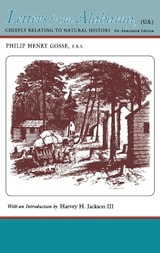
Philip Henry Gosse (1810-1888), a British naturalist, left home at age 17 and made his way to Alabama in 1838, where he had heard educated people were in demand. He was employed by Judge Reuben Saffold at Pleasant Hill in Dallas County as a teacher for about a dozen children of local landowners, but his principal interest was natural history. During the eight months he lived in th Black Belt he watched, listened, thought, took notes, and made sketches--activities that eventually led to Letters from Alabama. He lived among Alabamians, talked and listened to them, saw them at their best and their worst, and came to understand their hopes and fears. They were a part of the natural world, and he paid attention to them as any good scientist would. With the skills of a scientist and the temperament of an artist, Gosse set down an account of natural life in frontier Alabama that has no equal. Written to no one in particular, a common literary device of the period, the letters were first published in a magazine, and in 1859 appeared as a book. By that time Gosse was an established scholar and one of England’s most noted scientific illustrators.
Letters from Alabama
Chiefly Relating to Natural HistoryPhilip Henry Gosse, Edited by Gary R. Mullen and Taylor D. Littleton
University of Alabama Press, 2013
New and improved edition of a naturalist's captivating portrait of Alabama's wildlife, landscapes, and people.
Philip Henry Gosse (1810–1888), a British naturalist, left home at age seventeen and made his way to Alabama in 1838. He was employed by Judge Reuben Saffold and other planters near Pleasant Hill in Dallas County as a teacher for about a dozen of their children, but his principal interest was natural history. Letters from Alabama is a personalized record of Gosse’s perceptive observations during his eight-month residence in this small antebellum community. The work addresses a Victorian readership, including entomologists, who Gosse believed were relatively uninformed about the novelty and beauty of this “hilly region of the State of Alabama.” Written in an engaging literary style and organized as a series of epistolary discussions, the book is unparalleled in its detailed evocations of the natural history and cultural conditions of frontier Alabama. By the time Letters from Alabama appeared in 1859, Gosse’s scientific publications and fine illustrations had led to his being elected a Fellow of the Royal Society of London.
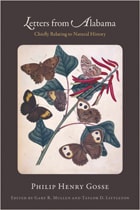
Edited by Gary R. Mullen and Taylor D. Littleton, this authoritative edition features thirty grayscale lithographs shot directly from the 1859 edition, reset type for easier reading, a new introduction and index by the two foremost scholars of Gosse in Alabama, a new appendix that provides modern scientific and common names for the plant and animal species described by Gosse, and a four-color cover featuring one of the plates from Gosse’s Entomologia Alabamensis.

Letters from Red Farm
The Untold Story of the Friendship between Helen Keller and Journalist Joseph Edgar ChamberlinElizabeth Emerson
University of Massachusetts Press, 2021
Informed by previously unpublished letters and extensive research, Letters from Red Farm explores for the first time Keller's deep and enduring friendship with the man who became her literary mentor and friend for over forty years. Written by Chamberlin's great-great granddaughter, this engaging story imparts new insights into Keller's life and personality, introduces the irresistible Chamberlin to a modern public, and follows Keller's burgeoning interest in social activism, as she took up the causes of disability rights, women's issues, and pacifism.

Letters from Wupatki
Courtney Reeder Jones; Edited by Lisa Rappoport
University of Arizona Press, 1995
The year was 1938, and the newlyweds had come to Wupatki National Monument as full-time National Park Service caretakers for the ruin. Remote in time and place, their story as described in Courtney's letters will take readers into a dramatic landscape of red rocks, purple volcanoes, and endless blue sky. Here, some 60 years ago, two young people came to terms with their new life together and with their nearly total reliance upon each other and their Navajo neighbors.
"They helped us in any way that a neighbor would, and we helped them as we could," wrote Courtney in her memoirs years later. Vivid and engaging, her letters home spill over with descriptions of their friendship with local Navajo families, their sings and celebrations, and her good luck in being able to be a part of it all.
Letters from Wupatki captures a more innocent era in southwestern archaeology and the history of the National Park Service before the post-war years brought paved roads, expanded park facilities, and ever-increasing crowds of visitors. Courtney's letters to her family and friends reflect all the charm of the earlier time as they convey the sense of rapid transition that came after the war.
Tracking those changes in the development of Wupatki National Monument and the National Park Service, the letters also—and perhaps more important—reveal changes in the Joneses themselves. Of particular interest to anthropologists and historians, their story also gives the general reader captivating glimpses of a partnership between two people who only grew stronger for the struggles they shared together.
Letters from the Boys
Wisconsin World War I Soldiers Write HomeCarrie A Meyer
Wisconsin Historical Society Press, 2018
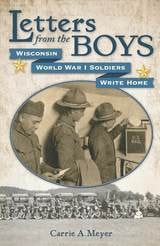
On the 100th anniversary of the arrival of the flood of American troops in Europe that would shift the tide of World War I in favor of the Allies, Letters from the Boys brings to life this terrible war as experienced by Wisconsinites writing home.
Technology had transformed the battlefield in alarming ways. Automatic rifles mowed down the young men who went “over the top” to attack enemy trenches; airplanes and improved artillery brought death unseen from miles away; terrifying clouds of poison gas choked and burned the European countryside; the internal combustion engine brought tanks to the battlefield for the first time and revolutionized the way troops deployed.
In the thick of it were young men from Wisconsin who found themselves caught up in geopolitical events half a world away. Professor Carrie A. Meyer combed through three newspapers in Green County, Wisconsin, to collect and synthesize the letters from the boys into a narrative that is both unique and representative, telling the stories of several Green County boys and what they saw, from preparing for war, to life among French families near the front, to the terror of the battlefield. Meyer gracefully removes the veil of obscurity and anonymity hanging over soldiers who participated in a war fought so long ago by great numbers of men, reminding us that armies are made of individuals who strove to do their part and then return to their families.

Letters from the Front, 1898-1945
Michael E. Stevens
Wisconsin Historical Society Press, 1992
This volume tells the stories of 62 men and women from Wisconsin who served in the Spanish-American War, World War I, and World War II. Letters from the Front is a vivid social history of wartime as told by those who took part in these foreign conflicts. Most of them are "ordinary" people, uprooted from farms, factories, and offices, who took part in extraordinary events. This work explores how war changed their lives and reveals the emotions they felt in uniform, in remote outposts, in combat, and in prison camps. These letters, diaries, oral histories, newspapers, and contemporary accounts provide a history of adaptation to military life; they also reflect the changes that occurred over the half-century encompassing these confilcts, an era of great technological innovation — and one in which America's vision of itself also changed.
Letters from the Southwest
Charles Lummis; Edited by James W. Byrkit
University of Arizona Press, 0
In the fall of 1884, journalist Charles Lummis set out on foot from Ohio to California on assignment for the Los Angeles Times. The reports he mailed ahead to that newspaper were later refashioned for the book A Tramp Across the Continent, a work that helped to establish Lummis as the most active promoter of Southwestern culture who ever lived.
Lummis wrote another set of letters during his journey, however, which he sent back to Ohio for publication by the Chillicothe Leader. Although these letters contain basically the same narrative as those sent to Los Angeles and later found in A Tramp, the Ohio letters more closely reflect the author’s thoughts and observations while on the journey. In fact, a comparison of the two drafts indicates that Lummis spent considerable effort removing spontaneous details from the Ohio letters in favor or a more commercial, self-promoting, and politic reporting for the California paper.
The twenty-four Ohio letters, assembled here by James W. Byrkit, offer a far more candid look at the Southwest than Lummis was later to bring to print, as well as greater insight into the author’s own personality. Byrkit’s introductory essay provides the background for Lummis’s career, compares the three bodies of work relating to the trek, and offers an account of Lummis’s transformation from chronicler to promoter.
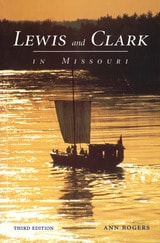
Lewis and Clark in Missouri
Ann Rogers
University of Missouri Press, 2002
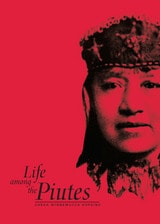
Life Among the Piutes
Their Wrongs and ClaimsSarah Winnemucca Hopkins
University of Nevada Press, 1994
This autobiographical work was written by one of the country's most well-known Native American women, Sarah Winnemucca. She was a Paiute princess and a major figure in the history of Nevada; her tribe still resides primarily in the state. Life Among the Piutes deals with Winnemucca's life and the plight of the Paiute Indians. Life Among the Piutes is Winnemucca's powerful legacy to both white and Paiute cultures. Following the oral tradition of Native American people, she reaches out to readers with a deeply personal appeal for understanding. She also records historical events from a unique perspective. She managed to record the Native American viewpoint of whites settling the West, told in a language that was not her own and by a woman during the time when even white women were not allowed to vote. Sarah Winnemucca dedicated her life to improving the living and social conditions for her people. She gave more than 400 speeches across the United States and Europe to gain support for the Paiutes. She died of tuberculosis in 1891. Life Among the Piutes was originally published in 1883.

Life and Death on the New York Dance Floor, 1980–1983
Tim Lawrence
Duke University Press, 2016
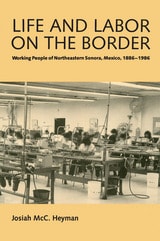
Life and Labor on the Border
Working People of Northeastern Sonora, Mexico, 1886–1986Josiah McC. Heyman
University of Arizona Press, 1991
Life and Labor on the Border traces the development of the urban working class in northern Sonora over the period of a century. Drawing on an extensive collection of life histories, Heyman describes what has happened to families over several generations as people have left the countryside to work for American-owned companies in northern Sonora or to cross the border to find other employment.
Heyman searches for the origins of "working classness" in these family histories, revealing aspects of life that strengthen people' s involvement with a consumer economy, including the role of everyday objects like sewing machines, cars, and stoves. He considers the consequences of changing political and economic tides, and also the effects on family life of the new role of women in the labor force. Within the broad sweep of family chronicles, key junctures in individual lives—both personal and historical crises—offer additional insights into social class dynamics.
Heyman's work dispels the notion that border inhabitants are uniformly impoverished or corrupted by proximity to the United States. These life stories instead convey the positive sense of people's goals in life and reveal the origins of a distinctive way of life in the Borderlands.
Life in the Leatherwoods
New EditionJohn Quincy Wolf
University of Arkansas Press, 2000
Originally published by Memphis State University Press in 1974, this new edition includes additional writings of John Q. Wolf and a continuation of the autobiographical narrative after his 1887 move to Batesville. Wolf’s writings are valuable resources for southern historians, folklorists, general readers, and scholars of Ozarkiana because they provide a rare glimpse into the social and family life of a largely misunderstood and stereotyped people—the independent hill farmers of the Arkansas Ozarks of the 1870s and 1880s. With Life in the Leatherwoods, Wolf bestows a benediction upon a society that existed vibrantly and humorously in his memory—one that has now forever disappeared from the American countryside.

Life on the Periphery
Economic Change in Late Prehistoric Southeastern New MexicoEdited by John D. Speth
University of Michigan Press, 2004
Life on the Texas Range
Photographs by Erwin E. SmithText by J. Evetts Haley
University of Texas Press, 1952
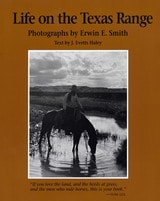
First published in 1953, this photographic record of the real life and work of cowboys remains a perennial favorite. Erwin E. Smith was the outstanding cowboy photographer of the West, and these eighty photographs were among those he chose for an exhibit of his best work at the 1936 Texas Centennial. The text by J. Evetts Haley, a noted historian of the range, skillfully complements Smith's visual record of a vanishing way of life.
Life, Death, and Archaeology at Fort Blue Mounds
A Settlers’ Fortification of the Black Hawk WarRobert A. Birmingham
Wisconsin Historical Society Press, 2012
Life, Death, and Archaeology at Fort Blue Mounds is an archaeological detective story illuminating the lives of white settlers in the lead-mining region during the tragic events of the historically important conflict known as the Black Hawk War.
Focusing on the strategically located Fort Blue Mounds in southwestern Wisconsin, Robert A. Birmingham summarizes the 1832 conflict and details the history of the fort, which played a major role not only in U.S. military and militia operations but also in the lives of the white settlers who sought refuge there. Birmingham then transports us to the site decades later, when he and fellow Wisconsin Historical Society archaeologists and dedicated volunteers began their search for the fort. The artifacts they unearthed provide fascinating—and sometimes surprising—insights into the life, material culture, and even the food of the frontier.
Recommended for readers interested in the Black Hawk War, frontier life, Native American history, military history, and archaeology, Life, Death, and Archaeology at Fort Blue Mounds is grounded by a sense of place and the discovery of what a careful examination of our surroundings can tell us about the past.
Life, Liberty, and the Mummers
Ed Kennedy
Temple University Press, 2007
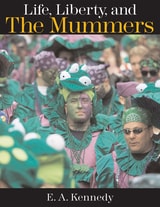
Noted photographer E. A. Kennedy spent four years documenting the Mummers and their parade. He has personally selected the striking images included here -- more than 150 in all -- and he has written an engaging history of the parade itself. As Kennedy explains, and as his photos make clear, "mummery" is a way of life for Mummers, who have deep attachments to their clubs, associations, and brigades.
For all its glitz, the Mummers Parade remains a folk parade. This is the captivating story of the folks behind the parade.
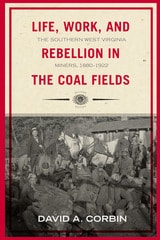
Life, Work, and Rebellion in the Coal Fields
The Southern West Virginia Miners, 1880-1922 2nd EditionDavid Corbin
West Virginia University Press, 2015
Between 1880 and 1922, the coal fields of southern West Virginia witnessed two bloody and protracted strikes, the formation of two competing unions, and the largest armed conflict in American labor history—a week-long battle between 20,000 coal miners and 5,000 state police, deputy sheriffs, and mine guards. These events resulted in an untold number of deaths, indictments of over 550 coal miners for insurrection and treason, and four declarations of martial law. Corbin argues that these violent events were collective and militant acts of aggression interconnected and conditioned by decades of oppression. His study goes a long way toward breaking down the old stereotypes of Appalachian and coal mining culture. This second edition contains a new preface and afterword by author David A. Corbin.

Light on the Devils
Coming of Age on the KlamathLouise Wagenknecht
Oregon State University Press, 2011
When Louise Wagenknecht’s family arrived in the remote logging town of Happy Camp in 1962, a boundless optimism reigned. Whites and Indians worked together in the woods and the lumber mills of northern California’s Klamath country. Logging and lumber mills, it seemed, would hold communities together forever.
But that booming prosperity would come to an end. Looking back on her teenage years spent along the Klamath River, Louise Wagenknecht recounts a vanishing way of life. She explores the dynamics of family relationships and the contradictions of being female in a western logging town in the 1960s. And she paints an evocative portrait of the landscape and her relationship with it.
Light on the Devils is a captivating memoir of place. It will appeal to general readers interested in the rural West, personal memoir, history, and natural history.
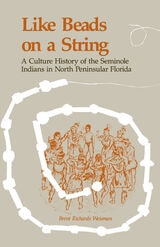
Like Beads on a String
A Culture History of the Seminole Indians in North Peninsular FloridaBrent Richards Weisman
University of Alabama Press, 1989
Florida's Seminole Indians are exerting an ever increasing influence on crucial issues in state politics, economy, and law. From a position of near obscurity less than a century ago, these Native Americans have staged a remarkable comeback to take an active hand in shaping Florida society, present and future. Anthropologists have long been fascinated with the Seminoles and have often remarked upon their ability to adapt to new circumstances while preserving the core features of their traditional culture. Early observers of the Seminoles also commented on the dynamic tension that existed for the individual, clan, and tribe, that drew them together, "like beads on a string," into a resilient and viable society. This study traces the emergence of these qualities in the late prehistoric and early historic period in the Southeast and demonstrates their influence on the course of Seminole culture history.

Like Friends, Like Foes
Japanese Americans and Nevada through World War IIAndrew B. Russell
University of Nevada Press, 2026
Like Friends, Like Foes offers a comprehensive analysis of how Nevada residents responded and reacted to the “Japanese Question” during World War II. Both before and during the war, the experience of Japanese American residents of Nevada varied widely. Once the war started, Japanese immigrants experienced an unusual case of mass internment from the mining towns of Ruth and McGill, Nevada, while Japanese American railroad workers and their families, scattered across the state, faced sudden layoffs and evictions. At the same time, most of the Japanese Americans living in Nevada fared much better than their counterparts who resided in the surrounding states.
Andrew Russell’s study examines how variations in local history and local circumstances generated starkly different perspectives and responses to the supposed “Japanese problems” confronting Nevada’s small communities, the state, and the larger region. While Russell’s interpretive history spotlights some highly unusual developments, it nevertheless offers fresh evidence of how individuals or small groups can play significant roles in combating the abuse of civil rights during times of fear and uncertainty.

Limping through Life
A Farm Boy’s Polio MemoirJerry Apps
Wisconsin Historical Society Press, 2013
A Farm Boy’s Polio Memoir
Jerry Apps
“Families throughout the United States lived in fear of polio throughout the late 1940s and early 1950s, and now the disease had come to our farm. I can still remember that short winter day and the chilly night when I first showed symptoms. My life would never be the same.”
—from the Introduction
Polio was epidemic in the United States starting in 1916. By the 1930s, quarantines and school closings were becoming common, as isolation was one of the only ways to fight the disease. The Sauk vaccine was not available until 1955; in that year, Wisconsin’s Fox River valley had more polio cases per capita than anywhere in the United States. In his most personal book, Jerry Apps, who contracted polio at age twelve, reveals how the disease affected him physically and emotionally, profoundly influencing his education, military service, and family life and setting him on the path to becoming a professional writer.
A hardworking farm kid who loved playing softball, young Jerry Apps would have to make many adjustments and meet many challenges after that winter night he was stricken with a debilitating, sometimes fatal illness. In Limping through Life he explores the ways his world changed after polio and pays tribute to those family members, teachers, and friends who helped him along the way.
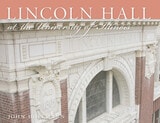
Lincoln Hall at the University of Illinois
John Hoffmann, Foreword by Richard H. Herman
University of Illinois Press, 2010
Lincoln Hall at the University of Illinois, named to commemorate the centennial of Abraham Lincoln's birth, has long been a familiar landmark on the Urbana-Champaign campus and the home for undergraduate and graduate work in the liberal arts and communication. Funded by the Illinois State Legislature in 1909, the building was dedicated in 1913 on Lincoln's birthday, February 12. In addition to its function as space for offices, classrooms, and departmental libraries, Lincoln Hall was commissioned, designed, and built to convey "the wisdom and patriotism of the democracy of learning."
That spirit of freedom and equality in education was manifest in Lincoln Hall's artistic design, which features terra cotta panels depicting Lincoln's life, quotations from his writings, and portraits of prominent figures of his day. At the outset of the building's conception, Evarts B. Greene, professor of history and dean of the College of Literature and Arts, provided detailed information about Lincoln that defined the building's artistic program. Wishing to retain the dignified simplicity of the overall design, he conferred with W. Carbys Zimmerman, the State Architect, about the nature and placement of the panels and other ornamental details that have become key features of the building's design.
Commemorating the bicentennial of Lincoln's birth, this magisterial volume chronicles the history of Lincoln Hall from its conception to its expansion and its present role on the campus. John Hoffmann identifies each of the building's historical panels and the portraits of Lincoln's contemporaries. Lavishly illustrated to show how much care was taken with the details of the design, this book provides a lasting historical record of the building's century-long place at the University of Illinois.
Supported by the Office of the Chancellor of the University of Illinois at Urbana-Champaign
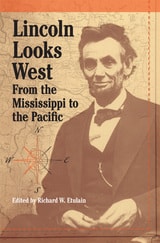
Lincoln Looks West
From the Mississippi to the PacificEdited by Richard W. Etulain
Southern Illinois University Press, 2010
This first-ever volume to comprehensively explore President Abraham Lincoln’s ties to the American West brings together a variety of scholars and experts who offer a fascinating look at the sixteenth president’s lasting legacy in the territory beyond the Mississippi River. Editor Richard W. Etulain’s extensive introductory essay treats these western connections from Lincoln’s early reactions to Texas, Oregon, and the Mexican War in the 1840s, through the 1850s, and during his presidency, providing a framework for the nine essays that follow.
Each of these essays offers compelling insight into the many facets of Lincoln’s often complex interactions with the American West. Included in this collection are a provocative examination of Lincoln’s opposition to the Mexican War; a discussion of the president’s antislavery politics as applied to the new arena of the West; new perspectives on Lincoln’s views regarding the Thirteenth Amendment and his reluctance regarding the admission of Nevada to the Union; a fresh look at the impact of the Radical Republicans on Lincoln’s patronage and appointments in the West; and discussion of Lincoln’s favorable treatment of New Mexico and Arizona, primarily Southern and Democratic areas, in an effort to garner their loyalty to the Union. Also analyzed is “The Tribe of Abraham”—Lincoln’s less-than-competent appointments in Washington Territory made on the basis of political friendship—and the ways in which Lincoln’s political friends in the Western Territories influenced his western policies. Other essays look at Lincoln’s dealings with the Mormons of Utah, who supported the president in exchange for his tolerance, and American Indians, whose relations with the government suffered as the president’s attention was consumed by the crisis of the Civil War.
In addition to these illuminating discussions, Etulain includes a detailed bibliographical essay, complete with examinations of previous interpretations and topics needing further research, as well as an extensive list of resources for more information on Lincoln's ties west of the Mississippi. Loaded with a wealth of information and fresh historical perspectives, Lincoln Looks West explores yet another intriguing dimension to this dynamic leader and to the history of the American West.
Contributors:
Richard W. Etulain
Michael S. Green
Robert W. Johannsen
Deren Earl Kellogg
Mark E. Neely Jr.
David A. Nichols
Earl S. Pomeroy
Larry Schweikart
Vincent G. Tegeder
Paul M. Zall
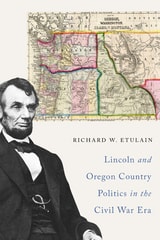
Lincoln and Oregon Country Politics in the Civil War Era
Richard W. Etulain
Oregon State University Press, 2013
—Harold Holzer, Chairman, Lincoln Bicentennial Foundation
This cross-continental history demonstrates Abraham Lincoln’s strong connections with the Oregon Country on various political issues—Indian relations, military policies, civil and legal rights, and North-South ideological conflicts—before and during the Civil War years. Richard Etulain refutes the argument that Pacific Northwest residents were mere “spectators of disunion,” revealing instead that men and women of the Oregon Country were personally and emotionally involved in the controversial ideas and events that inflamed the United States during the fractious era. Etulain’s well-researched and clearly told story demonstrates how links between Washington, D.C., and the Oregon Country helped shape both Lincoln’s policies and Oregon politics.
Lincoln in Indiana
Brian R. Dirck
Southern Illinois University Press, 2017
Lincoln in Indiana tells the story of Lincoln’s life in Indiana, from his family’s arrival to their departure. Dirck explains the Lincoln family’s ancestry and how they and their relatives came to settle near Pigeon Creek. He shows how frontier families like the Lincolns created complex farms out of wooded areas, fashioned rough livelihoods, and developed tight-knit communities in the unforgiving Indiana wilderness. With evocative prose, he describes the youthful Lincoln’s relationship with members of his immediate and extended family. Dirck illuminates Thomas Lincoln by setting him into his era, revealing the concept of frontier manhood, and showing the increasingly strained relationship between father and son. He illustrates how pioneer women faced difficulties as he explores Nancy Lincoln’s work and her death from milk sickness; how Lincoln’s stepmother, Sarah Bush, fit into the family; and how Lincoln’s sister died in childbirth. Dirck examines Abraham’s education and reading habits, showing how a farming community could see him as lazy for preferring book learning over farmwork. While explaining how he was both similar to and different from his peers, Dirck includes stories of Lincoln’s occasional rash behavior toward those who offended him. As Lincoln grew up, his ambitions led him away from the family farm, and Dirck tells how Lincoln chafed at his father’s restrictions, why the Lincolns decided to leave Indiana in 1830, and how Lincoln eventually broke away from his family.
In a triumph of research, Dirck cuts through the myths about Lincoln’s early life, and along the way he explores the social, cultural, and economic issues of early nineteenth-century Indiana. The result is a realistic portrait of the youthful Lincoln set against the backdrop of American frontier culture.
Lincoln in the Illinois Legislature
Ron J Keller
Southern Illinois University Press, 2019
Due partly to Lincoln’s own reserve and partly to an unimpressive legislative tally, Lincoln’s time in the state legislature has been largely neglected by historians more drawn to other early hallmarks of his life, including his law career, his personal life, and his single term as a U.S. congressman in the 1840s. Of about sixteen hundred bills, resolutions, and petitions passed from 1834 to 1842, Lincoln introduced only about thirty of them. The issue he most ardently championed and shepherded through the legislature—the internal improvements system—left the state in debt for more than a generation.
Despite that spotty record, Keller argues, it was during these early years that Lincoln displayed and honed the traits that would allow him to excel in politics and ultimately define his legacy: honesty, equality, empathy, and leadership. Keller reanimates Lincoln’s time in the Illinois legislature to reveal the formation of Lincoln’s strong character and political philosophy in those early years, which allowed him to rise to prominence as the Whig party’s floor leader regardless of setbacks and to build a framework for his future.
Lincoln in the Illinois Legislature details Lincoln’s early political platform and the grassroots campaigning that put him in office. Drawing on legislative records, newspaper accounts, speeches, letters, and other sources, Keller describes Lincoln’s positions on key bills, highlights his colleagues’ perceptions of him, and depicts the relationships that grew out of his statehouse interactions. Keller’s research delves into Lincoln’s popularity as a citizen of New Salem, his political alliances and victories, his antislavery stirrings, and his personal joys and struggles as he sharpened his political shrewdness.
Keller argues Lincoln’s definitive political philosophies—economic opportunity and the right to rise, democratic equality, and to a lesser extent his hatred of slavery—took root during his legislative tenure in Illinois. Situating Lincoln’s tenure and viewpoints within the context of national trends, Keller demonstrates that understanding Lincoln’s four terms as a state legislator is vital to understanding him as a whole.
Lincoln the Citizen, February 12, 1809 to March 4, 1861
The Complete VersionHenry C. Whitney. Edited and with an introduction by Michael Burlingame
University of Illinois Press, 2025
Whitney’s work reveals the legal and political spheres where Lincoln moved while providing eyewitness accounts and intimate stories shared by Lincoln himself. Whitney’s unique vantage point informs analyses of everything from Lincoln’s melancholic temperament to his colorful early career to views on his marriage and family life. Burlingame places Whitney’s singular contributions within Lincoln studies but also weighs criticisms of the book and disputes over what information the author may or may not have invented.
A restored edition of an invaluable memoir, Lincoln the Citizen presents a wealth of overlooked biographical detail by one of the people who knew Lincoln best.
Lincoln the Lawyer
Brian Dirck
University of Illinois Press, 2006
Despite historians' focus on the man as president and politician, Abraham Lincoln lived most of his adult life as a practicing lawyer. It was as a lawyer that he fed his family, made his reputation, bonded with Illinois, and began his political career. Lawyering was also how Lincoln learned to become an expert mediator between angry antagonists, as he applied his knowledge of the law and of human nature to settle one dispute after another. Frontier lawyers worked hard to establish respect for the law and encourage people to resolve their differences without intimidation or violence. These were the very skills Lincoln used so deftly to hold a crumbling nation together during his presidency.
The growth of Lincoln's practice attests to the trust he was able to inspire, and his travels from court to court taught him much about the people and land of Illinois. Lincoln the Lawyer explores the origins of Lincoln's desire to practice law, his legal education, his partnerships with John Stuart, Stephen Logan, and William Herndon, and the maturation of his far-flung practice in the 1840s and 1850s. Brian Dirck provides a context for law as it was practiced in mid-century Illinois and evaluates Lincoln's merits as an attorney by comparison with his peers. He examines Lincoln's clientele, his circuit practice, his views on legal ethics, and the supposition that he never defended a client he knew to be guilty. This approach allows readers not only to consider Lincoln as he lived his life--it also shows them how the law was used and developed in Lincoln's lifetime, how Lincoln charged his clients, how he was paid, and how he addressed judge and jury.

Lincoln's Ladder to the Presidency
The Eighth Judicial CircuitGuy C. Fraker, with a foreword by Michael Burlingame
Southern Illinois University Press, 2012
University Press Books for Public and Secondary Schools, 2013 edition
Superior Achievement by the Illinois State Historical Society, 2013
Throughout his twenty-three-year legal career, Abraham Lincoln spent nearly as much time on the road as an attorney for the Eighth Judicial Circuit as he did in his hometown of Springfield, Illinois. Yet most historians gloss over the time and instead have Lincoln emerge fully formed as a skillful politician in 1858. In this innovative volume, Guy C. Fraker provides the first-ever study of Lincoln’s professional and personal home away from home and demonstrates how the Eighth Judicial Circuit and its people propelled Lincoln to the presidency.
Each spring and fall, Lincoln traveled to as many as fourteen county seats in the Eighth Judicial Circuit to appear in consecutive court sessions over a ten- to twelve-week period. Fraker describes the people and counties that Lincoln encountered, discusses key cases Lincoln handled, and introduces the important friends he made, friends who eventually formed the team that executed Lincoln’s nomination strategy at the Chicago Republican Convention in 1860 and won him the presidential nomination.
As Fraker shows, the Eighth Judicial Circuit provided the perfect setting for the growth and ascension of Lincoln. A complete portrait of the sixteenth president depends on a full understanding of his experience on the circuit, and Lincoln’s Ladder to the Presidency provides that understanding as well as a fresh perspective on the much-studied figure, thus deepening our understanding of the roots of his political influence and acumen.

Lincoln's New Salem
Benjamin P. Thomas
Southern Illinois University Press, 1954
Lincoln’s New Salem highlights the young Lincoln’s arrival, his important wrestling match with Jack Armstrong, his self-education, his brief military career in the Black Hawk War, his experience as a postmaster largely indifferent to postal regulations, his financial woes with the general store, and his election to the state legislature. Making the point that New Salem was where Lincoln acquired faith in himself and in other people, Thomas introduces us to those who created New Salem and who knew, influenced, and befriended Lincoln, delving into his relationships with his neighbors and the loyal friends who often came to his aid.
This colorful history closes with a discussion of the Lincoln legend, which prompted the gradual realization that New Salem was not a dismal mire from which Abraham Lincoln had to extricate himself but was, in fact, an energizing force. This realization led to research and finally to the restoration of New Salem, which began in 1932. The preservation of the village remains vitally important.
First published in 1934 and revised by the author in 1954, this reissue includes a previously unpublished piece about New Salem and Illinois governor Henry Horner by Benjamin Thomas, a new introduction by Kenneth J. Winkle, and new photos by Robert Shaw, in addition to original drawings by Romaine Proctor and a 1971 foreword by Ralph G. Newman.