Results by title
18284 books match the query 'United States' and 698 start with l
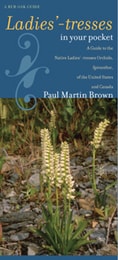
Ladies'-tresses in Your Pocket
A Guide to the Native Ladies'-tresses Orchids, Spiranthes, of the United States and CanadaPaul Martin Brown
University of Iowa Press, 2008
Brown provides general distributional information, time of flowering, and habitat requirements for each species as well as a complete list of hybrids and the many different growth and color forms that can make identifying orchids so intriguing. He includes information on 256 species, 3 additional varieties, and 7 hybrids.
Wild ladies’-tresses occur from British Columbia, with the hooded ladies’-tresses, Spiranthes romanzoffiana, to Florida, with Eaton’s-ladies’-tresses, S. eatonii. The newest species to science, Spiranthes stellata, the starry ladies’-tresses, is featured. Most of these species are easy to identify based upon their general appearance, range, and time of flowering. Answer three simple questions—when, where, and how does it grow? Then compare the living plant with the striking photos in these backpack-friendly laminated guides and consult the keys that Brown has created. Following these steps should enable both professional and amateur naturalists to achieve the satisfaction of identifying specific orchids in their native environment.

Lady Daredevils
American Women and Early AviationBarbara Ganson
University of Illinois Press, 2026
Women aviators challenged social norms that considered them inept with machinery and incapable of handling early flight’s very real dangers. Ganson follows how the New Woman ethos of freedom of movement and career inspired engagement with aviation. Despite resistance, women pushed limits by setting records for speed, altitude, distance, and endurance. The fashions of airwomen, meanwhile, reflected changing attitudes of women toward traditional roles and the pursuit of their career aspirations.
Informed by interviews and rare archival information, Lady Daredevils tells the stories of the pioneering women of early aviation history and reveals their dynamic interactions with social and technological change.
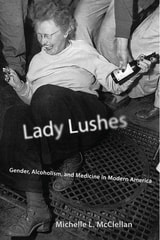
Lady Lushes
Gender, Alcoholism, and Medicine in Modern AmericaMcClellan, Michelle L
Rutgers University Press, 2017
In Lady Lushes, medical historian Michelle L. McClellan traces the story of the female alcoholic from the late-nineteenth through the twentieth century. She draws on a range of sources to demonstrate the persistence of the belief that alcohol use is antithetical to an idealized feminine role, particularly one that glorifies motherhood. Lady Lushes offers a fresh perspective on the importance of gender role ideology in the formation of medical knowledge and authority.

Lady's-slippers in Your Pocket
A Guide to the Native Lady's-slipper Orchids, Cypripedium, of the United States and CanadaPaul Martin Brown
University of Iowa Press, 2008
Brown provides general distributional information, time of flowering, and habitat requirements for each species as well as a complete list of hybrids and the many different growth and color forms that can make identifying orchids so intriguing. For the lady’s-slippers he includes information on 12 species, 2 additional varieties, and 6 hybrids.
Wild lady’s-slippers grow from Alaska, with the spotted lady’s-slipper, Cypripedium guttatum, to Texas, with the ivory-lipped lady’s-slipper, C. kentuckiense. Most of these species are easy to identify based upon their general appearance, range, and time of flowering. Answer three simple questions—when, where, and how does it grow? Then compare the living plant with the striking photos in these backpack-friendly laminated guides and consult the keys that Brown has created. Following these steps should enable both professional and amateur naturalists to achieve the satisfaction of identifying specific orchids in their native environment.
Lakanal the Regicide
John Charles Dawson
University of Alabama Press, 1948
Revolution, Republic, and Reform: The Life of a French Enlightenment Statesman in an Age of Upheaval.
After being comparatively neglected for several generations, Joseph Lakanal received many posthumous honors. These memorials of esteem were the tribute of the men of the Third French Republic to an outstanding character of the First Republic, established by the National Convention in 1792.
In numerous towns and cities of France streets and boulevards were named for Lakanal, among them Paris, Tours, Toulouse, and Montpellier. Elementary schools received his name at Perigueux, Cette, Beziers. Secondary schools were named in his honor, such as the Lycee Lakanal at Paris and the College Lakanal at Beziers. At least two monuments were erected to his memory, the more imposing of which was a life-sized statue in bronze at Foix in his native Ariege. The ancient adage that a prophet is not without honor save in his own country was not true of Lakanal.
Lakanal belonged to a group of thinkers at the end of the eighteenth century known as Ideologists, a derogatory term applied to them by First Consul Bonaparte. When, during the period of the Consulate, Bonaparte had signed a Concordat with the Pope whereby Catholicism was restored to France, and when in 1802 he had sought to put into force the terms of the Concordat, he found a stumbling-block to his plans in the membership of the Class of Moral and Political Sciences of the lnstitut de France. In this group were to be found the most influential free-thinkers of the day: Lakanal, Garat, Cabanis, Volney, Ginguene, Mercier, Naigeon, Destutt de Tracy and others who had been consistently hostile to the Church, and who had become hostile to the ambition of Bonaparte.
On the political side, Lakanal was an austere democrat, and remained one all his life. Had he been willing to compromise, he would undoubtedly have gone far under Napoleon. His career is quite in contrast with that of Talleyrand, whose chameleon-like qualities enabled him to occupy high place in the Revolution, the Consulate, the Empire, the Restoration, and the more liberal government of Louis Philippe.
In his profound belief in democracy and public education, and in the wide variety of his knowledge and interest in the various sciences, Lakanal is to be compared with Thomas Jefferson. The two men were of the same school of thought and possessed much in, common. In his passion for public education Lakanal may also be compared to Horace Mann.
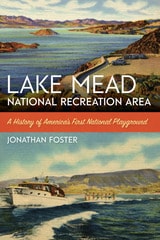
Lake Mead National Recreation Area
A History of America’s First National PlaygroundJonathan Foster
University of Nevada Press, 2016
First named the Boulder Dam Recreation Area, this parkland was created in 1936 by a memorandum of agreement between the National Park Service and the U.S. Bureau of Reclamation. Over the course of its existence, the area has served as a model for a subsequent system of National Recreation Areas. The area’s extreme popularity has, in combination with changing public attitudes regarding preservation and safety, presented the National Park Service with tremendous challenges in recent decades. Jonathan Foster’s examination of these challenges and the responses to them reveal an increasingly anxious relationship between the government, the public, and special interest groups in the American West.
Lake Superior Copper and the Indians
Miscellaneous Studies of Great Lakes PrehistoryEdited by James B. Griffin
University of Michigan Press, 1951
Lamar Archaeology
Mississippian Chiefdoms in the Deep SouthEdited by Mark Williams and Gary Shapiro
University of Alabama Press, 1990
A Dan Josselyn Memorial Publication
Lamar Archaeology provides a comprehensive and detailed review of our knowledge of the late prehistoric Indian societies in the Southern Appalachian area and its peripheries. These Lamar societies were chiefdom-level groups who built most of the mounds in this large region and were ancestors of later tribes, including the Creeks and Cherokees. This book begins with a history of the last 50 years of archaeological and historical research and brings together for the first time all the available data on this early culture. It also provides an invaluable model for books about Southeastern Indian societies by combining purely descriptive information with innovative analyses, advancing our knowledge of the past while remaining firmly grounded in the archaeological evidence as fact.
Contributors include:
Frankie Snow, Chad O. Braley, James B. Langford Jr., Marvin T. Smith, Daniel T. Elliott, Richard R. Polhemus, C. Roger Nance, Gary Shapiro, Mark Williams, John F. Scarry, David G. Anderson, andCharles M. Hudson
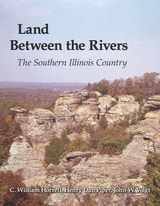
Land Between the Rivers
The Southern Illinois CountryC. William Horrell, Henry Dan Piper, John W. Voigt
Southern Illinois University Press, 1973
Surveying the area in words and pictures, the authors sensitively and appreciatively portray the region’s special qualities. Land Between the Rivers, a perennial classic since it was first published in 1973, provides an uncommon portrayal of American life in a distinct region, a memorable journey in both time and place.
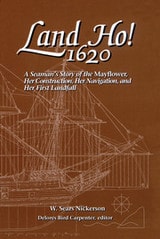
Land Ho! 1620
A Seaman's Story of the Mayflower, Her Construction, Her Navigation, and Her First LandfallW. Sears Nickerson
Michigan State University Press, 1997
With an original 1931 press run of only seven hundred and fifty, surviving copies of Land Ho! 1620 are now either in archives or exist as valued collector's editions. Acclaimed by the Cape Cod Pilgrim Memorial Association in 1957 as "the most authentic, interesting, and best written book on the voyage of the Pilgrims and their lives," Nickerson's work is now available in this handsome paperback edition, complete with all original illustrations and maps. Nickerson scholar Delores Bird Carpenter updated all one hundred and seventy- nine annotations, checking them against original sources. In addition, she has prepared a new bibliography and an extensive, new introduction that places Land Ho! 1620 into its historical and historiographical context.
Divided into four parts, the first describes "the Voyage"; the second, told with the skill of a shipbuilder, describes "the Ship," which includes drawings of the deck plan, the passenger quarters, and the elevation and the sail plan. Also included in this section are discussions of the ship's speed, instruments, and personnel. The Third, "the backside of Cape Cod," addresses the problem of where the Mayflower first saw land, and its subsequent course. Nickerson concludes with "the Landfall and the Landing." Of great significance is his map, The Back Side of Cape Cod Today—1930 and Yesterday—1620.
Land Hunger
Ohio and the Western FrontiersMansel G. Blackford
Ohio University Press, 2025
Land Made from Water
Appropriation and the Evolution of Colorado's Landscape, Ditches, and Water InstitutionsRobert R. Crifasi
University Press of Colorado, 2016
A Land Made from Water chronicles how the appropriation and development of water and riparian resources in Colorado changed the face of the Front Range—an area that was once a desert and is now an irrigated oasis suitable for the habitation and support of millions of people. This comprehensive history of human intervention in the Boulder Creek and Lefthand Creek valleys explores the complex interactions between environmental and historical factors to show how thoroughly the environment along the Front Range is a product of human influence.
Author Robert Crifasi examines the events that took place in nineteenth-century Boulder County, Colorado, and set the stage for much of the water development that occurred throughout Colorado and the American West over the following century. Settlers planned and constructed ditches, irrigation systems, and reservoirs; initiated the seminal court decisions establishing the appropriation doctrine; and instigated war to wrest control of the region from the local Native American population. Additionally, Crifasi places these river valleys in the context of a continent-wide historical perspective.
By examining the complex interaction of people and the environment over time, A Land Made from Water links contemporary issues facing Front Range water users to the historical evolution of the current water management system and demonstrates the critical role people have played in creating ecosystems that are often presented to the public as “natural” or “native.” It will appeal to students, scholars, professionals, and general readers interested in water history, water management, water law, environmental management, political ecology, or local natural history.

Land Utilization in Minnesota
A State Program for the Cut-Over LandsCommittee Committee on Land Utilization
University of Minnesota Press, 1934

Land of 10,000 Loves
A History of Queer MinnesotaStewart Van Cleve
University of Minnesota Press, 2012
For too long, LGBTQ communities—including Minnesota’s—have been maligned, misrepresented, and often outright ignored. Myths regarding the queer experience have grown and become embedded in local and national consciousness. The absence of queer stories over time in local historical and popular writing only served to further this ignorance, but great strides have been made in recent decades to celebrate Minnesota’s vibrant queer history. Add to this rising chorus an enchanting new voice: Land of 10,000 Loves, Stewart Van Cleve’s wide-ranging and unprecedented illustrated history of queer life in Minnesota.
Drawing from the renowned Tretter Collection at the University of Minnesota—a vast collection of books, photographs, films, and other historical artifacts that Van Cleve calls “one of the most comprehensive accounts of international queer history in the world”—Land of 10,000 Loves blends oral history, archival narrative, newspaper accounts, and fascinating illustrations to paint a remarkable picture of Minnesota’s queer history. More than 120 concise historical essays lead readers from the earliest evidences of queer life in Minnesota before the Second World War—for example, Oscar Wilde’s visit to Minnesota and “rumors” at the Alexander Ramsey house—to riverfront vice districts, protest and parade sites, bars, 1970s collectives, institutions, public spaces, and private homes. More than 130 illustrations illuminate these histories with images of pride guides, archival photographs, and advertisements from local queer bars among other extraordinary pieces of ephemera and artifacts. Many of the stories and images are well known, while others have been all but forgotten, until now.
Building on foundational works of regional queer history such as The Evening Crowd at Kirmser’s and Queer Twin Cities, the historical vignettes of Land of 10,000 Loves show us that Minnesota—from its biggest cities to its smallest towns—has been, as Van Cleve notes, “queer, to a certain extent, since the very beginning.” Land of 10,000 Loves honors this rich and diverse legacy and is a compelling testament to the sacrifices, scandals, and victories that have affected and continue to affect the lives of queer Minnesotans.
Land of Big Rivers
French and Indian Illinois, 1699-1778M. J. Morgan
Southern Illinois University Press, 2010
Drawing on research from a variety of academic fields, such as archaeology, history, botany, ecology, and physical science, M. J. Morgan explores the intersection of people and the environment in early eighteenth-century Illinois Country—a stretch of fecund, alluvial river plain along the Mississippi river. Arguing against the traditional narrative that describes Illinois as an untouched wilderness until the influx of American settlers, Morgan illustrates how the story began much earlier.
She focuses her study on early French and Indian communities, and later on the British, nestled within the tripartite environment of floodplain, riverine cliffs and bluffs, and open, upland till plain/prairie and examines the impact of these diverse groups of people on the ecological landscape. By placing human lives within the natural setting of the period—the abundant streams and creeks, the prairies, plants and wildlife—she traces the environmental change that unfolded across almost a century. She describes how it was a land in motion; how the occupying peoples used, extracted, and extirpated its resources while simultaneously introducing new species; and how the flux and flow of life mirrored the movement of the rivers. Morgan emphasizes the importance of population sequences, the relationship between the aboriginals and the Europeans, the shared use of resources, and the effects of each on the habitat.
Land of Big Rivers is a unique, many-themed account of the big-picture ecological change that occurred during the early history of the Illinois Country. It is the first book to consider the environmental aspects of the Illinois Indian experience and to reconsider the role of the French and British in environmental change in the mid-Mississippi Valley. It engagingly recreates presettlement Illinois with a remarkable interdisciplinary approach and provides new details that will encourage understanding of the interaction between physical geography and the plants, animals, and people in the Illinois Country. Furthermore, it exhibits the importance of looking at the past in the context of environmental transformation, which is especially relevant in light of today’s global climate change.
Land of Bright Promise
Advertising the Texas Panhandle and South Plains, 1870-1917By Jan Blodgett
University of Texas Press, 1988
“It shall be the chosen land, perpetual sunshine shall kiss its trees and vines, and, being storied in luscious fruits and compressed into ruddy wine, will be sent to the four points of the compass to gladden the hearts of all mankind . . . They will breathe the pure and bracing air, bask in the healing sunshine, drink the invigorating wine, and eat the life prolonging fruit.” —from a brochure advertising the Staked Plains from the Missouri Pacific Railway Company, 1889
Land of Bright Promise is a fascinating exploration of the multitude of land promotions and types of advertising that attracted more than 175,000 settlers to the Panhandle–South Plains area of Texas from the late years of the nineteenth century to the early years of the twentieth. Shunned by settlers for decades because of its popular but forbidding image as a desert filled with desperados, savage Indians, and solitary ranchers, the region was seen as an agricultural and cultural wasteland. The territory, consequently, was among the last to be settled in the United States.
But from 1890 to 1917, land companies and agents competed to attract new settlers to the plains. To this end, the combined efforts of local residents, ranchers and landowners, railroads, and professional real estate agents were utilized. Through brochures, lectures, articles, letters, fairs, and excursion trips, midwestern farmers were encouraged to find new homes on what was once feared as the “Great American Desert.” And successful indeed were these efforts: from 13,787 in 1890, the population grew to 193,371 in 1920, with a corresponding increase in the amount of farms and farm acreage.
The book looks at the imagination, enthusiasm, and determination of land promoters as they approached their task, including their special advertisements and displays to show the potential of the area. Treating the important roles of the cattlemen, the railroads, the professional land companies, and local boosters, Land of Bright Promise also focuses on the intentions and expectations of the settlers themselves. Of special interest are the fifteen historical photographs and reproductions of promotional pieces from the era used to spur the land boom. What emerges is an engaging look at a critical period in the development of the Texas Panhandle and an overview of the shift from cattle to agriculture as the primary industry in the area.
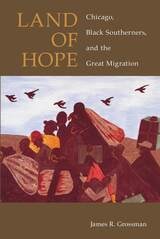
Land of Hope
Chicago, Black Southerners, and the Great MigrationJames R. Grossman
University of Chicago Press, 1989
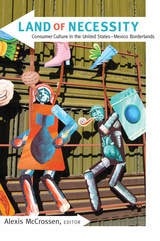
Land of Necessity
Consumer Culture in the United States–Mexico BorderlandsAlexis McCrossen, ed.
Duke University Press, 2009
In Land of Necessity, historians and anthropologists unravel the interplay of the national and transnational and of scarcity and abundance in the region split by the 1,969-mile boundary line dividing Mexico and the United States. This richly illustrated volume, with more than 100 images including maps, photographs, and advertisements, explores the convergence of broad demographic, economic, political, cultural, and transnational developments resulting in various forms of consumer culture in the borderlands. Though its importance is uncontestable, the role of necessity in consumer culture has rarely been explored. Indeed, it has been argued that where necessity reigns, consumer culture is anemic. This volume demonstrates otherwise. In doing so, it sheds new light on the history of the U.S.-Mexico borderlands, while also opening up similar terrain for scholarly inquiry into consumer culture.
The volume opens with two chapters that detail the historical trajectories of consumer culture and the borderlands. In the subsequent chapters, contributors take up subjects including smuggling, tourist districts and resorts, purchasing power, and living standards. Others address home décor, housing, urban development, and commercial real estate, while still others consider the circulation of cinematic images, contraband, used cars, and clothing. Several contributors discuss the movement of people across borders, within cities, and in retail spaces. In the two afterwords, scholars reflect on the U.S.-Mexico borderlands as a particular site of trade in labor, land, leisure, and commodities, while also musing about consumer culture as a place of complex political and economic negotiations. Through its focus on the borderlands, this volume provides valuable insight into the historical and contemporary aspects of the big “isms” shaping modern life: capitalism, nationalism, transnationalism, globalism, and, without a doubt, consumerism.
Contributors. Josef Barton, Peter S. Cahn, Howard Campbell, Lawrence Culver, Amy S. Greenberg, Josiah McC. Heyman, Sarah Hill, Alexis McCrossen, Robert Perez, Laura Isabel Serna, Rachel St. John, Mauricio Tenorio-Trillo, Evan R. Ward
Land of Opportunity
One Family's Quest for the American Dream in the Age of CrackWilliam M. Adler
University of Michigan Press, 2021
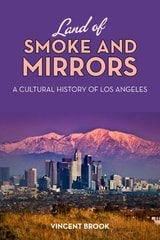
Land of Smoke and Mirrors
A Cultural History of Los AngelesBrook, Vincent
Rutgers University Press, 2013
Unlike the more forthrightly mythic origins of other urban centers—think Rome via Romulus and Remus or Mexico City via the god Huitzilopochtli—Los Angeles emerged from a smoke-and-mirrors process that is simultaneously literal and figurative, real and imagined, material and metaphorical, physical and textual. Through penetrating analysis and personal engagement, Vincent Brook uncovers the many portraits of this ever-enticing, ever-ambivalent, and increasingly multicultural megalopolis. Divided into sections that probe Los Angeles’s checkered history and reflect on Hollywood’s own self-reflections, the book shows how the city, despite considerable remaining challenges, is finally blowing away some of the smoke of its not always proud past and rhetorically adjusting its rear-view mirrors.
Part I is a review of the city’s history through the early 1900s, focusing on the seminal 1884 novel Ramona and its immediate effect, but also exploring its ongoing impact through interviews with present-day Tongva Indians, attendance at the 88th annual Ramona pageant, and analysis of its feature film adaptations.
Brook deals with Hollywood as geographical site, film production center, and frame of mind in Part II. He charts the events leading up to Hollywood’s emergence as the world’s movie capital and explores subsequent developments of the film industry from its golden age through the so-called New Hollywood, citing such self-reflexive films as Sunset Blvd.,Singin’ in the Rain, and The Truman Show.
Part III considers LA noir, a subset of film noir that emerged alongside the classical noir cycle in the 1940s and 1950s and continues today. The city’s status as a privileged noir site is analyzed in relation to its history and through discussions of such key LA noir novels and films as Double Indemnity, Chinatown, and Crash.
In Part IV, Brook examines multicultural Los Angeles. Using media texts as signposts, he maps the history and contemporary situation of the city’s major ethno-racial and other minority groups, looking at such films as Mi Familia (Latinos), Boyz N the Hood (African Americans), Charlotte Sometimes (Asians), Falling Down (Whites), and The Kids Are All Right (LGBT).

Land of the Underground Rain
Irrigation on the Texas High Plains, 1910-1970By Donald E. Green
University of Texas Press, 1973
The scarcity of surface water which has so marked the Great Plains is even more characteristic of its subdivision, the Texas High Plains. Settlers on the plateau were forced to use pump technology to tap the vast ground water resources—the underground rain—beneath its flat surface.
The evolution from windmills to the modern high-speed irrigation pumps took place over several decades. Three phases characterized the movement toward irrigation. In the period from 1910 to 1920, large-volume pumping plants first appeared in the region, but, due to national and regional circumstances, these premature efforts were largely abortive. The second phase began as a response to the drouth of the Dust Bowl and continued into the 1950s. By 1959, irrigation had become an important aspect of the flourishing High Plains economy. The decade of the 1960s was characterized chiefly by a growing alarm over the declining ground water table caused by massive pumping, and by investigations of other water sources.
Land of the Underground Rain is a study in human use and threatened exhaustion of the High Plains' most valuable natural resource. Ground water was so plentiful that settlers believed it flowed inexhaustibly from some faraway place or mysteriously from a giant underground river. Whatever the source, they believed that it was being constantly replenished, and until the 1950s they generally opposed effective conservation of ground water. A growing number of weak and dry wells then made it apparent that Plains residents were "mining" an exhaustible resource.
The Texas High Plains region has been far more successful in exploiting its resource than in conserving it. The very success of its pump technology has produced its environmental crisis. The problem brought about by the threatened exhaustion of this resource still awaits a solution.
This study is the first comprehensive history of irrigation on the Texas High Plains, and it is the first comprehensive treatment of the development of twentieth-century pump irrigation in any area of the United States.
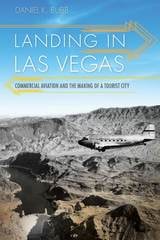
Landing in Las Vegas
Commercial Aviation and the Making of a Tourist CityDaniel K. Bubb
University of Nevada Press, 2017
At the beginning of the twentieth century, Las Vegas was a dusty, isolated desert town. By century’s end, it was the country’s fastest-growing city, a world-class travel destination with a lucrative tourist industry hosting millions of visitors a year. This transformation came about in large part because of a symbiotic relationship between airlines, the city, and the airport, facilitated by the economic democratization and deregulation of the airline industry, the development of faster and more comfortable aircraft, and the ambitious vision of Las Vegas city leaders and casino owners. Landing in Las Vegas is a compelling study of the role of fast, affordable transportation in overcoming the vast distances of the American West and binding western urban centers to the national and international tourism, business, and entertainment industries.

Landmarks of Texas Architecture
Lawrence W. Speck
University of Texas Press, 1986
"This selection of twenty of Texas' proudest architectural achievements is a tiny sampling of the state's rich, but little-heralded, architectural heritage. The visual presentation of these buildings in Richard Payne's insightful photographs is evidence enough to any student of Texas culture that there are deep and meaningful tracks of our civilization in the state's built environment. . . . In the stones of the Alamo and the steel and glass of our downtown skyscrapers lie the silent embodiment of who we are and where we have been."
—from the Introduction
Texas architecture has never been, nor is it likely to be in the future, an easily digested whole. This collection, drawn from the 1983 Texas Society of Architects' exhibit "Creating Tomorrow's Heritage," provides a look at twenty of the most interesting responses to the challenges posed by Texas history and geography. It reveals that what Texas architecture lacks in cohesiveness, it more than compensates for in vitality. Variations in circumstance and background, coupled with the kind of freedom which heterogeneity breeds, have produced a lively climate for architectural development in Texas—a place where, in the absence of pat answers, intriguing questions have been raised. The same freedom which has produced a dearth of cohesion has encouraged exploration and invention. The same disparities which have made tidy categorization of historical movements or periods difficult have led to some evocative hybrids—new and telling syntheses which are genuinely of their place.
Of interest to anyone who has strolled the Paseo del Rio in San Antonio or admired the dramatically lit State Capitol at night, Landmarks of Texas Architecture is a book to be looked at and enjoyed, a place to start in creating one's own list of architectural favorites. Part of the growing interest in Texas history and culture, Landmarks adds to our understanding of the forces which shaped the Texas of yesterday and will build the Texas of tomorrow.

Landscape of Fear
Stephen King's American GothicTony Magistrale
University of Wisconsin Press, 1988
One of the very first books to take Stephen King seriously, Landscape of Fear (originally published in 1988) reveals the source of King's horror in the sociopolitical anxieties of the post-Vietnam, post-Watergate era. In this groundbreaking study, Tony Magistrale shows how King's fiction transcends the escapism typical of its genre to tap into our deepest cultural fears: "that the government we have installed through the democratic process is not only corrupt but actively pursuing our destruction, that our technologies have progressed to the point at which the individual has now become expendable, and that our fundamental social institutions-school, marriage, workplace, and the church-have, beneath their veneers of respectability, evolved into perverse manifestations of narcissism, greed, and violence."
Tracing King's moralist vision to the likes of Twain, Hawthorne, and Melville, Landscape of Fear establishes the place of this popular writer within the grand tradition of American literature. Like his literary forbears, King gives us characters that have the capacity to make ethical choices in an imperfect, often evil world. Yet he inscribes that conflict within unmistakably modern settings. From the industrial nightmare of "Graveyard Shift" to the breakdown of the domestic sphere in The Shining, from the techno-horrors of The Stand to the religious fanaticism and adolescent cruelty depicted in Carrie, Magistrale charts the contours of King's fictional landscape in its first decade.
Landscapes of the Secular
Law, Religion, and American Sacred SpaceNicolas Howe
University of Chicago Press, 2016
Fusing geography, legal scholarship, and religion in a potent analysis, Howe shows how seemingly routine questions about how to look at a sunrise or a plateau or how to assess what a mountain is both physically and ideologically, lead to complex arguments about the nature of religious experience and its implications for our lives as citizens. In American society—nominally secular but committed to permitting a diversity of religious beliefs and expressions—such questions become all the more fraught and can lead to difficult, often unsatisfying compromises regarding how to interpret and inhabit our public lands and spaces. A serious commitment to secularism, Howe shows, forces us to confront the profound challenges of true religious diversity in ways that often will have their ultimate expression in our built environment. This provocative exploration of some of the fundamental aspects of American life will help us see the land, law, and society anew.
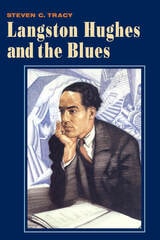
Langston Hughes and the Blues
Steven C. Tracy
University of Illinois Press, 2024
Language Diversity in the Classroom
From Intention to PracticeEdited by Geneva Smitherman and Victor Villanueva. Foreword by Suresh Canagarajah
Southern Illinois University Press, 2003
It’s no secret that, in most American classrooms, students are expected to master standardized American English and the conventions of Edited American English if they wish to succeed. Language Diversity in the Classroom: From Intention to Practice works to realign these conceptions through a series of provocative yet evenhanded essays that explore the ways we have enacted and continue to enact our beliefs in the integrity of the many languages and Englishes that arise both in the classroom and in professional communities.
Edited by Geneva Smitherman and Victor Villanueva, the collection was motivated by a survey project on language awareness commissioned by the National Council of Teachers of English and the Conference on College Composition and Communication.
All actively involved in supporting diversity in education, the contributors address the major issues inherent in linguistically diverse classrooms: language and racism, language and nationalism, and the challenges in teaching writing while respecting and celebrating students’ own languages. Offering historical and pedagogical perspectives on language awareness and language diversity, the essays reveal the nationalism implicit in the concept of a “standard English,” advocate alternative training and teaching practices for instructors at all levels, and promote the respect and importance of the country’s diverse dialects, languages, and literatures.
Contributors include Geneva Smitherman, Victor Villanueva, Elaine Richardson, Victoria Cliett, Arnetha F. Ball, Rashidah Jammi` Muhammad, Kim Brian Lovejoy, Gail Y. Okawa, Jan Swearingen, and Dave Pruett.
The volume also includes a foreword by Suresh Canagarajah and a substantial bibliography of resources about bilingualism and language diversity.

Language Loyalties
A Source Book on the Official English ControversyEdited by James Crawford
University of Chicago Press, 1992
Supporters argue that English has always been our common language—a means of resolving conflicts in a nation of diverse racial, ethnic, and religious groups, and an essential tool of social mobility and cultural integration. Opponents charge that the amendment is unnecessary and that it threatens civil rights, educational opportunities, and free speech, wrapping racist biases in a cloak of patriotism.
Language Loyalties: A Source Book on the Official English Controversy provides a balanced, comprehensive guide to this complex and often confusing debate. It is an essential handbook and reference for advocates, educators, policymakers, jurists, scholars, and citizens who seek to join this debate fully informed. Addressing the issues involved in developing America's first planned national language policy, James Crawford has expertly collected and introduced more than eighty-five source documents and articles.
Language Policy & Identity In The U.S.
Ronald Schmidt, Sr.
Temple University Press, 2000
This book lays out the two approaches to language policy -- linguistic assimilation and linguistic pluralism -- in clear and accessible terms. Filled with examples and narratives, it provides a readable overview of the U.S. "culture wars" and explains why the conflict has just now emerged as a major issue in the United States.
Professor Schmidt examines bilingual education in the public schools, "linguistic access" rights to public services, and the designation of English as the United States' "official" language. He illuminates the conflict by describing the comparative, theoretical, and social contexts for the debate. The source of the disagreement, he maintains, is not a disagreement over language per se but over identity and the consequences of identity for individuals, ethnic groups, and the country as a whole. Who are "the American people"? Are we one national group into which newcomers must assimilate? Or are we composed of many cultural communities, each of which is a unique but integral part of the national fabric? This fundamental point is what underlies the specific disputes over language policy. This way of looking at identity politics, as Professor Schmidt shows, calls into question the dichotomy between "material interest" politics and "symbolic" politics in relation to group identities.
Not limited to describing the nature and context of the language debate, Language Policy and Identity Politics in the United States reaches the conclusion that a policy of linguistic pluralism, coupled with an immigrant settlement policy and egalitarian economic reforms, will best meet the aims of justice and the common good. Only by attacking both the symbolic and material effects of racialization will the United States be able to attain the goals of social equality and national harmony.
Language and Political Meaning in Revolutionary America
John Howe
University of Massachusetts Press, 2009
Language and Power Reader
Representations of Race in a "Post-Racist" EraRobert Eddy
Utah State University Press, 2014
A Language and Power Reader organizes reading and writing activities for undergraduate students, guiding them in the exploration of racism and cross-racial rhetorics.
Introducing texts written from and about versions of English often disrespected by mainstream Americans, A Language and Power Reader highlights English dialects and discourses to provoke discussions of racialized relations in contemporary America. Thirty selected readings in a range of genres and from writers who work in ?alternative? voices (e.g., Pidgin, African American Language, discourse of international and transnational English speakers) focus on disparate power relations based on varieties of racism in America and how those relations might be displayed, imposed, or resisted across multiple rhetorics. The book also directs student participation and discourse. Each reading is followed by comments and guides to help focus conversation.
Research has long shown that increasing a student?s metalinguistic awareness improves a student?s writing. No other reader available at this time explores the idea of multiple rhetorics or encourages their use, making A Language and Power Reader a welcome addition to writing classrooms.
Language and the Law in Deaf Communities
Ceil Lucas
Gallaudet University Press, 2003

Language of the Gun
Youth, Crime, and Public PolicyBernard E. Harcourt
University of Chicago Press, 2006
Home to over 150 repeat offenders ranging in age from twelve to seventeen, the Catalina Mountain School is made up of a particular stratum of boys—those who have committed the most offenses but will still be released upon reaching adulthood. In an effort to understand the symbolic and emotional language of guns and gun carrying, Harcourt interviewed dozens of these incarcerated Catalina boys. What do these youths see in guns? What draws them to handguns? Why do some of them carry and others not? For Harcourt, their often surprising answers unveil many of the presuppositions that influence our laws and policies.

Larger Than Life
Movie Stars of the 1950sPalmer, R. Barton
Rutgers University Press, 2010
Larger Than Life offers a comprehensive view of the star system in 1950s Hollywood and also in-depth discussions of the decade's major stars, including Montgomery Clift, Judy Holliday, Jerry Lewis, James Mason, Marilyn Monroe, Kim Novak, Bing Crosby, Gene Kelly, Jayne Mansfield, and Audrey Hepburn.
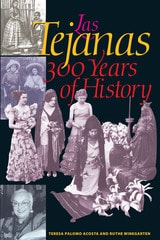
Las Tejanas
300 Years of HistoryBy Teresa Palomo Acosta and Ruthe Winegarten
University of Texas Press, 2003
Winner, Texas Reference Source Award, Reference Round Table, Texas Library Association, 2003
T.R. Fehrenbach Award, Texas Historical Commission, 2004
Since the early 1700s, women of Spanish/Mexican origin or descent have played a central, if often unacknowledged, role in Texas history. Tejanas have been community builders, political and religious leaders, founders of organizations, committed trade unionists, innovative educators, astute businesswomen, experienced professionals, and highly original artists. Giving their achievements the recognition they have long deserved, this groundbreaking book is at once a general history and a celebration of Tejanas' contributions to Texas over three centuries.
The authors have gathered and distilled a wide range of information to create this important resource. They offer one of the first detailed accounts of Tejanas' lives in the colonial period and from the Republic of Texas up to 1900. Drawing on the fuller documentation that exists for the twentieth century, they also examine many aspects of the modern Tejana experience, including Tejanas' contributions to education, business and the professions, faith and community, politics, and the arts. A large selection of photographs, a historical timeline, and profiles of fifty notable Tejanas complete the volume and assure its usefulness for a broad general audience, as well as for educators and historians.
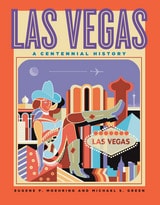
Las Vegas
A Centennial HistoryEugene P. Moehring
University of Nevada Press, 2005
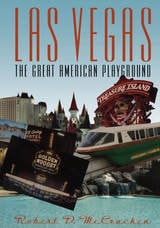
Las Vegas
The Great American PlaygroundRobert D. Mccracken
University of Nevada Press, 1996
Las Vegas: The Great American Playground, illustrated with many fine historical photographs, traces the city’s history from its first Native American occupants more than 10,000 years ago to its present status as a premier tourist destination. It is the story of a group of colorful, enterprising individuals who made the desert bloom with undreamed-of possibilities.

Las hijas de Juan
Daughters BetrayedJosie Méndez-Negrete
Duke University Press, 2006
Méndez-Negrete was born in Mexico, in the state of Zacatecas. She recalls a joyous childhood growing up in the midst of Tabasco, a vibrant town filled with extended family. Her father, though, had dreams of acquiring wealth in el norte. He worked sun-up to sun-down in the fields of south Texas. Returning home to Mexico, his pockets full of dollars, he spent evenings drinking and womanizing.
When Méndez-Negrete was eleven, her father moved the family to the United States, where they eventually settled in California’s Santa Clara Valley. There her father began molesting his daughters, viciously beating them and their mother. Within the impoverished immigrant family, the abuse continued for years, until a family friend brought it to the attention of child welfare authorities. Méndez-Negrete’s father was tried, convicted, and imprisoned.
Las hijas de Juan is told chronologically, from the time Méndez-Negrete was a child until she was a young adult trying, along with the rest of her family, to come to terms with her father’s brutal legacy. It is a harrowing story of abuse and shame compounded by cultural and linguistic isolation and a system of patriarchy that devalues the experiences of women and girls. At the same time, Las hijas de Juan is an inspiring tale, filled with strong women and hard-won solace found in traditional Mexican cooking, songs, and storytelling.

Last Best Gifts
Altruism and the Market for Human Blood and OrgansKieran Healy
University of Chicago Press, 2006
Last Best Gifts offers a fresh perspective on this ethical dilemma by examining the social organization of blood and organ donation in Europe and the United States. Gifts of blood and organs are not given everywhere in the same way or to the same extent—contrasts that allow Kieran Healy to uncover the pivotal role that institutions play in fashioning the contexts for donations. Procurement organizations, he shows, sustain altruism by providing opportunities to give and by producing public accounts of what giving means. In the end, Healy suggests, successful systems rest on the fairness of the exchange, rather than the purity of a donor’s altruism or the size of a financial incentive.
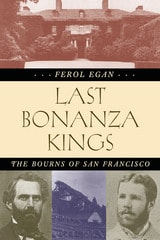
Last Bonanza Kings
The Bourns of San FranciscoFerol Egan
University of Nevada Press, 2009
Much of the wealth from the great mining bonanzas of the nineteenth century American West flowed into San Francisco and made possible the growth of the city and some fabulous personal fortunes. Among the wealthiest and most powerful of the Bonanza Kings were William Bowers Bourn I and his son and successor, William Bowers Bourn II. Their wealth came from rich mines in Nevada’s Comstock Lode and Treasure Hill and California’s Sierra foothills, as well as astute business ventures in the booming port city of San Francisco. Last Bonanza Kings tells their story with all the colorful detail and sweeping sense of epic drama that the characters and their times demand, setting them into the turbulent context of an age of rampant financial and civic growth, major technological advances in mining, lavish philanthropy, and opulent personal lifestyles.

Last Cavalier
The Life and Times of John A. Lomax, 1867-1948Nolan Porterfield
University of Illinois Press, 1996
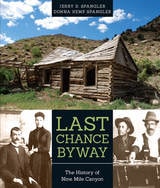
Last Chance Byway
The History of Nine Mile CanyonJerry D Spangler and Donna Kemp Spangler
University of Utah Press, 2015
The history of Nine Mile Canyon is not so much a story of those who lived and died there as it is of those whose came with dreams and left broke and disillusioned, although there were exceptions. Sam Gilson, the irascible U.S. marshal and famed polygamist hunter, became wealthy speculating in a hydrocarbon substance bearing his name, Gilsonite, a form of asphalt. The famed African American Buffalo Soldiers constructed a freight road through the canyon that for a time turned the Nine Mile Road into one of the busiest highways in Utah. Others who left their mark include famed outlaw hunter Joe Bush, infamous bounty hunter Jack Watson, the larger-than-life cattle baron Preston Nutter, and Robert Leroy Parker (known to most as Butch Cassidy).
Winner of the Charles Redd Center Clarence Dixon Taylor Historical Research Award.

Last Gangster in Austin
Frank Smith, Ronnie Earle, and the End of a Junkyard MafiaJesse Sublett
University of Texas Press, 2021
Ronnie Earle was a Texas legend. During his three decades as the district attorney responsible for Austin and surrounding Travis County, he prosecuted corrupt corporate executives and state officials, including the notorious US congressman Tom DeLay. But Earle maintained that the biggest case of his career was the one involving Frank Hughey Smith, the ex-convict millionaire, alleged criminal mastermind, and Dixie Mafia figure.
With the help of corrupt local authorities, Smith spent the 1970s building a criminal empire in auto salvage and bail bonds. But there was one problem: a rival in the salvage business threatened his dominance. Smith hired arsonists to destroy the rival; when they botched the job, he sent three gunmen, but the robbery they planned was a bloody fiasco. Investigators were convinced that Smith was guilty, but many were skeptical that the newly elected and inexperienced Earle could get a conviction. Amid the courtroom drama and underworld plots the book describes, Willie Nelson makes a cameo. So do the private eyes, hired guns, and madams who kept Austin not only weird but also riddled with vice. An extraordinary true story, Last Gangster in Austin paints an unusual picture of the Texas capital as a place that was wild, wonderful, and as crooked as the dirt road to paradise.

Last King of the Sports Page
The Life and Career of Jim MurrayTed Geltner
University of Missouri Press, 2012
Part crusader, part comedian, Jim Murray was a once-in-a-generation literary talent who just happened to ply his trade on newsprint, right near the box scores and race results. During his lifetime, Murray rose through the ranks of journalism, from hard-bitten 1940s crime reporter, to national Hollywood correspondent, to the top sports columnist in the United States. In Last King of the Sports Page: The Life and Career of Jim Murray, Ted Geltner chronicles Jim Murray’s experiences with twentieth-century American sports, culture, and journalism.
Last Paper Standing
A Century of Competition between the Denver Post and the Rocky Mountain NewsKen J. Ward
University Press of Colorado, 2023
This frequently sensational, sometimes outlandish, and occasionally bloody battle spanned numerous eras of journalism, embodying the rise and fall of the newspaper industry during the twentieth century in the lead up to the fall of American newspapering. Drawing on manuscript collections scattered across the United States as well as oral histories with executives, managers, and journalists from the papers, Ken J. Ward investigates the strategies employed in their competition with one another and against other challenges, such as widespread economic uncertainty and the deterioration of the newspaper industry. He follows this competition through the death of the Rocky Mountain News in 2009, which ended the country’s last great newspaper war and marked the close of the golden age of Denver journalism.
Fake news runs rampant in the absence of high-quality news sources like the News and the Post of the past. Neither canonizing nor vilifying key characters, Last Paper Standing offers insight into the historical context that led these papers’ managers to their changing strategies over time. It is of interest to media and business historians, as well as anyone interested in the general history of journalism, Denver, and Colorado.

Last Rampage
The Escape of Gary TisonJames W. Clarke
University of Arizona Press, 1999
Last Resort
The Financial Crisis and the Future of BailoutsEric A. Posner
University of Chicago Press, 2018
The answer, according to Eric A. Posner, is no. The federal government freely and frequently violated the law with the bailouts—but it did so in the public interest. An understandable lack of sympathy toward Wall Street has obscured the fact that bailouts have happened throughout economic history and are unavoidable in any modern, market-based economy. And they’re actually good. Contrary to popular belief, the financial system cannot operate properly unless the government stands ready to bail out banks and other firms. During the recent crisis, Posner agues, the law didn’t give federal agencies sufficient power to rescue the financial system. The legal constraints were damaging, but harm was limited because the agencies—with a few exceptions—violated or improvised elaborate evasions of the law. Yet the agencies also abused their power. If illegal actions were what it took to advance the public interest, Posner argues, we ought to change the law, but we need to do so in a way that also prevents agencies from misusing their authority. In the aftermath of the crisis, confusion about what agencies did do, should have done, and were allowed to do, has prevented a clear and realistic assessment and may hamper our response to future crises.
Taking up the common objections raised by both right and left, Posner argues that future bailouts will occur. Acknowledging that inevitability, we can and must look ahead and carefully assess our policy options before we need them.
Last Seen
Jacqueline Jones LaMon
University of Wisconsin Press, 2011
Inspired by actual case histories of long-term missing African American children, this provocative and heartrending collection of poems evokes the experience of what it means to be among the missing in contemporary America. This thought-provoking collection of persona poems looks at absence from the standpoint of the witnesses surrounding the void and offers an intimate depiction of those impossible moments of aftermath lived by those who remain accounted for and present. While enabling us to question our own sense of identity, this unique collection of poems reveals the blurred edges of separation between them and us and the impact that the missing have upon our present and future.
Finalist, NAACP Image Awards

Last Stand of the Pack
Critical EditionAndrew Gulliford
University Press of Colorado, 2017
This critical edition explores the past and future of wolves in Colorado. Originally published in 1929, The Last Stand of the Pack is a historical account of the extermination of what were then believed to be the last wolves in Colorado. Arthur H. Carhart and Stanley P. Young describe the wolves’ extermination and extoll the bravery of the federal trappers hunting them down while simultaneously characterizing the wolves as cunning individuals and noble adversaries to the growth of the livestock industry and the settlement of the West. This is nature writing at its best, even if the worldview expressed is at times jarring to the twenty-first-century reader.
Now, almost 100 years later, much has been learned about ecology and the role of top-tier predators within ecosystems. In this new edition, Carhart and Young’s original text is accompanied by an extensive introduction with biographical details on Arthur Carhart and an overview of the history of wolf eradication in the west; chapters by prominent wildlife biologists, environmentalists, wolf reintroduction activists, and ranchers Tom Compton, Bonnie Brown, Mike Phillips, Norman A. Bishop, and Cheney Gardner; and an epilogue considering current issues surrounding the reintroduction of wolves in Colorado. Presenting a balanced perspective, these additional chapters address views both in support of and opposed to wolf reintroduction.
Coloradans are deeply interested in wilderness and the debate surrounding wolf reintroduction, but for wolves to have a future in Colorado we must first understand the past. The Last Stand of the Pack: Critical Edition presents both important historical scholarship and contemporary ecological ideas, offering a complete picture of the impact of wolves in Colorado.

Last Stop, Carnegie Hall
New York Philharmonic Trumpeter William VacchianoBrian A. Shook
University of North Texas Press, 2011