Results by title
5550 books match the query 'Biography & Autobiography' and 276 start with l
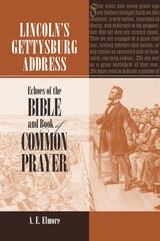
Lincoln's Gettysburg Address
Echoes of the Bible and Book of Common PrayerA. E. Elmore
Southern Illinois University Press, 2009
While it has long been determined that Abraham Lincoln’s writings were influenced by the King James Bible, until now no full-length study has shown the precise ways in which the Gettysburg Address uses its specific language. Refuting the view that the address was crafted with traditional classical references, this revealing investigation provides a new way to think about the speech and the man who wrote it. A. E. Elmore offers chapter and verse evidence from the Bible as well as specific examples from the Episcopal Book of Common Prayer to illustrate how Lincoln borrowed from these sources to imbue his speech with meanings that would resonate with his listeners. He cites every significant word and phrase—conceived, brought forth, struggled, remaining, consecrate, dedicate, hallow, devotion, new birth, to name a few—borrowed by Lincoln from these two religious texts for use in his dedication of the Gettysburg National Cemetery.
Lincoln’s Gettysburg Address focuses on a number of overlooked themes and ideas, such as the importance of literary allusion and the general public’s knowledge of the Bible in the age of Lincoln. It provides fresh answers to old questions and poses new questions: Was Lincoln a common thief who made use of words from previously published materials as well as from works by his contemporaries? Was he a genius whose literary and political skills were unmatched? No one who reads this highly engaging study will ever think about Lincoln or the Gettysburg Address the same way again.
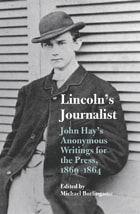
Lincoln's Journalist
John Hay's Anonymous Writings for the Press, 1860 - 1864Edited by Michael Burlingame
Southern Illinois University Press, 2006
Michael Burlingame presents anonymous and pseudonymous newspaper articles written by Lincoln's assistant personal secretary, John Hay, between 1860 and 1864. In the White House, Hay became the ultimate insider, the man who had the president's ear. "Only an extremely small number of persons ever saw Abraham Lincoln both day and night in public as well as private settings from 1860 to 1864," notes Wayne C. Temple, chief deputy director, Illinois State Archives. "And only one of them had the literary flair of John Milton Hay."
Burlingame takes great pains to establish authorship of the items reproduced here. He convincingly demonstrates that the essays and letters written for the Providence Journal, the Springfield Illinois State Journal, and the St. Louis Missouri Democrat under the pseudonym "Ecarte" are the work of Hay. And he finds much circumstantial and stylistic evidence that Hay wrote as "our special correspondent" for the Washington World and for the St. Louis Missouri Republican. Easily identifiable, Hay's style was "marked by long sentences, baroque syntactical architecture, immense vocabulary, verbal pyrotechnics, cocksure tone (combining acid contempt and extravagant praise), offbeat adverbs, and scornful adjectives."
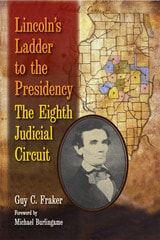
Lincoln's Ladder to the Presidency
The Eighth Judicial CircuitGuy C. Fraker, with a foreword by Michael Burlingame
Southern Illinois University Press, 2012
University Press Books for Public and Secondary Schools, 2013 edition
Superior Achievement by the Illinois State Historical Society, 2013
Throughout his twenty-three-year legal career, Abraham Lincoln spent nearly as much time on the road as an attorney for the Eighth Judicial Circuit as he did in his hometown of Springfield, Illinois. Yet most historians gloss over the time and instead have Lincoln emerge fully formed as a skillful politician in 1858. In this innovative volume, Guy C. Fraker provides the first-ever study of Lincoln’s professional and personal home away from home and demonstrates how the Eighth Judicial Circuit and its people propelled Lincoln to the presidency.
Each spring and fall, Lincoln traveled to as many as fourteen county seats in the Eighth Judicial Circuit to appear in consecutive court sessions over a ten- to twelve-week period. Fraker describes the people and counties that Lincoln encountered, discusses key cases Lincoln handled, and introduces the important friends he made, friends who eventually formed the team that executed Lincoln’s nomination strategy at the Chicago Republican Convention in 1860 and won him the presidential nomination.
As Fraker shows, the Eighth Judicial Circuit provided the perfect setting for the growth and ascension of Lincoln. A complete portrait of the sixteenth president depends on a full understanding of his experience on the circuit, and Lincoln’s Ladder to the Presidency provides that understanding as well as a fresh perspective on the much-studied figure, thus deepening our understanding of the roots of his political influence and acumen.
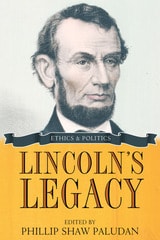
Lincoln's Legacy
Ethics and PoliticsEdited by Phillip Shaw Paludan
University of Illinois Press, 2007
The four new essays in Lincoln's Legacy describe major ethical problems that the sixteenth president navigated what can be learned from how he did so. The distinguished and award-winning Lincoln scholars William Miller, Mark E. Neely Jr., Phillip Shaw Paludan, and Mark Summers describe Lincoln’s attitudes and actions during encounters with questions of politics, law, constitutionalism, patronage, and democracy. The remarkably focused essays include an assessment of Lincoln's virtues in the presidency, the first study on Lincoln and patronage in more than a decade, a challenge to the cliché of Lincoln the democrat, and a study of habeas corpus, Lincoln, and state courts. On the eve of the bicentennial celebration of Lincoln’s birth, Lincoln’s Legacy highlights his enduring importance in contemporary conversations about law, politics, and democracy.
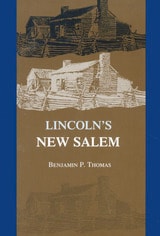
Lincoln's New Salem
Benjamin P. Thomas
Southern Illinois University Press, 1988
Thomas tells the story of the village where Abraham Lincoln lived from 1831 to 1837. His three-part examination of the village often referred to as Lincoln’s "Alma Mater" features the founding and early history of New Salem, Lincoln’s impact on the village and its effect on him, and the story of the Lincoln legend and the reconstruction of the town.
Thomas argues convincingly that New Salem was the town where Lincoln acquired faith in himself, faith in people. At 22 the future president drifted into town seeking to become a blacksmith. Thomas introduces us to the people who created New Salem and who knew, influenced, and befriended Lincoln.
Thomas highlights Lincoln’s arrival, his relationships with his neighbors, his important wrestling match with Jack Armstrong, his self-education, his quiet career as an Indian fighter, his experience as a postmaster largely indifferent to postal regulations, his financial woes as a businessman, his loyal friends who often came to his aid, and his election to the legislature.
This colorful history closes with a discussion of the Lincoln legend. The truth of the stories is unimportant. What matters is that the growing Lincoln legend prompted the gradual realization that New Salem was not a dismal mire from which President Lincoln had had to extricate himself but was, in fact, an energizing force. This realization led to research and finally to the restoration of New Salem, which began in 1932.
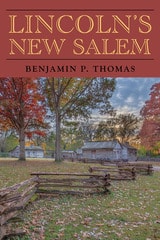
Lincoln's New Salem
Benjamin P. Thomas
Southern Illinois University Press, 1954
Lincoln’s New Salem highlights the young Lincoln’s arrival, his important wrestling match with Jack Armstrong, his self-education, his brief military career in the Black Hawk War, his experience as a postmaster largely indifferent to postal regulations, his financial woes with the general store, and his election to the state legislature. Making the point that New Salem was where Lincoln acquired faith in himself and in other people, Thomas introduces us to those who created New Salem and who knew, influenced, and befriended Lincoln, delving into his relationships with his neighbors and the loyal friends who often came to his aid.
This colorful history closes with a discussion of the Lincoln legend, which prompted the gradual realization that New Salem was not a dismal mire from which Abraham Lincoln had to extricate himself but was, in fact, an energizing force. This realization led to research and finally to the restoration of New Salem, which began in 1932. The preservation of the village remains vitally important.
First published in 1934 and revised by the author in 1954, this reissue includes a previously unpublished piece about New Salem and Illinois governor Henry Horner by Benjamin Thomas, a new introduction by Kenneth J. Winkle, and new photos by Robert Shaw, in addition to original drawings by Romaine Proctor and a 1971 foreword by Ralph G. Newman.
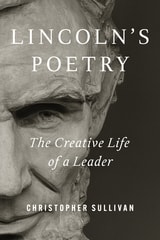
Lincoln's Poetry
The Creative Life of a LeaderChristopher Sullivan
University of Illinois Press, 2026
Christopher Sullivan’s engaging exploration focuses on the role of poetry in Lincoln’s life and thought. As Sullivan shows, the poetic prose of Lincoln’s most famous writings and oratory drew on an ear for verse he began to cultivate during his frontier youth. Full versions of Lincoln’s own published and unpublished poetry provide fascinating context for his work before and during his political career while shedding light on his state of mind during the crisis of an existential war. Sullivan also considers Lincoln’s relationship with poetry against a backdrop of what poetry is, how it operates, and how it may resurface in prose.
A journalistic look at the crossroads of art and leadership, Lincoln’s Poetry adds a surprising yet vital dimension to our perceptions of the sixteenth president.

Lincoln's Rail-Splitter
GOVERNOR RICHARD J. OGLESBYMark A. Plummer
University of Illinois Press, 2001
Like Lincoln, Oglesby was born in Kentucky and spent most of his youth in central Illinois, apprenticing as a lawyer in Springfield and standing for election to the Illinois legislature, Congress, and U.S. Senate. Oglesby participated in the battles of Cerro Gordo and Vera Cruz during the Mexican-American War and made a small fortune in the gold rush of 1849. A superlative speaker, he ran unsuccessfully for Congress in a campaign that featured the Lincoln-Douglas debates of 1858, then was elected to the Illinois senate as Lincoln was being elected president.
When the Civil War came, Oglesby resigned his senate seat to lead a regiment of the Union Army. Critically wounded at the Battle of Corinth, he was promoted to major general before resigning his commission to run successfully for governor of Illinois. Oglesby was at Lincoln's deathbed and led the effort to build the sixteenth president's tomb in Springfield, delivering the major oration at its dedication. In the postwar years, Oglesby drew on his popularity, his association with the martyred Lincoln, and his extraordinary stump-speaking skills to rescue the Illinois Republican Party in a time of political crisis. In his third term as governor, Oglesby faced massive labor unrest in the aftermath of the Haymarket affair.
A mature and thoughtful biography, Lincoln's Rail-Splitter chronicles Oglesby's pivotal contribution to American political life while also providing a sensitive portrait of this able, energetic man.
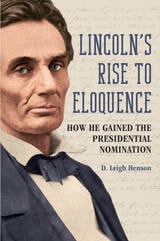
Lincoln's Rise to Eloquence
How He Gained the Presidential NominationD. Leigh Henson
University of Illinois Press, 2024
Insightful and revealing, Lincoln’s Rise to Eloquence follows Lincoln from his early career through the years-long clashes with Stephen A. Douglas to trace the future president’s evolution as a communicator and politician.
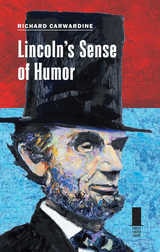
Lincoln's Sense of Humor
Richard Carwardine
Southern Illinois University Press, 2017
Winner, ISHS Annual Award for a Scholarly Publication, 2018
Abraham Lincoln was the first president to make storytelling, jokes, and laughter tools of the office, and his natural sense of humor has become legendary. Lincoln’s Sense of Humor registers the variety, complexity of purpose, and ethical dimension of Lincoln’s humor and pinpoints the political risks Lincoln ran in telling jokes while the nation was engaged in a bloody struggle for existence.
Complete with amusing anecdotes, this book shows how Lincoln’s uses of humor evolved as he matured and explores its versatility, range of expressions, and multiple sources: western tall tales, morality stories, bawdy jokes, linguistic tricks, absurdities, political satire, and sharp wit. While Lincoln excelled at self-mockery, nothing gave him greater pleasure than satirical work lampooning hypocrisy and ethical double standards. He particularly enjoyed David R. Locke’s satiric writings by Petroleum V. Nasby, a fictional bigoted secessionist preacher, and the book explores the nuances of Lincoln’s enthusiasm for what he called Locke’s genius, showing the moral springs of Lincoln’s humor.
Richard Carwardine methodically demonstrates that Lincoln’s funny stories were the means of securing political or personal advantage, sometimes by frontal assault on opponents but more often by depiction through parable, obfuscation through hilarity, refusal through wit, and diversion through cunning. Throughout his life Lincoln worked to develop the humorist’s craft and hone the art of storytelling. His jokes were valuable in advancing his careers as politician and lawyer and in navigating his course during a storm-tossed presidency. His merriness, however, coexisted with self-absorbed contemplation and melancholy. Humor was his lifeline; dark levity acted as a tonic, giving Lincoln strength to tackle the severe challenges he faced. At the same time, a reputation for unrestrained, uncontrollable humor gave welcome ammunition to his political foes. In fact, Lincoln’s jocularity elicited waves of criticism during his presidency. He was dismissed as a “smutty joker,” a “first rate second rate man,” and a “joke incarnated.”
Since his death, Lincoln’s anecdotes and jokes have become detached from the context that had given them their political and cultural bite, losing much of the ironic and satiric meaning that he had intended. With incisive analysis and laugh-inducing examples, Carwardine helps to recapture a strong component of Lincoln’s character and reanimates the good humor of our sixteenth president.
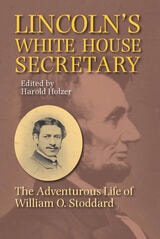
Lincoln's White House Secretary
The Adventurous Life of William O.StoddardEdited by Harold Holzer
Southern Illinois University Press, 2007
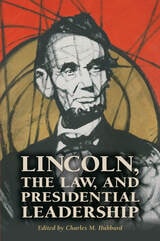
Lincoln, the Law, and Presidential Leadership
Edited by Charles M. Hubbard
Southern Illinois University Press, 2015
The volume’s contributors not only address specific situations and issues that assisted in Lincoln’s development of a new understanding of law and its application but also show Lincoln’s remarkable presidential leadership. Among the topics covered are civil liberties during wartime; presidential pardons; the law and Lincoln’s decision-making process; Lincoln’s political ideology and its influence on his approach to citizenship; Lincoln’s defense of the Constitution, the Union, and popular government; constitutional restraints on Lincoln as he dealt with slavery and emancipation; the Lieber codes, which set forth how the military should deal with civilians and with prisoners of war; the loyalty (or treason) of government employees, including Lincoln’s domestic staff; and how Lincoln’s image has been used in presidential rhetoric. Although varied in their strategies and methodologies, these essays expand the understanding of Lincoln’s vision for a united nation grounded in the Constitution.
Lincoln, the Law, and Presidential Leadership shows how the sixteenth president’s handling of complicated legal issues during the Civil War, which often put him at odds with the Supreme Court and Congress, brought the nation through the war intact and led to a transformation of the executive branch and American society.
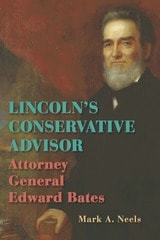
Lincoln’s Conservative Advisor
Attorney General Edward BatesMark A. Neels
Southern Illinois University Press, 2025
How a traditionalist became part of Lincoln's volatile team of rivals
Edward Bates, a founding father of Missouri and leader of the Missouri Whig Party, served as Abraham Lincoln’s attorney general during the American Civil War. The first full biography of Bates in nearly sixty years, Lincoln’s Conservative Advisor reveals a striking portrait of this complex figure in Lincoln’s cabinet.
Author Mark A. Neels begins with Bates’s youth in Virginia and follows him through his political and judicial career, his candidacy as a Republican presidential nominee in 1860, and his appointment to Abraham Lincoln’s cabinet as attorney general. Bates became an essential advisor to the president on key legal, military, and political matters from emancipation to civil liberties and equal rights, and his official opinion on Habeas Corpus would have a permanent effect on presidential authority and separation of powers. When Lincoln drafted the Emancipation Proclamation, Bates found himself at odds with the president and the radical anti-slavery members of the cabinet. But more than simply highlighting the conflict within Lincoln’s administration, Bates’s example lays bare the strong philosophical divisions within the Republican Party during the Civil War era. These divisions were present at the party’s inception, crystallized during the war, and ultimately sparked a political realignment during Reconstruction. Bates was at the center of this divide for most of its existence, and in some cases assisted in its promulgation.
Bates, a fierce opponent of radical Republicanism, embodies the conflict among Republicans over issues of slavery and citizenship. In both judicial and elective office, he was compelled by a sense of duty to defy the populism of President Andrew Jackson and Senator Thomas Hart Benton, and, later, the proslavery forces that threatened to tear the nation apart. Though he had owned slaves, Bates represented at least one enslaved woman’s suit for freedom, released from bondage the people he had enslaved, and aided Lincoln in his efforts to end slavery nationwide. Bates’s opinion on citizenship as attorney general helped pave the way for equal rights. His opinions were not always popular with either his colleagues or the greater populace, but Bates remained true to his conservative principles—a set of values shared by a large swath of Lincoln’s Republican Party—which positioned him as a leading opponent of radical Republicanism during the Reconstruction Era.
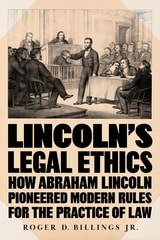
Lincoln’s Legal Ethics
How Abraham Lincoln Pioneered Modern Rules for the Practice of LawRoger D. Billings Jr.
University of Illinois Press, 2027
Roger D. Billings Jr. examines how Lincoln’s practices in Illinois helped shape the development of the legal standards that lawyers follow today. Lincoln learned the law through self-study, experience, and mentorship. Billings focuses on actual cases to show Lincoln’s ethical choices when confronted with issues like conflict of interest, client trust, and honesty with the court. In addition, the studies shine a light on the future president’s on-the-job performance. Though an imperfect practitioner, Lincoln and his energetic work on behalf of clients and way of doing business, among other practices, influenced the evolution of the ABA Model Rules of Professional Conduct in the United States.
An original study of Lincoln’s years at the bar, Lincoln’s Legal Ethics connects the self-styled country lawyer with modern legal standards.
Lingua Cosmica
Science Fiction from around the WorldEdited by Dale Knickerbocker
University of Illinois Press, 2018

Linus Pauling
Clifford Mead
Oregon State University Press, 2001
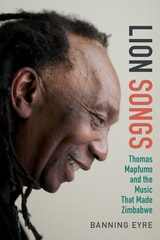
Lion Songs
Thomas Mapfumo and the Music That Made ZimbabweBanning Eyre
Duke University Press, 2015
Lionel Trilling and the Fate of Cultural Criticism
Mark Krupnick
Northwestern University Press, 1986
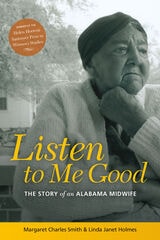
Listen to Me Good
The Story of an Alabama MidwifeMargaret Charles Smith and Linda Janet Holmes
The Ohio State University Press, 1996
Margaret Charles Smith, a ninety-one-year-old Alabama midwife, has thousands of birthing stories to tell. Sifting through nearly five decades of providing care for women in rural Greene County, she relates the tales that capture the life-and-death struggle of the birthing experience and the traditions, pharmacopeia, and spiritual attitudes that influenced her practice. She debunks images of the complacent southern “granny” midwife and honors the determination, talent, and complexity of midwifery.
Fascinating to read, this book is part of the new genre of writing that recognizes the credibility of midwives who have emerged from their own communities and were educated through apprenticeship and personal experience. Past descriptions of southern black midwives have tended to denigrate their work in comparison with professional established medicine. Believed to be the oldest living (though retired) traditional African American midwife in Alabama, Smith is one of the few who can recount old-time birthing ways. Despite claims that midwives contributed to high infant mortality rates, Smith’s story emphasizes midwives' successes in facing medical challenges and emergencies.
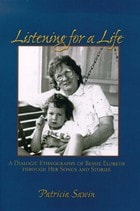
Listening For a Life
A Dialogic Ethnography of Bessie Eldreth through Her Songs and StoriesPatricia Sawin
Utah State University Press, 2004
Drawing on Bahktinian and feminist theory, Sawin pushes forward our understanding of the interactive roles of ethnographer and subject and in the process gives us a deeper understanding of folk singer and storyteller Bessie Eldreth and her greatest art, herself.
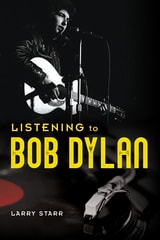
Listening to Bob Dylan
Larry Starr
University of Illinois Press, 2021
Reader-friendly and revealing, Listening to Bob Dylan encourages hardcore fans and Dylan-curious seekers alike to rediscover the music legend.
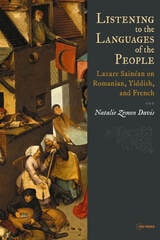
Listening to the Languages of the People
Lazare Sainéan on Romanian, Yiddish, and FrenchNatalie Zemon Davis
Central European University Press, 2022
This tale of great achievements and great disappointments offers a fresh perspective on the interplay between scholarship and political sentiment in the late nineteenth and early twentieth centuries.
Lazăr Șăineanu (1859-1934), linguist and folklorist, was a pioneer in his native Romania, seeking out the popular elements in culture along with high literary ones. He was among the first to publish a study of Yiddish as a genuine language, and he uncovered Turkish features in Romanian language and customs. He also made an index of hundreds of Romanian folktales. Yet when he sought Romanian citizenship and a professorship, he was blocked by powerful figures who thought Jews could not be Romanians and who fancied the origins of Romanian culture to be wholly Latin. Faced with anti-Semitism, some of his friends turned to Zionism. Instead he tried baptism, which brought him only mockery and shame.
Hoping to find a polity to which he could belong, Șăineanu moved with his family to Paris in 1900 and became Lazare Sainéan. There he made innovative studies of French popular speech and slang, culminating in his great work on the language of Rabelais. Once again, he was contributing to the development of a national tongue. Even then, while welcomed by literary scholars, Sainéan was unable to get a permanent university post. Though a naturalized citizen of France, he felt himself a foreigner, an “intruder,” into his old age.
Lister Hill
Statesman from the SouthVirginia Van der Veer Hamilton
University of Alabama Press, 2004
Literary Alchemist
The Writing Life of Evan S. ConnellSteve Paul
University of Missouri Press, 2021
Winner, 2022 Society of Midland Authors award for Biography/Memoir
Evan S. Connell (1924–2013) emerged from the American Midwest determined to become a writer. He eventually made his mark with attention-getting fiction and deep explorations into history. His linked novels Mrs. Bridge (1959) and Mr. Bridge (1969) paint a devastating portrait of the lives of a prosperous suburban family not unlike his own that, more than a half century later, continue to haunt readers with their minimalist elegance and muted satire. As an essayist and historian, Connell produced a wide range of work, including a sumptuous body of travel writing, a bestselling epic account of Custer at the Little Bighorn, and a singular series of meditations on history and the human tragedy.
This first portrait and appraisal of an under-recognized American writer is based on personal accounts by friends, relatives, writers, and others who knew him; extensive correspondence in library archives; and insightful literary and cultural analysis of Connell’s work and its context. It also illuminates aspects of American publishing, Hollywood, male anxieties, and the power of place.
Literary Couplings
Writing Couples, Collaborators, and the Construction of AuthorshipEdited by Marjorie Stone and Judith Thompson
University of Wisconsin Press, 2007
This innovative collection challenges the traditional focus on solitary genius by examining the rich diversity of literary couplings and collaborations from the early modern to the postmodern period. Literary Couplings explores some of the best-known literary partnerships—from the Sidneys to Boswell and Johnson to Sylvia Plath and Ted Hughes—and also includes lesser-known collaborators such as Daphne Marlatt and Betsy Warland. The essays place famous authors such as Samuel Coleridge, Oscar Wilde, and William Butler Yeats in new contexts; reassess overlooked members of writing partnerships; and throw new light on texts that have been marginalized due to their collaborative nature. By integrating historical studies with authorship theory, Literary Couplings goes beyond static notions of the writing "couple" to explore literary couplings created by readers, critics, historians, and publishers as well as by writers themselves, thus expanding our understanding of authorship.
Literary Sisters
Dorothy West and Her Circle, A Biography of the Harlem RenaissanceMitchell, Verner D
Rutgers University Press, 2012
Harlem Renaissance writer Dorothy West led a charmed life in many respects. Born into a distinguished Boston family, she appeared in Gershwin’s Porgy and Bess, then lived in the Soviet Union with a group that included Langston Hughes, to whom she proposed marriage. She later became friends with Jacqueline Kennedy Onassis, who encouraged her to finish her second novel, The Wedding, which became the octogenarian author’s first bestseller.
Literary Sisters reveals a different side of West’s personal and professional lives—her struggles for recognition outside of the traditional literary establishment, and her collaborations with talented African American women writers, artists, and performers who faced these same problems. West and her “literary sisters”—women like Zora Neale Hurston and West’s cousin, poet Helene Johnson—created an emotional support network that also aided in promoting, publishing, and performing their respective works. Integrating rare photos, letters, and archival materials from West’s life, Literary Sisters is not only a groundbreaking biography of an increasingly important author but also a vivid portrait of a pivotal moment for African American women in the arts.
Literature Is a Voyage of Discovery
Tom Bishop in Conversation with Donatien GrauTom Bishop and Donatien Grau
Diaphanes, 2021
Tom Bishop has, for over sixty years, helped shape the literary, philosophical, cultural, artistic, and political conversation between Paris and New York. As professor and director of the Center for French Civilization and Culture at New York University, he made the Washington Square institution one of the great bridges between French innovation and a New York scene in full transformation. Bishop was close to Beckett, championed Robbe-Grillet in the United States, befriended Marguerite Duras and Hélène Cixous, and organized historic public encounters—such as the one between James Baldwin and Toni Morrison. He was also a scholar, a recognized specialist in the avant-garde, notably the Nouveau Roman and the Nouveau Théâtre.
In 2012, Bishop invited Donatien Grau to give a talk at NYU. This invitation led to conversations—many of which are presented in this book—and a friendship. Literature Is a Voyage of Discovery gathers their dialogues, retracing Bishop’s career, his own history, his departure from Vienna, his studies, his meetings, his choices, his conception of literature and life, his relationship to the political and economic world, and the way he helped define the profession of “curator” as it is practiced today, offering a thought-provoking look into one of the leading minds of our time.
Lithium Jesus
A Memoir of ManiaCharles Monroe-Kane
University of Wisconsin Press, 2020
From Baby Doc’s Haiti to the Czech Velvet Revolution, and from sex, drugs, and a stabbing to public humiliation by the leader of the free world, Monroe-Kane burns through his twenties and several bridges of youthful idealism before finally saying: enough.
In a memoir that blends engaging charm with unflinching frankness, Monroe-Kane gives his testimony of mental illness, drug abuse, faith, and love. By the end of Lithium Jesus there may be a voice in your head, too, saying “Do more, be more, live more. And fear less.”
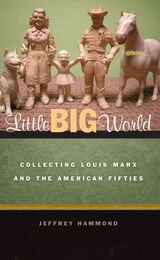
Little Big World
Collecting Louis Marx and the American FiftiesJeffrey Hammond
University of Iowa Press, 2010
Jeffrey Hammond’s Little Big World: Collecting Louis Marx and the American Fifties is the story of a middle-aged man’s sudden compulsion to collect the toys of his childhood: specifically themed playsets produced by the Louis Marx Toy Company. Hammond never made a conscious decision to become a collector of any kind, so he was surprised when his occasional visits to web sites turned into hours spent gazing at, and then impulsively purchasing, the tiny plastic people and animals in the Civil War set, the Fort Apache set, Roy Rogers Ranch, and Happi-Time Farm—just a few of the dozens of playsets the Marx Company produced.
Hammond interweaves childhood memories with reflections on what they reveal about the culture and values of cold war America, offering an extended meditation on toys as powerful catalysts for the imagination of both children and adults. Never sentimentalizing his childhood in an effort to get his old toys back, Hammond exposes the dangers of nostalgia by casting an unsettling light on the culture of the fifties and the era’s lasting impact on those who grew up in it.
Writing in a lovably quirky voice, Hammond not only attempts to understand his personal connection to the Marx toys but also examines the psychology of his fellow eBay denizens. In this warm, funny, and contemplative work, the reader encounters an online community of serious adult collectors who, as the author suspects, are driven to obsession by middle-aged nostalgia. When Hammond questions this preoccupation with the past, he comes to realize that his own collecting has prevented him from moving forward. With this insight, he offers an insider’s take on the culture and psychology of collecting.
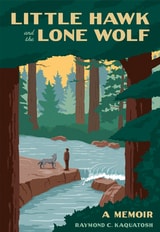
Little Hawk and the Lone Wolf
A MemoirRaymond Kaquatosh
Wisconsin Historical Society Press, 2014
After his father’s death, eight-year-old Ray was sent to an Indian boarding school in Keshena. There he experienced isolation and despair, but also comfort and kindness. Upon his return home, Ray remained a lonely boy in a full house until he met and befriended a lone timber wolf. The unusual bond they formed would last through both their lifetimes. As Ray grew into a young man, he left the reservation more frequently. Yet whenever he returned—from school and work, from service in the Marines, and finally from postwar Wausau with his future wife—the wolf waited.
In this rare first-person narrative of a Menominee Indian’s coming of age, Raymond Kaquatosh shares a story that is wise and irreverent, often funny, and in the end, deeply moving.
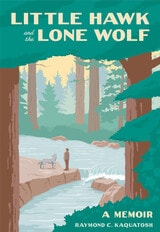
Little Hawk and the Lone Wolf
A MemoirRaymond Kaquatosh
Wisconsin Historical Society Press, 2022
After his father’s death, eight-year-old Ray was sent to an Indian boarding school in Keshena. There he experienced isolation and despair, but also comfort and kindness. Upon his return home, Ray remained a lonely boy in a full house until he met and befriended a lone timber wolf. The unusual bond they formed would last through both their lifetimes. As Ray grew into a young man, he left the reservation more frequently. Yet whenever he returned—from school and work, from service in the Marines, and finally from postwar Wausau with his future wife—the wolf waited.
In this rare first-person narrative of a Menominee Indian’s coming of age, Raymond Kaquatosh shares a story that is wise and irreverent, often funny, and in the end, deeply moving.

Little Magazines - American Writers 32
University of Minnesota Pamphlets on American WritersReed Whittemore
University of Minnesota Press, 1963
Little Magazines - American Writers 32 was first published in 1963. Minnesota Archive Editions uses digital technology to make long-unavailable books once again accessible, and are published unaltered from the original University of Minnesota Press editions.

Live Fast, Love Hard
The Faron Young StoryDiane Diekman
University of Illinois Press, 2012
As one of the best-known honky tonkers to appear in the wake of Hank Williams’s death, Faron Young was a popular presence on Nashville’s music scene for more than four decades. The Singing Sheriff produced a string of Top Ten hits, placed over eighty songs on the country music charts, and founded the long-running country music periodical Music City News in 1963. Flamboyant, impulsive, and generous, he helped and encouraged a new generation of talented songwriter-performers that included Willie Nelson and Bill Anderson. In 2000, four years after his untimely death, Faron was inducted into the Country Music Hall of Fame.
Presenting the first detailed portrayal of this lively and unpredictable country music star, Diane Diekman masterfully draws on extensive interviews with Young’s family, band members, and colleagues. Impeccably researched, Diekman’s narrative also weaves anecdotes from Louisiana Hayride and other old radio shows with ones from Young’s business associates, including Ralph Emery. Her unique insider’s look into Young’s career adds to an understanding of the burgeoning country music entertainment industry during the key years from 1950 to 1980, when the music expanded beyond its original rural roots and blossomed into a national (ultimately, international) enterprise. Echoing Young’s characteristic ability to entertain and surprise fans, Diekman combines an account of his public career with a revealing, intimate portrait of his personal life.
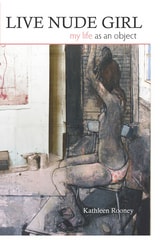
Live Nude Girl
My Life as an ObjectKathleen Rooney
University of Arkansas Press, 2008
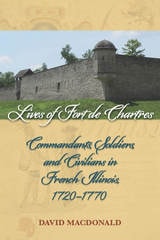
Lives of Fort de Chartres
Commandants, Soldiers, and Civilians in French Illinois, 1720–1770David MacDonald
Southern Illinois University Press, 2016
Fort de Chartres, built in 1719-1720 in the heart of what would become the American Midwest, embodied French colonial power for half a century. Lives of Fort de Chartres, by David MacDonald, details the French colonial experience in Illinois from 1720 to 1770 through vivid depictions of the places, people, and events around the fort and its neighboring villages.
In the first section, MacDonald explores the fascinating history of French Illinois and the role of Fort de Chartres in this history, focusing on native peoples, settlers, slaves, soldiers, villages, trade routes, military administration, and the decline of French rule in Illinois. The second section profiles the fort’s twelve distinctive and often colorful commandants, who also served as administrative heads of French Illinois. These men’s strong personalities served them well when dealing simultaneously with troops, civilians, and Indians and their multifaceted cultures. In the third section, MacDonald presents ten thought-provoking biographies of people whose lives intersected with Fort de Chartres in various ways, from a Kaskaskia Indian woman known as “the Mother of French Illinois” to an ill-fated chicken thief and a European aristocrat. Subjects treated in the book include French–Native American relations, the fur trade, early Illinois agriculture, and tensions among different religious orders. Together, the biographies and historical narrative in the volume illuminate the challenges that shaped the French colonies in America.
The site of Fort de Chartres, recognized as a National Historic Landmark in 1966, still exists today as a testament to the ways in which French, British, Spanish, and American histories have intertwined. Both informative and entertaining, Lives of Fort de Chartres contributes to a more complete understanding of the French colonial experience in the Midwest and portrays a vital and vigorous community well worth our appreciation.
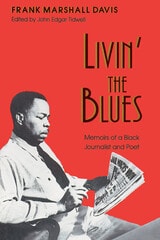
Livin' the Blues
Memoirs of a Black Journalist and PoetFrank Marshall Davis
University of Wisconsin Press, 1993
Frank Marshall Davis was a prominent poet, journalist, jazz critic, and civil rights activist on the Chicago and Atlanta scene from the 1920s through 1940s. He was an intimate of Langston Hughes and Richard Wright and an influential editor at the Chicago Evening Bulletin, the Chicago Whip, the Chicago Star, and the Atlanta World. He renounced his writing career in 1948 and moved to Hawaii, forgotten until the Black Arts Movement rediscovered him in the 1960s.
Because of his early self-exile from the literary limelight, Davis's life and work have been shrouded in mystery. Livin' the Blues offers us a chance to rediscover this talented poet and writer and stands as an important example of black autobiography, similar in form, style, and message to those of Langston Hughes and Richard Wright.
"Both a social commentary and intellectual exploration into African American life in the twentieth century."—Charles Vincent, Atlanta History
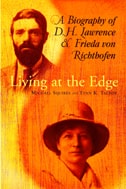
Living At The Edge
Biography Of D H Lawrence & Frieda Von RichthofenMichael Squires
University of Wisconsin Press, 2002
Living at the Edge follows the separate lives of Lawrence and Frieda up to their first meeting in 1912. Tracing their new life together, it depicts their grateful escape from the English Midlands; their discovery of exotic places where they made temporary homes—Italy, Cornwall, Australia, New Mexico, and Mexico; Lawrence’s courageous battle against illness; and, after his death in 1930, Frieda’s success in recreating the simple life on ranches near Taos, New Mexico, where she died in 1956.
At the center of their story is Lawrence’s literary career. Biographers Squires and Talbot see Lawrence’s major novels—The Rainbow, Women in Love, Lady Chatterley’s Lover—as a fresh way to understand his turbulent and conflicted life. They reveal the extreme care with which he rewrote his personal experience to satisfy his deepest needs, and they introduce the many influential people who entered the Lawrences’ lives and work. The rich materials from Frieda’s letters reveal a different Lawrence—more difficult as a man but more interesting as an artist; they also reveal a different Frieda—more vibrant as a woman, more substantial as a companion. This superb biography gives both Lawrence and Frieda striking new dimensions.
Living Ethnomusicology
Paths and PracticesMargaret Sarkissian and Ted Solís
University of Illinois Press, 2019
A bountiful resource on history and practice, Living Ethnomusicology is an enlightening intellectual exploration of an exotic academic culture.
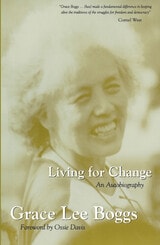
Living For Change
An AutobiographyGrace Lee Boggs
University of Minnesota Press, 1998
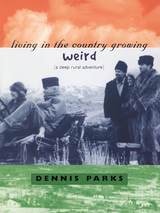
Living In The Country Growing Weird
A Deep Rural AdventureDennis Parks
University of Nevada Press, 2001
Parks created a pottery school that attracts students from around the world and developed for himself an international reputation as the creator of powerful, innovative works in clay. Meanwhile, he and his family had to master the skills required of those who choose to live in the back country--growing and hunting their own food, renovating or building from scratch the structures they needed for residences or studios, resolving conflicts with neighbors, inventing their own amusements. The transformation from middle-class urbanity to small-town simplicity is, as Parks reveals, a lurching and sometimes hilarious process, and the achievement of self-sufficiency is similarly fraught with unexpected challenges.
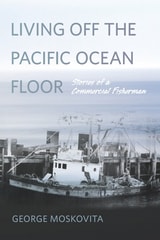
Living Off the Pacific Ocean Floor
Stories of a Commercial FishermanGeorge Moskovita
Oregon State University Press, 2015
In a career that spanned over 60 years, George Moskovita met with many maritime adventures, recounted for the reader in a clear, direct, and unsentimental style. He saw the fishery he had helped build devastated by foreign factory processing ships. He bought, repaired, traded, and sank more boats than most fishermen would work on in a lifetime. Along the way, he managed to raise four daughters with his wife, June. The name of one of his last boats, the Four Daughters, reflects the central importance of family life to a man who was often at sea. Moskovita’s memoir provides a unique glimpse of Pacific maritime life in the 20th century, small-town coastal life after World War II, and the early days of fishery development in Oregon.
With an introduction and textual notes by Carmel Finley, an historian of science, and Mary Hunsicker, an aquatic and fisheries scientist, this book will be invaluable to fishery students and professionals interested in the biology, ecology, and history of oceans and commercial fishing. It will also have broad appeal to readers of Oregon history and maritime adventure, and anyone else who has ever stood at the western edge of the continent and wondered what life was like at sea.
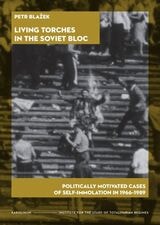
Living Torches in the Soviet Bloc
Politically Motivated Cases of Self-Immolation, 1966–1989Petr Blažek
Karolinum Press, 2025
Living Torches in the Soviet Bloc presents the lives of those who chose self-immolation as a radical form of protest against the political oppression of Communist regimes in the Soviet Bloc between 1966–1989. While more than fifty such cases were identified during the relevant period, Petr Blažek focuses here on the twenty-one cases in which at least partial political motivation is apparent from historical sources.
Many of the cases of the “living torches” were a radical response to the August 1968 occupation of Czechoslovakia by the armies of five Warsaw Pact member states and the suppression of the Prague Spring. After January 1969, the self-immolation of Jan Palach evoked a large wave of followers not only in Czechoslovakia, but also abroad, and greatly influenced other cases of “living torches” which continued to appear in the Soviet Bloc until the end of the 1980s.
Although the conditions in the Soviet Bloc states were sometimes fundamentally different, these cases of self-immolation across states share a common disapproval of the totalitarian form of rule. They were often drastic responses from members of occupied nations, most of whom were Czechs, Lithuanians, Ukrainians, and Poles, who rejected the enforced Communist regime and Soviet military presence. Some decided to sacrifice their lives to wake others from indifference and resignation. Even several decades later, their shocking acts not only provoke, but also lead us to reflect on fundamental questions of human life.
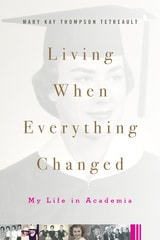
Living When Everything Changed
My Life in AcademiaMary Kay Thompson Tetreault
Rutgers University Press, 2019
In this compelling memoir, Mary Kay Thompson Tetreault describes how a Catholic girl from small-town Nebraska discovered her callings as a feminist, as an academic, and as a university administrator. She recounts her experiences at three very different schools: the small progressive Lewis & Clark College, the massive regional university of Cal State Fullerton, and the rapidly expanding Portland State University. Reflecting on both her accomplishments and challenges, she considers just how much second-wave feminism has transformed academia and how much reform is still needed.
With remarkable candor and compassion, Thompson Tetreault provides an intimate personal look at an era when both women’s lives and university culture changed for good.
The Acknowledgments were inadvertently left out of the first printing of this book. We apologize for the oversight, and offer them here instead. Future printings will include this information. (https://d3tto5i5w9ogdd.cloudfront.net/wp-content/uploads/2019/08/29185420/Thompson-Tetreault-Acknowledgments.pdf)
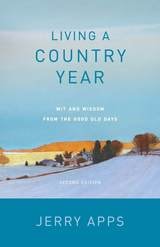
Living a Country Year
Wit and Wisdom from the Good Old DaysJerry Apps
Wisconsin Historical Society Press, 2018
“Even with the all the hard work, we had more time (perhaps we took more time) to enjoy what was all around us: nights filled with starlight, days with clear blue skies and puffy clouds. Wonderful smells everywhere—fresh mown hay, wildflowers, and apple blossoms. Interesting sounds—the rumble of distant thunder, an owl calling in the woods, a flock of Canada geese winging over in the fall.”
In this paperback edition of a beloved Jerry Apps classic, the rural historian tells stories from his childhood days on a small central Wisconsin dairy farm in the 1930s and 1950s. From a January morning memory of pancakes piled high after chores, to a June day spent learning to ride a pony named Ginger, Jerry moves through the turn of the seasons and teaches gentle lessons about life on the farm. With recipes associated with each month and a new introduction exclusive to this 2nd edition, Living a Country Year celebrates the rhythms of rural life with warmth and humor.
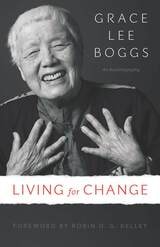
Living for Change
An AutobiographyGrace Lee Boggs
University of Minnesota Press, 2016
No one can tell in advance what form a movement will take. Grace Lee Boggs’s fascinating autobiography traces the story of a woman who transcended class and racial boundaries to pursue her passionate belief in a better society. Now with a new foreword by Robin D. G. Kelley, Living for Change is a sweeping account of a legendary human rights activist whose network included Malcolm X and C. L. R. James. From the end of the 1930s, through the Cold War, the Civil Rights era, and the rise of the Black Panthers to later efforts to rebuild crumbling urban communities, Living for Change is an exhilarating look at a remarkable woman who dedicated her life to social justice.
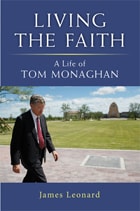
Living the Faith
A Life of Tom MonaghanJames Leonard
University of Michigan Press, 2012
Who is Tom Monaghan?
Is he the four-year-old kid whose father died on Christmas Eve and whose mother sent him to an orphanage and then a juvenile detention home?
Is he the entrepreneurial genius who built Domino's Pizza from a hole-in-the-wall pizzeria in Michigan into an American brand as world-conquering as Ford or Coke?
Is he the religious visionary who sold Domino's for $1 billion to create an orthodox Catholic university, law school, and special interest law firm with the goal of transforming America to reflect his conservative values?
He's all that and more. With extensive interviews with friends and enemies plus unprecedented access to the man himself, but wholly without his authorization, Living the Faith illuminates Tom Monaghan, the man and the myth.
Living the Faithis the much-needed, definitive biography of one of the most fascinating and controversial figures in the realms of American business and religion. Through eighteen hard-boiled chapters, journalist James Leonard follows Monaghan on his path from a heartbroken kid who climbed into his father's coffin to the business tycoon who purchased the world-champion Detroit Tigers and spent a fortune on his own air force, navy, and island to the religious visionary who founded a university to make saints and a public interest law firm to overturn evolution.
A sympathetic but critical perspective of the man and his works, this book is for believers, nonbelievers, and agnostics; for conservatives, liberals, and independents; for the rich, the poor, and the shrinking middle class. Mainly, however, this book is for those who want the facts about Tom Monaghan—and the truth about the effect religion had on one man and the effect that man had on the world.
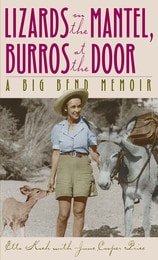
Lizards on the Mantel, Burros at the Door
A Big Bend MemoirBy Etta Koch with June Cooper Price
University of Texas Press, 1999
A woman who went West with her husband in the 1840s must have expected hardships and privation, but during the 1940s, when Etta Koch stopped off in Big Bend with her young family and a 23-foot travel trailer in tow, she anticipated no more than a civilized camping trip between her old home in Ohio and a new one in Arizona. It was only when she found herself moving into an old rock house without plumbing or electricity in the new Big Bend National Park that Etta realized, "From the sheltered life of a city girl of moderate circumstances, I too would have to face the reality of frontier living."
In this book based on her journals and letters, Etta Koch and her daughter June Cooper Price chronicle their family's first years (1944-1946) in the Big Bend. Etta describes how her photographer husband Peter Koch became captivated by the region as a place for natural history filmmaking-and how she and their three young daughters slowly adapted to a pioneer lifestyle during his months' long absences on the photo-lecture circuit. In vivid, often humorous anecdotes, she describes making the rock house into a home, getting to know the Park Service personnel and other neighbors, coping with the local wildlife, and, most of all, learning to love the rugged landscape and the hardy individuals who call it home.
Lloyd George
Hugh Purcell
Haus Publishing, 2006
Locations of Buddhism
Colonialism and Modernity in Sri LankaAnne M. Blackburn
University of Chicago Press, 2010
Modernizing and colonizing forces brought nineteenth-century Sri Lankan Buddhists both challenges and opportunities. How did Buddhists deal with social and economic change; new forms of political, religious, and educational discourse; and Christianity? And how did Sri Lankan Buddhists, collaborating with other Asian Buddhists, respond to colonial rule? To answer these questions, Anne M. Blackburn focuses on the life of leading monk and educator Hikkaduve Sumangala (1827–1911) to examine more broadly Buddhist life under foreign rule.
In Locations of Buddhism, Blackburn reveals that during Sri Lanka’s crucial decades of deepening colonial control and modernization, there was a surprising stability in the central religious activities of Hikkaduve and the Buddhists among whom he worked. At the same time, they developed new institutions and forms of association, drawing on pre-colonial intellectual heritage as well as colonial-period technologies and discourse. Advocating a new way of studying the impact of colonialism on colonized societies, Blackburn is particularly attuned here to human experience, paying attention to the habits of thought and modes of affiliation that characterized individuals and smaller scale groups. Locations of Buddhism is a wholly original contribution to the study of Sri Lanka and the history of Buddhism more generally.
Locker Room Talk
A Woman’s Struggle to Get InsideMelissa Ludtke
Rutgers University Press, 2024
While sportswriters rushed into Major League Baseball locker rooms to talk with players, MLB Commissioner Bowie Kuhn barred the lone woman from entering along with them. That reporter, 26-year-old Sports Illustrated reporter Melissa Ludtke, charged Kuhn with gender discrimination, and after the lawyers argued Ludtke v. Kuhn in federal court, she won. Her 1978 groundbreaking case affirmed her equal rights, and the judge’s order opened the doors for several generations of women to be hired in sports media.
Locker Room Talk is Ludtke’s gripping account of being at the core of this globally covered case that churned up ugly prejudices about the place of women in sports. Kuhn claimed that allowing women into locker rooms would violate his players’ “sexual privacy.” Late-night television comedy sketches mocked her, as newspaper cartoonists portrayed her as a sexy, buxom looker who wanted to ogle the naked athletes’ bodies. She weaves these public perspectives throughout her vivid depiction of the court drama overseen by Judge Constance Baker Motley, the first Black woman to serve on the federal bench. She recounts how her lawyer, F.A.O. “Fritz” Schwarz, employed an ingenious legal strategy that persuaded Judge Motley to invoke the Fourteenth Amendment’s Equal Protection Clause in giving Ludtke access identical to that of her male counterparts. Locker Room Talk is both an inspiring story of one woman’s determination to do a job dominated by men and an illuminating portrait of a defining moment for women’s rights.