Results by title
1563 books match the query 'African American & Black Studies' and 68 start with m
M Archive
After the End of the WorldAlexis Pauline Gumbs
Duke University Press, 2018
Macbeth in Harlem
Black Theater in America from the Beginning to Raisin in the SunClifford Mason
Rutgers University Press, 2020
2021 PROSE Awards Finalist, Music & the Performing Arts
In 1936 Orson Welles directed a celebrated all-black production of Macbeth that was hailed as a breakthrough for African Americans in the theater. For over a century, black performers had fought for the right to perform on the American stage, going all the way back to an 1820s Shakespearean troupe that performed Richard III, Othello, and Macbeth, without relying on white patronage.
"Macbeth" in Harlem tells the story of these actors and their fellow black theatrical artists, from the early nineteenth century to the dawn of the civil rights era. For the first time we see how African American performers fought to carve out a space for authentic black voices onstage, at a time when blockbuster plays like Uncle Tom’s Cabin and The Octoroon trafficked in cheap stereotypes. Though the Harlem Renaissance brought an influx of talented black writers and directors to the forefront of the American stage, they still struggled to gain recognition from an indifferent critical press.
Above all, "Macbeth" in Harlem is a testament to black artistry thriving in the face of adversity. It chronicles how even as the endemic racism in American society and its theatrical establishment forced black performers to abase themselves for white audiences’ amusement, African Americans overcame those obstacles to enrich the nation’s theater in countless ways.

Making Their Own Way
Southern Blacks' Migration to Pittsburgh, 1916-30Peter Gottlieb
University of Illinois Press, 1987
on that momentous movement historians know as the Great Migration. Peter
Gottlieb shatters the received portrait of southern migrants as bewildered,
premodern folk, 'utterly unprepared' for the complexities of urban life.
African Americans in his account emerge as complex, creative agents, exploiting
old solidarities and building new ones, transforming the urban landscape
even as it transformed them." -- James Campbell, Northwestern University
"Engagingly written and well organized. . . . A major addition to
the fields of Afro-American, urban, and working-class history." --
Howard N. Rabinowitz, Georgia Historical Quarterly
"Gottlieb uses oral histories, corporate records, and primary and
secondary scholarship to present a useful picture of an important part
of the Great Migration that followed World War I." -- George Lipsitz,
Choice
"Sensitive and yet also incisive. . . . clear and often compelling.
An outstanding study." -- James R. Barrett, Journal of American
Ethnic History
Publication of this work was supported in part by a grant from the
Andrew W. Mellon Foundation.
Making Whole What Has Been Smashed
On Reparations PoliticsTorpey, John
Rutgers University Press, 2017
Viewing the search for “coming to terms with the past” as a form of politics, John Torpey argues that there are major differences between reparations for the living victims of past wrongdoing and reparations for the descendants of such victims. More fundamentally, he argues that claims for reparations comprise a relatively novel kind of politics that involves a quest for symbolic recognition and material compensation for those seeking them—through the idiom of the past rather than the present. This reissue is the first paperback edition and contains a new preface by the author.
Making a Promised Land
Harlem in Twentieth-Century Photography and FilmMassood, Paula J.
Rutgers University Press, 2013
Making a Promised Land examines the interconnected histories of African American representation, urban life, and citizenship as documented in still and moving images of Harlem over the last century. Paula J. Massood analyzes how photography and film have been used over time to make African American culture visible to itself and to a wider audience and charts the ways in which the “Mecca of the New Negro” became a battleground in the struggle to define American politics, aesthetics, and citizenship. Visual media were first used as tools for uplift and education. With Harlem’s downturn in fortunes through the 1930s, narratives of black urban criminality became common in sociological tracts, photojournalism, and film. These narratives were particularly embodied in the gangster film, which was adapted to include stories of achievement, economic success, and, later in the century, a nostalgic return to the past. Among the films discussed are Fights of Nations (1907), Dark Manhattan (1937), The Cool World (1963), Black Caesar (1974), Malcolm X (1992), and American Gangster (2007). Massood asserts that the history of photography and film in Harlem provides the keys to understanding the neighborhood’s symbolic resonance in African American and American life, especially in light of recent urban redevelopment that has redefined many of its physical and demographic contours.
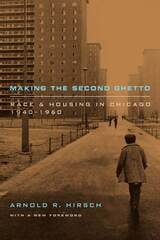
Making the Second Ghetto
Race and Housing in Chicago, 1940-1960Arnold R. Hirsch
University of Chicago Press, 2021
Hirsch’s classic and groundbreaking work of urban history is a revelatory look at Chicago in the decades after the Great Depression, a period when the city dealt with its rapidly growing Black population not by working to abolish its stark segregation but by expanding and solidifying it. Even as the civil rights movement rose to prominence, Chicago exploited a variety of methods of segregation—including riots, redevelopment, and a host of new legal frameworks—that provided a national playbook for the emergence of a new kind of entrenched inequality. Hirsch’s chronicle of the strategies employed by ethnic, political, and business interests in reaction to the Great Migration of Southern Blacks in the mid-twentieth century makes startingly clear how the violent reactions of an emergent white population found common ground with policy makers to segregate first a city and then the nation.
This enlarged edition of Making the Second Ghetto features a visionary afterword by historian N. D. B. Connolly, explaining why Hirsch’s book still crackles with “blistering relevance” for contemporary readers.
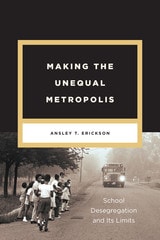
Making the Unequal Metropolis
School Desegregation and Its LimitsAnsley T. Erickson
University of Chicago Press, 2016
Taking Nashville as her focus, Erickson uncovers the hidden policy choices that have until now been missing from popular and legal narratives of inequality. In her account, inequality emerges not only from individual racism and white communities’ resistance to desegregation, but as the result of long-standing linkages between schooling, property markets, labor markets, and the pursuit of economic growth. By making visible the full scope of the forces invested in and reinforcing inequality, Erickson reveals the complex history of, and broad culpability for, ongoing struggles in our schools.
Malcolm X's Michigan Worldview
An Exemplar for Contemporary Black StudiesRita Kiki Edozie
Michigan State University Press, 2024
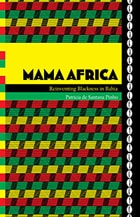
Mama Africa
Reinventing Blackness in BahiaPatricia de Santana Pinho
Duke University Press, 2010
Pinho explores how Bahian cultural production influences and is influenced by black diasporic cultures and the idealization of Africa—to the extent that Bahia draws African American tourists wanting to learn about their heritage. Analyzing the conceptions of blackness produced by the blocos afro, she describes how Africa is re-inscribed on the body through clothes, hairstyles, and jewelry; once demeaned, blackness is reclaimed as a source of beauty and pride. Turning to the body’s interior, Pinho explains that the myth of Mama Africa implies that black appearances have corresponding black essences. Musical and dance abilities are seen as naturally belonging to black people, and these traits are often believed to be transmitted by blood. Pinho argues that such essentialized ideas of blackness render black culture increasingly vulnerable to exploitation by the state and commercial interests. She contends that the myth of Mama Africa, while informing oppositional black identities, overlaps with a constraining notion of Bahianness promoted by the government and the tourist industry.
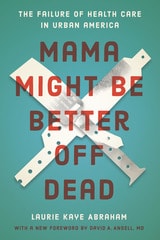
Mama Might Be Better Off Dead
The Failure of Health Care in Urban AmericaLaurie Kaye Abraham
University of Chicago Press, 1994
Mama Might Be Better Off Dead immerses readers in the lives of four generations of a poor, African-American family in the neighborhood, who are beset with the devastating illnesses that are all too common in America’s inner-cities. Headed by Jackie Banes, who oversees the care of a diabetic grandmother, a husband on kidney dialysis, an ailing father, and three children, the Banes family contends with countless medical crises. From visits to emergency rooms and dialysis units, to trials with home care, to struggles for Medicaid eligibility, Laurie Kaye Abraham chronicles their access—or more often, lack thereof—to medical care. Told sympathetically but without sentimentality, their story reveals an inadequate health care system that is further undermined by the direct and indirect effects of poverty.
Both disturbing and illuminating, Mama Might Be Better Off Dead is an unsettling, profound look at the human face of health care in America. Published to great acclaim in 1993, the book in this new edition includes an incisive foreword by David Ansell, a physician who worked at Mt. Sinai Hospital, where much of the Banes family’s narrative unfolds.
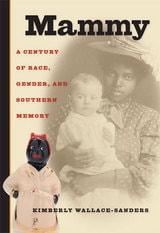
Mammy
A Century of Race, Gender, and Southern MemoryKimberly Wallace-Sanders
University of Michigan Press, 2008
---Choice
"In this insightful analysis of representations of mammy, Wallace-Sanders skillfully illustrates how this core icon of Black womanhood has figured prominently in upholding hierarchies of race, gender, and class in the United States. Far from being a timeless, natural, benign image of domesticity, the idealized mammy figure was repeatedly reworked to accommodate varying configurations of racial rule. No one reading this book will be able to see Gone with the Wind in the same way ever again."
---Patricia Hill Collins, University of Maryland
"Kimberly Wallace-Sanders' interdisciplinary approach is first-rate. This expansive and engaging book should appeal to students and scholars in American studies, African American studies, and women's studies."
---Thadious Davis, The University of Pennsylvania
Her cheerful smile and bright eyes gaze out from the covers of old cookbooks, song sheets, syrup bottles, salt and pepper shakers, and cookie jars, and she has long been a prominent figure in fiction, film, television, and folk art. She is Mammy, a figure whose provocative hold on the American psyche has persisted since before the Civil War.
But who is Mammy, and where did she come from? Her large, dark body and her round smiling face tower over our imaginations to such an extent that more accurate representations of African American women wither in her shadow. Mammy's stereotypical attributes---a sonorous and soothing voice, raucous laugh, infinite patience, self-deprecating wit, and implicit acceptance of her own inferiority and her devotion to white children---all point to a long-lasting and troubled confluence of racism, sexism, and southern nostalgia.
This groundbreaking book traces the mammy figure and what it has symbolized at various historical moments that are linked to phases in America's racial consciousness. The author shows how representations of Mammy have loomed over the American literary and cultural imagination, an influence so pervasive that only a comprehensive and integrated approach of this kind can do it justice.
The book's many illustrations trace representations of the mammy figure from the nineteenth century to the present, as she has been depicted in advertising, book illustrations, kitchen figurines, and dolls. The author also surveys the rich and previously unmined history of the responses of African American artists to the black mammy stereotype, including contemporary reframings by artists Betye Saar, Michael Ray Charles, and Joyce Scott.
Kimberly Wallace-Sanders is Associate Professor of the Graduate Institute of Liberal Arts and Women's Studies at Emory University. She is editor of Skin Deep, Spirit Strong: The Black Female Body in American Culture.
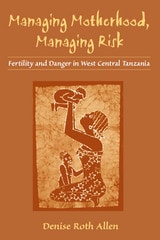
Managing Motherhood, Managing Risk
Fertility and Danger in West Central TanzaniaDenise Roth Allen
University of Michigan Press, 2004
In Managing Motherhood, Managing Risk, Denise Roth Allen persuasively argues that development interventions in the Third World often have unintended and unacknowledged consequences. Based on twenty-two months of fieldwork in the Shinyanga Region of west central Tanzania, this rich and engaging ethnography of women's fertility-related experiences highlights the processes by which a set of seemingly well-intentioned international maternal health policy recommendations go awry when implemented at the local level.
An exploration of how threats to maternal health have been defined and addressed at the global, national, and local levels, Managing Motherhood, Managing Risk presents two contrasting, and oftentimes competing, definitions of risk: those that form the basis of international recommendations and national maternal health policies and those that do not. The effect that these contrasting definitions of risk have on women's fertility-related experiences at the local level are explored throughout the book.
This study employs an innovative approach to the analysis of maternal health risk, one that situates rural Tanzanian women's fertility-related experiences within a broader historical and sociocultural context. Beginning with an examination of how maternal health risk was defined and addressed during the early years of British colonial rule in Tanganyika and moving to a discussion of an internationally conceived maternal health initiative that was launched on the world stage in the late 1980s, the author explores the similarities in the language used and solutions proposed by health development experts over time.
This set of "official" maternal health risks is then compared to an alternative set of risks that emerge when attention is focused on women's experiences of pregnancy and childbirth at the local level. Although some of these latter risks are often spoken about as deriving from spiritual or supernatural causes, the case studies presented throughout the second half of the book reveal that the concept of risk in the context of pregnancy and childbirth is much more complex, involving the interplay of spiritual, physical, and economic aspects of everyday life.
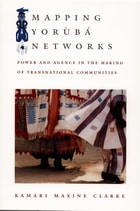
Mapping Yorùbá Networks
Power and Agency in the Making of Transnational CommunitiesKamari Maxine Clarke
Duke University Press, 2004
Examining how the development of a deterritorialized network of black cultural nationalists became aligned with a lucrative late-twentieth-century roots heritage market, Clarke explores the dynamics of Òyótúnjí Village’s religious and tourist economy. She discusses how the community generates income through the sale of prophetic divinatory consultations, African market souvenirs—such as cloth, books, candles, and carvings—and fees for community-based tours and dining services. Clarke accompanied Òyótúnjí villagers to Nigeria, and she describes how these heritage travelers often returned home feeling that despite the separation of their ancestors from Africa as a result of transatlantic slavery, they—more than the Nigerian Yorùbá—are the true claimants to the ancestral history of the Great Òyó Empire of the Yorùbá people. Mapping Yorùbá Networks is a unique look at the political economy of homeland identification and the transnational construction and legitimization of ideas such as authenticity, ancestry, blackness, and tradition.
Mariners, Renegades and Castaways
The Story of Herman Melville and the World We Live InC. L. R. James
Dartmouth College Press, 2001
Mariners, Renegades and Castaways
The Story of Herman Melville and the World We Live InC. L. R. James
Brandeis University Press, 2025
Political theorist and cultural critic, novelist, and cricket enthusiast, C. L. R. James (1901–89) was a brilliant polymath who was described by Edward Said as “a centrally important twentieth-century figure.” Through such landmark works as The Black Jacobins, Beyond a Boundary, and American Civilization, James’s thought continues to influence and inspire scholars in a variety of fields.
In this complete edition of his seminal work of literary and cultural criticism, Mariners, Renegades, and Castaways, James anticipated many of the concerns and ideas that have shaped the contemporary fields of American and postcolonial studies. In this provocative study of Moby Dick in which he challenged the prevailing Americanist interpretation that opposed a “totalitarian” Ahab and a “democratic, American” Ishmael, James offers instead a vision of a factory-like Pequod whose “captain of industry” leads the crew to their doom. In addition to demonstrating how such an interpretation supported the United States’ emerging national security state, he also related the narrative of Moby Dick to his own persecuted position at the height of McCarthyism. It is precisely this personal, deeply original material that was excised from the first edition of this book.
With a new foreword by Professor Chanda Prescod-Weinstein—theoretical physicist, advocate for a just science, and James’s granddaughter—and an introduction by Professor Donald E. Pease at Dartmouth College that places the work in its critical and cultural context, Mariners, Renegades, and Castaways is once again available in a new edition.
Mark One or More
Civil Rights in Multiracial AmericaKim M. Williams
University of Michigan Press, 2010
The movement to add a multiracial category to the 2000 U.S. Census provoked unprecedented debates about race. The effort made for strange bedfellows. Republicans like House Speaker Newt Gingrich and affirmative action opponent Ward Connerly took up the multiracial cause. Civil rights leaders opposed the movement on the premise that it had the potential to dilute the census count of traditional minority groups. The activists themselves—a loose confederation of organizations, many led by the white mothers of interracial children—wanted recognition. What they got was the transformation of racial politics in America.
Mark One or More is the compelling account of how this small movement sparked a big change, and a moving call to reassess the meaning of racial identity in American life.
Kim M. Williams is Associate Professor of Public Policy in Harvard's Kennedy School of Government, and an expert in racial and ethnic politics and political movements.
Marked
Race, Crime, and Finding Work in an Era of Mass IncarcerationDevah Pager
University of Chicago Press, 2007
Nearly every job application asks it: have you ever been convicted of a crime? For the hundreds of thousands of young men leaving American prisons each year, their answer to that question may determine whether they can find work and begin rebuilding their lives.
The product of an innovative field experiment, Marked gives us our first real glimpse into the tremendous difficulties facing ex-offenders in the job market. Devah Pager matched up pairs of young men, randomly assigned them criminal records, then sent them on hundreds of real job searches throughout the city of Milwaukee. Her applicants were attractive, articulate, and capable—yet ex-offenders received less than half the callbacks of the equally qualified applicants without criminal backgrounds. Young black men, meanwhile, paid a particularly high price: those with clean records fared no better in their job searches than white men just out of prison. Such shocking barriers to legitimate work, Pager contends, are an important reason that many ex-prisoners soon find themselves back in the realm of poverty, underground employment, and crime that led them to prison in the first place.
“Using scholarly research, field research in Milwaukee, and graphics, [Pager] shows that ex-offenders, white or black, stand a very poor chance of getting a legitimate job. . . . Both informative and convincing.”—Library Journal
“Marked is that rare book: a penetrating text that rings with moral concern couched in vivid prose—and one of the most useful sociological studies in years.”—Michael Eric Dyson
Maroon Choreography
fahima ife
Duke University Press, 2021
Duke University Press Scholars of Color First Book Award recipient
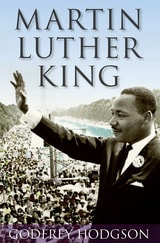
Martin Luther King
Godfrey Hodgson
University of Michigan Press, 2010
Dr. Martin Luther King Jr. is as relevant today as he was when he led civil rights campaigns in the 1950s and 1960s. He was an agent and a prophet of political change in this country, and the election of President Barack Obama is his direct legacy.
Now from one of Britain's most experienced political observers comes a new, accessible biography of the man and his works. The story of King is dramatic, and Godfrey Hodgson presents it with verve, clarity, and acute insight based in part on his own reporting on-scene at the time. He interviewed King half a dozen times or more; heard his speech at the March on Washington; was in Birmingham, Selma and Chicago; and met many of the characters in King's life story. Martin Luther King combines the best of his own reporting, plus the work of other biographers and researchers, to trace the iconic civil rights leader's career from his birth in Atlanta in 1929, through the campaigns that made possible the Civil Rights Act of 1964 and the Voting Rights Act of 1965, to his assassination in Memphis in 1968. Hodgson sheds light on every aspect of an extraordinary life: the Black Baptist culture in which King grew up, his theology and political philosophy, his physical and moral courage, his insistence on the injustice of inequality, his campaigning energy, his repeated sexual infidelities.
Hodgson describes the political minefield in which King operated; follows how he gradually persuaded President Kennedy that he could not stand by and allow the civil rights movement to be frustrated; and describes how, on the verge of success, his career was threatened by President Johnson's anger at King's principled decision to come out against the Vietnam War. He also puts King's career into the context of American history in the crisis of the 1960s. In his life, King was frustrated; but in death, he has been triumphant.
Martin Luther King allows the charisma and power of King's personality to shine through, showing in gripping narrative style exactly how one man helped America to progress toward its truest ideals. Hodgson's extensive research and detail help paint an accurate, complex portrait of one of America's most important leaders.
Godfrey Hodgson has worked in Britain and America as a newspaper and magazine journalist; as a television reporter, documentary maker and anchor; as a university teacher and lecturer; and as the author of a dozen well-received books about U.S. politics and recent history, including America in Our Time, a history of the United States in the 1960s; More Equal than Others, on politics and society in twentieth-century America; and most recently, a biography of Senator Daniel Patrick Moynihan, The Gentleman from New York. Hodgson met King on a number of occasions between 1956 and 1967. He recently retired as director of the Reuters Foundation Programme at Oxford University and is a visiting journalism professor at City University in London.
PRAISE FOR America in Our Time
"A critique so stimulating and compelling that I can only say read it."
---Richard Lingeman, The New York Times
"It simply gets right, without great fuss, the detail and proportion of things like the civil rights movement, student unrest, the stages of our Vietnam engagement."
---Garry Wills, The New York Review of Books
PRAISE FOR More Equal than Others
"The most thoughtful, thorough and sorrowful book imaginable on what has happened in these years."
---Bernard Crick, The Independent
Martin Luther King Jr. and the Sermonic Power of Public Discourse
Carolyn Calloway-Thomas
University of Alabama Press, 1993
Critical studies of the prophetic voice that reshaped a nation.
Martin Luther King Jr. and the Sermonic Power of Public Discourse presents a rich and illuminating examination of Dr. King’s rhetorical mastery, revealing how his most iconic speeches and writings drew deeply from African American sermonic traditions to articulate a moral vision capable of transforming public consciousness. Through nine incisive essays, the volume explores how King’s oratory fused theology, ethics, metaphor, and call‑and‑response patterns to mobilize audiences and frame the civil rights movement as a universal moral struggle.
The collection focuses on five pivotal works—“Death of Evil on the Seashore,” “Letter from Birmingham Jail,” “I Have a Dream,” “A Time to Break Silence,” and “I’ve Been to the Mountaintop”—each analyzed for its rhetorical structure, historical context, and thematic force. These pieces span the full arc of King’s public career, illustrating not only his evolving political and theological commitments but also his sustained effort to envision and communicate a “beloved community” rooted in justice, equality, and human dignity.
In addition to unpacking King’s metaphoric language, ethical appeals, and theological grounding, several essays highlight the ways his rhetoric bridged diverse audiences and invited collective participation in social change. Scholars examine how King re‑constructed the rhetorical situation in “Letter from Birmingham Jail,” framed equality as a universal ideal, and used orality and performance to elevate “I Have a Dream” into one of the most resonant speeches in American history.
Far more than an anthology of commentary, this volume provides a nuanced, interdisciplinary understanding of King as a rhetorician whose discourse transcended political advocacy to become a powerful form of moral persuasion. It is an essential resource for readers interested in rhetoric, communication, civil rights history, and the enduring power of prophetic speech.
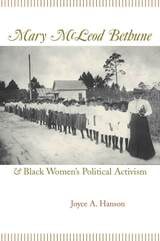
Mary McLeod Bethune and Black Women's Political Activism
Joyce A. Hanson
University of Missouri Press, 2003
Mary McLeod Bethune was a significant figure in American political history. She devoted her life to advancing equal social, economic, and political rights for blacks. She distinguished herself by creating lasting institutions that trained black women for visible and expanding public leadership roles. Few have been as effective in the development of women’s leadership for group advancement. Despite her accomplishments, the means, techniques, and actions Bethune employed in fighting for equality have been widely misinterpreted.
Examining the historical evolution of African American women’s activism in the critical period between 1920 and 1950, a time previously characterized as “doldrums” for both feminist and civil rights activity, Mary McLeod Bethune and Black Women’s Political Activism is important for understanding the centrality of black women to the political fight for social, economic, and racial justice.
Masculinist Impulses
Toomer, Hurston, Black Writing, and ModernityNathan Grant
University of Missouri Press, 2004
Grant’s book provides close readings of Jean Toomer (Cane and Natalie Mann) and Zora Neale Hurston (Moses, Man of the Mountain, Seraph of the Suwanee, and Their Eyes Were Watching God), for whom the American South was a crucial locus of the African American experience. Toomer and Hurston were virtually alone among the Harlem Renaissance writers of prose who returned to the South for their literary materials. That return, however, allowed their rediscovery of key black masculine values and charted the northern route of those values in the twentieth century to their compromise and destruction.
Grant then moves on to three more recent writers—John Edgar Wideman, Gloria Naylor, and Toni Morrison—who expanded upon and transformed the themes of Toomer and Hurston. Like Toomer and Hurston, these later authors recognized the need for the political union of black men and women in the effort to realize the goals of equity and justice.
Masculinist Impulses discusses nineteenth- and twentieth-century black masculinity as both a feature and a casualty of modernism. Scholars and students of African American literature will find Grant’s nuanced and creative readings of these key literary texts invaluable.
Materia Medica
Black Women, White Doctors, and Spectacular GynecologyNicole N. Ivy
Duke University Press, 2026
Mavericks of Style
The Seventies in ColorUri McMillan
Duke University Press, 2025
Mavericks, Money, and Men
The AFL, Black Players, and the Evolution of Modern FootballCharles Ross
Temple University Press, 2016
The American Football League, established in 1960, was innovative both in its commitment to finding talented, overlooked players—particularly those who played for historically black colleges and universities—and in the decision by team owners to share television revenues.
In Mavericks, Money and Men, football historian Charles Ross chronicles the AFL’s key events, including Buck Buchanan becoming the first overall draft pick in 1963, and the 1965 boycott led by black players who refused to play in the AFL-All Star game after experiencing blatant racism. He also recounts how the success of the AFL forced a merger with the NFL in 1969, which arguably facilitated the evolution of modern professional football.
Ross shows how the league, originally created as a challenge to the dominance of the NFL, pressured for and ultimately accelerated the racial integration of pro football and also allowed the sport to adapt to how African Americans were themselves changing the game.
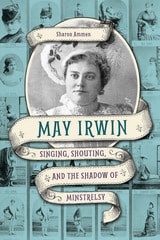
May Irwin
Singing, Shouting, and the Shadow of MinstrelsySharon Ammen
University of Illinois Press, 2017
Sharon Ammen's in-depth study traces Irwin's hurly-burly life. Irwin gained fame when, layering aspects of minstrelsy over ragtime, she popularized a racist "Negro song" genre. Ammen examines this forgotten music, the society it both reflected and entertained, and the ways white and black audiences received Irwin's performances. She also delves into Irwin's hands-on management of her image and career, revealing how Irwin carefully built a public persona as a nurturing housewife whose maternal skills and performing acumen reinforced one another. Irwin's act, soaked in racist song and humor, built a fortune she never relinquished. Yet her career's legacy led to a posthumous obscurity as the nation that once adored her evolved and changed.

Me and My House
James Baldwin's Last Decade in FranceMagdalena J. Zaborowska
Duke University Press, 2018
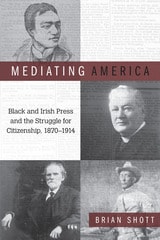
Mediating America
Black and Irish Press and the Struggle for Citizenship, 1870-1914Brian Shott
Temple University Press, 2019
Until recently, print media was the dominant force in American culture. The power of the paper was especially true in minority communities. African Americans and European immigrants vigorously embraced the print newsweekly as a forum to move public opinion, cohere group identity, and establish American belonging.
Mediating America explores the life and work of T. Thomas Fortune and J. Samuel Stemons as well as Rev. Peter C. Yorke and Patrick Ford—respectively two African American and two Irish American editor/activists in the late nineteenth and early twentieth centuries. Historian Brian Shott shows how each of these “race men” (the parlance of the time) understood and advocated for his group’s interests through their newspapers. Yet the author also explains how the newspaper medium itself—through illustrations, cartoons, and photographs; advertisements and page layout; and more—could constrain editors’ efforts to guide debates over race, religion, and citizenship during a tumultuous time of social unrest and imperial expansion.
Black and Irish journalists used newspapers to recover and reinvigorate racial identities. As Shott proves, minority print culture was a powerful force in defining American nationhood.
Medicating Race
Heart Disease and Durable Preoccupations with DifferenceAnne Pollock
Duke University Press, 2012

Memory Care
Essays on ForgettingJennifer C. Nash
Duke University Press, 2027
Memory, Meaning, and Resistance
Reflecting on Oral History and Women at the MarginsFran Leeper Buss
University of Michigan Press, 2017
Memphis Tennessee Garrison
The Remarkable Story of a Black Appalachian WomanAncella R. Bickley
Ohio University Press, 2001
As a black Appalachian woman, Memphis Tennessee Garrison belonged to a demographic category triply ignored by historians.
The daughter of former slaves, she moved to McDowell County, West Virginia, at an early age and died at ninety-eight in Huntington. The coalfields of McDowell County were among the richest seams in the nation. As Garrison makes clear, the backbone of the early mining work force—those who laid the railroad tracks, manned the coke ovens, and dug the coal—were black miners. These miners and their families created communities that became the centers of the struggle for unions, better education, and expanded civil rights. Memphis Tennessee Garrison, an innovative teacher, administrative worker at U.S. Steel, and vice president of the National Board of the NAACP at the height of the civil rights struggle (1963-66), was involved with all of these struggles.
In many ways, this oral history, based on interview transcripts, is the untold and multidimensional story of African American life in West Virginia, as seen through the eyes of a remarkable woman. She portrays a courageous people who organize to improve their working conditions, send their children to school and then to college, own land, and support a wide range of cultural and political activities.
Men's College Athletics and the Politics of Racial Equality
Five Pioneer Stories of Black Manliness, White Citizenship, and American DemocracyGregory J Kaliss
Temple University Press, 2014
College sports have provided a compelling means to discuss issues regarding racial equality and fairness in American life. As previously-white institutions of higher learning gradually (and grudgingly) opened their playing fields to African-American athletes in men's basketball and football, black and white spectators interpreted mixed-race team sports in often contradictory ways. In Men's College Athletics and the Politics of Racial Equality, Gregory Kaliss offers stunning insights into Americans' contested visions of equality, fairness, black manhood, citizenship, and an equal opportunity society.
Kaliss looks at Paul Robeson, Jackie Robinson, Wilt Chamberlain, Charlie Scott, John Mitchell, Wilbur Marshall, and Bear Bryant to show how Americans responded to racial integration over time. Men's College Athletics and the Politics of Racial Equality reveals that as fans, media members, university students, faculty, and administration—black and white—discussed the achievements and struggles of these athletes, they inevitably talked about much more than what occurred on the field.
Metaracial
Hegel, Antiblackness, and Political IdentityRei Terada
University of Chicago Press, 2023
Exploring anxieties raised by Atlantic slavery in radical enlightenment literature concerned about political unfreedom in Europe, Metaracial argues that Hegel's philosophy assuages these anxieties for the left. Interpreting Hegel beside Rousseau, Kant, Mary Shelley, and Marx, Terada traces Hegel's transposition of racial hierarchy into a hierarchy of stances toward reality. By doing so, she argues, Hegel is simultaneously antiracist and antiblack. In dialogue with Black Studies, psychoanalysis, and critical theory, Metaracial offers a genealogy of the limits of antiracism.
Midnight Basketball
Race, Sports, and Neoliberal Social PolicyDouglas Hartmann
University of Chicago Press, 2016
Organized in the 1980s and ’90s by dozens of American cities, late-night basketball leagues were designed for social intervention, risk reduction, and crime prevention targeted at African American youth and young men. In Midnight Basketball, Hartmann traces the history of the program and the policy transformations of the period, while exploring the racial ideologies, cultural tensions, and institutional realities that shaped the entire field of sports-based social policy. Drawing on extensive fieldwork, the book also brings to life the actual, on-the-ground practices of midnight basketball programs and the young men that the programs intended to serve. In the process, Midnight Basketball offers a more grounded and nuanced understanding of the intricate ways sports, race, and risk intersect and interact in urban America.
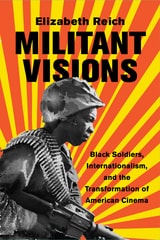
Militant Visions
Black Soldiers, Internationalism, and the Transformation of American CinemaReich, Elizabeth
Rutgers University Press, 2016
Offering a nuanced reading of a figure that was simultaneously conservative and radical, Reich considers how the cinematic black soldier lent a human face to ongoing debates about racial integration, black internationalism, and American militarism. Militant Visions thus not only presents a new history of how American cinema represented race, but also demonstrates how film images helped to make history, shaping the progress of the civil rights movement itself.
Millennial Style
The Politics of Experiment in Contemporary African Diasporic CultureAliyyah I. Abdur-Rahman
Duke University Press, 2024
Minority Report
Evaluating Political Equality in AmericaJohn D. Griffin and Brian Newman
University of Chicago Press, 2008
Missions for Science
U.S. Technology and Medicine in America's African WorldMcBride, David
Rutgers University Press, 2002
--What specific technologies and medical resources were transferred by U.S. institutions to black populations centers and why?
--How did the professed aims of U.S. technical projects, public health, and military activities differ from their actual effects and consequences?
--Did the U.S. technical transfer amount to a form of political hegemony?
--What lessons can we learn from the history of technology and medicine in these key geographic regions?
Missions for Science is the first book to explain how modern industrial and scientific advances shaped black Atlantic population centers. McBride is the first to provide a historical analysis of how shifting environmental factors and disease-control aid from the United States affected the collective development of these populations. He also discusses how independent black Atlantic republics with close historical links to the United States independently envisioned and attempted to use science and technology to build their nations.
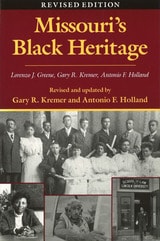
Missouri's Black Heritage, Revised Edition
Gary R. Kremer & Antonio F. Holland & With a Personal Reminiscence by Lorenzo J. Greene
University of Missouri Press, 1993
Originally written in 1980 by the late Lorenzo J. Greene, Gary R. Kremer, and Antonio F. Holland, Missouri's Black Heritage remains the only book-length account of the rich and inspiring history of the state's African American population. It has now been revised and updated by Kremer and Holland, incorporating the latest scholarship into its pages. This edition describes in detail the struggles faced by many courageous African Americans in their efforts to achieve full civil and political rights against the greatest of odds.
Documenting the African American experience from the horrors of slavery through present-day victories, the book touches on the lives of people such as John Berry Meachum, a St. Louis slave who purchased his own freedom and then helped countless other slaves gain emancipation; Hiram Young, a Jackson County free black whose manufacturing of wagons for Sante Fe Trail travelers made him a legendary figure; James Milton Turner, who, after rising from slavery to become one of the best-educated blacks in Missouri, worked with the Freedmen's Bureau and the State Department of Education to establish schools for blacks all over the state after the Civil War; and Annie Turnbo Malone, a St. Louis entrepreneur whose business skills made her one of the state's wealthiest African Americans in the early twentieth century.
A personal reminiscence by the late Lorenzo J. Greene, a distinguished African American historian whom many regard as one of the fathers of black history, offers a unique view of Missouri's racial history and heritage.
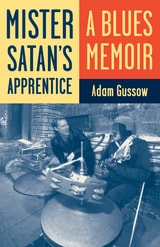
Mister Satan's Apprentice
A Blues MemoirAdam Gussow
University of Minnesota Press, 1998
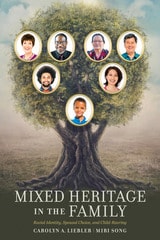
Mixed Heritage in the Family
Racial Identity, Spousal Choice, and ChildrearingCarolyn Liebler
Russell Sage Foundation, 2025
Liebler and Song break new ground by being the first to combine and integrate the study of three aspects of life for people of mixed racial heritage – identity, spouse choice, and childrearing. This integrated approach reveals how complicated racial identification can be, and how it can be expressed in one’s choice of partner or in how one raises their children. The authors draw on census data and interviews with Asian-White, Black-White, and American Indian/Alaska Native-White mixed people to better understand how their identity choices are related to their choice of spouse and how they racially identify and raise their children.
Increasingly, mixed people in the United States are identifying with multiple races. However, the authors find that mixed-race people are not a monolith and that how and why they identify varies considerably between and within each group. They found several common factors that influenced whether mixed-race people choose to identify as biracial, solely White, or solely as a racial minority. These factors include the history of the specific minority race in the U.S., the racial demographics of where they were raised, their social and cultural exposure to their White and non-White backgrounds, their attachment to their racial backgrounds, and how they are seen racially by others.
The way mixed-heritage people identify was closely tied to the race of their spouse. However, having a White spouse did not necessarily mean the mixed-race person felt disconnected from their non-White heritage. White spouses varied in their racial consciousness and their interest in the culture of their mixed-race spouse’s minority ancestry. The spouse’s race, and the nature of racial overlap between the spouses, was also key in the racial upbringing of a mixed-heritage person’s child. In families where the parents share a minority racial heritage, couples lean into their shared ‘family race’, which guides their parenting choices and family life. Many mixed heritage parents found it important to foster racial pride in their children and combat negative racial stereotypes.
Liebler and Song caution against making superficial predictions about the state of race relations in the U.S. based on an increase in the multiracial population. They show that race has not become less salient in the lives of many mixed-race people—American society is not post-racial.
Mixed Heritage in the Family breaks new ground, provides compelling insights in its examination of the lives of mixed-race people, and shows how complicated racial identification can be.
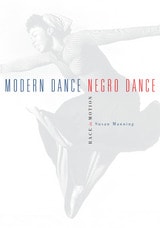
Modern Dance, Negro Dance
Race in MotionSusan Manning
University of Minnesota Press, 2006
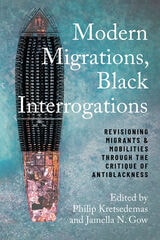
Modern Migrations, Black Interrogations
Revisioning Migrants and Mobilities through the Critique of AntiblacknessEdited by Philip Kretsedemas and Jamella N. Gow
Temple University Press, 2024
Focusing on antiblackness in immigration and examining restrictions on freedom of movement and on settling alike, chapters address how Black im/mobility operates and how it can be distinguished from that of the migrant and the colonial settler, as well as from the transgressive mobilities of Indigenous populations. Looking at blackness, borders and border practices, and displacement, Modern Migrations, Black Interrogations investigates racialized boundaries that determine immigration policy, citizenship, legality, and inclusion. Additional chapters analyze communities, such as the Haitian diaspora in Miami, antiblackness in the context of Australian migration, and explore literary representations of justice, slavery and Black feminist consciousness.
Modern Migrations, Black Interrogations uses (anti)blackness to rethink the way we understand borders, immigrant identity, barriers to integration, and the dynamics of migrant exclusion, while also providing an understanding of “otherness” for Black populations across nationalities.
Contributors: Maya Hislop, P. Khalil Saucier, Hyacinth Udah, Paula von Gleich, Tryon P. Woods, and the editors
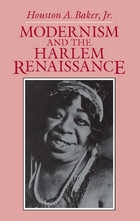
Modernism and the Harlem Renaissance
Houston A. Baker Jr.
University of Chicago Press, 1989
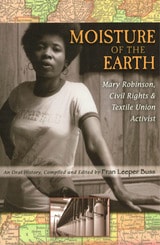
Moisture of the Earth
Mary Robinson, Civil Rights and Textile Union ActivistAn Oral History, Compiled and Edited by Fran Leeper Buss
University of Michigan Press, 2009
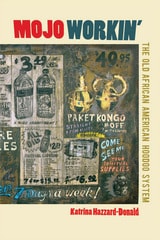
Mojo Workin'
The Old African American Hoodoo SystemKatrina Hazzard-Donald
University of Illinois Press, 2013
A bold reconsideration of Hoodoo belief and practice
Katrina Hazzard-Donald explores African Americans' experience and practice of the herbal, healing folk belief tradition known as Hoodoo. She examines Hoodoo culture and history by tracing its emergence from African traditions to religious practices in the Americas. Working against conventional scholarship, Hazzard-Donald argues that Hoodoo emerged first in three distinct regions she calls "regional Hoodoo clusters" and that after the turn of the nineteenth century, Hoodoo took on a national rather than regional profile. The spread came about through the mechanism of the "African Religion Complex," eight distinct cultural characteristics familiar to all the African ethnic groups in the United States.
The first interdisciplinary examination to incorporate a full glossary of Hoodoo culture, Mojo Workin': The Old African American Hoodoo System lays out the movement of Hoodoo against a series of watershed changes in the American cultural landscape. Hazzard-Donald examines Hoodoo material culture, particularly the "High John the Conquer" root, which practitioners employ for a variety of spiritual uses. She also examines other facets of Hoodoo, including rituals of divination such as the "walking boy" and the "Ring Shout," a sacred dance of Hoodoo tradition that bears its corollaries today in the American Baptist churches. Throughout, Hazzard-Donald distinguishes between "Old tradition Black Belt Hoodoo" and commercially marketed forms that have been controlled, modified, and often fabricated by outsiders; this study focuses on the hidden system operating almost exclusively among African Americans in the Black spiritual underground.
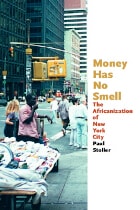
Money Has No Smell
The Africanization of New York CityPaul Stoller
University of Chicago Press, 2002
Blending fascinating ethnographic description with incisive social analysis, Stoller shows how these savvy West African entrepreneurs have built cohesive and effective multinational trading networks, in part through selling a simulated Africa to African Americans. These and other networks set up by the traders, along with their faith as devout Muslims, help them cope with the formidable state regulations and personal challenges they face in America. As Stoller demonstrates, the stories of these West African traders illustrate and illuminate ongoing debates about globalization, the informal economy, and the changing nature of American communities.
Monstrous Work and Radical Satisfaction
Black Women Writing under SegregationEve Dunbar
University of Minnesota Press, 2024
Radical Black feminist refusal through the works of mid-twentieth-century African American women writers
Monstrous Work and Radical Satisfaction offers new and insightful readings of African American women’s writings in the 1930s–1950s, illustrating how these writers centered Black women’s satisfaction as radical resistance to the false and incomplete promise of liberal racial integration. Eve Dunbar examines the writings of Ann Petry, Dorothy West, Alice Childress, and Gwendolyn Brooks to show how these women explored self-fulfillment over normative and sanctioned models of national belonging.
Paying close attention to literary moments of disruption, miscommunication, or confusion rather than ease, assimilation, or mutual understanding around race and gender, Dunbar tracks these writers’ dissatisfaction with American race relations. She shows how Petry, West, Childress, and Brooks redeploy the idea of monstrous work to offer potential modalities for registering Black women’s capacity to locate satisfaction within the domestic and interpersonal.
While racial integration may satisfy the national idea of equality and inclusion, it has not met the long-term needs of Black people’s quest for equity. Dunbar responds, demonstrating how these mid-century women offer new blueprints for Black life by creating narrative models for radical satisfaction: Black women’s completeness, joy, and happiness outside the bounds of normative racial inclusion.
Montage of a Dream
The Art and Life of Langston HughesEdited by John Edgar Tidwell & Cheryl R. Ragar, Foreword by Arnold Rampersad
University of Missouri Press, 2007
Over a forty-six-year career, Langston Hughes experimented with black folk expressive culture, creating an enduring body of extraordinary imaginative and critical writing. Riding the crest of African American creative energy from the Harlem Renaissance to the onset of Black Power, he commanded an artistic prowess that survives in the legacy he bequeathed to a younger generation of writers, including award winners Alice Walker, Paule Marshall, and Amiri Baraka.
Montage of a Dream extends and deepens previous scholarship, multiplying the ways in which Hughes’s diverse body of writing can be explored. The contributors, including such distinguished scholars as Steven Tracy, Trudier Harris, Juda Bennett, Lorenzo Thomas, and Christopher C. De Santis, carefully reexamine the significance of his work and life for their continuing relevance to American, African American, and diasporic literatures and cultures.
Probing anew among Hughes’s fiction, biographies, poetry, drama, essays, and other writings, the contributors assert fresh perspectives on the often overlooked “Luani of the Jungles” and Black Magic and offer insightful rereadings of such familiar pieces as “Cora Unashamed,” “Slave on the Block,” and Not without Laughter. In addition to analyzing specific works, the contributors astutely consider subjects either lightly explored by or unavailable to earlier scholars, including dance, queer studies, black masculinity, and children’s literature. Some investigate Hughes’s use of religious themes and his passion for the blues as the fabric of black art and life; others ponder more vexing questions such as Hughes’s sexuality and his relationship with his mother, as revealed in the letters she sent him in the last decade of her life.
Montage of a Dream richly captures the power of one man’s art to imagine an America holding fast to its ideals while forging unity out of its cultural diversity. By showing that Langston Hughes continues to speak to the fundamentals of human nature, this comprehensive reconsideration invites a renewed appreciation of Hughes’s work—and encourages new readers to discover his enduring relevance as they seek to understand the world in which we all live.