Results by title
239 books match the query 'Black people' and 11 start with m
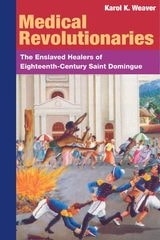
MEDICAL REVOLUTIONARIES
The Enslaved Healers of Eighteenth-Century Saint DomingueKarol K. Weaver
University of Illinois Press, 2006
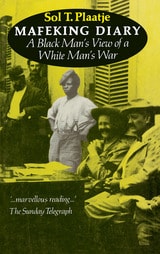
Mafeking Diary
A Black Man’s View of a White Man’s WarSol T. Plaatje
Ohio University Press, 1990
“Sol Plaatje’s Mafeking Diary is a document of enduring importance and fascination. The product of a young black South African court interpreter, just turned 23 years old when he started writing, it opens an entirely new vista on the famous Siege of Mafeking. By shedding light on the part played by the African population of the town, Plaatje explodes the myth, maintained by belligerents, and long perpetuated by both historians and the popular imagination, this this was a white man’s affair. One of the great epics of British imperial history, and perhaps the best remembered episode of the Anglo-Boer war of 1899–1902, is presented from a wholly novel perspective.
“At the same time, the diary provides an intriguing insight into the character of a young man who was to play a key role in South African political and literary history during the first three decades of this century. It reveals much of the perceptions and motives that shaped his own attitudes and intellectual development and, indeed, those of an early generation of African leaders who sought to build a society which did not determine the place of its citizens by the colour of their skin. The diary therefore illuminates the origins of a struggle which continues to this day.”
— John L. Comaroff (ed.) in his preface

Malambo
Lucía Charún-Illescas
Swan Isle Press, 2004
“In Malambo . . . the Rimac proudly rubs elbows with the freedmen, the cimarrons, and smuggled slaves. . . It runs united to the other subterranean springs underneath Blanket Street, Weavers Lane, and under Jewish Street . . . and Swordmaker’s Lanes.”
The Rimac shapes the narrative of this compelling historical novel that probes the brutal clash of ethnicity, religion, and class in sixteenth- and seventeenth-century Peru. Set against the backdrop of Spanish colonialism and the Spanish Inquisition in the “New World,” Malambo peels back the layers of Peru’s society to focus on the subtle connections among indigenous peoples— Africans, Jews, Christians, and others—whose cultural fusion pervades Latin American history and culture.
At the heart of the novel is Tomason, an African artist living along the Rimac who paints religious murals for the church and his colonial masters. The intermingling of his Yoruba heritage with his life in a Spanish colony transforms him into a griot figure who unearths the deeper truths of his painful and complex experience by sharing it. Other memorable characters’ stories intertwine with Tomason’s tale, developing a narrative that powerfully reflects on the themes of dislocation and enslavement.
Malambo is an unforgettable work that explores the origins of the Afro-Hispanic experience and offers a profound meditation on the forces of history.
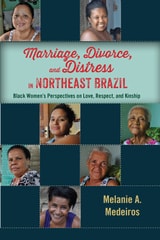
Marriage, Divorce, and Distress in Northeast Brazil
Black Women's Perspectives on Love, Respect, and KinshipMedeiros, Melanie A.
Rutgers University Press, 2018

Media and Dependency in South Africa
A Case Study of the Press and the Ciskei “Homeland”Les Switzer
Ohio University Press, 1985
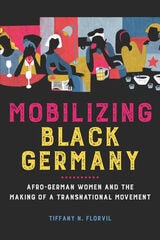
Mobilizing Black Germany
Afro-German Women and the Making of a Transnational MovementTiffany N. Florvil
University of Illinois Press, 2020
Tiffany N. Florvil examines the role of queer and straight women in shaping the contours of the modern Black German movement as part of the Black internationalist opposition to racial and gender oppression. Florvil shows the multifaceted contributions of women to movement making, including Audre Lorde’s role in influencing their activism; the activists who inspired Afro-German women to curate their own identities and histories; and the evolution of the activist groups Initiative of Black Germans and Afro-German Women. These practices and strategies became a rallying point for isolated and marginalized women (and men) and shaped the roots of contemporary Black German activism.
Richly researched and multidimensional in scope, Mobilizing Black Germany offers a rare in-depth look at the emergence of the modern Black German movement and Black feminists’ politics, intellectualism, and internationalism.
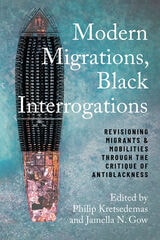
Modern Migrations, Black Interrogations
Revisioning Migrants and Mobilities through the Critique of AntiblacknessEdited by Philip Kretsedemas and Jamella N. Gow
Temple University Press, 2024
Focusing on antiblackness in immigration and examining restrictions on freedom of movement and on settling alike, chapters address how Black im/mobility operates and how it can be distinguished from that of the migrant and the colonial settler, as well as from the transgressive mobilities of Indigenous populations. Looking at blackness, borders and border practices, and displacement, Modern Migrations, Black Interrogations investigates racialized boundaries that determine immigration policy, citizenship, legality, and inclusion. Additional chapters analyze communities, such as the Haitian diaspora in Miami, antiblackness in the context of Australian migration, and explore literary representations of justice, slavery and Black feminist consciousness.
Modern Migrations, Black Interrogations uses (anti)blackness to rethink the way we understand borders, immigrant identity, barriers to integration, and the dynamics of migrant exclusion, while also providing an understanding of “otherness” for Black populations across nationalities.
Contributors: Maya Hislop, P. Khalil Saucier, Hyacinth Udah, Paula von Gleich, Tryon P. Woods, and the editors

Moving Against the System
The 1968 Congress of Black Writers and the Shaping of Global Black ConsciousnessEdited by David Austin
Pluto Press, 2018
Against a backdrop of widespread racism in the West and ongoing colonialism and imperialism in the Global South, this group of activists, writers, and political figures gathered to discuss the history and struggles of people of African descent and the meaning of black power.
For the first time since 1968, David Austin brings alive the speeches and debates of the most important international gathering of black radicals of the era. With never-before-seen texts from Stokely Carmichael, Walter Rodney and C.L.R. James, these documents will prove invaluable to anyone interested in black radical thought and political activism of the 1960s.
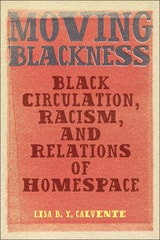
Moving Blackness
Black Circulation, Racism, and Relations of HomespaceLisa B. Y. Calvente
Rutgers University Press, 2025
Engaging with theories of anti-Black racism, modernity, coloniality, and the Black diaspora, the book frames storytelling and the circulation of narratives as performances deeply rooted in the everyday lives of Black people across the diaspora. Starting with an examination of the racial construction of movement during colonialism and slavery, the book traces how this history shapes contemporary interactions. With its exploration of how Black circulation transforms movement and space, the book introduces a forward-thinking approach to the Black diaspora, anchored in a politics of identification rather than being confined to the past or a specific location. Moving Blackness argues that the desire for homespace, a yearning for belonging that transcends any particular physical space, fuels this envisioned future, rooted in the historical and material conditions of racism and marginalization.

Music in Black American Life, 1600-1945
A University of Illinois Press AnthologyCompiled by Laurie Matheson. Introduction by Sandra Jean Graham
University of Illinois Press, 2022
Eclectic and essential, Music in Black American Life, 1600–1945 offers specialists and students alike a gateway to the history and impact of Black music in the United States.
Contributors: R. Reid Badger, Rae Linda Brown, Samuel A. Floyd Jr., Sandra Jean Graham, Jeffrey Magee, Robert M. Marovich, Harriet Ottenheimer, Eileen Southern, Katrina Dyonne Thompson, Stephen Wade, and Charles Wolfe
Music in Black American Life, 1945-2020
A University of Illinois Press AnthologyCompiled by Laurie Matheson. Introduction by Tammy L. Kernodle
University of Illinois Press, 2022
Part sourcebook and part survey of historic music scholarship, Music in Black American Life, 1945–2020 collects groundbreaking work that redefines our view of Black music and its place in American music history.
Contributors: Nelson George, Wayne Everett Goins, Claudrena N. Harold, Eileen M. Hayes, Loren Kajikawa, Robin D. G. Kelley, Tammy L. Kernodle, Cheryl L. Keyes, Gwendolyn Pough, Bernice Johnson Reagon, Mark Tucker, and Sherrie Tucker