Results by title
1882 books match the query 'Criticism and interpretation' and 106 start with m
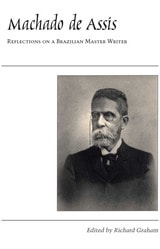
Machado de Assis
Reflections on a Brazilian Master WriterBy Richard Graham
University of Texas Press, 1999
Joaquim Maria Machado de Assis (1839-1908) never left Brazil and rarely traveled outside his native city of Rio de Janeiro, yet he is widely acknowledged by those who have read him as one of the major authors of the nineteenth century. His works are full of subtle irony, relentless psychological insights, and brilliant literary innovations. Yet, because he wrote in Portuguese, a language outside the mainstream of Western culture, those with access to his writings are relatively few.
This book is designed not only to call new attention to this master but also to raise questions about the nature of literature itself and current alternative views on how it can be approached. Four essays address the question of Machado's "realism" in the five masterpiece novels of his maturity, especially Dom Casmurro. The noted contributors include John Gledson (University of Liverpool), João Adolfo Hansen (Universidade de São Paulo), Sidney Chalhoub (Universidade de Campinas), and Daphne Patai (University of Massachusetts at Amherst).
Dain Borges of the University of California at San Diego says, "[This is the] only collection explicitly debating the question that polarizes contemporary Brazilian criticism of Machado de Assis: was he a sophisticated late realist, or was he a pioneering anti-realist, even a postmodernist? The [essayists] marshal their evidence and argument with virtuosity and arrive at sharply opposing conclusions."
Machado de Assis
Toward a Poetics of EmulationJoão Cezar de Castro Rocha
Michigan State University Press, 2015
At the center of this alternative explanation, Castro Rocha situates the fallout from the success enjoyed by Eça de Queirós with the publication of Cousin Basílio and Machado’s two long texts condemning the author and his work. Literary and aesthetic rivalries come to the fore, allowing for a new theoretical framework based on a literary appropriation of “thick description,” the method proposed by anthropologist Clifford Geertz. From this method, Castro Rocha derives his key hypothesis: an unforeseen consequence of Machado’s reaction to Eça’s novel was a return to the classical notion of aemulatio, which led Machado to develop a “poetics of emulation.”
Machiavelli's Politics
Catherine H. Zuckert
University of Chicago Press, 2017
Starting with Machiavelli’s two major political works, Zuckert persuasively shows that the moral revolution Machiavelli sets out in The Prince lays the foundation for the new form of democratic republic he proposes in the Discourses. Distrusting ambitious politicians to serve the public interest of their own accord, Machiavelli sought to persuade them in The Prince that the best way to achieve their own ambitions was to secure the desires and ambitions of their subjects and fellow citizens. In the Discourses, he then describes the types of laws and institutions that would balance the conflict between the two in a way that would secure the liberty of most, if not all. In the second half of her book, Zuckert places selected later works—La Mandragola, The Art of War, The Life of Castruccio Castracani, Clizia, and Florentine Histories—under scrutiny, showing how Machiavelli further developed certain aspects of his thought in these works. In The Art of War, for example, he explains more concretely how and to what extent the principles of organization he advanced in The Prince and the Discourses ought to be applied in modern circumstances. Because human beings act primarily on passions, Machiavelli attempts to show readers what those passions are and how they can be guided to have productive rather than destructive results.
A stunning and ambitious analysis, Machiavelli’s Politics brilliantly shows how many conflicting perspectives do inform Machiavelli’s teachings, but that one needs to consider all of his works in order to understand how they cohere into a unified political view. This is a magisterial work that cannot be ignored if a comprehensive understanding of the philosopher is to be obtained.
Machinic Eros
Writings on JapanFélix Guattari
University of Minnesota Press, 2015
The French philosopher Félix Guattari frequently visited Japan during the 1980s and organized exchanges between French and Japanese artists and intellectuals. His immersion into the “machinic eros” of Japanese culture put him into contact with media theorists such as Tetsuo Kogawa and activists within the mini-FM community (Radio Home Run), documentary filmmakers (Mitsuo Sato), photographers (Keiichi Tahara), novelists (Kobo Abe), internationally recognized architects (Shin Takamatsu), and dancers (Min Tanaka). From pachinko parlors to high-rise highways, alongside corporate suits and among alt-culture comrades, Guattari put himself into the thick of Japanese becomings during a period in which the bubble economy continued to mutate. This collection of essays, interviews, and longer meditations shows a radical thinker exploring the architectural environment of Japan’s “machinic eros.”

Mackintosh's Masterwork
The Glassgow School of ArtEdited by William Buchanan
Rutgers University Press, 2004
Of the many practitioners of art nouveau in Great Britain, Charles Rennie Mackintosh (1868–1928) has outlasted them all. His work bridged the more ornate style of the later nineteenth century and the forms of international modernism that followed. Like Frank Lloyd Wright, with whom he is frequently compared, he is known for so thoroughly integrating art and decoration that the two became inseparable. His work has been honored by a major exhibition at the Metropolitan Museum of Art, and his designs have proliferated to such an extent that they can be found reproduced in posters, prints, jewelry, and even new buildings. His most important project was the Glasgow School of Art, which still functions as a highly prestigious art school. This glorious building is visited each year by thousands of tourists from around the world. Built over a dozen years, beginning in 1897, the Glasgow School of Art is Mackintosh’s greatest and most influential legacy.
This completely redesigned and heavily illustrated edition of Mackintosh’s Masterwork has been greatly expanded and contains newly discovered material about both the early life of the architect and the formative years in which his plans for the School of Art were executed.
Magical Muse
Millennial Essays on Tennessee WilliamsEdited by Ralph F. Voss
University of Alabama Press, 2002
Like Faulkner before him, Tennessee Williams gave universal appeal to southern characters and settings. His major plays, from Cat on a Hot Tin Roof and The Glass Menagerie to A Streetcar Named Desire and Night of the Iguana, continue to capture America's popular imagination, a significant legacy. Though he died in 1983, only recently have Williams's papers become available to the public, bringing to light a number of intriguing discoveries—letters, drafts, and several unpublished and unproduced plays. These recent developments make a reassessment of Williams's life and work both timely and needed.
The essays in this collection originated as presentations at the 27th annual Alabama Symposium on English and American Literature at The University of Alabama in 1999. The book addresses a wide range of topics, among them the influence of popular culture on Williams's plays, and, in turn, his influence on popular culture; his relationship to Hollywood and his struggles with censorship, Hollywood standards, and the competing vision of directors such as Elia Kazan; his depictions of gender and sexuality; and issues raised by recently discovered plays.
Anyone interested in American literature and drama will find this collection of fresh, accessible essays a rewarding perspective on the life, work, and legacy of one of the bright stars of American theatre.
Mahler
A Musical PhysiognomyTheodor W. Adorno
University of Chicago Press, 1992
Since its appearance in 1960 in German, Mahler has established itself as a classic of musical interpretation. Now available in English, the work is presented here in a translation that captures the stylistic brilliance of the original.
Theodor W. Adorno (1903-69), one of the foremost members of the Frankfurt school of critical theory, studied with Alban Berg in Vienna during the late twenties, and was later the director of the Institute of Social Research at the University of Frankfurt from 1956 until his death. His works include Aesthectic Theory, Introduction to the Sociology of Music, The Jargon of Authenticity, Prism, and Philosophy of Modern Music.
Maimonides and Spinoza
Their Conflicting Views of Human NatureJoshua Parens
University of Chicago Press, 2012
Until the last century, it was generally agreed that Maimonides was a great defender of Judaism, and Spinoza—as an Enlightenment advocate for secularization—among its key opponents. However, a new scholarly consensus has recently emerged that the teachings of the two philosophers were in fact much closer than was previously thought. In his perceptive new book, Joshua Parens sets out to challenge the now predominant view of Maimonides as a protomodern forerunner to Spinoza—and to show that a chief reason to read Maimonides is in fact to gain distance from our progressively secularized worldview.
Making Girls into Women
American Women's Writing and the Rise of Lesbian IdentityKathryn R. Kent
Duke University Press, 2003
Kent not only analyzes how texts represent queer erotics, but also theorizes how texts might produce them in readers. She describes the ways postbellum sentimental literature such as that written by Harriet Beecher Stowe, Louisa May Alcott, and Emma D. Kelley eroticizes, reacts against, and even, in its own efforts to shape girls’ selves, contributes to the production of queer female identifications and identities. Tracing how these identifications are engaged and critiqued in the early twentieth century, she considers works by Djuna Barnes, Gertrude Stein, Marianne Moore, and Elizabeth Bishop, as well as in the queer subject-forming effects of another modern invention, the Girl Scouts. Making Girls into Women ultimately reveals that modern lesbian identity marks an extension of, rather than a break from, nineteenth-century women’s culture.
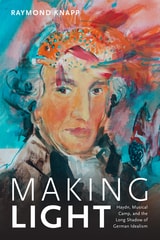
Making Light
Haydn, Musical Camp, and the Long Shadow of German IdealismRaymond Knapp
Duke University Press, 2018
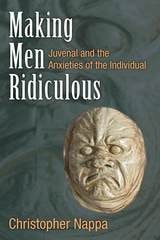
Making Men Ridiculous
Juvenal and the Anxieties of the IndividualChristopher Nappa
University of Michigan Press, 2018
In his sixteen verse satires, Juvenal presents speakers who decry the breakdown in traditional Roman values and the status of Roman men as they are confronted by upstart foreigners, devious and deviant women, class traitors, the power of the imperial household, and even the body itself. The satirist castigates vice and immorality even as he revels in describing them. This book locates Juvenal’s targets among the matrices of birth, wealth, class, gender, and ethnicity and walks carefully through a number of his most arresting vignettes in order to show not only what, but how, he satirizes. Moreover, the analysis shows that Juvenal’s portraits sometimes escape his grasp, and, as often as not, he ends up undermining the voice with which he speaks and the values he claims to hold dear. Individual chapters look at the satirist himself, rebellious bodies, disgraced aristocrats, uppity (even murderous) wives, and the necessary but corrupting power of money. The conclusion considers the endurance of both the targets and the rhetoric behind them in the modern world.
Making Men Ridiculous will interest scholars and advanced students of ancient satire, later European satire, imperial Roman culture and literature, and class, gender, and sexuality in the ancient world.
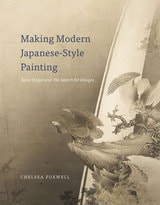
Making Modern Japanese-Style Painting
Kano Hogai and the Search for ImagesChelsea Foxwell
University of Chicago Press, 2015
Chelsea Foxwell sheds light on interlinked trends in Japanese nationalist discourse, government art policy, American and European commentary on Japanese art, and the demands of export. The seminal artist Kano Hogai (1828–88) is one telling example: originally a painter for the shogun, his art eventually evolved into novel, eerie images meant to satisfy both Japanese and Western audiences. Rather than simply absorbing Western approaches, nihonga as practiced by Hogai and others broke with pre-Meiji painting even as it worked to neutralize the rupture.
By arguing that fundamental changes to audience expectations led to the emergence of nihonga—a traditional interpretation of Japanese art for a contemporary, international market—Making Modern Japanese-Style Painting offers a fresh look at an important aspect of Japan’s development into a modern nation.
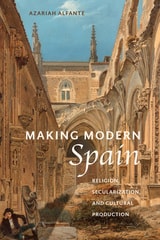
Making Modern Spain
Religion, Secularization, and Cultural ProductionAzariah Alfante
Bucknell University Press, 2024
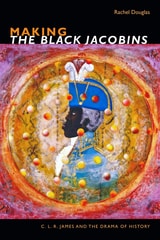
Making The Black Jacobins
C. L. R. James and the Drama of HistoryRachel Douglas
Duke University Press, 2019
Making the Past Present
David Jones, the Middle Ages and ModernismPaul Robichaud
Catholic University of America Press, 2007

Male Call
Becoming Jack LondonJonathan Auerbach
Duke University Press, 1996
Jonathan Auerbach shows that London’s personal identity was not a basis of his literary success, but rather a consequence of it. Unlike previous studies of London that are driven by the author’s biography, Male Call examines how London carefully invented a trademark “self” in order to gain access to a rapidly expanding popular magazine and book market that craved authenticity, celebrity, power, and personality. Auerbach demonstrates that only one fact of London’s life truly shaped his art: his passionate desire to become a successful author. Whether imagining himself in stories and novels as a white man on trail in the Yukon, a sled dog, a tramp, or a professor; or engaging questions of manhood and mastery in terms of work, race, politics, class, or sexuality, London created a public persona for the purpose of exploiting the conventions of the publishing world and marketplace.
Revising critical commonplaces about both Jack London’s work and the meaning of “nature” within literary naturalism and turn-of-the-century ideologies of masculinity, Auerbach’s analysis intriguingly complicates our view of London and sheds light on our own postmodern preoccupation with celebrity. Male Call will attract readers with an interest in American studies, American literature, gender studies, and cultural studies.
Mandelstam, Blok, and the Boundaries of Mythopoetic Symbolism
Stuart Goldberg
The Ohio State University Press, 2011
“Mandelstam had no teacher,” marveled Anna Akhmatova, reflecting on his early maturity and singularity. But Mandelstam himself spoke of the need and even duty to study a poet’s literary roots. So how did this consummately complex, compelling, multi-resonant poet navigate and exploit the burden of the Russian Symbolist movement from which he emerged? How did this process change and augment his poetry?
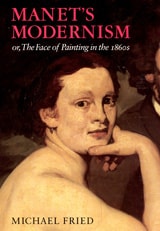
Manet's Modernism
or, The Face of Painting in the 1860sMichael Fried
University of Chicago Press, 1996
"Beautifully produced. . . . [Fried's] thought is always stimulating, if not provocative. This is an important book, which all students of modernism, in the broadest sense, will find rewarding."—Virginia Quarterly Review
"An astonishing piece of scholarship that will cause readers to rethink their understanding of Manet's influence, ambition, and achievement."—Gary Michael, Bloomsbury Review
"An audaciously brilliant book, long awaited and as essential reading for philosophers as for art historians."—Wayne Andersen, Common Knowledge
"Art history of the highest originality and distinction."—Arthur C. Danto, New York Times Book Review
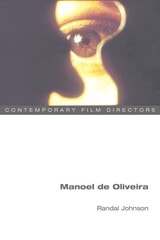
Manoel de Oliveira
John Randal Johnson
University of Illinois Press, 2006
Understanding the iconoclastic work of a lifelong cinematic pioneer
Manoel de Oliveira's eighty-five year career made him a filmmaking icon and a cultural giant in his native Portugal. A lifelong cinematic pioneer, Oliveira merged distinctive formal techniques with philosophical treatments of universal themes--frustrated love, aging, nationhood, evil, and divine grace--in films that always moved against mainstream currents.
Randal Johnson navigates Oliveira's massive feature film oeuvre. Locating the director's work within the broader context of Portuguese and European cinema, Johnson discusses historical and political influences on Oliveira's work, particularly Portugal's transformation from dictatorship to social democracy. He ranges from Oliveira's early concerns with cinematic specificity to hybrid discourses that suggest a tenuous line between film and theater on the one hand, and between fiction and documentary on the other.
A rare English-language portrait of the director, Manoel de Oliveira invites students and scholars alike to explore the work of one of the cinema's greatest and most prolific artists.
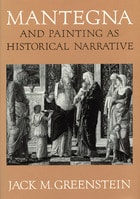
Mantegna and Painting as Historical Narrative
Jack M. Greenstein
University of Chicago Press, 1992
"Greenstein has raised the level of sophistication of the historical criticism of Renaissance painting by at least one whole notch; at the same time, he has written a book for everyone interested in problems of interpretation."—David Summers, University of Virginia
Manuel Zapata Olivella and the "Darkening" of Latin American Literature
Antonio D. Tillis
University of Missouri Press, 2005
Manuel de Falla and Modernism in Spain, 1898-1936
Carol A. Hess
University of Chicago Press, 2001
Mapping Shakespeare's World
Peter Whitfield
Bodleian Library Publishing, 2015
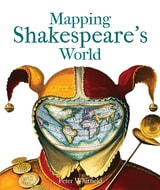
Mapping Shakespeare’s World explores these questions with surprising results. It has often been said that setting is irrelevant to Shakespeare’s plays—that, wherever they are set, their enduring appeal lies in their ability to speak to broad questions of human nature. Peter Whitfield shows that, on the contrary, many of Shakespeare’s locations were carefully chosen for their ability to convey subtle meanings an Elizabethan audience would have picked up on and understood. Through the use of paintings, drawings, contemporary maps and geographical texts, Whitfield suggests answers to such questions as where Illyria was located, why The Merry Wives of Windsor could only have taken place in Windsor, and how two utterly different comedies—The Comedy of Errors and Pericles, Prince of Tyre—both came to take place in ancient Ephesus.
Just when one might think there was nothing more to be said about Shakespeare, with Mapping Shakespeare’s World, Whitfield offers a fascinating new point of view.
Mapping the Stars
Celebrity, Metonymy, and the Networked Politics of IdentityClaire Sisco King
The Ohio State University Press, 2023
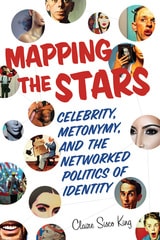
King considers three stars with popular and controversial personas: Norman Rockwell, Will Smith, and Kim Kardashian. Working in very different contexts and with very different public images, these figures nonetheless share a consistent, if not conspicuous, interest in celebrity as a construct. Offering intertextual readings of their public images across such sites as movie posters, magazines, cinema, and social media—and deploying rhetorical theories of metonymy (a linguistic device linking signifiers by shared associations)—King argues that these stars’ self-reflexive attention to the processes by which celebrity is created and constrained creates opportunities for reframing public discourse about what it means to be famous and what it means to be a person.
Marfa, Marfa
Rasquachismo and Minimalism in Far West TexasJosh T Franco
Duke University Press, 2026

Margaret Atwood
Vision and FormsEdited by Kathryn Van Spanckeren and Jan Garden Castro. Foreword by Margaret Atwood
Southern Illinois University Press, 1988
A prolific writer and versatile social critic, Canadian novelist and poet Margaret Atwood has recently published Bluebeard’s Egg (short stories), Interlunar (poetry), and The Handmaid’s Tale a critically acclaimed best-selling novel.
This international collection of essays evaluates the complete body of her work—both the acclaimed fiction and the innovative poetry. The critics represented here—American, Australian, and Canadian—address Atwood’s handling of such themes as feminism, ecology, the gothic novel, and the political relationship between Canada and the United States.
The essays on Atwood’s novels introduce the general reader to her development as a writer, as she matures from a basically subjective, poetic vision, seen in Surfacing and The Edible Woman, to an increasingly engaged, political stance, exemplified by The Handmaid’s Tale. Other essays examine Atwood’s poetry, from her transformation of the Homeric model to her criticisms of the United States’ relationship with Canada. The last two critical essays offer a unique view of Atwood through an investigation of her use of the concept of shamanism and through a presentation of eight of her vivid watercolors.
The volume ends with Atwood presenting her own views in an interview with Jan Garden Castro and in a conversation between Atwood and students at the University of Tampa, Florida.
Margaret Atwood’s Textual Assassinations
Recent Poetry and FictionEdited by Sharon Rose Wilson
The Ohio State University Press, 2005

Margaret Fuller and Her Circles
Brigitte Bailey
University of New Hampshire Press, 2013
Margaret Fuller
Transatlantic Crossings in a Revolutionary AgeEdited by Charles Capper and Cristina Giorcelli
University of Wisconsin Press, 2007
This volume is a collaboration of international scholars who, from varied fields and approaches, assess Fuller’s genius and character. Treating the last several years of Margaret Fuller’s short life, these essays offer a truly international discussion of Fuller’s unique cultural, political, and personal achievements. From the origins and articulations of Fuller’s cosmopolitanism to her examination of “the woman question,” and from her fascination with the European “other” to her candid perception of imperial America from abroad, they ponder what such an extraordinary woman meant to America, and also to Italy and Europe, during her lifetime and continuing to the present.
Marianne Moore, Elizabeth Bishop, and May Swenson
The Feminist Poetics of Self-RestraintKirstin Hotelling Zona
University of Michigan Press, 2002
In recent years critical studies of Bishop and Moore have flourished, a large percentage of them devoted to explorations of sexuality and gender. A gap is growing, however, between feminist repossessions of Moore and Bishop and recent readings of their antiessentialist poetics. On the one hand, these poets are appearing more frequently in the feminist canon, but the price of this inclusion is usually the suppression of their strategies of self-restraint. While Zona questions the poetic privileging of self-expression, she establishes contiguity between feminist poetry and developments in American poetry at large. In doing so she asserts the centrality of feminist poetry within discussions of contemporary American poetry, thereby challenging the common perception of feminist poetry as an "alternative" (which often means auxiliary) genre.
Kirstin Hotelling Zona is Assistant Professor of Poetry and Poetics, Illinois State University.
Marie de France and the Poetics of Memory
Logan E. Whalen
Catholic University of America Press, 2008
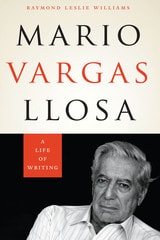
Mario Vargas Llosa
A Life of WritingBy Raymond Leslie Williams
University of Texas Press, 2014
Awarded the Nobel Prize in 2010 at the age of seventy-four, Peruvian writer Mario Vargas Llosa has held pivotal roles in the evolution and revolutions of modern Latin American literature. Perhaps surprisingly, no complete history of Vargas Llosa’s works, placed in biographical and historical context, has been published—until now. A masterwork from one of America’s most revered scholars of Latin American fiction, Mario Vargas Llosa: A Life of Writing provides a critical overview of Vargas Llosa’s numerous novels while reinvigorating debates regarding conventional interpretations of the work.
Weaving analysis with discussions of the writer’s political commentary, Raymond Leslie Williams traces the author’s youthful identity as a leftist student of the 1960s to a repudiation of some of his earlier ideas beginning in the 1980s. Providing a unique perspective on the complexity, nuance, and scope of Vargas Llosa’s lauded early novels and on his passionate support of indigenous populations in his homeland, Williams then turns his eye to the recent works, which serve as a bridge between the legacies of the Boom and the diverse array of contemporary Latin American fiction writers at work today. In addition, Williams provides a detailed description of Vargas Llosa’s traumatic childhood and its impact on him—seen particularly in his lifelong disdain for authority figures—as well as of the authors who influenced his approach, from Faulkner to Flaubert. Culminating in reflections drawn from Williams’s formal interviews and casual conversations with the author at key phases of both men’s careers, this is a landmark publication that will spark new lines of inquiry into an intricate body of work.
Mario Vargas Llosa
Public Intellectual in Neoliberal Latin AmericaJuan E. De Castro
University of Arizona Press, 2011
The idea of a sitting president debating a novelist may seem surprising to readers unfamiliar with Latin American politics, but Vargas Llosa has enjoyed considerable influence in the political arena, thanks in no small part to his run for the Peruvian presidency in 1990. Though he was awarded the Nobel Prize in 2010 for his literary achievements, he is as well known in the Spanish-speaking world for his political columns as he is for his novels. In his widely syndicated political pieces, Vargas Llosa asserts a position he calls “liberal” in the classical sense of affirming the importance of a free market and individual rights, though as De Castro argues, he has often aligned himself with groups that emphasize the former at the expense of the latter.
What makes Vargas Llosa’s rise to political prominence compelling is “not only that he is still a vibrantly active writer, but that he was at the time of the beginning of his rise to literary fame, and throughout the 1960s, a staunch defender of the Cuban Revolution.” While his early literary output seemed to proclaim an allegiance with the Left, Vargas Llosa was soon to take a right turn that De Castro argues was anticipatory and representative of the Latin American embrace of the free market in the 1990s. Understanding Vargas Llosa’s political thought is thus of more than biographical interest. It is a key to understanding the social and cultural shifts that have taken place not only in Peru but throughout Latin America.
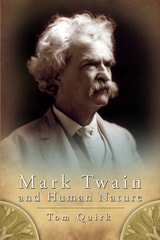
Mark Twain and Human Nature
Tom Quirk
University of Missouri Press, 2007
Mark Twain once claimed that he could read human character as well as he could read the Mississippi River, and he studied his fellow humans with the same devoted attention. In both his fiction and his nonfiction, he was disposed to dramatize how the human creature acts in a given environment—and to understand why.
Now one of America’s preeminent Twain scholars takes a closer look at this icon’s abiding interest in his fellow creatures. In seeking to account for how Twain might have reasonably believed the things he said he believed, Tom Quirk has interwoven the author’s inner life with his writings to produce a meditation on how Twain’s understanding of human nature evolved and deepened, and to show that this was one of the central preoccupations of his life.
Quirk charts the ways in which this humorist and occasional philosopher contemplated the subject of human nature from early adulthood until the end of his life, revealing how his outlook changed over the years. His travels, his readings in history and science, his political and social commitments, and his own pragmatic testing of human nature in his writing contributed to Twain’s mature view of his kind. Quirk establishes the social and scientific contexts that clarify Twain’s thinking, and he considers not only Twain’s stated intentions about his purposes in his published works but also his ad hoc remarks about the human condition.
Viewing both major and minor works through the lens of Twain’s shifting attitude, Quirk provides refreshing new perspectives on the master’s oeuvre. He offers a detailed look at the travel writings, including The Innocents Abroad and Following the Equator, and the novels, including The Adventures of Tom Sawyer, Adventures of Huckleberry Finn, and Pudd’nhead Wilson, as well as an important review of works from Twain’s last decade, including fantasies centering on man’s insignificance in Creation, works preoccupied with isolation—notably No. 44,The Mysterious Stranger and “Eve’s Diary”—and polemical writings such as What Is Man?
Comprising the well-seasoned reflections of a mature scholar, this persuasive and eminently readable study comes to terms with the life-shaping ideas and attitudes of one of America’s best-loved writers. Mark Twain and Human Nature offers readers a better understanding of Twain’s intellect as it enriches our understanding of his craft and his ineluctable humor.
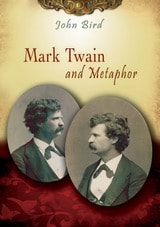
Mark Twain and Metaphor
John Bird
University of Missouri Press, 2007
Metaphor theory, observes John Bird, is like Mark Twain: both seem simple upon first introduction. Now, in the most complete study to date of Twain’s use of figurative language, a veteran Twain scholar tackles the core of his writing and explores it with theoretical approaches that have rarely been applied to Twain, providing new insights into how he imagined his world—and the singular ways in which he expressed himself.
From “The Jumping Frog” to the late dream narratives, Bird considers Twain’s metaphoric construction over his complete career and especially sheds new light on his central texts: Roughing It; The Adventures of Tom Sawyer; Adventures of Huckleberry Finn; A Connecticut Yankee in King Arthur’s Court; Pudd’nhead Wilson; and No. 44,The Mysterious Stranger. He reconsiders “Old Times on the Mississippi” as the most purely metaphorical of Twain’s writings, goes on to look at how Twain used metaphor and talked about it in a variety of works and genres, and even argues that Clemens’s pseudonym is not so much an alter ego as a metaphorized self.
By offering insight into how Twain handled figurative language during the composing process, Bird reveals not only hidden facets of his artistry but also new aspects of works that we think we know well—including some entirely new ideas regarding Huck Finn that draw on the recent discovery of the first half of the manuscript. In addition to dealing with issues currently central to Twain studies, such as race and gender, he also links metaphor to humor and dream theory to further illuminate topics central to his work.
More than a study of Twain’s language, the book delves into the psychological aspects of metaphor to reveal the writer’s attitudes and thoughts, showing how using metaphor as a guide to Twain reveals much about his composition process. Applying the insights of metaphor theorists such as Roman Jakobson and Colin M. Turbayne, Bird offers readers not only new insights into Twain but also an introduction to this interdisciplinary field.
In lively prose, Mark Twain and Metaphor provides a vital way to read Twain’s entire corpus, allowing readers to better appreciate his style, humor, and obsession with dreams. It opens new ground and makes old ground fresh again, offering ways to see and resee this essential American writer.
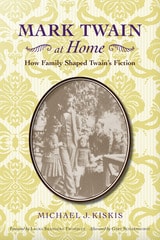
Mark Twain at Home
How Family Shaped Twain’s FictionMichael J. Kiskis, Foreword by Laura Skandera Trombley, Afterword by Gary Scharnhorst
University of Alabama Press, 2016
Mark Twain was the child of a loveless marriage and a homelife over which hovered the constant specter of violence. Informed by his difficult childhood, orthodox readings of The Adventures of Tom Sawyer and Adventures of Huckleberry Finn frame these canonical literary figures as nostalgic—autobiographical fables of heroic individualists slipping the bonds of domestic life.
Kiskis, however, presents a wealth of biographical details about Samuel Clemens and his family that reinterpret Twain’s work as a robust affirmation of domestic spheres of life. Among Kiskis’s themes are that, as the nineteenth century witnessed high rates of orphanhood and childhood mortality, Clemens’s work often depicted unmoored children seeking not escape from home but rather seeking the redemption and safety available only in familial structures. Similarly, Mark Twain at Home demonstrates that, following the birth of his first daughter, Twain began to exhibit in his writing an anxiety with social ills, notably those that affected children.
In vigorous and accessible descriptions of Twain’s life as it became reflected in his prose, Kiskis offers a compelling and fresh understanding of this work of this iconic American author.
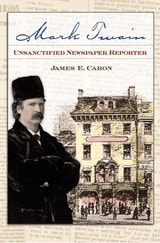
Mark Twain, Unsanctified Newspaper Reporter
James E. Caron
University of Missouri Press, 2008
Before Mark Twain became a national celebrity with his best-selling The Innocents Abroad, he was just another struggling writer perfecting his craft—but already “playin’ hell” with the world. In the first book in more than fifty years to examine the initial phase of Samuel Clemens’s writing career, James Caron draws on contemporary scholarship and his own careful readings to offer a fresh and comprehensive perspective on those early years—and to challenge many long-standing views of Mark Twain’s place in the tradition of American humor.
Tracing the arc of Clemens’s career from self-described “unsanctified newspaper reporter” to national author between 1862 and 1867, Caron reexamines the early and largely neglected writings—especially the travel letters from Hawaii and the letters chronicling Clemens’s trip from California to New York City. Caron connects those sets of letters with comic materials Clemens had already published, drawing on all known items from this first phase of his career—even the virtually forgotten pieces from the San Francisco Morning Call in 1864—to reveal how Mark Twain’s humor was shaped by the sociocultural context and how it catered to his audience’s sensibilities while unpredictably transgressing its standards.
Caron reveals how Sam Clemens’s contemporaries, notably Charles Webb, provided important comic models, and he shows how Clemens not only adjusted to but also challenged the guidelines of the newspapers and magazines for which he wrote, evolving as a comic writer who transmuted personal circumstances into literary art. Plumbing Mark Twain’s cultural significance, Caron draws on anthropological insights from Victor Turner and others to compare the performative aspects of Clemens’s early work to the role of ritual clowns in traditional societies
Brimming with fresh insights into such benchmarks as “Our Fellow Savages of the Sandwich Islands” and “Jim Smiley and His Jumping Frog,” this book is a gracefully written work that reflects both patient research and considered judgment to chart the development of an iconic American talent. Mark Twain, Unsanctified Newspaper Reporter should be required reading for all serious scholars of his work, as well as for anyone interested in the interplay between artistic creativity and the literary marketplace.
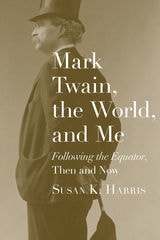
Mark Twain, the World, and Me
"Following the Equator," Then and NowSusan K. Harris
University of Alabama Press, 2020
A scholar accompanies Twain on his journey around the world
In Mark Twain, the World, and Me: “Following the Equator,” Then and Now, Susan K. Harris follows Twain’s last lecture tour as he wound his way through the British Empire in 1895–1896. Deftly blending history, biography, literary criticism, reportage, and travel memoir, Harris gives readers a unique take on one of America’s most widely studied writers.
Structured as a series of interlocking essays written in the first person, this engaging volume draws on Twain’s insights into the histories and cultures of Australia, India, and South Africa and weaves them into timely reflections on the legacies of those countries today. Harris offers meditations on what Twain’s travels mean for her as a scholar, a white woman, a Jewish American, a wife, and a mother. By treating topics as varied as colonial rule, the clash between indigenous and settler communities, racial and sexual “inbetweenness,” and species decimation, Harris reveals how the world we know grew out of the colonial world Twain encountered. Her essays explore issues of identity that still trouble us today: respecting race and gender, preserving nature, honoring indigenous peoples, and respecting religious differences.
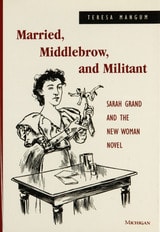
Married, Middlebrow, and Militant
Sarah Grand and the New Woman NovelTeresa Mangum
University of Michigan Press, 1998

Marsden Hartley
Race, Region, and NationDonna M. Cassidy
University of New Hampshire Press, 2005
Cassidy, sensitive to the psychological and gender analysis traditionally central to interpretations of Hartley, becomes the first scholar to reassess his late work in light of contemporary American perceptions of race, ethnicity, place, and history. This remarkable new book resonates not only as a seminal Hartley study and a complex art and cultural period history, but as a superb example of applied early twentieth-century American intellectual history informed by an impressive command of primary and secondary interdisciplinary literature. Numerous and rich illustrations, as well as transcriptions of several key essays by Hartley, some never before published, including "This Country of Maine" (1937–38), round out this insightful, nuanced, and revolutionary treatment. Donna M. Cassidy's Marsden Hartley will engage general readers as well as scholars and students.
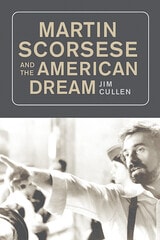
Martin Scorsese and the American Dream
Jim Cullen
Rutgers University Press, 2021
This book is the first study of Scorsese’s profound ambivalence toward the American Dream, the ways it drives some men and women to aspire to greatness, but leaves others seduced and abandoned. Showing that Scorsese understands the American dream in terms of a tension between provincialism and cosmopolitanism, Jim Cullen offers a new lens through which to view such seemingly atypical Scorsese films as The Age of Innocence, Hugo, and Kundun. Fast-paced, instructive, and resonant, Martin Scorsese and the American Dream illuminates an important dimension of our national life and how a great artist has brought it into focus.
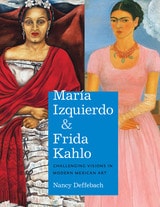
María Izquierdo and Frida Kahlo
Challenging Visions in Modern Mexican ArtBy Nancy Deffebach
University of Texas Press, 2015
María Izquierdo (1902–1955) and Frida Kahlo (1907–1954) were the first two Mexican women artists to achieve international recognition. During the height of the Mexican muralist movement, they established successful careers as easel painters and created work that has become an integral part of Mexican modernism. Although the iconic Kahlo is now more famous, the two artists had comparable reputations during their lives. Both were regularly included in major exhibitions of Mexican art, and they were invariably the only women chosen for the most important professional activities and honors.
In a deeply informed study that prioritizes critical analysis over biographical interpretation, Nancy Deffebach places Kahlo’s and Izquierdo’s oeuvres in their cultural context, examining the ways in which the artists participated in the national and artistic discourses of postrevolutionary Mexico. Through iconographic analysis of paintings and themes within each artist’s oeuvre, Deffebach discusses how the artists engaged intellectually with the issues and ideas of their era, especially Mexican national identity and the role of women in society. In a time when Mexican artistic and national discourses associated the nation with masculinity, Izquierdo and Kahlo created images of women that deconstructed gender roles, critiqued the status quo, and presented more empowering alternatives for women. Deffebach demonstrates that, paradoxically, Kahlo and Izquierdo became the most successful Mexican women artists of the modernist period while most directly challenging the prevailing ideas about gender and what constitutes important art.
Masculine Births
Milton, Women, and the LawLynne Greenberg
Northwestern University Press, 2026
Examining the legal lives of early modern women through Milton’s literary works
In his History of Britain, John Milton writes, “Laws are Masculin Births . . . nothing [is] more awry from the Law of God and Nature, then that a Woman should give Laws to Men.” In this interdisciplinary study, Lynne Greenberg explores the normative and nonnormative legal lives of early modern women as depicted in Milton’s works—unmarried and married women, mothers, heiresses, widows, and queens—providing cogent overviews of the laws of multiple jurisdictions to offer critical context for each case study. Greenberg explores a wide range of legal-juridical materials and previously unexplored archival and private family documents. As she demonstrates, while Milton’s narratives are at times enmeshed in existing jural paradigms, they also offer resistant responses to marital, custodial, property, inheritance, and criminal laws and even imagine alternative jural paradigms for women. Through Masculine Births: Milton, Women and the Law, Greenberg deftly reveals that Milton both reproduces seventeenth-century legal constructs and gives birth to laws that move us toward greater equality for women.
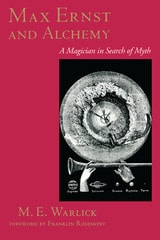
Max Ernst and Alchemy
A Magician in Search of MythBy M. E. Warlick
University of Texas Press, 2001
Surrealist artist Max Ernst defined collage as the "alchemy of the visual image." Students of his work have often dismissed this comment as simply a metaphor for the transformative power of using found images in a new context. Taking a wholly different perspective on Ernst and alchemy, however, M. E. Warlick persuasively demonstrates that the artist had a profound and abiding interest in alchemical philosophy and often used alchemical symbolism in works created throughout his career.
A revival of interest in alchemy swept the artistic, psychoanalytic, historical, and scientific circles of the late nineteenth and early twentieth centuries, and Warlick sets Ernst's work squarely within this movement. Looking at both his art (many of the works she discusses are reproduced in the book) and his writings, she reveals how thoroughly alchemical philosophy and symbolism pervade his early Dadaist experiments, his foundational work in surrealism, and his many collages and paintings of women and landscapes, whose images exemplify the alchemical fusing of opposites. This pioneering research adds an essential key to understanding the multilayered complexity of Ernst's works, as it affirms his standing as one of Germany's most significant artists of the twentieth century.
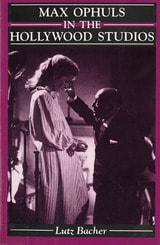
Max Ophuls in the Hollywood Studios
Bacher, Lutz
Rutgers University Press, 1996
Max Ophuls, who is considered one of the greatest film directors of all time, has long been seen as an “auteur”––the artist in complete control of his work. Lutz Bacher’s examination of his American career gives us a unique perspective on the workings of the Hollywood system and the struggle of a visionary to function within it. He thus establishes clear connections between the production contexts of Ophuls' American films and their idiosyncratic style.
Drawing on documents in many archives and on interviews with more than sixty of Ophuls' contemporaries, Bacher traces the European director's struggle to find a niche in the U.S. film industry. He describes how Ophuls ran the gamut from ghost writing to substitute directing, to a debilitating association with Preston Sturges and Howard Hughes, to making four films––Letter from an Unknown Woman and Caught among them––in thirty months, and then returning to Europe with a runaway production that was to have starred Greta Garbo. Throughout, Bacher demonstrates that Ophuls' bending of conventional Hollywood methods to his own will through compromise and subversion allowed him to achieve a style that was both uniquely American and a point of departure for his later work. A rare synthesis of production history, stylistic analysis, and biography, this book is essential reading for serious film scholars and fans of the director’s work.
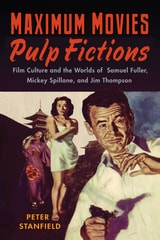
Maximum Movies—Pulp Fictions
Film Culture and the Worlds of Samuel Fuller, Mickey Spillane, and Jim ThompsonStanfield, Peter
Rutgers University Press, 2011
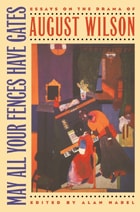
May All Your Fences Have Gates
Essyas on the Drama of August WilsonAlan Nadel
University of Iowa Press, 1993
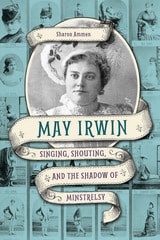
May Irwin
Singing, Shouting, and the Shadow of MinstrelsySharon Ammen
University of Illinois Press, 2017
Sharon Ammen's in-depth study traces Irwin's hurly-burly life. Irwin gained fame when, layering aspects of minstrelsy over ragtime, she popularized a racist "Negro song" genre. Ammen examines this forgotten music, the society it both reflected and entertained, and the ways white and black audiences received Irwin's performances. She also delves into Irwin's hands-on management of her image and career, revealing how Irwin carefully built a public persona as a nurturing housewife whose maternal skills and performing acumen reinforced one another. Irwin's act, soaked in racist song and humor, built a fortune she never relinquished. Yet her career's legacy led to a posthumous obscurity as the nation that once adored her evolved and changed.
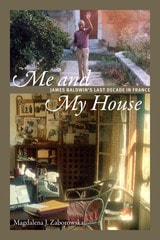
Me and My House
James Baldwin's Last Decade in FranceMagdalena J. Zaborowska
Duke University Press, 2018
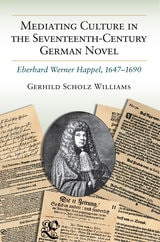
Mediating Culture in the Seventeenth-Century German Novel
Eberhard Werner Happel, 1647-1690Gerhild Scholz Williams
University of Michigan Press, 2014
Happel primarily lived and worked in the vigorous port city of Hamburg, which was a “media center” in terms of the access it offered to a wide library of books in public and private collections. Hamburg’s port status meant it buzzed with news and information, and Happel drew on this flow of data in his novels. His books deal with many topics of current interest—national identity formation, gender and sexualities, Western European encounters with neighbors to the East, confrontations with non-European and non-Western powers and cultures—and they feature multiple media, including news reports, news collections, and travel writings. As a result, Happel’s use of contemporary source material in his novels feeds our current interest in the impact of the production of knowledge on seventeenth-century narrative. Mediating Culture in the Seventeenth-Century German Novel explores the narrative wealth and multiversity of Happel’s work, examines Happel’s novels as illustrative of seventeenth-century novel writing in Germany, and investigates the synergistic relationship in Happel’s writings between the booming print media industry and the evolution of the German novel.