Results by title
436 books match the query 'Disability' and 25 start with m
Mad at School
Rhetorics of Mental Disability and Academic LifeMargaret Price
University of Michigan Press, 2011
"A very important study that will appeal to a disability studies audience as well as scholars in social movements, social justice, critical pedagogy, literacy education, professional development for disability and learning specialists in access centers and student counseling centers, as well as the broader domains of sociology and education."
---Melanie Panitch, Ryerson University
"Ableism is alive and well in higher education. We do not know how to abandon the myth of the 'pure (ivory) tower that props up and is propped up by ableist ideology.' . . . Mad at School is thoroughly researched and pathbreaking. . . . The author's presentation of her own experience with mental illness is woven throughout the text with candor and eloquence."
---Linda Ware, State University of New York at Geneseo
Mad at School explores the contested boundaries between disability, illness, and mental illness in the setting of U.S. higher education. Much of the research and teaching within disability studies assumes a disabled body but a rational and energetic (an "agile") mind. In Mad at School, scholar and disabilities activist Margaret Price asks: How might our education practices change if we understood disability to incorporate the disabled mind?
Mental disability (more often called "mental illness") is a topic of fast-growing interest in all spheres of American culture, including popular, governmental, aesthetic, and academic. Mad at School is a close study of the ways that mental disabilities impact academic culture. Investigating spaces including classrooms, faculty meeting rooms, and job searches, Price challenges her readers to reconsider long-held values of academic life, including productivity, participation, security, and independence. Ultimately, she argues that academic discourse both produces and is produced by a tacitly privileged "able mind," and that U.S. higher education would benefit from practices that create a more accessible academic world.
Mad at School is the first book to use a disability-studies perspective to focus specifically on the ways that mental disabilities impact academic culture at institutions of higher education. Individual chapters examine the language used to denote mental disability; the role of "participation" and "presence" in student learning; the role of "collegiality" in faculty work; the controversy over "security" and free speech that has arisen in the wake of recent school shootings; and the marginalized status of independent scholars with mental disabilities.
Margaret Price is Associate Professor of English at Spelman College.
Made to Hear
Cochlear Implants and Raising Deaf ChildrenLaura Mauldin
University of Minnesota Press, 2016
A mother whose child has had a cochlear implant tells Laura Mauldin why enrollment in the sign language program at her daughter’s school is plummeting: “The majority of parents want their kids to talk.” Some parents, however, feel very differently, because “curing” deafness with cochlear implants is uncertain, difficult, and freighted with judgment about what is normal, acceptable, and right. Made to Hear sensitively and thoroughly considers the structure and culture of the systems we have built to make deaf children hear.
Based on accounts of and interviews with families who adopt the cochlear implant for their deaf children, this book describes the experiences of mothers as they navigate the health care system, their interactions with the professionals who work with them, and the influence of neuroscience on the process. Though Mauldin explains the politics surrounding the issue, her focus is not on the controversy of whether to have a cochlear implant but on the long-term, multiyear undertaking of implantation. Her study provides a nuanced view of a social context in which science, technology, and medicine are trusted to vanquish disability—and in which mothers are expected to use these tools. Made to Hear reveals that implantation has the central goal of controlling the development of the deaf child’s brain by boosting synapses for spoken language and inhibiting those for sign language, placing the politics of neuroscience front and center.
Examining the consequences of cochlear implant technology for professionals and parents of deaf children, Made to Hear shows how certain neuroscientific claims about neuroplasticity, deafness, and language are deployed to encourage compliance with medical technology.
Making Down Syndrome
Motherhood and Kinship Futures in Urban JordanChristine Sargent
Rutgers University Press, 2026
Making Down Syndrome: Motherhood and Kinship Futures in Urban Jordan draws on ethnographic research conducted primarily in Jordan’s capital city of Amman to explore how the label and identity of Down syndrome is gaining increasing cohesiveness. Focused on the experiences of mothers, who serve as an entry point for understanding broader family dynamics and choices, the book argues that practices and ideologies of care play a central role in making Down syndrome’s embodied and political realities. They do so through the momentum of kinship futures, or futures imagined through the prism of kinship roles and relations, which shape how families organize and distribute care between and beyond kinship networks and under conditions of economic and political uncertainty. By approaching everyday life in Jordan through the lens of disability, Making Down Syndrome offers new insights into how people navigate structures of family, gender, power, inequality, and precarity, all while trying to maintain hope for and cultivate better futures.

Making Life Work
Freedom and Disability in a Community Group HomeJack Levinson
University of Minnesota Press, 2010

Making Security Social
Disability, Insurance, and the Birth of the Social Entitlement State in GermanyGreg Eghigian
University of Michigan Press, 2000
Making Their Days Happen
Paid Personal Assistance Services Supporting People with Disability Living in Their Homes and CommunitiesLisa I. Iezzoni
Temple University Press, 2022
Most Americans—even those with significant disability—want to live in their homes and communities. Unpaid family members or friends often work as “informal” caregivers, helping those who need assistance— and many feel they have no option but to serve. In contrast, paid personal assistance services workers (PAS) provide a lifeline to those consumers with complex needs and limited social networks. However, there is a crisis looming in the increasing needs for paid PAS and the limited available PAS workforce.
Making Their Days Happen explores disability, health, and civil rights, along with relevant federal and state labor policies related to personal assistance services. Lisa Iezzoni addresses the legal context of paid PAS as well as financing mechanisms for obtaining home-based personal assistance. She also draws upon interviews she conducted with paid PAS consumers and PAS workers to explore PAS experiences and their perspectives about their work.
Offering recommendations for improving future experiences of PAS consumers and providers, Iezzoni emphasizes that people with disabilities want to be a part of society, and PAS workers who do this low-wage work find satisfaction in helping them achieve their goals.
Mammographies
The Cultural Discourses of Breast Cancer NarrativesMary K. DeShazer
University of Michigan Press, 2015
While breast cancer continues to affect the lives of millions, contemporary writers and artists have responded to the ravages of the disease in creative expression. Mary K. DeShazer’s book looks specifically at breast cancer memoirs and photographic narratives, a category she refers to as mammographies, signifying both the imaging technology by which most Western women discover they have this disease and the documentary imperatives that drive their written and visual accounts of it. Mammographies argues that breast cancer narratives of the past ten years differ from their predecessors in their bold address of previously neglected topics such as the link between cancer and environmental carcinogens, the ethics and efficacy of genetic testing and prophylactic mastectomy, and the shifting politics of prosthesis and reconstruction.
Mammographies is distinctive among studies of contemporary illness narratives in its exclusive focus on breast cancer, its analysis of both memoirs and photographic texts, its attention to hybrid and collaborative narratives, and its emphasis on ecological, genetic, transnational, queer, and anti-pink discourses. DeShazer’s methodology—best characterized as literary critical, feminist, and interdisciplinary—includes detailed interpretation of the narrative strategies, thematic contours, and visual imagery of a wide range of contemporary breast cancer memoirs and photographic anthologies. The author explores the ways in which the narratives constitute a distinctive testimonial and memorial tradition, a claim supported by close readings and theoretical analysis that demonstrates how these narratives question hegemonic cultural discourses, empower reader-viewers as empathic witnesses, and provide communal sites for mourning, resisting, and remembering.
Managing Their Own Affairs
The Australian Deaf Community in the 1920s and 1930sBreda Carty
Gallaudet University Press, 2017
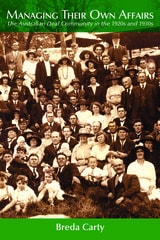
During this time, deaf Australians aspired to manage their own affairs. They enjoyed some success by establishing “breakaways” from the Deaf Societies, and they also established an independent national organization, which was contested and ultimately suppressed by the Deaf Societies. These developments were influenced by wider social movements in Australian society, such as the mobilization of minority groups in their push for autonomy and equal rights. Although most of the breakaway Deaf organizations did not survive beyond the 1930s, they significantly affected the power structures and relationships between deaf and hearing people in Australia. The Australian Deaf community’s attempts to organize independently during these years have been largely erased from collective memory, making Carty’s examination a particularly important and necessary addition to the historical literature.
Meaning Of A Disability
The Lived Experience of ParalysisAlbert Robillard
Temple University Press, 1999
With his loss of speech, Robillard was forced to communicate through a lip-reading system developed by his wife and student assistants. Restricted by this form of communication and his paralysis, he soon learned the frustrations of making his meaning known. Hospital nurses wrongly anticipated his words. Those who translated for him inevitably distorted his meaning. Most of all, the casual pace of conversational give-and-take was disrupted. Old friends would leave before Robillard could provide the expected interactional response.
Finding himself isolated due to his lack of both mobility and vocalization, Robillard threw himself into his academic work and began to develop settings and methods where he could satisfactorily interact with others. A researcher and writer experienced in describing the bodily and verbal methods used to coordinate and construct the most ordinary of social forms, Robillard joins in this book both his years of sociological training and his time with illness to talk with moving and illuminating analysis about a broad range of matters. Moving gracefully from examinations of narratives about disability and illness, the stigmatizing things that healthcare providers unwittingly say to their patients, and communication problems in the intensive care unit, to more personal reflections on anger, isolation, and stories of tragedy, Robillard also discusses disability in the workplace and such seemingly simple topics as computers and vacations. Meaning of a Disability is the personal story of a highly trained observer forced to confront simultaneously the limits of the disabled person's social world and the unspoken assumptions about meaningful interaction -- as he struggles with the daily difficulties of maintaining his identity.
Meaning of a Disability will interest a wide audience, including healthcare professionals, disabled people, and caretakers as well as academics studying ethnomethodology, health and illness, conversation, symbolic interaction, storytelling, and most aspects of lived experience.
Medical Entanglements
Rethinking Feminist Debates about HealthcareKristina Gupta
Rutgers University Press, 2020
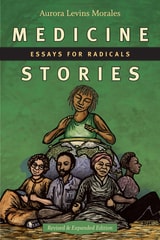
Medicine Stories
Essays for RadicalsAurora Levins Morales
Duke University Press, 2019

Meet Shakur’s Family
A Shakur Series Board BookAndrea Sonnier
Gallaudet University Press, 2024
About the Shakur Series:
The Shakur Series features Black deaf characters who use American Sign Language, offering a unique and inclusive reading experience for children. The vibrant illustrations showcase a signing family and will captivate young minds, while the engaging text reinforces learning. These charming board books contain positive messages and practical lessons, support early childhood development, and encourage children to explore the world with Shakur. This series honors and celebrates Black deaf experiences through everyday adventures that will resonate with young children and their families.
Published in partnership with The Laurent Clerc National Deaf Education Center.
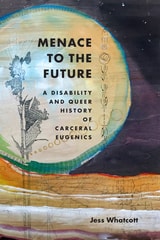
Menace to the Future
A Disability and Queer History of Carceral EugenicsJess Whatcott
Duke University Press, 2024
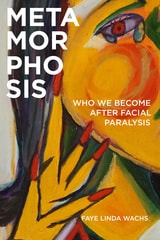
Metamorphosis
Who We Become after Facial ParalysisFaye Linda Wachs
Rutgers University Press, 2023
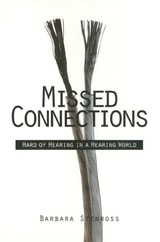
Missed Connections
Barbara Stenross
Temple University Press, 1999
Based on seven years of research, Stenross's book tells of how -- as she sought information and solutions to help her hard-of-hearing father -- she came to join a community group called Village Self Help for Hard of Hearing People. Taking us along to group meetings and into the homes of members, Stenross shows us -- through the personal accounts of these individuals -- the exhaustion that comes from constantly straining to listen, the frustration of missing critical comments or the or the punchlines of jokes, and the pain that hard-of-hearing family members experience when loved ones accuse them of hearing "when they want to." Full of scenes, dialogues, and conversations, Missed Connections also discusses such practical issues as how people with impaired hearing can continues to use the phone, how assistive technologies can help in public and private, why hearing aids can't always do enough, and how bluffing and silence can hurt more than help. Understanding that when one family member is hard of hearing, the whole family can suffer from "missed connections," Stenross offers in this book a useful family resource with a broad range of practical guidance.
With chapters on belonging and acceptance, do's and don'ts in public, lip-reading, hearing aids, and television, Missed Connections will interest a range of readers including deaf and hard-of-hearing people -- as well as their families, teachers, friends, employers, and counselors -- healthcare professionals, scholars, and others interested in the experience of and solutions for disability and hearing loss.
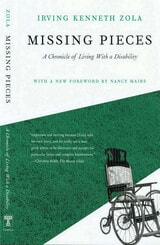
Missing Pieces
A Chronicle Of Living With A DisabilityKenneth Zola
Temple University Press, 2003

Money, Marriage, and Madness
The Life of Anna OttKim E. Nielsen
University of Illinois Press, 2020
Kim E. Nielsen explores a life at once irregular and unexceptional. Historical and institutional structures, like her whiteness and laws that liberalized divorce and women's ability to control their property, opened up uncommon possibilities for Ott. Other structures, from domestic violence in the home to rampant sexism and ableism outside of it, remained a part of even affluent women's lives. Money, Marriage, and Madness tells a forgotten story of how the legal and medical cultures of the time shaped one woman—and what her life tells us about power and society in nineteenth century America.
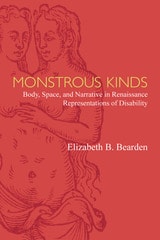
Monstrous Kinds
Body, Space, and Narrative in Renaissance Representations of DisabilityElizabeth B. Bearden
University of Michigan Press, 2019

Mrs. Sigourney of Hartford
Poems and Prose on the Early American Deaf CommunityEdna Edith Sayers
Gallaudet University Press, 2013
Lydia Huntley was born in 1791 in Norwich, CT, the only child of a poor Revolutionary war veteran. But her father’s employer, a wealthy widow, gave young Lydia the run of her library and later sent her for visits to Hartford, CT. After teaching at her own school for several years in Norwich, Lydia returned to Hartford to head a class of 15 girls from the best families. Among her students was Alice Cogswell, a deaf girl soon to be famous as a student of Thomas Hopkins Gallaudet and Laurent Clerc.
Lydia’s inspiration came from a deep commitment to the education of girls and also for African American, American Indian, and deaf children. She left teaching to marry Charles Sigourney, then turned to writing to support her family, publishing 56 books, 2,000 magazine articles, and popular poetry. Lydia Sigourney never abandoned her passion for deaf education, remaining a supporter of Gallaudet’s school for the deaf until her death. Yet, her contributions to deaf education and her writing have been forgotten until now.
All of Lydia Sigourney’s of Lydia Sigourney’s work on the nascent Deaf community is presented in this new volume. Her writing intertwines her mastery of the sentimentalism form popular in her day with her sharp insights on the best ways to educate deaf children. In the process, Mrs. Sigourney of Hartford reestablishes her rightful place in history.
Music at the Margins of Sense
Jessica A. Holmes
University of Michigan Press, 2026
In Music at the Margins of Sense, Jessica A. Holmes contests prevailing misconceptions associated with deafness and hearing in Western music by turning to the musical experiences of deaf, hard of hearing, and hearing disabled musicians in order to impart a multisensory, multimodal conception of music and musicianship. Through a range of examples drawn from music history, popular music, recent film, and popular science, Holmes reveals that “deafness” is mistakenly understood as a state of total silence and heightened tactile sensation, a stigmatizing trope she calls the “figure of deafness.”
Holmes explores music-making spanning auditory, visual-spatial, vibrotactile, and non-sonorous modalities, including the creative practice of Christine Sun Kim, all-deaf electronic dance music raves, the musical experiences of hearing aid users, and music and musical instruments devised to mitigate tinnitus and hyperacusis. By examining the cultural production of “natural” hearing in the design, branding, and musical programming of digital hearing aids, Holmes offers a reappraisal of hearing that defies naturalized perceptual processes and auditory thresholds, the idealization of sonic fidelity, and biologically driven conceptions of musicality. Music at the Margins of Sense champions an understanding of musicianship that embraces the lived experience of disability as a vital locus of musical creativity and expertise.
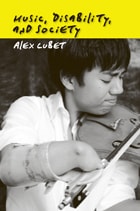
Music, Disability, and Society
Authored by Alex Lubet
Temple University Press, 2010
Musical talent in Western culture is regarded as an extraordinary combination of technical proficiency and interpretative sensitivity. In Music, Disability, and Society, Alex Lubet challenges the rigid view of technical skill and writes about music in relation to disability studies. He addresses the ways in which people with disabilities are denied the opportunity to participate in music.
Elaborating on the theory of "social confluence," Lubet provides a variety of encounters between disability and music to observe radical transformations of identity. Considering hand-injured and one-handed pianists; the impairments of jazz luminaries Django Reinhardt, Horace Parlan, and "Little" Jimmy Scott; and the "Blind Orchestra" of Cairo, he shows how the cultural world of classical music contrasts sharply with that of jazz and how musicality itself is regarded a disability in some religious contexts. Music, Disability, and Society also explains how language difference can become a disability for Asian students in American schools of music, limiting their education and careers.
Lubet offers pungent criticism of the biases in music education and the music profession, going so far as to say that culture disables some performers by adhering to rigid notions of what a musician must look like, how music must be played, who may play it, and what (if any) is the legitimate place of music in society. In Music, Disability, and Society, he convincingly argues that where music is concerned, disability is a matter of culture, not physical impairment.
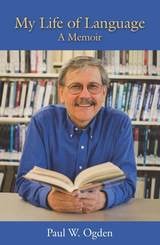
My Life of Language
A Memoirogden
Gallaudet University Press, 2017
Paul W. Ogden has dedicated his life to educating young deaf and hard of hearing people and raising awareness of what it means to be deaf in a hearing world. He has taught and mentored a generation of teachers, and his classic volume, The Silent Garden, has served as a guide for parents and educators for over thirty years. Now he tells his personal story of challenges faced and lessons learned, revealing that the critical, guiding factors for him have always been language and successful communication.
Born in a time when many deaf children had no access to language, Paul learned spoken and written language skills at a young age through the painstaking efforts of his mother. His tight-knit family, which included one deaf and two hearing older brothers, facilitated open and constant communication using a variety of methods. His father was a pastor who was involved in the civil rights movement. He struggled with depression, an illness that would take the life of one of Paul’s brothers. As a student at a residential deaf school where the use of American Sign Language (ASL) was suppressed, Paul continued to build on the speech and lipreading skills he had learned at home. He returned home for high school and graduated as co-valedictorian—unaware of the standing ovation he received as he walked to the podium.
Following a rewarding experience as an undergraduate at Antioch College, Paul went on to earn a PhD from the University of Illinois, a rare accomplishment for a deaf person at that time. During his graduate studies, he finally had the opportunity to learn ASL. As an award-winning professor of Deaf Studies at California State University, Fresno, he successfully petitioned for the university to recognize ASL as a language, and he established the Silent Garden program, which has grown into a flourishing provider of training and resources to support the Deaf community. In My Life of Language, Paul offers eloquent reflections on both the joyful and difficult periods of his life as he navigated relationships, faced discrimination, questioned his faith, and found great happiness in his marriage.
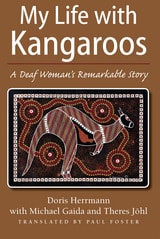
My Life with Kangaroos
A Deaf Woman’s Remarkable StoryDoris Herrmann
Gallaudet University Press, 2013
Doris Herrmann was born deaf in 1933 in Basel, Switzerland, and from the age of three, she possessed a mystical attraction to kangaroos. She recalls seeing them at that age for the first time at the Basel Zoo, and spending every spare moment visiting them from then on. Eventually, her fascination grew into passionate study of their behavior. Her dedication caught the attention of the zookeepers who provided her greater access to these extraordinary animals. Despite her challenges with communication, Herrmann wrote a scientific paper about the kangaroo’s pouch hygiene when raising a joey. Soon, experts from around the world came to visit this precocious deaf girl who knew about kangaroos.
Herrmann appreciated the opportunities opening up to her, but her real dream was to travel to Australia to study kangaroos in the wild. For years she worked and yearned, until Dr. Karl H. Winkelsträter a renowned authority on kangaroos, suggested an independent study in Australia at a place called Pebbly Beach. In 1969, at the age of 35, Herrmann finally traveled to the native land of kangaroos. During the next four decades, she would make many more trips to observe and write about kangaroos.
My Life with Kangaroos explores every facet of Herrmann’s connection to these engaging marsupials. Her single-minded devotion not only made her a leading self-made scholar on kangaroos, it transformed her own personality and her relationships with others. As she forged bonds with kangaroos named Dora, Jacqueline, Manuela, and many others, she engendered great affection and respect in the people around her, truly a remarkable story of success.
My Mother Made Me Deaf
Discourse and Identity in a Deaf CommunityBryan K. Eldredge
Gallaudet University Press, 2017
Bryan K. Eldredge seeks to more precisely understand the relationship between ASL use and Deaf identity using the tools of linguistic anthropology. In this work, he presents research resulting from fieldwork with the Deaf community of Utah Valley. Through informal interactions and formal interviews, he explores the role of discourse in the projection and construction of Deaf identities and, conversely, considers how ideas about language affect the discourse that shapes identities. He finds that specific linguistic ideologies exist that valorize some forms of language over others and that certain forms of ASL serve to establish a culturally Deaf identity. My Mother Made Me Deaf demonstrates that the DEAF-WORLD consists of a multitude of experiences and ways of being even as it is bound together by certain essential elements that are common to Deaf people.
My Sense of Silence
Memoirs of a Childhood with DeafnessLennard J. Davis
University of Illinois Press, 1999
Selected as an "Editors Choice" by the Chicago Tribune
Lennard J. Davis grew up as the hearing child of deaf parents. In this candid, affecting, and often funny memoir, he recalls the joys and confusions of this special world, especially his complex and sometimes difficult relationships with his working-class Jewish immigrant parents. Gracefully slipping through memory, regret, longing, and redemption, My Sense of Silence is an eloquent remembrance of human ties and human failings.